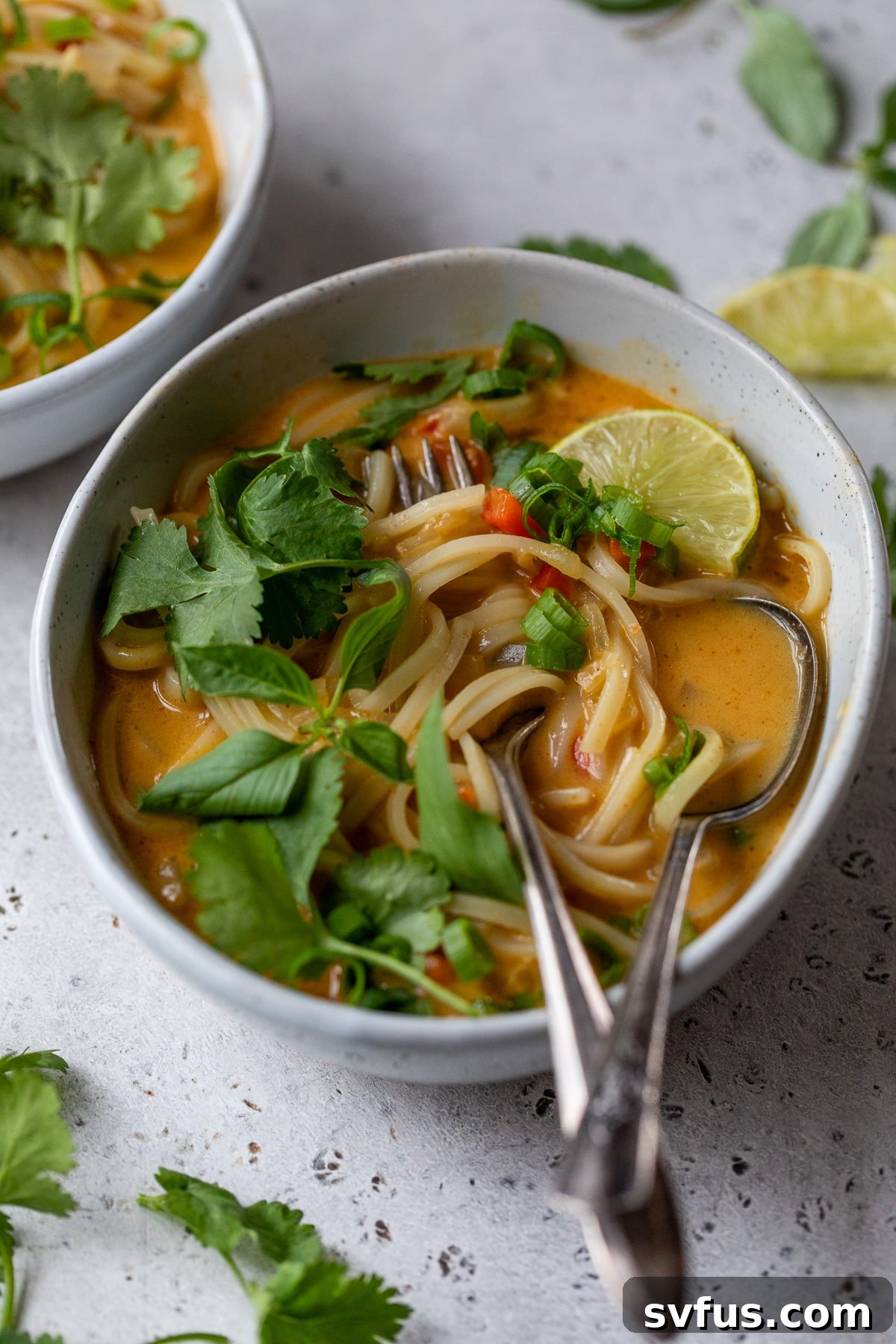
Welcome to your new favorite go-to recipe for warmth, comfort, and explosive flavor! This **Vegan Red Curry Noodle Soup** is a culinary masterpiece, bringing together tender rice noodles and a medley of vibrant vegetables in an incredibly aromatic, luxuriously creamy, and delightfully bold Thai red curry broth. It’s more than just a meal; it’s a soul-soothing experience, perfectly crafted to chase away the chill on any cold day. Best of all, this impressive dish comes together in a single pot in under 30 minutes, making it the ultimate quick comfort food solution for busy weeknights or whenever a craving strikes.
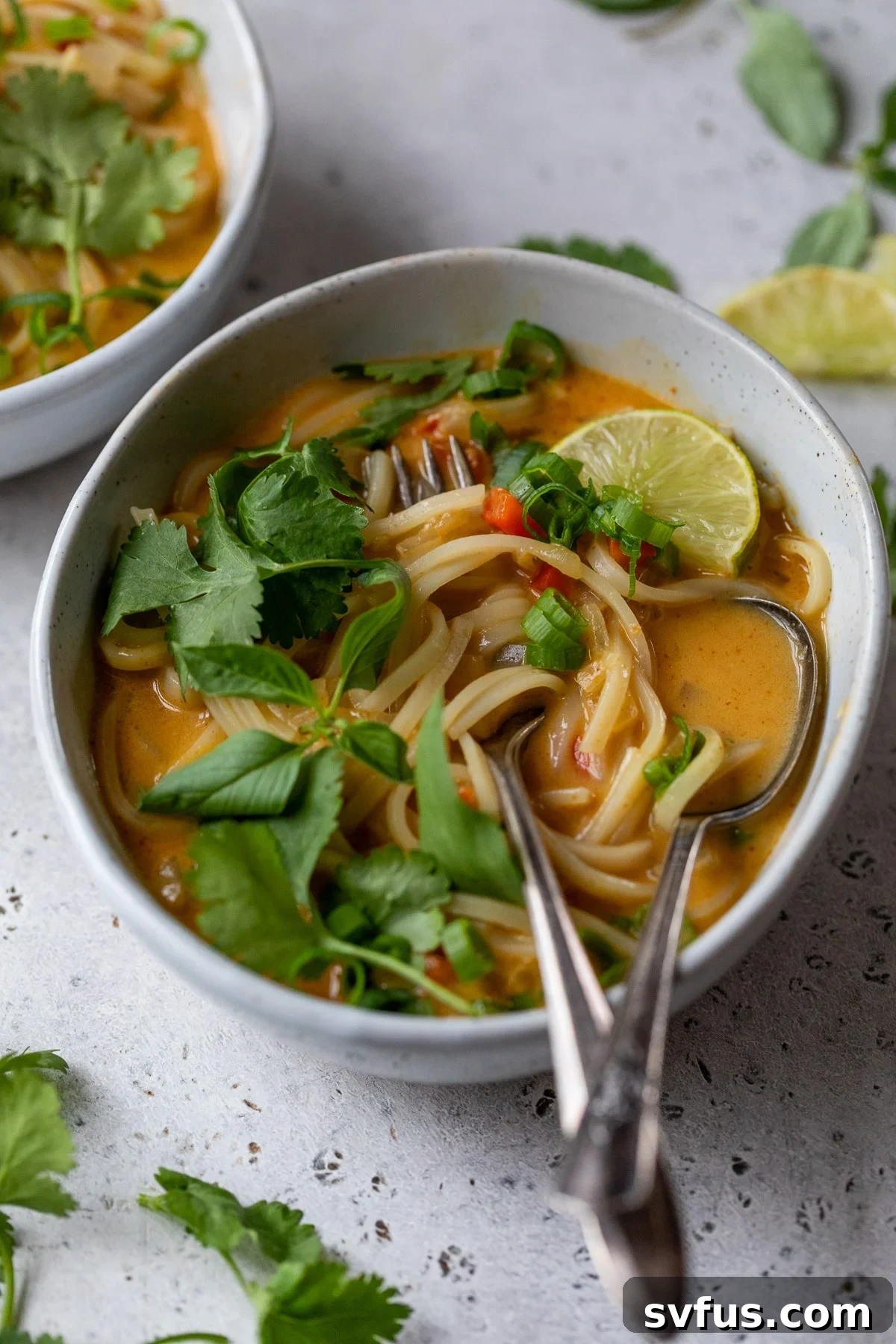
If you’re a devotee of quick, effortless, and utterly delicious curry recipes – perhaps you’ve enjoyed a rich creamy chickpea cauliflower curry or a satisfying healthy curry beef bowl – then prepare to be captivated by this extraordinary Red Curry Noodle Soup. It embodies everything you adore about authentic Thai red curry, transformed into an irresistibly cozy and satisfying slurp-worthy soup that promises to become a staple in your kitchen.
The magic begins with the broth. Infused with rich red curry paste and velvety coconut milk, it delivers a profound depth of flavor with just the right amount of stimulating heat. This robust foundation perfectly cradles bouncy, chewy rice noodles, transforming a simple soup into a wonderfully fulfilling meal. But the beauty of this recipe extends beyond its deliciousness; it’s also incredibly adaptable. Feel free to personalize it with your favorite plant-based proteins like crispy tofu, or an abundance of extra fresh vegetables. There’s ample room for creativity and all your preferred mix-ins!
Imagine this: a wholesome, flavor-packed meal on the table in less than half an hour, requiring minimal cleanup. That’s the promise of this one-pot wonder. It’s the dependable answer to those sudden curry cravings and the perfect antidote when you’re yearning for a fast, comforting dish without the fuss. And if speedy vegan comfort foods are your jam, don’t miss out on another fantastic recipe: this delightful easy vegan ramen!
Why This Vegan Curry Noodle Soup Will Be Your New Favorite
This isn’t just another soup; it’s a revelation. Here’s why this Vegan Red Curry Noodle Soup stands out:
- Unforgettable Flavor Profile: Experience a complex symphony of sweet, spicy, savory, and tangy notes, all harmoniously blended in a rich, coconut-infused broth. The Thai red curry paste is the star, delivering an authentic and invigorating kick.
- Speedy One-Pot Convenience: Say goodbye to endless dishes! This entire meal comes together in a single pot in under 30 minutes, making it ideal for busy weeknights or when you need a quick culinary escape.
- Naturally Vegan & Gluten-Friendly: Crafted entirely from plant-based ingredients, this soup is inherently vegan. With simple substitutions like tamari for soy sauce, it’s also easily made gluten-free, catering to a wide range of dietary needs without compromising on taste.
- Effortlessly Customizable: Whether you’re a fan of extra veggies, a hearty protein boost, or a specific spice level, this recipe is a blank canvas for your culinary imagination. Tailor it to your preferences every time!
- Ultimate Comfort Food: Warm, nourishing, and deeply satisfying, a bowl of this curry noodle soup is the perfect remedy for cold weather, a stressful day, or simply a desire for something truly comforting.
Essential Ingredients for a Perfect Thai Red Curry Noodle Soup
Crafting this flavorful soup relies on a careful selection of fresh and pantry-staple ingredients. Each component plays a crucial role in building the layers of taste and texture that make this dish so irresistible.
The Heart of the Flavor: Aromatics
The foundation of any great soup begins with a robust aromatic base. For our Thai Red Curry Noodle Soup, we start with a fragrant trio:
- Onion: Sautéed diced onion provides a sweet and savory backbone, deepening in flavor as it caramelizes slightly.
- Red Bell Pepper: Chosen for its vibrant color and natural sweetness, diced red bell pepper adds a lovely counterpoint to the spice of the curry. While red is preferred for its sugar content, any color of bell pepper will work beautifully, offering a slight variation in sweetness.
- Fresh Ginger: Grated fresh ginger introduces a warm, zesty, and slightly pungent note that is quintessential in Thai cuisine, providing a refreshing zing.
- Garlic Cloves: Minced garlic offers an indispensable savory depth and pungent aroma, enhancing the overall complexity of the broth.
- Salt & Curry Powder: A touch of salt brings out all the individual flavors, while a hint of curry powder adds another layer of warm, earthy spice, complementing the red curry paste without overpowering it.
These aromatics are carefully sautéed to unlock their full flavor potential before the liquid elements are introduced, laying the groundwork for an incredibly rich broth.
The Star of the Show: Red Curry Paste
The distinct and fiery flavor of this soup comes directly from the Red Curry Paste. This concentrated blend of chili, lemongrass, galangal, and other spices is what gives Thai red curry its iconic taste. My personal favorite, and one that is widely accessible, is Thai Kitchen red curry paste. It offers a well-balanced flavor with a relatively mild spice level, making it suitable for most palates.
However, red curry pastes can vary significantly in heat depending on the brand. If you are sensitive to spice or unsure, I highly recommend starting with 1 to 2 tablespoons, tasting the broth, and then adding more gradually until you reach your desired level of heat. “Blooming” the curry paste by sautéing it briefly with the aromatics before adding liquids is a critical step, as it deepens its flavor and aroma, unlocking its full potential.
Creaminess & Balance: Coconut Milk
Full-fat coconut milk is absolutely essential for achieving the signature creamy texture and rich mouthfeel of this Thai-inspired soup. It not only contributes a subtle sweetness and tropical depth but also effectively tones down the heat from the red curry paste, creating a perfectly balanced flavor profile. For the best results, opt for full-fat canned coconut milk rather than the light version, which can result in a less satisfyingly rich soup.
If you have an aversion to coconut, or simply prefer an alternative, you can substitute with an equal amount of homemade cashew cream (blended soaked cashews with water), unsweetened oat milk, unsweetened soy milk, or even traditional heavy cream for a non-vegan option. Each alternative will impart a slightly different nuance, but the core flavor will remain delicious.
The Perfect Slurp: Rice Noodles
No noodle soup is complete without the noodles! Rice noodles are the ideal choice here, offering a wonderful chewy and bouncy texture that perfectly complements the rich broth. You have several varieties to choose from:
- Thin Vermicelli Rice Noodles: These delicate noodles cook very quickly and are excellent for a lighter texture.
- Wider Rice Noodles (e.g., Pad Thai Noodles): These offer a more substantial chew and tend to hold up better if you plan on having leftover soup, as they are less prone to becoming mushy after soaking in the broth.
Regardless of your choice, the key is to cook them just until tender to avoid an overcooked, mushy consistency. Incorporating them towards the end of the cooking process ensures they retain their ideal texture.
The Final Flourish: Flavor Boosters
To truly amp up those authentic Thai-inspired flavors and bring a bright finish to the soup, we incorporate a few essential additions at the very end:
- Soy Sauce: Adds a crucial umami depth and savory richness. For a gluten-free option, substitute with tamari or coconut aminos.
- Brown Sugar: A touch of brown sugar balances the acidity and heat, introducing a subtle caramel sweetness that is characteristic of Thai cuisine. It helps to round out all the flavors.
- Fresh Lime Juice: A squeeze of fresh lime juice at the end is non-negotiable! It provides a bright, tangy acidity that awakens all the flavors, cutting through the richness of the coconut milk and lifting the entire dish.
How to Master Your Vegan Curry Noodle Soup: A Step-by-Step Guide
Creating this flavorful Red Curry Noodle Soup is surprisingly simple, designed for efficiency without sacrificing taste. Follow these easy steps for a perfect bowl every time:
-
Step 1: Sauté the Aromatics to Build the Flavor Base
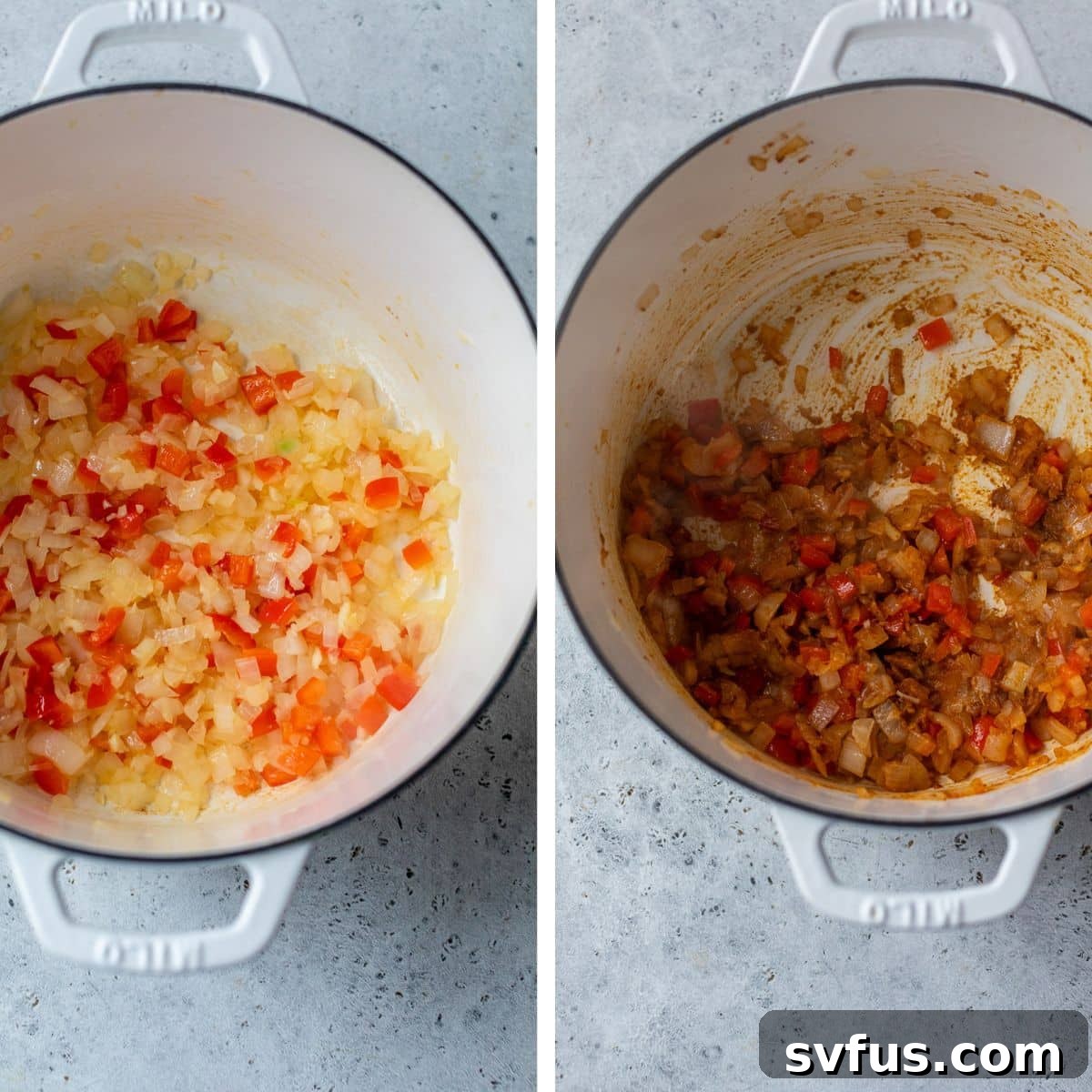
Begin by heating 1 tablespoon of olive oil in a large Dutch oven or a heavy-bottomed pot over medium heat. Once shimmering, add your diced onion and red bell pepper. Sauté these vibrant vegetables for about 5 minutes, or until they begin to soften and become translucent. This initial step is crucial for developing the foundational sweetness and savory notes of your soup.
Next, stir in the grated fresh ginger, minced garlic, 1/2 teaspoon of salt, and 1/2 teaspoon of curry powder. Continue to sauté for just one more minute. This quick cook time allows the spices and aromatics to become fragrant, intensifying their flavors without burning the garlic. You’ll notice a beautiful aroma filling your kitchen at this stage.

-
Step 2: Bloom the Curry Paste and Create the Broth
Now it’s time for the star ingredient: the red curry paste. Stir 3 tablespoons of red curry paste into the sautéed aromatics. Cook the paste in the hot pan for 1 to 2 minutes, stirring constantly. This crucial step, known as “blooming” the curry paste, helps to release its complex aromatic oils and deepen its flavor profile. You’ll know it’s ready when it becomes intensely fragrant and slightly darker in color.
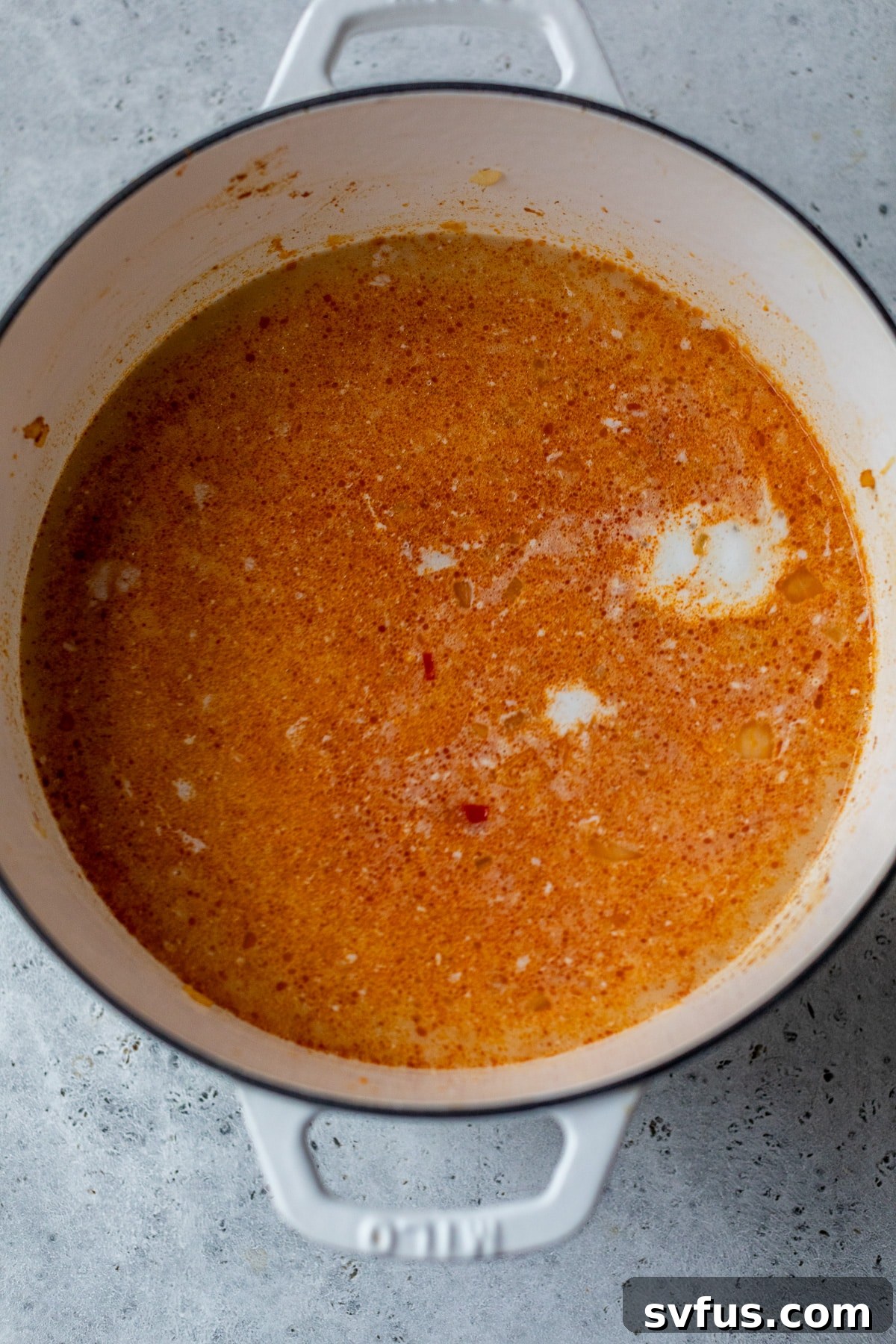
Immediately after blooming the paste, pour in the 14 ounces (1 can) of full-fat coconut milk and 6 cups of vegetable broth. Stir everything together thoroughly, ensuring the curry paste is fully dissolved and incorporated into the liquids. This creates the rich, creamy, and flavorful base of your soup.
-
Step 3: Cook the Rice Noodles to Perfection
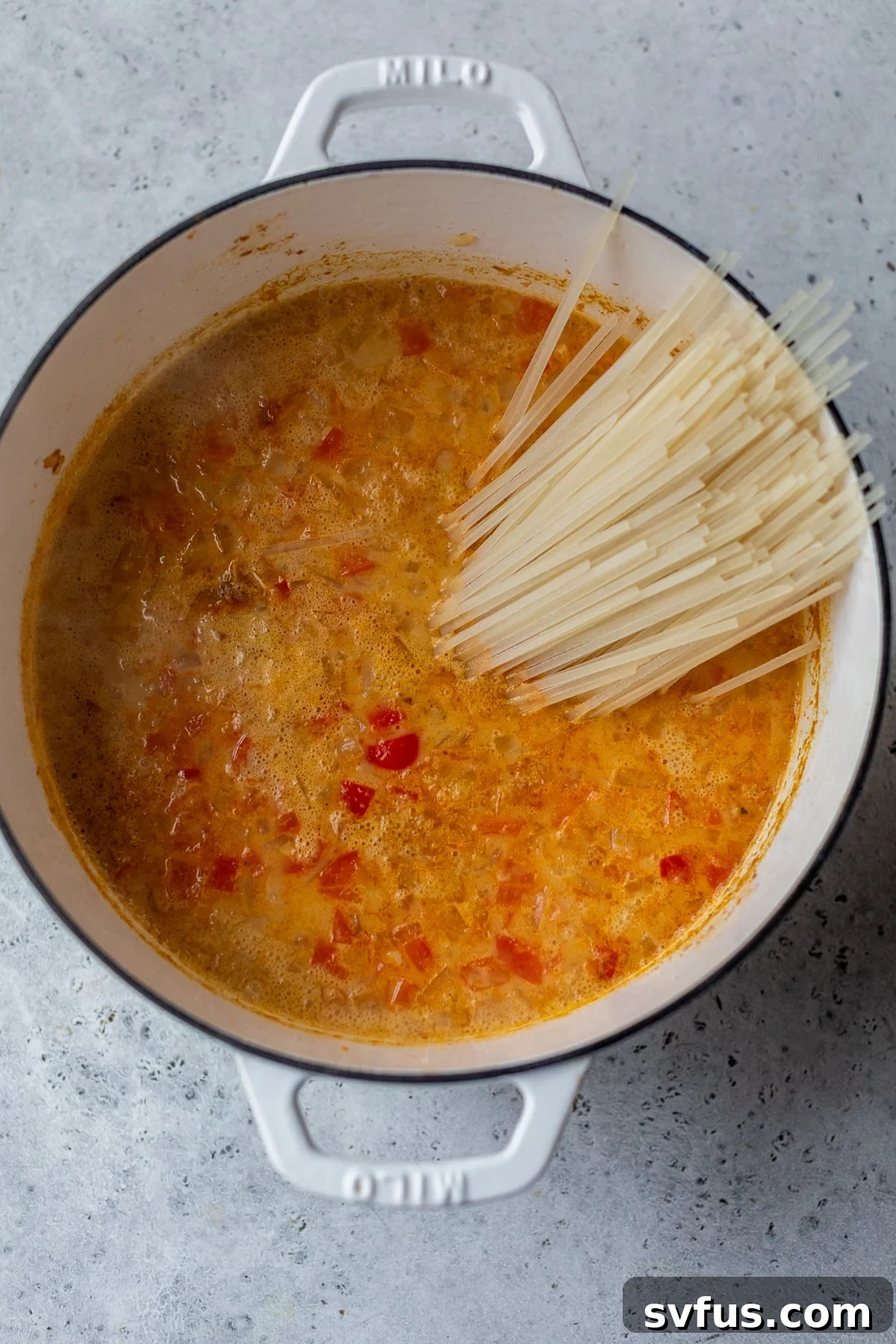
Bring the soup mixture to a gentle boil over medium-high heat. Once boiling, reduce the heat to a simmer and carefully add the 6 ounces of rice noodles. Stir them gently to ensure they are fully submerged in the broth and don’t clump together. Cook the noodles according to package directions, usually about 3-5 minutes, until they are just tender. It’s important to keep a close eye on them, as rice noodles cook quickly and can become mushy if overcooked.
Once the noodles are tender, remove the pot from the heat immediately to prevent them from continuing to cook in the hot broth. This ensures they maintain their perfect chewy texture.
-
Step 4: Fine-Tune the Flavor and Serve
With the noodles cooked, it’s time for the final flavor adjustments. Stir in 2 tablespoons of soy sauce (or tamari for gluten-free), 1 tablespoon of brown sugar, and 1 tablespoon of fresh lime juice. These additions balance the savory, sweet, and tangy elements, bringing the soup to its peak flavor.
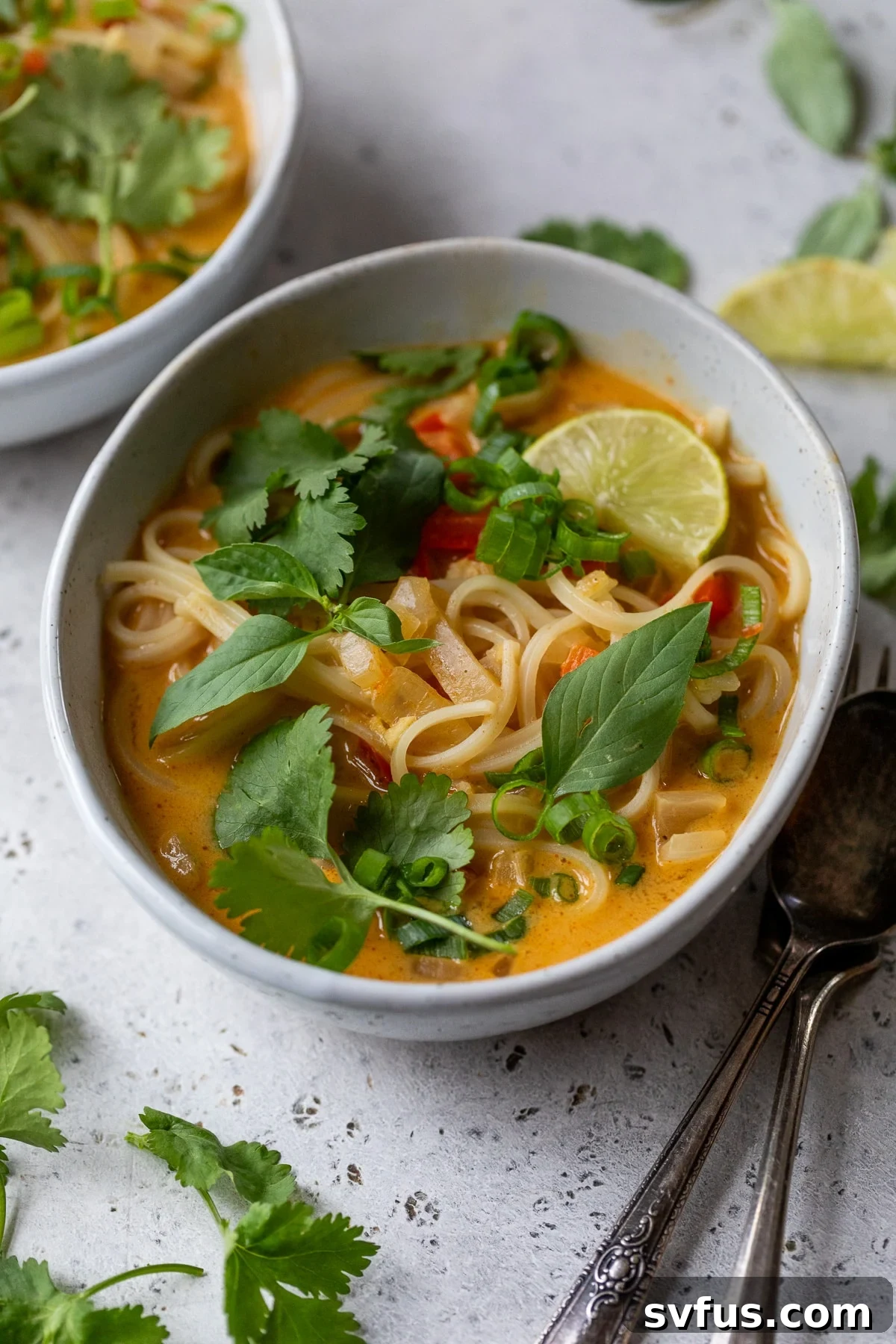
Now, taste the soup and adjust the flavors as needed. This is your moment to customize! If it’s too salty, add a little more lime juice. Too spicy? More brown sugar and lime juice can mellow the heat. Lacking depth? A tiny dash more soy sauce or a pinch of salt can make a difference. Ladle the finished Thai curry noodle soup into individual bowls. Top generously with your desired garnishes and toppings (see suggestions below) and enjoy immediately!
Expert Tips and Frequently Asked Questions
Unlock the full potential of your Vegan Red Curry Noodle Soup with these invaluable tips and answers to common queries.
Pro Tips for the Best Curry Noodle Soup
- The Art of Tasting and Adjusting: This is perhaps the most crucial tip! Before serving, always taste your soup.
- Too Salty? A splash more fresh lime juice often helps to cut through excessive saltiness.
- Too Spicy? Brown sugar is your friend here, along with additional lime juice. Both help to mellow and balance the heat. Coconut milk can also be added for a creamier, less intense spice.
- Lacking Depth? A small dash of soy sauce or a sprinkle of salt can enhance the overall umami. A tiny bit more red curry paste can also boost flavor if it feels too mild.
- “Blooming” the Red Curry Paste is Key: Don’t skip this step! Sautéing the red curry paste with the aromatics in hot oil for 1 to 2 minutes before adding any liquids is essential. This process draws out the aromatic compounds and deepens the complex flavors, creating a richer, more profound broth. You’ll know it’s “bloomed” when it becomes wonderfully fragrant and slightly darker in color.
- Prevent Mushy Noodles: Rice noodles cook very quickly, often in 5 minutes or less. To prevent them from becoming overcooked and mushy, always add them to the simmering broth towards the very end of the cooking process. As soon as they are tender but still retain a pleasant chew (al dente), immediately remove the pot from the heat. If you’re planning on leftovers, consider cooking noodles separately and adding them to individual bowls as needed to keep them perfectly textured.
Customize Your Curry Noodle Soup: Endless Add-in Ideas
Transform your delicious curry soup into an even more indulgent and personalized meal with these fantastic add-ins:
- Proteins (Vegan & Non-Vegan Options):
- Tofu: Press extra-firm tofu, then bake or air fry it until golden brown and crispy. Add it to the soup just before serving to maintain its delightful crunch. Explore my baked tofu or air fryer tofu recipes for detailed instructions.
- Chicken (Pre-cooked): If not strictly vegan, stir in pre-cooked shredded chicken or diced chicken breast at the very end, allowing it just enough time to warm through in the hot broth.
- Shrimp: For a seafood twist, add peeled and deveined shrimp during the last 3 to 4 minutes of simmering. Remove the soup from the heat as soon as the shrimp turn opaque pink.
- Fish: Incorporate bite-sized chunks of fresh cod, tilapia, or halibut during the last 5 minutes of cooking. Similar to shrimp, remove the soup from the heat once the fish pieces become opaque and flaky.
- Vegetable Boosts: Love your greens and vibrant veggies?
- Sauté sliced mushrooms alongside the onion and bell peppers for an earthy depth.
- Add thinly sliced carrots, zucchini ribbons, or baby bok choy during the last few minutes of simmering to ensure they remain tender-crisp.
- For an extra burst of greens, stir in fresh spinach or chopped kale right at the end; the residual heat will quickly wilt them.
Serving Suggestions and Irresistible Toppings
A bowl of Thai Red Curry Noodle Soup is a fantastic light and flavorful lunch or a satisfying dinner all on its own. But don’t underestimate the power of toppings! They add not only beautiful color but also layers of texture and fresh flavor to every spoonful.
- Fresh Herbs & Greens: Brighten your bowl with a generous sprinkle of sliced green onions (scallions), fresh cilantro, fragrant Thai basil leaves, or even exotic curry leaves and makrut lime leaves for an authentic touch.
- Crunchy Elements: For delightful textural contrast, consider adding crushed peanuts, crispy fried shallots, crunchy garlic chips, fresh bean sprouts, or thinly shredded cabbage.
- Extra Heat & Spice: If you crave more heat, garnish with thinly sliced red chilis (like bird’s eye chilies), a pinch of chili flakes, or a drizzle of spicy chili oil or sriracha.
To round out your meal and truly enhance the soup’s bold flavors, serve it alongside some complementary dishes. A refreshing spicy cucumber salad or delicate sesame tofu spring rolls would be perfect. Alternatively, for a simpler side, opt for curry roasted cauliflower, savory Thai peanut cauliflower steaks, or perfectly steamed instant pot broccoli.
Can I Use Green or Yellow Curry Paste Instead?
Yes, absolutely! You can certainly substitute green or yellow curry paste for the red. However, be aware that the flavor profile of your soup will be distinctly different:
- Green Curry Paste: Typically spicier than red curry paste, green curry is also more herbaceous. It often features strong notes of lemongrass, makrut lime, and fresh green chilies, resulting in a vibrant and pungent flavor.
- Yellow Curry Paste: This paste is generally milder and offers warm, earthy flavors, largely due to the inclusion of turmeric, which also gives it its characteristic golden hue. It often has a slightly sweet and savory profile.
Choose the paste that best suits your preferred spice level and flavor nuances. Remember to adjust the quantity based on the brand’s heat intensity.
What Can I Use Instead of Rice Noodles?
If rice noodles aren’t available or you simply prefer another option, several alternatives work wonderfully:
- Ramen Noodles or Glass Noodles (Cellophane Noodles): These are excellent substitutes. Like rice noodles, they can be simmered directly in the broth during the last few minutes of cooking.
- Dried Udon, Linguine, or Spaghetti Noodles: These pasta varieties also make good alternatives for a heartier soup. However, to prevent them from absorbing too much broth and becoming starchy, it’s best to cook them separately according to package directions and then add them to individual bowls of soup just before serving.
Is Thai Red Curry Noodle Soup Vegan?
This particular recipe for Thai Red Curry Noodle Soup is indeed **inherently vegan**, provided you use a vegan-friendly red curry paste. Many traditional Thai curry pastes, especially those made in Thailand, contain shrimp paste or fish sauce for authentic umami flavor.
However, numerous brands now offer vegan versions. Always check the ingredients list on the jar you purchase to ensure it does not contain any animal products. The Thai Kitchen brand, for example, is widely available and typically vegan-friendly, making it a reliable choice for this recipe.
Storage and Reheating Best Practices
Enjoying leftovers of this delicious soup is easy with these storage and reheating tips:
- Refrigerator: Transfer any leftover curry noodle soup to an airtight container and store it in the refrigerator for up to 4 days. Keep in mind that the rice noodles will continue to absorb the broth over time, becoming softer and thickening the soup. When reheating, you will likely need to add an extra splash of vegetable broth or water to achieve the desired consistency.
- Freezer: For best results, I highly recommend freezing the curry soup without the noodles. Cooked rice noodles tend to become mushy and lose their desirable texture when frozen and then thawed. You can freeze the broth separately in an airtight container for up to 3 months. When you’re ready to enjoy, thaw the soup, reheat it, and then stir in a batch of freshly cooked rice noodles right before serving.
- Reheating: Gently warm the soup on the stovetop over medium heat, stirring occasionally, until it is heated through. Alternatively, you can reheat it in the microwave in 30-second intervals, stirring between each, adding more broth as needed to reach your preferred consistency.
More Easy Soup Recipes to Explore
DF
P
30
Paleo Beef Pho
DF
Chicken Curry Soup
Vegetable Quinoa Soup
If you’ve enjoyed making this incredible Vegan Red Curry Noodle Soup, please share your experience! We’d love for you to leave a comment and a star rating below. Your feedback helps us and other home cooks discover and enjoy these delicious recipes. Thank you!