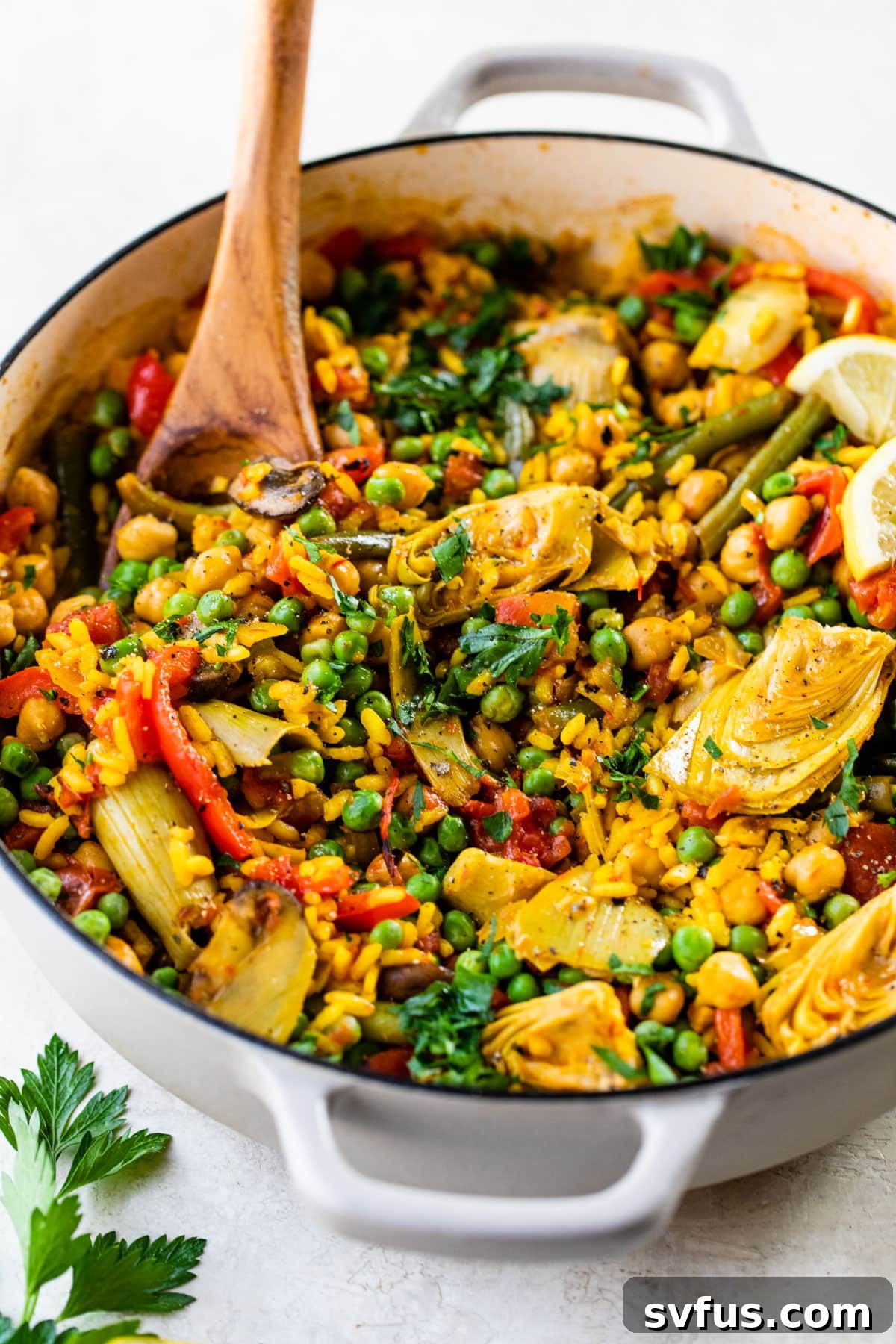
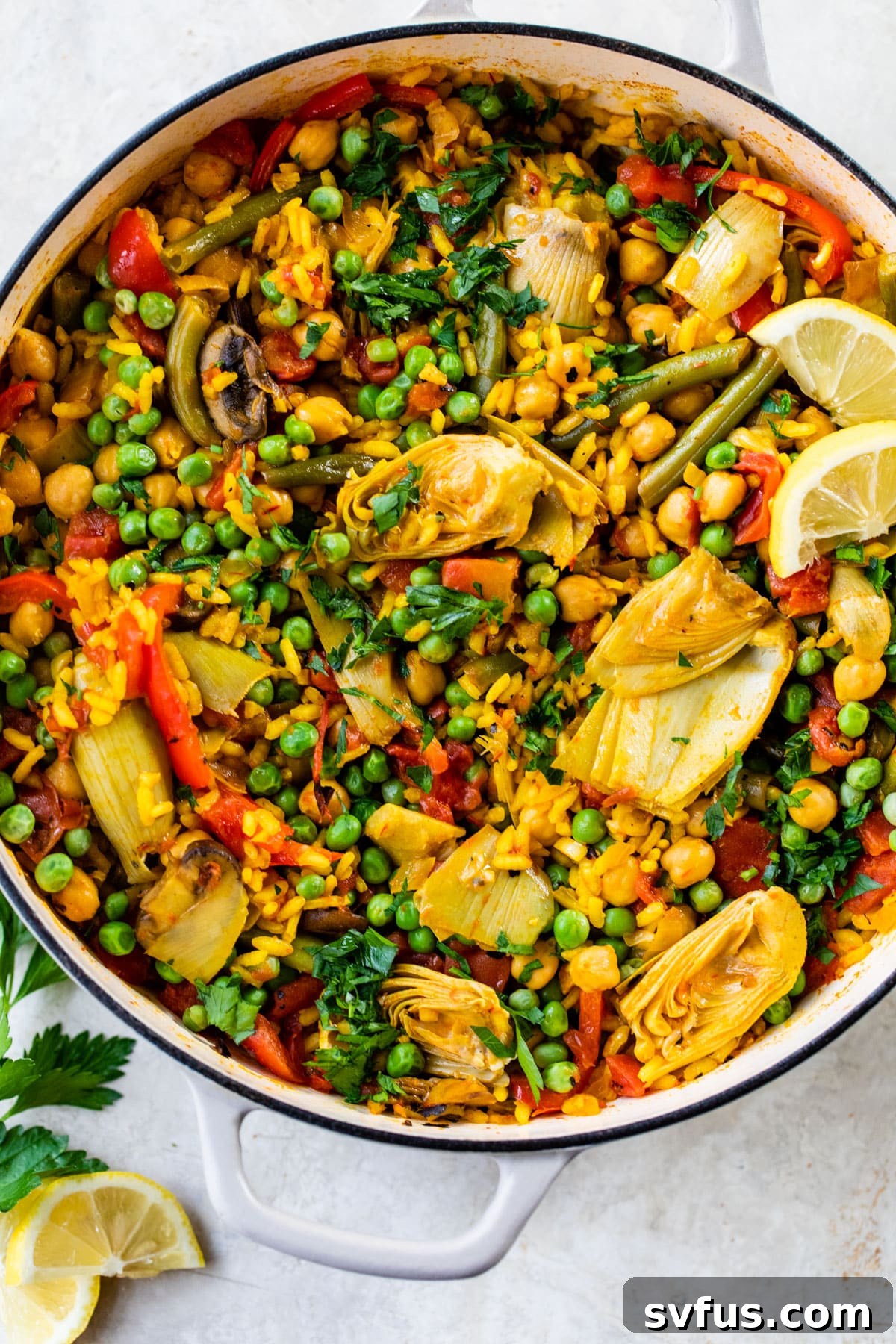
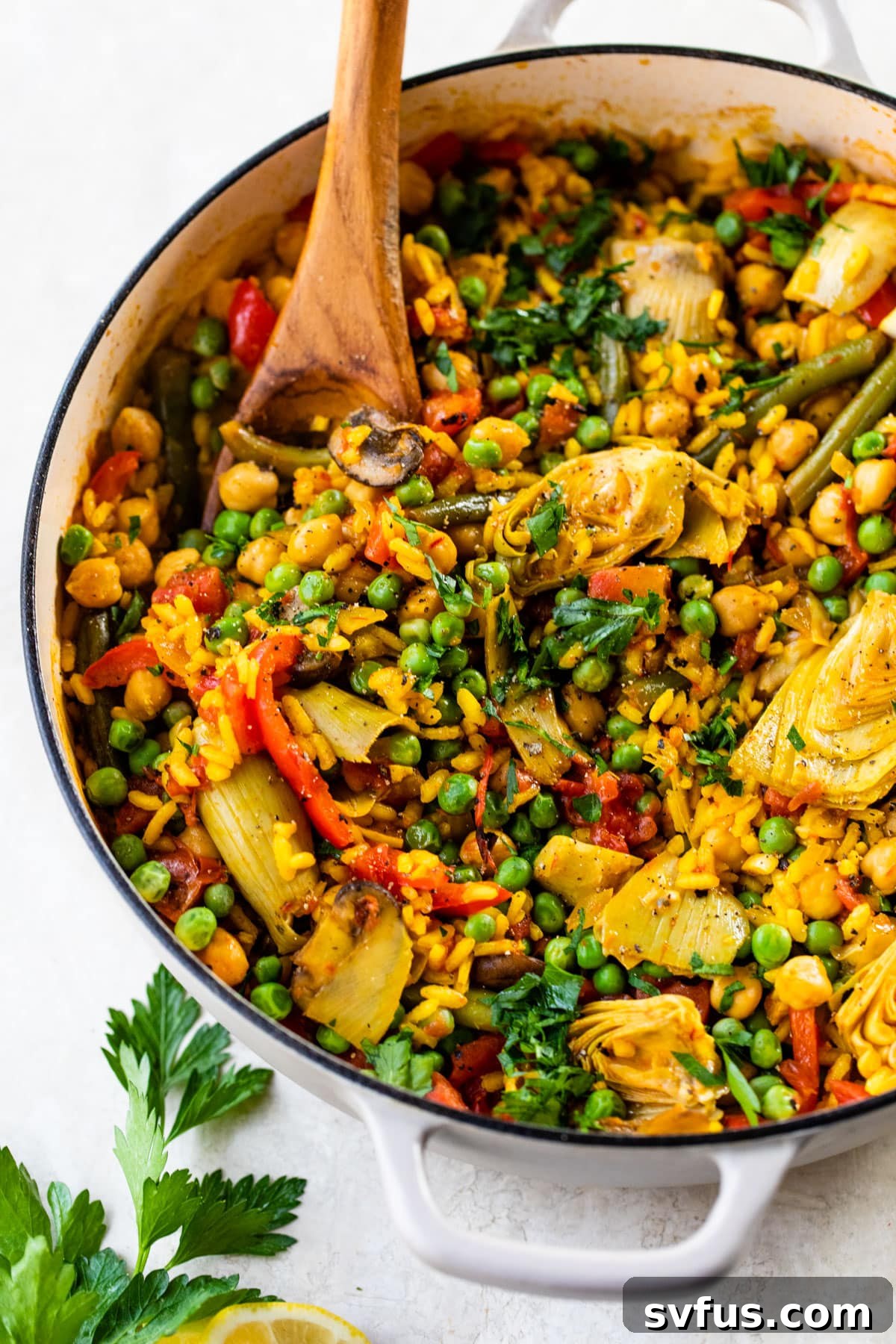
Embark on a culinary journey to the heart of Spain with this incredibly easy and utterly delicious Vegetable Paella recipe. This vibrant, one-pot wonder brings together a medley of fresh, colorful vegetables, protein-rich chickpeas, and fragrant, saffron-infused rice. Ready in approximately an hour, it transforms into a stunning and satisfying Spanish-inspired main course that is both vegetarian and entirely vegan-friendly.
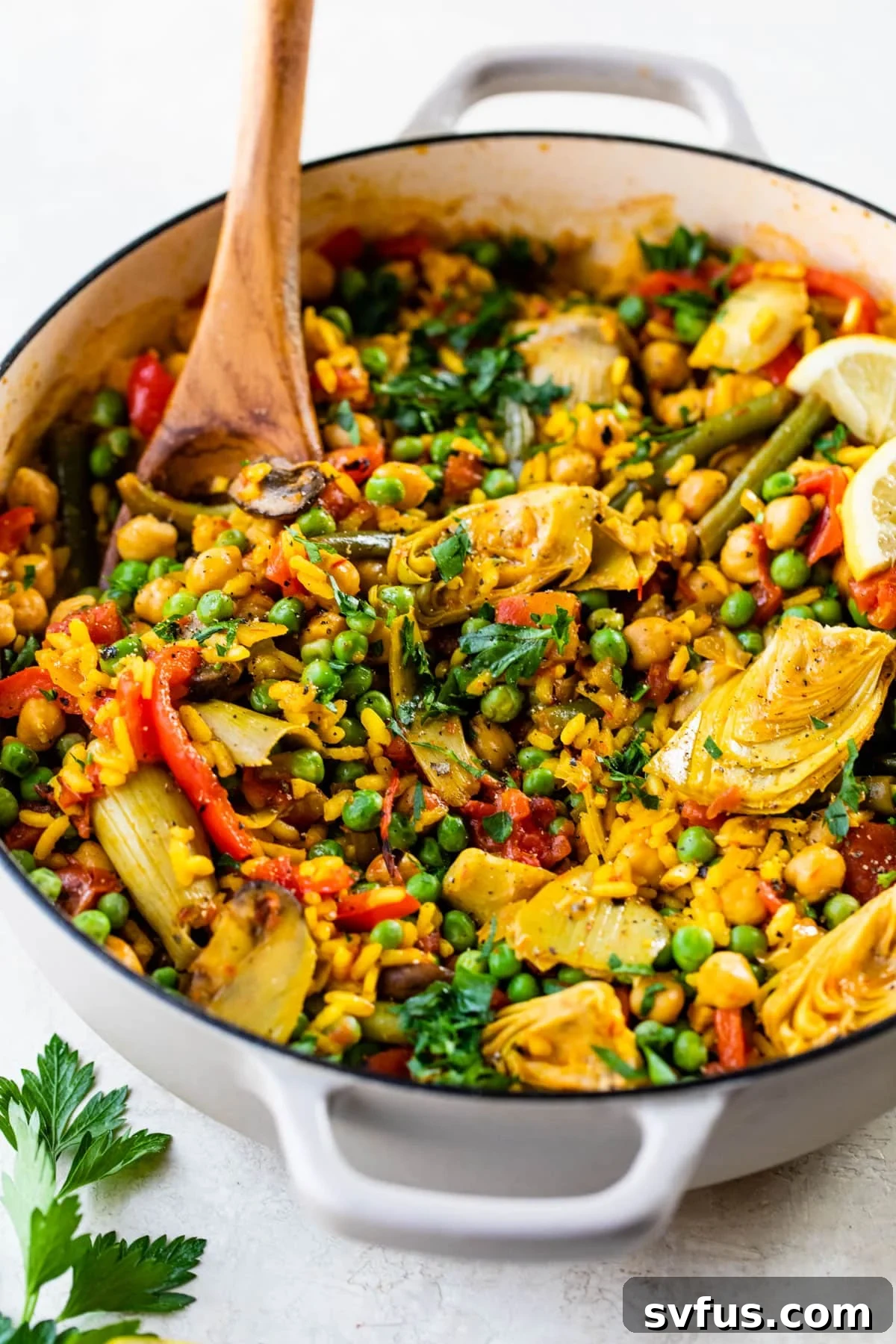
Traditional Spanish paella, renowned for its rich flavors and impressive presentation, often features saffron-infused rice, various vegetables, and a selection of proteins like chicken or seafood. While undeniably delicious, this classic can be intimidating for some or unsuitable for those following plant-based diets. Our vegetable paella captures all the aromatic essence and visual appeal of its traditional counterpart, but with a delightful vegetarian twist. We substitute meat with a generous assortment of vibrant vegetables and hearty chickpeas, ensuring every spoonful is packed with flavor and satisfying texture. You’ll find yourself reaching for seconds, completely forgetting that meat was ever an option!
The result is a gorgeously golden rice dish, brimming with authentic Spanish-inspired flavors. This easy vegetarian paella recipe is designed for minimal prep and cooks entirely in one pot, making it perfect for weeknight dinners or impressive gatherings. You can have this mouthwatering meal on your table in about an hour, proving that incredible taste doesn’t have to mean complicated cooking.
Why You’ll Love This Easy Vegetable Paella
This Spanish rice dish is more than just a meal; it’s an experience. Here’s why this vegan paella recipe will become a staple in your kitchen:
- Nutrient-Rich and Flavorful: The colorful blend of fresh vegetables, fiber-packed chickpeas, and savory spices makes this Spanish vegetable paella a remarkably healthy choice, overflowing with incredible flavor. It’s a complete meal that nourishes your body while delighting your taste buds.
- Effortless One-Pot Preparation: All the simple ingredients cook together in a single pot. Forget about dirtying multiple pans; this streamlined process makes cleanup a breeze. You don’t even need a specialized paella pan – a large skillet or Dutch oven works perfectly.
- Highly Customizable: This recipe offers endless possibilities for personalization. Easily swap in your favorite seasonal vegetables or adjust the spice levels to suit your preference. It’s a flexible recipe that encourages creativity in the kitchen.
- Perfect for Any Occasion: Whether you’re hosting a dinner party, preparing a family meal, or simply craving a taste of Spain, this paella fits the bill. Its vibrant colors and robust flavors make it an impressive dish for special occasions, yet its simplicity ensures it’s achievable for everyday cooking.
- Vegan and Vegetarian Friendly: A delicious solution for plant-based diets, this paella ensures everyone can enjoy a hearty and authentic Spanish meal without compromise. The chickpeas provide a substantial protein boost, making it incredibly satisfying.
Key Ingredients for a Perfect Vegetable Paella
Crafting the perfect vegetable paella relies on a thoughtful selection of fresh, high-quality ingredients. Each component plays a crucial role in building the layered flavors and appealing textures that define this iconic dish.
Paella Vegetables: Our base includes essential aromatics and textural elements. Yellow onion provides a sweet foundation, while red bell pepper adds a touch of sweetness and vibrant color. Earthy mushrooms contribute a savory umami depth, and crisp-fresh green beans introduce a delightful crunch and freshness to the dish. Feel free to incorporate other seasonal vegetables like zucchini, artichoke hearts, or peas for added variety.
Aromatic Seasonings: The soul of paella lies in its spices. Both smoked paprika and sweet paprika are essential, lending a rich, smoky depth and a subtly sweet warmth. Saffron threads are a non-negotiable component in classic paella, imparting that distinctive golden hue and a delicate, floral aroma that truly sets the dish apart. A balanced touch of salt and freshly ground black pepper ensures all flavors are perfectly harmonized.
Dry White Wine: A splash of dry white wine, such as Pinot Grigio or Sauvignon Blanc, is used to deglaze the skillet. This step helps lift caramelized bits from the bottom of the pan, adding another layer of complex flavor to the paella. If you prefer not to use wine, an equal amount of vegetable broth can be substituted without compromising the delicious outcome.
Short Grain Rice: For that authentic, fluffy-chewy paella texture, short grain rice like Arborio or Valencia rice is highly recommended. These varieties cook beautifully, absorbing the broth and flavors while retaining a pleasant bite. While short grain rice is preferred, long grain white or brown rice can also be used as a substitute; please refer to the Tips and FAQs section for guidance on adjusting cooking times.
Chickpeas: Canned chickpeas are a fantastic addition, providing a substantial boost of plant-based protein and fiber. They absorb the rich flavors of the paella beautifully, adding a creamy texture and making this a truly hearty and satisfying meal.
Green Peas: Whether fresh or thawed from frozen, green peas contribute a lovely pop of bright color and a sweet, fresh flavor. They are typically added towards the end of the cooking process to maintain their vibrant hue and tender texture.
Artichokes: Canned or jarred roasted or grilled artichoke hearts, quartered for convenience, introduce a unique textural dimension and a pleasant tangy, slightly briny flavor. They complement the other vegetables and spices perfectly, adding a gourmet touch.
Vegetable Broth: The quality of your broth is paramount, as the rice will absorb it, taking on its savory essence. Opt for a high-quality vegetable broth to ensure a deeply flavorful paella.
Step-by-Step Instructions for Vegetable Paella
Creating this flavorful vegetable paella is a straightforward process, achievable even for novice cooks. Follow these simple steps for a truly rewarding culinary experience.
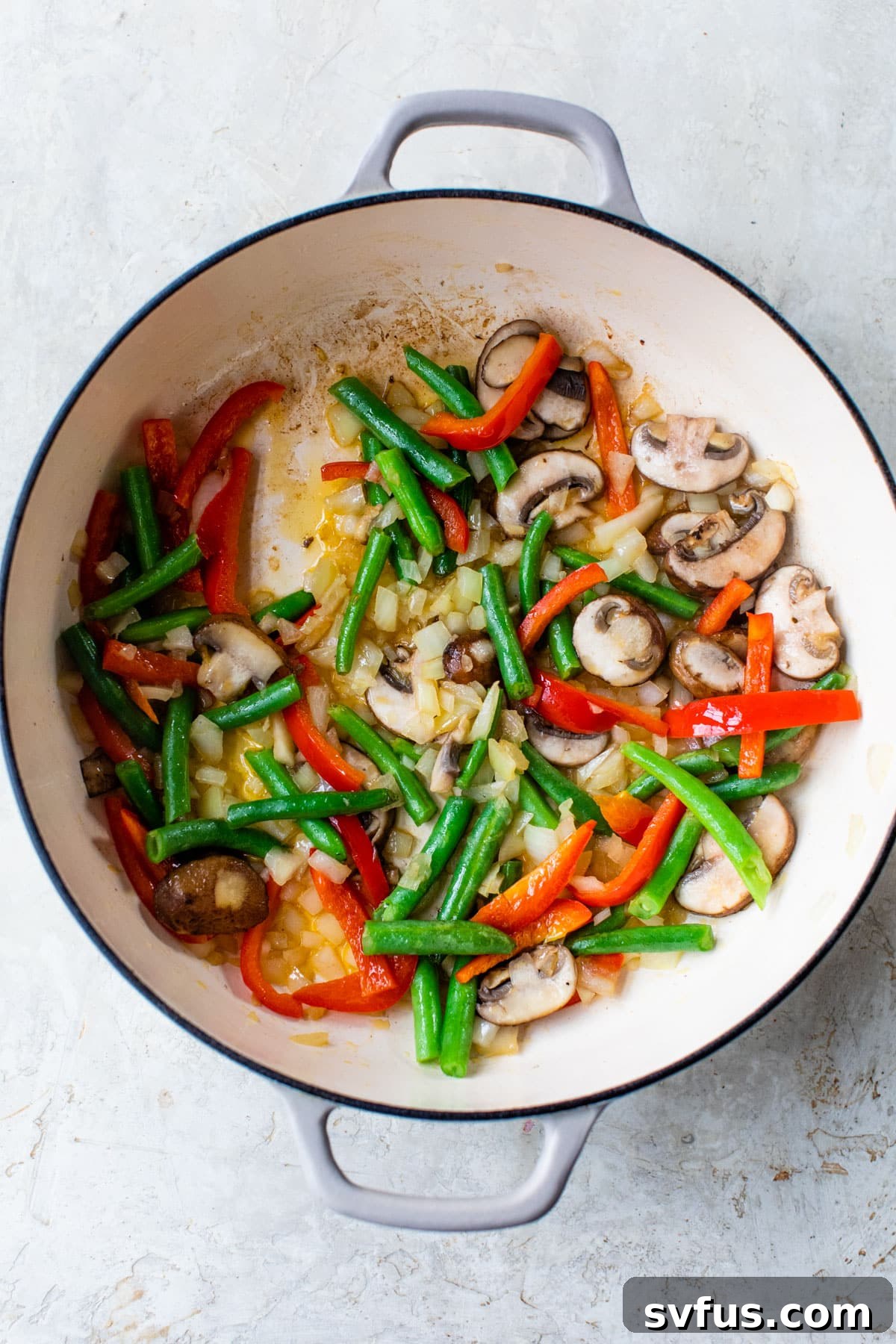
- Step 1: Sauté the Veggies and Spices. Begin by heating 3 tablespoons of olive oil in a large skillet or Dutch oven over medium-high heat. Once the oil is shimmering, add the diced yellow onion, sliced red bell pepper, sliced mushrooms, and green beans. Sauté these vegetables for about 5-7 minutes, or until they have softened and begun to caramelize slightly, releasing their aromatic compounds. Next, stir in the minced garlic, salt, black pepper, smoked paprika, sweet paprika, and the crumbled saffron threads. Continue to cook for another 2 minutes, allowing the spices to become fragrant and infuse the vegetables with their deep aromas.
- Step 2: Deglaze the Skillet. Pour in the dry white wine (or extra vegetable broth if substituting). Cook for 3-4 minutes, stirring gently, until the liquid has almost completely absorbed. This deglazing step helps lift any flavorful browned bits from the bottom of the pan, adding depth to your paella.
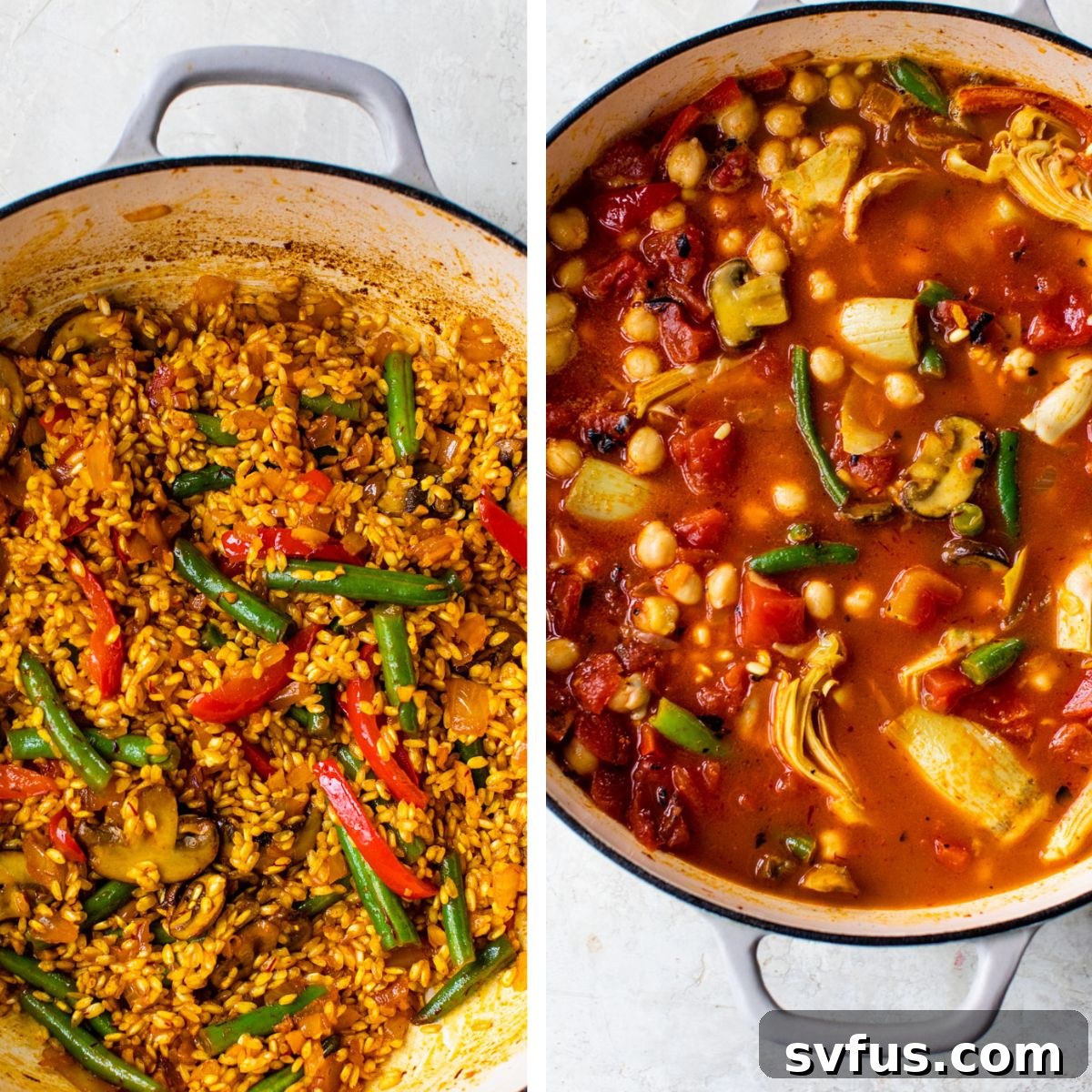
- Step 3: Cook the Rice. Add the short grain rice to the hot pan and toast it for about 2 minutes, stirring continuously. This brief toasting enhances the nutty flavor of the rice and helps it cook more evenly. Then, incorporate the drained and rinsed chickpeas, fire-roasted diced tomatoes, thawed green peas, quartered artichokes, and vegetable broth. Bring the mixture to a gentle boil, then reduce the heat to low. Cover the skillet with a tight-fitting lid and allow it to simmer for approximately 20-25 minutes, or until the rice is tender and most of the liquid has been absorbed. Avoid stirring during this phase to encourage the formation of the coveted socarrat (crispy rice layer) at the bottom.
- Step 4: Finish and Serve. Once the rice is tender, remove the lid and continue cooking for another 5 minutes over low heat. This step encourages the formation of the delicious socarrat—a slightly crispy, caramelized layer of rice at the bottom of the pan, a hallmark of authentic paella. Finish by stirring in the fresh chopped parsley, the juice of one lemon, and an additional tablespoon of olive oil. Stir gently to combine. Serve your magnificent vegetable paella hot, directly from the pan, and prepare to savor every exquisite bite!
- Maximize Saffron Flavor and Color: To extract the maximum flavor and a truly brilliant golden color from your saffron threads, always soak them in a small amount of warm water or vegetable broth for 10 to 15 minutes before adding them to the paella. This simple step blooms the saffron, intensifying its distinct characteristics.
- Monitor Liquid Levels: Keep a close eye on the liquid level throughout the cooking process. Paella should be moist but not soupy. If the rice appears to be drying out too quickly before it’s fully cooked, add a small amount of extra warm vegetable broth (about ¼ to ½ cup at a time) to prevent it from sticking excessively and ensure even cooking.
- Allow for Resting Time: After the paella has finished cooking, remove it from the heat and let it rest, covered, for a few minutes (5-10 minutes is ideal). This crucial resting period allows the flavors to meld together more deeply and gives the prized “socarrat” (the crispy bottom layer of rice) a chance to properly form and set, creating a delightful textural contrast.
- The Cook Time Depends on Rice Type: The total cooking time for your paella will vary depending on the type of rice you choose. For this recipe, we recommend short grain rice (like Arborio or Valencia), which typically takes about 20 to 25 minutes to cook to a tender, al dente consistency. If you opt for long grain white rice, expect a slightly longer cooking time, usually around 30 to 35 minutes. Brown rice will require even more time, generally 35-40 minutes, and potentially more liquid. Always refer to your rice package instructions and adjust accordingly.
- Expand Your Veggie Palette: Feel free to swap or add other vegetables based on your preferences or what’s in season. Yellow squash, zucchini, tender eggplant, crisp asparagus, sweet cherry tomatoes, fresh spinach, or briny Spanish olives would all make wonderful additions. Consider incorporating sun-dried tomatoes for an intense burst of flavor.
- Boost the Plant-Based Protein: Enhance the protein content by incorporating additional plant-based sources. Try adding crispy tofu cubes, savory grilled tempeh strips, seitan, plant-based sausage, cannellini beans, cooked lentils, or edamame alongside the chickpeas for an even heartier meal.
- Explore New Spices and Seasonings: While saffron and paprika are core to paella, you can experiment with other spices to fine-tune the flavor. A pinch of ground cumin or coriander can add an earthy depth. For a bit of heat, consider a dash of chili powder, red pepper flakes, or a tiny amount of cayenne pepper.
- Instant Pot Chicken and Rice
- Tomato Risotto
- Instant Pot Fried Rice
- 4 tbsp olive oil, divided
- 1 medium yellow onion, diced
- 1 red bell pepper, stemmed, seeded and sliced into ½” strips
- 1 cup bella mushrooms, sliced
- 1 cup green beans, trimmed and cut in half
- 6 garlic cloves, minced
- 1 tsp salt, plus more to taste
- 1/2 tsp black pepper
- 1 tsp smoked paprika
- 1/2 tsp paprika
- 1 tsp saffron threads, crumbled together
- 1/2 cup dry white wine, or sub broth
- 1 1/2 cups short grain rice
- 15 oz. chickpeas, drained and rinsed
- 15 oz. fire roasted diced tomatoes, drained
- 3/4 cup frozen peas, thawed
- 14 oz. roasted or grilled artichokes, drained & quartered; from a can or jar
- 2 1/2 cups vegetable broth
- 1/4 cup chopped fresh parsley, plus more for garnish
- 1 lemon, juiced
- Grab a large skillet with a lid and heat 3 tbsp olive oil over medium-high heat. Add the onion, bell pepper, mushrooms, and green beans and cook until softened, about 5-7 minutes. Then add the garlic, salt, pepper, smoked paprika, paprika, and saffron and cook for another 2 minutes.
- Add in the wine and cook for 3-4 minutes or until the liquid has almost completely absorbed. Next add the rice and stir to combine everything together, about 2 minutes.
- Stir in the chickpeas, tomatoes, peas, artichokes, and broth and bring to a low boil. Once boiling, reduce heat, cover, and cook for about 20-25 minutes.
- Once the rice is done cooking, remove the lid and let the mixture cook for another 5 minutes or until the rice starts to stick to the bottom and is browned. Then add in the parsley, lemon juice, and additional 1 tbsp olive oil. Enjoy!
- Calories are per serving and are an estimation.
- If you prefer to use brown rice, the cook time will be closer to 35-40 minutes.
Tips and FAQs for Your Best Vegetable Paella
Mastering vegetable paella involves a few key techniques and common considerations. Here are some tips and answers to frequently asked questions to help you achieve perfect results every time.
Variations to Customize Your Paella
This vegetable paella recipe is incredibly versatile, inviting you to experiment with different ingredients and flavor profiles:
Serving Suggestions for a Complete Spanish Feast
Paella is designed to be shared, making it the perfect centerpiece for family dinners or gatherings with friends. Serve it directly from the pan, allowing everyone to admire its beauty, or transfer it to a large, elegant serving platter.
To beautifully complement the vibrant flavors of this vegetarian paella, consider serving it alongside a crisp arugula salad, dressed simply with lemon and olive oil, and a side of crusty garlic bread for dipping into the flavorful rice. For a truly authentic Spanish-inspired meal, pair your paella with refreshing stone fruit ceviche as a starter and a pitcher of homemade Spanish sangria, or a chilled crisp white wine, such as Albariño or Sauvignon Blanc.
Can I add meat to this paella recipe?
Absolutely! While this recipe is thoughtfully crafted to be entirely vegan and vegetarian-friendly, it serves as an excellent base if you wish to incorporate meat or seafood. You can certainly add diced chicken, spicy chorizo, or various seafood options like shrimp, tender squid, or fresh mussels. For best results and food safety, cook any meat or seafood separately before gently folding it into the fully cooked paella during the final resting stage. This ensures your added proteins are perfectly cooked without overcooking the paella.
Can I use a different type of rice for paella?
While we personally adore paella made with traditional short grain varieties like Arborio or Valencia rice for their ideal texture, you can certainly experiment with other types. Long grain white or brown rice can be used, and for a low-carb alternative, some even use cauliflower rice. However, it’s crucial to remember that different types of rice will have varying cooking times and may require different liquid ratios. Always consult the package instructions for your chosen rice and closely monitor the paella as it cooks, adding more broth if needed, to prevent the rice from drying out or becoming undercooked. Achieving the perfect texture is key to a great paella.
Do you need a paella pan to make this recipe?
No, you absolutely do not need a specialized paella pan to create a delicious paella. While a traditional paella pan, with its wide, shallow design, is ideal for achieving the iconic socarrat (the crispy bottom layer of rice) and even heat distribution, a wide and shallow skillet or a large, oven-safe Dutch oven will work just as well. The key is to use a pan that allows the rice to spread out in a relatively thin layer, maximizing the surface area for that desirable crisp texture.
Is vegetable paella healthy?
Yes, vegetable paella is indeed a very healthy meal! Packed with a vibrant array of fresh vegetables, high-fiber chickpeas, and aromatic spices, it offers an excellent balance of fiber, plant-based protein, and essential nutrients. It’s a fantastic way to incorporate more plant-based meals into your diet without sacrificing flavor or feeling like you’re missing out on meat. This paella is naturally nourishing and contributes to a wholesome eating plan.
Storage and Reheating Tips
This vegetable paella makes wonderful leftovers, perfect for a quick and flavorful meal the next day. Proper storage ensures its deliciousness is preserved.
Refrigerator: To store leftover Spanish vegan paella, transfer it to an airtight container and place it in the refrigerator. It will stay fresh and delicious for 3 to 4 days.
Freezer: For longer storage, you can freeze your paella. Allow it to cool completely, then transfer it to freezer-safe containers or sturdy ziplock bags. It can be frozen for 2 to 3 months. When you’re ready to enjoy it, thaw the paella overnight in the refrigerator before reheating.
Reheating: To reheat, gently warm the paella in the microwave or on the stovetop over low heat, adding a splash of vegetable broth if it seems dry, until it is thoroughly heated through.
More Impressive Rice Dishes to Try
If you loved this Vegetable Paella, explore other fantastic rice-based recipes that are sure to impress:
If you made this irresistible paella recipe, be sure to leave a comment and star rating below to share your experience! Your feedback is greatly appreciated.
Vegetable Paella
By Erin Alvarez
Servings: 6
Prep Time: 15 mins
Cook Time: 45 mins
Total Time: 1 hr
This Vegetable Paella recipe is easy to make in one pot with vibrant veggies, protein-packed chickpeas, and aromatic spiced rice. It’s ready in about 1 hour and can be enjoyed as a mouthwatering Spanish-inspired vegetarian and vegan-friendly main course!
Ingredients
Instructions
Notes
Nutrition
| Serving: | 1g | | Calories: | 494kcal |
| Carbohydrates: | 81g | | Protein: | 15g |
| Fat: | 12g | | Saturated Fat: | 2g |
| Polyunsaturated Fat: | 2g | | Monounsaturated Fat: | 7g |
| Sodium: | 964mg | | Potassium: | 770mg |
| Fiber: | 14g | | Sugar: | 11g |
| Vitamin A: | 1799IU | | Vitamin C: | 61mg |
| Calcium: | 123mg | | Iron: | 7mg |
Nutrition information is automatically calculated and should only be used as an approximation.