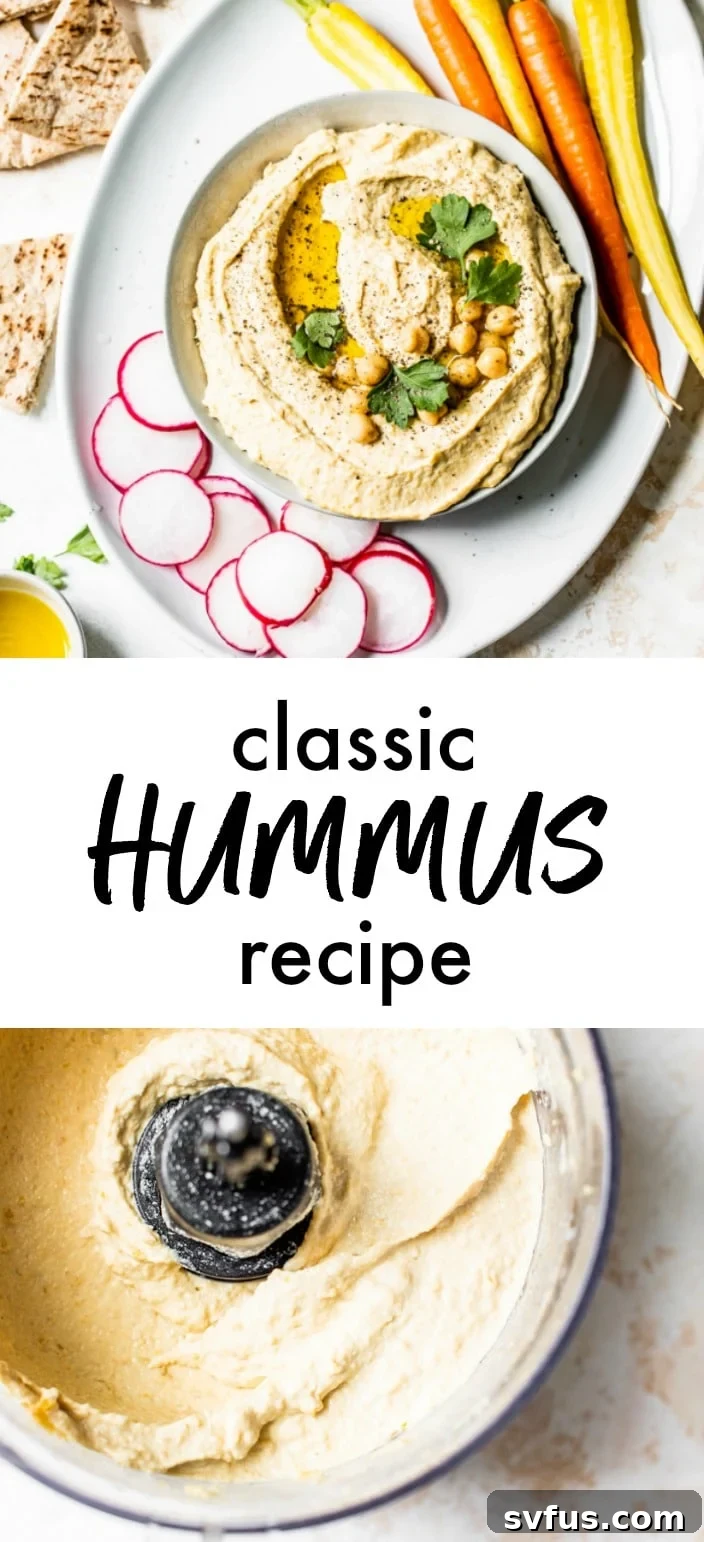
Welcome to the ultimate guide to crafting the most delightful, creamy, and undeniably fresh classic hummus right in your own kitchen! Forget the store-bought versions; once you experience the rich flavor and smooth texture of homemade hummus, there’s no turning back. This recipe isn’t just easy, it’s incredibly fast, taking mere minutes to transform simple, wholesome ingredients into a culinary masterpiece. Whether you’re a seasoned chef or a kitchen novice, prepare to be amazed at how effortlessly you can whip up this versatile dip that’s perfect for any occasion.
Hummus, a beloved staple of Middle Eastern cuisine, has captivated taste buds worldwide with its unique blend of savory goodness and healthful properties. Traditionally made from cooked, mashed chickpeas blended with tahini, lemon juice, and garlic, it’s more than just a dip; it’s a cultural icon. This article dives deep into perfecting that timeless recipe, ensuring your homemade hummus is not only quick to prepare but also achieves that dreamily smooth consistency and vibrant flavor profile you crave. So, grab your food processor and get ready to elevate your snacking experience!
Why Choose Homemade Hummus? The Unbeatable Advantages
In a world brimming with convenient food options, one might wonder why bother making hummus from scratch when a store shelf is just a reach away. The answer, my friend, lies in a multitude of compelling reasons that will convince you to ditch the pre-packaged tubs forever. Firstly, **unrivaled freshness and flavor** are at the top of the list. Homemade hummus bursts with brighter, more distinct flavors that simply cannot be replicated by mass-produced varieties, which often contain preservatives and artificial additives. You control every ingredient, ensuring only the freshest, highest-quality components make it into your bowl.
Secondly, **cost-effectiveness** is a significant factor. Canned chickpeas, a jar of tahini, fresh lemons, and garlic are all budget-friendly ingredients that yield a much larger quantity of hummus for a fraction of the price of store-bought equivalents. This makes it an economical choice for meal prepping and entertaining. Thirdly, **customization is king**. Do you prefer more lemon zest, a kick of spice, or an extra garlicky punch? When you make it yourself, you can fine-tune every element to suit your personal preferences, something impossible with off-the-shelf options. This empowers you to create your signature hummus.
Beyond taste and cost, **health benefits** are paramount. Homemade hummus is naturally vegan, often gluten-free (double-check your tahini!), and packed with plant-based protein, dietary fiber, and healthy fats. It’s a nutrient powerhouse that supports digestion, promotes satiety, and contributes to a balanced diet. By avoiding unnecessary sugars, unhealthy oils, and sodium often found in commercial brands, you’re making a healthier choice for yourself and your family. Finally, the sheer **simplicity and speed** of this classic recipe mean you can enjoy superior quality hummus in roughly five minutes, making it a perfect last-minute appetizer or snack. It truly is a game-changer!
The Essential Ingredients for Your Perfect Hummus
Creating a truly outstanding classic hummus begins with understanding and selecting the right ingredients. While the list is short and simple, the quality of each component plays a crucial role in the final flavor and texture of your dip. Here’s a closer look at the stars of our show:
- Garbanzo Beans (Chickpeas): The undisputed foundation of hummus. For speed and convenience, canned chickpeas are your best friend. Opt for a good quality brand, and always remember to drain and rinse them thoroughly under cold water. Rinsing helps to wash away excess sodium and the starchy liquid (aquafaba) they come in, which can sometimes impart an off-flavor if not desired. If you’re feeling ambitious and have extra time, cooking dried chickpeas from scratch can yield an even creamier result, but for a 5-minute recipe, canned is perfectly fine.
- Tahini: This rich paste made from ground sesame seeds is the heart and soul of authentic hummus. It provides that distinctive nutty flavor and contributes significantly to the creamy texture. The quality of your tahini makes a huge difference. Look for a light-colored, runny tahini without any bitter aftertaste. If your tahini is very thick or separated, give it a good stir before measuring. A high-quality tahini will effortlessly emulsify with the other ingredients, leading to a much smoother dip.
- Lemon Juice: Freshly squeezed lemon juice is non-negotiable for vibrant, zesty hummus. Bottled lemon juice often lacks the bright, nuanced flavor of fresh lemons and can sometimes taste artificial. The acidity of the lemon juice cuts through the richness of the tahini and chickpeas, balancing the flavors beautifully and adding a refreshing tang.
- Garlic: Fresh garlic cloves are essential for that pungent, aromatic kick. Depending on your preference, you can use one or two cloves. For a milder garlic flavor, you can roast the garlic beforehand, which mellows its intensity and adds a subtle sweetness. Always use fresh garlic over garlic powder for the best results; the depth of flavor is incomparable.
- Sea Salt: A fundamental seasoning that enhances all the other flavors. Start with the recommended amount and then adjust to taste. Fine sea salt dissolves easily and distributes evenly throughout the hummus.
- Cold Water (or Aquafaba): This is the secret ingredient for achieving that silky-smooth consistency. Adding cold water gradually while blending helps to emulsify the mixture, resulting in an incredibly airy and light texture. For an extra boost of creaminess and to reduce waste, some recipes suggest using the aquafaba (the liquid from canned chickpeas) instead of plain water.
- Extra Virgin Olive Oil (for garnishing): While not strictly an ingredient in the blending process, a generous drizzle of good quality extra virgin olive oil just before serving is crucial for both flavor and presentation. It adds a luxurious richness and a beautiful sheen.
These simple components, when combined correctly, create a symphony of flavors that define classic hummus. Don’t be afraid to experiment with the ratios slightly to discover your ideal balance!
How to Make Classic Hummus: A Step-by-Step Guide to Perfection
Making classic hummus is incredibly straightforward, transforming a few humble ingredients into a dip that rivals any restaurant-quality version. The secret truly lies in a good food processor and a little patience during the blending phase. Follow these steps for an effortlessly smooth and creamy result:
- Gather and Combine the Core Ingredients: Begin by adding your drained and rinsed chickpeas, tahini, freshly squeezed lemon juice, peeled garlic cloves, and sea salt to the bowl of your food processor. Ensure all these solid ingredients are in place before you start processing.
- The Initial Pulse for Integration: Secure the lid on your food processor and begin to pulse the mixture. This initial pulsing helps to break down the chickpeas and garlic, and to combine all the ingredients roughly. You’ll notice a thick, coarse paste starting to form.
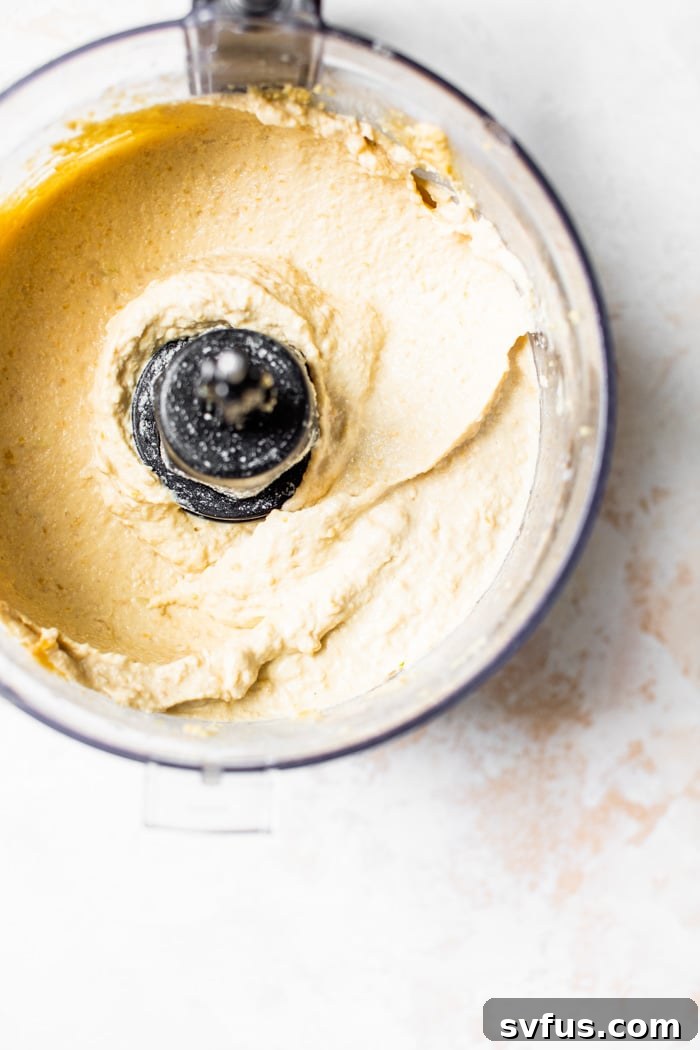
- The Creaminess Secret: Gradual Water Addition and Prolonged Blending: This is where the magic happens for achieving that signature smooth texture. With the food processor still running (or pulsing intermittently if your machine struggles with continuous running), slowly pour the cold water in through the feed tube, one tablespoon at a time. As you add the water, you’ll observe the mixture transforming, becoming lighter in color and significantly smoother. Crucially, once all the water is added, continue to process the hummus for at least 3 to 5 full minutes. Yes, really! This extended blending time is vital. It warms the tahini slightly, helping it to emulsify completely with the chickpeas and water, breaking down any remaining small chickpea pieces and incorporating air for a wonderfully airy and fluffy texture. Just like making homemade nut butter, the longer you blend, the smoother and creamier your hummus will be. Scrape down the sides of the bowl occasionally to ensure everything is thoroughly incorporated.
- Taste and Adjust: Once your hummus reaches your desired consistency, stop the food processor. Now is the time to taste and adjust the seasonings. You might want to add more salt for flavor, an extra squeeze of lemon juice for brightness, or even a dash more water if you prefer a thinner consistency. Remember, personal preference is key here!
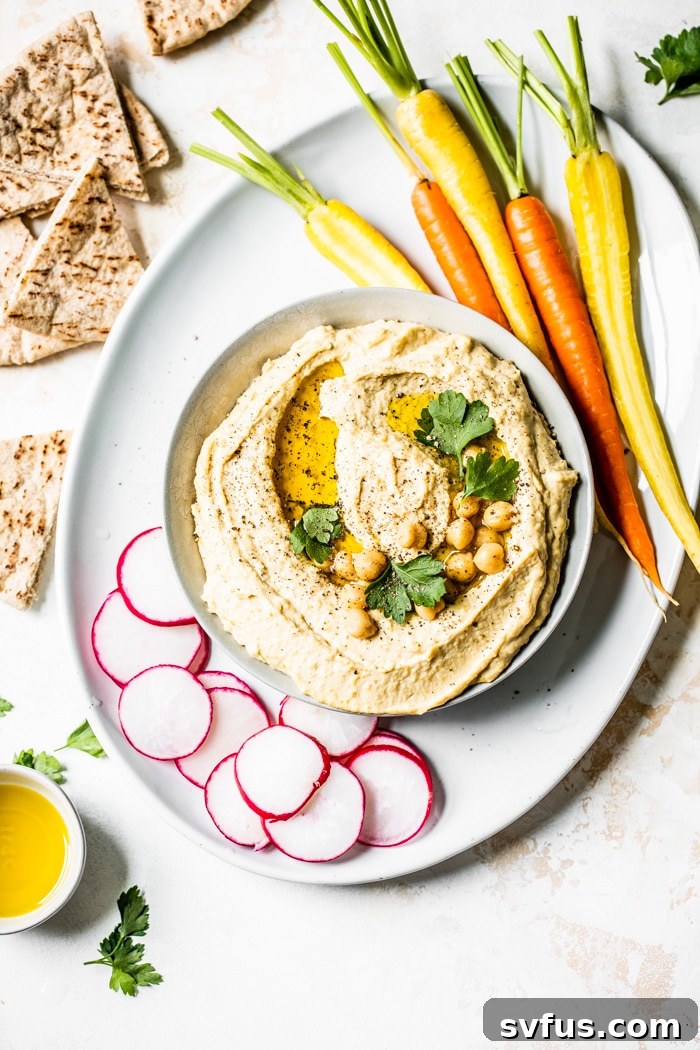
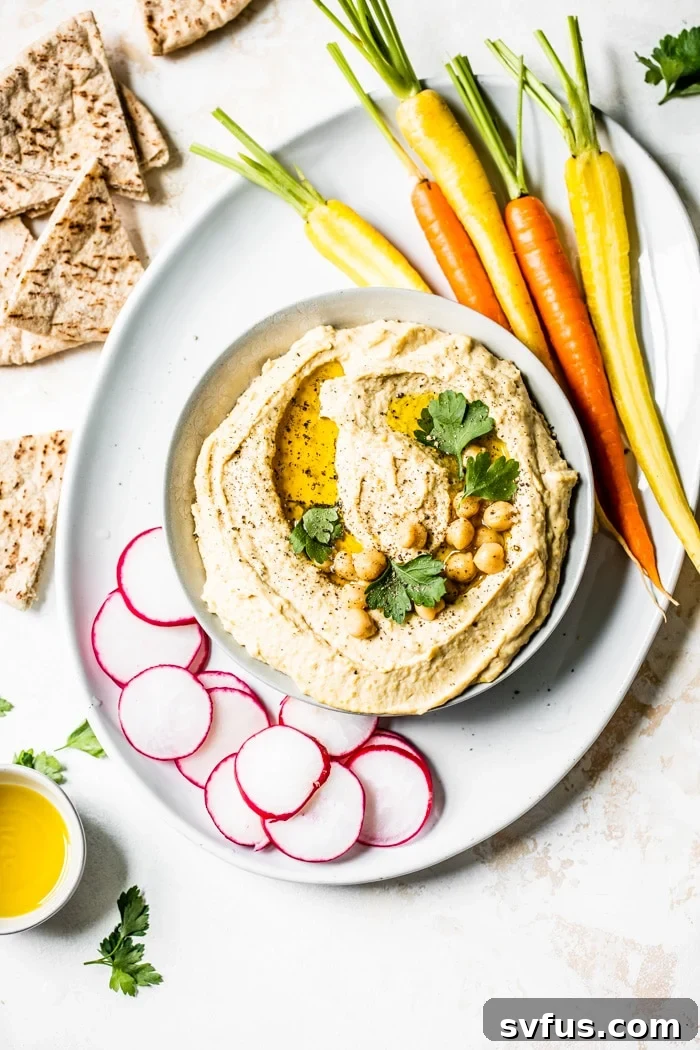
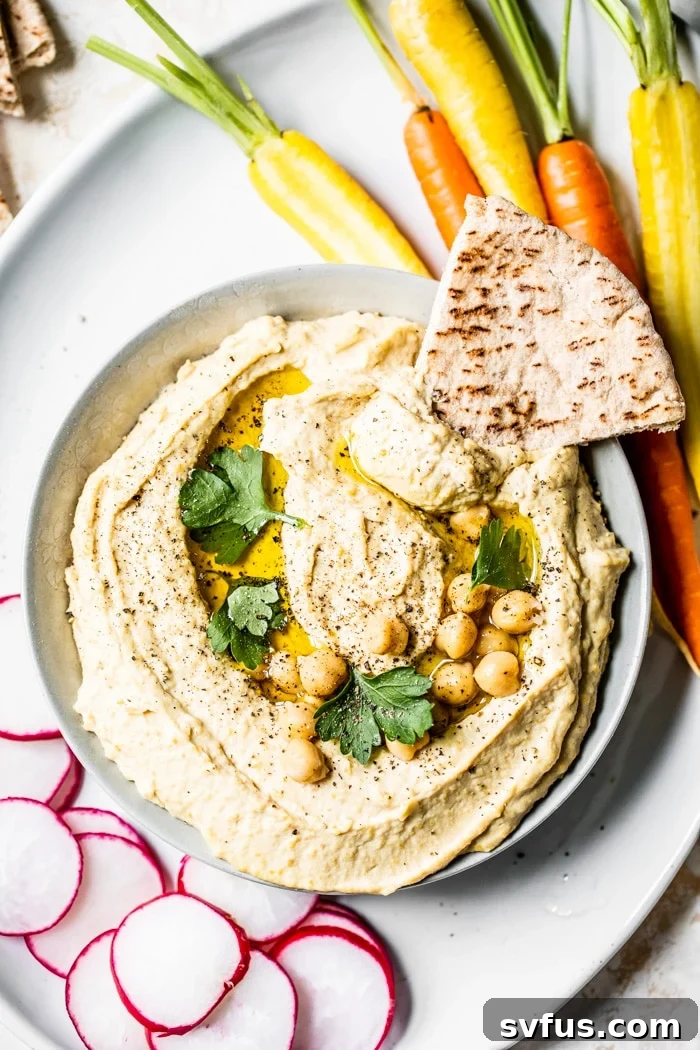
- Serve and Garnish with Flair: Transfer your freshly made hummus to a serving bowl. Create a small well in the center using the back of a spoon. Drizzle generously with a high-quality extra virgin olive oil. For an extra touch of flavor and visual appeal, sprinkle with your favorite spices. Popular choices include a dusting of paprika (smoked paprika adds a lovely depth), a pinch of cumin, or finely chopped fresh herbs like parsley or cilantro.
Your homemade classic hummus is now ready to be enjoyed! It’s an incredibly satisfying reward for such minimal effort.
Serving Suggestions & Creative Variations
The beauty of classic hummus lies not only in its simplicity but also in its incredible versatility. While it shines brightly on its own, pairing it with other foods or transforming it with creative twists can elevate your culinary experience.
Classic Pairings:
- Pita Bread: Warm pita bread, cut into wedges, is the quintessential companion for hummus. Its soft texture is perfect for scooping.
- Fresh Vegetables: A colorful assortment of crunchy vegetables like carrot sticks, cucumber slices, bell pepper strips, celery stalks, cherry tomatoes, and radishes provides a refreshing contrast in texture and flavor.
- Crackers & Chips: For a quick snack, serve hummus with your favorite crackers, pita chips, or even tortilla chips.
- Falafel: A match made in heaven! Serve hummus alongside crispy falafel for an authentic Middle Eastern meal.
Beyond the Dip:
Don’t limit hummus to just dipping! It makes an excellent addition to many meals:
- Sandwiches & Wraps: Spread a generous layer of hummus on your sandwiches or wraps instead of mayonnaise or other condiments. It adds moisture, flavor, and a healthy boost.
- Salad Dressing Base: Thin out hummus with a little extra lemon juice and water to create a creamy, flavorful salad dressing.
- Grain Bowls: Add a dollop of hummus to your Buddha bowls or grain bowls for added protein and creaminess.
- Breakfast Toast: Spread hummus on toast and top with avocado, a fried egg, or everything bagel seasoning for a savory breakfast.
Flavor Variations to Inspire You:
Once you’ve mastered the classic recipe, feel free to get creative with additions:
- Roasted Red Pepper Hummus: Blend in one or two roasted red peppers (jarred or homemade) for a sweet and smoky flavor.
- Spicy Hummus: Add a pinch of cayenne pepper, a dash of hot sauce, or a spoonful of harissa paste for a fiery kick.
- Avocado Hummus: Incorporate half an avocado for an extra creamy, vibrant green dip with healthy fats.
- Sun-Dried Tomato Hummus: Blend in a few oil-packed sun-dried tomatoes for an intense, savory flavor.
- Beet Hummus: Add a roasted beet for a stunning pink hue and an earthy sweetness.
- Herb Hummus: Blend in fresh basil, cilantro, or a mix of your favorite herbs for a fresh, aromatic twist.
These variations not only add exciting new flavors but also introduce different colors, making your hummus platter even more appealing. The possibilities are truly endless, allowing you to continually enjoy hummus in new and exciting ways.
Storage Tips for Your Homemade Hummus
Proper storage ensures your delicious homemade hummus stays fresh and flavorful for as long as possible. Once prepared, transfer your hummus to an airtight container. Before sealing, smooth out the top surface of the hummus and drizzle a thin layer of extra virgin olive oil over it. This creates a protective barrier that helps prevent the hummus from drying out and oxidizing, which can cause discoloration. Store the container in the refrigerator for up to 5-7 days.
If you’ve made a large batch or want to prepare it far in advance, hummus can also be frozen! To freeze, place the hummus in an airtight freezer-safe container, again topping it with a thin layer of olive oil. Freeze for up to 3 months. When you’re ready to enjoy it, simply transfer the container to the refrigerator and allow it to thaw overnight. Stir well before serving, and if the consistency is a bit thick, you can whisk in a tablespoon or two of cold water or lemon juice to restore its creaminess.
Health Benefits of Hummus: A Nutritional Powerhouse
Beyond its delicious taste and versatility, hummus is celebrated for its impressive nutritional profile. It’s a genuinely healthy addition to almost any diet, offering a wealth of benefits that contribute to overall well-being.
- Rich in Plant-Based Protein: Chickpeas are an excellent source of protein, making hummus a fantastic option for vegetarians, vegans, and anyone looking to increase their plant protein intake. Protein is crucial for muscle repair, growth, and satiety.
- High in Dietary Fiber: Both chickpeas and tahini are rich in dietary fiber. Fiber is vital for digestive health, helping to regulate bowel movements and prevent constipation. It also contributes to a feeling of fullness, which can aid in weight management by reducing overall calorie intake.
- Healthy Fats: Tahini (sesame paste) and the optional drizzle of extra virgin olive oil provide healthy monounsaturated and polyunsaturated fats. These fats are beneficial for heart health, helping to lower bad cholesterol levels and reduce the risk of cardiovascular disease.
- Vitamins and Minerals: Hummus is packed with essential micronutrients, including folate, iron, phosphorus, B vitamins, and manganese from chickpeas, and calcium, magnesium, and zinc from tahini. These nutrients play crucial roles in energy production, bone health, blood formation, and immune function.
- Blood Sugar Regulation: The combination of protein and fiber in hummus helps to slow down the absorption of carbohydrates, leading to a more stable blood sugar response. This makes it an excellent snack for individuals managing blood sugar levels or those looking to avoid energy crashes.
- Anti-Inflammatory Properties: The ingredients in hummus, particularly olive oil and sesame seeds, contain compounds with anti-inflammatory properties, contributing to overall health and reducing the risk of chronic diseases.
Incorporating homemade hummus into your diet is an easy and delicious way to boost your nutrient intake and enjoy a wholesome, satisfying food.
More Delicious Dips to Try
- Carrot Top Pesto Hummus
- Black Pepper Whipped Feta
Classic Hummus Recipe
Erin Alvarez
6
5 mins
5 mins
Ingredients
- 14 oz. chickpeas, drained and rinsed
- 1/3 cup tahini
- 1/3 cup lemon juice
- 2 garlic cloves
- 1/2 tsp salt
- 3 tbsp water, or more, as needed
Instructions
-
Place chickpeas, tahini, lemon juice, garlic, and salt in your food processor and pulse until roughly combined.
-
While still pulsing, or with the food processor running, pour water in through the top one tablespoon at a time. Continue processing for 3 full minutes, which will result in a creamier, lighter texture. Scrape down the sides of the bowl as needed.
-
Taste and adjust seasoning if necessary. Top hummus with a drizzle of olive oil and spices of choice (e.g., cumin, smoked paprika, fresh herbs, etc.).
-
Enjoy immediately with pita, fresh vegetables, or as a spread!
Notes
If you desire an ultra-creamy, restaurant-quality consistency, consider peeling the skins off the chickpeas before adding them to your food processor. This process can take about 15 minutes, but many find it makes a noticeable difference in texture, especially when serving to guests. For a quick, everyday batch for yourself or your immediate family, skipping this step is perfectly acceptable and still yields delicious results.
Nutrition
| Carbohydrates: 22g
| Protein: 8g
| Fat: 9g
| Saturated Fat: 1g
| Sodium: 204mg
| Potassium: 268mg
| Fiber: 6g
| Sugar: 4g
| Vitamin A: 27IU
| Vitamin C: 7mg
| Calcium: 53mg
| Iron: 3mg
Nutrition information is automatically calculated and should be used as an approximation.
Did you make this?
Leave a comment and star rating below!
In conclusion, making classic homemade hummus is a rewarding endeavor that offers unparalleled freshness, flavor, and health benefits compared to store-bought alternatives. With just a handful of simple ingredients and a few minutes in a food processor, you can create a creamy, delicious dip that will impress family and friends alike. From its rich history in Middle Eastern cuisine to its incredible versatility as a snack, spread, or meal component, hummus truly is a culinary gem. Don’t hesitate to experiment with different seasonings or serving ideas to make this classic recipe your own.
So, what are you waiting for? Dive into the delightful world of homemade hummus and discover how easy it is to enjoy this nutritious and satisfying dip whenever the craving strikes. Happy blending!