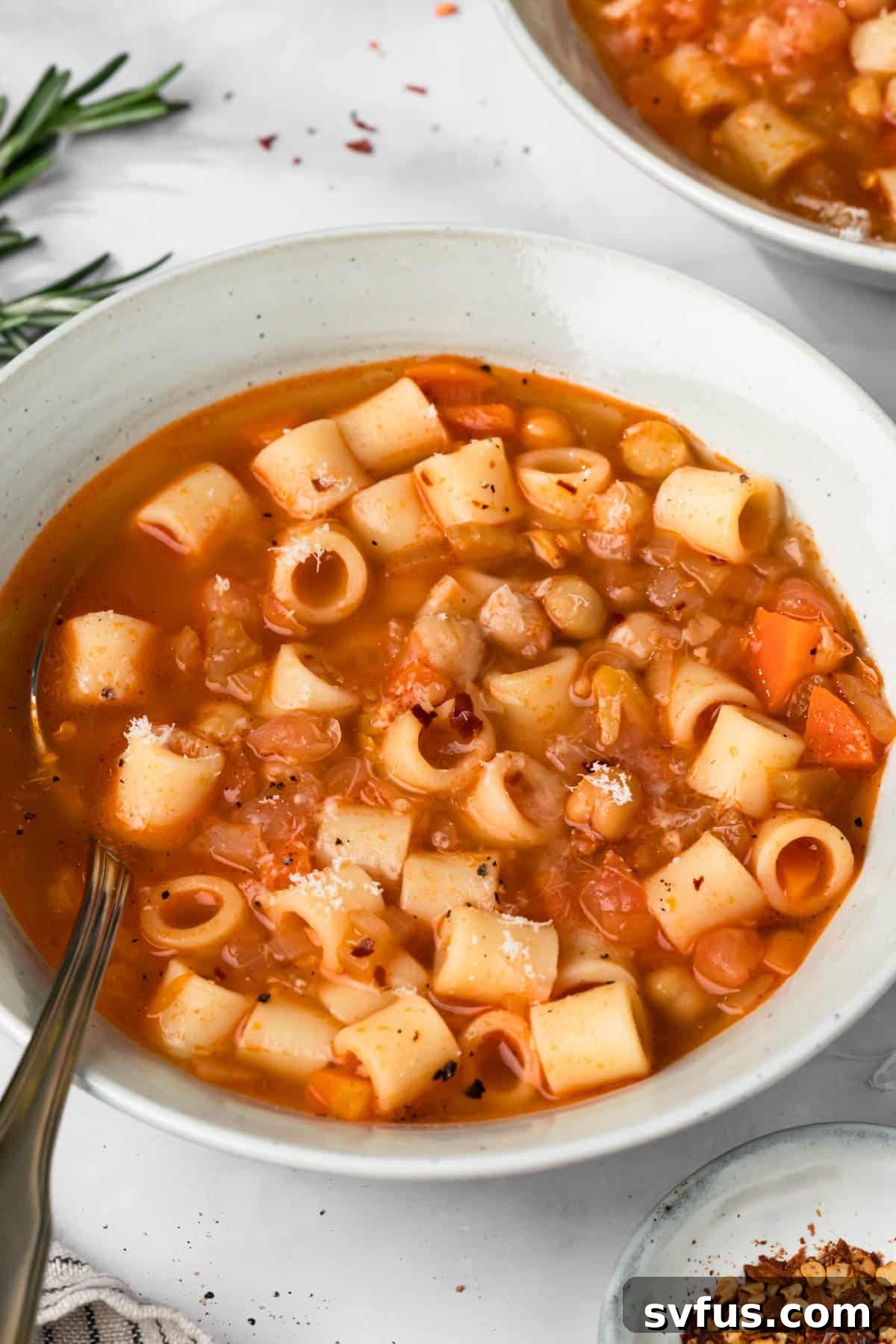
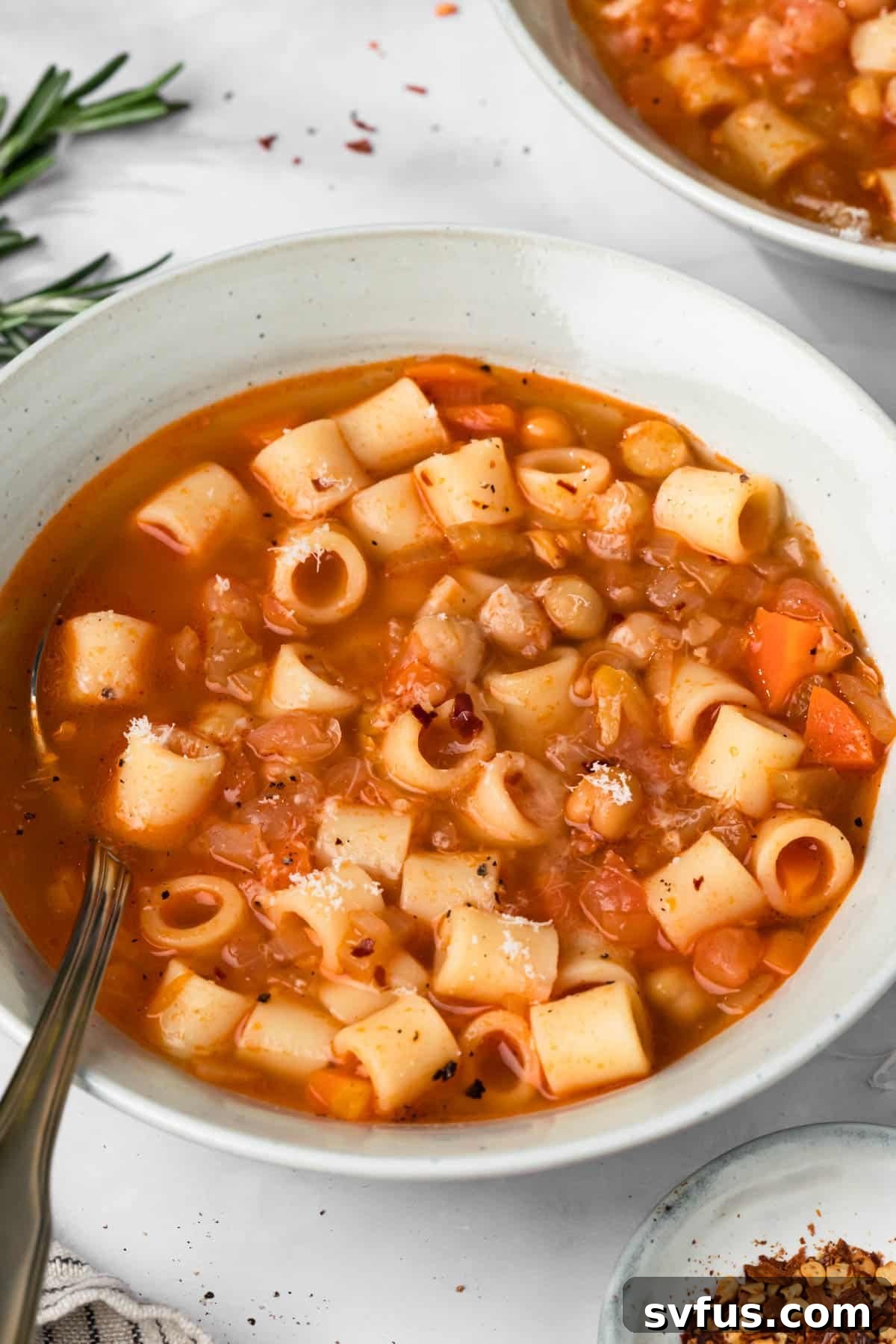
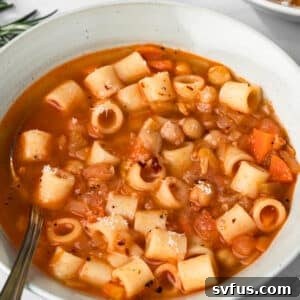
Pasta e Ceci is the quintessential Italian comfort food, a rustic and deeply satisfying chickpea and pasta soup that transports you straight to a cozy Roman kitchen. In just 30 minutes, humble pantry staples like chickpeas, pasta, fresh vegetables, and savory Parmesan cheese miraculously transform into a thick, velvety, and soul-warming stew. This classic dish is not only naturally vegetarian but also incredibly versatile, making it easy to customize for any dietary preference or ingredient availability. It’s pure magic in a bowl, perfect for a quick weeknight dinner or a leisurely weekend meal.
Why You’ll Fall in Love with This Pasta e Ceci Recipe

There are countless reasons to adore this Roman-style chickpea pasta, making it a staple in your culinary repertoire. It’s more than just a meal; it’s an experience of warmth, simplicity, and exquisite flavor.
- A True One-Pot Wonder: Forget the pile of dishes! This recipe streamlines the cooking process by preparing all ingredients—from the aromatic vegetables to the tender pasta and hearty chickpeas—directly in a single pot of rich broth. This not only minimizes cleanup but also allows all the incredible flavors to meld together beautifully, creating a more cohesive and deeply flavored soup.
- Pantry Powerhouse: Crafted from affordable and readily available pantry staples, Pasta e Ceci proves that gourmet-quality meals don’t require expensive or exotic ingredients. Canned chickpeas, short pasta, and a few common vegetables are all you need to create a truly spectacular dinner that’s kind to your wallet.
- Incredibly Adaptable: This chickpea pasta soup is wonderfully flexible, making it suitable for a variety of preferences. While naturally vegetarian, it’s remarkably easy to transform into a gluten-free or vegan dish with simple substitutions. Feel free to enhance it further by adding extra vegetables for more nutrients or incorporating meat like crumbled Italian sausage for a heartier version.
- Nutritious and Wholesome: Packed with plant-based protein and fiber from the chickpeas, and essential vitamins from the vegetables, Pasta e Ceci is a hearty and healthy meal. It’s a satisfying option that nourishes your body and soul without feeling heavy.
- Authentic Italian Flavor: This recipe captures the rustic essence of traditional Italian cooking. The careful layering of flavors, from the initial soffritto to the final touch of Parmesan, creates an authentic taste that will transport your senses straight to the heart of Italy.
Table of Contents
- Why You’ll Fall in Love with This Pasta e Ceci Recipe
- The Heartwarming History of Pasta e Ceci
- Essential Ingredients for Your Perfect Pasta e Ceci
- Creative Variations to Personalize Your Chickpea Pasta Soup
- Step-by-Step Guide: Crafting Your One-Pot Pasta e Ceci
- Expert Tips for the Best Pasta e Ceci Every Time
- Frequently Asked Questions About Italian Chickpea Soup
- Storage and Meal Prep Tips
- Serving Suggestions for Pasta e Ceci
- Explore More Italian Soup Recipes
- Pasta e Ceci Recipe Card
My admiration for chickpeas runs deep; I’ve experimented with them in myriad ways, from baking them into rich fudgy chocolate brownies to transforming them into a delightful creamy plant-based “chicken” salad. However, when it comes to true, soul-satisfying comfort food, there’s no better home for these versatile legumes than a bubbling pot of Pasta e Ceci, commonly known as pasta with chickpeas.
More than just a simple chickpea and pasta soup, Pasta e Ceci is a luxurious, thick, and stew-like embrace in a bowl. Each spoonful evokes the warm, inviting aromas of a traditional Roman trattoria. The secret to its incredible texture and depth lies in the preparation: canned chickpeas are thoughtfully combined with a carefully selected handful of humble yet intensely flavorful Italian ingredients. A crucial step involves mashing a portion of the chickpeas directly in the pot, which releases their natural starches, creating an irresistibly thick and creamy consistency that truly distinguishes this dish.
This venerable Italian soup boasts a history stretching back generations, yet its enduring magic resides in its elegant simplicity. It stands as a testament to the belief that culinary masterpieces don’t require an extensive grocery list or complicated techniques. With just a few basic components, you can conjure a velvety, astonishingly rich, and profoundly satisfying meal that speaks volumes of tradition and taste. It’s an accessible gourmet experience that proves less truly can be more.
The Heartwarming History of Pasta e Ceci
Pasta e Ceci holds a cherished place in the heart of Italian culinary tradition, particularly within Roman cucina povera, or “poor kitchen” cuisine. This dish embodies the ingenious resourcefulness of generations past, who masterfully transformed simple, readily available ingredients into deeply flavorful and nourishing meals. Originating as a staple for farmers and laborers, Pasta e Ceci provided sustaining energy and warmth, especially during cooler months.
The beauty of this soup lies in its straightforwardness: combining pasta and chickpeas, two fundamental components of the Mediterranean diet, with aromatic vegetables. While its core remains consistent, regional variations exist across Italy, each adding its unique touch—some may include a touch of pancetta, others a different blend of herbs. Regardless of the slight differences, the spirit of Pasta e Ceci endures as a testament to rustic charm, comfort, and the ability of basic ingredients to create extraordinary taste.
Essential Ingredients for Your Perfect Pasta e Ceci
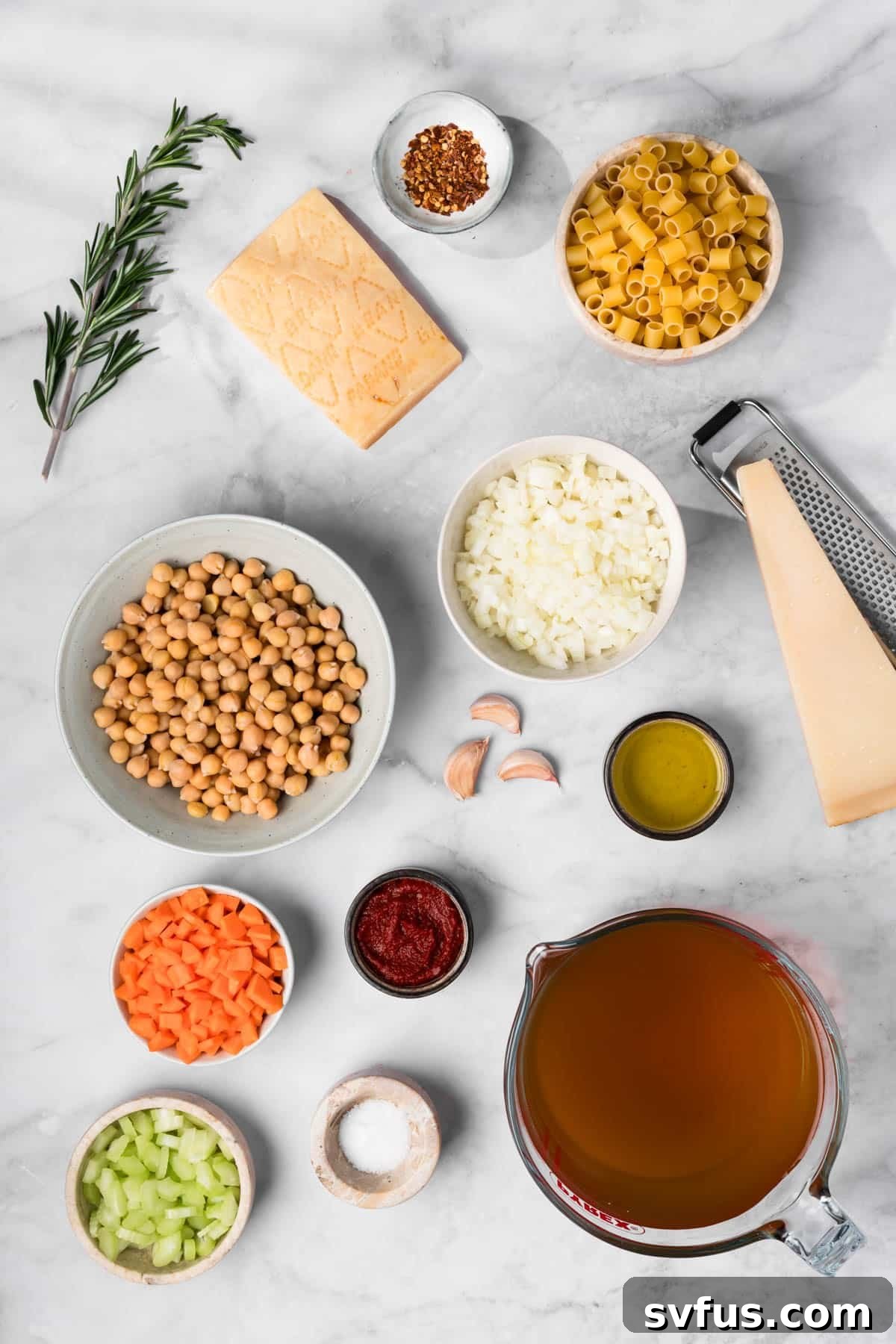
Every ingredient in Pasta e Ceci plays a vital role in building its complex and comforting flavor profile. Here’s a closer look at what you’ll need and why each component is essential:
- Olive Oil: A high-quality extra virgin olive oil is the foundation of this soup. It’s used to sauté the vegetables, helping to release their natural sweetness and creating a rich, aromatic base for the entire dish. Its fruity notes also contribute to the overall Italian essence.
- Soffritto (Diced Onion, Carrots, and Celery): This classic Italian aromatic base is non-negotiable for a truly flavorful soup. Sautéing these diced vegetables slowly until softened and slightly caramelized builds a deep, savory foundation that permeates every bite of the Pasta e Ceci. Don’t rush this step—it’s where the magic begins.
- Herbs and Seasonings (Salt, Red Pepper Flakes, Rosemary): These elements are key to capturing that cozy, authentic Italian vibe. Salt balances and enhances all the flavors, while red pepper flakes add a subtle warmth and a touch of Roman zest. A sprig of fresh rosemary infuses the soup with an earthy, piney aroma. If fresh isn’t available, half a teaspoon of dried rosemary will work, though fresh is preferred for its vibrant essence.
- Chickpeas (Ceci): Canned chickpeas are the ultimate convenience for this recipe, allowing for quick preparation without compromising on taste or texture. Ensure they are drained and rinsed thoroughly before adding them to the pot. Their creamy texture and nutty flavor are central to the dish, and mashing some of them is crucial for thickening the soup.
- Broth (Vegetable or Chicken): The choice of broth significantly influences the soup’s character. Vegetable broth keeps it purely vegetarian, offering a light yet savory base. Chicken broth adds a richer, more robust flavor. For an extra boost of protein and collagen, especially when I’m looking for a more nourishing meal, I often opt for homemade bone broth.
- Parmesan Cheese (and Rind): This ingredient is a game-changer! Both shredded Parmesan cheese and the leftover rind contribute immense umami and a salty, nutty depth to the soup. The rind, simmered in the broth, slowly releases its incredible flavor, transforming the soup into something truly extraordinary. Remember to remove the rind before serving!
- Pasta: The ideal pasta for Pasta e Ceci consists of short, tubular noodles that can easily integrate into the thick, stew-like consistency. Ditalini pasta is a classic choice, but tubetti, orecchiette, conchigliette, or small elbow macaroni are also excellent alternatives that perfectly cradle the chickpeas and broth.
This list provides further clarification on a few ingredients. For the complete, detailed ingredient list with precise measurements, please refer to the recipe card below.
Creative Variations to Personalize Your Chickpea Pasta Soup
One of the joys of Pasta e Ceci is its incredible versatility. Don’t hesitate to experiment and make it your own with these delicious variations:
- Gluten-Free Option: Simply swap out traditional pasta for your favorite gluten-free short-cut pasta. To ensure the best texture and prevent mushiness, I recommend boiling gluten-free pasta separately according to package directions. Then, add it directly to individual serving bowls before ladling the hot soup over top. This method keeps the pasta firm and prevents it from breaking down in the broth.
- Vegan Version: Easily adapt this recipe for a vegan diet. Use vegetable broth instead of chicken broth, and replace the Parmesan cheese with a generous sprinkle of nutritional yeast for a cheesy, umami flavor. Alternatively, a tablespoon of white miso paste stirred in at the end can provide a similar savory depth. Finish your bowl with a drizzle of high-quality extra virgin olive oil or a sprinkle of your favorite store-bought vegan Parmesan.
- Add More Veggies: Boost the nutritional content and flavor by incorporating additional vegetables. Feel free to sauté a diced zucchini, chopped green beans, or sliced mushrooms along with the soffritto at the beginning of the cooking process. Spinach or kale can also be stirred in during the last few minutes until wilted.
- Add Hearty Protein: For a more substantial meal, consider adding meat. Brown crumbled Italian sausage (mild or spicy) or finely diced pancetta in the pot before adding your vegetables. The rendered fat will add incredible flavor to the soffritto. Alternatively, stir in some cooked shredded chicken or turkey breast at the very end of the cooking process.
- Flavor Boosters: Elevate the taste profile with these simple additions. For a delightful kick, stir in a little Calabrian chili paste or a pinch of crushed red pepper flakes (if you like extra heat). To add a bright, fresh finish that cuts through the richness, squeeze in a tablespoon of fresh lemon juice just before serving. A handful of chopped fresh parsley or basil at the end also works wonders.
Step-by-Step Guide: Crafting Your One-Pot Pasta e Ceci
Creating this rich and creamy Pasta e Ceci is a straightforward process, designed to deliver maximum flavor with minimal fuss. Follow these detailed steps to achieve the perfect Italian chickpea soup:
Step 1: Build the Soffritto Base. Begin by heating two tablespoons of olive oil in a large, heavy-bottomed pot or Dutch oven over medium heat. Once shimmering, add the finely diced onion, carrots, and celery. Sauté these vegetables gently for 5 to 7 minutes, stirring occasionally, until they have softened and the onions become translucent. This slow sautéing is crucial for developing the foundational sweet and savory flavors of your soup.
Step 2: Bloom the Aromatics. Next, stir in the minced garlic, tomato paste, salt, and red pepper flakes. Continue to cook for another minute, stirring constantly. You’ll notice the tomato paste deepening in color, turning a rusty brown shade, and becoming more fragrant. This “blooming” step intensifies its flavor and removes any raw tomato taste.
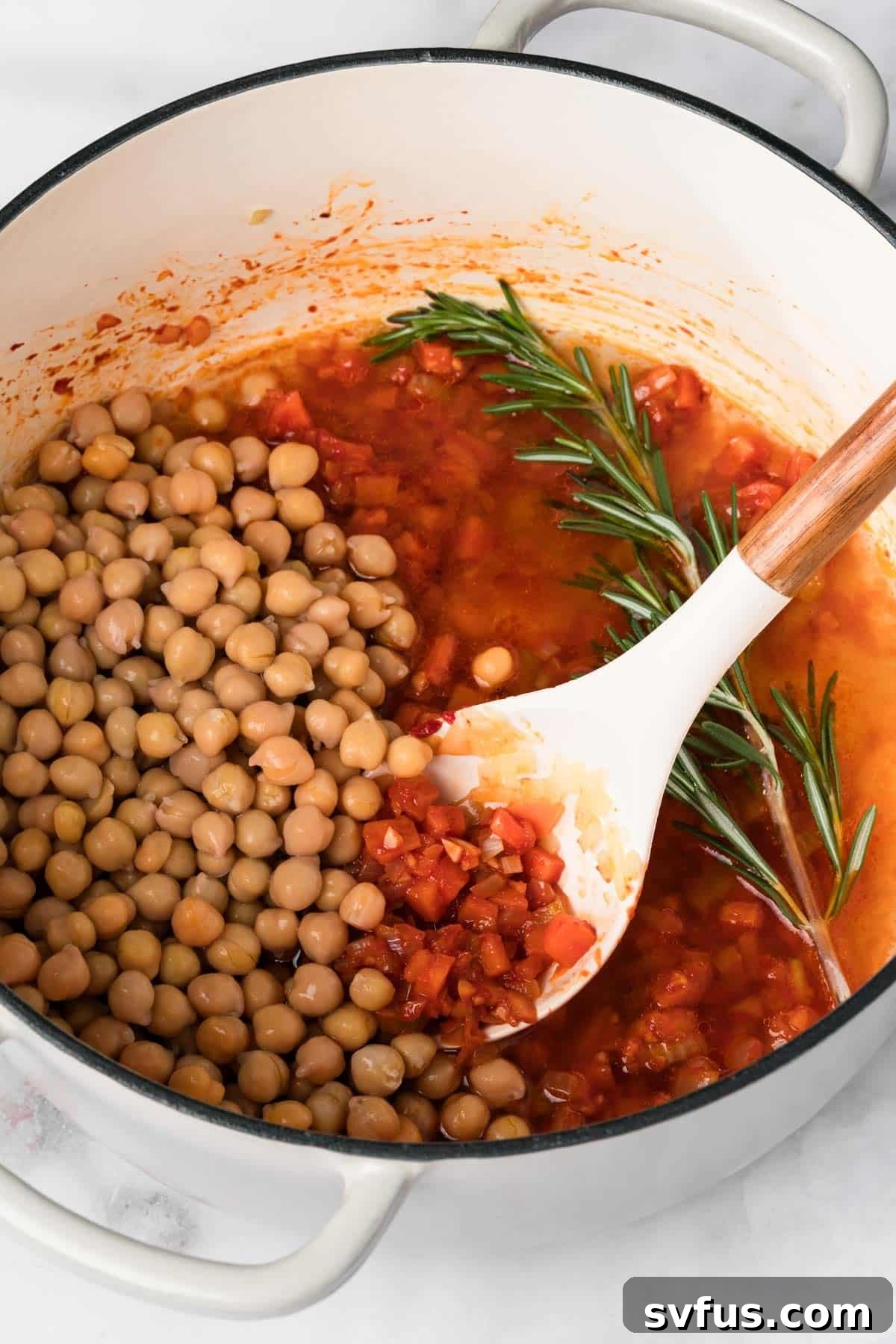
Step 3: Deglaze for Depth. Add the sprig of fresh rosemary, the drained and rinsed chickpeas, and one cup of the broth to the pot. Using a wooden spoon, vigorously scrape up any browned bits (known as “fond”) that may have stuck to the bottom of the pot. These flavorful bits contribute immense depth and complexity to your soup, so ensure they are fully incorporated.
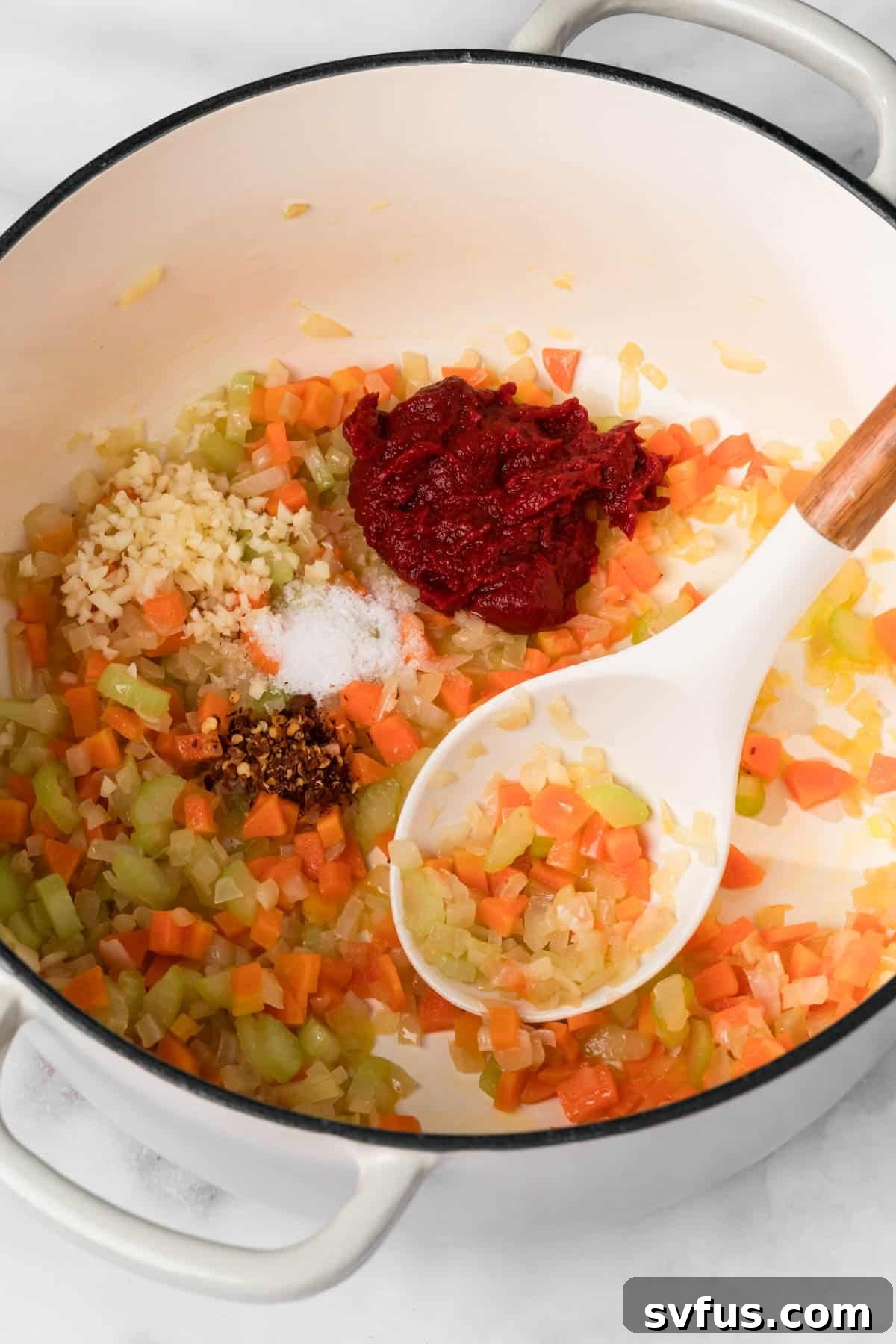
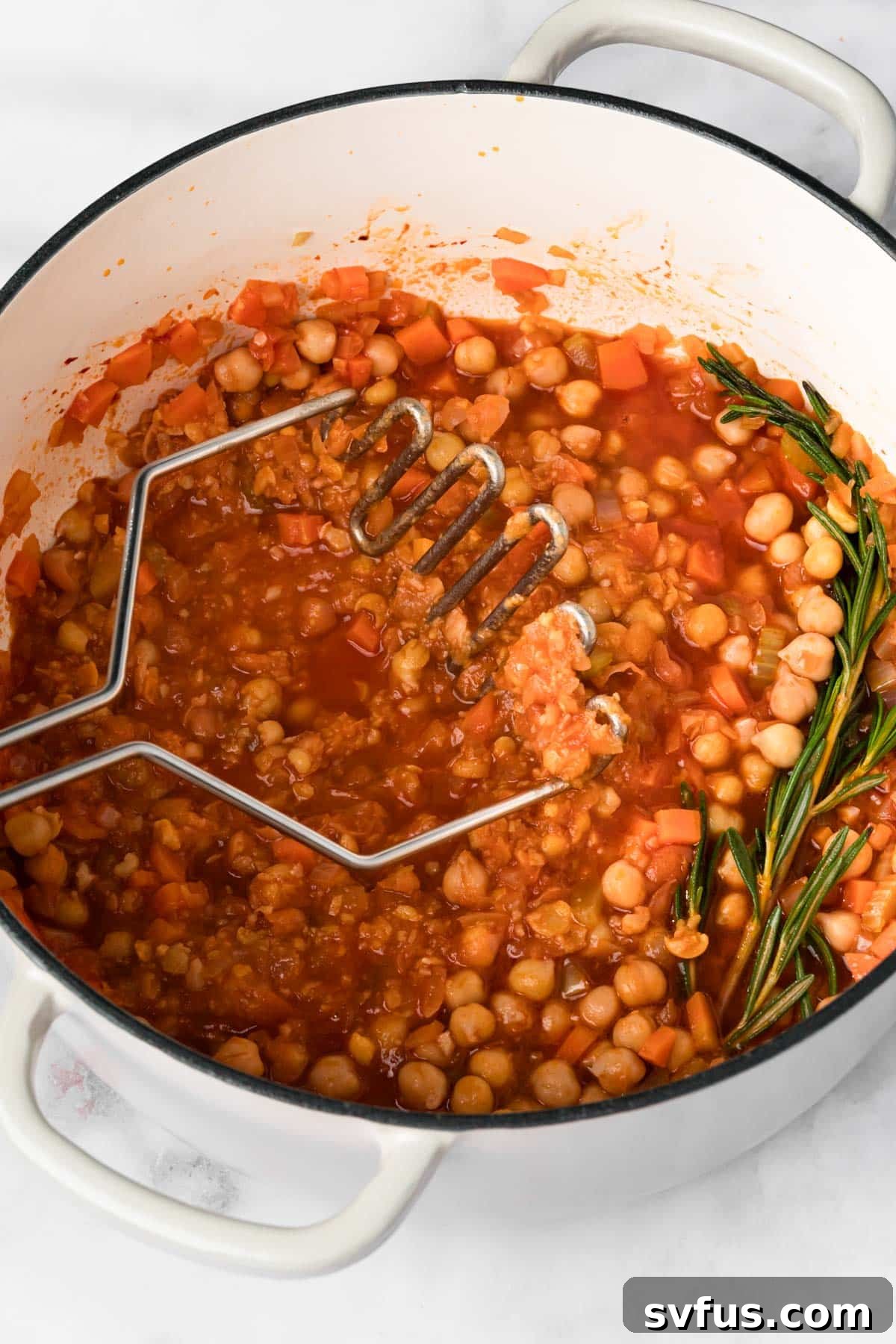
Step 4: The Chickpea Magic (Mashing). Using a potato masher or a sturdy fork, gently mash some of the chickpeas directly in the pot. This crucial step releases their starches, which is what gives Pasta e Ceci its signature thick, creamy, and stew-like consistency. You can mash as much or as little as you like, depending on your preferred level of creaminess; I like to leave about half of the chickpeas whole for varied texture.
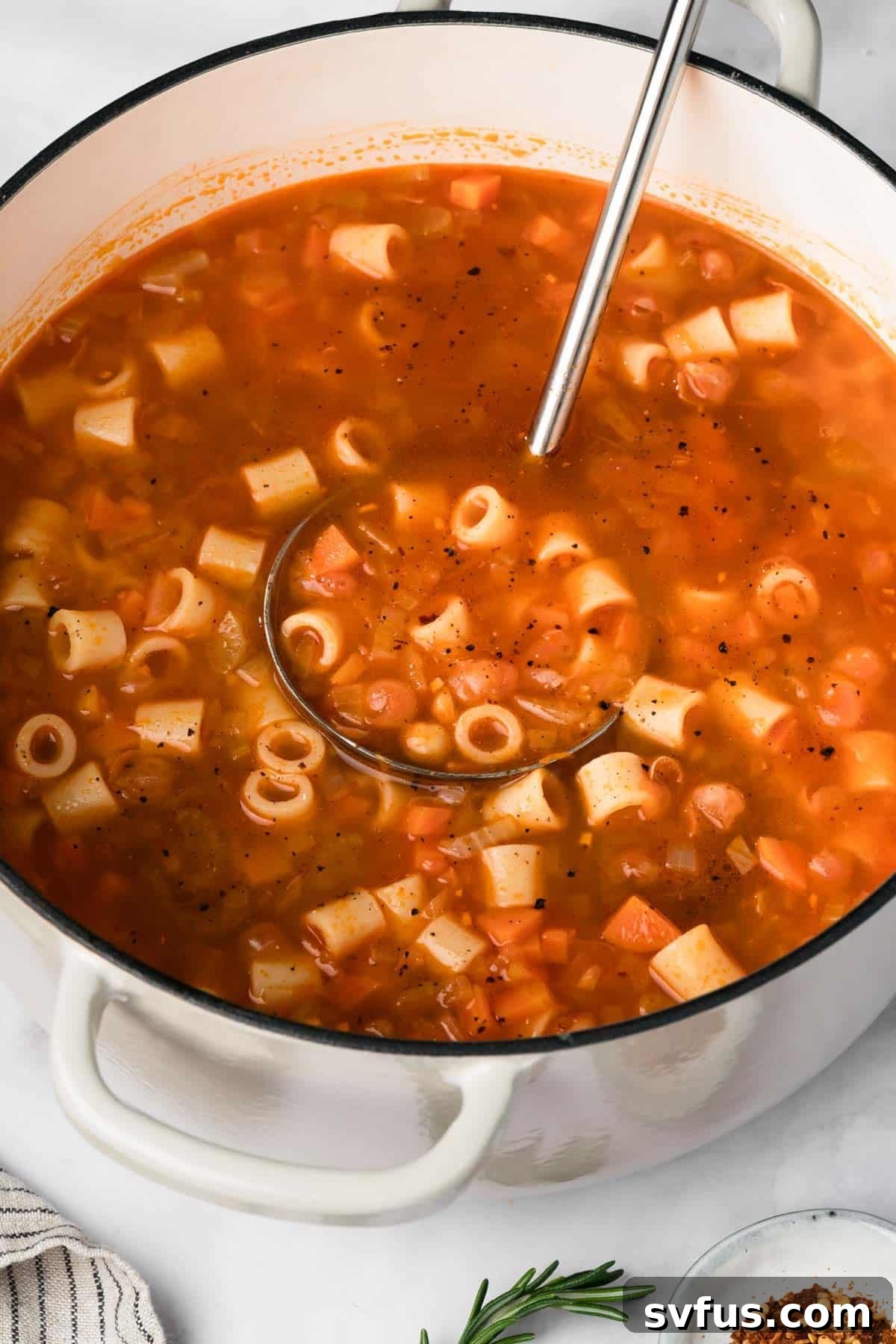
Step 5: Cook the Pasta to Perfection. Pour in the remaining broth and add the Parmesan rind (if using) to the pot. Bring the soup to a rolling boil over medium-high heat. Once boiling, stir in the pasta and cook according to package directions, typically for about 8-10 minutes, or until the pasta is perfectly al dente—tender with a slight bite. Stir occasionally to prevent the pasta from sticking.
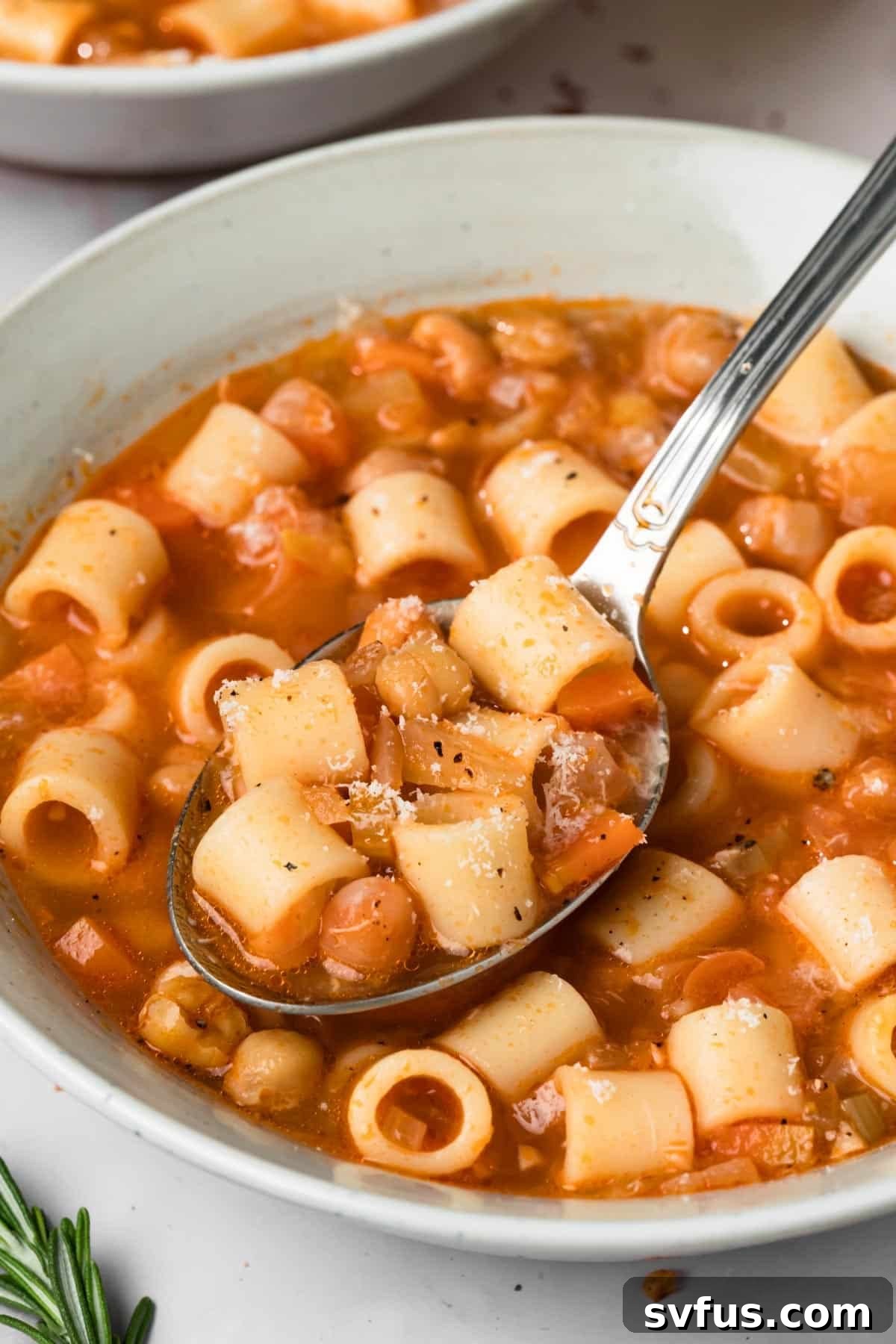
Step 6: Finish and Serve. Remove the pot from the heat. Carefully discard the rosemary sprig and the Parmesan rind. Stir in the freshly shredded Parmesan cheese until it melts and integrates into the soup, adding a final layer of richness. Taste and adjust the seasonings as needed, adding more salt, pepper, or red pepper flakes to your preference. Ladle the hot, comforting soup into bowls, perhaps with an extra sprinkle of Parmesan or a fresh herb garnish. Serve immediately and savor every spoonful!
Expert Tips for the Best Pasta e Ceci Every Time
Achieving the perfect Pasta e Ceci is all about attention to a few key details. These tips will help you elevate your soup from good to absolutely unforgettable:
- Mastering the Soffritto: Do not rush the process of cooking the soffritto (onion, carrots, and celery). This foundational step is crucial for developing the soup’s savory depth. By allowing the vegetables to sauté slowly over medium heat until they are deeply softened and translucent, you coax out their natural sugars and create a rich flavor base that will infuse the entire dish. Patience here pays off immensely.
- The Art of Deglazing: When you add the initial cup of broth, make sure to use a wooden spoon to thoroughly scrape up any browned bits that have formed on the bottom of the pot. These bits, known as “fond,” are caramelized vegetable and aromatic residues that are packed with incredible flavor. Deglazing the pot ensures that none of that deliciousness goes to waste and gets fully incorporated into your soup.
- Preventing Mushy Pasta: The key to perfectly cooked pasta in soup is to simmer the noodles just until they reach an al dente texture—meaning they are tender but still have a slight bite to them. Pasta continues to absorb liquid and soften even after it’s removed from the heat. If you plan to save leftover soup, consider undercooking the pasta by about 2 minutes. This trick prevents it from becoming overly soft or mushy when you reheat it later, ensuring a pleasant texture in every subsequent serving.
My Pro Tip
The Chickpea Mash Secret
It wouldn’t truly be authentic Pasta e Ceci if you didn’t mash some of the chickpeas directly in the pot! This is the secret to achieving that signature thick, creamy, and wonderfully stew-like consistency that sets this dish apart. As you mash them, the chickpeas release their natural starches, which naturally thicken the broth without the need for additional flour or cream. I personally like to totally smush about half to two-thirds of the chickpeas, leaving the remaining ones whole for a delightful textural contrast. However, you can adjust the amount of mashing to your personal preference, depending on how creamy and thick you desire your soup to be.
Frequently Asked Questions About Italian Chickpea Soup
Absolutely, using dried chickpeas is an excellent option if you have the time for a deeper, nuttier flavor. For this recipe, you would typically soak about 1/2 cup of dried chickpeas in water overnight. The next day, drain them, add them to a pot with fresh water, and simmer until they are tender, which can take anywhere from 1 to 2 hours depending on their age. Once cooked, proceed with the recipe as directed for canned chickpeas.
While you can freeze parts of this soup, I generally don’t recommend freezing the entire Pasta e Ceci with the pasta included. The pasta tends to absorb too much liquid and can become mushy and lose its texture after thawing and reheating. However, you can absolutely freeze the chickpea and broth base (before adding the pasta) for about 3 months. When you’re ready to enjoy, thaw the base, bring it to a simmer, and then cook fresh pasta directly in it. This ensures optimal texture and flavor.
Pasta e Ceci is quite hearty on its own, but it pairs wonderfully with a few simple accompaniments. Crusty Italian bread or focaccia is perfect for dipping into the rich broth. A light, fresh green salad with a simple vinaigrette provides a nice contrast. A drizzle of high-quality extra virgin olive oil and a sprinkle of fresh parsley or basil also make excellent garnishes.
Yes, Pasta e Ceci can be adapted for an Instant Pot or slow cooker, though cooking times will vary. For an Instant Pot, you would typically sauté the soffritto, then add the remaining ingredients (except the pasta and Parmesan) and pressure cook. The pasta would be added and cooked after the pressure cooking cycle is complete. For a slow cooker, you would often sauté the aromatics on the stovetop first, then combine all ingredients (except pasta and Parmesan) and cook on low for several hours, adding the pasta in the last 30 minutes to an hour.
Storage and Meal Prep Tips
Proper storage ensures you can enjoy your delicious Pasta e Ceci for days to come. Here are some helpful tips:
Make Ahead: If you’re a dedicated meal-prepper and want to ensure the best pasta texture for leftovers, I recommend a slight modification. Prepare the soup as normal, but cook the pasta in a separate pot on the stovetop. Once cooked al dente, store the pasta in its own airtight container, separate from the chickpea and broth base. This prevents the noodles from becoming overly mushy or absorbing too much liquid while stored in the broth.
Refrigerator: Store any leftover Pasta e Ceci in an airtight container in the refrigerator. It will keep beautifully for 3 to 4 days. The flavors often deepen and become even more wonderful overnight!
Reheating: When you’re ready to reheat, transfer as much soup as you plan to eat to a small saucepan. You’ll likely notice that the pasta has soaked up a significant amount of the broth, causing the soup to thicken considerably. To restore it to its desired consistency, add a splash of water or extra broth (chicken or vegetable) to the saucepan. Heat gently over medium-low heat, stirring occasionally, until it’s warmed through to your liking. Do not boil vigorously to avoid overcooking the pasta.
Serving Suggestions for Pasta e Ceci
While Pasta e Ceci is a complete and satisfying meal on its own, a few thoughtful additions can elevate the dining experience. Here’s how to best enjoy your homemade Italian chickpea soup:
- Crusty Bread: A must-have! Serve with slices of crusty artisan bread, a fresh baguette, or a warm piece of focaccia. It’s perfect for soaking up every last drop of the flavorful broth.
- Fresh Garnishes: A final flourish goes a long way. Before serving, sprinkle with freshly chopped parsley or basil for a burst of fresh flavor and color. A generous grating of extra Parmesan cheese is always welcome, and a drizzle of high-quality extra virgin olive oil adds a luxurious finish.
- Side Salad: A simple, crisp green salad dressed with a light lemon vinaigrette offers a refreshing contrast to the richness of the soup.
- Red Pepper Flakes: For those who love a bit more heat, offer extra red pepper flakes at the table so guests can customize their spice level.
Explore More Italian Soup Recipes
Vegan Minestrone Soup
Instant Pot Wedding Soup
Whole30 Zuppa Toscana
Sausage Tortellini Soup
If you made this recipe, we’d love to hear from you! Be sure to leave a comment and a star rating below to share your experience. Thanks for cooking with us!
Pasta e Ceci
Erin Alvarez
6
5 mins
20 mins
25 mins
Ingredients
- 2 tbsp olive oil
- 1 cup onion, diced
- 1 carrot, finely diced
- 1 celery stalk, finely diced
- 3 garlic cloves, minced
- 2 tbsp tomato paste
- 1 tsp salt
- ½ tsp red pepper flakes
- 1 sprig fresh rosemary
- 1 can (15-oz) chickpeas, drained and rinsed
- 6 cups broth: vegetable or chicken, divided
- 1 parmesan rind, optional
- 1 cup ditalini pasta (or other small tubular pasta)
- ½ cup parmesan, freshly grated, plus more for serving
Instructions
- Heat olive oil in a large pot or Dutch oven over medium heat. Add the diced onion, carrots, and celery, and sauté for 5-7 minutes until softened and translucent.
- Stir in the minced garlic, tomato paste, salt, and red pepper flakes. Cook for 1 minute, stirring constantly, until the tomato paste darkens slightly and becomes fragrant.
- Add the rosemary sprig, drained chickpeas, and 1 cup of the broth. Use a wooden spoon to scrape up any brown bits from the bottom of the pot, incorporating them into the liquid.
- Using a potato masher or fork, mash some of the chickpeas directly in the pot to create a slightly creamier consistency. Leave some whole for texture.
- Pour in the remaining broth and add the Parmesan rind (if using). Bring the soup to a boil. Once boiling, add the pasta and cook according to package directions until al dente, about 8-10 minutes. Stir occasionally.
- Remove the pot from the heat. Discard the rosemary sprig and Parmesan rind. Stir in the freshly shredded Parmesan cheese until melted. Taste and adjust seasonings (salt, pepper, red pepper flakes) as needed. Ladle into bowls and serve immediately.
Notes
* Nutritional information is an estimation and can vary based on specific ingredients and brands used.
Nutrition Facts
Did you make this?
Leave a comment and star rating below!