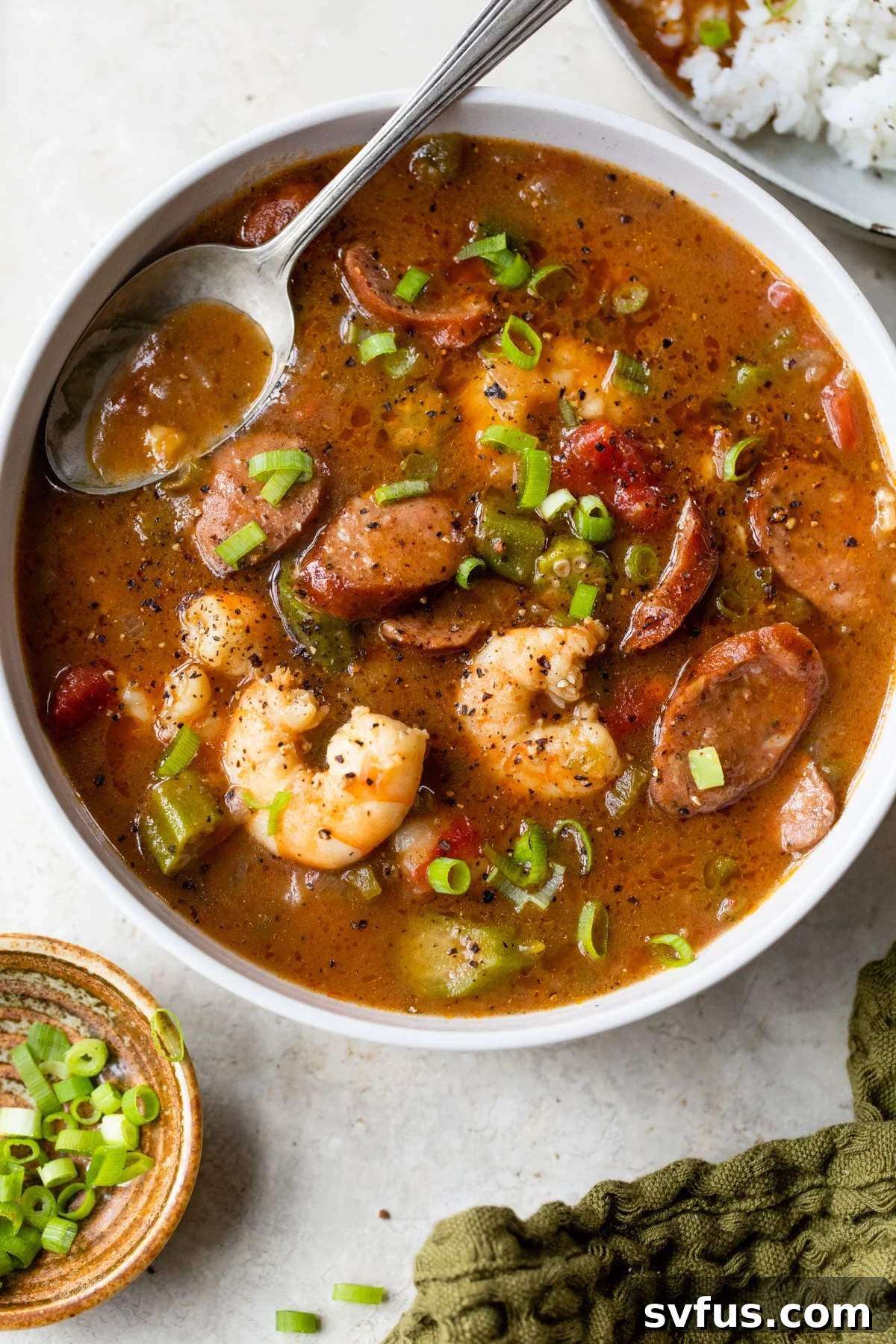
Welcome to the ultimate guide for creating an unforgettable **Shrimp and Sausage Gumbo**, a true masterpiece of Cajun cuisine that brings the vibrant flavors of Louisiana right into your kitchen. This hearty, aromatic one-pot stew is celebrated for its deep, complex flavor profile, rich roux-based sauce, and comforting blend of succulent shrimp and savory sausage. Served traditionally over a bed of fluffy white rice, it’s more than just a meal; it’s an experience that evokes warmth, tradition, and the soulful spirit of the South. Prepare to embark on a culinary journey that promises profoundly satisfying bites with every spoonful, proving that some dishes are truly worth the extra time and effort.
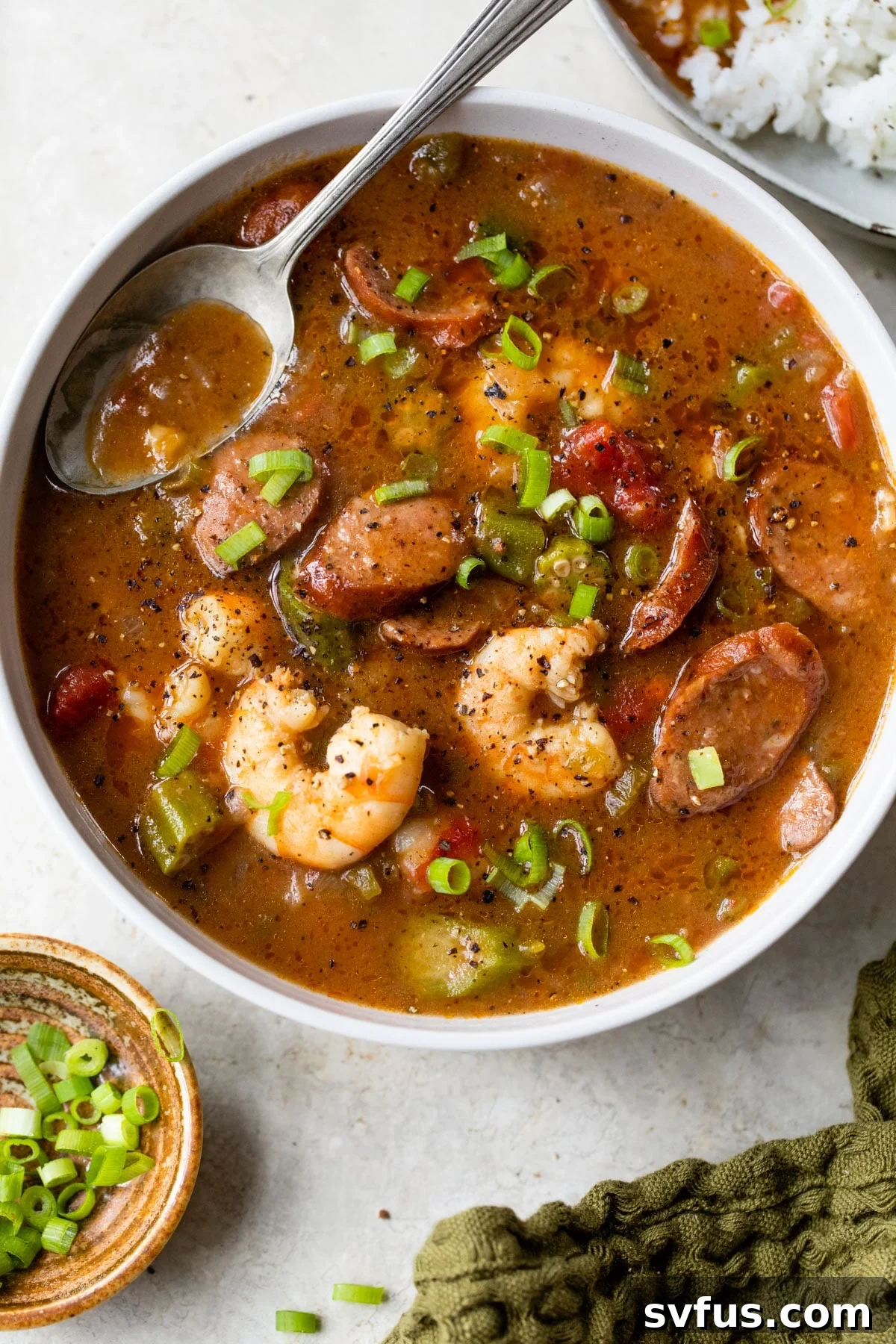
There are countless reasons why this **Cajun Shrimp and Sausage Gumbo** has earned its place as a beloved comfort food, but perhaps the most compelling is its incredible depth of flavor. The magic truly begins with the roux—a carefully crafted base that lends this stew its characteristic thickness, luscious texture, and a nutty richness that is unparalleled. This recipe guides you through the process of achieving a perfect dark brown roux, laying the foundation for the irresistible layers of taste contributed by tender shrimp, smoky Andouille sausage, and a medley of classic Cajun aromatics and spices. If you appreciate the art of slow-cooked, deeply flavored dishes, and have a special place in your heart for comfort food, then this gumbo is destined to become a cherished favorite in your recipe collection. And for those who love exploring the vibrant flavors of Cajun cuisine, be sure to also check out my Baked Cajun Salmon and Cajun Chickpea Burgers!
Why You’ll Love This Authentic Shrimp and Sausage Gumbo
- **A Taste of Louisiana Heritage:** Gumbo stands as one of Louisiana’s oldest and most cherished dishes, embodying centuries of culinary tradition. This shrimp and sausage rendition is a heartfelt homage to that classic, offering an authentic experience without needing to visit the Bayou State.
- **Effortless One-Pot Wonder:** Despite its sophisticated flavor, this **one-pot gumbo recipe** streamlines the cooking process, making clean-up a breeze. It’s a deliciously spiced and deeply savory meal that the entire family will adore, perfect for weeknight dinners or cozy weekend gatherings.
- **Master the Art of the Roux:** The secret to truly authentic gumbo lies in its roux. This recipe provides a comprehensive guide to making a gorgeous homemade dark roux, a critical element that builds the foundational flavor and texture for this iconic stew. Learning this technique is a game-changer for any aspiring Southern cook.
- **Rich & Complex Flavors:** From the smoky notes of Andouille sausage to the sweet succulence of shrimp and the aromatic depth of the “holy trinity” (onions, celery, bell peppers), every ingredient contributes to a symphony of flavors that is both bold and comforting.
- **Perfect for Any Occasion:** Whether you’re hosting a dinner party, looking for a hearty meal on a chilly evening, or simply craving an authentic taste of Cajun country, this gumbo is versatile and always impressive.
Essential Ingredients for a Flavorful Cajun Gumbo
Crafting a truly authentic **Cajun Gumbo** requires a selection of fresh, high-quality ingredients, each playing a crucial role in developing its signature taste and texture. Here’s a detailed look at what you’ll need:
- **Flour and High-Heat Fat (Butter/Oil):** These two components are fundamental for creating the roux, the backbone of your gumbo. All-purpose flour is standard, while a quality high-heat cooking fat such as butter, avocado oil, or olive oil is essential for its long cooking time. Butter provides a richer flavor, while oils offer a higher smoke point, making them easier to manage for longer roux cooking.
- **The Creole “Holy Trinity” (Onions, Bell Peppers, Celery):** This trio of aromatic vegetables forms the flavor base for countless Cajun and Creole dishes, and a gumbo simply wouldn’t be complete without them. Diced yellow onions, green bell peppers, and celery provide a sweet, earthy, and slightly peppery foundation that infuses the entire stew with depth.
- **Andouille Sausage:** For the most authentic gumbo experience, smoked Andouille sausage is highly recommended. Its spicy, smoky profile is unmistakable and adds a robust meatiness to the dish. You can opt for either Andouille chicken sausage or traditional pork sausage, but ensure it’s smoked for that characteristic flavor.
- **Spices and Seasonings:** A robust **Cajun spice blend** is key. You can easily make your own at home using a mix of paprika, garlic powder, onion powder, dried oregano, dried thyme, and black pepper. In addition to this, salt and a touch of cayenne pepper (optional, but highly recommended) provide balance and the iconic heat that defines Cajun cuisine. Don’t forget bay leaves, which slowly release their subtle, aromatic notes during simmering.
- **Broth:** Chicken broth is a popular choice, offering a neutral yet savory liquid base that allows other flavors to shine. However, vegetable broth or a rich seafood stock can also be used, depending on your preference. For an unparalleled depth of flavor, consider using homemade bone broth or stock.
- **Coconut Aminos (or Soy Sauce/Tamari):** This ingredient is used to add a layer of umami—a savory depth that enhances the overall richness of the gumbo. If you don’t have coconut aminos, soy sauce or tamari make excellent substitutes.
- **Shrimp:** Raw, large shrimp are ideal for this recipe. Ensure they are peeled and deveined before cooking. The size of the shrimp will influence their cooking time, so be prepared to adjust accordingly to prevent overcooking.
- **Frozen Okra:** Okra serves a dual purpose in this **Cajun shrimp gumbo**. Not only is it a delicious and nutritious vegetable, but its natural mucilage (the slightly slimy substance it releases when cooked, explained here) acts as a natural thickener, contributing to the smooth, silky consistency of the gumbo gravy. While fresh okra can be used, frozen okra is convenient and works perfectly well.
- **Diced Tomatoes:** Fire-roasted diced tomatoes add a subtle smokiness and acidity that brightens the gumbo, complementing the rich, savory base.
Step-by-Step Guide to Crafting the Perfect Shrimp and Sausage Gumbo
Making a flavorful gumbo is a rewarding process that builds layers of flavor. Follow these detailed steps to achieve a truly authentic and delicious result:
- **Prepare Your Mise en Place:** Before you begin cooking, it’s crucial to have all your ingredients prepped and ready. Dice the yellow onion, green bell pepper, and celery (the “holy trinity”) and set them aside in a bowl. Mince the garlic cloves and keep them separate. If your Andouille sausage is raw, slice it into rounds. Thaw and peel the shrimp, and have your spices, broth, and other liquids measured out. This preparation ensures a smooth cooking process.
- **Master the Roux (The Heart of Gumbo):** In a large, heavy-bottomed pot or Dutch oven, combine the oil (or butter) and all-purpose flour over medium heat. Begin whisking constantly and continue for approximately 20 minutes, or until the roux transforms into a deep caramel or chocolate brown color. This long cooking time is essential to develop the rich, nutty flavor that defines authentic gumbo. Patience is key here; if the roux appears to be browning too quickly or threatening to burn, immediately reduce the heat to low. A low and slow approach is crucial for preventing bitterness. This step might seem long, but putting on a podcast or some music can make the time fly by!
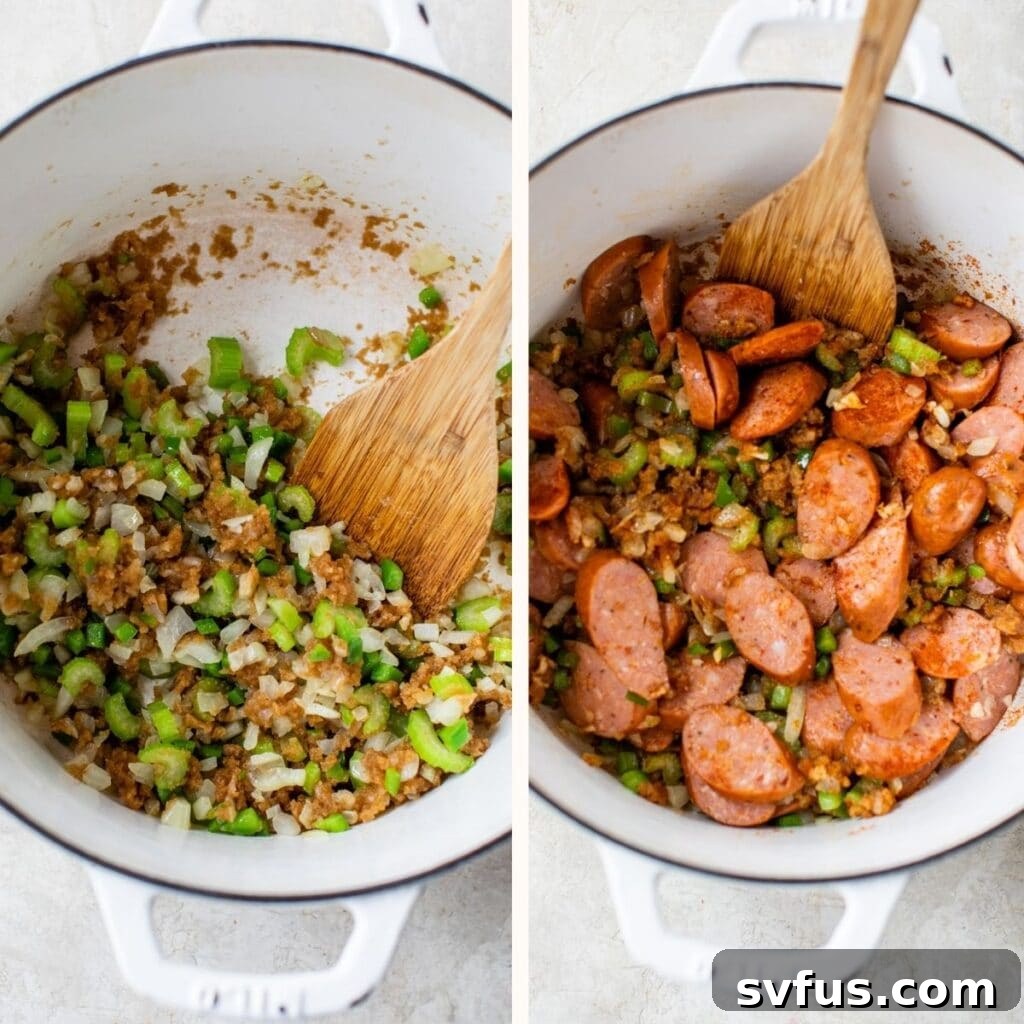
- **Sauté the Aromatics:** Once your roux has reached the desired dark amber hue, add the diced onion, bell pepper, and celery to the pot. Sauté these vegetables for about 5-7 minutes, stirring occasionally, until they soften and become fragrant. Next, stir in the minced garlic and cook for an additional minute until it releases its aromatic scent, being careful not to burn it.
- **Build the Flavor Base and Simmer:** Add the sliced Andouille sausage to the pot, along with the Cajun seasoning, salt, and cayenne pepper (if using). Stir well to combine, allowing the sausage and spices to toast slightly and meld with the vegetables for a few minutes. Then, pour in the chicken broth, water, fire-roasted diced tomatoes (with their juices), coconut aminos, and bay leaves. Bring the mixture to a low boil, then reduce the heat to a gentle simmer. Cover the pot partially or leave it uncovered and let it simmer for approximately 50 minutes. This extended simmering time allows all the flavors to deepen and meld beautifully, creating a rich and harmonious broth.
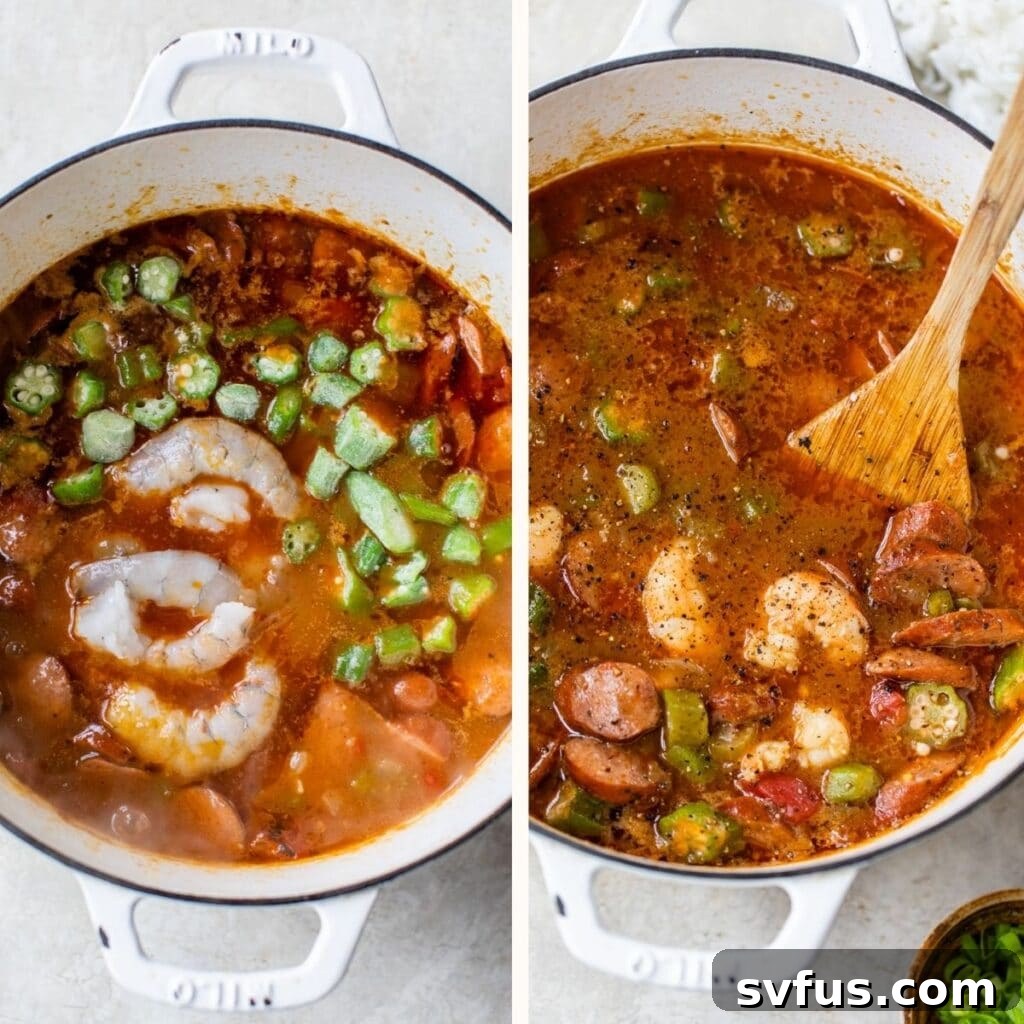
- **Introduce Shrimp and Okra:** After the gumbo has simmered for almost an hour, it’s time to add the peeled and thawed shrimp and the frozen okra. Stir them gently into the simmering gumbo. Continue to cook for another 10-15 minutes, or until the shrimp turn pink and opaque, indicating they are cooked through. Be careful not to overcook the shrimp, as they can become tough.
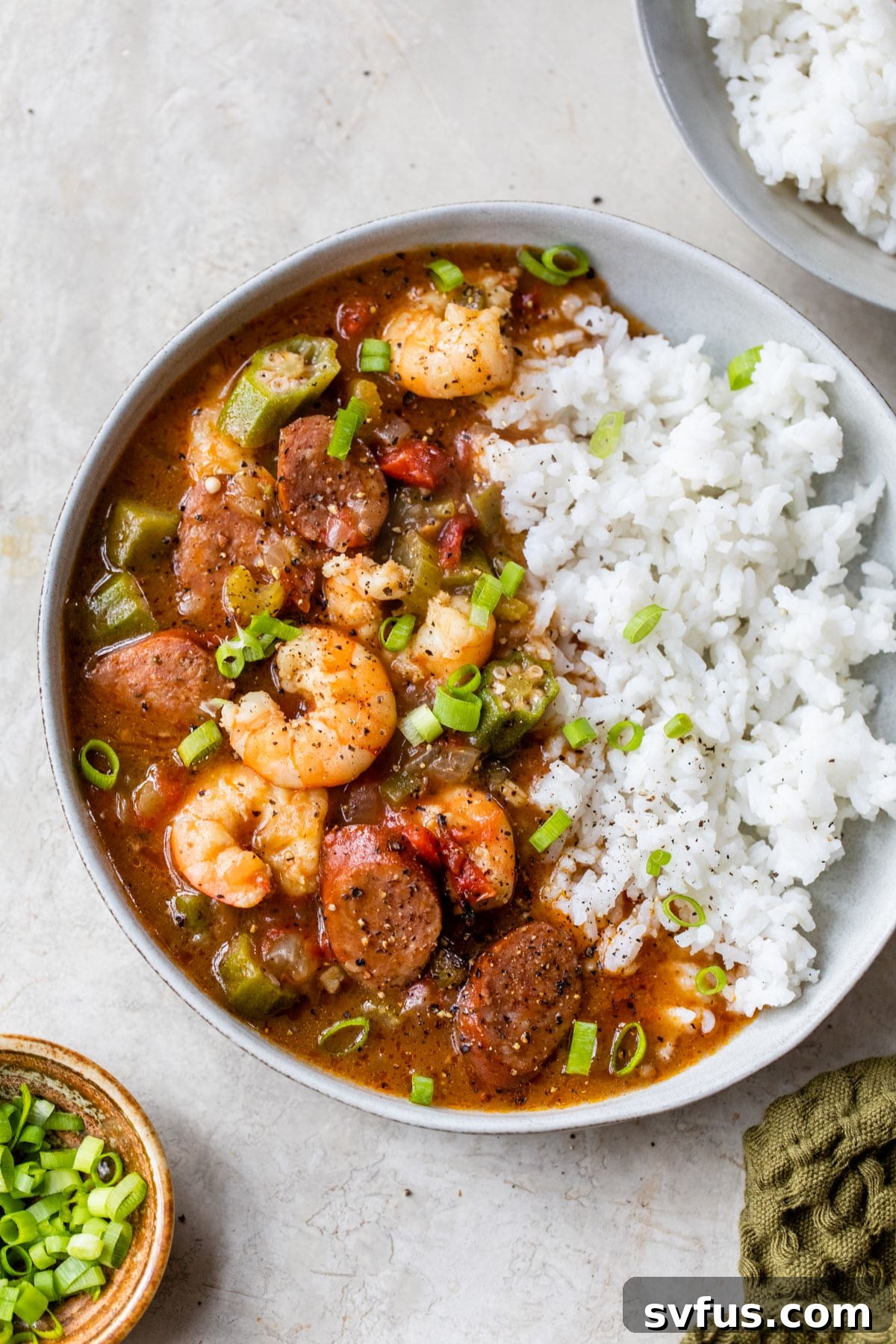
- **Garnish and Serve:** Carefully remove the bay leaves from the pot before serving. Ladle generous portions of the hot shrimp and sausage gumbo into serving bowls, typically over a mound of cooked long-grain white or brown rice. Garnish with a sprinkle of fresh green onions for a pop of color and fresh flavor. Serve immediately and savor the rich, rustic flavors of this authentic Cajun dish!
Expert Tips for Your Best Gumbo Yet
Achieving a truly exceptional gumbo involves a few key techniques and considerations:
- **Roux Perfection is Key:** The success of your gumbo hinges on the roux. You’ll know it’s ready when it reaches a deep amber, caramel, or even chocolate brown color. This process requires continuous whisking and patience, but the depth of flavor it imparts is absolutely worth the effort. Do not rush this step, and if it starts to smoke or burn, discard it and start over, as a burnt roux will make your gumbo bitter.
- **Manage the Heat:** If your roux seems to be browning too quickly, immediately lower the heat. A proper roux is made low and slow. This gentle simmering allows the flour to cook thoroughly without burning, resulting in a smooth, flavorful base.
- **Roux Color Dictates Style:** The shade of your roux will influence the style and flavor of your gumbo. For a **Creole-style gumbo**, aim for a lighter, peanut butter-colored roux, which results in a milder, often tomato-based stew. For a more traditional **Cajun-style gumbo**, as in this recipe, strive for a deep amber or chocolate brown roux, yielding a richer, nuttier, and typically spicier flavor profile.
- **Consider Filé Powder:** Filé powder, made from dried and ground sassafras leaves, is another traditional gumbo thickener and flavor enhancer. It’s typically stirred into individual bowls of gumbo *after* it’s cooked and removed from the heat, as boiling it can make the gumbo stringy. It adds an earthy, distinctive flavor.
- **Don’t Overcook the Shrimp:** Shrimp cook very quickly. Add them at the very end of the simmering process and cook only until they turn pink and opaque. Overcooked shrimp will be rubbery and tough.
- **Taste and Adjust:** Always taste your gumbo before serving. Adjust salt, cayenne, and other seasonings to your preference. Remember, flavors deepen as the gumbo simmers.
What’s the Difference Between Gumbo and Jambalaya?
While both are beloved Louisiana dishes featuring similar ingredients like sausage, the primary distinction lies in the rice. In jambalaya, the rice is cooked directly within the pot, absorbing all the flavors of the broth and ingredients, creating a cohesive, seasoned rice dish. Gumbo, on the other hand, is a rich stew or soup that is traditionally spooned over a separate serving of plain, cooked rice, allowing the rice to soak up the flavorful gravy upon serving.
What Type of Rice is Best Served with Cajun Shrimp Gumbo?
For this **Shrimp and Sausage Gumbo recipe**, long-grain white rice is the classic choice as it remains fluffy and separate, perfect for soaking up the rich sauce. Basmati and jasmine rice are also excellent options due to their aromatic qualities and distinct grain structure. Brown rice can be used for a healthier, nuttier alternative.
Can I Make This Recipe with Fresh Sausage?
Smoked Andouille sausage is highly recommended for its characteristic flavor. However, if you’re using fresh, raw sausage (like Italian sausage or unsmoked Andouille), you should slice the links and brown them thoroughly in a separate pan before adding them to the gumbo pot. This step is crucial for developing flavor and ensuring the sausage is cooked. Alternatively, smoked ham can be used as a flavorful substitute for Andouille sausage.
Can It Be Made Gluten-Free?
Yes, this gumbo can be adapted to be gluten-free. While the roux in this recipe uses regular all-purpose flour, you can successfully substitute it with a quality all-purpose gluten-free flour blend. Many GF blends are designed to behave similarly to wheat flour in thickening sauces and gravies. For a paleo-friendly option, cassava flour might also work as a thickener, although it hasn’t been personally tested in this specific recipe. Always ensure your chosen sausage and broth are also gluten-free.
Can I Add Chicken to This Shrimp and Sausage Gumbo?
Absolutely! Many gumbos feature chicken in addition to sausage and seafood. To incorporate chicken, you can brown boneless, skinless chicken thighs or breasts (cut into bite-sized pieces) in the pot before starting your roux, then remove them and add them back during the last 30 minutes of simmering. Alternatively, shredded rotisserie chicken can be added during the final stages of cooking for convenience.
How Do I Adjust the Spice Level?
The spice level of your gumbo can be easily customized. For less heat, reduce or omit the cayenne pepper. For more heat, you can increase the amount of cayenne or add a dash of your favorite hot sauce to individual servings. Remember that Cajun seasoning blends often contain some heat, so taste as you go.
Storage and Make-Ahead Tips
Gumbo is one of those wonderful dishes that often tastes even better the next day as the flavors have more time to meld and deepen. It’s also excellent for meal prepping!
- **Refrigerator:** Allow the **Shrimp and Sausage Gumbo** to cool completely to room temperature before transferring it to an airtight container. It can be stored in the refrigerator for up to 3 to 4 days. Reheat gently on the stovetop over low heat, stirring occasionally, until warmed through. You may need to add a splash of broth or water if it has thickened too much.
- **Freezer:** For longer storage, once the gumbo has cooled, pour it into freezer-safe containers or heavy-duty freezer bags, leaving a little headspace. Freeze for up to 6 months. To reheat, thaw the gumbo overnight in the refrigerator, then warm it on the stovetop. The texture of the okra might change slightly after freezing, becoming a bit softer, but the flavor will remain delicious.
More Hearty Soups and Stews to Try
If you’ve enjoyed the comforting embrace of this gumbo, you’ll surely love exploring these other hearty and flavorful recipes:
- Slow Cooker Chicken Stew: A convenient and comforting meal that cooks itself.
- Spicy Sausage and Potato Soup: A warming and flavorful soup with a kick.
- Paleo Beef Stew: A healthy yet incredibly rich and satisfying stew.
If you’ve made this delicious Shrimp and Sausage Gumbo, we’d love to hear from you! Please leave a comment and a star rating below to share your experience. Your feedback helps us and other home cooks!
Shrimp and Sausage Gumbo

Print Recipe
Ingredients
- 1/4 cup avocado oil, or butter
- 1/3 cup all purpose flour, (see notes for gluten free/paleo option)
- 1 yellow onion, diced
- 1 green bell pepper, diced
- 2 celery stalks, chopped
- 4 garlic cloves, minced
- 12 oz. andouille chicken sausage or pork sausage
- 1 tbsp Cajun seasoning
- 1/2 tsp salt
- 1/2 tsp cayenne, optional
- 32 oz. chicken broth
- 1 cup water
- 14 oz. fire roasted diced tomatoes
- 1 tbsp coconut aminos
- 2 bay leaves
- 1 lb. large shrimp, raw; peeled and deveined
- 1 1/2 cups frozen okra
- 1/4 cup green onions, for garnish
Instructions
-
Start by prepping your vegetables: dice the onion, bell pepper and celery and place them in a bowl; set aside. Mince the garlic and set it aside separately.
-
Add the oil and flour to a large pot or Dutch oven. Turn the heat to medium and whisk constantly for 20 minutes (yes really!). I know, I know — it’s a little time intensive, but if you want the roux to be correct, this is what you have to do. My suggestion? Put on a good podcast and the time will fly by! Tip: you want the roux to be golden brown like the color of caramel or a little bit darker, but if it seems to be burning at all, turn the heat down to low.
-
Once the 20 minutes is up, add the onion, bell pepper and celery to the pot and sauté for 5 minutes. Then, add the garlic and sauté for 1 minute.
-
Next, add the sausage, Cajun seasoning, salt, and cayenne if using and stir to combine. Then, pour in the chicken broth, water, diced tomatoes with their juices, coconut aminos, and bay leaves and bring the gumbo to a low boil. Simmer it uncovered for 50 minutes. Meanwhile, if you haven’t already, thaw and peel the shrimp.
-
Once the time is up, add the shrimp and okra to the pot and continue simmering for 10 minutes or until the shrimp is pink and cooked through.
-
Remove the bay leaves, then divide the gumbo into bowls and garnish with green onions. Enjoy!
Notes
*GF/Paleo: To make this paleo-friendly, I recommend using cassava flour instead of all-purpose; to make gluten-free, use gluten-free all-purpose flour.
*Storage: store in a sealed container in the refrigerator for up to 4 days; or, transfer to a freezer-safe container and store for up to 6 months; thaw in the refrigerator overnight before serving.
*SLOW COOKER OPTION:
- Add the oil and flour to a medium saucepan and whisk on medium-low heat for 10 minutes until it resembles a golden-brown roux (if it browns too quickly, reduce heat to low — you want it to resemble a caramel color); Transfer roux to your slow cooker.
- Add the sausage, onion, bell pepper, celery, garlic, Cajun seasoning, salt, cayenne, diced tomatoes, chicken broth, water, coconut aminos, and bay leaves and cook on HIGH for 3-4 hours or LOW for 6-7 hours.
- Add the shrimp and okra and cook for an additional 20-30 minutes or until the shrimp are pink.
- Remove the bay leaves, garnish with green onions and enjoy!