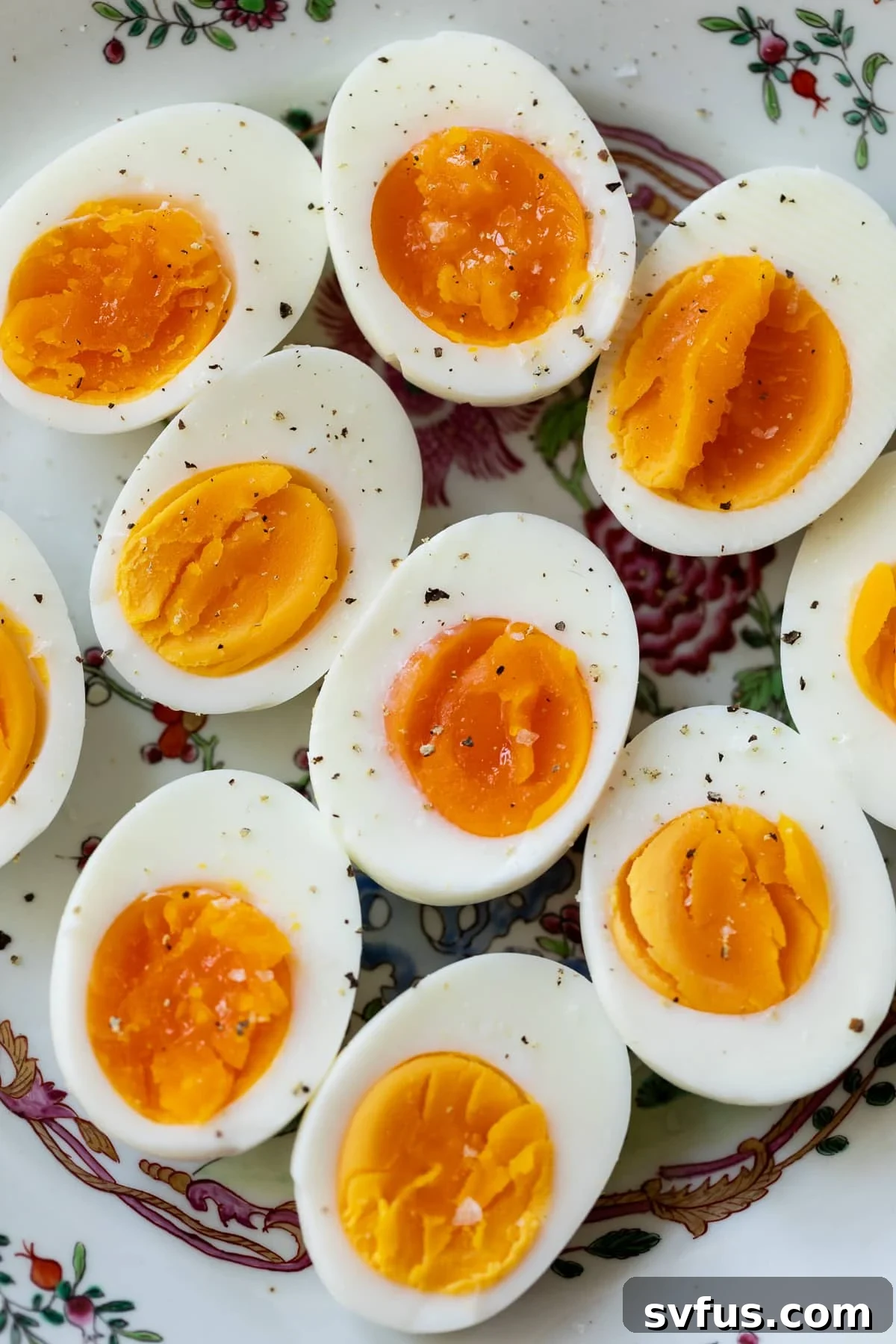
Unlock the secret to consistently perfect eggs, whether you prefer them soft, medium, or hard-boiled, with your versatile Instant Pot. This comprehensive guide will transform your egg-cooking experience, making Instant Pot Boiled Eggs a staple in your kitchen. Bid farewell to the frustration of undercooked yolks or stubbornly stuck shells and embrace effortless, flawless results every single time!
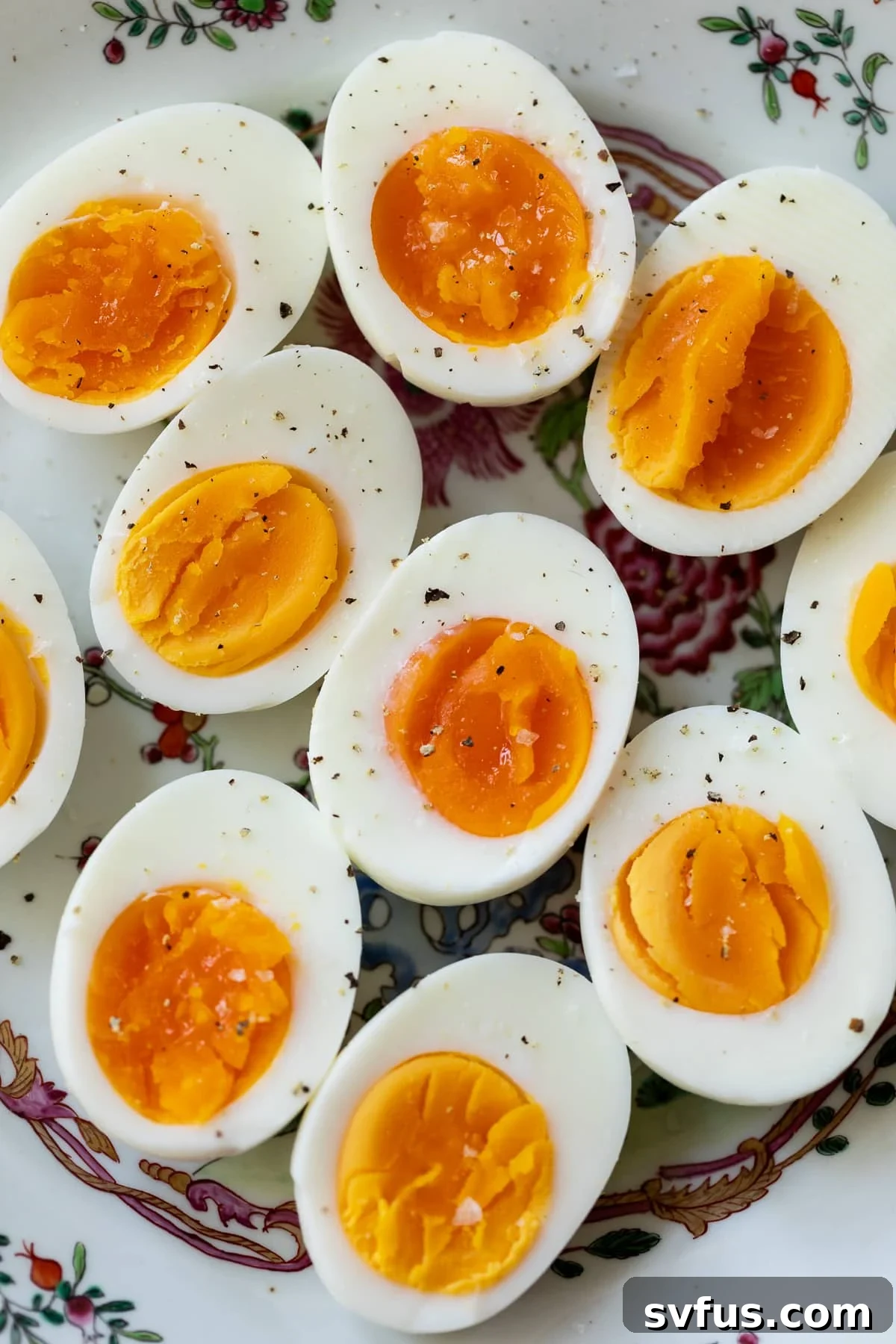
While the Instant Pot is celebrated for creating magnificent, hearty meals like tender pot roasts and comforting chicken stews, its true genius often shines in simplifying everyday tasks. Boiling eggs, a seemingly simple act, can be surprisingly challenging on the stovetop. We’ve all encountered the disappointment of slicing into an egg only to find a runny center when we wanted firm, or a rubbery yolk when we desired a creamy one.
This is where the Instant Pot revolutionizes the process. It eliminates the guesswork and the constant monitoring required by traditional stovetop methods. With precise pressure cooking, you gain complete control over the doneness of your eggs, ensuring that each batch meets your exact preference. From delicate, jammy soft-boiled eggs perfect for toast, to firm, easy-to-peel hard-boiled eggs ideal for salads and snacks, the Instant Pot delivers consistent excellence with minimal effort.
For those committed to healthy eating and efficient meal preparation, Instant Pot boiled eggs are an absolute game-changer. They offer a quick, convenient, and high-protein addition to a myriad of dishes. Prepare a dozen (or more!) at once, store them in your refrigerator, and have a healthy, versatile ingredient ready whenever hunger strikes. Whether it’s adding a protein boost to your morning oats, enhancing a vibrant salad, or serving as a satisfying grab-and-go snack, these perfectly cooked eggs simplify your weekly meal planning.
Why Choose the Instant Pot for Boiled Eggs?
The Instant Pot isn’t just a kitchen gadget; it’s a culinary game-changer, especially when it comes to boiling eggs. Its unique pressure cooking mechanism offers several distinct advantages over traditional methods, ensuring superior results and simplifying your cooking routine.
- Unmatched Consistency, Every Time: Say goodbye to the unpredictability of stovetop boiling. The Instant Pot provides a consistent cooking environment, leading to perfectly cooked eggs with uniform texture batch after batch. This means no more green rings around overcooked yolks or disappointingly runny whites.
- Effortless Peeling for Any Egg: One of the most common frustrations with boiled eggs is difficult peeling. The pressure cooking process, combined with an immediate ice bath, helps to separate the egg membrane from the white, making even the freshest eggs incredibly easy to peel. This is a significant time-saver and stress-reducer!
- Hands-Off Cooking: Unlike stovetop boiling where you need to monitor water levels and cooking times closely, the Instant Pot allows for true set-it-and-forget-it cooking. Once you set the timer, you’re free to attend to other tasks, making it ideal for busy mornings or multi-tasking meal prep sessions.
- Customizable Doneness: Whether your preference leans towards a runny yolk, a perfectly jammy center, or a firm, fully set egg, the Instant Pot allows precise control over cooking times to achieve your desired doneness with ease.
- Perfect for Meal Prep: Cook a large batch of eggs simultaneously, knowing they will all turn out perfectly. This makes them an invaluable asset for weekly meal planning, providing a readily available source of protein for quick breakfasts, lunches, and snacks.
Ingredients You’ll Need
Making Instant Pot boiled eggs requires only two simple ingredients:
- Eggs: For the absolute best results and the easiest peeling experience, opt for eggs that are at least a week old. As eggs age, their pH level changes, causing the albumen (egg white) to shrink slightly and separate more easily from the shell membrane. Fresh eggs, while delicious, often cling more stubbornly. Furthermore, it’s highly recommended to let your eggs sit at room temperature for about 10 to 15 minutes before cooking. This crucial step helps prevent the shells from cracking when they are introduced to the hot, pressurized environment of the Instant Pot. Using large eggs is standard for the cooking times provided in this guide, but adjustments for other sizes are noted below.
- Water: Cold tap water is all you need. The water creates the steam necessary for the Instant Pot to come to pressure and cook the eggs.
Step-by-Step Instructions for Perfect Instant Pot Boiled Eggs
Achieving perfect boiled eggs in your Instant Pot is a remarkably straightforward process. Follow these simple steps for consistent, delicious results:
Step 1: Prepare Your Instant Pot
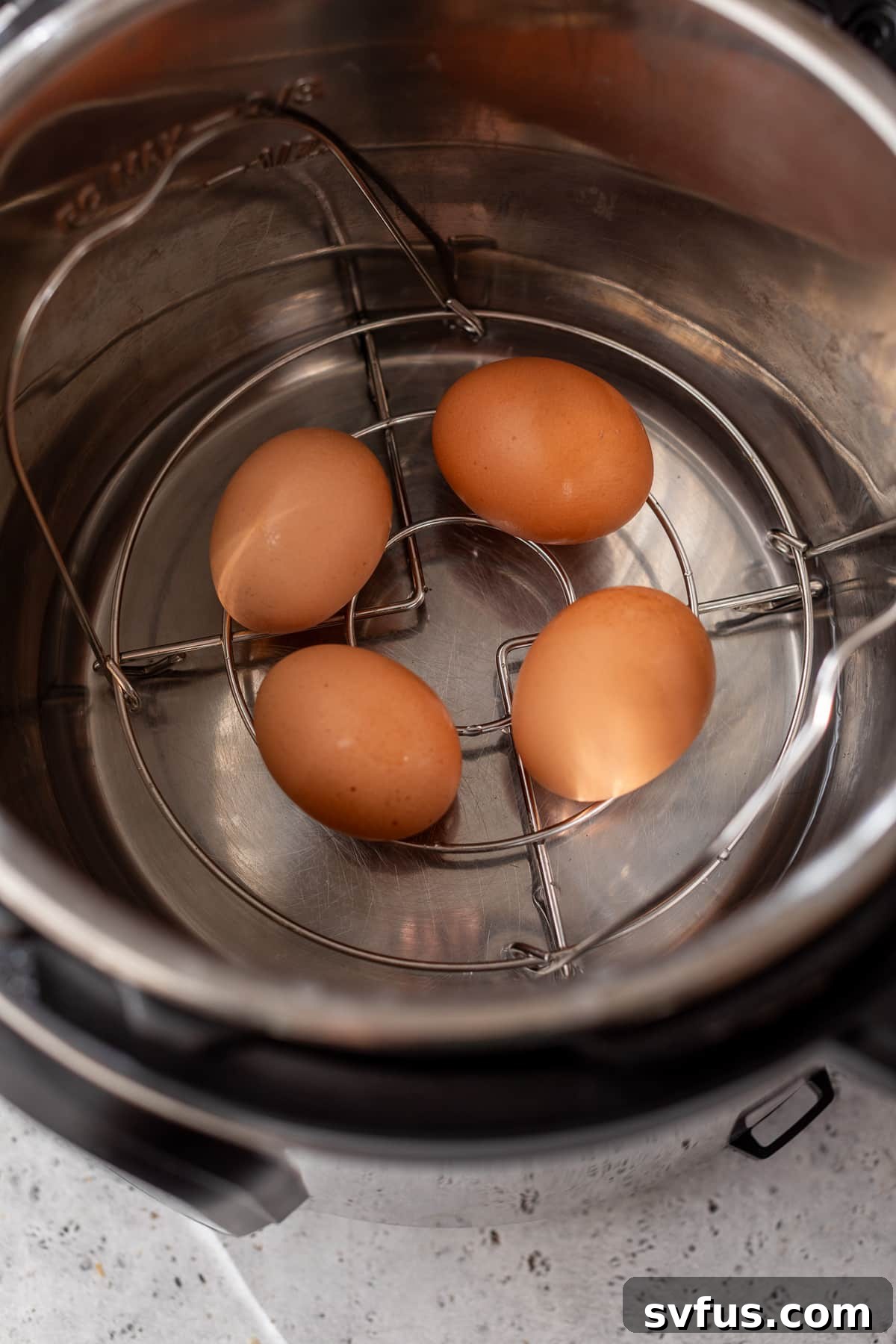
Begin by pouring 1 cup of cold water into the inner pot of your 6-quart Instant Pot. If you’re using an 8-quart Instant Pot, increase the water to 1 ½ cups. Next, place the trivet (the metal rack that comes with your Instant Pot) inside the pot. The trivet is essential as it keeps the eggs elevated above the water, allowing them to steam evenly without direct contact with the boiling liquid, which helps prevent cracking and ensures even cooking.
Step 2: Gently Add the Eggs
Carefully arrange your eggs on the trivet. You can fit as many eggs as will comfortably sit on the trivet without being too tightly packed. For most 6-quart models, this means around 12-18 large eggs. Don’t worry if you need to stack them; they will still cook evenly. Once the eggs are in place, securely close the Instant Pot lid. Crucially, ensure that the steam release valve on the lid is set to the “seal” position.
Step 3: Pressure Cook to Perfection
Select the “Manual” or “Pressure Cook” setting on your Instant Pot and set it to HIGH pressure. The cooking time will vary depending on your desired doneness:
- For Soft-boiled eggs: Set the timer for 3 minutes.
- For Medium-boiled eggs: Set the timer for 4 minutes.
- For Hard-boiled eggs: Set the timer for 5 minutes.
Once the cooking cycle is complete, the Instant Pot will beep. It’s now time for the natural pressure release (NPR) phase. Allow the pressure to release naturally for:
- 4 minutes for Soft-boiled eggs.
- 4 minutes for Medium-boiled eggs.
- 5 minutes for Hard-boiled eggs.
After the specified natural release time, carefully switch the steam release valve to the “venting” position for a quick release (QR) to release any remaining pressure. Once the float valve drops, it’s safe to open the lid.
Step 4: The Essential Ice Bath
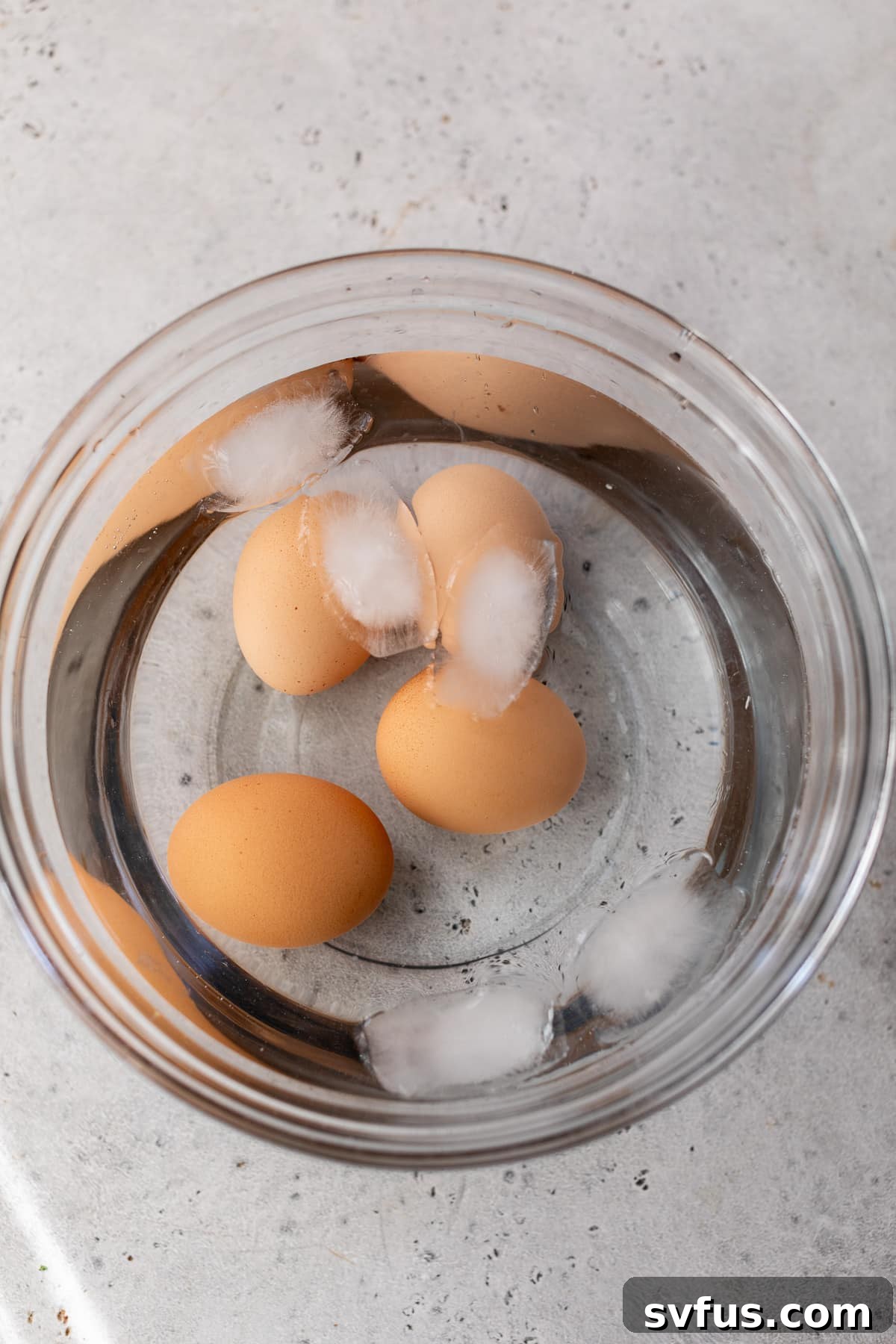
Immediately after releasing the pressure, use tongs or a slotted spoon to transfer the cooked eggs from the Instant Pot into a large bowl filled with ice water. This ice bath is a critical step that serves two primary purposes: it instantly halts the cooking process, preventing overcooking and the formation of a greenish ring around the yolk, and it helps the egg white contract, creating a tiny air pocket that makes peeling significantly easier. Allow the eggs to cool in the ice bath for at least 5 minutes, or until they are cool enough to handle.
Step 5: Peel and Enjoy!
Once the eggs have cooled sufficiently in the ice bath, they are ready to be peeled and enjoyed. Gently tap each egg on a hard surface, like your countertop, to create small cracks all around the shell. You can then roll the egg between your palms to further loosen the shell. For the easiest cleanup, peel the eggs under a gentle stream of running water or in a bowl of water. This helps wash away small shell fragments and makes the membrane easier to separate from the egg white.
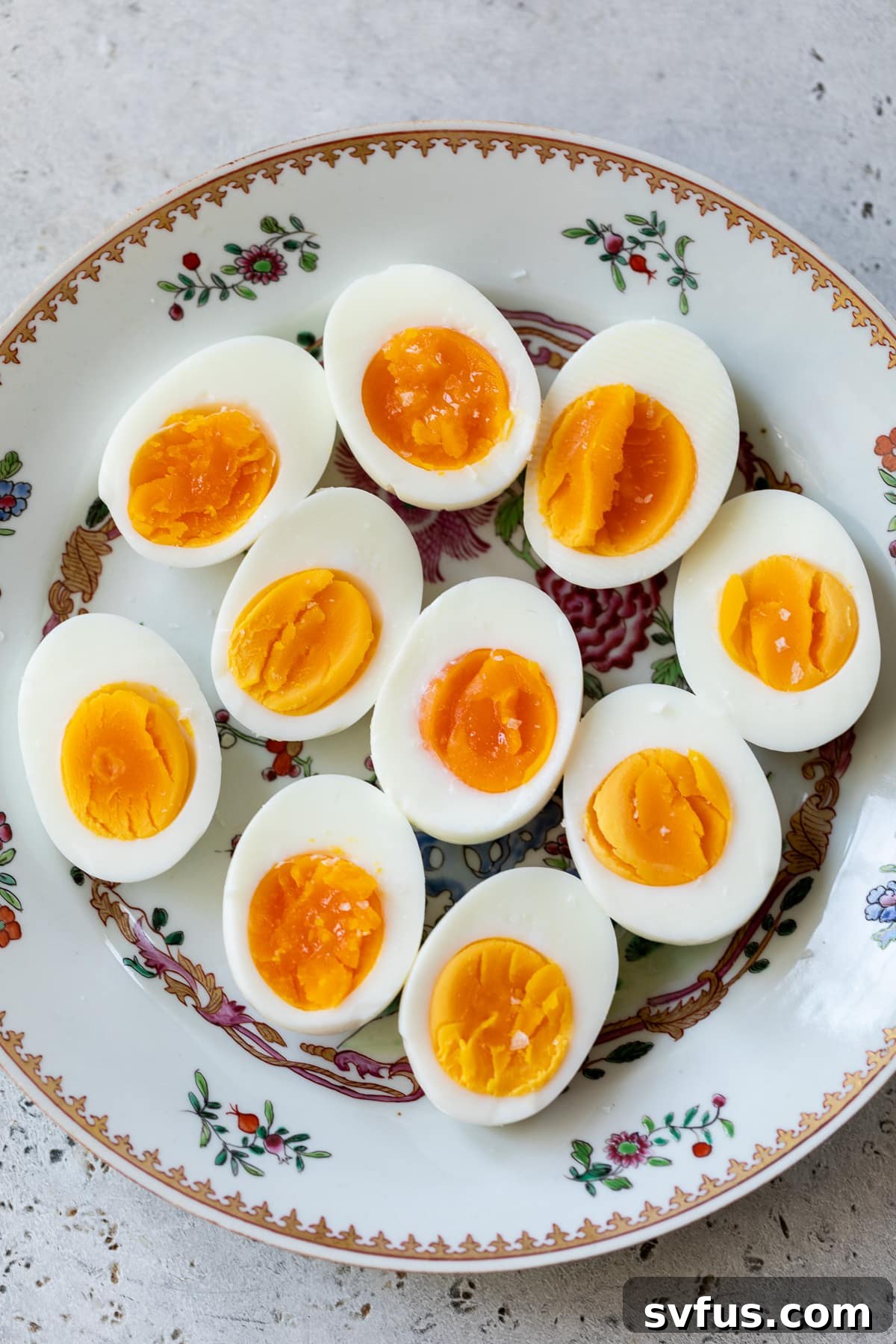
Instant Pot Boiled Egg Cooking Times Guide
The beauty of the Instant Pot lies in its precise control over the cooking environment, allowing you to achieve your perfect egg yolk every time. Here’s a quick reference guide for pressure cooking times and natural release durations, based on using large eggs:
- Soft-boiled eggs (Jammy Yolk):
- Pressure Cook (HIGH): 3 minutes
- Natural Release: 4 minutes
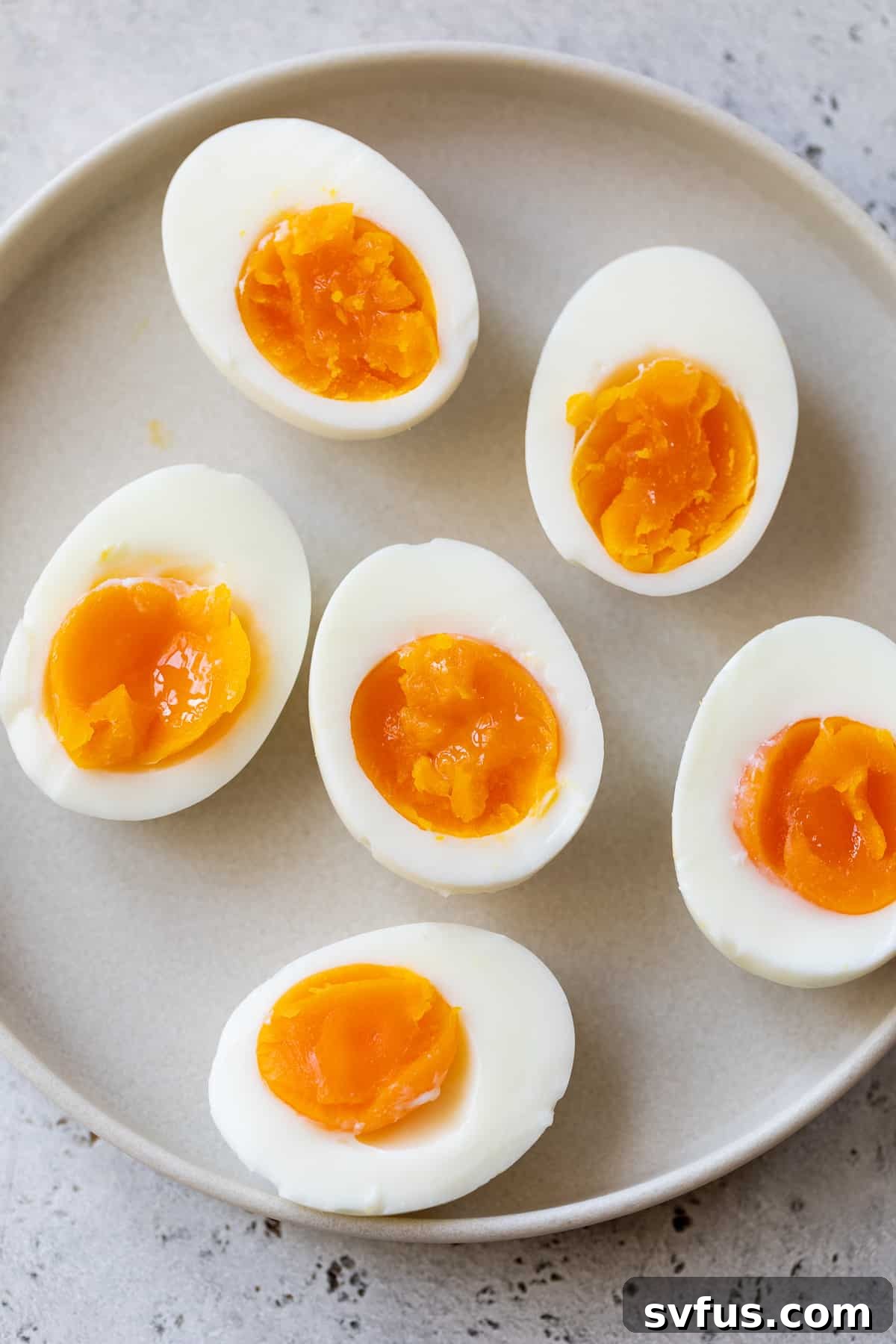
- Result: A firm white with a gloriously runny, jammy center – perfect for toast or ramen!
- Medium-boiled eggs (Creamy Yolk):
- Pressure Cook (HIGH): 4 minutes
- Natural Release: 4 minutes
- Result: A fully set white and a creamy, moist yolk that’s still slightly tender.
- Hard-boiled eggs (Firm Yolk):
- Pressure Cook (HIGH): 5 minutes
- Natural Release: 5 minutes
- Result: A perfectly firm white and a solid, bright yellow yolk without any green discoloration. Ideal for salads, snacks, and deviled eggs.
A Note on Egg Size, Altitude, and Instant Pot Models
These cooking times are optimized for large eggs (such as those from Vital Farms mentioned in the original recipe). It’s important to remember that variables like the size of your eggs, your altitude, and even specific Instant Pot models can slightly affect cooking times:
- Extra-Large Eggs: May require an additional 1 minute of pressure cooking time to reach the desired doneness.
- Medium Eggs: Might need a reduction of 1 minute in pressure cooking time.
- Altitude: For those living at higher altitudes, you might find that adding an extra minute to the pressure cook time is necessary, as water boils at a lower temperature at higher elevations.
- Instant Pot Models: While generally consistent, minor variations can occur.
Think of these times as an excellent starting point. Don’t hesitate to experiment and adjust by 1 minute up or down in subsequent batches until you discover your personal perfect timing. Practice truly makes perfect when it comes to customizing your Instant Pot egg results!
Expert Tips & Troubleshooting
Even with the Instant Pot’s simplicity, a few tricks can make your experience even smoother and help you achieve consistently flawless results.
Pro Tips for Success:
- Don’t Skip the Ice Bath: This step is non-negotiable for perfectly cooked, easy-to-peel eggs. It immediately stops the cooking process, preventing overcooking and that unappealing green ring around the yolk. Plus, the rapid temperature change helps the egg white separate from the shell membrane, leading to effortlessly peeled eggs.
- For the Easiest Peeling: After the ice bath, gently tap the wide end of the egg on your countertop to break the air sac. Then, roll the egg gently to create a network of small cracks. Peel under cool running water or submerged in a bowl of water; the water helps to slip the shell and membrane away from the egg white.
- Room Temperature Eggs Prevent Cracks: Cold eggs are more prone to cracking when exposed to the rapid temperature change inside the Instant Pot. Allowing them to sit at room temperature for 10-15 minutes prior to cooking significantly reduces the risk of cracks.
- Cooking Large Batches: The Instant Pot is fantastic for batch cooking. It’s perfectly fine to stack eggs on the trivet, even two layers high. Just ensure they are arranged evenly to allow the steam to circulate properly around all the eggs for consistent cooking. The cooking time remains the same regardless of the number of eggs, as long as your Instant Pot can reach pressure.
- 8-Quart Instant Pot Water Adjustment: If you are using a larger 8-quart Instant Pot, you’ll need slightly more water to help it come to pressure efficiently. Add an additional ½ cup of cold water to the pot (making it 1 ½ cups total) before placing the trivet and eggs.
Troubleshooting Common Issues:
- Why Did My Eggs Crack During Cooking? This is most often due to cold eggs going into the hot Instant Pot environment. As mentioned above, letting your eggs warm up to room temperature for 10 to 15 minutes before cooking can largely prevent this.
- What If My Eggs Are Undercooked? If you find your eggs are not done to your liking (e.g., whites are still too runny for soft-boiled or yolks are too runny for medium), you can place them back in the Instant Pot. Reseal the lid, and cook for an additional 1 to 2 minutes on high pressure, followed by a quick release. Be mindful that this can slightly alter the texture. For future batches, simply add 1 minute to your pressure cook time.
- What is the 5-5-5 Method for Hard-Boiled Eggs? This popular method is specifically for achieving perfectly firm hard-boiled eggs with easy-to-peel shells. It refers to: 5 minutes of high-pressure cooking, followed by a 5-minute natural pressure release, and then a 5-minute ice bath. This sequence consistently delivers flawless hard-boiled eggs.
- My Eggs Have a Green Ring Around the Yolk! This green-grey discoloration indicates that the eggs were slightly overcooked. The ferrous sulfide forms when iron from the yolk reacts with hydrogen sulfide from the white, a reaction sped up by high heat and prolonged cooking. The ice bath helps prevent this by stopping the cooking process quickly. Adjust your cooking time down by 1 minute for the next batch if this occurs.
Chef’s Tip
If you’re using an 8-quart Instant Pot, remember to add an additional ½ cup of cold water to the pot (1 ½ cups total) to ensure it comes to pressure effectively.
Versatile Serving Suggestions
One of the greatest advantages of making boiled eggs in the Instant Pot is their incredible versatility, especially for meal prep. Keep a batch in the fridge, and you’ll have a high-protein ingredient ready for countless culinary creations beyond just a simple snack. Here are some fantastic ways to enjoy your perfectly cooked eggs:
- Classic Avocado Toast: Elevate your avocado toast by adding slices of soft or medium-boiled eggs. The creamy yolk pairs beautifully with mashed avocado, a sprinkle of flaky sea salt, black pepper, and chili flakes for an extra kick.
- Enrich Your Salads: Boiled eggs are a staple for adding texture and a significant protein boost to any salad. They are particularly wonderful in:
- A hearty Shrimp Cobb Salad, offering a rich counterpoint to crisp greens and other toppings.
- A timeless Grilled Chicken Caesar Salad, adding an extra layer of satiety.
- A sophisticated Niçoise Salad, where hard-boiled eggs are a traditional and essential component.
- A vibrant BBQ Chicken Salad, providing balance to the smoky flavors.
- Boost Your Grain & Power Bowls: Incorporate sliced or halved eggs into your favorite grain and power bowls for added protein and richness. They are a fantastic addition to:
- A seasonal Autumn Harvest Bowl, blending with seasonal vegetables and grains.
- A satisfying Burger Bowl, offering a different protein dimension.
- A wholesome Cauliflower Breakfast Bowl, making it a complete and energizing start to your day.
- Exquisite Ramen Topping: Transform your bowl of ramen into a gourmet experience by adding Instant Pot soft-boiled eggs. Their rich, jammy yolks melt into the broth, adding incredible depth and flavor.
- Quick Egg Salad or Deviled Eggs: Hard-boiled eggs are the base for quick and delicious recipes like a creamy egg salad sandwich or crowd-pleasing chipotle deviled eggs, perfect for picnics or parties.
- Simple Protein Snack: Enjoy them plain with a sprinkle of salt and pepper for a satisfying, nutrient-dense snack anytime.
Frequently Asked Questions About Instant Pot Boiled Eggs
How many eggs can I cook at once in the Instant Pot?
You can cook a surprising number of eggs in your Instant Pot simultaneously! The primary limit is how many will fit on your trivet without completely blocking steam circulation. For a 6-quart Instant Pot, you can typically fit 12 to 18 large eggs, often in a single layer or gently stacked. An 8-quart Instant Pot can accommodate even more, usually 20-24 eggs or sometimes even more depending on how you arrange them. The cooking time remains the same regardless of the quantity of eggs, as long as your Instant Pot can successfully come to pressure.
Can I use fresh eggs, and will they peel easily?
While you can certainly use fresh eggs, they are notoriously more difficult to peel than older eggs. The membrane of a very fresh egg tends to cling tightly to the white, often resulting in jagged, torn eggs. Older eggs (ideally 7-10 days old) have a slightly higher pH, which causes the membrane to separate more easily. If you must use fresh eggs, ensure they go directly into a cold ice bath immediately after cooking, as this quick temperature change is your best bet for easier peeling.
How do I know if my eggs are cooked properly?
The best way to determine if your eggs are cooked to your desired doneness is by following the precise cooking and release times provided in this guide. The immediate ice bath is key for stopping the cooking process. If you follow the guide and still find your eggs consistently over or undercooked, make slight adjustments (1 minute up or down) to your pressure cook time for your specific Instant Pot model and egg size.
Can I cook frozen eggs in the Instant Pot?
No, it is not recommended to cook frozen eggs in the shell in your Instant Pot. The rapid expansion during cooking would almost certainly cause the shells to crack and explode, creating a mess and potentially damaging your appliance. Always start with fresh or room-temperature eggs.
What are the nutritional benefits of eggs?
Eggs are a powerhouse of nutrition, often referred to as nature’s multivitamin. They are an excellent source of high-quality protein, providing all nine essential amino acids. They also contain vital vitamins and minerals, including Vitamin D, Vitamin B12, selenium, choline, and antioxidants like lutein and zeaxanthin, which are important for eye health. All of this is packed into a relatively low-calorie food.
Storage Guidelines for Boiled Eggs
Proper storage is essential to keep your Instant Pot boiled eggs fresh and safe to eat throughout the week, making them perfect for continued meal prep.
- Refrigerator (Unpeeled): For optimal freshness and ease, store boiled eggs in their shells. Place them in an airtight container or a bowl covered with plastic wrap in the refrigerator. When stored this way, they will remain fresh for up to 1 week. Keeping the shell on helps protect the egg from absorbing odors from other foods in the fridge and maintains its moisture.
- Refrigerator (Peeled): If you’ve already peeled your eggs, it’s best to consume them within 3 to 4 days. Store peeled eggs in an airtight container in the refrigerator, ideally submerged in a bowl of cold water, changing the water daily, to keep them moist and prevent them from drying out.
More Instant Pot Recipe Inspirations
The Instant Pot is a versatile tool for so much more than just eggs! Explore these other easy and delicious Instant Pot recipes to expand your culinary repertoire:
- Instant Pot Spaghetti Squash
- Instant Pot Broccoli
- Instant Pot Carrots
Instant Pot Boiled Eggs Recipe
Whether you want hard-boiled, medium, or soft-boiled eggs, this complete guide to Instant Pot Boiled Eggs has you covered. Say goodbye to the guesswork and hello to perfect boiled eggs every time!

Servings: 12 eggs
Prep time: 10 minutes
Cook time: 3-5 minutes (depending on doneness)
Ingredients
- 12 large eggs, at room temperature
- 1 cup cold water (for 6-quart Instant Pot; 1 ½ cups for 8-quart Instant Pot)
Instructions
For Hard-Boiled Eggs: (Firm, fully set yolk)
- Add 1 cup of cold water to your 6-quart Instant Pot (or 1 ½ cups for an 8-quart), then place the trivet inside.
- Gently add as many eggs as can fit on the trivet. Close the lid, ensuring the knob on top is in the “seal” position.
- Pressure cook on HIGH for 5 minutes.
- Allow the pressure to release naturally for 5 minutes before manually releasing any remaining pressure.
- Immediately transfer the eggs to a large bowl filled with ice water to prevent them from cooking further.
- Once cooled, peel and enjoy!
For Medium-Boiled Eggs: (Creamy, moist yolk)
- Add 1 cup of cold water to your 6-quart Instant Pot (or 1 ½ cups for an 8-quart), then place the trivet inside.
- Gently add as many eggs as can fit on the trivet. Close the lid, ensuring the knob on top is in the “seal” position.
- Pressure cook on HIGH for 4 minutes.
- Allow the pressure to release naturally for 4 minutes before manually releasing any remaining pressure.
- Immediately transfer the eggs to a large bowl filled with ice water to prevent them from cooking further.
- Once cooled, peel and enjoy!
For Soft-Boiled Eggs: (Runny, jammy yolk)
- Add 1 cup of cold water to your 6-quart Instant Pot (or 1 ½ cups for an 8-quart), then place the trivet inside.
- Gently add as many eggs as can fit on the trivet. Close the lid, ensuring the knob on top is in the “seal” position.
- Pressure cook on HIGH for 3 minutes.
- Allow the pressure to release naturally for 4 minutes before manually releasing any remaining pressure.
- Immediately transfer the eggs to a large bowl filled with ice water to prevent them from cooking further.
- Once cooled, peel and enjoy!
Notes
- Calories are per serving and are an estimation.
Nutrition Information (Estimated per Serving)
Serving: 1 egg | Calories: 63kcal | Carbohydrates: 0.3g | Protein: 6g | Fat: 4g | Saturated Fat: 1g | Polyunsaturated Fat: 1g | Monounsaturated Fat: 2g | Trans Fat: 0.02g | Cholesterol: 164mg | Sodium: 62mg | Potassium: 61mg | Sugar: 0.2g | Vitamin A: 238IU | Calcium: 25mg | Iron: 1mg
Did you make this recipe?
Leave a comment and star rating below to share your experience!