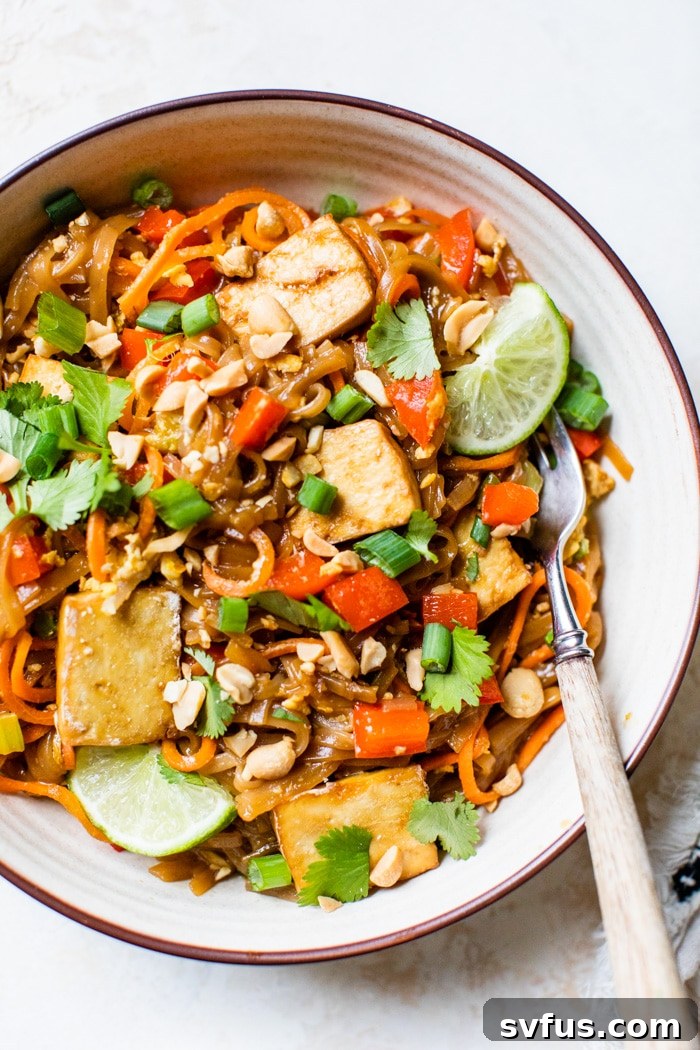
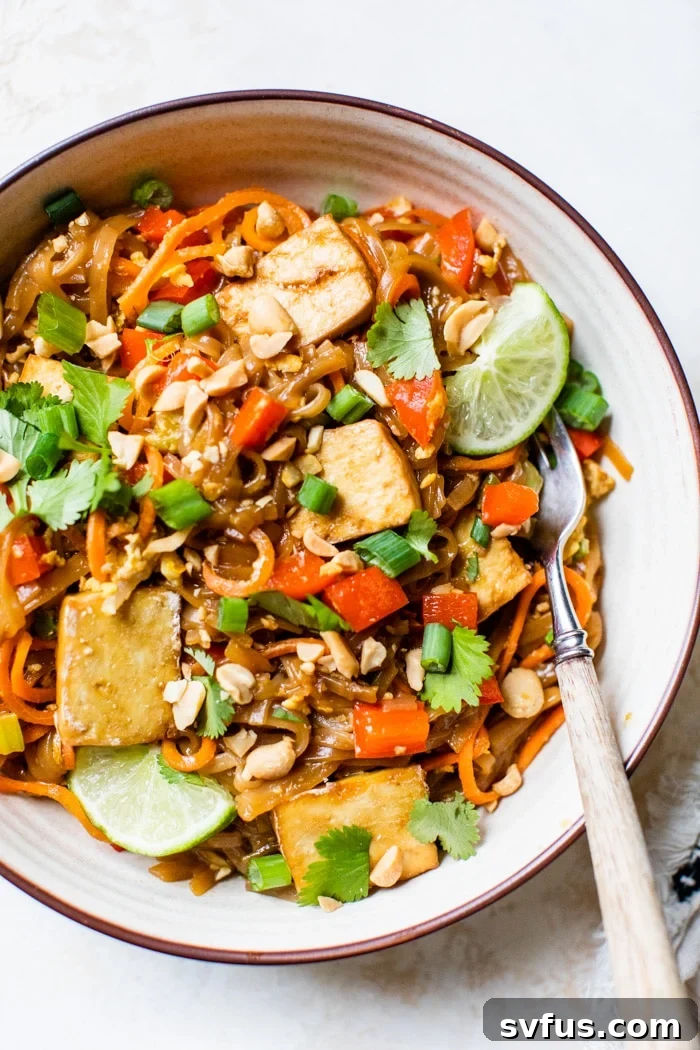
Welcome to the ultimate guide for crafting a delectable and healthy Tofu Pad Thai! This vibrant dish brings together the best of Thai-inspired flavors with a plant-based twist, making it a perfect weeknight meal that’s both satisfying and nutritious. Our recipe uniquely features a harmonious blend of tender rice noodles and crisp, spiralized carrot noodles, creating an exciting texture and boosting your vegetable intake. Crowned with perfectly crispy baked tofu, a scattering of fresh green onions, crunchy peanuts, and enveloped in a luscious honey and soy sauce, this Tofu Pad Thai promises an unforgettable culinary experience that the entire family will adore.
Why Tofu Pad Thai is Your Next Favorite Meal
Tofu Pad Thai stands out as an exceptional choice for any meal, particularly for those embracing plant-based eating or simply looking to reduce meat consumption. It’s an ideal candidate for “Meatless Monday” or any day you wish to incorporate more wholesome, vibrant dishes into your diet. While not every week might be dedicated to meatless meals, integrating one or two plant-based dinners into your routine offers a delightful opportunity to explore new flavors, experiment with diverse protein sources, and significantly increase your daily vegetable intake. This recipe not only delivers on taste but also on versatility and health benefits, proving that plant-based doesn’t mean compromising on flavor or satisfaction.
The Benefits of Choosing Plant-Based
- Nutrient-Rich: Tofu Pad Thai is packed with fresh vegetables and plant-based protein, offering a wealth of vitamins, minerals, and fiber essential for a healthy diet.
- Sustainable: Opting for plant-based meals is a fantastic way to support environmental sustainability by reducing your carbon footprint.
- Deliciously Diverse: Far from bland, this dish explodes with a complex array of sweet, savory, tangy, and spicy notes characteristic of traditional Pad Thai, but with the added goodness of tofu.
- Customizable: Easily adapt the recipe to suit your taste preferences or what you have on hand, making it a truly flexible meal.
Essential Ingredients for Your Tofu Pad Thai
Crafting an authentic and delicious Tofu Pad Thai starts with selecting the right ingredients. Each component plays a vital role in building the layered flavors and textures that make this dish so irresistible. Here’s a detailed look at what you’ll need and some tips for each:
The Stars of the Dish
- Super Firm Tofu: The undisputed star of this plant-based Pad Thai, tofu provides a fantastic source of protein, making this meal incredibly satisfying. For the best crispy results, always opt for super firm or extra firm tofu. It has less water content, which is crucial for achieving that desirable golden-brown, chewy texture when baked. Pressing the tofu thoroughly before baking is a game-changer – it expels excess water, allowing the tofu to absorb marinades better and crisp up beautifully. You can use a tofu press or simply wrap the block in paper towels, place it between two plates, and weigh it down for at least 30 minutes, or up to a few hours.
- Rice Noodles: The foundation of any Pad Thai, rice noodles soak up the sauce’s rich flavors beautifully. You can use traditional flat rice noodles or brown rice noodles for a healthier, whole-grain option, as preferred in this recipe. Both varieties work wonderfully. Ensure you follow the package instructions meticulously for cooking; overcooked noodles can become mushy, while undercooked ones will be too tough. They should be al dente – tender with a slight bite.
-
Abundant Vegetables: This Pad Thai recipe is a celebration of fresh, crisp vegetables, adding color, nutrients, and crunch.
- Red Bell Pepper: Adds a sweet, vibrant crunch and a pop of color.
- Green Onions: Both the white and green parts are essential. The white parts are sautéed for a pungent base, while the green parts are reserved for garnish, providing a fresh, mild onion flavor.
- Bean Sprouts: A classic Pad Thai inclusion, bean sprouts contribute a refreshing crispness and a subtle earthy flavor. Add them towards the end of cooking to maintain their crunch.
- Carrots (Spiralized or Sliced): Here’s where this recipe gets a fun twist! Spiralizing carrots into “carrot noodles” allows them to seamlessly blend with the rice noodles, adding a wonderful sweetness and an extra boost of vitamins. If you don’t have a spiralizer, don’t worry! You can simply slice the carrots into thin matchsticks or small rounds and sauté them with the other vegetables. They will still add great flavor and texture.
- Garlic: Minced garlic is the aromatic backbone of the dish, infusing the stir-fry with a pungent, savory depth.
- Eggs: Scrambled eggs are often found in Pad Thai, contributing to its authentic texture and flavor. They also add another layer of protein.
-
The Flavorful Sauce: The heart and soul of Pad Thai, this sauce balances sweet, savory, and tangy notes.
- Soy Sauce: Provides the fundamental savory, umami base. Use low-sodium soy sauce if you are mindful of sodium intake.
- Honey: Adds natural sweetness and a subtle depth. For a 100% vegan version, readily substitute maple syrup. The flavor profile will shift slightly but remain incredibly delicious.
- Fish Sauce: This is a quintessential ingredient in traditional Pad Thai, offering a unique salty, umami kick. If you want to keep the recipe completely vegan, simply omit the fish sauce entirely. While its absence will alter the taste profile slightly, the dish will still be wonderfully flavorful thanks to the other robust ingredients.
- Rice Vinegar: Contributes a delicate tanginess, balancing the sweetness and richness of the sauce.
- Lime Juice: Freshly squeezed lime juice brightens the entire dish with its zesty, aromatic acidity, a crucial component for authentic Pad Thai flavor.
-
Garnishes: Don’t skip these! Garnishes add essential freshness, texture, and flavor to the finished dish.
- Fresh Cilantro: Offers a bright, herbaceous note.
- Green Onions (green part): Adds a mild oniony freshness and a pop of color.
- Roasted Peanuts: Provides a delightful crunch and nutty flavor, enhancing the overall experience.
Step-by-Step Guide: How to Make Tofu Pad Thai
Creating this incredibly satisfying Tofu Pad Thai is a straightforward process when you follow these clear steps. The key is efficient preparation and layering of flavors to ensure every bite is bursting with taste.
Phase 1: Preparation is Key
- Prepare the Tofu: This is the most time-consuming step, so it’s best to start here. For truly crispy tofu, proper pressing is essential to remove excess water. After pressing, you’ll bake the tofu until it’s golden brown and firm. Baking is my preferred method as it requires minimal oil and makes for an easy cleanup. I provide a detailed guide on achieving perfect crispy baked tofu in this dedicated post, so be sure to consult it for the best results. Get your tofu baking, as it sets the stage for the rest of the meal.
- Noodle & Veggie Prep: While the tofu is baking, cook your rice noodles according to their package instructions until al dente. Drain them and set aside. Next, get your carrots ready. If you own a spiralizer, run the large carrot through it to create beautiful carrot noodles. If not, simply slice the carrot thinly into matchsticks.
- Whip Up the Sauce: In a medium bowl, whisk together all the sauce ingredients: soy sauce, honey (or maple syrup for vegan), fish sauce (or omit for vegan), rice vinegar, and lime juice. Stir until well combined and set aside.
- Egg Prep: Crack and whisk the two eggs in a small bowl. Having them ready will make the cooking process seamless.
- Green Onion Separation: Separate the white and green parts of the green onions. The white parts will be sautéed, and the vibrant green parts will be used as a fresh garnish at the end.
Phase 2: Assembling Your Pad Thai
- Sauté Aromatics and Peppers: Heat 1 teaspoon of olive oil in a large wok or skillet over medium-high heat. Add the diced red pepper, the white parts of the green onions, and the minced garlic. Sauté for 3-5 minutes, stirring frequently, until the red pepper begins to soften and the aromatics are fragrant.
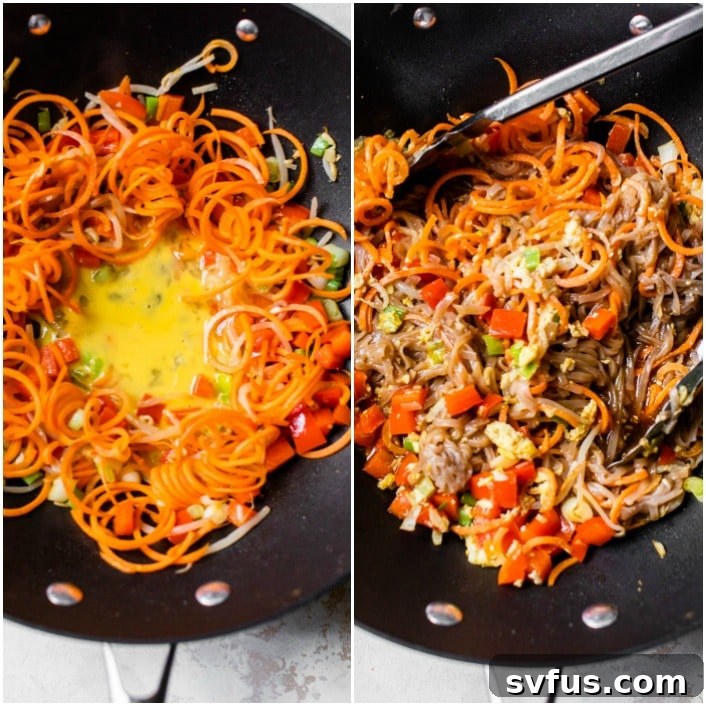
- Add Bean Sprouts & Scramble Eggs: Toss in the bean sprouts and cook for another 1-2 minutes, just until they start to tenderize slightly but still retain their crunch. Using your spatula or spoon, push the vegetable mixture to the sides of the wok, creating an empty space in the center. Pour the whisked eggs into this space and scramble them until they are fully cooked and broken into small pieces. Once cooked, gently mix the scrambled eggs into the vegetables.
- Combine Noodles: Now, add the spiralized carrot noodles to the wok. Using kitchen tongs, toss them with the vegetable and egg mixture for 1-2 minutes until they become slightly soft but still have a pleasant bite. If your carrot noodles are excessively long, use kitchen shears to snip them into more manageable, bite-sized pieces for easier eating. Immediately follow with the cooked rice noodles, adding them to the wok, and stir everything together to combine evenly.
- Sauce It Up: Pour the prepared Pad Thai sauce evenly over the noodles and vegetables. Using your tongs, toss everything thoroughly until all the ingredients are beautifully coated in the rich, glossy sauce. Ensure every strand of noodle and every piece of vegetable is bathed in flavor.
- Fold in the Tofu: Gently fold in the crispy baked tofu pieces. You want to mix them in without breaking them up too much, allowing them to absorb some of the sauce while retaining their delightful texture.
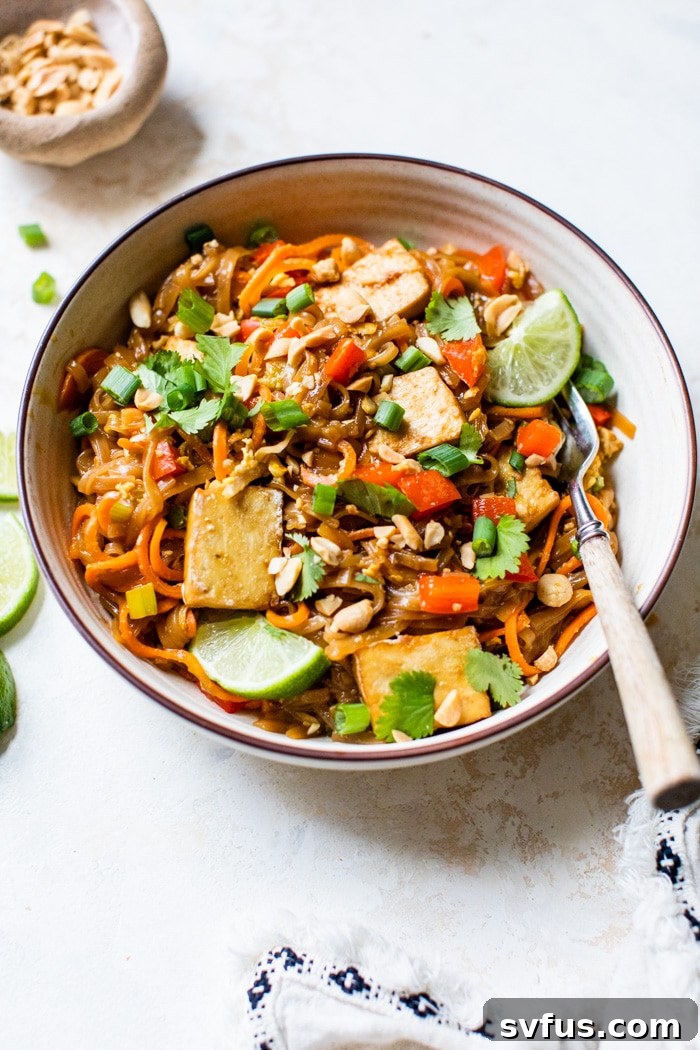
- Garnish and Serve: Transfer your glorious Tofu Pad Thai to serving bowls. The final touch truly elevates the dish! Generously sprinkle with fresh chopped cilantro, the reserved green parts of the green onions, and a handful of crunchy peanuts. Serve immediately and savor the incredible blend of flavors and textures!
Tips for the Perfect Tofu Pad Thai
- Press Your Tofu Thoroughly: This cannot be stressed enough. Removing as much water as possible from the tofu is the secret to achieving that coveted crispy exterior.
- Don’t Overcook Noodles: Rice noodles can quickly turn mushy. Cook them just until al dente, as they will continue to cook slightly when tossed with the hot sauce and other ingredients.
- High Heat, Quick Cooking: Pad Thai is a stir-fry, and stir-frying thrives on high heat and quick cooking times. Ensure your wok or skillet is properly heated before adding ingredients to get a good sear and prevent steaming.
- Taste and Adjust: Before adding the sauce to the wok, taste it. Adjust the sweetness (more honey/maple syrup), tanginess (more lime juice/rice vinegar), or saltiness (more soy sauce/fish sauce) to match your preference.
- Mise en Place: Have all your ingredients prepped, chopped, and measured before you start cooking. This dish comes together quickly, so having everything ready will prevent overcooking and ensure a smooth process.
Variations and Customizations
One of the many joys of cooking Tofu Pad Thai is its adaptability. Feel free to experiment and make it your own!
- Add More Veggies: Broccoli florets, sliced mushrooms, snow peas, or thinly sliced cabbage would all make excellent additions, boosting both nutrition and texture.
- Spice It Up: If you enjoy a kick, add a pinch of red pepper flakes to the sauce or garnish with a drizzle of sriracha.
- Nutty Alternatives: While peanuts are traditional, chopped cashews or sesame seeds can offer a different nutty crunch.
- Citrus Zest: A little lime zest added to the sauce or as a garnish can intensify the citrusy aroma.
- Sesame Oil Finish: A tiny drizzle of toasted sesame oil right before serving can add an extra layer of nutty depth.
Serving Suggestions
Tofu Pad Thai is a complete meal on its own, packed with protein, vegetables, and carbohydrates. However, if you’re looking to round out your dining experience, consider serving it alongside a simple green salad with a light vinaigrette to add extra freshness, or a bowl of miso soup for an authentic Asian-inspired spread. A refreshing glass of iced tea or sparkling water with lime would also complement the flavors beautifully.
More Delicious Plant-Based Dinner Recipes
If you loved this Tofu Pad Thai and are looking for more plant-based inspiration, explore these other fantastic recipes that are sure to become new family favorites:
- Easy Tofu Curry
- The Best Vegan Pizza
- Vegan Eggplant Parmesan
Tofu Pad Thai
Erin Alvarez
4
10
mins
35
mins
45
mins
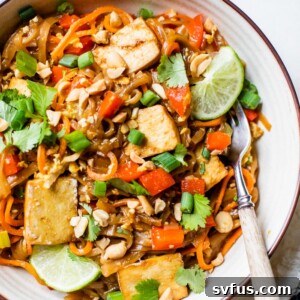
This Tofu Pad Thai uses a combination of carrot noodles and rice noodles as a base, is topped with crispy baked tofu, green onion and peanuts and is coated in honey and soy sauce that’s sure to please the whole family!
Ingredients
- 1 block super firm tofu , baked (see notes)
- 1 red pepper, diced
- 5 green onions (white part), sliced
- 2 garlic cloves, minced
- 1/2 cup bean sprouts
- 2 eggs
- 1 large carrot, spiralized
- 8 oz. rice noodles (white or brown)
for the sauce:
- 1/4 cup soy sauce
- 2 tbsp honey
- 1 tbsp fish sauce
- 1 tbsp rice vinegar
- 1 tbsp lime juice
for garnish:
- cilantro
- green onions (green part)
- peanuts
Instructions
-
Cook the rice noodles over the stove according to the package instructions. Spiralize the carrot and set aside. Whisk 2 eggs together in a bowl and set aside, and in a separate bowl make the sauce and set it aside as well.
-
Add red pepper, the white part of the green onion and the garlic to a wok or large skillet, then sauté with 1 tsp olive oil for 3-5 minutes. Then, add bean sprouts and cook for 1 more minute. Use a spatula to create a hole in the middle of the wok, then pour the eggs into the center and scramble them.
-
Now, add the carrot noodles to the wok and use tongs to toss for 1-2 minutes or until the noodles are slightly soft, then add the cooked rice noodles and stir everything together.
-
Pour sauce over the mixture and toss to combine, then add the baked tofu.
-
Top the dish with cilantro, the green part of the green onions and peanuts and enjoy!
Notes
Nutrition
Carbohydrates: 62g |
Protein: 17g |
Fat: 5g |
Saturated Fat: 2g |
Polyunsaturated Fat: 2g |
Monounsaturated Fat: 1g |
Trans Fat: 0.01g |
Cholesterol: 82mg |
Sodium: 1283mg |
Potassium: 415mg |
Fiber: 6g |
Sugar: 14g |
Vitamin A: 3753IU |
Vitamin C: 45mg |
Calcium: 72mg |
Iron: 3mg
Did you make this?
Leave a comment and star rating below!