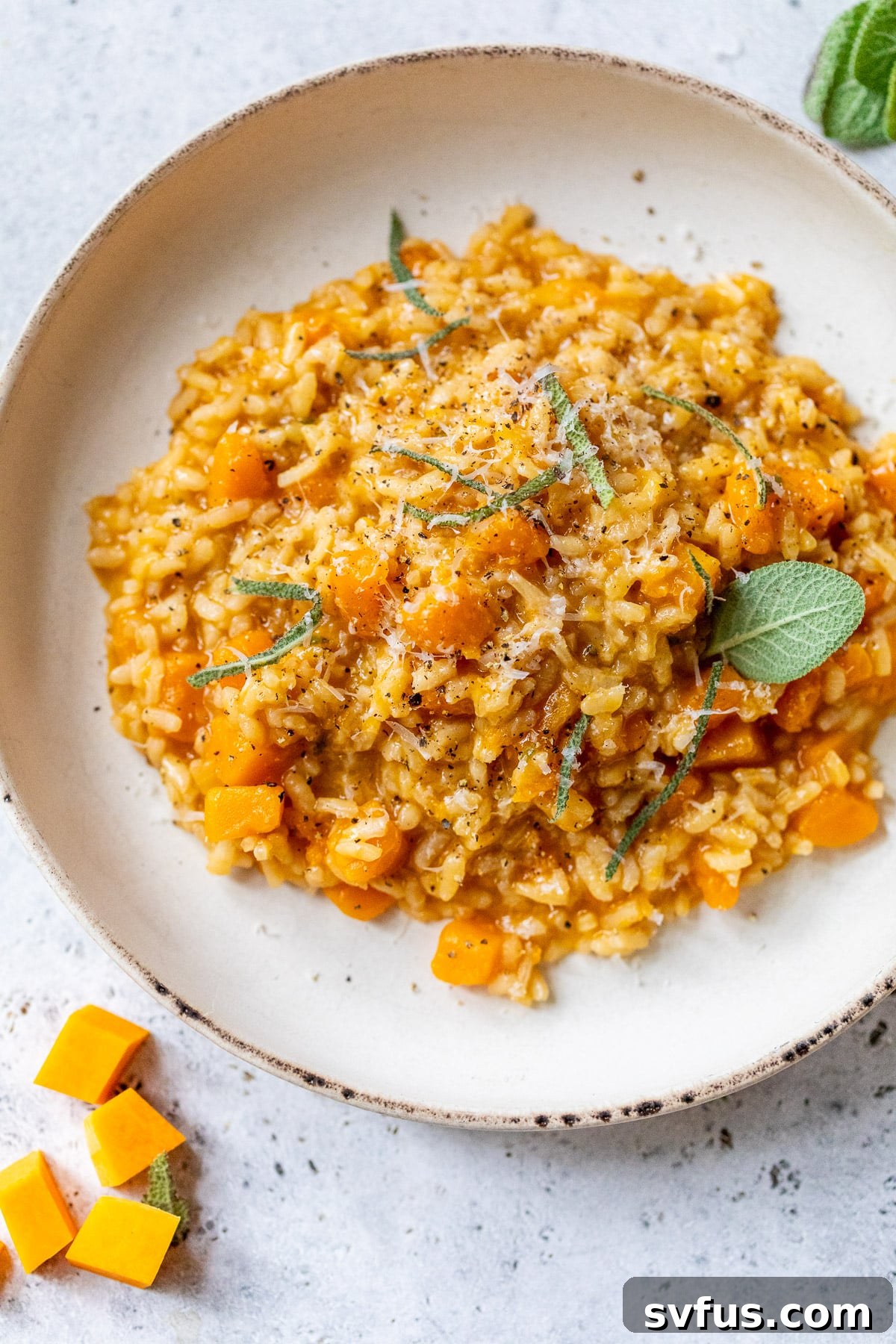
Indulge in Autumn’s Embrace: Creamy Butternut Squash Risotto
As the leaves turn golden and a crisp coolness fills the air, there’s nothing quite as inviting as a warm, comforting bowl of Butternut Squash Risotto. This isn’t just any risotto; it’s a celebration of autumn, infused with the sweet, nutty essence of roasted butternut squash and the aromatic warmth of fresh sage. Its irresistibly creamy texture and profound seasonal flavors make it an ideal choice for a cozy autumn dinner or a standout side dish at your next gathering. And despite its gourmet reputation, you’ll be delighted to discover just how approachable and rewarding it is to prepare.
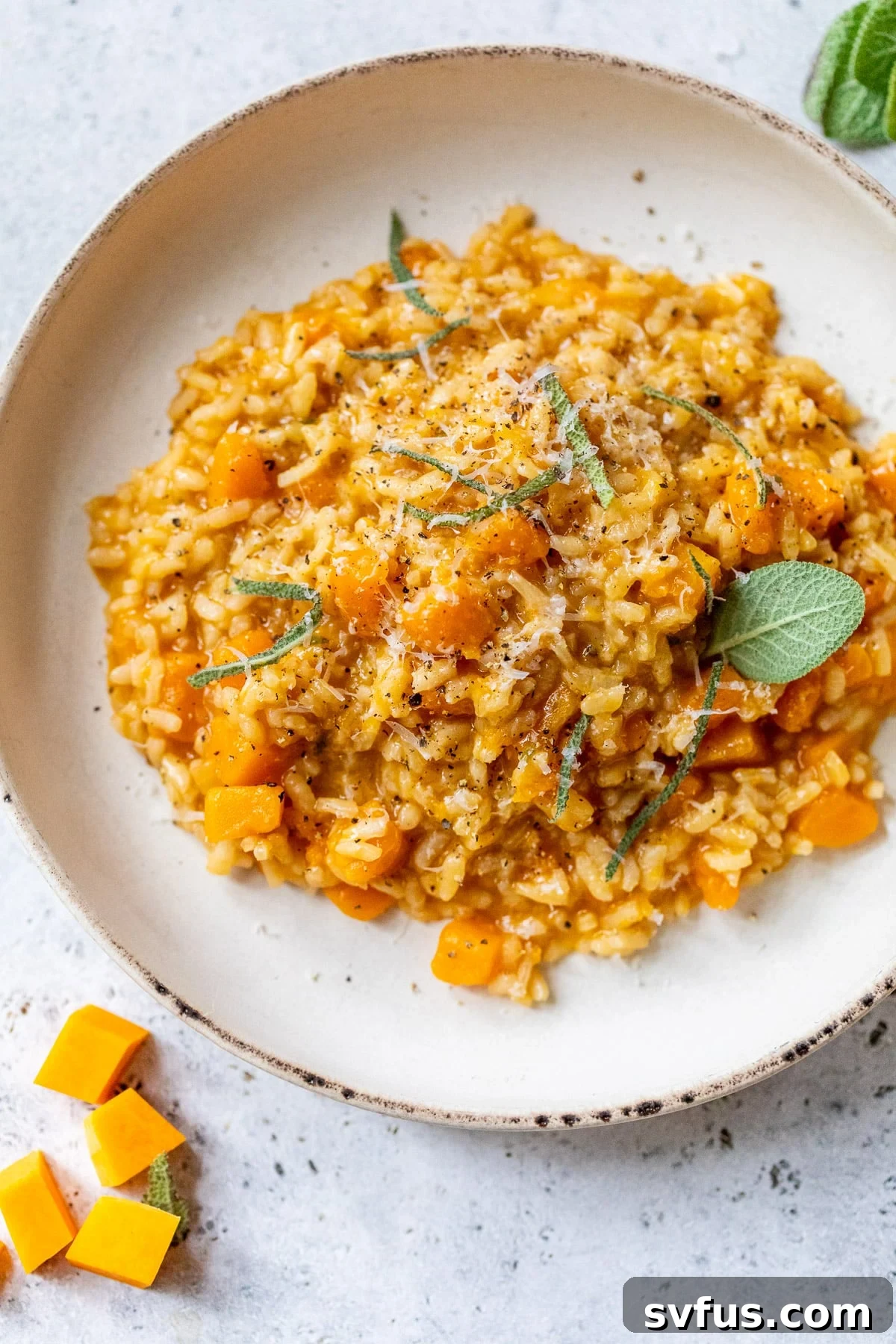
Why You’ll Fall in Love with This Butternut Squash Risotto

This Butternut Squash Risotto isn’t just a meal; it’s an experience that captures the very essence of autumn. Here’s why it deserves a coveted spot in your fall cooking repertoire, promising warmth and satisfaction with every spoonful:
- A Seasonal Culinary Masterpiece: It perfectly embodies the spirit of fall. The vibrant sweetness of fresh butternut squash, coupled with the earthy, peppery notes of sage, transforms this classic Italian dish into a truly seasonal delight. Every spoonful offers a taste of the harvest, making it an exquisite choice for holiday meals, festive gatherings, or a comforting weeknight treat. Its rich, autumnal hues and comforting aroma are guaranteed to make your kitchen feel cozy and inviting.
- Unparalleled Creaminess: The magic of risotto lies in its ability to achieve a luxurious, velvety texture, and this recipe delivers beyond expectation. By slowly cooking starchy Arborio rice in warm broth, allowing it to gradually release its starches, and finishing it with a generous amount of freshly grated Parmesan cheese, we create a dish that is unbelievably rich and smooth. This method truly takes comfort food to an elevated level, resulting in a texture that is silky and almost melts in your mouth with every bite.
- A Fresh Approach to Butternut Squash: While butternut squash soups, purees, and roasted sides are undeniably delicious staples, this risotto offers an exciting and novel way to enjoy this versatile winter squash. Folding tender, sautéed (or even pre-roasted!) butternut squash cubes into creamy risotto introduces a delightful textural contrast and a profound depth of flavor that might just become your new favorite application for this seasonal gem. It’s a wonderful way to diversify your use of seasonal produce beyond the usual.
- Surprisingly Simple to Master: Don’t let the gourmet reputation of risotto intimidate you. While it requires a bit of attention and consistent stirring, the process itself is incredibly meditative and straightforward. Many home cooks find the rhythmic stirring to be quite relaxing, turning a cooking task into a calming activity. The most challenging part, undeniably, is peeling and chopping the firm butternut squash, but even that can be effortlessly circumvented by purchasing pre-cut squash from your local grocery store. With this shortcut, your path to a gourmet-quality risotto becomes even smoother, proving that sophisticated flavors can be achieved with relative ease right in your own kitchen.
Table of Contents
- Why You’ll Fall in Love with This Butternut Squash Risotto
- Mastering the Ingredients for Perfect Butternut Squash Risotto
- Exciting Variations to Customize Your Risotto
- Step-by-Step Guide: How to Craft Your Butternut Squash Risotto
- Expert Tips for an Unforgettable Butternut Squash Risotto
- Storing and Reheating Your Butternut Squash Risotto
- More Delightful Fall Side Dishes
- Butternut Squash Risotto Recipe Card
Prepare yourself for a truly delightful culinary journey into the heart of autumn flavors. This Butternut Squash and Sage Risotto is not just a dish; it’s a warm embrace in a bowl, a testament to the comforting power of simple, fresh ingredients. Each spoonful is a symphony of textures and tastes: from the tender, subtly sweet cubes of squash to the rich, savory depth of the creamy Arborio rice. It’s the kind of meal that wraps you in cozy vibes, making even the chilliest days feel a little brighter. The harmonious blend of earthy sage and the inherent sweetness of butternut squash creates a flavor profile that is both sophisticated and deeply satisfying, embodying the very best of seasonal cooking and offering a true taste of fall.
Many perceive risotto as a daunting kitchen endeavor, often associated with endless stirring and meticulous timing. However, I find the process to be quite the opposite – almost therapeutic. The rhythmic stirring, the gradual absorption of the broth, and the transformation of humble rice into a luxurious, creamy masterpiece can be incredibly relaxing and meditative. It’s a culinary dance where patience is richly rewarded. The most strenuous part, undeniably, is peeling and chopping the firm butternut squash, but even that can be effortlessly circumvented by purchasing pre-cut squash from your local grocery store. With this shortcut, your path to a gourmet-quality risotto becomes even smoother, leaving you more time to savor the cooking experience and enjoy the delicious aromas filling your kitchen.
The beauty of risotto lies in its simplicity and the quality of its components. You’re essentially coaxing starch from the rice, drop by drop, creating that signature silky consistency. This process, while requiring attention, is far from complicated. Once the risotto achieves its luscious texture – tender yet with a slight al dente bite – a final swirl of butter and a generous shower of freshly grated Parmesan cheese elevate it to pure indulgence. These finishing touches, known as mantecare, are what give risotto its characteristic gloss and profound richness, making it truly irresistible. If you’ve savored the bright, fresh flavors of my tomato risotto during the summer months, then you are absolutely going to adore the comforting, earthy elegance of this butternut squash version as autumn arrives. It’s a natural progression, bringing seasonal warmth and depth to your table with every perfectly creamy mouthful.
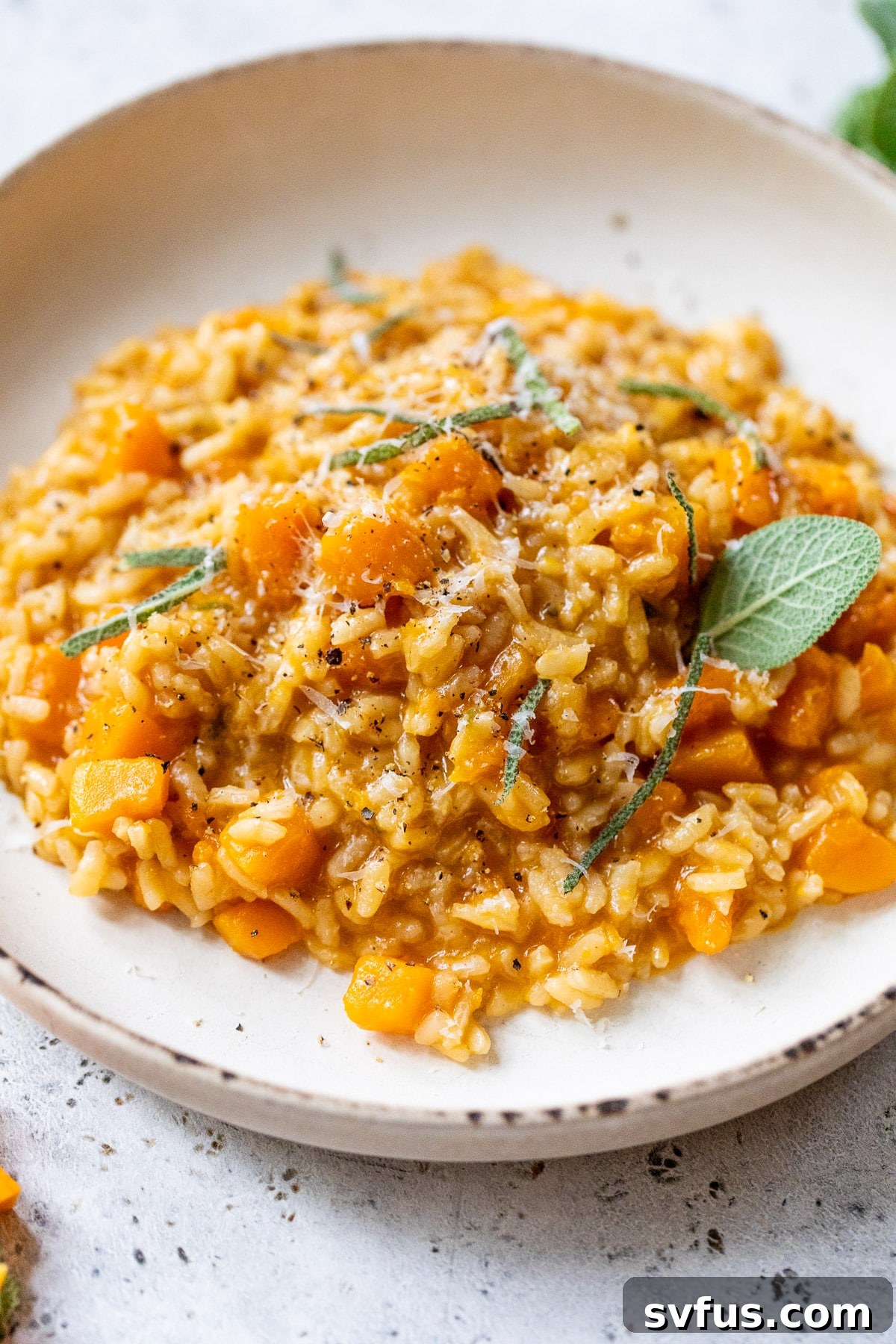
Mastering the Ingredients for Perfect Butternut Squash Risotto
The success of any great dish often comes down to the quality and understanding of its ingredients. This Butternut Squash Risotto is no exception. Here’s a closer look at the key components and why they matter, ensuring you create a dish that’s bursting with flavor and boasts a perfect, velvety texture:
The Foundation: Broth
Broth: The choice of broth significantly influences the overall flavor profile of your risotto. I personally prefer using a high-quality vegetable broth for this recipe. Its delicate flavor beautifully complements the natural sweetness of the butternut squash, keeping the dish wonderfully vegetarian-friendly and allowing the autumn flavors to truly shine without competition. However, if you’re not adhering to a strictly vegetarian diet, a good chicken broth can also be used, lending a slightly richer, more savory undertone. The crucial tip here, regardless of your choice, is to ensure your broth is always warm – keeping it at a gentle simmer in a separate saucepan will prevent shocking the rice, ensuring a smooth, continuous cooking process and contributing significantly to that coveted creamy texture. Never use cold broth!
The Star: Butternut Squash
Butternut Squash: This is, of course, the vibrant heart of our risotto! Its naturally sweet, nutty, and slightly earthy flavor is what defines this dish. You have a few options for preparation: you can either dice a fresh butternut squash into small, even cubes yourself, which offers the freshest flavor and a satisfying firmness. For convenience and to save precious prep time, many grocery stores offer pre-chopped squash in their produce section. If fresh isn’t an option or you’re short on time, frozen squash can also be used directly from the freezer; simply note that it might take a few extra minutes to cook through. Don’t limit yourself though – if butternut squash is out of season or unavailable, feel free to experiment with other winter squashes like acorn or delicata, sweet potatoes, or even pumpkin for a similar delightful result and a unique twist on the classic.
The Aromatic: Fresh Sage
Fresh Sage: This aromatic herb is indispensable for capturing the quintessential fall flavor profile of this risotto. It offers a subtle, earthy, slightly peppery, and piney aroma that harmonizes perfectly with the sweetness and richness of the squash. It’s vital to use fresh sage leaves, finely chopped, rather than dried or ground sage. The fresh leaves not only infuse the dish with a brighter, more nuanced flavor during cooking but also provide a beautiful, fragrant, and sometimes crispy garnish for the finished product, adding visual appeal and an extra layer of taste that truly enhances the autumn theme.
The Heart: Arborio Rice
Arborio Rice: This is the non-negotiable hero of any authentic risotto. Its short, plump, and oval-shaped grains are renowned for their high starch content, specifically amylopectin. As the rice cooks slowly and gradually absorbs the warm broth, this starch is steadily released, creating the signature creamy, almost velvety texture that distinguishes true risotto. Unlike other rice varieties, Arborio maintains a pleasant chewiness at its core even when fully cooked, contributing to the desirable al dente texture. No other rice variety can truly replicate this unique characteristic, so stick with Arborio for the best, most authentic results!
The Finishing Touch: Parmesan Cheese
Parmesan Cheese: The final flourish that takes this risotto from delicious to truly sublime. Its sharp, salty, and umami-rich notes are essential for balancing the sweetness of the squash and adding a profound depth of flavor. For the ultimate melt and flavor, I strongly recommend shredding your Parmesan from a high-quality block yourself. Pre-shredded cheeses often contain anti-caking agents (like cellulose) that can hinder their ability to melt smoothly, potentially leading to a slightly grainy or clumpy texture. Freshly grated Parmesan, with its superior quality and moisture content, melts beautifully into the risotto, adding a rich depth and an extra layer of creaminess that is simply unmatched. Always have a little extra on hand for garnish!
This section provides deeper insights into selected ingredients, offering tips for optimal flavor and texture. For the complete list of ingredients and their exact measurements, please refer to the detailed recipe card at the end of this article.
Exciting Variations to Customize Your Risotto
While the classic Butternut Squash Risotto is perfection in itself, don’t hesitate to personalize it with these delightful variations to suit your taste or dietary needs, making it truly your own culinary creation:
- Wine-Free Option: If you prefer to omit alcohol from your cooking, simply replace the dry white wine with an equal amount of additional warm vegetable broth. To replicate the slight acidity and depth that wine provides, add a small splash (about 1-2 teaspoons) of apple cider vinegar or fresh lemon juice at the point where the wine would typically be added. This will help brighten the flavors without the alcohol content.
- Dairy-Free / Vegan Delight: To transform this into a luscious vegan butternut squash risotto, swap out the traditional dairy butter for your favorite high-quality vegan butter alternative. For the cheese, use a reliable, meltable shredded vegan Parmesan cheese. The inherent creaminess of risotto, derived from the rice’s starch, will still shine through beautifully, making it a satisfying plant-based meal that doesn’t compromise on texture or flavor.
- Embrace Winter Spices: For an even deeper autumnal flavor profile and a touch of warming complexity, introduce a pinch of complementary spices. A dash of ground cinnamon, nutmeg, or even a hint of ground cloves added with the other spices (shallots and garlic) can enhance the squash’s natural sweetness and bring a wonderfully cozy aroma to the dish, making it even more festive and layered in flavor.
- Crispy Sage Garnish: Elevate your presentation and add an incredible textural contrast with crispy sage leaves. Simply heat a shallow layer of olive oil in a small skillet over medium heat. Once hot, carefully add the reserved fresh sage leaves and fry them for 30-60 seconds until they become perfectly crisp and slightly darker green (be careful not to burn them, as they cook very quickly!). Transfer them to a paper towel-lined plate to drain any excess oil, then crumble or place them whole atop your finished risotto for an exquisite crunch and burst of concentrated sage flavor. This garnish is a game-changer!
- Additional Garnish Ideas: Get creative with your toppings to add extra layers of flavor and texture! Consider crumbled crispy bacon or prosciutto for a savory, smoky note (if not vegetarian). A dollop of creamy goat cheese adds a tangy richness that beautifully cuts through the risotto’s richness. Freshly chopped parsley or chives can brighten the dish with a touch of herbaceous freshness, while a subtle drizzle of maple syrup can accentuate the squash’s natural sweetness for an unexpected yet delightful twist. Toasted pecans or walnuts also add a fantastic crunch and nutty flavor.
Step-by-Step Guide: How to Craft Your Butternut Squash Risotto
Creating this creamy Butternut Squash Risotto is a rewarding culinary journey that, while requiring a bit of patience, is surprisingly straightforward. Follow these detailed steps to achieve a restaurant-quality dish bursting with fall flavors in your own kitchen:
Step 1: Prepare Your Broth. The first crucial step is to prepare your broth. Pour the vegetable (or chicken) broth into a medium saucepan. Place it over medium-low heat and bring it to a gentle simmer. It’s absolutely essential to keep your broth warm throughout the entire risotto-making process. Introducing cold broth to hot rice will instantly drop the temperature of your pan, shocking the rice grains. This shock causes the starches to tighten up, making it much harder for the rice to absorb liquid evenly and release the starches that create the creamy texture. The result can be a longer cooking time and a gluey, rather than velvety, risotto. Keep the saucepan covered to maintain its heat and a steady simmer.
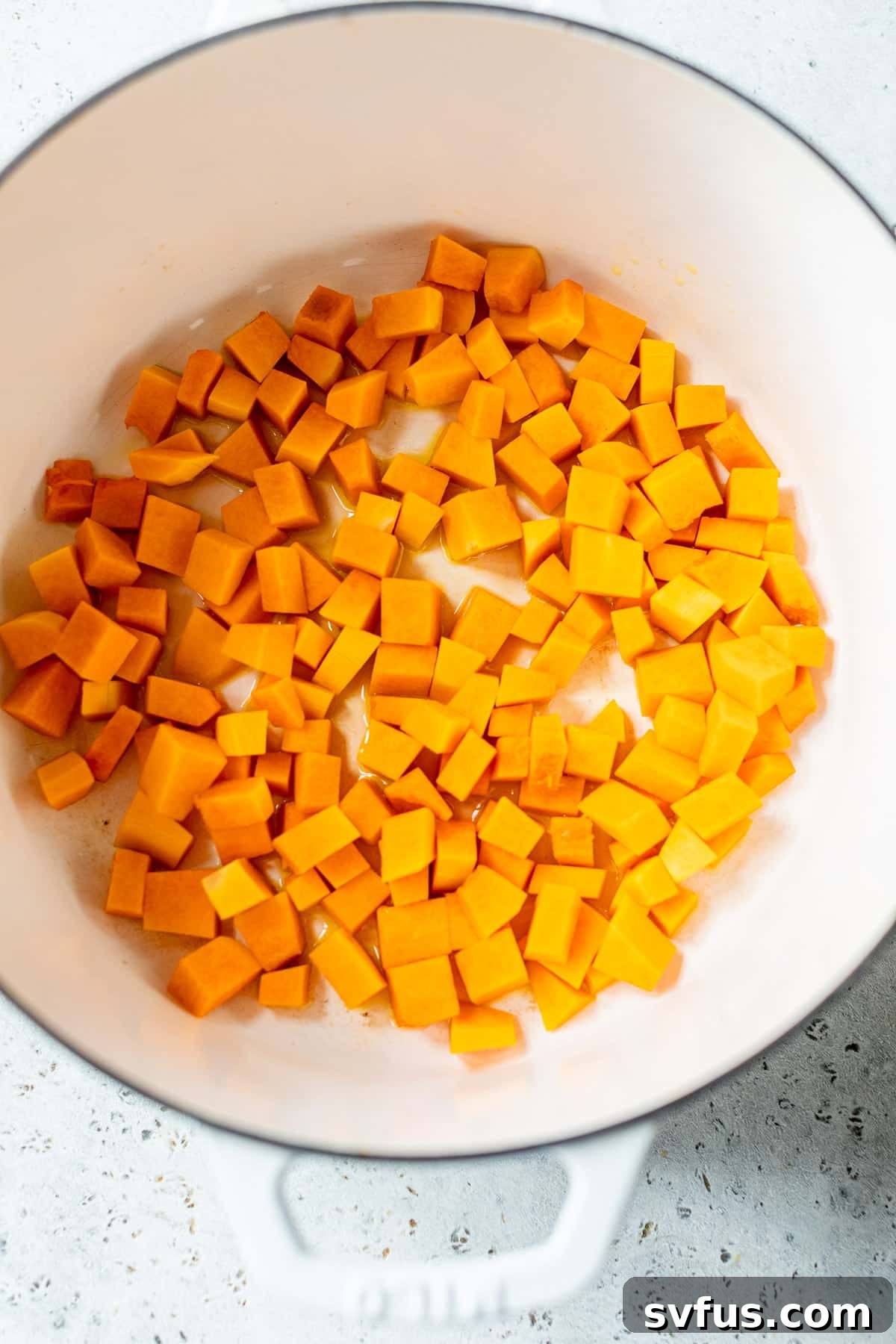
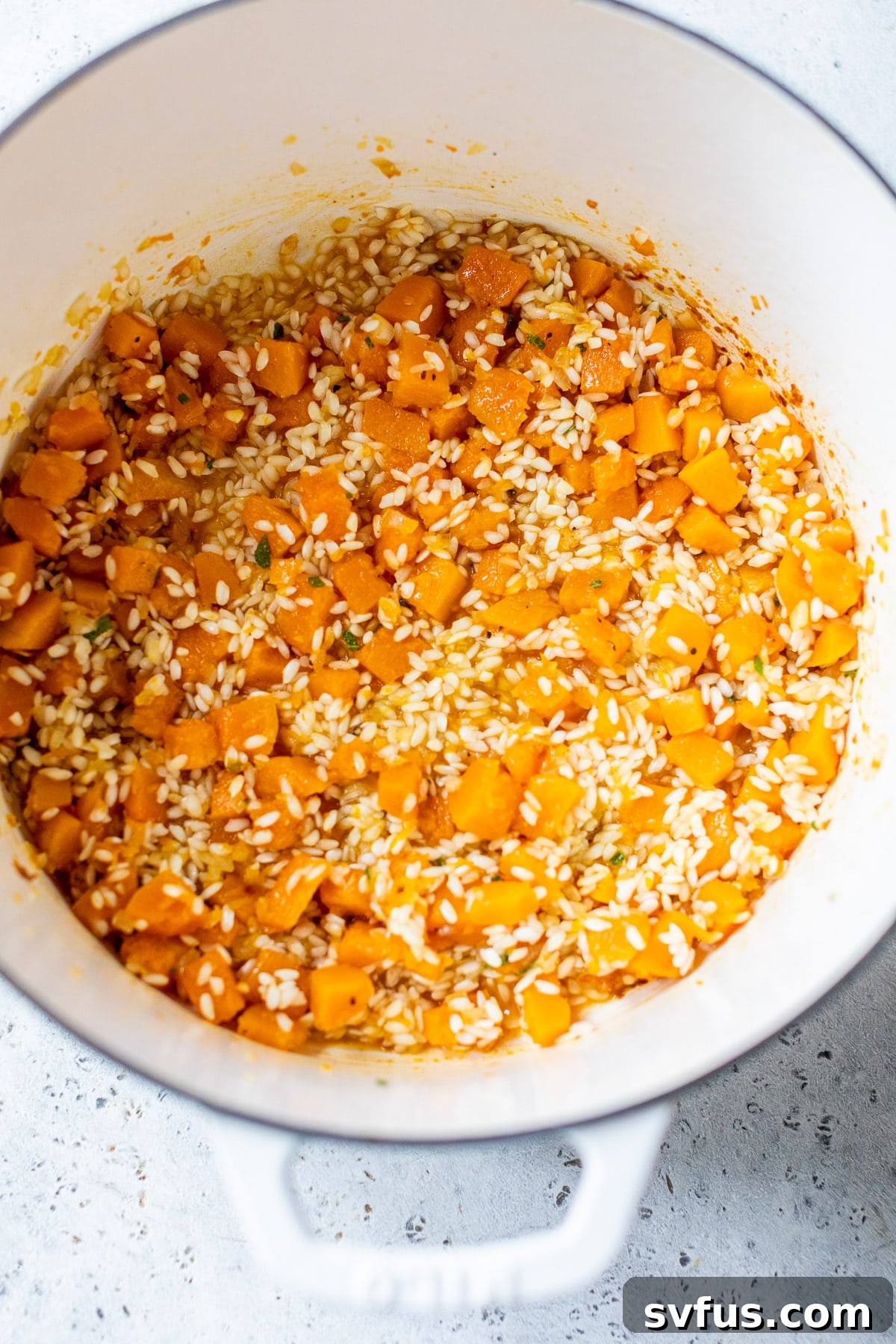
Step 2: Sauté the Aromatics and Squash. In a large, deep skillet or sturdy Dutch oven, heat the olive oil over medium heat. Once the oil is shimmering and hot, add the diced butternut squash cubes. Sauté the squash for about 4 minutes, stirring frequently to ensure even cooking and to prevent sticking. You want the squash to begin softening slightly and develop a beautiful, light golden hue. Next, add the finely diced shallot, minced garlic, finely chopped fresh sage, and the initial teaspoon of salt. Continue to sauté for an additional 4 minutes, stirring regularly. During this time, the aromatics will become wonderfully fragrant, and the shallot should turn translucent, laying a flavorful foundation for your risotto.
Step 3: Toast the Arborio Rice. Add the Arborio rice directly into the skillet with the sautéed squash and aromatics. Stir continuously for 1 minute. This crucial “toasting” step, known in Italian as tostatura, is essential. It helps to lightly toast and seal the exterior of each rice grain, which prevents it from breaking down too quickly and becoming mushy during the extended cooking process. More importantly, this process contributes significantly to the desirable al dente bite in the finished risotto and also deepens the nutty flavor of the rice itself. After toasting, pour in the dry white wine (or your chosen wine-free alternative). Continue to stir constantly until the rice has absorbed almost all the liquid. The alcohol will evaporate during this stage, leaving behind a wonderful depth and complexity of flavor that enriches the entire dish.
Step 4: Gradually Add the Broth for Creaminess. Now begins the signature, meditative technique of making risotto. Start by ladling approximately 1 cup of your warm broth into the skillet. Stir gently but consistently, allowing the rice to slowly absorb the liquid. As the broth is absorbed, the rice will release its starches, creating a creamy, luxurious emulsion. Once most of the liquid has been absorbed and the mixture thickens slightly, ladle in another cup of warm broth. Continue this patient process, adding one cup of broth at a time and stirring until almost fully absorbed before adding the next. This gradual, deliberate addition, typically taking between 20-25 minutes, is what builds the risotto’s characteristic velvety texture and ensures the rice cooks perfectly. Taste a grain of rice occasionally to check for doneness; it should be tender but still have a slight, pleasant resistance or “bite” in the center (al dente). You may not need all the broth, or you may need a little extra.
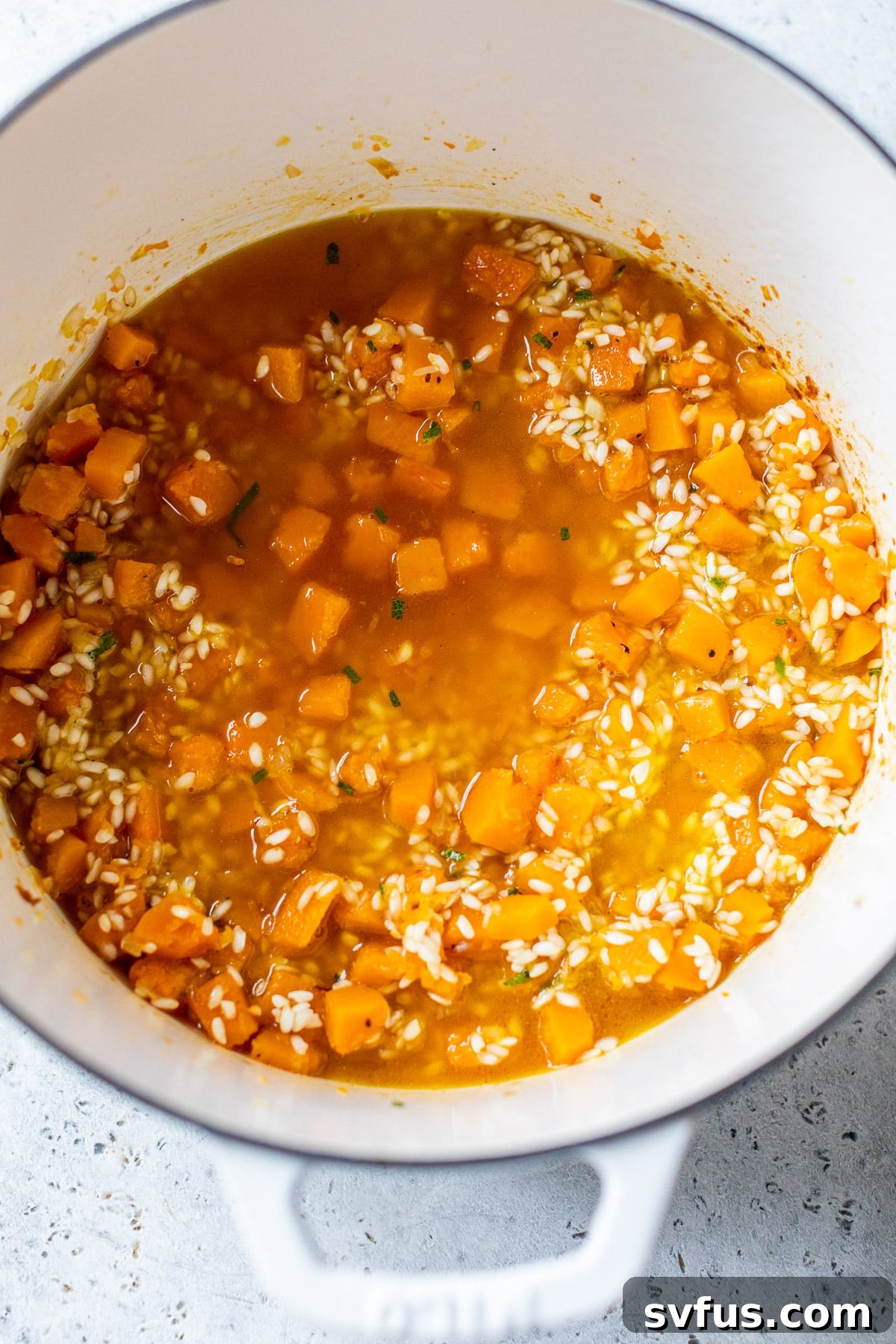
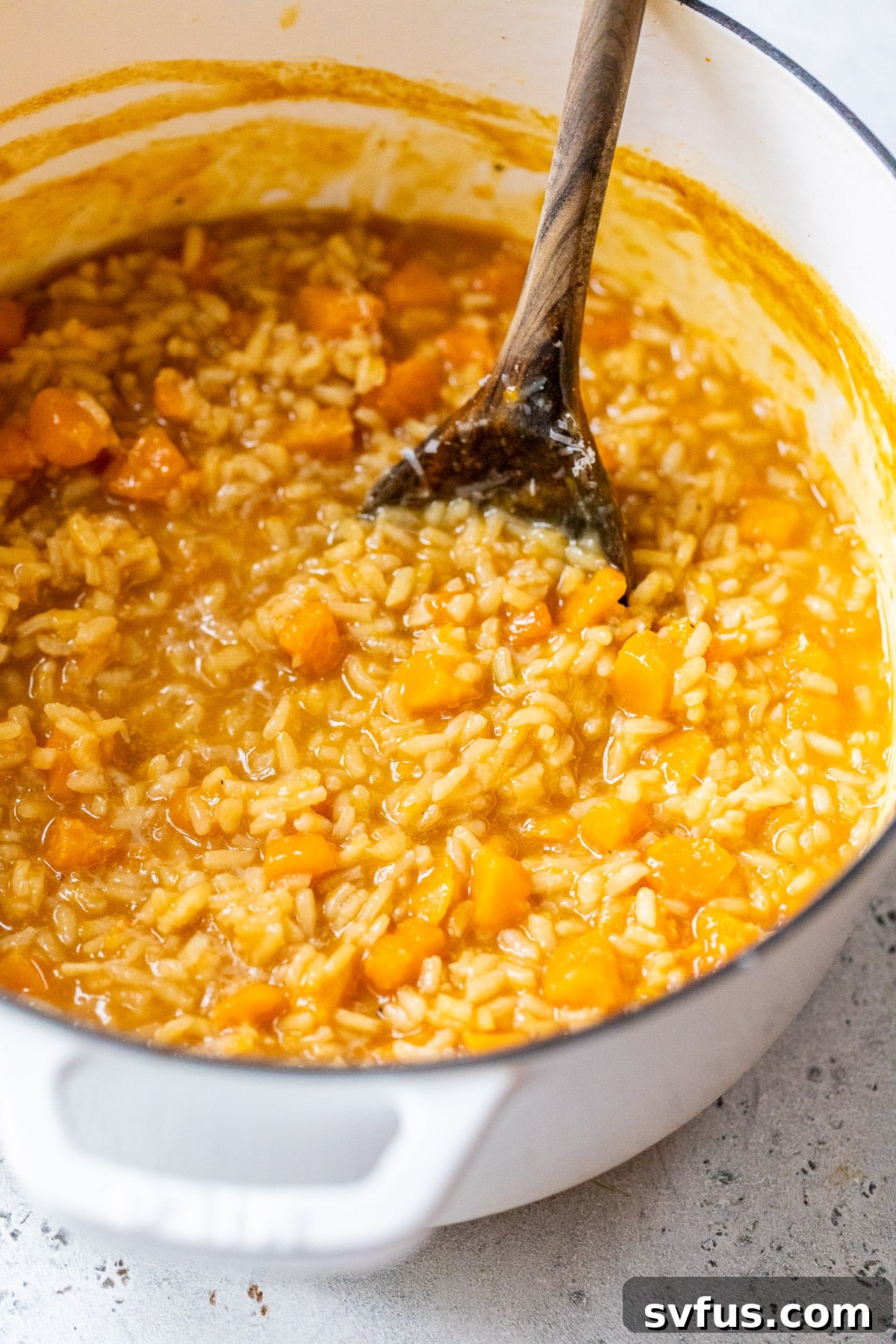
Step 5: Finish with Butter and Parmesan. Once the risotto has reached its perfect creamy consistency and the rice is al dente, remove the skillet from the heat immediately. This is the final and crucial step, known as mantecare, which adds richness, a beautiful sheen, and binds all the flavors together. Stir in the cold butter and the freshly grated Parmesan cheese. The cold butter will emulsify beautifully into the hot risotto, adding extra richness and gloss. Stir vigorously until both the butter and cheese are completely melted and thoroughly incorporated, creating a truly luxurious, cohesive, and incredibly flavorful texture. Taste the risotto and adjust seasoning with additional salt and freshly ground black pepper as needed. Sometimes a final squeeze of fresh lemon juice can also brighten the flavors and add a pleasant zest.
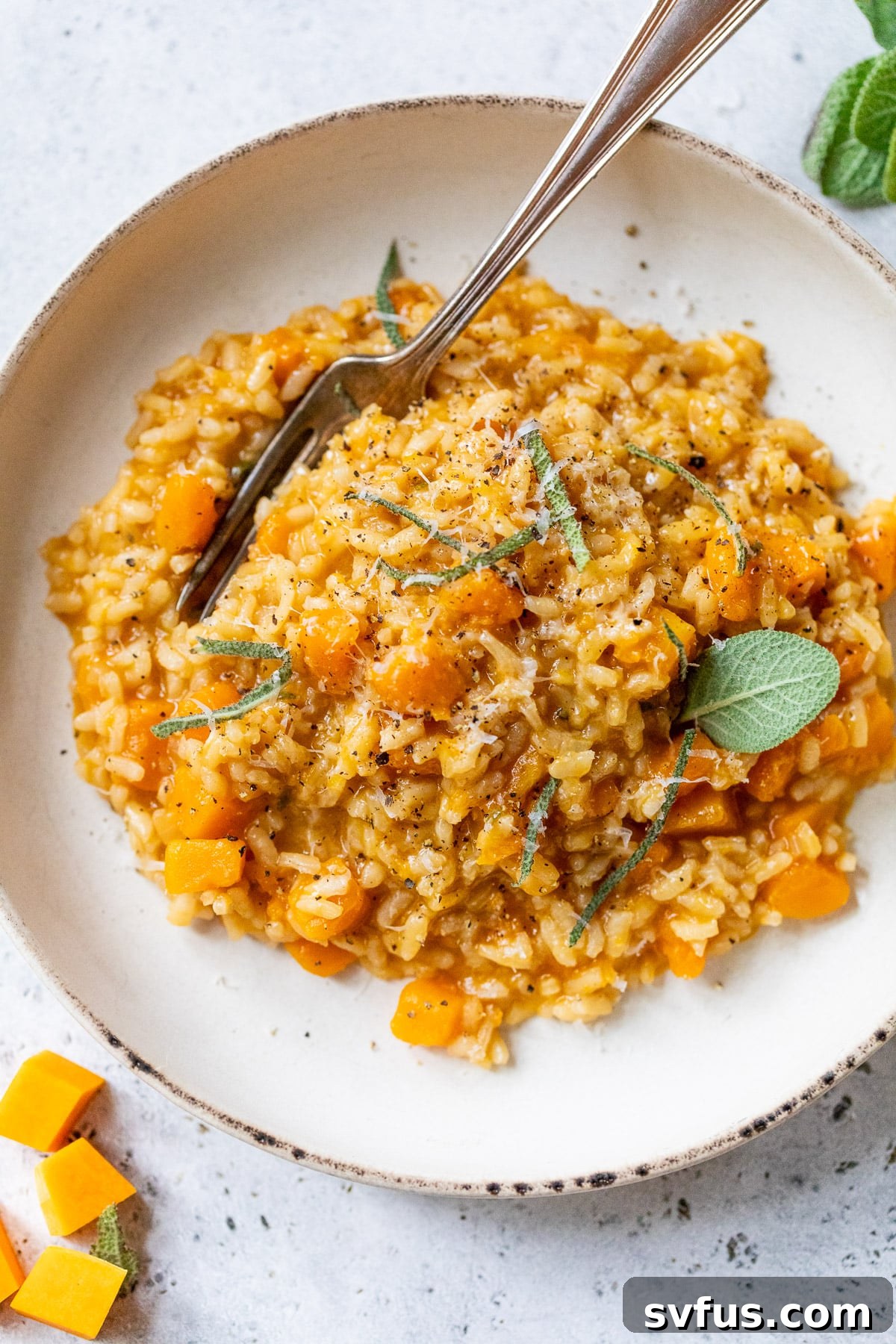
Garnish your magnificent Butternut Squash Risotto generously with additional fresh sage leaves (perhaps even crispy fried sage, as suggested in our variations!) and a final sprinkle of freshly grated Parmesan cheese. Serve immediately, as risotto is always at its absolute best when enjoyed piping hot, fresh off the stove. Prepare to be delighted by every rich, creamy, and flavorful bite of this autumnal masterpiece!
Expert Tips for an Unforgettable Butternut Squash Risotto
Crafting the perfect risotto is an art, but one that is easily mastered with a few key techniques and considerations. Keep these expert tips in mind to ensure your Butternut Squash Risotto is nothing short of spectacular, impressing even the most discerning palates:
- The Importance of Toasting the Grains (Tostatura): This initial step, where the Arborio rice is lightly toasted in olive oil or butter before any liquid is added, is absolutely vital. Toasting creates a thin, protective barrier around each grain, which prevents it from becoming overly soft or mushy during the extended cooking process. More importantly, it helps the rice maintain its desirable al dente texture – a slight chew in the center. Furthermore, it subtly deepens the nutty flavor of the rice itself, adding a foundational layer of taste to your final dish. Don’t rush or skip this minute-long step!
- Always Use Warm Broth – It’s Non-Negotiable: This is arguably the most crucial rule for successful risotto. Introducing cold broth to hot rice will instantly drop the temperature of your pan, shocking the rice grains. This shock causes the starches to tighten up, making it much harder for the rice to absorb liquid evenly and release the starches that create the creamy texture. The result can be a longer cooking time and a gluey, rather than velvety, risotto. Keep your broth at a gentle simmer in a separate saucepan throughout the entire cooking process, adding it warm, ladle by ladle, for consistent cooking and maximum creaminess.
- The “Wave” Test for Perfect Doneness: Knowing when your risotto is perfectly cooked is key to achieving that ideal texture. You’ll know it’s ready when it passes the “wave” test: if you drag a wooden spoon across the bottom of the pan, the risotto should slowly flow back into the empty space, like a gentle, creamy wave, rather than holding a rigid line or being too soupy. The rice itself should be tender but still possess a slight, pleasant resistance or “bite” in the very center – this is what Italians describe as al dente. It shouldn’t be crunchy, but it definitely shouldn’t be mushy either.
- Perfect Pairings for Any Occasion: This Creamy Butternut Squash Risotto is incredibly versatile and can be adapted for various meals. Serve it as a comforting and hearty fall side dish, perhaps alongside a vibrant and fresh apple pecan salad for a beautifully balanced meal. To transform it into a robust and satisfying main course, consider topping it with perfectly cooked air fryer chicken breast, pan-seared scallops, roasted shrimp, or even a medley of roasted wild mushrooms for a truly elegant vegetarian main. The possibilities are endless!
- Embrace the Stirring (But Don’t Overdo It!): Risotto absolutely requires consistent stirring, especially when you’re gradually adding the broth. This continuous motion encourages the rice grains to gently rub against each other, aiding in the release of their starches to create that desirable creamy consistency. However, avoid stirring incessantly or too vigorously, as this can break down the rice grains too much, leading to a gluey texture. A moderate, consistent stirring rhythm is key – just enough to prevent sticking and promote that beautiful creaminess without overworking the rice.
Chef’s Pro Tip
Deepen the Butternut Squash Flavor with Roasting
To truly unlock and intensify the sweet, nutty, and earthy flavors of your butternut squash, I highly recommend considering an extra step: roasting the cubes before adding them to the risotto. Simply toss the diced squash with a little olive oil, salt, and pepper, then spread them in a single layer on a baking sheet. Roast in a preheated 400ºF (200ºC) oven for 25 to 35 minutes, or until they are fork-tender and beautifully caramelized around the edges. This simple pre-treatment creates an incredible depth of flavor and sweetness that elevates the entire dish, taking your Butternut Squash Risotto to an entirely new level of deliciousness and complexity!
Storing and Reheating Your Butternut Squash Risotto
While risotto is undeniably at its absolute best when served fresh, immediately after preparation, any leftovers can certainly be stored and enjoyed later with a little care. Be aware that the texture may change slightly upon cooling and reheating – it will likely become thicker and less ‘flowing’ – but with the right technique, it will still be incredibly flavorful and satisfying, making your efforts worthwhile for a second meal.
- Refrigerator Storage: To store leftovers safely, allow the risotto to cool completely to room temperature first. This is crucial for food safety to prevent bacterial growth. Once cooled, transfer it to an airtight container. Refrigerate promptly, and it will remain fresh and delicious for up to 3 days.
- Freezer Storage: For longer storage, you can freeze leftover risotto. Transfer the cooled risotto to a freezer-safe bag or container, ensuring it’s tightly sealed to prevent freezer burn and maintain quality. It can be stored effectively in the freezer for about 1 month. When you’re ready to enjoy it, simply transfer the frozen risotto to the refrigerator and allow it to thaw overnight before reheating.
- Reheating Instructions: Reheating risotto requires a gentle touch to revive its creamy consistency and prevent it from becoming dry or clumpy. Transfer the desired portion of risotto to a skillet or saucepan over medium-low heat. Add a generous splash (or two!) of vegetable or chicken broth (or even a little water) to help rehydrate the rice and loosen its texture. Stir frequently and gently until the risotto is warmed through and has regained a desirable creamy texture. Avoid high heat, as it can cause the rice to dry out quickly or become sticky. You might find you need to add a bit more liquid than you initially expect to achieve a consistency closer to its original state. A final pat of butter or a sprinkle of fresh Parmesan can also help restore its richness.
More Delightful Fall Side Dishes
Slow Cooker Pumpkin Curry Soup
A deliciously creamy and aromatic soup that’s incredibly easy to make. Let your slow cooker do all the work, filling your home with wonderful autumn scents!
Hearty Potato Brussels Sprouts Salad
A robust and flavorful salad featuring perfectly roasted potatoes and tender Brussels sprouts, tossed in a zesty leek dressing. A fantastic complement to any fall meal.
Refreshing Carrot Apple Ginger Soup
A delightful blend of sweet carrots, crisp apples, and zesty ginger, creating a vibrant, healthy, and subtly warming soup perfect for any season, especially autumn.
Brown Butter Sweet Potatoes
Sweet and savory, these roasted sweet potatoes are elevated with the rich, nutty, and irresistible flavor of brown butter and aromatic garlic – a side dish favorite that’s sure to impress.
Did you try this irresistible Butternut Squash Risotto recipe? We’d love to hear from you! Please leave a comment below and share your star rating. Your feedback helps us and other home cooks in our community!
Butternut Squash Risotto Recipe Card
By: Erin Alvarez
Yields: 6 servings
Prep time: 10 minutes
Cook time: 25 minutes
Total time: 35 minutes
A crisp fall day calls for a bowl of this creamy and comforting Butternut Squash Risotto. It’s bursting with seasonal fall flavors, surprisingly easy to make, and perfect as a hearty autumn dinner or a luxurious side dish.

Print Recipe
Ingredients
- 3 cups vegetable broth (or chicken broth), plus more as needed
- 2 tbsp olive oil
- 2 cups butternut squash, diced small (fresh or frozen)
- 1 large shallot, diced
- 3 garlic cloves, minced
- 2 tsp fresh sage, chopped, plus extra for garnish
- 1 tsp salt
- 1 cup Arborio rice
- ½ cup dry white wine (or ½ cup vegetable broth + splash of apple cider vinegar/lemon juice)
- 2 tbsp butter (or vegan butter)
- ½ cup Parmesan cheese, freshly grated, plus more for garnish (or vegan Parmesan)
- Salt and freshly ground black pepper, to taste
Instructions
- Warm the Broth: Pour the broth into a medium saucepan and heat it over medium-low until simmering gently. Keep it warm throughout the cooking process.
- Sauté Squash and Aromatics: In a large, deep skillet or Dutch oven, heat the olive oil over medium heat. Add the diced butternut squash and sauté for 4 minutes, stirring frequently until slightly softened. Then, add the diced shallot, minced garlic, chopped fresh sage, and 1 tsp salt. Continue to sauté for an additional 4 minutes, until the aromatics are fragrant and the shallot is translucent.
- Toast the Rice: Add the Arborio rice to the skillet. Stir continuously for 1 minute to toast the grains. Pour in the dry white wine (or substitute) and stir constantly until the liquid has been almost completely absorbed by the rice.
- Gradually Add Broth: Ladle 1 cup of the warm broth into the skillet. Stir gently but consistently, allowing the rice to absorb the liquid. Once most of the broth is absorbed, add another cup. Continue this process, adding one cup of broth at a time and stirring until absorbed, until all the broth is used. This process typically takes 20-25 minutes, resulting in tender, creamy rice with a slight al dente bite.
- Finish and Serve: Remove the skillet from the heat. Stir in the butter and freshly grated Parmesan cheese until completely melted and incorporated, creating a rich, creamy consistency. Taste and adjust seasoning with additional salt and freshly ground black pepper as desired. Garnish generously with extra fresh sage leaves and Parmesan cheese. Serve immediately.
Notes
- *Calories are per serving and are an estimation.
- To enhance the depth of flavor, consider roasting the butternut squash cubes in a 400ºF (200ºC) oven for 25-35 minutes until tender and caramelized, instead of sautéing. This simple step truly elevates the squash’s natural sweetness and nuttiness.
Nutrition (Estimated per Serving)
| Calories: | 276 kcal |
| Carbohydrates: | 35g |
| Protein: | 6g |
| Fat: | 11g |
| Saturated Fat: | 4g |
| Polyunsaturated Fat: | 1g |
| Monounsaturated Fat: | 5g |
| Trans Fat: | 0.2g |
| Cholesterol: | 16mg |
| Sodium: | 1025mg |
| Potassium: | 235mg |
| Fiber: | 2g |
| Sugar: | 3g |
| Vitamin A: | 5393 IU |
| Vitamin C: | 11mg |
| Calcium: | 134mg |
| Iron: | 2mg |
Nutrition information is automatically calculated and should be used as an approximation.