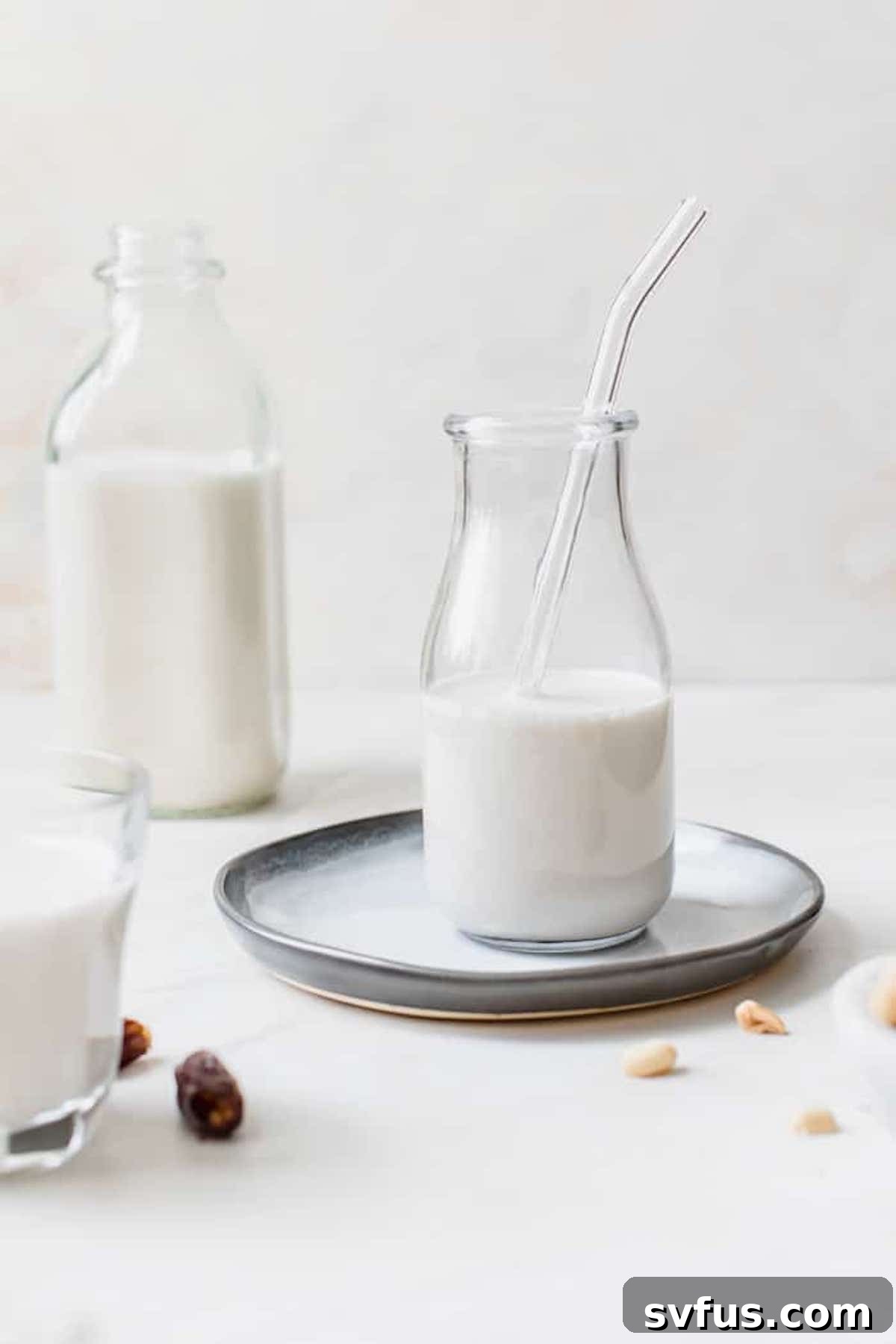
Welcome to the world of homemade peanut milk – a delightful and nutritious dairy-free alternative that will tantalize your taste buds with its rich, creamy texture and distinct peanut butter flavor. Forget about generic store-bought options; crafting your own plant-based milk from scratch ensures unparalleled freshness, purity, and taste. This step-by-step guide will empower you to create a versatile beverage that’s as simple to make as it is delicious to drink.
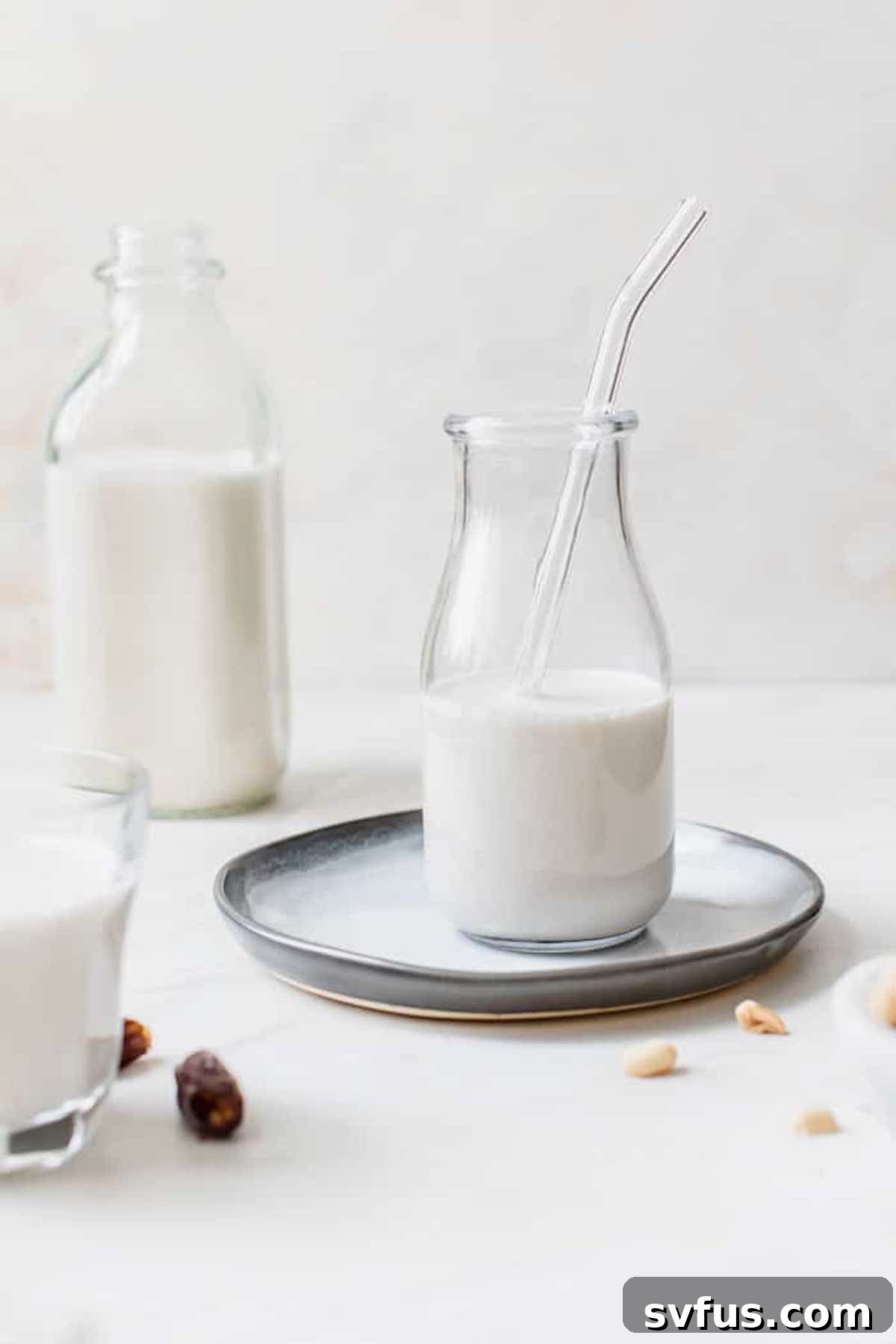
Discover the Delight of Homemade Peanut Milk: Your Ultimate Dairy-Free Guide
In an era where plant-based living is more popular than ever, the market is flooded with various dairy-free milk alternatives, from almond to oat, soy to cashew. But have you ever considered the incredible potential of peanut milk? While homemade nut milks like almond and cashew have gained widespread recognition, peanut milk remains a hidden gem, offering a uniquely rich, nutty flavor that closely resembles your favorite peanut butter in liquid form. Imagine pouring this creamy goodness over your cereal, stirring it into your coffee, or blending it into a smoothie – the possibilities are endless.
While the convenience of store-bought milk is undeniable, there’s a distinct satisfaction and superior quality that comes with making your own. Homemade plant milk boasts a freshness that simply can’t be replicated by mass-produced cartons. You control every ingredient, ensuring no unnecessary additives, preservatives, or sweeteners. This not only makes for a healthier option but also allows you to customize the flavor profile to perfectly suit your preferences. Plus, it’s often more cost-effective in the long run, reducing both your grocery bill and environmental footprint.
If you’re a devout peanut lover, prepare to be amazed. This guide will walk you through the surprisingly simple process of creating your own peanut milk, transforming humble peanuts into a luscious, dairy-free beverage. It’s a game-changer for anyone looking to expand their plant-based repertoire or simply enjoy a fresh, wholesome drink.
And for those who are already enchanted by the magic of homemade peanut milk, you absolutely must try our Chocolate Peanut Milk recipe – it’s an even more indulgent twist on this fantastic base!
Why Choose Homemade Peanut Milk?
Opting for homemade peanut milk offers a myriad of benefits that extend beyond just taste. It’s a conscious choice for health, economy, and environmental sustainability.
Health and Nutritional Advantages
Peanuts are a powerhouse of nutrition, packed with protein, healthy fats, fiber, vitamins (like B vitamins and E), and minerals (such as magnesium, potassium, and zinc). By making peanut milk at home, you harness these nutrients directly. Unlike some commercial plant milks that can be laden with sugars and artificial thickeners, your homemade version is pure. It’s an excellent option for those managing lactose intolerance, dairy allergies, or simply seeking to reduce their dairy intake for health reasons.
Cost-Effectiveness
Buying specialty plant milks can add up quickly. Peanuts, on the other hand, are often more affordable than many other nuts, making peanut milk a budget-friendly alternative. A single bag of peanuts can yield several batches of milk, offering significant savings over time compared to purchasing individual cartons.
Environmental Impact
Choosing homemade plant milk contributes to a more sustainable lifestyle. It reduces the need for extensive packaging, transportation, and industrial processing associated with store-bought alternatives. By utilizing readily available and relatively resource-efficient peanuts, you make a positive impact on the planet.
Unmatched Flavor and Customization
The most compelling reason for many is the superior flavor. The fresh, authentic taste of peanuts shines through, creating a milk that’s rich, slightly sweet, and incredibly satisfying. You have complete control over the sweetness level, the thickness, and even the addition of other flavor enhancers, allowing for endless customization to suit your palate.
Essential Ingredients for Homemade Peanut Milk
Crafting delicious peanut milk requires just a few key ingredients. The quality and type of these ingredients will significantly influence the final taste and texture of your homemade beverage.
- Peanuts: The star of our recipe! For the best flavor, we highly recommend using roasted and unsalted peanuts. Roasting deepens the nutty aroma and flavor, which translates directly into a more robust and “peanut buttery” milk. While you *can* use raw peanuts, the resulting milk will have a milder, less intense peanut flavor. It’s crucial to avoid salted peanuts unless you enjoy a very savory milk, as the salt content will be highly concentrated and potentially overwhelming.
- Filtered Water: The base of your milk. Using filtered water is important as it ensures a clean taste, free from any impurities or off-flavors that tap water might introduce. The quantity can be adjusted slightly to achieve your desired consistency – more water for a thinner milk, less for a creamier one.
- Dates: (Optional, but highly recommended) Pitted dates are a wonderful natural sweetener that adds a subtle caramel-like sweetness without the need for refined sugars. They also contribute to a slightly thicker, more luxurious texture. Adjust the amount based on your sweetness preference. If you don’t have dates, a touch of maple syrup or agave nectar can be used as an alternative, but dates offer additional fiber and nutrients.
- Vanilla Extract: (Optional) A splash of pure vanilla extract elevates the flavor profile, adding warmth and depth that complements the peanuts beautifully. A little goes a long way, but feel free to add more to taste or omit it if you prefer a pure peanut flavor.
The beauty of this recipe lies in its simplicity. If you’ve ever ventured into making other plant-based milks, the process for peanut milk will feel familiar, following the same basic principles but with the unique characteristics of peanuts at its core.
Step-by-Step Guide: How to Make Perfect Peanut Milk
Making peanut milk from scratch is a straightforward process that yields incredibly rewarding results. Follow these detailed steps to ensure a smooth, creamy, and flavorful batch every time.
Step 1: The All-Important Soak
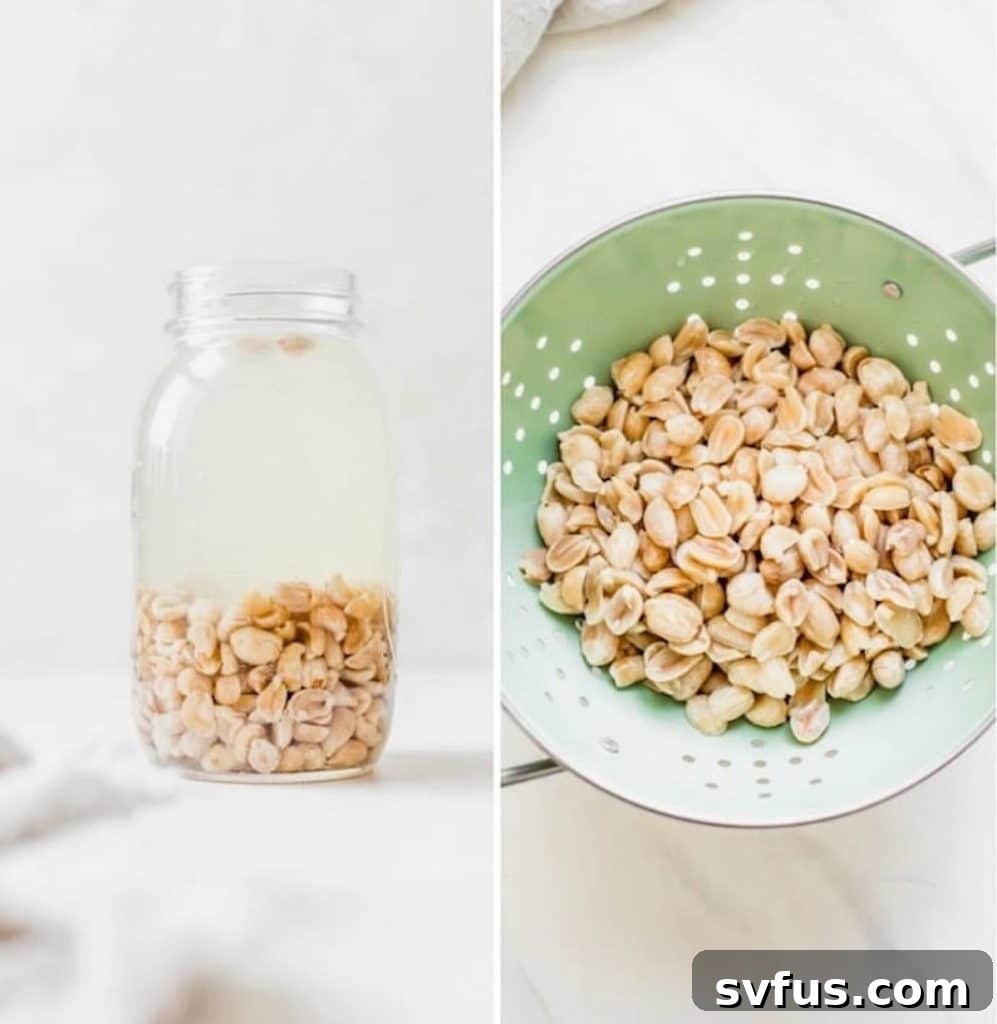
Place 1 cup of unsalted dry roasted peanuts into a bowl or jar. Cover them generously with at least 4 cups of filtered water, ensuring all peanuts are fully submerged. Soaking is a crucial step that helps soften the peanuts, making them easier to blend into a smooth consistency. It also aids in breaking down phytic acid, which can improve nutrient absorption and digestibility. Ideally, soak the peanuts for a minimum of six hours, or even better, overnight in the refrigerator. This longer soak will result in a creamier, more thoroughly blended milk.
Step 2: Rinse, Blend, and Transform
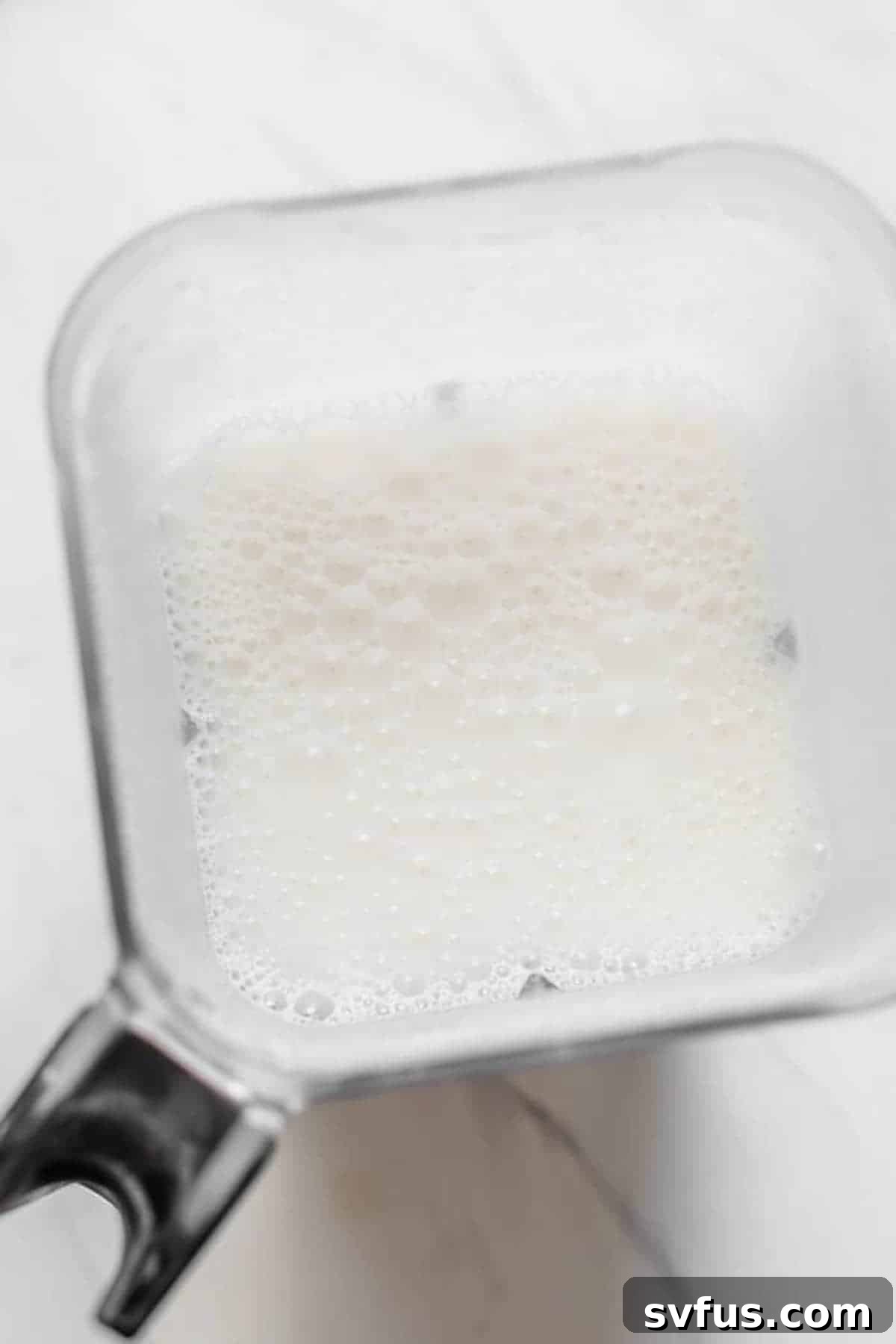
Once the peanuts have thoroughly soaked, pour them into a fine-mesh strainer and rinse them under cold running water. This removes any residual soaking water and helps ensure a fresh taste. Transfer the rinsed peanuts to a high-speed blender. Add 2 1/2 to 3 cups of fresh filtered water (adjusting the amount based on your desired thickness and your blender’s capacity), along with the pitted dates (if using) and vanilla extract (if using). Blend on high for at least 1 minute, or until the mixture appears completely smooth and creamy. You want to ensure the peanuts are fully pulverized to extract maximum flavor and nutrients.
Step 3: The Art of Straining for Smoothness
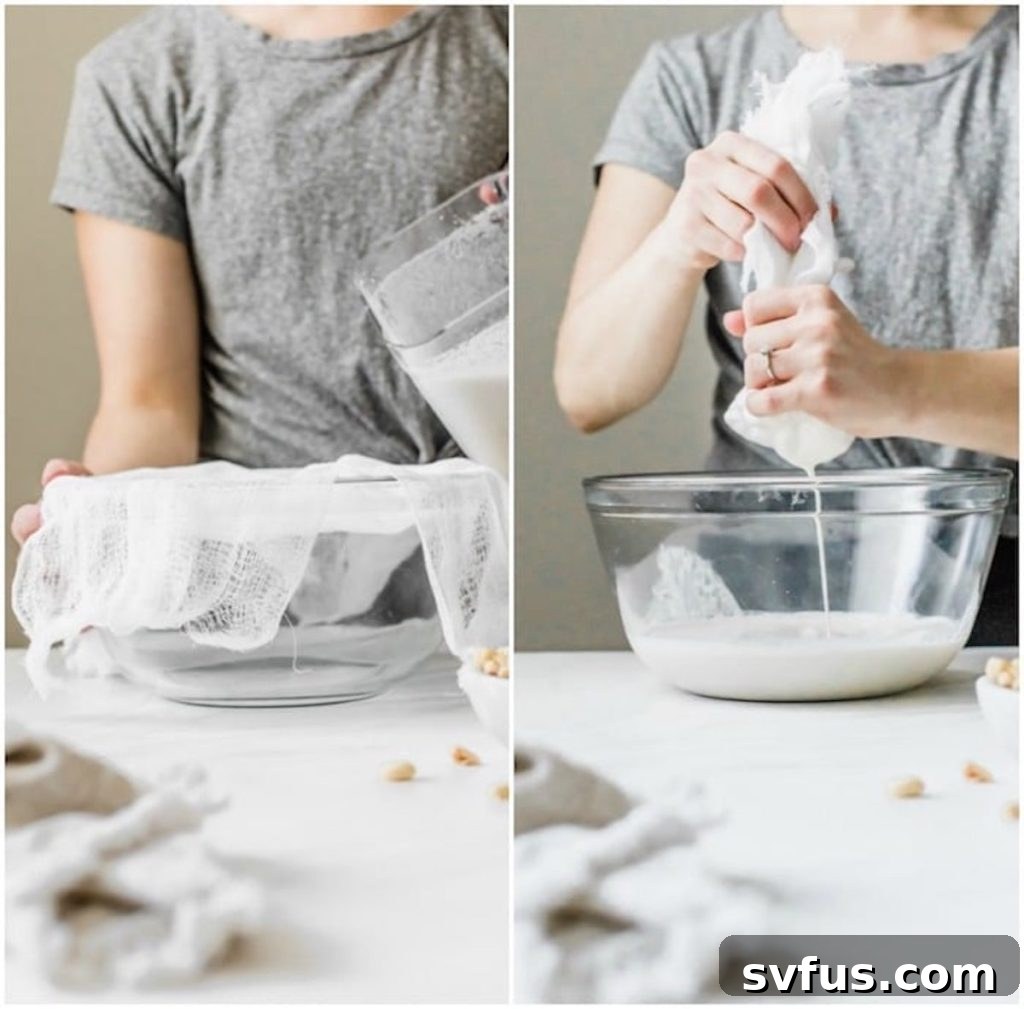
Place a double layer of cheesecloth or a dedicated nut milk bag over a large bowl or container. Carefully pour the blended peanut mixture over the cloth, ensuring it doesn’t spill over the edges. Gather the edges of the cloth or bag and gently but firmly squeeze the pulp to extract all the liquid. This process separates the creamy peanut milk from the fibrous pulp, resulting in a silky-smooth beverage. Don’t rush this step; take your time to squeeze out every last drop of delicious milk. If you don’t have a nut milk bag or cheesecloth, you can use a very fine mesh strainer, straining the milk two or three times for optimal smoothness.
Step 4: Store and Savor
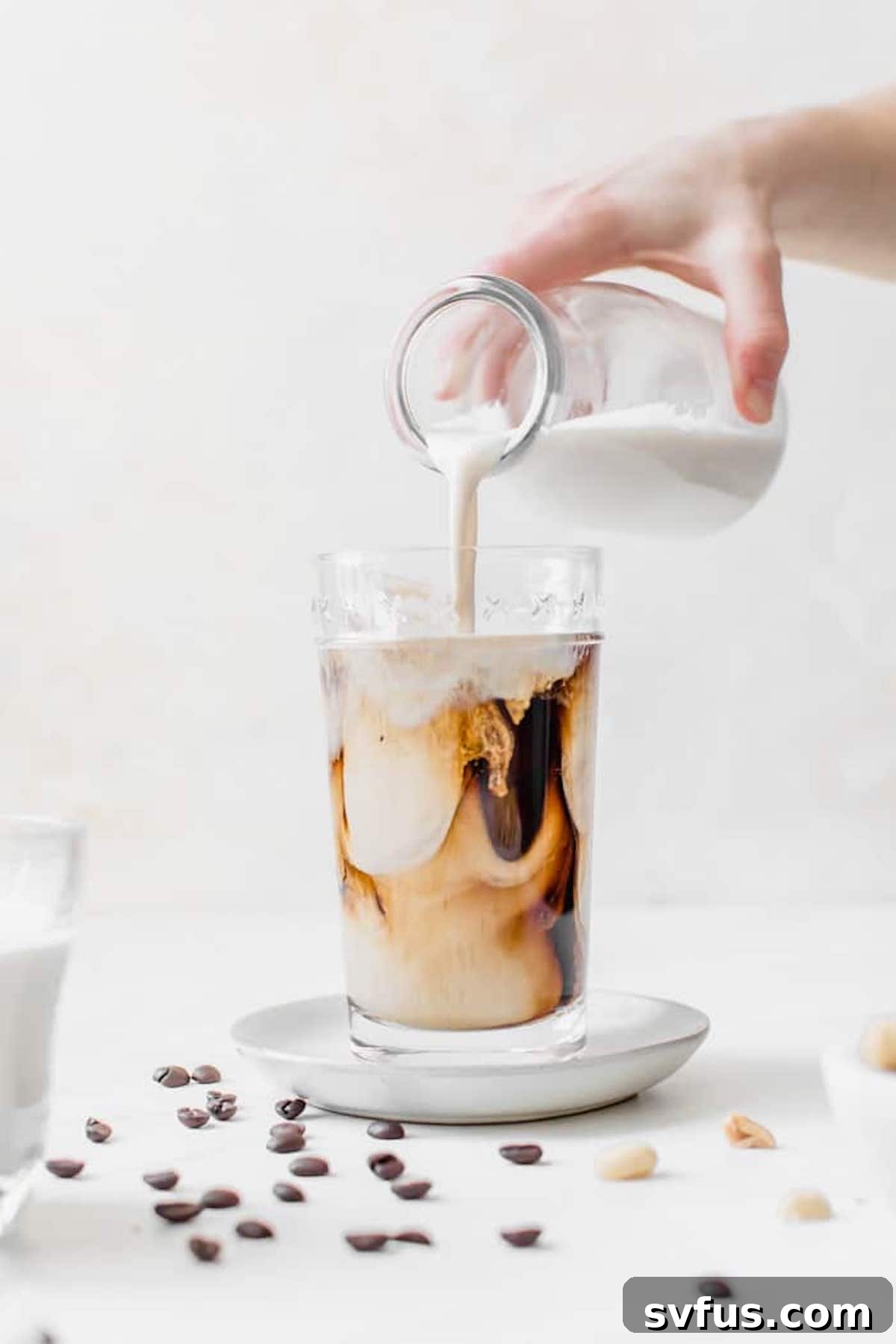
Pour your freshly made peanut milk into an airtight glass jar or bottle. Store it in the refrigerator. Homemade plant milks typically last for up to 4 days when stored properly. Give it a good shake before each use, as some natural separation may occur. Enjoy your homemade peanut milk as-is, pour it over your favorite cereal, blend it into smoothies, or even use it as a dairy-free creamer in your coffee or tea for a delightful nutty twist!
Tips for Success and Troubleshooting Your Peanut Milk
Even though making peanut milk is straightforward, a few tips can ensure a perfect batch every time and help you troubleshoot common issues.
- For a Quick Alternative (with caution): If you’re truly in a pinch and don’t have time to soak whole peanuts, you can attempt to make peanut milk by blending creamy peanut butter with water. However, be aware that the flavor will likely be less robust and more diluted compared to using whole peanuts. For the best, most authentic peanut flavor, starting with whole, soaked peanuts is always recommended.
- Optimal Straining Tools: A good quality nut milk bag or a double layer of cheesecloth is your best friend for achieving super smooth milk. These tools effectively separate the fine pulp from the liquid. If you don’t own either, a very fine-mesh strainer can work, but you’ll likely need to strain the milk two or three times to remove all the tiny particles.
- Blender Capacity: If your blender isn’t particularly large, consider making the milk in two smaller batches. Overfilling the blender can lead to inefficient blending and a less creamy result.
- Adjusting Sweetness: The amount of dates specified is a guideline. Feel free to increase or decrease them based on your personal preference. For a completely unsweetened milk, omit them entirely. For an extra sweet treat, you can add a touch more, or even a drizzle of maple syrup or agave after straining.
- Don’t Waste the Pulp! The leftover peanut pulp is a fantastic byproduct. It’s rich in fiber and flavor! You can incorporate it into baked goods like muffins, cookies, or energy balls. You can also dry it out and use it as a flour substitute or mix it into oatmeal.
- Achieving Different Consistencies: For a thinner, more pourable milk, add an extra half cup of water during blending. For a thicker, creamier milk ideal for coffee or smoothies, reduce the water by a quarter to half cup.
Frequently Asked Questions About Peanut Milk
How long will homemade peanut milk last in the refrigerator?
When stored in an airtight container in the refrigerator, your homemade peanut milk should remain fresh and delicious for up to 4 days. Always give it a good shake before serving, as natural separation is common.
Can I use salted peanuts for peanut milk?
While technically possible, it is strongly advised against. Using salted peanuts will result in a milk that is excessively salty and may not be pleasant to drink or use in sweet recipes. Always opt for unsalted dry roasted or raw peanuts for the best flavor profile.
Can I freeze peanut milk?
Yes, you can freeze peanut milk! Pour it into ice cube trays for convenient single servings, or freeze it in airtight containers, leaving some headspace for expansion. Thaw it in the refrigerator overnight before use. The texture might change slightly after thawing, but it will still be perfectly fine for smoothies or cooking.
What if my peanut milk separates?
Natural separation of homemade plant milks is completely normal and expected. The heavier peanut particles will settle at the bottom. Simply give your jar a good shake or stir before each use to recombine the ingredients and restore its creamy consistency.
Can I add other flavors to my peanut milk?
Absolutely! The beauty of homemade milk is customization. Beyond vanilla, consider adding a pinch of cinnamon, a dash of nutmeg, a spoonful of cocoa powder for chocolate peanut milk, or even a few more dates or a touch of maple syrup for extra sweetness. Experiment to find your favorite combinations!
Creative Ways to Enjoy Your Homemade Peanut Milk
Once you’ve mastered the art of making peanut milk, you’ll find it’s an incredibly versatile ingredient. Here are some inspiring ideas to incorporate this dairy-free delight into your daily routine:
- Morning Cereal & Oatmeal: Replace traditional dairy milk with peanut milk for a protein-packed and flavorful start to your day. It’s particularly delicious with granola, overnight oats (like our Peanut Butter Protein Overnight Oats!), or a simple bowl of oatmeal.
- Smoothies & Shakes: Peanut milk makes an excellent base for any smoothie, adding creaminess and a delightful nutty flavor. It pairs wonderfully with bananas, berries, chocolate, or spinach for a nutrient-dense beverage.
- Coffee & Tea: Use it as a dairy-free creamer in your morning coffee or afternoon tea. Its richness can beautifully cut through the bitterness of coffee and add an intriguing dimension to teas.
- Baking & Desserts: Substitute dairy milk with peanut milk in recipes for muffins, pancakes, waffles, cakes, and cookies. It imparts a subtle peanut flavor that enhances many baked goods. It’s also fantastic in puddings or custards.
- Savory Dishes: Don’t limit peanut milk to sweet applications! It can be used to add a creamy, nutty base to savory sauces, curries, or even in a rich vegan mac and cheese.
- Straight Up: Sometimes, the simplest way is the best. Enjoy a cold glass of homemade peanut milk on its own for a refreshing and satisfying drink.
Nutritional Profile of Homemade Peanut Milk
While nutrition information can vary based on exact ingredients and portion sizes, homemade peanut milk typically offers a great array of benefits. Our recipe for peanut milk, per serving, generally provides:
Calories: 115kcal | Carbohydrates: 5g | Protein: 4g | Fat: 9g | Saturated Fat: 1g | Sodium: 131mg | Potassium: 135mg | Fiber: 2g | Sugar: 2g | Calcium: 12mg | Iron: 1mg
This shows that peanut milk is not only delicious but also a good source of energy, healthy fats, and plant-based protein, making it a valuable addition to a balanced diet.
More Delicious Plant-Based Recipes to Explore:
- Vegan Chocolate Chip Cookies
- Chocolate Peanut Butter Chickpea Cookies
- Peanut Butter Protein Overnight Oats
How To Make Peanut Milk
By Erin Alvarez
Servings: 8
Prep time: 6 hours
Cook time: 5 minutes
Total time: 6 hours 5 minutes
Print Recipe
Learn how to make peanut milk with these step-by-step instructions. It’s a tasty and dairy-free milk alternative!
Video Tutorial
Ingredients
- 1 cup unsalted dry roasted peanuts*
- 2 1/2-3 cups filtered water
- 2 pitted dates, optional
- 1/2 tsp vanilla extract, optional
Instructions
- To start, pour 1 cup peanuts into a container and then top them with 4 cups of filtered water. Store the container in the refrigerator for at least 6 hours, or overnight.
- Once the peanuts have soaked, pour them out into a strainer and rinse them with cold water.
- Next, scoop out 1 cup of the peanuts and pour them into the blender. Add 2 1/2-3 cups filtered water (however much fits into your blender), the dates and the vanilla, and blend peanuts for 1 minute.
- Place a double layer of cheesecloth or a nut milk bag over a large container or bowl and carefully pour milk overtop, making sure the milk doesn’t seep over the edges. Gently squeeze the bottom of the cloth so that the milk strains out and the only thing left is the peanut milk.
- Pour the milk into a glass jar and store it in the refrigerator.
- Enjoy!
Notes
*You can also use raw peanuts if you prefer.
**I’ve tried this with peanut butter per several reader requests, and though it does work and is a lot easier/faster, I found the flavor to be more diluted (less peanut-y) than it is when you use real peanuts.
Nutrition Information
Carbohydrates: 5g |
Protein: 4g |
Fat: 9g |
Saturated Fat: 1g |
Sodium: 131mg |
Potassium: 135mg |
Fiber: 2g |
Sugar: 2g |
Calcium: 12mg |
Iron: 1mg
If you made this recipe, we’d love to hear from you! Please leave a comment and star rating below to share your experience. Thanks!