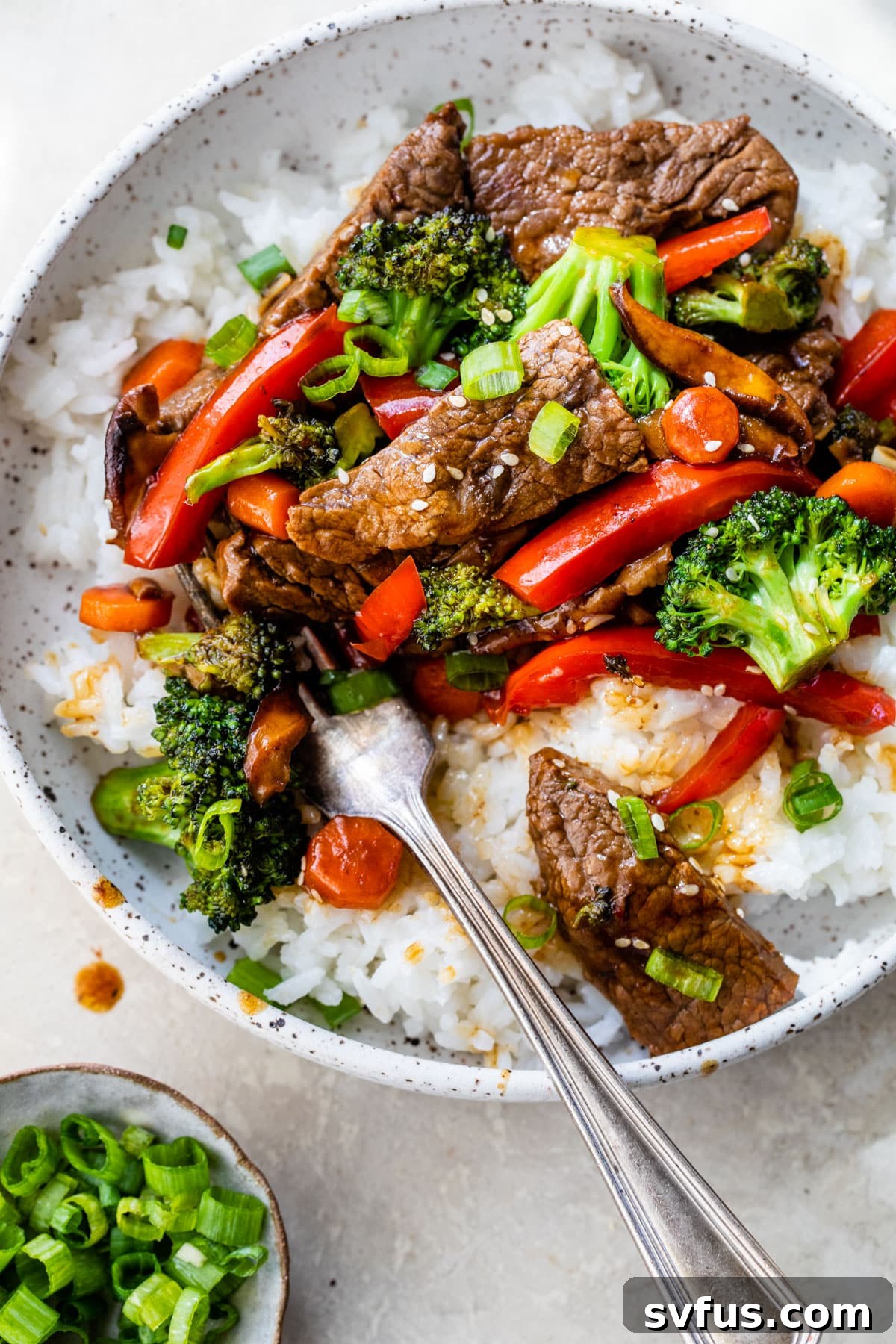
Welcome to the ultimate solution for your busy weeknights: a lightning-fast, incredibly flavorful, and wholesome Beef Stir Fry that comes together in just 15 minutes! This recipe is a game-changer for anyone seeking a delicious, homemade meal without the fuss, offering a perfect blend of tender, thinly sliced flank steak and a vibrant medley of crisp-tender vegetables, all coated in a savory, naturally gluten-free sauce. Whether you’re meal prepping for the week ahead or whipping up a quick dinner after a long day, this stir fry promises a simple yet profoundly satisfying culinary experience.
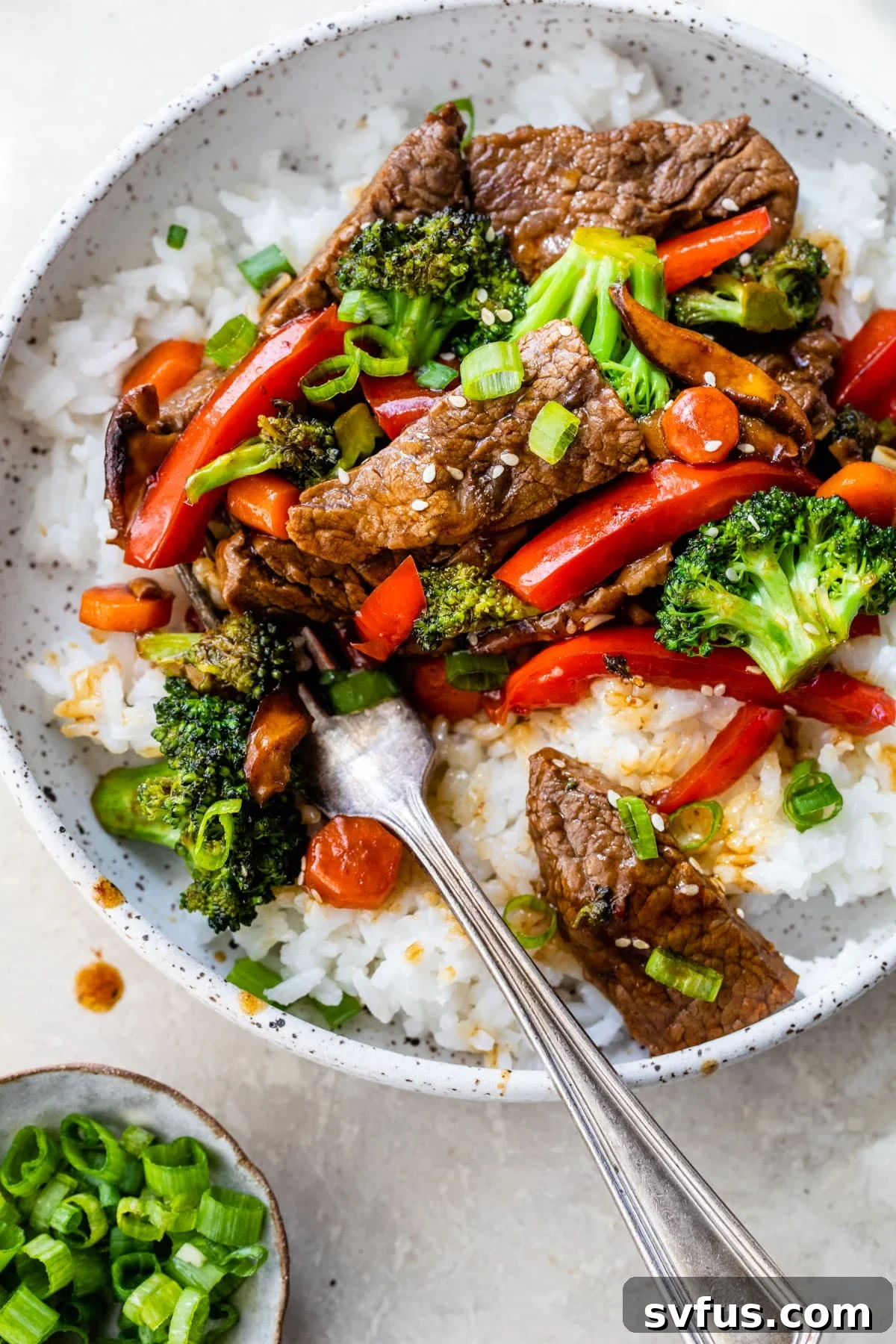
Stir fry stands out as one of those truly magical and adaptable dishes that consistently delivers a well-balanced meal in record time. Its inherent flexibility allows for endless customization, making it an ideal choice for utilizing whatever fresh ingredients you have on hand. From a zesty honey garlic shrimp stir fry to a hearty crispy baked tofu version, the possibilities are vast. This particular Beef Stir Fry recipe is no exception; it exemplifies how quick cooking doesn’t mean compromising on taste or nutritional value. With minimal effort, you can transform simple ingredients into a rich, aromatic dish that satisfies every palate.
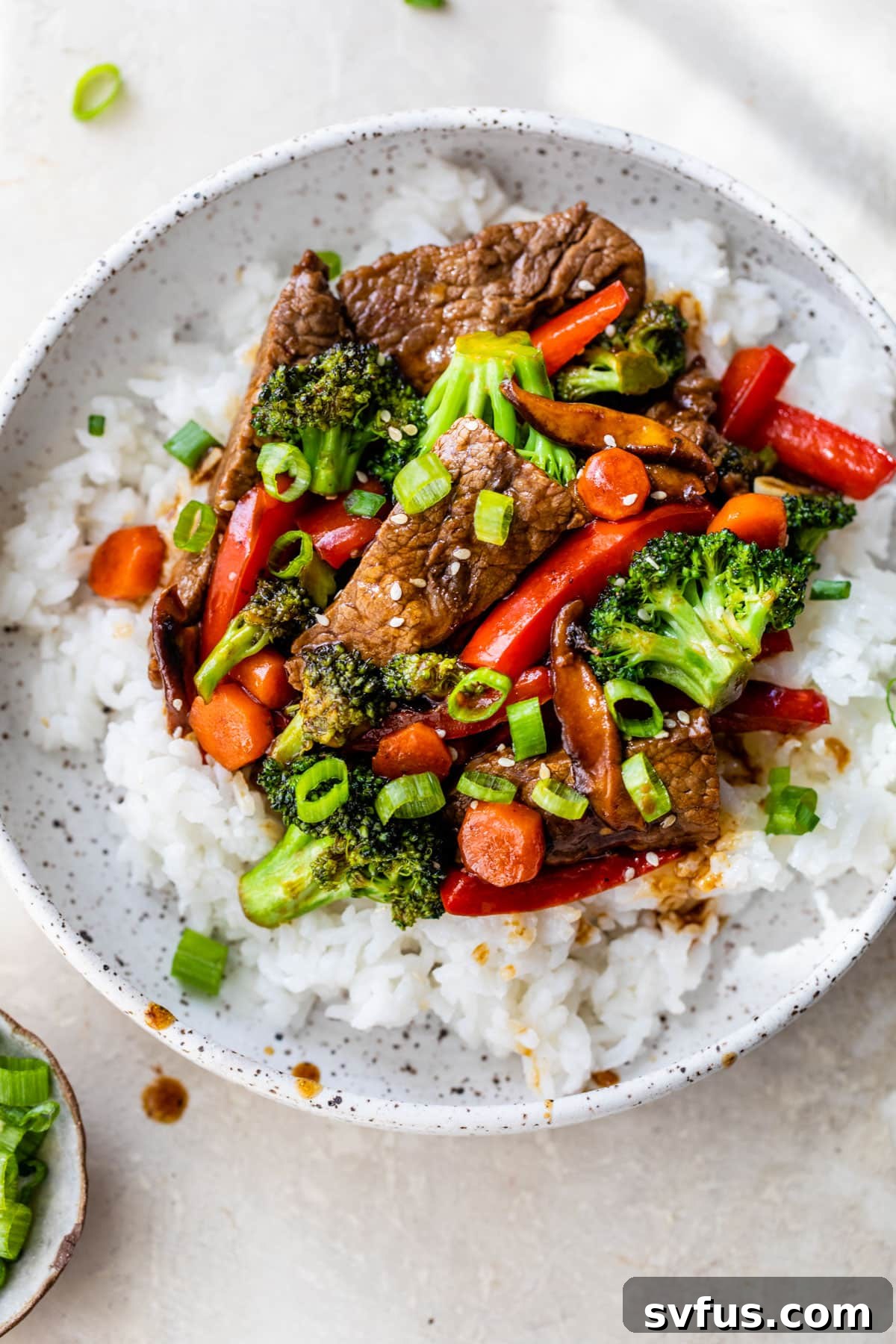
Our Gluten-Free Beef Stir Fry takes thinly sliced flank steak and cooks it alongside a colorful assortment of fresh vegetables in a single skillet, before uniting them with a luscious, homemade stir-fry sauce. This entire meal is crafted to be naturally gluten-free, and it effortlessly converts into a satisfying Whole30-friendly dinner when paired with a fluffy bed of cauliflower rice. The beauty of this recipe lies in its simplicity: no lengthy marinating is required, and the one-pan approach ensures cleanup is an absolute breeze. Enjoy it piping hot straight from the stove, or pack the leftovers for a convenient and delicious lunch the next day. It truly is a fantastic meal prep option, maintaining its savory and hearty essence even when reheated.
Why You’ll Love This Quick & Healthy Beef Stir Fry
This Beef Stir Fry isn’t just another recipe; it’s a culinary hack for delicious, healthy eating. Here’s what makes it an absolute must-try:
- Explosive Flavor in Every Bite: Experience the perfect harmony of tender, succulent beef and a vibrant array of crisp-tender vegetables, all coated in a rich, savory, and naturally gluten-free sauce that also aligns with Whole30 principles.
- Unbeatably Fast: Designed to fit into your busiest schedule, this complete meal comes together in just 15 minutes from start to finish. It’s the ultimate solution for effortless weeknight dinners and efficient meal preparation.
- No Marinating Required: Forget about planning hours in advance. Our method ensures maximum flavor absorption without any pre-marinating, allowing you to go from craving to serving in minutes. Simply sear the steak, quickly sauté the vegetables, toss with the incredible sauce, and enjoy!
- Dietary Friendly & Adaptable: Naturally gluten-free, this recipe is incredibly versatile. Easily make it Whole30 compliant by serving it over cauliflower rice, or adjust ingredients to suit other dietary needs like Paleo or low-carb.
- Simple Ingredients, Incredible Results: Crafted with readily available fresh ingredients, this stir fry transforms everyday items into an extraordinary meal that’s both nourishing and deeply satisfying.
- Perfect for Meal Prep: Its ability to taste just as good the next day makes it an ideal candidate for meal prepping. Cook a larger batch and have healthy, delicious meals ready for days.
Essential Ingredient Notes for Your Perfect Stir Fry
Crafting a truly exceptional beef stir fry starts with understanding your ingredients. Here’s a deeper dive into the key components of this recipe:
Flank Steak: The Stir Fry Champion
Flank steak is often hailed as one of the best cuts for stir-frying, and for good reason. It’s not only one of the more economical beef options but also incredibly versatile. Its lean nature and distinct grain make it easy to slice into thin, uniform strips, which are crucial for quick and even cooking. More importantly, flank steak has a remarkable ability to absorb the rich flavors of marinades and sauces, making it an ideal canvas for our delicious stir-fry sauce. When cooked correctly (quickly and against the grain), it becomes wonderfully tender. However, if flank steak isn’t your preference or readily available, don’t worry! There are several other excellent cuts you can use, such as sirloin, ribeye, skirt steak, or rump steak, each offering a slightly different texture and richness.
Vibrant Stir Fry Vegetables: A Canvas of Color and Nutrition
Our core recipe calls for a colorful mix of carrots, red bell pepper, broccoli, and shiitake mushrooms, creating a delightful texture and flavor profile. These vegetables not only add essential nutrients but also bring visual appeal to your dish. The beauty of stir fry, however, is its incredible flexibility. It’s an ideal “clean out your fridge” meal, allowing you to experiment with almost any vegetable you have on hand. Consider adding or swapping in options like crisp snap peas, tender asparagus, crunchy baby corn, leafy bok choy, earthy water chestnuts, Napa cabbage, cauliflower florets, zucchini, or even thinly sliced red onion. The goal is a balanced mix of textures and flavors that cook relatively quickly.
The Homemade Gluten-Free Stir Fry Sauce: The Heart of the Flavor
The sauce is arguably the most critical component of any stir fry, and ours is designed for maximum flavor with dietary considerations in mind. This super simple, yet powerfully aromatic sauce is built on a base of toasted sesame oil and coconut aminos. Toasted sesame oil provides a rich, nutty depth that is characteristic of Asian cuisine, while coconut aminos offer a fantastic gluten-free alternative to traditional soy sauce, delivering a savory, umami-rich flavor with a hint of sweetness. For those who aren’t strictly gluten-free or Whole30, regular tamari (gluten-free soy sauce) or even conventional soy sauce can be substituted. Finally, arrowroot powder (or cornstarch for a non-Whole30 option) is added as a thickening agent, ensuring your sauce beautifully coats every piece of beef and vegetable, creating that irresistible glossy finish.
Step-by-Step Instructions: Mastering Your Beef Stir Fry
Follow these straightforward steps to create a restaurant-quality beef stir fry in your own kitchen:
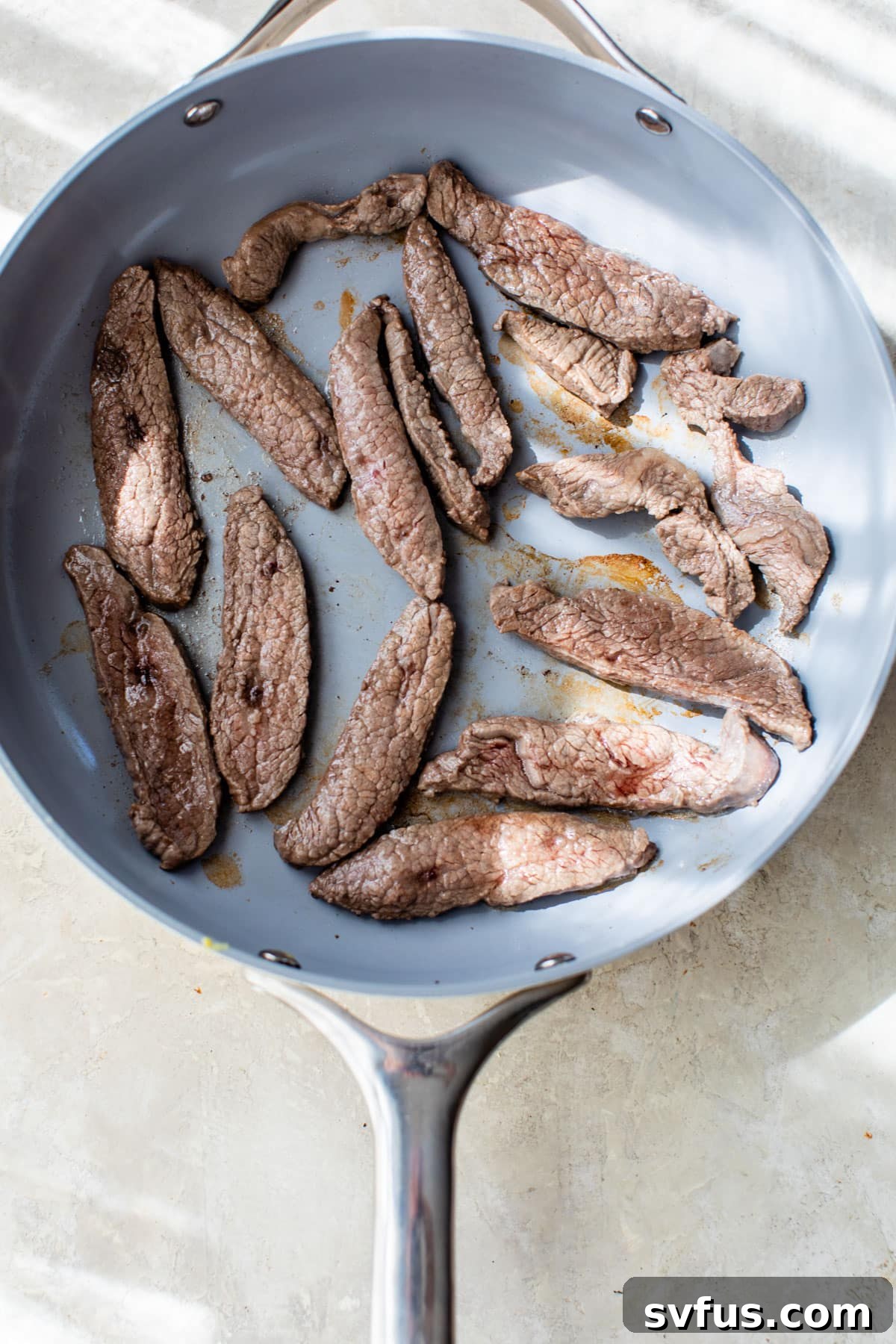
Step 1: Prepare and Sear the Steak. Begin by preparing your flank steak. Place the steak in the freezer for about 15-20 minutes – this simple trick makes it significantly easier to slice thinly and uniformly. Once slightly firmed, trim away any excess muscle membrane or silver skin. Then, slice the steak against the grain into thin strips, roughly ¼-inch thick. Season these strips generously with salt. Heat a large skillet or wok over medium-high heat. Once hot, add a tablespoon of olive oil. Sear the beef strips in a single layer, ensuring not to overcrowd the pan, for 1-2 minutes per side until beautifully browned. This quick sear locks in the juices and creates a delicious crust. Remove the seared steak from the skillet and set it aside on a plate; it will finish cooking with the vegetables later.
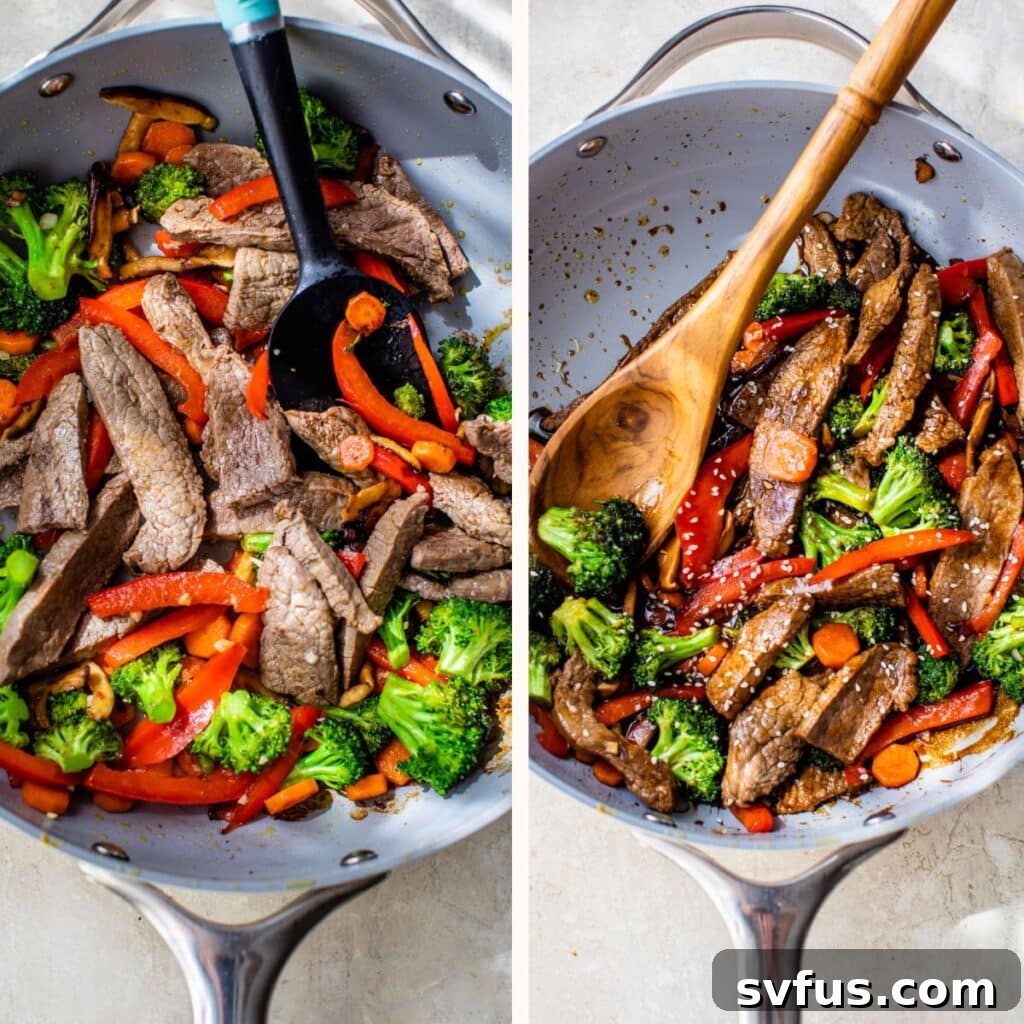
Step 2: Sauté the Vegetables to Perfection. Using the same skillet (no need to clean it – the browned bits add flavor!), add the remaining olive oil. Introduce the harder vegetables first: carrots, bell pepper, broccoli, and mushrooms. Sauté them over medium-high heat for 5-8 minutes, stirring frequently, until they are tender-crisp and vibrant. You want them cooked through but still retaining a slight crunch. Next, add the minced garlic and sauté for just 1 more minute until it becomes fragrant. Be careful not to burn the garlic, as this can turn bitter.
Step 3: Whisk Together the Flavorful Stir Fry Sauce. While your vegetables are cooking, prepare the sauce. In a small bowl or a glass measuring cup, whisk together the coconut aminos (or your chosen soy sauce substitute), toasted sesame oil, and arrowroot powder (or cornstarch). Whisk vigorously until the thickener is completely dissolved and there are no lumps. This ensures a smooth, glossy sauce.
Step 4: Combine, Thicken, and Serve. Return the seared steak strips to the skillet with the sautéed vegetables. Stir everything gently to combine. Reduce the heat to low, then pour the whisked stir fry sauce evenly over the beef and vegetables. Continue to stir constantly for 1-2 minutes until the sauce begins to thicken and beautifully coats all the ingredients. If the sauce isn’t thickening to your desired consistency, you can slightly increase the heat to medium-low. Conversely, if it thickens too quickly, remove the skillet from the heat immediately. Once coated and glistening, transfer the stir fry to serving bowls. Garnish generously with freshly chopped green onions and a sprinkle of sesame seeds for an extra burst of flavor and visual appeal. Serve immediately and enjoy!
Expert Tips & Frequently Asked Questions for Perfect Stir Fry Every Time
Achieving a truly spectacular beef stir fry goes beyond just following the steps. Here are some pro tips and answers to common questions that will elevate your cooking:
Tips for Success:
- Mastering the Steak Slice: For effortlessly thin and uniform steak strips, pop your flank steak into the freezer for 15-20 minutes before slicing. This firms up the meat, making it much easier to cut. Always cut the steak against the grain to ensure maximum tenderness. Also, pat the steak dry with paper towels before searing to promote better browning and a delicious crust.
- Don’t Overcrowd the Pan: When searing the beef or sautéing vegetables, resist the urge to cram too much into the skillet. Cook in batches if necessary. Overcrowding lowers the pan’s temperature, leading to steaming instead of searing, which results in less flavor and a mushy texture.
- Heat Management is Key: Stir-frying requires high heat for quick cooking and a beautiful sear. Ensure your skillet is adequately hot before adding ingredients. Adjust the heat as needed – lower when adding the sauce to prevent it from thickening too quickly, and slightly raise it if you need the sauce to thicken further.
- Sauce Thickening Secrets: If your stir fry sauce isn’t thickening, gently raise the heat back to medium-low and continue stirring. The starch (arrowroot or cornstarch) needs heat to activate its thickening properties. If it thickens too quickly and becomes gloopy, immediately remove the skillet from the heat and, if needed, add a tiny splash of water or broth to thin it out slightly.
- Wok vs. Skillet: While a traditional wok is fantastic for stir-frying due to its heat distribution, a large, heavy-bottomed skillet (cast iron or stainless steel) works perfectly well. The key is consistent heat and enough surface area.
What cut of beef is best for stir fry?
While flank steak is a classic and highly recommended choice for stir fry due to its flavor, texture when thinly sliced, and ability to absorb sauces, several other cuts of beef work exceptionally well. Sirloin steak (especially top sirloin) is another popular option, offering great flavor and tenderness. Ribeye can be used for a richer, more luxurious stir fry, though it’s typically pricier. Skirt steak, similar to flank, provides excellent flavor but can be tougher if not sliced thinly against the grain. Even leaner cuts like rump steak can be used, provided they are sliced very thinly. The most important factor is always to slice against the grain to ensure tenderness.
What vegetables go well in a beef stir fry?
The beauty of stir fry is its unparalleled versatility when it comes to vegetables. Almost any vegetable can be incorporated, making it an excellent meal for using up what’s in your fridge! Beyond the carrots, bell pepper, broccoli, and shiitake mushrooms in this recipe, consider adding: crisp snow peas, vibrant asparagus, crunchy baby corn, leafy bok choy, water chestnuts for a unique texture, thinly sliced napa cabbage, cauliflower florets, tender zucchini, or even red onion. Don’t be afraid to experiment with your favorites or what’s in season; aim for a variety of colors and textures for a visually appealing and nutritious meal.
Do frozen vegetables work in stir fry?
While fresh vegetables are generally preferred for stir fry because they maintain a better texture and tend to get that desirable crisp-tender bite, frozen vegetables can absolutely be used in a pinch! They are a convenient option, especially when fresh produce isn’t available. For the best results when using frozen veggies, it’s crucial to let them thaw completely before adding them to the hot skillet. This helps to release excess moisture, preventing your stir fry from becoming watery and allowing them to cook more evenly. Be aware that thawed frozen vegetables may not achieve the same crispy texture as fresh ones, but they will still contribute flavor and nutrition to your dish.
What goes well with beef stir fry?
Beef stir fry is incredibly versatile and pairs wonderfully with a variety of bases to complete your meal. For a classic and naturally gluten-free option, serve it over a bed of fluffy steamed white rice, wholesome brown rice, or protein-rich quinoa. If you’re looking for something with a bit more zest, try it with gluten-free fried rice. For those who enjoy noodles, feel free to toss udon, soba, ramen, egg noodles, or even healthier alternatives like zucchini or sweet potato noodles directly into the stir fry just before serving. Each option adds a different dimension to the dish, allowing you to customize your meal according to your preferences.
Storing and Meal Prep Information
This Beef Stir Fry is a fantastic candidate for meal prepping, ensuring you have delicious, healthy meals ready to go throughout the week. You can significantly reduce your cooking time by preparing components in advance:
Advance Prep: To save time on cooking day, you can slice the beef, whisk together the stir fry sauce, and chop all your vegetables up to 24 hours in advance. Store each component separately in airtight containers in the refrigerator until you’re ready to cook.
Refrigerator Storage: Leftovers of the cooked beef stir fry are best stored in an airtight container in the refrigerator for 3 to 4 days. The flavors tend to meld even further, often tasting even better the next day.
Freezer Storage: For longer storage, cooked beef stir fry can be frozen in an airtight, freezer-safe container for up to 2 months. To reheat, let the stir fry thaw overnight in the refrigerator, then gently warm it in a skillet over medium heat or in the microwave until heated through. Add a splash of water or broth if it seems too dry.
More Delicious & Healthy Beef Recipes
If you love this beef stir fry, you’re sure to enjoy these other healthy and flavorful beef-centric dishes:
- Paleo Beef Pho
- Curry Beef Bowl
- Hearty Beef Barley Soup
We hope you thoroughly enjoy this quick, healthy, and incredibly flavorful Beef Stir Fry. It’s designed to bring ease and excitement to your kitchen, proving that delicious home-cooked meals don’t have to be complicated. Give it a try, and let us know what you think!
Beef Stir Fry
By Erin Alvarez

This 15-minute Beef Stir Fry is the ideal recipe for busy weeknights and meal prep. Colorful vegetables and sliced flank steak are tossed in a gluten-free stir fry sauce, leaving you with a simple, yet flavorful and healthy meal.
Ingredients
For the Stir Fry:
- 1 lb. flank steak, thinly sliced
- Salt, to taste
- 2 tbsp olive oil
- 3 carrots, chopped
- 1 red bell pepper, sliced, seeds removed
- 2 cups broccoli florets
- 1 cup shiitake mushrooms, sliced
- 2 garlic cloves, minced
- Green onion for garnish, chopped
- Sesame seeds for garnish
For the Sauce:
- 1/2 cup coconut aminos (or gluten-free tamari/soy sauce)
- 1 tsp toasted sesame oil
- 2 tsp arrowroot powder (or cornstarch)
Instructions
- Slice the flank steak thinly against the grain, then sprinkle generously with salt.
- Heat a large skillet or wok over medium-high heat. Add 1 tablespoon of olive oil. Sear the steak strips for 3-5 minutes, flipping halfway through until browned. Remove the steak from the skillet and set aside.
- In the same skillet, add the remaining 1 tablespoon of olive oil. Add the carrots, bell pepper, broccoli, and mushrooms. Sauté for 5-8 minutes until the vegetables are tender-crisp. Add the minced garlic and cook for 1 more minute until fragrant.
- While the vegetables are cooking, prepare the sauce: In a small bowl, whisk together the coconut aminos (or soy sauce alternative), toasted sesame oil, and arrowroot powder (or cornstarch) until smooth.
- Return the seared steak to the skillet with the vegetables. Reduce the heat to low. Pour the prepared sauce over the ingredients and stir continuously until everything is well coated and the sauce has thickened to a glossy consistency. If the sauce is too thin, increase the heat slightly. If it thickens too quickly, remove from heat.
- Serve hot, garnished with fresh green onions and sesame seeds. Enjoy over a bowl of rice, cauliflower rice, or noodles.
Notes
- Nutrition information (calories, macros) provided below is an estimation per serving.
- Frozen vegetables can be used in a pinch! For best results, thaw them completely before adding to the skillet to prevent excess moisture.
- To make this recipe Whole30 compliant, ensure you use coconut aminos and arrowroot powder for the sauce, and serve it over cauliflower rice.
Nutrition
Calories: 327kcal | Carbohydrates: 21g | Protein: 28g | Fat: 14g | Saturated Fat: 4g | Polyunsaturated Fat: 2g | Monounsaturated Fat: 8g | Cholesterol: 68mg | Sodium: 791mg | Potassium: 918mg | Fiber: 5g | Sugar: 6g | Vitamin A: 8858IU | Vitamin C: 82mg | Calcium: 67mg | Iron: 3mg
UPDATE NOTE: This post was originally published in March 2017. It was comprehensively updated with new text, expanded tips, and fresh photos in August 2022 to enhance clarity and provide more value to our readers.