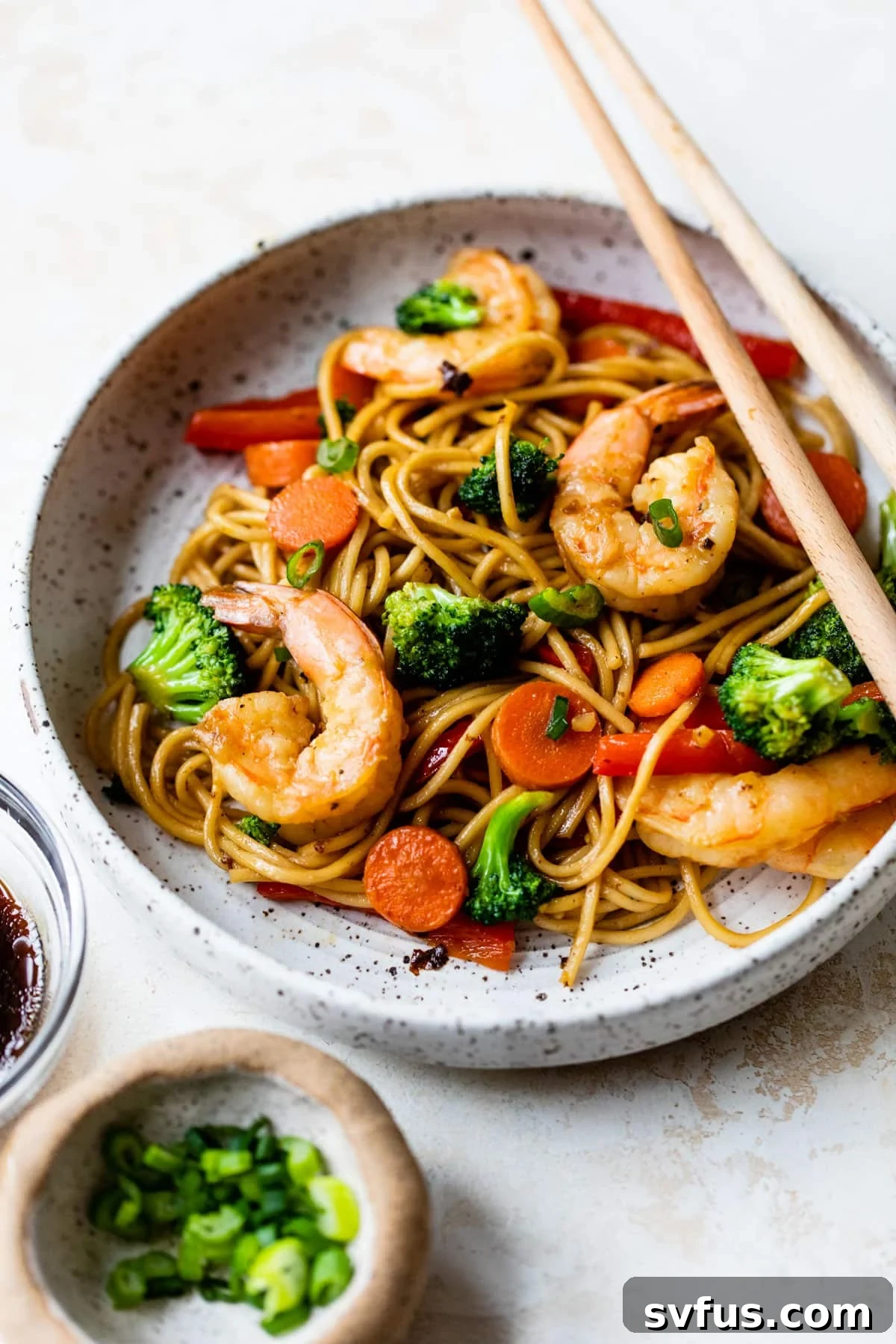
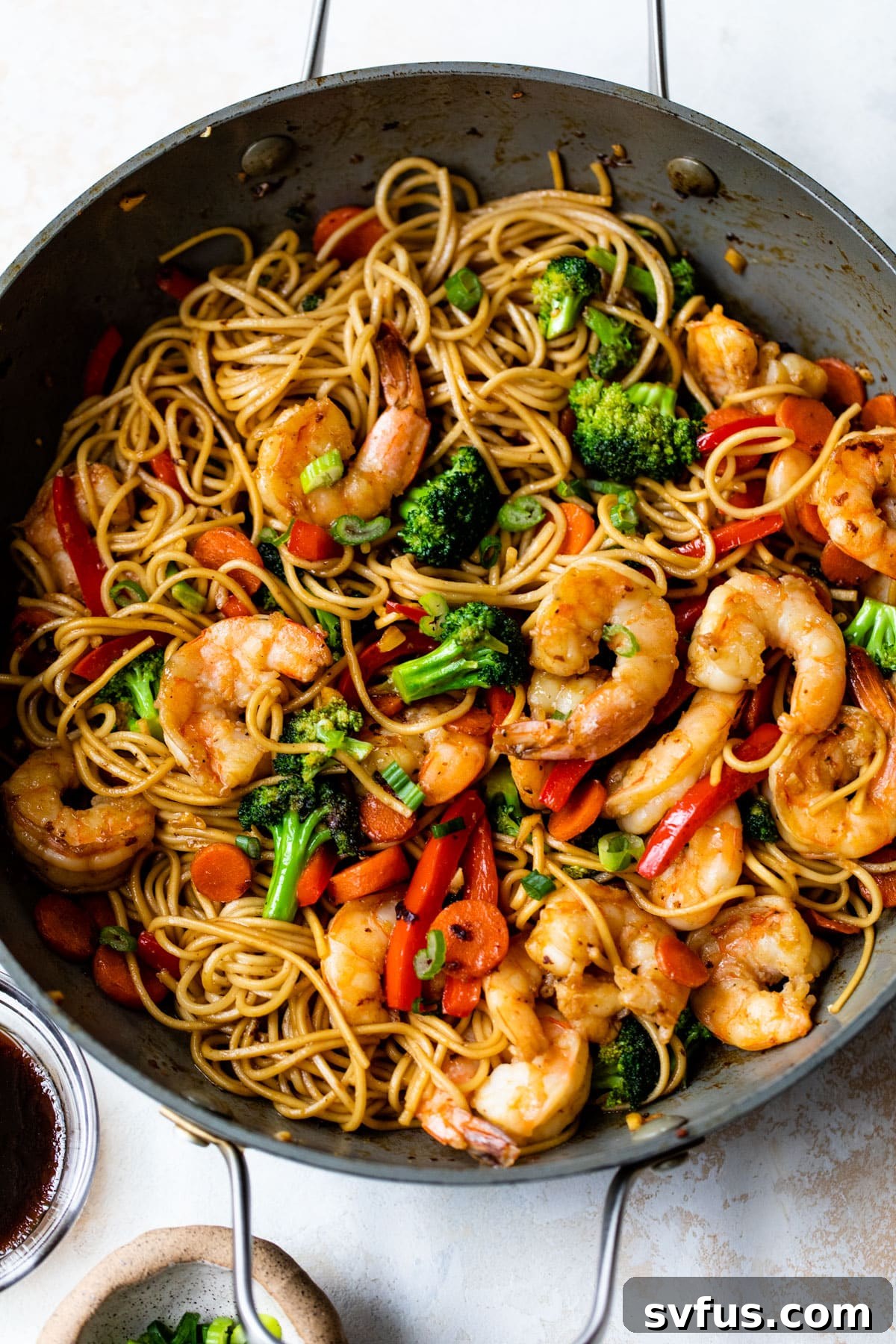
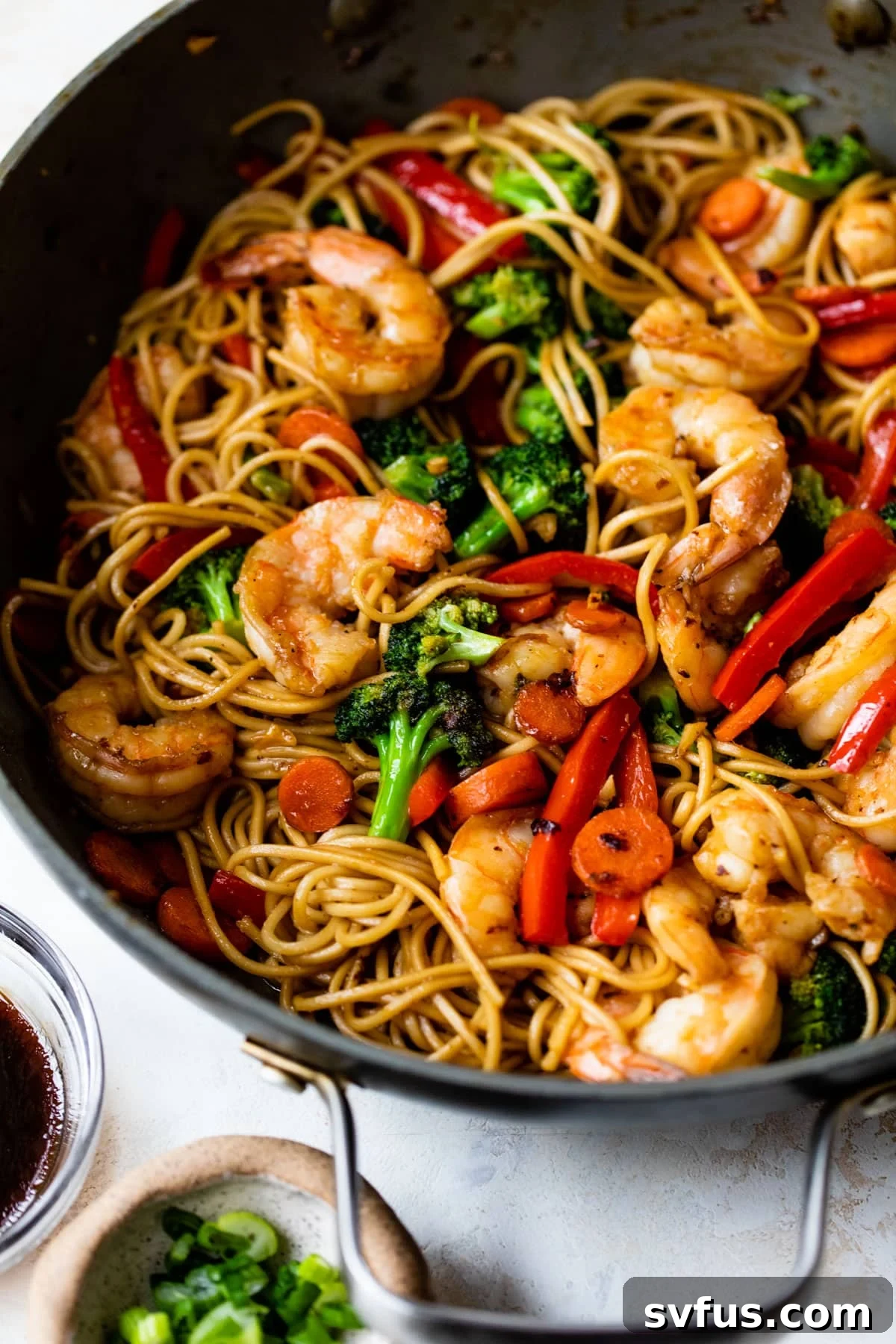
This incredibly easy Shrimp Lo Mein recipe offers an authentic and satisfying taste experience that genuinely surpasses your favorite takeout! Imagine succulent shrimp, crisp-tender vegetables, perfectly cooked noodles, and a rich, umami-packed sauce, all expertly tossed together in a single skillet. The result is a vibrant, flavorful, and complete meal that comes together in under 30 minutes, making it the ideal choice for busy weeknights or when you crave delicious Chinese cuisine without the wait.
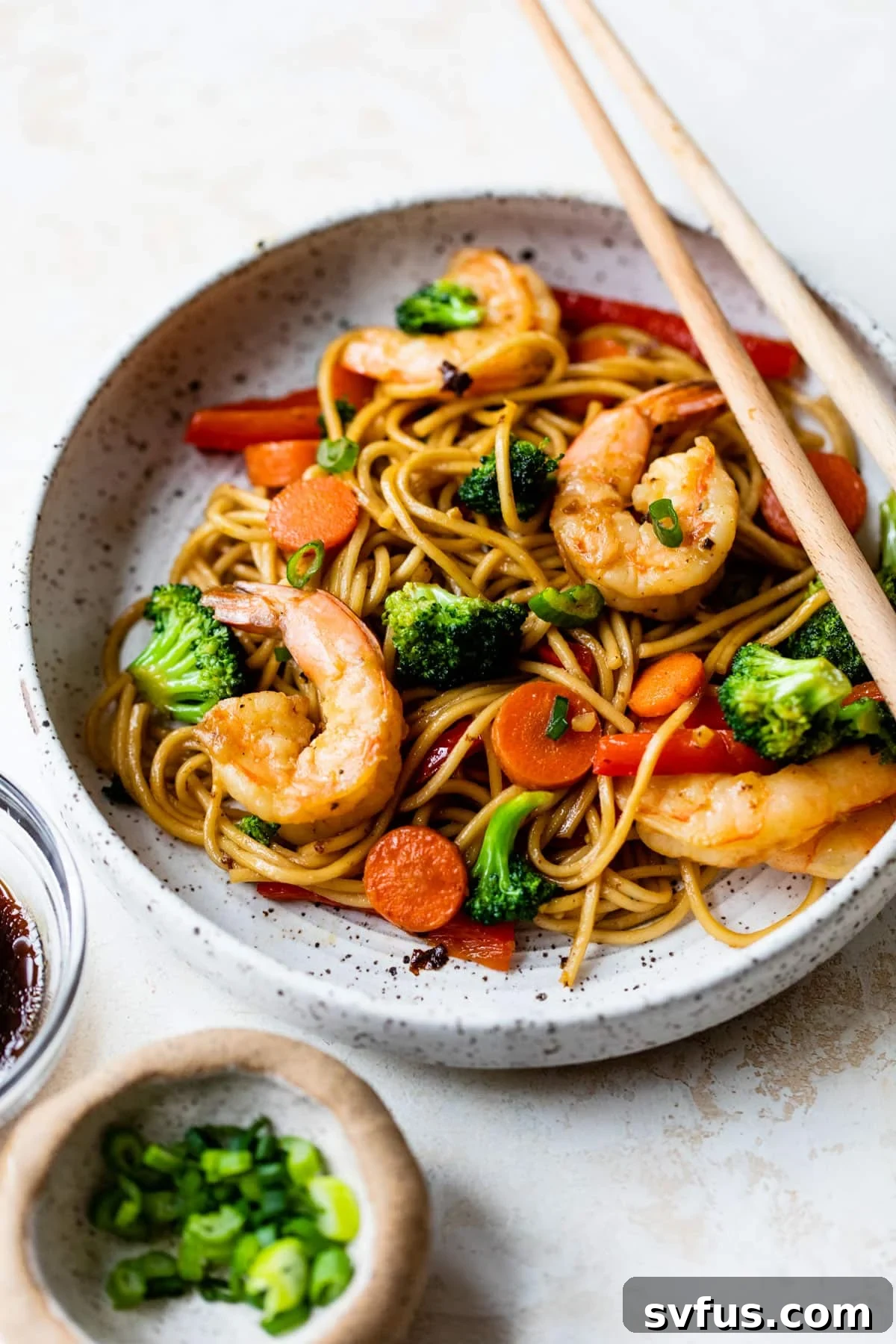
There’s a special joy in recreating beloved Chinese takeout classics right in your own kitchen. Mastering dishes like fried rice, orange chicken, and sweet and sour chicken at home not only saves money but also ensures you have a fresh, flavorful meal ready in the same amount of time it would take to place an order and await delivery. This homemade Shrimp Lo Mein recipe perfectly embodies that ethos, delivering a dish that is both quick and incredibly delicious.
Shrimp Lo Mein, a true takeout superstar, is characterized by its long, soft, chewy egg noodles, perfectly stir-fried shrimp, and an assortment of vibrant vegetables, all brought together by a rich and savory lo mein sauce. This particular recipe is a marvel of simplicity and speed, guaranteeing a mouthwatering meal on your table in under 30 minutes. Each forkful is an explosion of salty, savory, and deep umami flavors, creating a truly satisfying experience that will have you reaching for seconds.
What truly sets lo mein (lāo miàn) recipes apart is their incredible flavor profile combined with remarkable flexibility. This isn’t just a recipe; it’s a culinary canvas. You have the freedom to effortlessly swap the shrimp for your preferred protein, incorporate any variety or quantity of vegetables you desire, or fine-tune the sauce to perfectly match your taste preferences or dietary requirements. Whether you’re looking to use up ingredients in your fridge or cater to specific tastes, this lo mein recipe adapts beautifully, ensuring a delightful and personalized meal every time.
Key Recipe Features and Benefits
- Quick & Convenient: This recipe yields two generous servings and is ready to enjoy in less than 30 minutes from start to finish. It’s the ultimate solution for a fast, delicious, and fulfilling weeknight dinner, often quicker than ordering takeout.
- Flavorful & Budget-Friendly: Experience a complex, layered flavor profile that rivals your favorite Chinese restaurant, all while using a short list of accessible and affordable ingredients commonly found in most grocery stores. It’s a smart way to enjoy gourmet taste on a budget.
- Remarkably Flexible: This lo mein is incredibly versatile, allowing you to easily customize it to your liking. Feel free to switch out the type of noodles, experiment with different proteins, add a greater variety of vegetables, or adjust the sauce to create a dish that’s uniquely yours. It’s a recipe that encourages creativity in the kitchen!
Essential Ingredients for Perfect Shrimp Lo Mein
Crafting exceptional Shrimp Lo Mein starts with understanding the role of each ingredient. Here’s a breakdown of the key components:
Soy Sauce – This forms the fundamental savory base of our lo mein sauce. For an authentic flavor, a good quality regular soy sauce is recommended. If you’re managing a gluten-free diet, fear not! Tamari makes an excellent 1:1 gluten-free alternative, providing the same depth of flavor without the wheat.
Hoisin Sauce – Hoisin sauce introduces a rich, sweet, and tangy element to the sauce, contributing to its signature umami depth. It’s a staple in many Chinese dishes, offering a complex flavor that’s hard to replicate entirely. However, if hoisin sauce isn’t available or preferred, you can adjust by increasing the brown sugar to 1 tablespoon to maintain a balanced sweetness.
Shrimp – The star protein of this dish! You can use either fresh or frozen peeled and deveined shrimp. If opting for frozen shrimp, remember to thaw them thoroughly in the refrigerator prior to cooking for even results. Whether you prefer to leave the tails on for presentation and easier handling or remove them for a less messy eating experience is entirely up to your personal preference.
Vegetables – This recipe shines with its adaptable vegetable component. I’ve chosen a classic combination of crisp broccoli florets, vibrant carrots, and sweet red bell peppers for their color, texture, and nutritional value. However, the beauty of lo mein lies in its versatility. Feel free to incorporate any fresh or frozen vegetables you love or happen to have on hand, such as snow peas, cabbage, mushrooms, or bok choy.
Lo Mein Noodles – For a truly authentic lo mein experience, fresh Chinese egg noodles are ideal. These soft, chewy noodles are typically found in the refrigerated section of most major grocery stores or Asian markets. If fresh noodles are hard to come by, don’t worry – there are plenty of excellent alternatives suggested in our FAQs section, including dry lo mein noodles or even common pasta varieties like spaghetti.
Effortless Step-by-Step Instructions
Preparing this homemade Shrimp Lo Mein is incredibly straightforward. Follow these simple steps for a delicious meal:
Step 1: Prepare the Umami-Rich Sauce and Cook the Noodles. Begin by creating your flavorful lo mein sauce. In a small bowl, thoroughly whisk together the soy sauce, hoisin sauce, brown sugar, and sesame oil until well combined. Set this aside. Simultaneously, start cooking your chosen lo mein noodles according to the package directions, ensuring they are al dente and ready to be incorporated into the stir-fry.
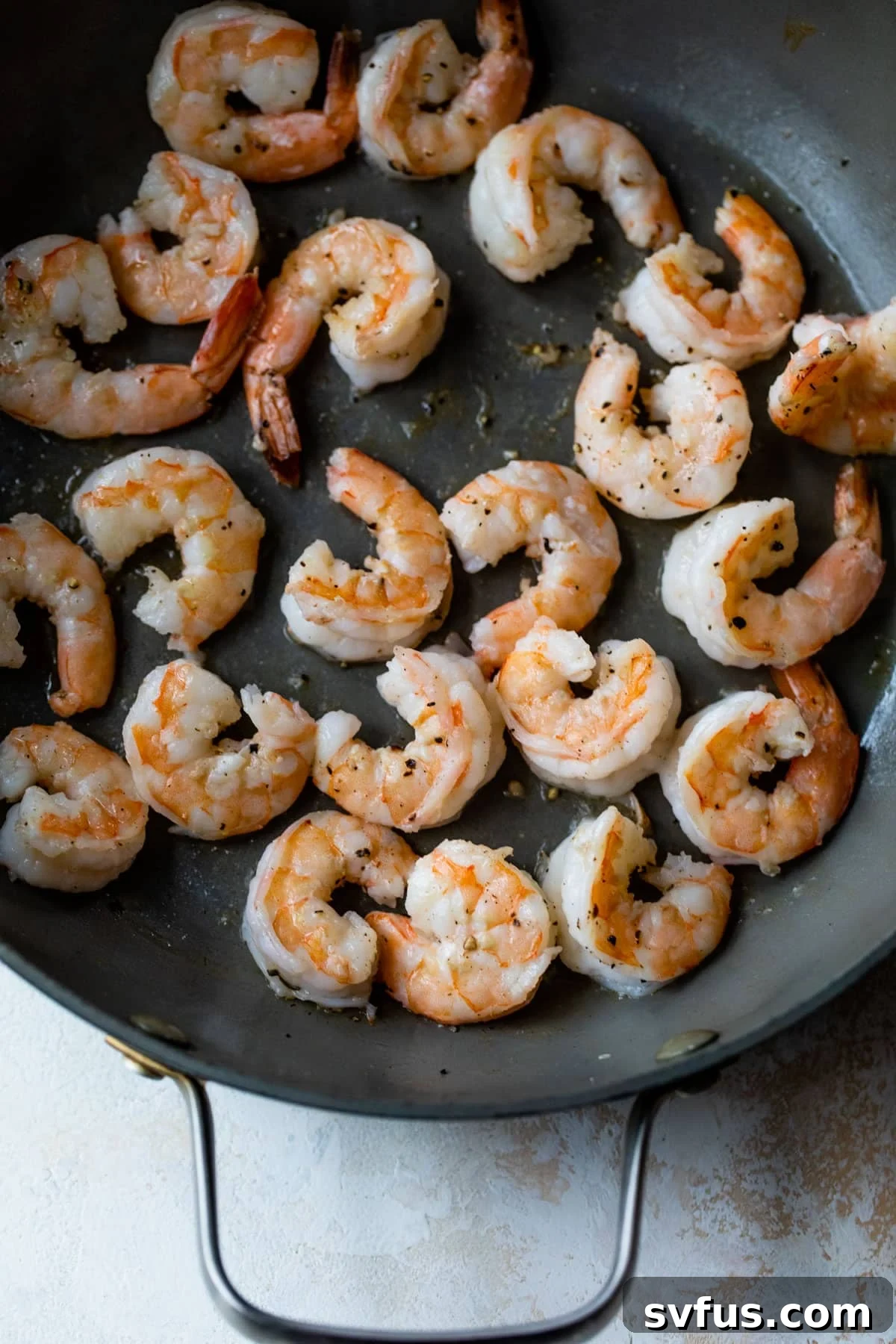
Step 2: Perfectly Cook the Shrimp. Heat 1 tablespoon of your preferred oil (like avocado oil) in a large skillet or wok over medium-high heat. Once the oil is shimmering and hot, add the peeled and deveined shrimp in a single layer. Cook for just 1-2 minutes per side, until the shrimp turn opaque and pink, being careful not to overcook them to maintain their tender texture. Transfer the cooked shrimp to a plate and set aside while you prepare the vegetables.
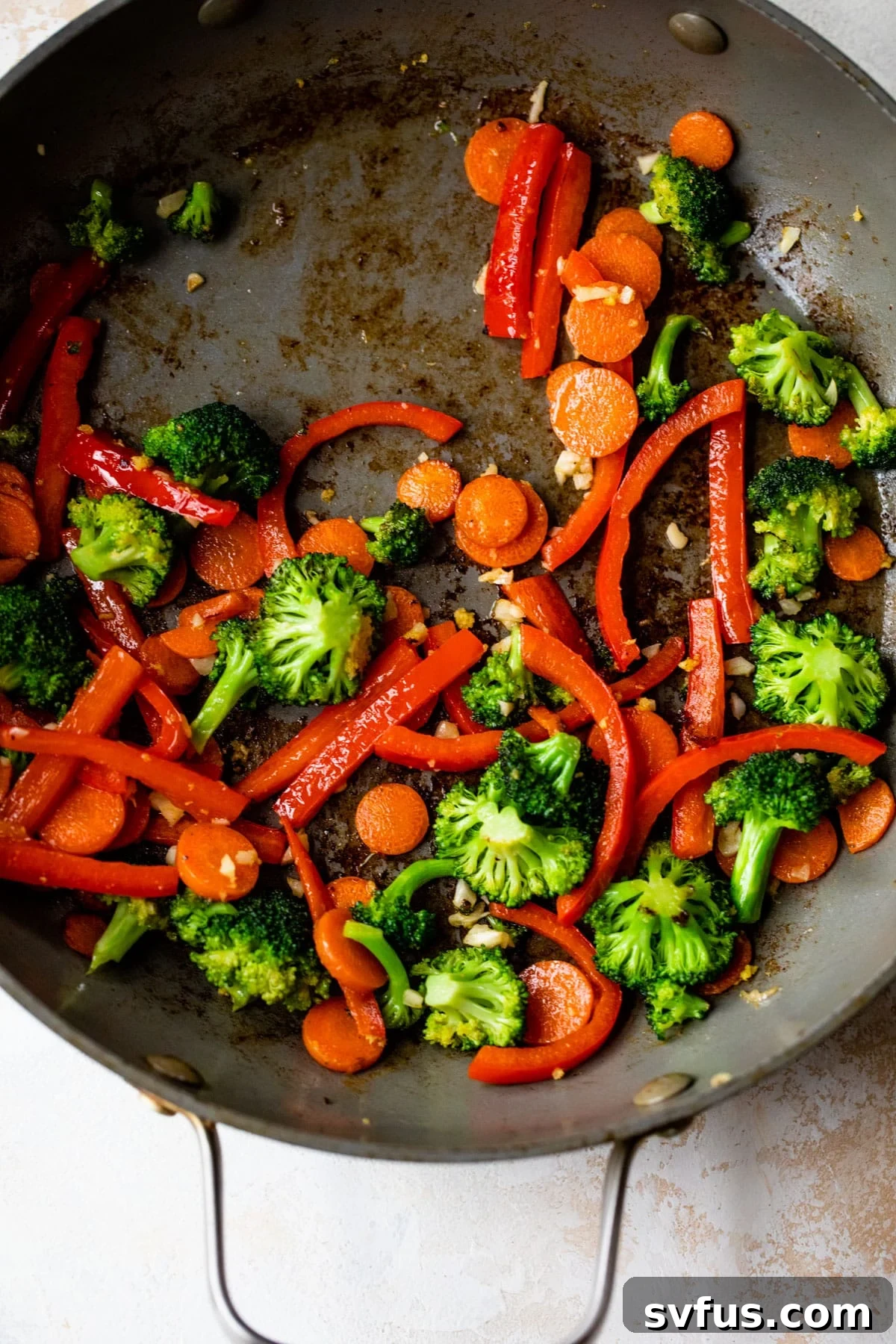
Step 3: Sauté the Flavorful Vegetables. Add the remaining 1 tablespoon of oil to the now-empty skillet. Introduce the sliced bell peppers, carrots, and broccoli florets to the hot pan. Stir-fry for 3-4 minutes, allowing them to soften slightly while still retaining a pleasant crisp-tender bite. Next, add the minced garlic and grated fresh ginger, and continue to sauté for another 30 seconds until fragrant, filling your kitchen with an aromatic delight.
Step 4: Combine All Ingredients and Serve. Return the perfectly cooked shrimp to the skillet with the sautéed vegetables. Pour the prepared lo mein sauce generously over everything. Stir vigorously to ensure the shrimp and vegetables are thoroughly coated in the savory sauce. Finally, add the drained noodles to the pan. Using tongs, gently toss all the ingredients together until the noodles are evenly coated with the rich sauce and integrated with the shrimp and vegetables. Garnish your delicious homemade lo mein with freshly chopped green onions and a sprinkle of sesame seeds (optional). Scoop into bowls and savor every incredible bite!
Pro Tips & Frequently Asked Questions for Ultimate Lo Mein
Elevate your homemade Shrimp Lo Mein with these expert tips and answers to common questions:
- Smart Shrimp Cooking for Efficiency: To save precious time and enable efficient multitasking, consider cooking the shrimp in your air fryer. This method allows you to simultaneously sauté your vegetables in the skillet while the shrimp cook to perfection with minimal effort and supervision, streamlining your cooking process.
- The Noodle Starch Secret: When your noodles are cooked, drain them thoroughly but absolutely do not rinse them under running water. The residual starch on the noodles is crucial for creating a silky, slightly thickened sauce that clings beautifully to every strand, enhancing the overall texture and flavor of your lo mein. Rinsing washes away this natural thickening agent.
- Timing is Everything for Noodles: Avoid cooking your noodles too far in advance of assembling the dish. While they need to be drained immediately after cooking to prevent overcooking, allowing them to sit for too long out of the water can cause them to clump together, making them difficult to incorporate evenly into the stir-fry. Cook them just before you’re ready to add them to the skillet.
- Customize Your Spice Level: For those who love a bit of heat, easily transform this into spicy shrimp lo mein. Incorporate a dash of sriracha, a sprinkle of red pepper flakes, a teaspoon of chili garlic sauce, or a few dried red chilies (stemmed and seeded for less heat, if preferred) directly into the sauce mixture or add them to the skillet with the garlic and ginger for a fiery kick.
What’s the actual difference between Lo Mein and Chow Mein?
While often confused due to their similar names and shared ingredients, lo mein and chow mein (chāu-mèn) have a distinct difference in their preparation, particularly concerning the noodles. Both dishes typically feature Chinese egg noodles, an array of vegetables, a protein, and a savory stir-fry sauce. The key distinction lies in how the noodles are incorporated into the dish. In chow mein, the noodles are usually pre-boiled, then stir-fried until slightly crispy, often alongside the vegetables, meat, and sauce, giving them a drier, chewier, and sometimes crispier texture. Conversely, lo mein noodles are boiled until soft, then simply tossed with the cooked vegetables, meat, and sauce at the very end of the cooking process, resulting in a softer, saucier, and more pliable noodle texture. Think of “lo mein” as “tossed noodles” and “chow mein” as “fried noodles.”
What noodles are truly best for lo mein?
For an authentic lo mein experience, fresh Chinese egg noodles are undoubtedly the top choice. These soft, round, and slightly chewy noodles are typically found in the refrigerated section of most Asian grocery stores or larger supermarkets. However, if fresh lo mein noodles are unavailable, don’t let that stop you! Excellent alternatives include dried lo mein noodles, which can be found in the pasta aisle, or even standard chow mein noodles. For readily available options, whole wheat spaghetti, fettuccine, or linguine noodles make fantastic substitutes. Their similar shape and ability to absorb sauce well make them ideal for replicating the lo mein texture.
What other delicious ingredients can you add to shrimp lo mein?
This recipe is incredibly adaptable, encouraging you to customize it with an array of additional ingredients. Let your creativity flow and make this dish truly your own:
- Diverse Protein Options: While shrimp is fantastic, consider incorporating or substituting other proteins. Add thinly sliced chicken breast or thigh, tender beef strips (flank steak or sirloin work well), or savory pork. For a combination lo mein, feel free to use a mix of several meats! If you’re looking for a vegetarian or vegan alternative, crispy baked tofu or air fryer tempeh are superb choices, absorbing the sauce beautifully and adding satisfying texture.
- Expanded Vegetable Medley: Boost the nutritional value and texture of your lo mein with an even wider selection of vegetables. Consider adding shredded cabbage (for extra crunch), delicate snow peas, miniature baby corn, crisp water chestnuts, slender green beans, vibrant bok choy, thinly sliced onions, or earthy mushrooms. Remember to cut all vegetables into uniform, bite-sized pieces to ensure even and quick cooking.
- Savory Scrambled Eggs: If you’re a fan of scrambled eggs in fried rice, you’ll absolutely love their addition to lo mein. They add a wonderful richness and depth. The easiest method is to scramble the eggs separately in a small pan until just set, then gently fold them into the lo mein with the noodles and sauce at the very end.
Can this recipe be made gluten-free?
Absolutely! With a few simple ingredient swaps, you can easily transform this delicious recipe into a gluten-free friendly meal without sacrificing any flavor:
- Gluten-Free Lo Mein Sauce: The primary source of gluten in the sauce is traditional soy sauce. To make it gluten-free, substitute the regular soy sauce with tamari, certified gluten-free soy sauce, or coconut aminos. For hoisin sauce, seek out a gluten-free variety, which is becoming increasingly common. If gluten-free hoisin is unavailable, a good quality gluten-free teriyaki sauce can offer similar sweet and savory flavor dimensions as an alternative.
- Gluten-Free Lo Mein Noodles: Traditional egg noodles often contain wheat. For gluten-free noodles, your best options are wide rice noodles (common in Thai cuisine, but work well here), or any gluten-free variety of spaghetti-like pasta made from rice, corn, or quinoa. Ensure to cook them according to package directions until al dente.
Storing and Reheating Your Homemade Lo Mein
Enjoying your delicious Shrimp Lo Mein leftovers is a breeze with these storage and reheating tips:
Refrigerator: Allow any leftover lo mein to cool completely to room temperature before transferring it to an airtight container. Stored properly, it will keep fresh in the refrigerator for up to 4 to 5 days, making it perfect for meal prepping. The flavors often meld and deepen overnight!
Freezer: For longer storage, lo mein freezes surprisingly well. Place cooled leftovers in a freezer-safe container or heavy-duty freezer bag. It can be stored in the freezer for 1 to 2 months. When you’re ready to enjoy, simply transfer it to the refrigerator to defrost overnight before reheating.
Reheating: To reheat, you have a couple of options. For a quick refresh, microwave the leftovers for a few minutes, stirring halfway through, until heated thoroughly. For a skillet-fresh taste, return the noodles to a large skillet over medium-high heat with a splash of water or broth. The noodles will naturally soak up some of the sauce as they sit, so adding a small amount of liquid will help to thin out the consistency and revive the moisture, ensuring your lo mein is just as delicious as when it was first made.
Discover More Delectable Noodle Recipes
- Irresistible Teriyaki Noodles
- Simple & Satisfying Vegan Ramen
- Sweet & Savory Honey Tofu Pad Thai
If you’ve whipped up this fantastic Shrimp Lo Mein recipe, we’d love to hear from you! Please leave a comment and a star rating below to share your experience. Thank you!
Shrimp Lo Mein
Ingredients
- 3 tbsp soy sauce
- 1 tbsp hoisin sauce, if you don’t have or want to use hoisin sauce, increase brown sugar to 1 tbsp
- 1 tsp brown sugar
- 1 tsp sesame oil
- 1 lb. shrimp, peeled and deveined, tails on or off
- 2 tbsp avocado oil, divided
- 1 red bell pepper, thinly sliced
- 1 carrot, thinly sliced into rounds
- 1 cup broccoli, chopped into small florets
- 2 garlic cloves, minced
- 1/2 tsp fresh ginger, grated
- 5 oz. lo mein noodles
- green onion for garnish (optional)
Instructions
-
Start by making the sauce: whisk the soy sauce, hoisin sauce, brown sugar, and sesame oil together; set aside. At this point, you should also cook the noodles according to the package instructions.
-
Next, heat 1 tablespoon of oil in a large skillet over medium heat, then add the shrimp and cook it until it’s pink, making sure not to overcook it. Use a slotted spoon to remove the shrimp.
-
Add the remaining oil to the skillet, then add the bell pepper, carrots and broccoli and sauté for 3-4 minutes. Then, add the garlic and ginger and sauté for 30 seconds.
-
Add the shrimp back into the skillet, then pour in the sauce and give everything a good stir before adding in the noodles. Use tongs to toss everything together.
-
Garnish with green onion (optional) and enjoy!
Notes
NOTE: can’t find or don’t want to use lo mein noodles? Try using whole wheat spaghetti noodles instead
Nutrition
Did you make this?Leave a comment and star rating below!