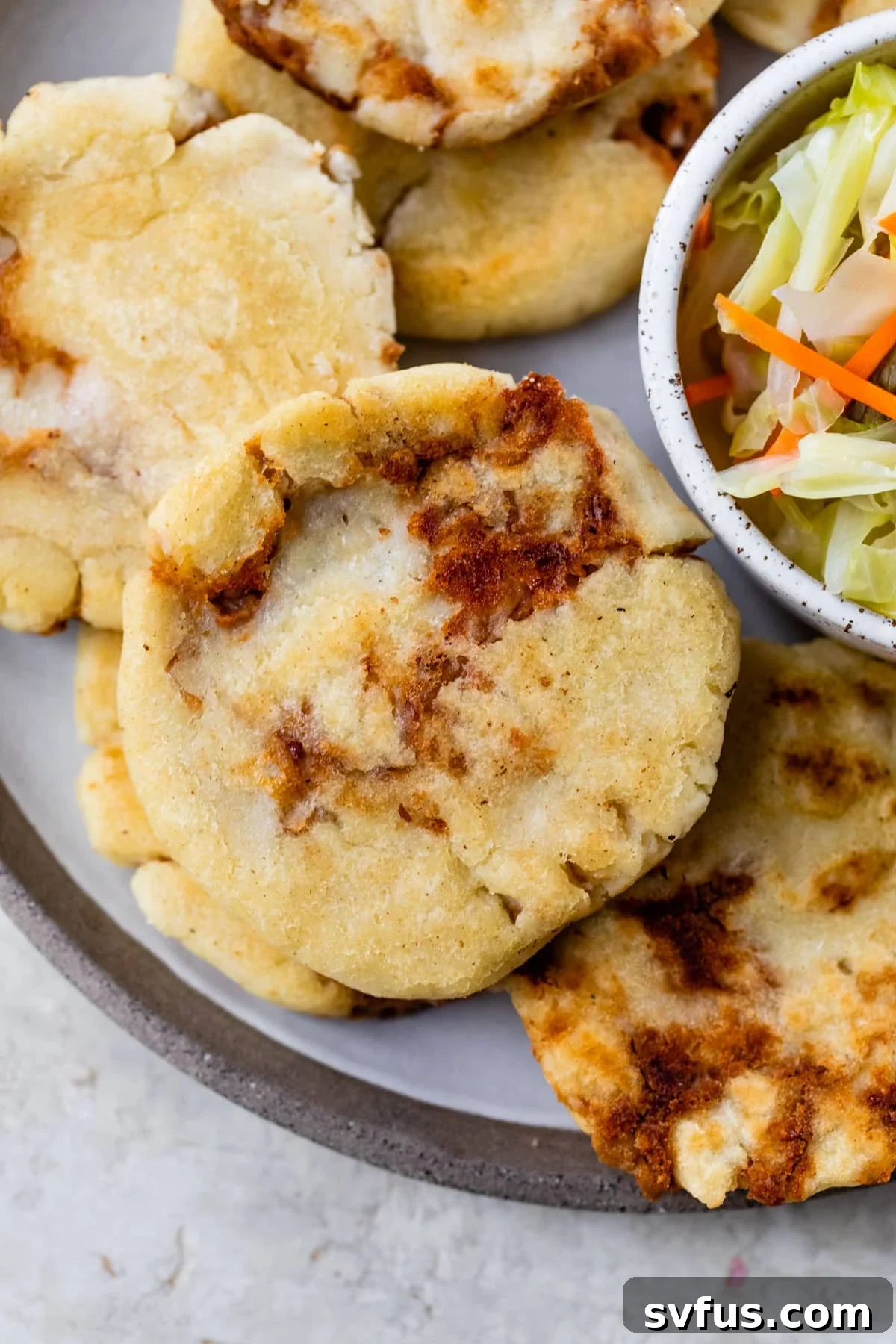
Authentic Salvadoran Pupusas: A Step-by-Step Guide to Flavorful Bean and Cheese Tortillas
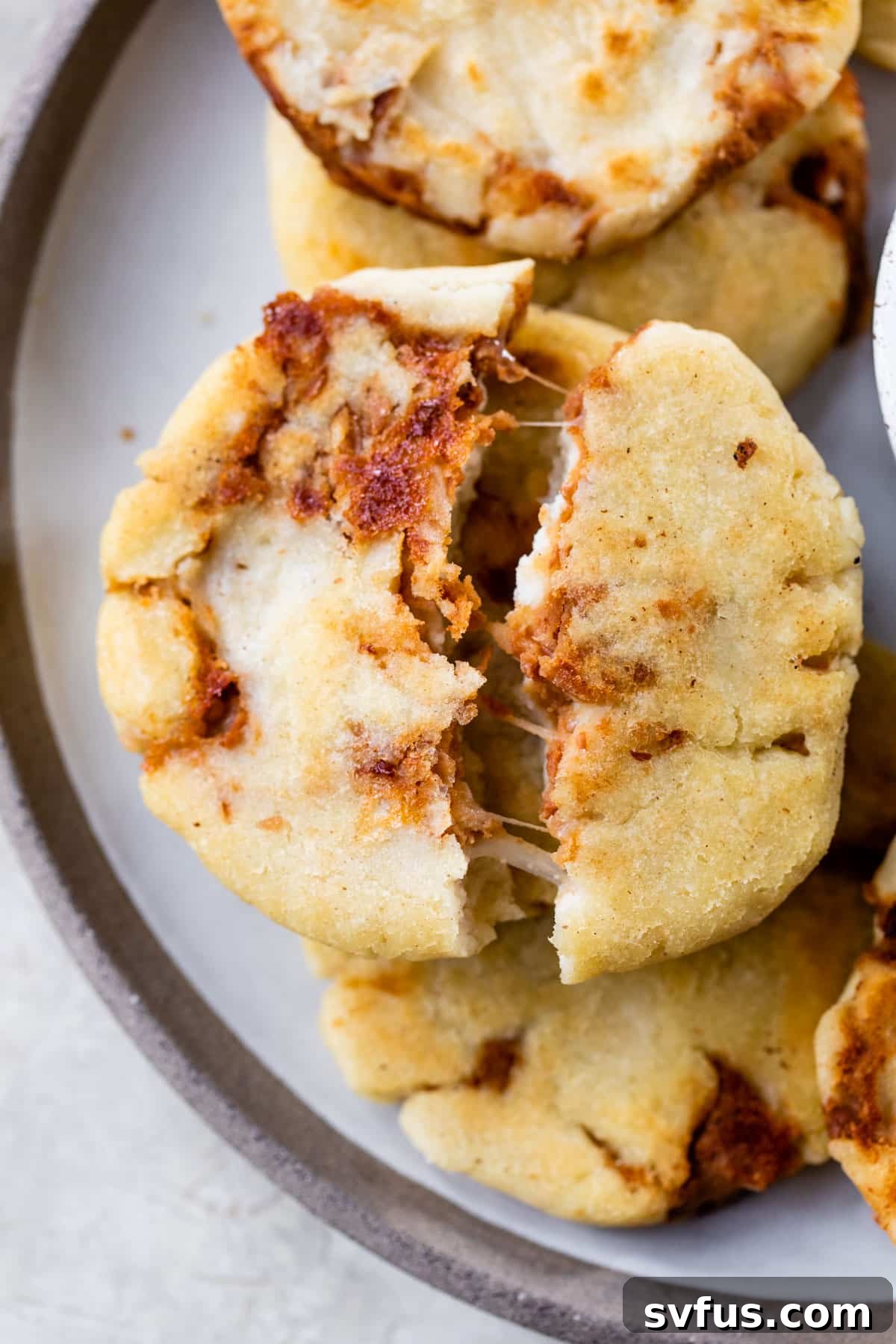
Embark on a culinary journey to El Salvador with this authentic Pupusa Recipe, carefully passed down through generations. Pupusas are more than just a dish; they are a cherished staple of Salvadoran culture, beloved for their comforting warmth and incredible versatility. These thick, handmade corn tortillas, generously filled with a delightful mixture of beans and cheese, offer a taste experience that is both simple and profoundly satisfying. Perfect as a hearty lunch, a comforting dinner, or a delightful snack, pupusas are traditionally served alongside a tangy fermented cabbage relish known as curtido, creating a harmonious blend of flavors and textures.
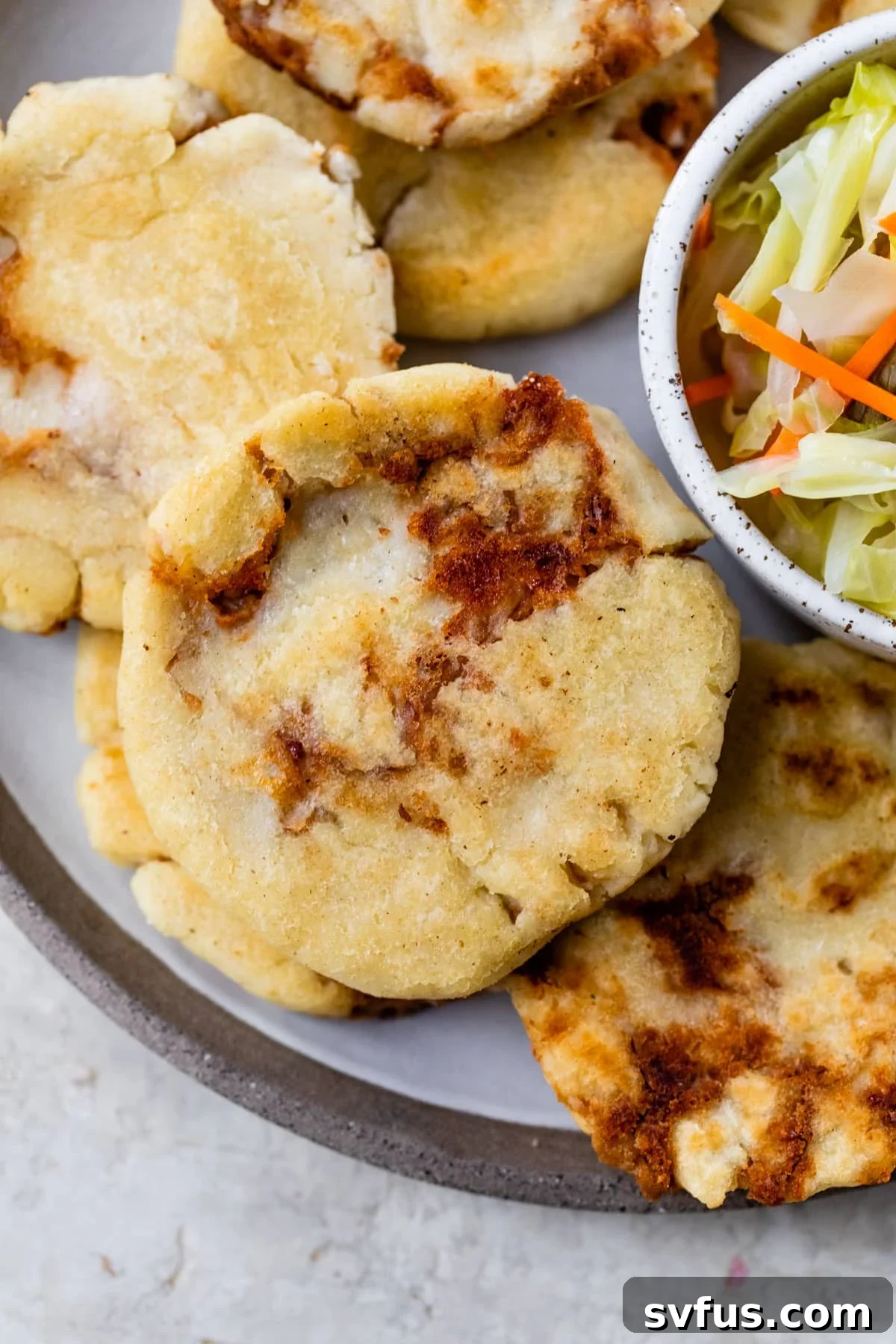
My culinary adventures often lead me to the heart of my in-laws’ kitchen, where family recipes come alive with stories and flavors. Following the success of their cherished Panes con Pollo, I am thrilled to share another gem: the infamous pupusa recipe. My first memorable encounter with pupusas dates back to 2015, a moment that sparked an enduring love affair with this incredible dish. I was instantly captivated by their unassuming nature, yet bursting with flavor, and the endless possibilities of their fillings.
For this particular recipe, we’re focusing on the classic and immensely popular bean and cheese filling. However, the world of pupusas is vast and exciting, offering a canvas for your culinary creativity. Below, you’ll find notes on various other traditional and modern fillings to inspire your next batch.
What Exactly Are Pupusas? A Dive into Salvadoran Cuisine
At their core, pupusas are thick, griddle-cooked tortillas made from masa harina, a special corn flour, mixed with water to form a pliable dough. What sets them apart is their unique preparation: these tortillas are stuffed with a variety of savory fillings before being cooked. Common fillings range from rich cheeses and seasoned refried beans to succulent pork (chicharrones) and even fresh vegetables like zucchini or loroco (an edible flower native to Central America).
Recognized as the national dish of El Salvador, pupusas hold a significant place in the country’s culinary heritage and daily life. They are typically enjoyed with curtido, a vibrant, slightly tart fermented cabbage relish, and often a mild tomato salsa (salsa roja). While pupusas share similarities with other Latin American corn-based dishes like Honduran baleadas or Colombian arepas, they distinguish themselves by being generally flatter and wider, with a uniquely soft, yet slightly crispy, texture.
The history of pupusas dates back centuries, with indigenous Pipil tribes in El Salvador believed to be their originators. The word “pupusa” itself is thought to come from the Pipil word “pupusawa.” Over time, this beloved dish evolved, adapting to available ingredients and culinary traditions, becoming the iconic food item it is today. Making pupusas is not just cooking; it’s participating in a rich cultural tradition, bringing a piece of El Salvador right to your kitchen.
Why You’ll Love This Pupusa Recipe
This recipe isn’t just easy; it’s a gateway to making delicious, homemade Salvadoran pupusas that will impress family and friends. Here’s what makes it special:
- Effortlessly Simple: We’ve broken down the process into easy-to-follow steps, making this an achievable recipe for home cooks of all skill levels, even if you’re new to making tortillas from scratch.
- Versatile Fillings: While we highlight the classic bean and shredded cheese combination, this recipe serves as a perfect base for exploring other delicious fillings like savory pulled pork (chicharrón), tender zucchini, or even just a simple, gooey cheese pupusa.
- Flavor-Packed Pairing: The essential accompaniment, curtido, is included, adding a bright, tangy, and crunchy counterpoint to the warm, soft pupusas, transforming them into a complete and incredibly satisfying meal.
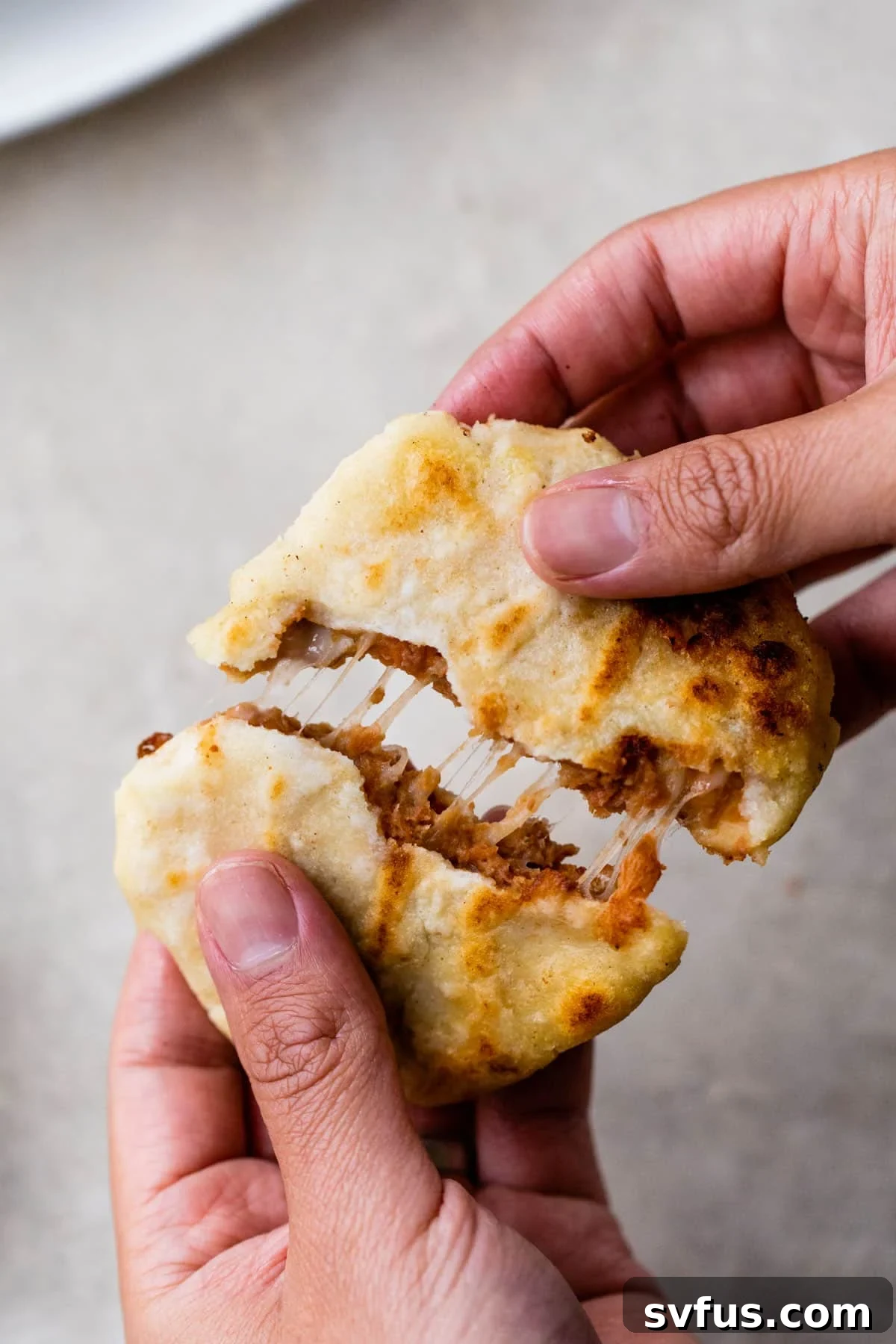
Essential Ingredients for Authentic Pupusas
Crafting the perfect pupusa relies on a few key ingredients. Here’s a closer look at what you’ll need and why each component is vital:
- Masa Harina: This is the soul of your pupusas. Masa harina is a finely ground corn flour that has been nixtamalized (cooked and soaked in an alkaline solution), giving it its distinct flavor and texture, essential for creating pliable and delicious dough. There are no direct substitutions for masa harina in this recipe; ensure you use a good quality brand for the best results.
- Refried Beans: While traditional pupusas often feature homemade refried beans, my mother-in-law assures me that high-quality store-bought refried beans are perfectly acceptable and significantly speed up the preparation process. Look for a brand with minimal additives for the most authentic flavor.
- Seasoning: Goya chicken seasoning is our secret weapon here. This readily available seasoning blend adds a depth of savory flavor to the bean filling that is truly authentic to Salvadoran cooking. You can typically find it in the international aisle of most conventional grocery stores.
- Mozzarella Cheese: Shredded or freshly grated mozzarella provides that satisfying melty, gooey interior. Its mild flavor perfectly complements the beans and seasoning without overpowering them. For the best melt, grate your own cheese from a block.
For the essential accompaniment, Curtido:
- Cabbage: Green cabbage is the traditional choice for curtido. Its crisp texture and mild flavor are ideal for fermentation. While green is preferred, purple cabbage can also be used, offering a beautiful color variation.
- Carrots: Adding a touch of sweetness and vibrant color, carrots are an integral part of curtido. To save time and effort, consider buying pre-shredded carrots.
- Onion: Either white or yellow onion will work beautifully, providing a sharp, aromatic base to the curtido.
- Vinegar: White vinegar or apple cider vinegar contributes the necessary acidity for the curtido’s characteristic tangy flavor and aids in the fermentation process.
Step-by-Step Guide to Making Perfect Pupusas
Follow these detailed steps to create delicious pupusas from scratch:
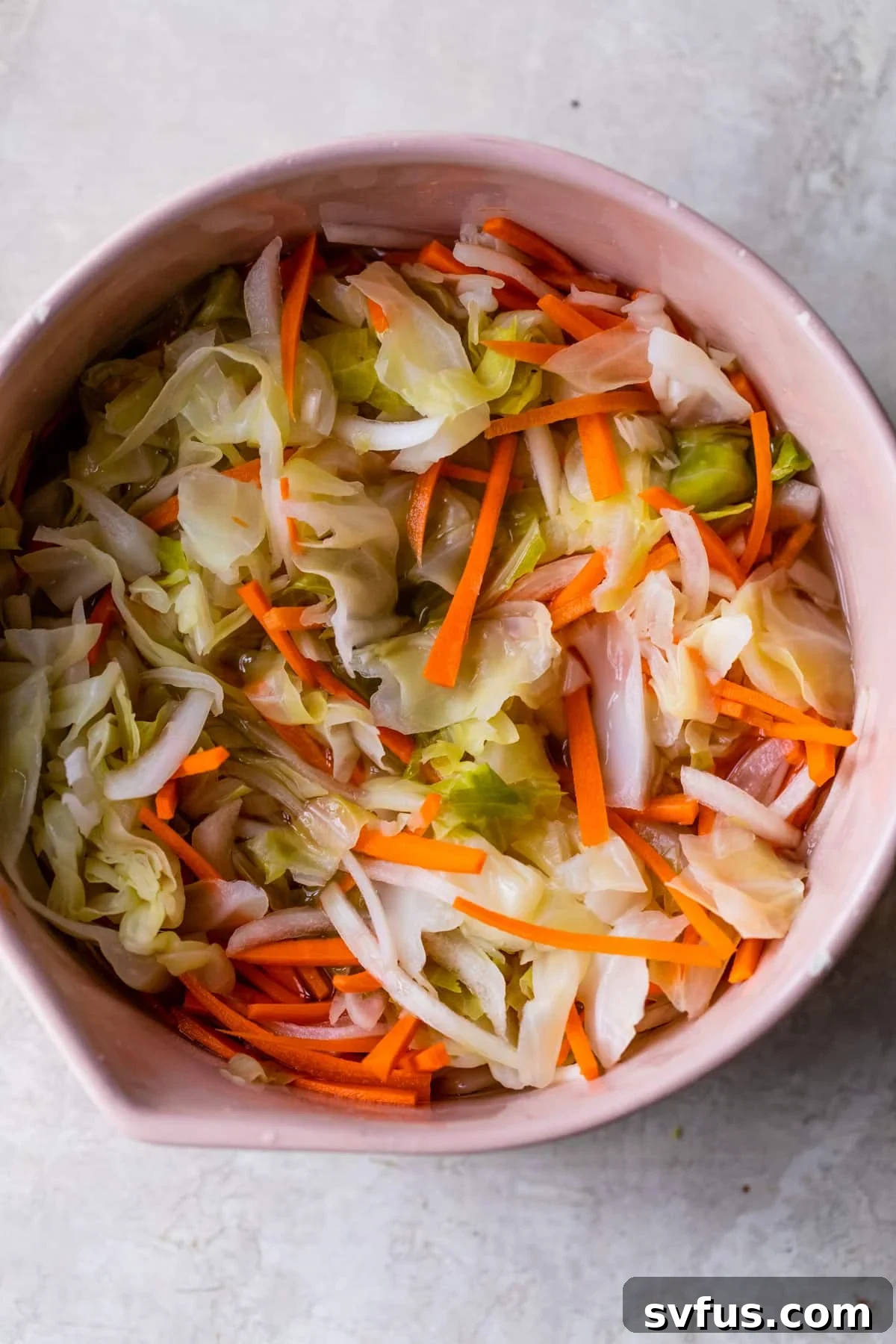
Step 1: Prepare the Curtido. Begin by bringing a large pot of water to a rolling boil. Add your sliced cabbage to the boiling water and cook until it softens, about 5-7 minutes. Reserve ½ cup of the hot water, then drain the remaining water from the cabbage. Transfer the cooked cabbage to a large mixing bowl. Add the shredded carrots, thinly sliced onion, salt to taste, and the chosen vinegar along with the reserved hot water. Stir everything together thoroughly. Allow this mixture to sit and ferment at room temperature while you proceed with preparing the pupusas. This resting period is crucial for developing the curtido’s signature tangy flavor.
Step 2: Craft the Dough. In a sizable mixing bowl, combine the masa harina and salt. Gradually pour in the warm water, about 1 cup at a time, using your hands to mix and knead the ingredients. Continue adding water and mixing until the dough achieves a smooth, consistent texture similar to play-doh – firm enough to hold its shape but soft and pliable. If the dough feels too dry, add a tiny bit more water; if too wet, sprinkle in a bit more masa harina. Cover the bowl with a damp cloth to prevent the dough from drying out while you prepare the filling.
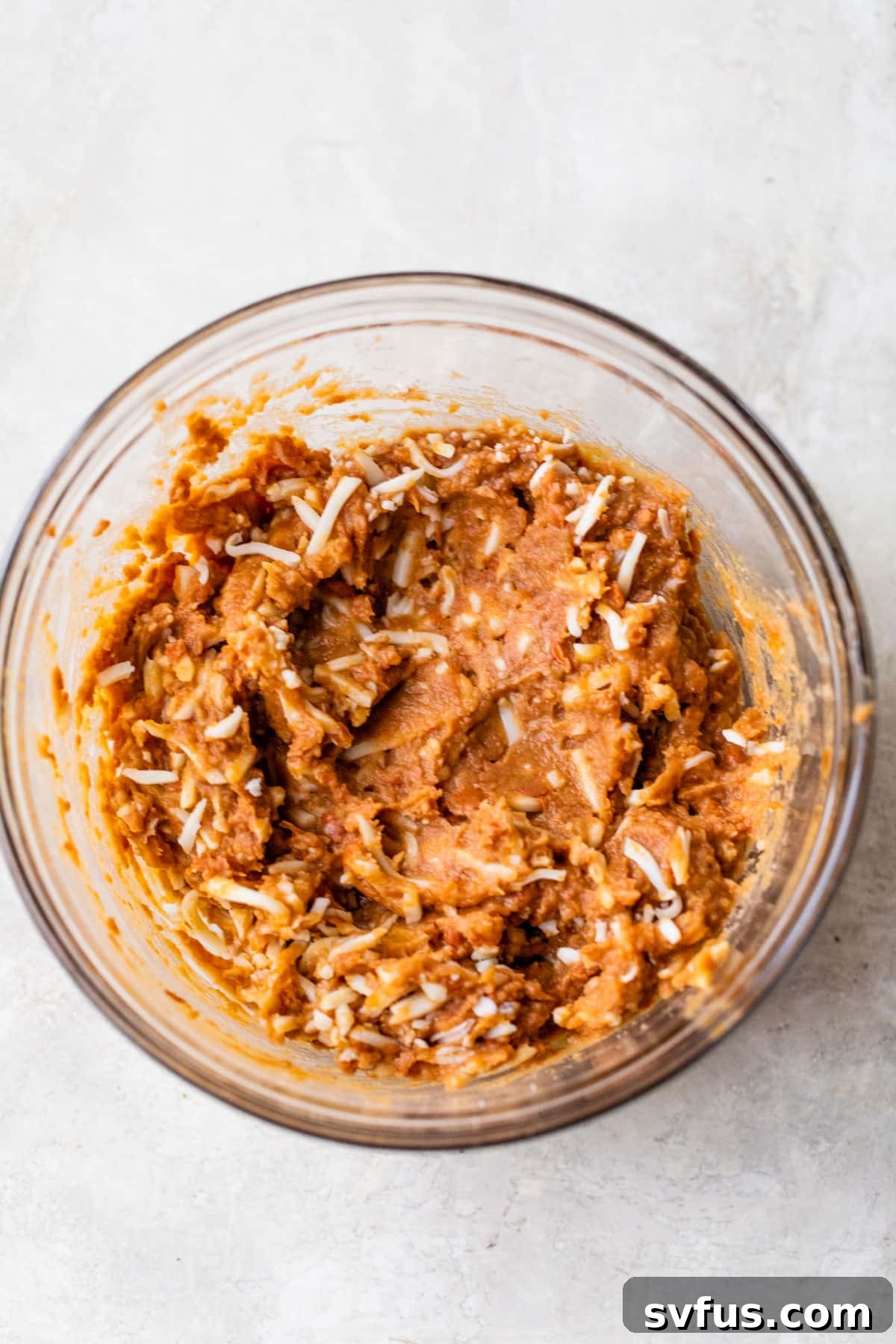
Step 3: Prepare the Filling. In a separate bowl, combine the refried beans, Goya chicken seasoning, and shredded mozzarella cheese. Mix thoroughly until all ingredients are well incorporated and the mixture is uniform. This ensures every bite of your pupusa is packed with flavor.
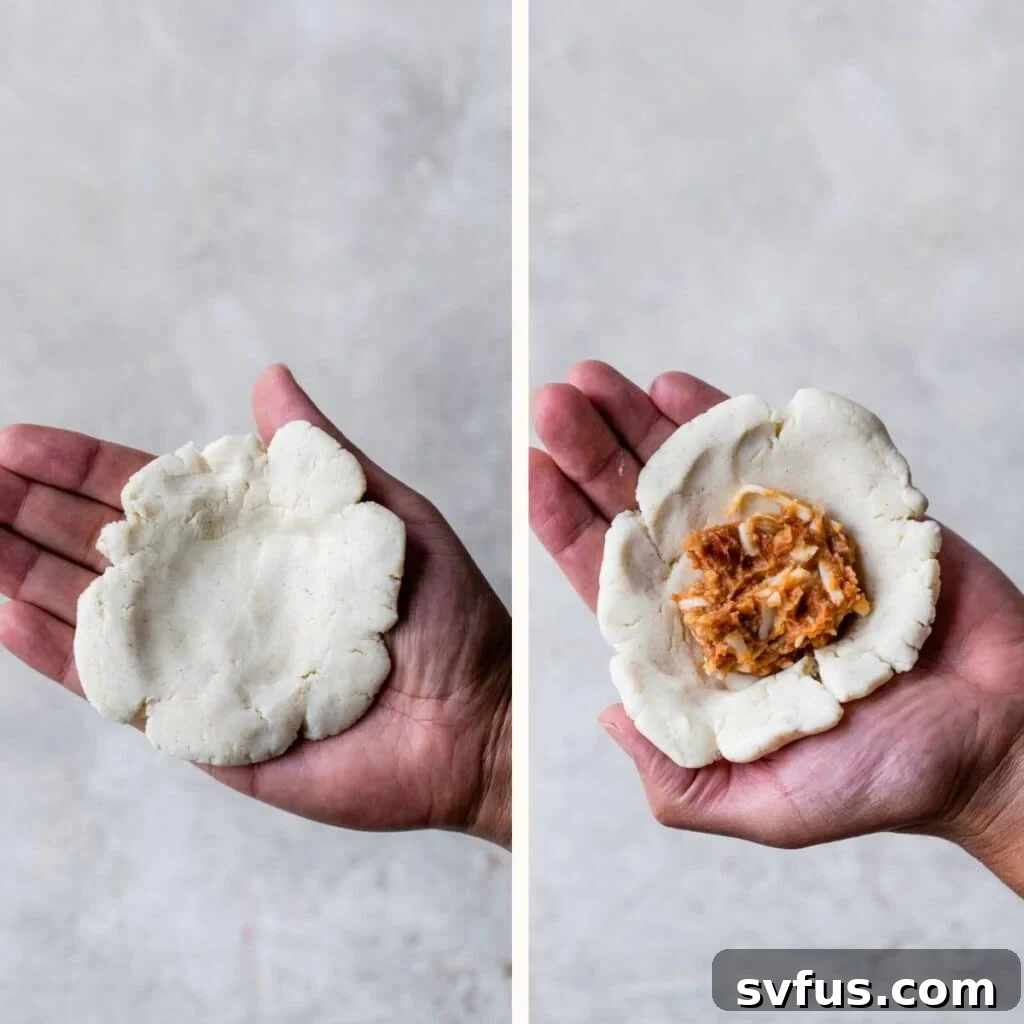
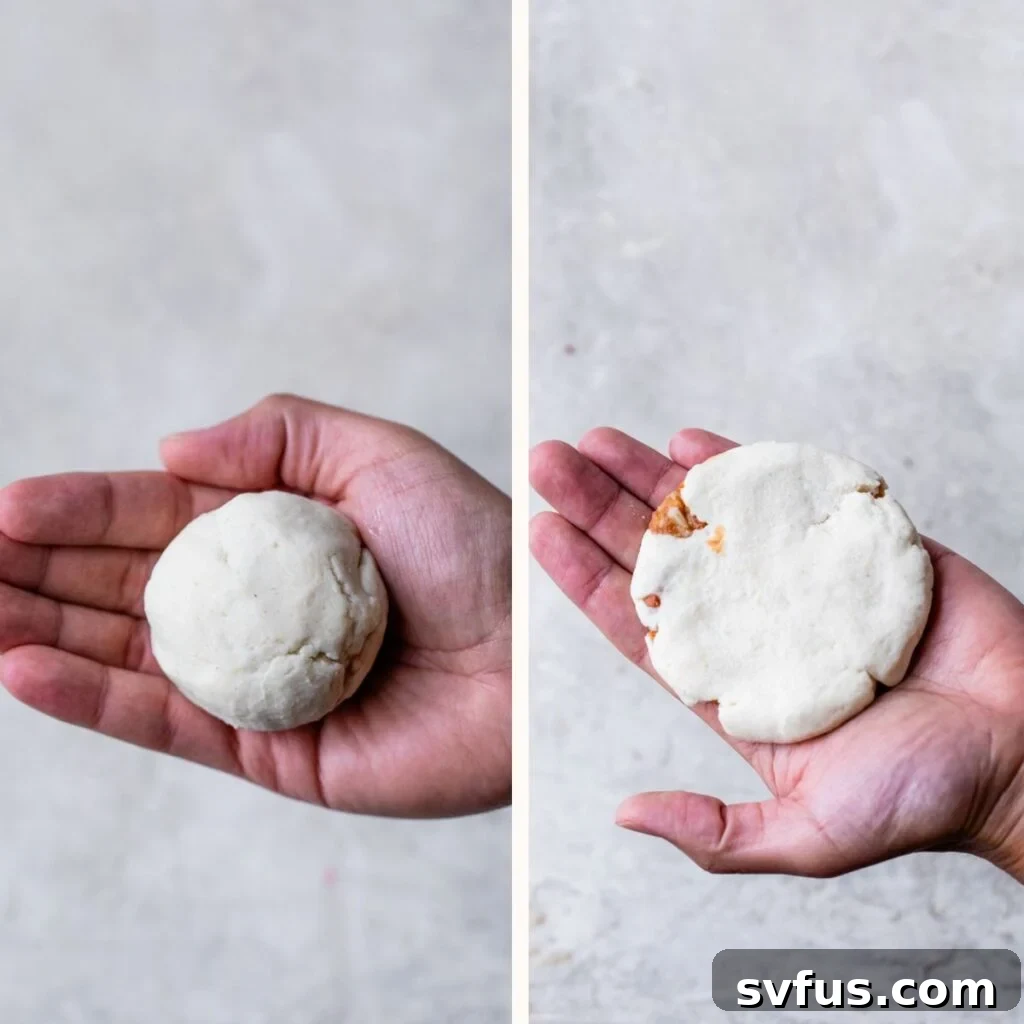
Step 4: Assemble the Pupusas. This is the fun part! Lightly moisten your hands with a little water or oil. Take a golf-ball sized portion of the masa dough and use your palms to flatten it into a small disc, roughly 3-4 inches in diameter. Gently press your thumbs around the edges to create a slight indentation, forming a shallow cup. Place a tablespoon or two of the bean and cheese mixture into the center of this dough cup. Carefully fold the edges of the dough upwards and pinch them together to completely enclose the filling, forming a ball. Once sealed, gently flatten the ball back into a disc, approximately ½ inch thick. Don’t worry if it isn’t perfectly round; a rustic charm is part of the appeal of homemade pupusas. This step may take a few tries to master, so be patient with yourself! Repeat until all the filling and dough are used.
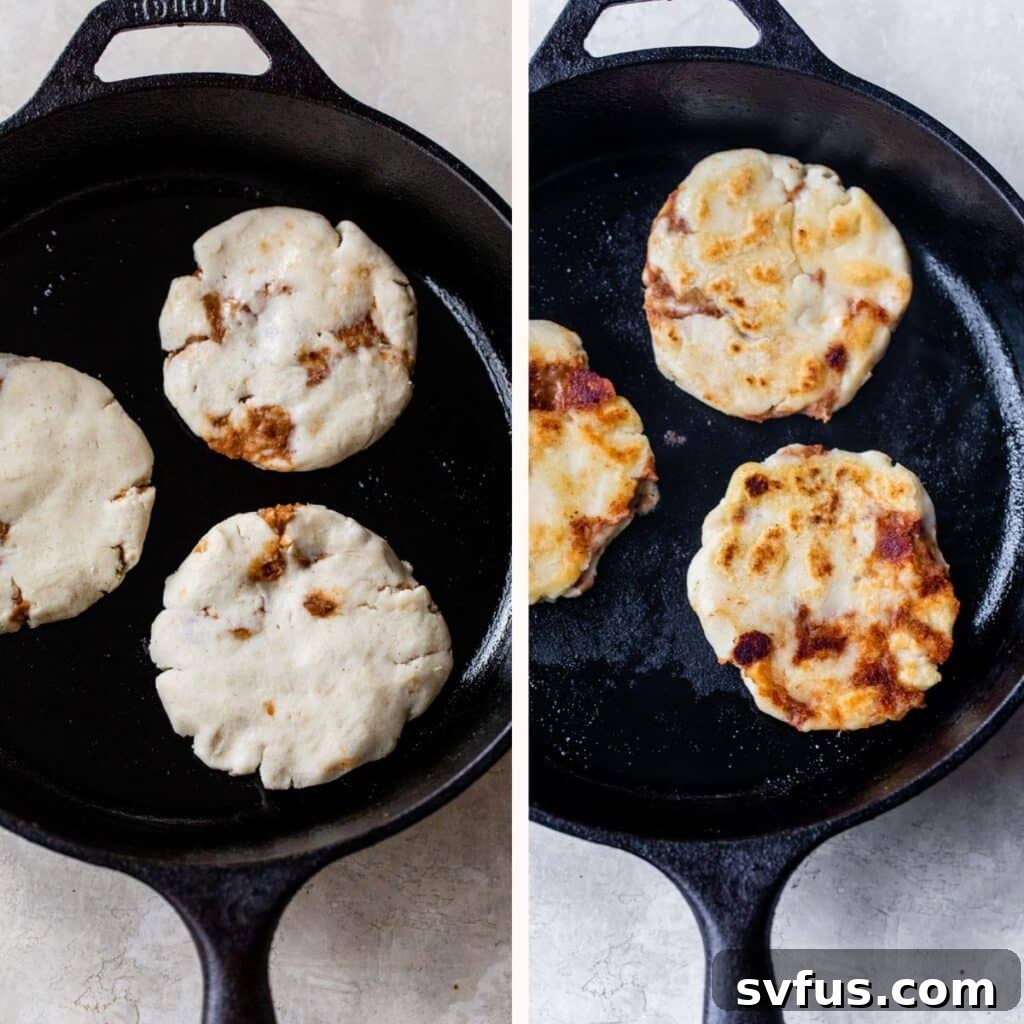
Step 5: Cook the Pupusas. Heat a cast iron skillet or any heavy-bottomed skillet over medium heat. Add a small amount (about 1 tablespoon) of avocado oil or your preferred cooking oil. Once the oil is shimmering, carefully place 3-4 pupusas into the skillet, ensuring not to overcrowd it. Cook for 2-3 minutes on the first side, or until they develop a beautiful golden-brown crust. Flip them using a spatula and cook for another 1-2 minutes on the second side, until both sides are evenly golden and the pupusas are heated through. The cheese inside should be melty and the dough fully cooked. Repeat with the remaining pupusas, adding more oil as needed.
Step 6: Serve and Enjoy. Arrange 2-3 warm, freshly cooked pupusas on a plate. Generously top them with a spoonful of the prepared curtido. For an extra authentic touch, serve with a side of salsa roja if available. Enjoy these delightful Salvadoran treats immediately!
Expert Tips for Perfect Pupusas
Achieving pupusa perfection takes a little practice and a few key tricks. Keep these tips in mind for the best results:
- Keep the Dough Moist: Masa dough tends to dry out quickly. To maintain its ideal consistency, always cover the bowl of dough with a damp kitchen towel. This prevents it from becoming crumbly and difficult to work with.
- Moist Hands are Key: When handling the dough, especially during the shaping and flattening process, keep your hands slightly wet. This prevents the dough from sticking and makes it much easier to mold. Don’t be concerned if a little bit of the filling seeps out during flattening; these bits will crisp up beautifully on the griddle, adding an extra layer of delicious texture.
- Curtido Time-Saver: For a quicker curtido preparation, opt for pre-shredded carrots. This small shortcut can significantly reduce your prep time without compromising flavor.
- Griddle Temperature: Maintain a consistent medium heat on your skillet. Too low, and the pupusas won’t brown properly; too high, and they’ll burn on the outside before cooking through on the inside.
- Don’t Overfill: While it’s tempting to load up on filling, overfilling can make it very difficult to seal the pupusas, leading to excessive leakage during cooking. A tablespoon or two is usually sufficient.
- Practice Makes Perfect: The shaping process can be a bit tricky initially. Don’t get discouraged if your first few aren’t perfectly round. With each pupusa, you’ll get a better feel for the dough and the technique.
What About Salsa Roja?
You’re absolutely right to ask about salsa roja! While this particular family recipe from Miguel’s aunt doesn’t include it, pupusas are almost universally served with a vibrant, flavorful tomato-based salsa. A traditional salsa roja for pupusas typically features fresh tomatoes, onions, garlic, and a hint of chicken seasoning. It’s usually a lighter, thinner salsa designed to complement, not overpower, the pupusas and curtido. Feel free to prepare your favorite version of salsa roja to serve alongside these delicious pupusas for a truly complete Salvadoran experience.
Storage and Reheating
Pupusas are best enjoyed fresh, but they can be stored and reheated for later enjoyment:
- Refrigerator: Cooked pupusas can be stored in an airtight container in the refrigerator for up to 5 days.
- Freezer (Uncooked): To prepare these delicious treats ahead of time, assemble the pupusas but do not cook them. Wrap each uncooked pupusa individually in plastic wrap, then place them in a freezer-safe bag or container. They can be frozen for up to 2-3 months. When ready to cook, thaw them overnight in the refrigerator, then cook them as usual following the instructions.
- Reheating Cooked Pupusas: To reheat, place cooked pupusas in a covered skillet over medium-low heat. Cook for several minutes on each side, until they are warmed through and the dough softens again. You can also gently warm them in an oven or air fryer for a crispier exterior.
Pupusa Filling Variations to Explore
While bean and cheese is a classic, the beauty of pupusas lies in their customizable fillings. Here are a couple of popular variations:
- Zucchini Pupusas: For a delightful veggie option, shred fresh zucchini and season it with salt and a touch of chicken seasoning. Let it sit for about 5 minutes to allow excess moisture to draw out. Then, transfer the zucchini to a nut milk bag or pile it onto several layers of paper towels and squeeze out as much liquid as possible. Place the dried zucchini in a bowl and stir in shredded mozzarella cheese. This mixture is now ready to fill your pupusas.
- Chicharron (Pork) Pupusas: For a heartier, meaty filling, use a fattier cut of pork. Cut the pork into bite-sized pieces, then boil it with salt, Old Bay seasoning, and minced garlic until it’s tender. Once soft, transfer the pork to a hot skillet and pan-fry it until it’s nicely browned and slightly crispy. Drain any excess fat. Transfer the cooked pork to a food processor along with a fresh tomato, a quarter of an onion, a small piece of green bell pepper, and 2 garlic cloves. Pulse everything together a few times until a coarse paste forms. Season with chicken seasoning to taste, strain out any remaining water from the mixture, then stir in shredded mozzarella cheese. This rich chicharron blend will make incredibly flavorful pupusas.
More Delicious Recipes You’ll Love
If you enjoyed this taste of authentic Latin American cuisine, be sure to explore more recipes that bring global flavors to your kitchen:
- Grandma’s Polish Pierogi Recipe
- Panes con Pollo
- Easy Black Bean Soup
If you made this recipe, be sure to leave a comment and star rating below. Your feedback is greatly appreciated!
Pupusa Recipe
By Erin Alvarez
Servings: 14 pupusas
Prep Time: 35 mins
Cook Time: 15 mins
Total Time: 50 mins
Pin Recipe
Print Recipe
Ingredients
for the dough:
- 3 cups masa harina
- 2 tsp salt
- 2 3/4 cups warm water
- 2 tbsp avocado oil, or oil of choice; for frying
for the filling:
- 15 oz. refried beans
- 1 packet chicken seasoning (preferably Goya)
- 1 cup mozzarella cheese, shredded
for the curtido:
- 1/2 head green cabbage, sliced
- 1 large carrot, peeled and sliced thinly (or use 1/2 cup pre-shredded carrots)
- 1/2 onion, thinly sliced
- salt to taste
- 1/2 cup white vinegar, or apple cider vinegar
- 1/2 cup boiling water, or more
Instructions
- Start by making the curtido: bring a large pot of water to a boil, then add the cabbage and boil it until soft; reserve 1/2 cup of the water, then drain the rest. Transfer the cabbage to a bowl and add the carrot, onion, salt, vinegar, and the reserved hot water. Allow the mixture to sit while you prepare the pupusas.
- Next, make the filling: stir the refried beans, chicken seasoning and cheese together in a bowl; set aside.
- Next, make the dough: add the masa and salt to a large mixing bowl, then add the water in 1 cup at a time, using your hands to stir everything together to form the dough. Once all of the water has been added, the dough should feel similar to play-doh.
- Now, it’s time to assemble the pupusas! Grab a small handful of the dough and use your palms to flatten it into a disc. Use your fingers to lift the edges up a bit so it resembles a shallow cup, then add 1-2 tablespoons of the bean mixture into the center. Fold the sides up so that the dough forms a ball, then use your palms to flatten it back out into a disc. It’s ok if it isn’t perfect! This process takes several tries to get right. Repeat this process until all of the bean mixture is used up.
- Heat 1 tablespoon of oil in a cast iron skillet (or heavy bottomed skillet) over medium heat. Add 3 pupusas and cook them for 2-3 minutes, then use a spatula to flip them over and cook for 1-2 minutes until they’re golden on the outside. Repeat this process with all of the pupusas.
- Serve pupusas with curtido on top (and salsa roja, if available) and enjoy!
Notes
*Calories are per pupusa with a spoonful of curtido and are an estimation
Variations:
- Zucchini: shred the zucchini, then season it with salt and chicken seasoning. Let the mixture sit for 5 minutes. Transfer the zucchini to a nut milk bag, or place it on top of several paper towels and squeeze out the excess moisture; pour it into a bowl, then stir in the mozzarella cheese.
- Chicharron (pork): make sure to use a fattier cut. Cut the pork into bite-size pieces, then boil it and add some salt, Old Bay seasoning and garlic. Once it’s soft, transfer it to a skillet and pan-fry it until brown. Transfer it to a food processor, along with tomato, onion, green pepper, and 2 garlic cloves; pulse everything together a few times, then add chicken seasoning to taste. Strain out any water, then stir in the mozzarella cheese.
Nutrition
Calories: 165kcal | Carbohydrates: 25g | Protein: 6g | Fat: 5g | Saturated Fat: 1g | Polyunsaturated Fat: 1g | Monounsaturated Fat: 2g | Cholesterol: 6mg | Sodium: 568mg | Potassium: 148mg | Fiber: 4g | Sugar: 2g | Vitamin A: 1024IU | Vitamin C: 12mg | Calcium: 101mg | Iron: 2mg
Did you make this?Leave a comment and star rating below!