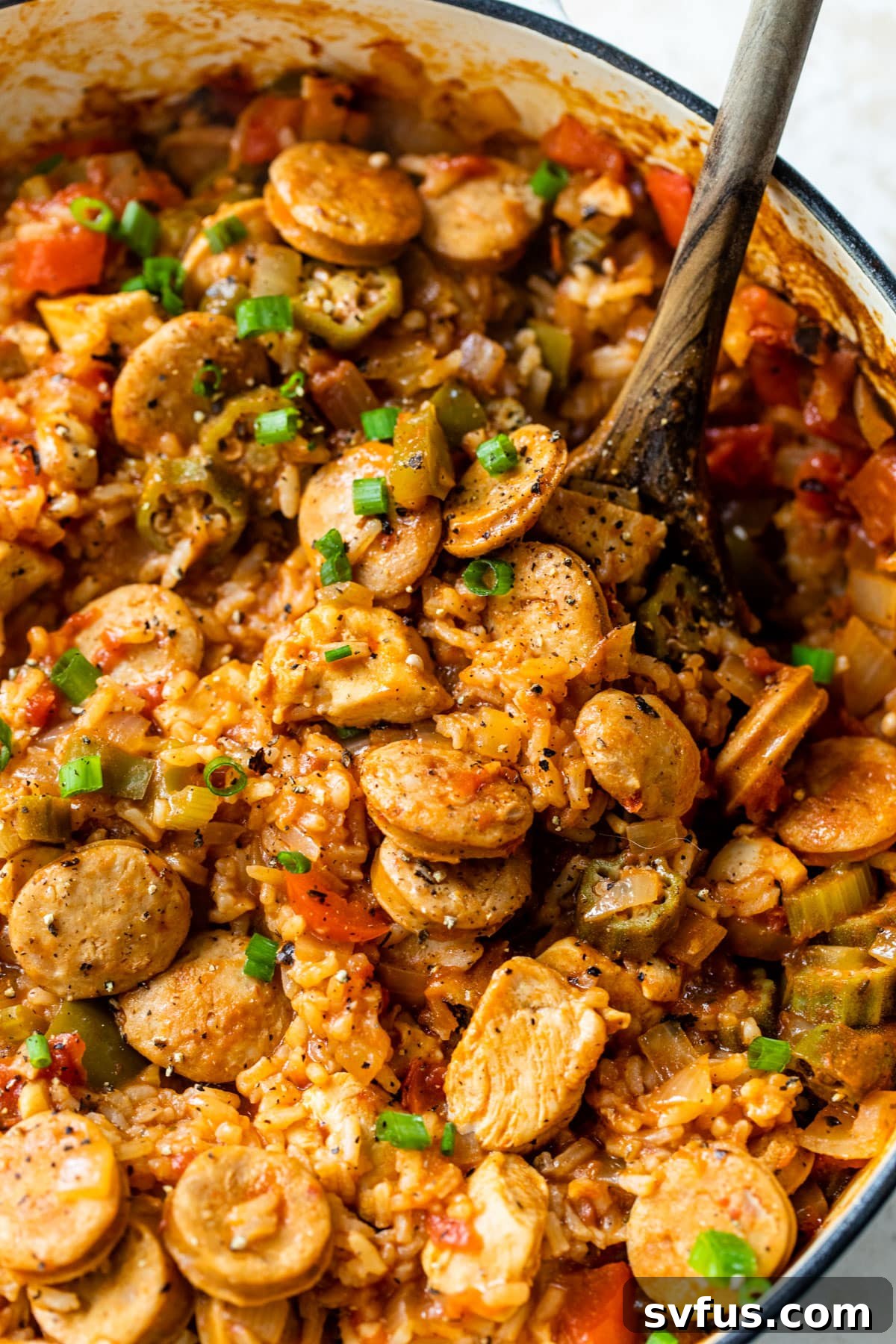
Authentic Chicken and Sausage Jambalaya: A One-Pot Cajun & Creole Masterpiece
Embark on a culinary journey to the heart of Louisiana with this soul-satisfying Chicken and Sausage Jambalaya! This iconic one-pot wonder brings together tender chicken, smoky andouille sausage, a vibrant medley of vegetables, earthy okra, and fluffy rice, all simmered in a rich, spicy broth bursting with authentic Cajun and Creole flavors. Perfect for celebrating Fat Tuesday, Mardi Gras, or simply enjoying a taste of Southern comfort any day of the week, this recipe promises a hearty and memorable meal straight from your kitchen.
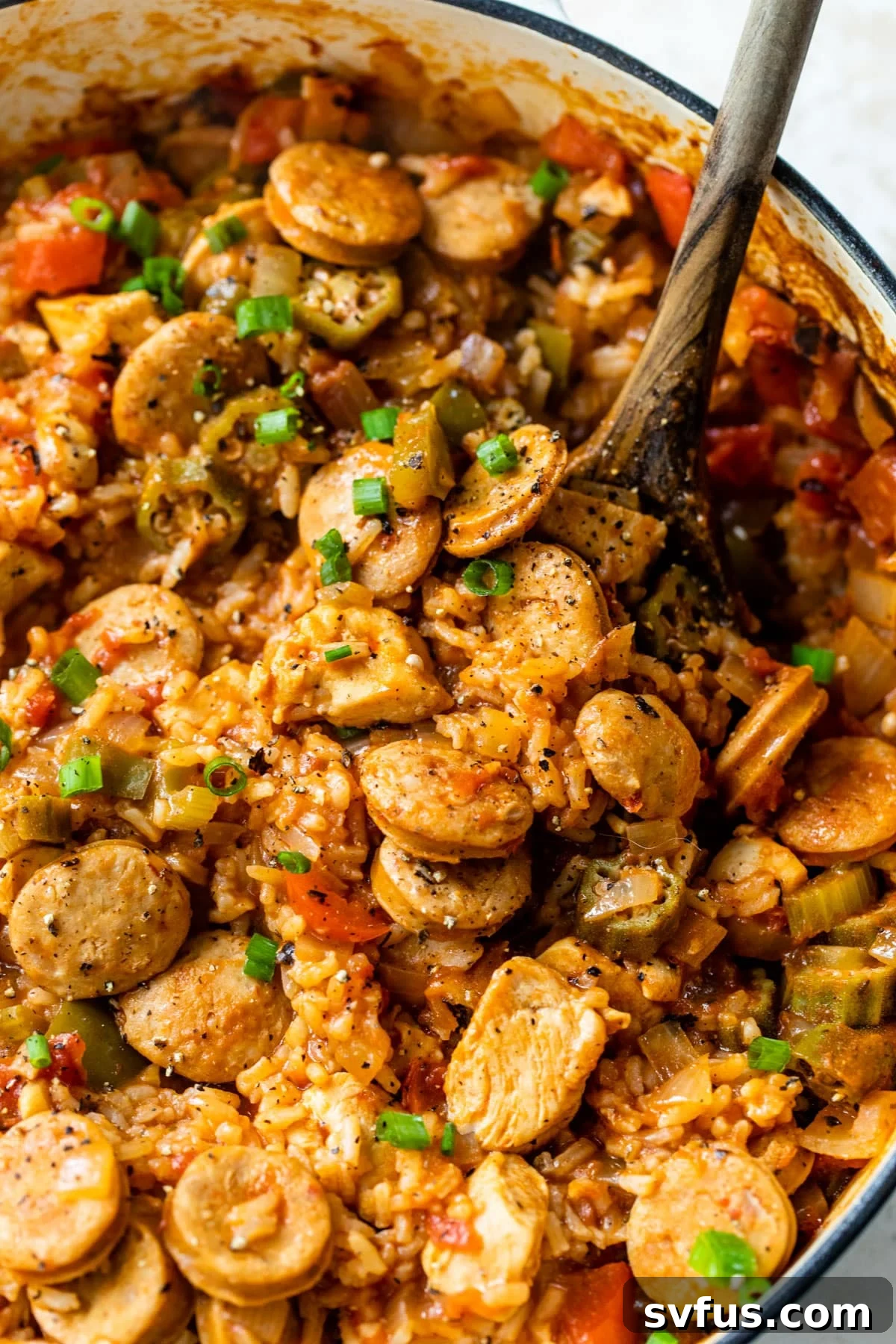
Jambalaya’s roots run deep, tracing back to the vibrant fusion of Spanish paella and French jambon in colonial Louisiana. It’s a dish born from necessity and ingenuity, where locals combined readily available ingredients in a single skillet, allowing the distinct flavors to meld into something truly magical. This easy chicken and sausage jambalaya recipe empowers you to recreate that historical essence, delivering bold and authentic flavors without requiring a trip to the Deep South. Ready in about an hour, it’s the ultimate solution for a delicious, crowd-pleasing dinner. Let’s bring those tantalizing aromas to your kitchen!
Why You’ll Love This Chicken and Sausage Jambalaya Recipe
- Effortless One-Skillet Wonder: Everything cooks in a single pot, simplifying both the cooking process and cleanup. This recipe captures all the beloved components and rich flavors of a traditional Southern jambalaya without the fuss.
- Feeds a Crowd: This generous recipe yields enough to comfortably serve your family, impress guests at a dinner party, or make a fantastic contribution to any potluck gathering. It’s perfect for sharing the warmth of Southern hospitality.
- Authentic Louisiana Flavors: Each spoonful delivers an iconic blend of Cajun and Creole spices, creating a truly immersive culinary experience that transports your taste buds straight to the vibrant streets of New Orleans or the bayous of Louisiana.
- Customizable Comfort: Easily adapt the spice level, add your favorite seafood, or experiment with different sausage varieties to make this dish uniquely yours, while still honoring its traditional roots.
Essential Ingredients for Your Jambalaya
Crafting the perfect jambalaya starts with selecting quality ingredients that contribute to its rich, layered flavor profile. Here’s a closer look at what you’ll need:
Chicken Breast: We recommend boneless, skinless chicken breast, cut into bite-sized pieces for even cooking and easy eating. For an even richer, more succulent texture, consider using boneless, skinless chicken thighs. Their higher fat content adds moisture and depth of flavor that beautifully complements the smoky sausage and spices.
Andouille Sausage: The cornerstone of authentic Cajun and Creole cooking, Andouille sausage is a smoked pork sausage known for its coarse texture and spicy kick. Its distinctive flavor is absolutely crucial for the characteristic taste of jambalaya. While traditional Andouille is pork-based, chicken Andouille sausage is a delicious and often leaner alternative. If Andouille is unavailable, a well-seasoned kielbasa can serve as a suitable substitute, though you might need to adjust the amount of Cajun seasoning to achieve a similar spice level.
Cajun (or Creole) Seasoning: This is where the magic happens! A good quality store-bought blend is key to achieving authentic flavors. These blends typically include paprika, cayenne pepper, garlic powder, onion powder, and dried herbs like oregano and thyme. Renowned brands such as Zatarain’s Creole Seasoning, Emeril’s Essence Original Seasoning, Chef Paul Prudhomme’s Blackened Redfish Magic, Tony Chachere’s Original Creole Seasoning, and Slap Ya Mama Cajun Seasoning are excellent choices. Having extra on hand is always a good idea for other dishes like Cajun shrimp alfredo, baked Cajun salmon, or blackened shrimp tacos!
The Holy Trinity of Vegetables: This foundational aromatic base is essential for nearly all Cajun and Creole dishes. Our jambalaya features a classic medley of diced red bell pepper, green bell pepper, onion, and celery. Sautéing these vegetables slowly develops a deep, savory flavor that forms the soul of the dish. Minced garlic is added to this trio for an extra layer of pungent aroma and taste.
Crushed Tomatoes: A can of crushed tomatoes, preferably fire-roasted for an added layer of smoky depth, provides a rich, tangy, and umami-packed base. The inclusion of tomatoes categorizes this particular recipe as a Creole-style jambalaya, often referred to as “red jambalaya,” contributing to its beautiful color and complex flavor profile.
Long Grain White Rice: Varieties like basmati or jasmine rice are ideal for jambalaya. Their individual grains remain separate and fluffy when cooked, absorbing the rich broth and spices without becoming overly sticky or mushy. Rinsing the rice thoroughly before adding it to the pot can help prevent excess starch from making the dish gummy.
Chicken Broth: This liquid gold is crucial for cooking the rice and infusing every grain with flavor. Using a high-quality chicken broth, or even better, a homemade bone broth (like this Instant Pot bone broth), will significantly enhance the overall richness and depth of your jambalaya.
Okra: This signature Southern vegetable plays a dual role in jambalaya. It acts as a natural thickener, contributing to the dish’s hearty consistency, and adds a subtle earthy flavor with a unique texture. While fresh okra is wonderful, frozen okra works just as well. Important Note: Frozen okra is typically softer than fresh. To prevent it from becoming slimy, add it directly to the jambalaya without thawing. Soaking fresh okra in vinegar or lemon juice for about 30 minutes, or briefly sautéing it separately before adding it towards the end of the cooking process, are also excellent techniques to prevent sliminess.
Step-by-Step Cooking Instructions
Follow these detailed steps to create a truly unforgettable Chicken and Sausage Jambalaya:
Step 1: Perfectly Brown the Chicken and Sausage. Heat 1 tablespoon of olive oil in a large, heavy-bottomed skillet or Dutch oven over medium heat. Once the oil shimmers, add the bite-sized chicken pieces and sliced Andouille sausage. Sprinkle with half a tablespoon of your Cajun seasoning. Cook, stirring occasionally, until the chicken is cooked through and beautifully browned, and the sausage has developed a nice caramelization. This browning is crucial for building deep flavor. Using a slotted spoon, transfer the cooked chicken and sausage to a separate bowl, leaving behind any flavorful drippings in the skillet.
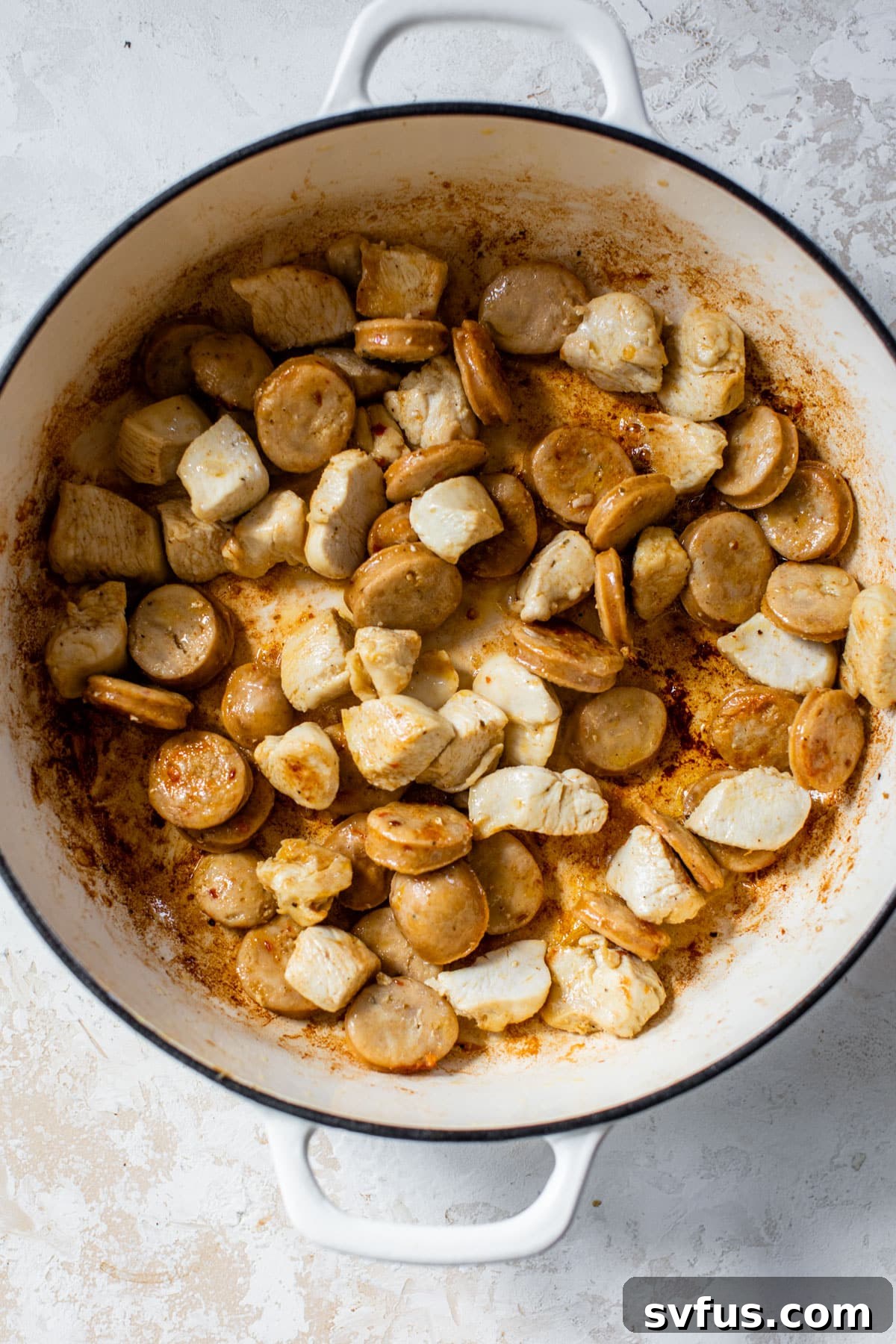
Step 2: Deglaze for Maximum Flavor. Add a small splash of chicken broth to the hot skillet. Use a wooden spoon or spatula to scrape up any browned bits (fond) that are stuck to the bottom of the pan. These flavorful remnants are packed with concentrated taste and will dissolve into the broth, enriching your jambalaya’s overall flavor.
Step 3: Sauté the Aromatic Base (The Holy Trinity). Add another tablespoon of olive oil to the skillet, if needed. Introduce the diced red bell pepper, green bell pepper, onion, and celery. Sauté for about 5-7 minutes, stirring frequently, until the vegetables soften and become translucent. Next, stir in the minced garlic, the remaining Cajun seasoning, dried thyme, and a pinch of cayenne pepper (adjust to your preferred spice level). Continue to sauté for another minute until fragrant, allowing the spices to toast and release their aromas.
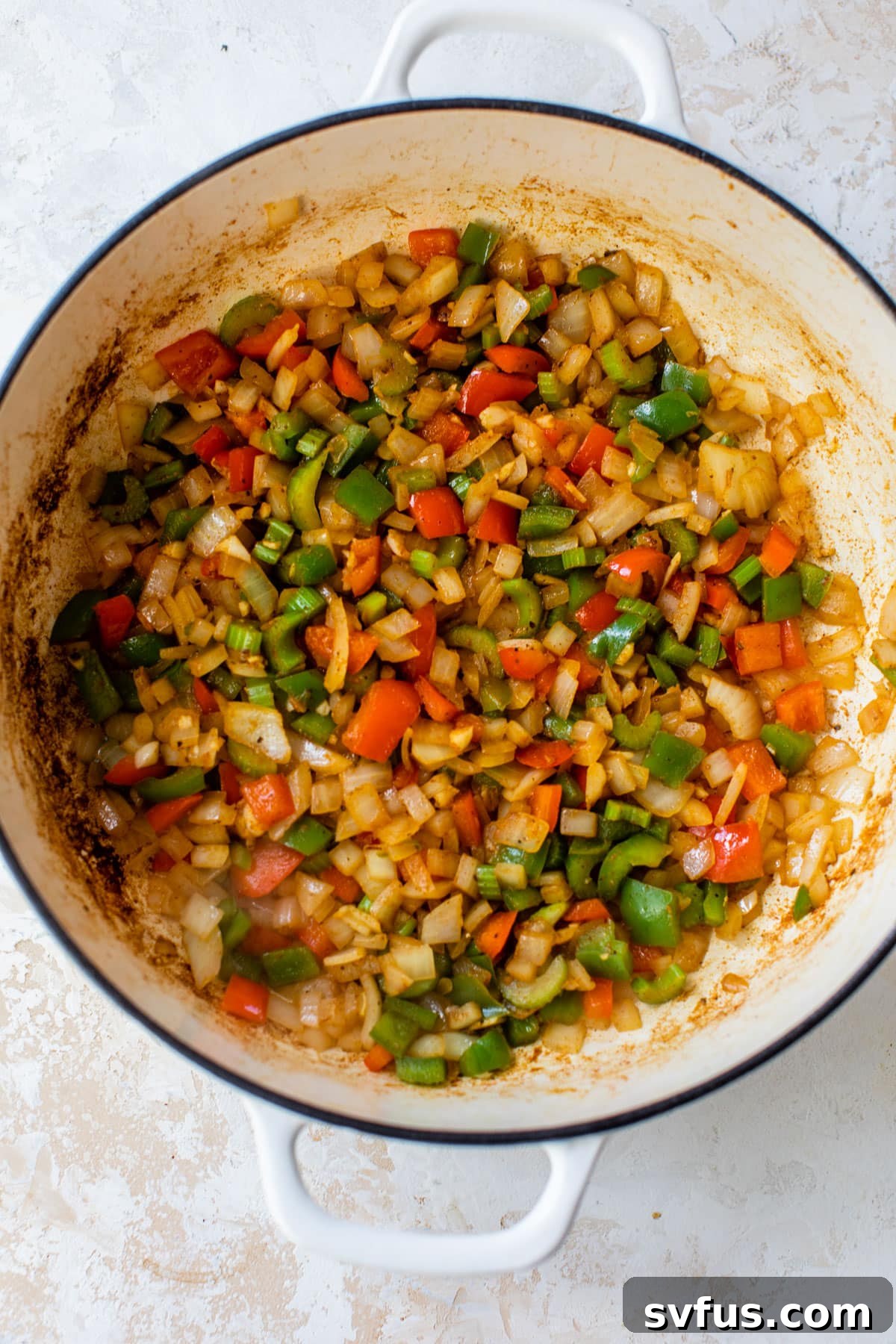
Step 4: Combine All Ingredients. Pour in the coconut aminos (or soy sauce), crushed tomatoes, rinsed long-grain white rice, chicken broth, thinly sliced okra, and a bay leaf. Return the browned chicken and sausage mixture to the skillet. Give everything a good, thorough stir to ensure all ingredients are well combined and the rice is evenly distributed and submerged in the liquid.
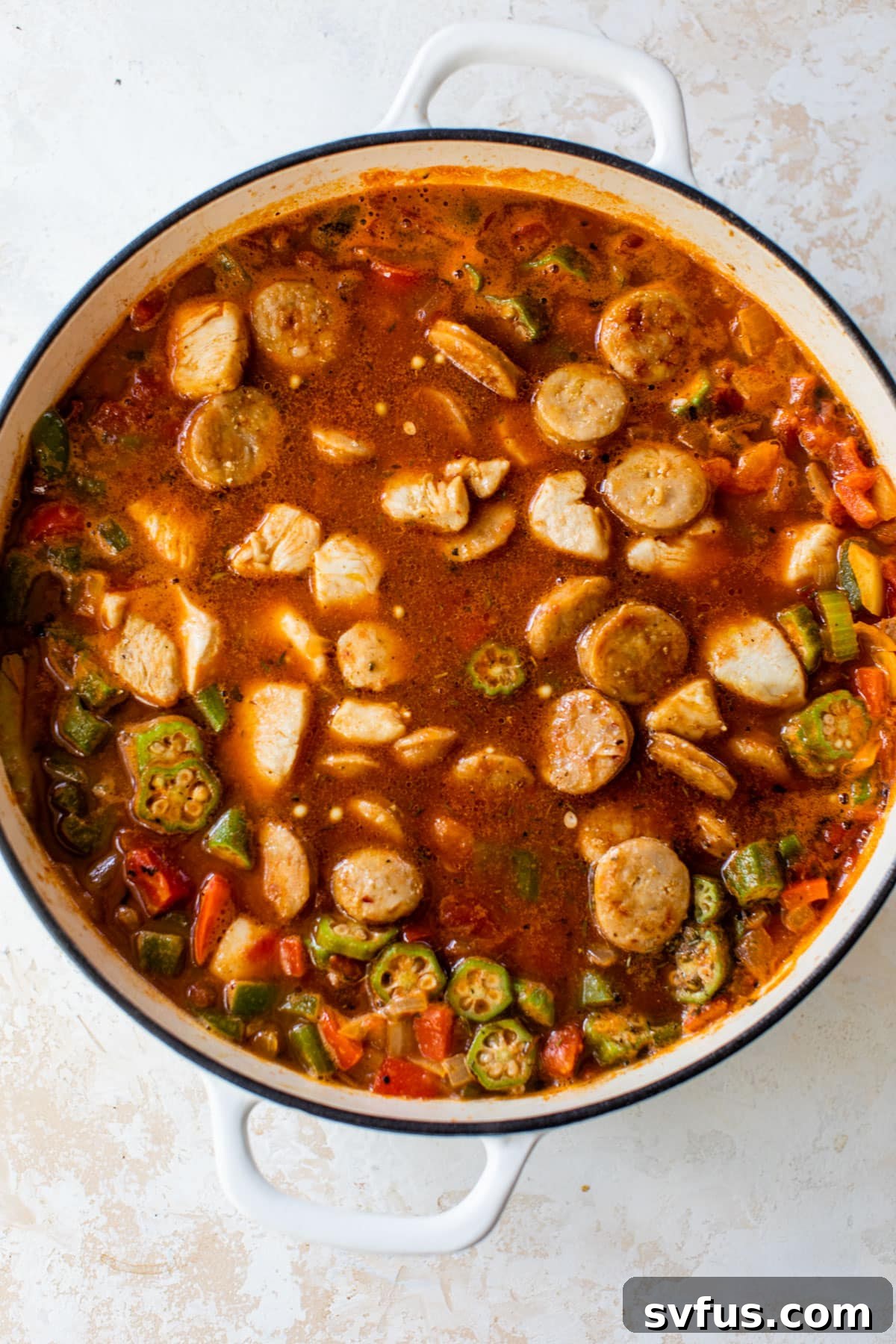
Step 5: Simmer to Perfection. Bring the mixture to a rolling boil over medium-high heat. Once boiling, reduce the heat to medium-low, cover the skillet tightly with a lid, and simmer gently for about 25-30 minutes. This allows the rice to slowly absorb the flavorful liquid and cook until tender. Remember to stir occasionally, especially during the last 10-15 minutes, to prevent the rice from sticking to the bottom of the pan and ensure even cooking. The goal is for all the liquid to be absorbed and the rice to be perfectly tender.
Step 6: Garnish and Serve. Once the jambalaya is cooked and the rice is tender, remove it from the heat. Let it rest, covered, for 5-10 minutes to allow the flavors to meld further and the rice to steam. Fluff gently with a fork. Before serving, sprinkle generously with freshly chopped green onions (scallions) or fresh parsley for a burst of color and herbaceous freshness. Serve hot and enjoy this incredible taste of Louisiana!
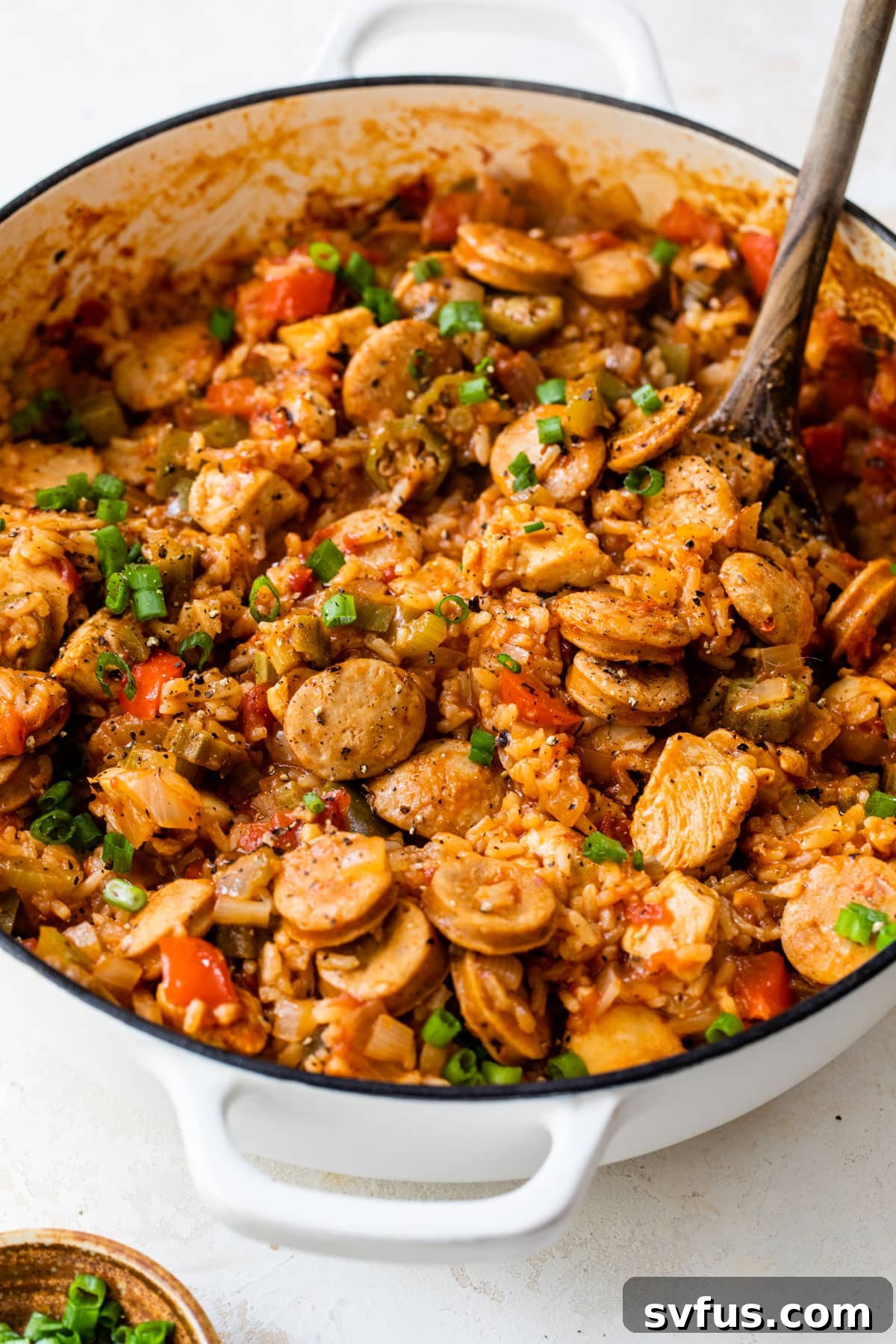
Expert Tips for a Perfect Jambalaya & FAQs
Achieve jambalaya perfection with these insightful tips and answers to common questions:
- Patience with the Rice is Key: Do not rush the rice cooking process. Allow it ample time to slowly absorb all the wonderful flavors from the spices, broth, and other ingredients. Stirring occasionally is helpful to prevent sticking, but avoid excessive stirring which can break down the rice grains and make them mushy.
- Adjusting Liquid for Rice: If you find that the rice has absorbed all the liquid in the skillet but is still not tender, don’t fret! Simply add another splash (about 1/4 to 1/2 cup) of chicken broth or water, cover the skillet again, and continue to simmer until the rice reaches your desired tenderness. Every rice brand and stovetop can vary slightly.
- Taste and Season with Confidence: Always taste your jambalaya before serving. Cajun and Creole spices can be bold, so you might want to add more for an extra spicy kick, or adjust the salt and pepper to your personal preference. A perfectly seasoned dish elevates the entire experience.
- Taming Slimy Okra: Okra contains a natural mucilage that can sometimes result in a “slimy” texture when cooked. To prevent this, there are a few effective tricks:
- Vinegar Soak: Soak fresh okra in vinegar or lemon juice for about 30 minutes before adding it to the dish. The acidity helps to break down the mucilage.
- Separate Sauté: Briefly sauté the okra separately in a little oil until slightly browned before adding it to the jambalaya. This seals the pods and minimizes sliminess.
- Late Addition: Add okra towards the end of the cooking process, so it cooks just enough to be tender but not enough to release excessive mucilage.
- Frozen Okra Advantage: Frozen okra, when added directly to the hot dish without thawing, often has less of an issue with sliminess due to its cellular structure being disrupted during freezing.
- The Secret to Good Jambalaya: Layering Flavors: The true artistry of jambalaya lies in the methodical layering of flavors. Each step of this recipe, from browning the chicken and sausage to sautéing the aromatics and deglazing the pan, is designed to build complexity and depth. Don’t skip these steps; they are essential for creating the most well-balanced and authentically flavored dish.
Jambalaya Variations to Explore
Get creative in the kitchen with these delicious variations:
- Add a Seafood Twist: For a delightful surf-and-turf experience, stir in pre-cooked shrimp, crawfish, or crab meat during the last 5-10 minutes of simmering, just long enough to heat through. Their delicate flavors pair wonderfully with the rich base.
- Crank Up the Heat: If you crave an extra fiery kick, incorporate a splash of your favorite Louisiana hot sauce, a diced jalapeño, or a few dashes of Tabasco directly into the pot with the spices.
- Deglaze with Wine: For an added layer of sophistication, deglaze the skillet with a dry, crisp white wine, such as Sauvignon Blanc or Pinot Grigio, instead of broth in Step 2. Allow the wine to reduce slightly before proceeding.
- Vegetarian Jambalaya: Omit the chicken and sausage. Use vegetable broth and add extra vegetables like mushrooms, zucchini, or bell peppers, along with smoked paprika for a hint of smoky flavor.
- Smoked Ham Addition: For another traditional touch, add diced smoked ham or tasso ham along with the Andouille sausage for an even deeper smoky profile.
Perfect Serving Suggestions
Complete your authentic Southern feast by pairing your Chicken and Sausage Jambalaya with these delicious sides:
- Classic Comfort: Serve alongside warm, fluffy cornbread or crusty French bread to soak up every last bit of the flavorful broth. This traditional pairing is incredibly satisfying.
- Lighter Accompaniments: If you prefer something a bit lighter, a fresh side of coleslaw, vibrant braised greens, or a crisp baby kale salad with honey-mint vinaigrette will provide a refreshing contrast to the robust flavors of the jambalaya.
- Simple Green Salad: A simple mixed green salad with a light vinaigrette can also cut through the richness and cleanse the palate.
What is Jambalaya?
Jambalaya is a beloved Louisiana Creole or Cajun dish, typically prepared as a hearty, one-pot rice dish. Its primary components include a combination of meats (such as chicken, sausage, and/or seafood), a vibrant medley of vegetables (often the “Holy Trinity” of onion, bell pepper, and celery), and rice, all seasoned generously with a unique blend of Cajun or Creole spices. The ingredients are simmered together, allowing the flavors to marry and create a deeply savory and satisfying meal.
What’s the Difference Between Cajun and Creole Jambalaya?
The key distinction between Cajun and Creole jambalaya primarily lies in the use of tomatoes. Creole jambalaya, often associated with New Orleans and its French and Spanish colonial influences, typically includes tomatoes, giving it a reddish hue and leading to its nickname “red jambalaya.” Conversely, Cajun jambalaya, hailing from the more rural swamp and prairie regions of Louisiana, usually omits tomatoes, resulting in a browner, roux-based appearance and is often called “brown jambalaya.” Given the inclusion of crushed tomatoes in this recipe, you can proudly consider this a delicious Creole-style Chicken and Sausage Jambalaya!
How is Jambalaya Different from Gumbo?
While both jambalaya and gumbo are iconic Louisiana dishes known for their rich flavors, they differ significantly in their preparation and consistency. Jambalaya is fundamentally a one-pot rice dish where the rice cooks directly within the main mixture, absorbing all the flavors. Gumbo, on the other hand, is a thick, savory stew that starts with a dark roux (a mixture of fat and flour) and is served *over* a bed of separately cooked rice. Gumbo tends to be much soupier and often features filé powder or okra as a thickener, while jambalaya has a drier, more integrated texture.
Storage and Reheating Instructions
Enjoy your homemade jambalaya for days with these convenient storage tips:
- Refrigerator: Store any leftover chicken and sausage jambalaya in an airtight container in the refrigerator for up to 3 to 4 days. The flavors often deepen overnight, making it even more delicious the next day!
- Freezer: For longer storage, allow the jambalaya to cool completely to room temperature. Transfer it to a freezer-safe, airtight container or heavy-duty freezer bags. It can be frozen for up to 2 to 3 months. When ready to enjoy, thaw the frozen jambalaya overnight in the refrigerator before reheating.
- Reheating: Individual portions can be easily reheated in the microwave until warmed through. Alternatively, reheat on the stovetop over medium heat in a covered skillet, adding a splash of chicken broth or water to reintroduce moisture and prevent drying out. Stir occasionally until thoroughly heated.
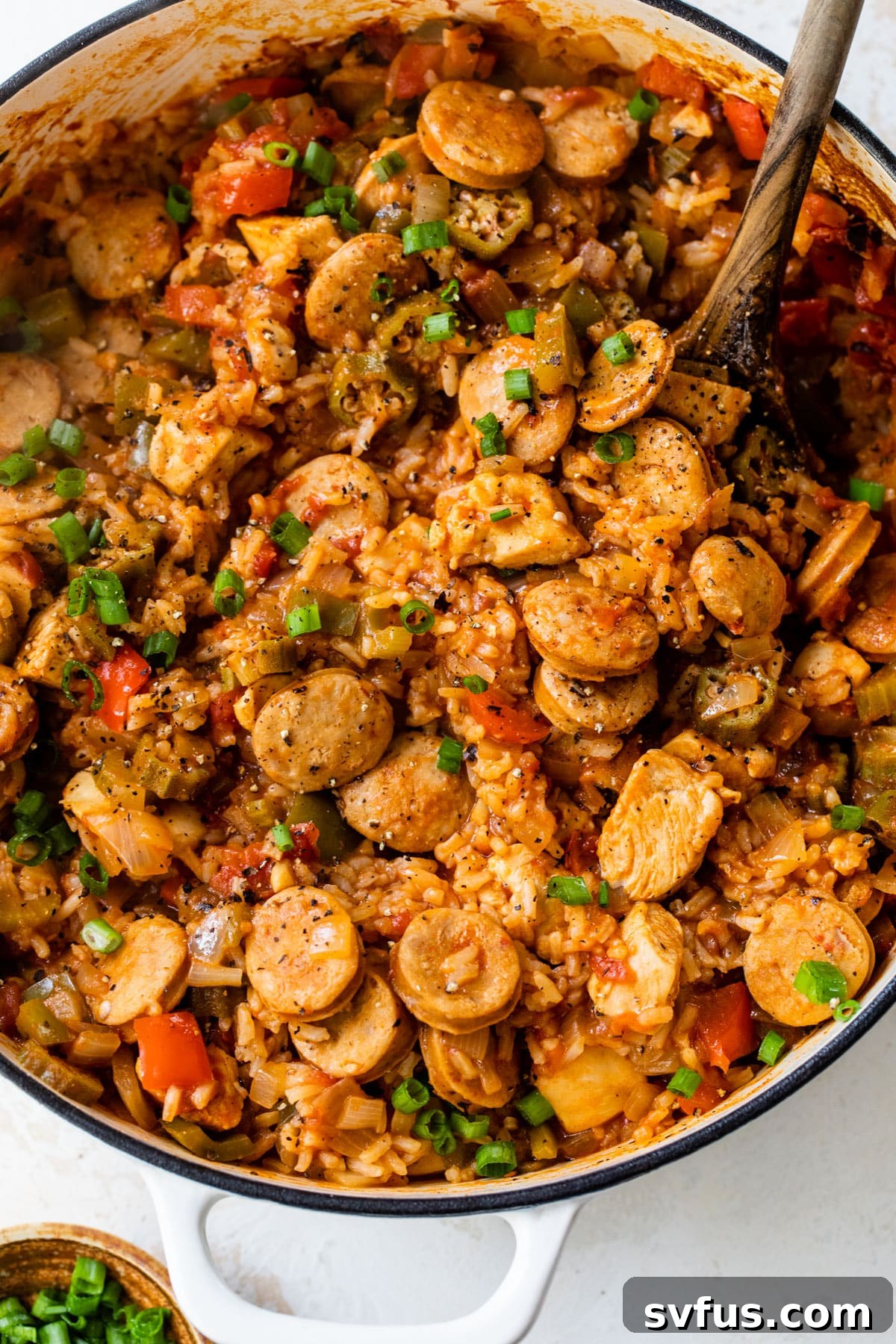
More Easy One-Pot Dinner Recipes
If you loved the simplicity and flavor of this one-pot jambalaya, be sure to explore these other fantastic single-pan dinner ideas:
- One Pan Fajita Pasta
- Easy Orange Chicken
- Mushroom Chicken
Chicken and Sausage Jambalaya Recipe
By Erin Alvarez
Servings: 6
Prep Time: 10 mins
Cook Time: 40 mins
Total Time: 50 mins

Bring soul-satisfying Cajun-style cooking to your kitchen with this Chicken and Sausage Jambalaya! Chicken, sausage, vegetables, okra, and rice get together in a rich, spicy broth in this one-skillet dinner. Perfect for Fat Tuesday or any day of the week!
Video Guide
Ingredients
- 1 lb chicken breast, cut into bite-size pieces
- 10 oz andouille chicken or pork sausage, sliced into rounds
- 2 tbsp olive oil, divided
- 1 1/2 tbsp cajun seasoning
- 1 red bell pepper, diced
- 1 green bell pepper, diced
- 1 medium onion, diced
- 2 celery stalks, chopped
- 4 garlic cloves, minced
- 1/2 tsp thyme
- 1/4 tsp cayenne pepper
- 1 tbsp coconut aminos or soy sauce
- 14 oz crushed tomatoes, preferably fire roasted
- 1 1/2 cups long grain white rice
- 3 cups chicken broth, or more as needed
- 1 cup okra, thinly sliced
- 1 bay leaf
- Green onions and/or fresh parsley for garnish
Instructions
- Heat 1 tbsp olive oil in a large skillet or Dutch oven over medium heat. Add the chicken and sausage and sprinkle with ½ tbsp of the cajun seasoning. Cook until chicken is cooked through and sausage is browned. Remove with a slotted spoon and set aside.
- Add a splash of broth to the skillet to deglaze and scrape up any brown bits. Then, add the remaining 1 tbsp olive oil to the skillet. Add the red bell pepper, green bell pepper, onion, and celery and sauté for 5 minutes until softened. Stir in the garlic, remaining cajun seasoning, thyme, and cayenne, and sauté for 1 minute more until fragrant.
- Pour in the coconut aminos (or soy sauce), crushed tomatoes, long grain white rice, chicken broth, okra, and bay leaf. Return the cooked chicken and sausage to the skillet. Stir everything well to combine.
- Bring the mixture to a boil. Reduce the heat to medium-low, cover with a lid, and simmer for about 25 minutes, or until the liquid is absorbed and the rice is tender. Stir occasionally to prevent sticking.
- Remove from heat, let stand covered for 5-10 minutes. Fluff with a fork, then sprinkle with chopped green onions or parsley before serving. Enjoy!
Notes
*Calories are per serving and are an estimation.
Nutrition Information
Serving: 1g | Calories: 503kcal | Carbohydrates: 50g | Protein: 30g | Fat: 20g | Saturated Fat: 5g | Polyunsaturated Fat: 3g | Monounsaturated Fat: 10g | Trans Fat: 0.1g | Cholesterol: 85mg | Sodium: 986mg | Potassium: 904mg | Fiber: 4g | Sugar: 6g | Vitamin A: 1982IU | Vitamin C: 55mg | Calcium: 83mg | Iron: 3mg
If you made this recipe, be sure to leave a comment and star rating below. Thanks!