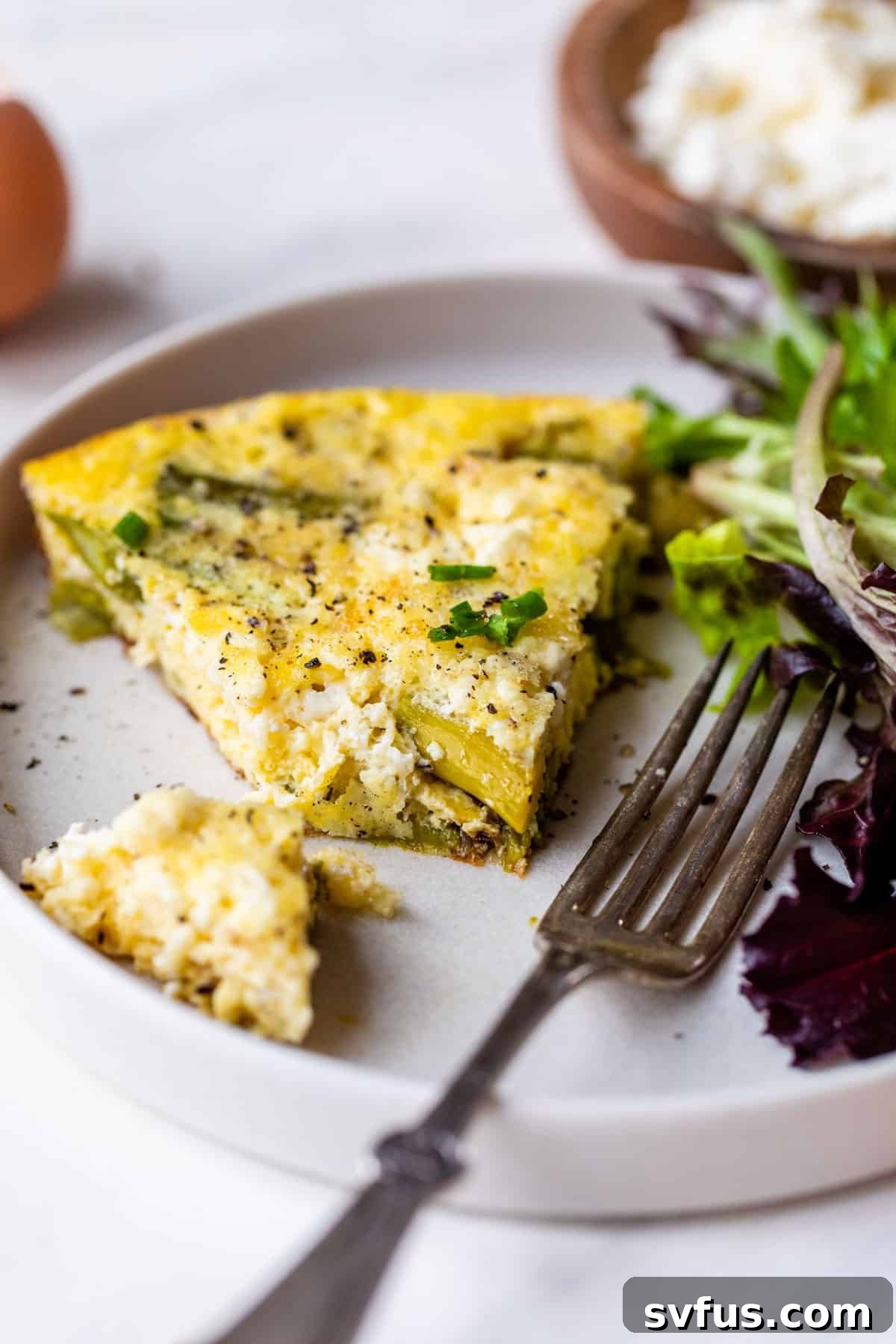
Welcome the vibrant flavors of spring with this exquisite Asparagus Frittata. Bursting with fresh, seasonal asparagus, creamy cottage cheese, and savory feta, this dish offers a delightful and satisfying start to your day. Whether you’re planning a special brunch, a hearty breakfast, or a light lunch, this low-carb, protein-packed frittata is incredibly versatile and guaranteed to be a crowd-pleaser. Its elegant presentation belies its simple preparation, making it an ideal choice for both seasoned cooks and kitchen novices alike. Discover how effortless it is to bring a taste of spring to your table with this comforting and nourishing egg bake.
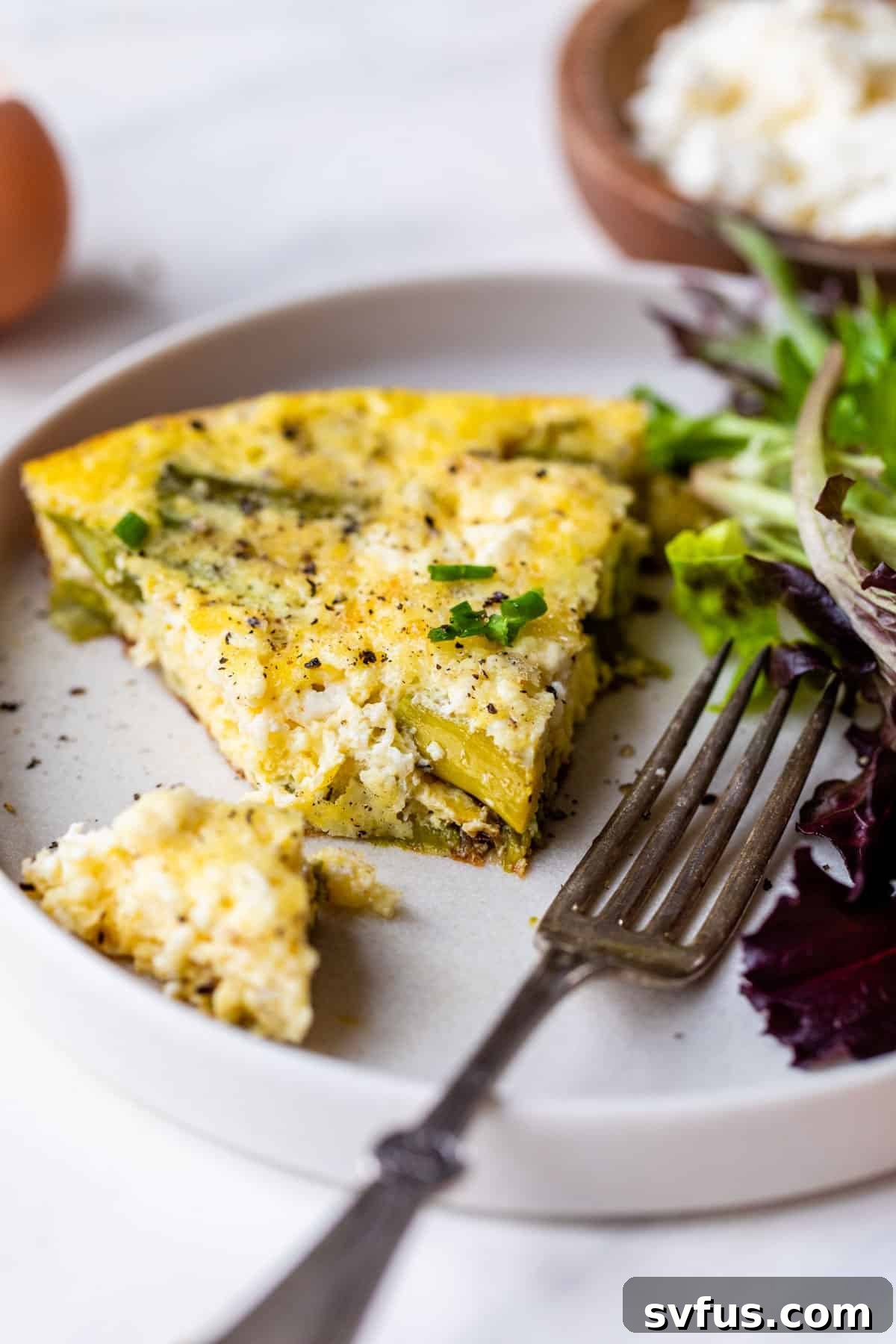
Say goodbye to complicated morning meals and hello to your new favorite breakfast or brunch hero. This easy Asparagus Frittata is a fuss-free centerpiece that combines perfectly baked eggs with the crisp freshness of asparagus, the rich protein of cottage cheese, and the salty tang of feta. Its inherent simplicity makes it a fantastic alternative to more involved dishes like quiche, offering all the flavor without the added step of preparing a pastry crust. Imagine serving each warm, fluffy slice alongside a zesty skinny bloody mary – the perfect pairing to kickstart your day or celebrate the arrival of the spring season!
What truly elevates this vegetarian frittata is its remarkable balance of health and convenience. Not only is it loaded with essential protein and naturally gluten-free, but it also comes together in a fraction of the time it takes to bake a traditional quiche. While quiche relies on a pastry base to encase its egg filling, a frittata is effortlessly baked directly in a skillet, resulting in a lighter, crustless dish. For those who appreciate the flavors of quiche but prefer a simpler, lighter option, feel free to affectionately call this your “crustless quiche” – either way, it’s undeniably delicious!
Why You Will Love This Asparagus Frittata
This Asparagus Frittata isn’t just a recipe; it’s a celebration of fresh flavors and effortless cooking. Here’s why it’s destined to become a staple in your kitchen:
- Protein-Packed & Gluten-Free Elegance: This baked egg dish is naturally gluten-free and packed with protein, making it a healthy and satisfying meal. It’s perfect for impressing guests at a spring brunch, a leisurely weekend breakfast, or even a holiday lunch without any dietary worries.
- A Symphony of Flavors and Textures: Experience the delightful contrast of tender-crisp asparagus baked into a creamy, custard-like base of eggs and a medley of cheeses. Every forkful offers a harmonious blend of textures and tastes, from the earthy asparagus to the rich, salty notes of feta and the delicate creaminess of cottage cheese.
- Quick & Effortless to Prepare: Forget spending hours in the kitchen. This frittata is incredibly easy to make and can be on your table in just 30 minutes. Its straightforward steps mean less stress and more time to enjoy your meal.
- Infinitely Customizable: The beauty of a frittata lies in its adaptability. This recipe provides a fantastic foundation, but you can easily mix and match your favorite vegetables, cheeses, and proteins to create endless variations that suit your taste and whatever ingredients you have on hand.
- Perfect for Any Meal: While often considered a breakfast or brunch item, this savory frittata is substantial enough to be enjoyed for lunch or a light dinner. Its versatility ensures it fits seamlessly into any meal plan.
Key Ingredients for Your Spring Frittata
Crafting the perfect Asparagus Frittata starts with fresh, quality ingredients. Each component plays a vital role in building the incredible flavor and texture of this dish:
Shallots: These small, delicate members of the onion family contribute a wonderfully aromatic and subtly sweet onion flavor to the frittata, elevating its overall complexity without overpowering the other ingredients. Their mildness makes them ideal for lighter egg dishes. If shallots are hard to find, you can substitute with finely sliced yellow onion, leeks, or even green onions (scallions) for a slightly sharper, fresher note.
Asparagus: The star of this spring dish! Asparagus is at its peak during the spring months, typically from February through June, making it readily available in most grocery stores and farmers’ markets. When selecting asparagus, look for stalks that are bright green, firm to the touch, and have tightly closed tips. Avoid any with wilted or mushy ends, or those that appear dull in color. Asparagus not only provides a beautiful color and crisp-tender texture but is also packed with vitamins K, A, and C, as well as folate and fiber, adding a healthy boost to your meal.
Eggs: The foundational element of any frittata! This recipe utilizes a combination of whole eggs and egg whites, contributing to a lighter yet rich custard consistency. Using a mix helps achieve that perfect fluffy texture while keeping it relatively light. You can separate eggs yourself (saving the yolks for decadent treats like chocolate caramel lava cakes) or opt for convenient carton egg whites. Eggs are a powerhouse of protein and essential nutrients, forming the base of this satisfying meal.
Cottage Cheese: Often an overlooked ingredient in frittatas, cottage cheese is the secret to achieving an incredibly creamy, satiny texture in the baked eggs, reminiscent of a delicate soufflé. Its mild flavor seamlessly integrates into the dish, and it delivers a significant protein boost (approximately 28 grams per 1 cup). For substitutions, ricotta cheese offers a similar creamy texture, while grated Parmesan or mozzarella can add a different cheesy dimension, though the texture might be slightly less uniform.
Feta Cheese: To round out the flavor profile, crumbled feta cheese adds a delightful punch of salty, tangy flavor that beautifully complements the sweetness of the asparagus and the richness of the eggs. Its distinct Mediterranean character provides an exciting contrast. If feta isn’t your preference, you have many delicious alternatives: try crumbled goat cheese for a milder tang, shredded Gruyere for a nutty depth, Fontina for meltiness, or even a sharp white cheddar for a classic cheesy taste. Halloumi or queso fresco can also offer interesting texture and flavor variations.
Olive Oil: A staple in Mediterranean cooking, olive oil provides a healthy fat source and serves as the perfect medium for sautéing the shallots and asparagus, helping to unlock their flavors and achieve that ideal tender-crisp texture. Use a good quality extra virgin olive oil for the best results.
Salt and Black Pepper: Simple yet essential seasonings that enhance all the other flavors. Adjust to your personal preference, but remember a pinch of salt helps the asparagus release its natural sweetness during cooking.
Step-by-Step Instructions for a Perfect Asparagus Frittata
Creating this delicious Asparagus Frittata is surprisingly straightforward. Follow these simple steps for a flawless result:
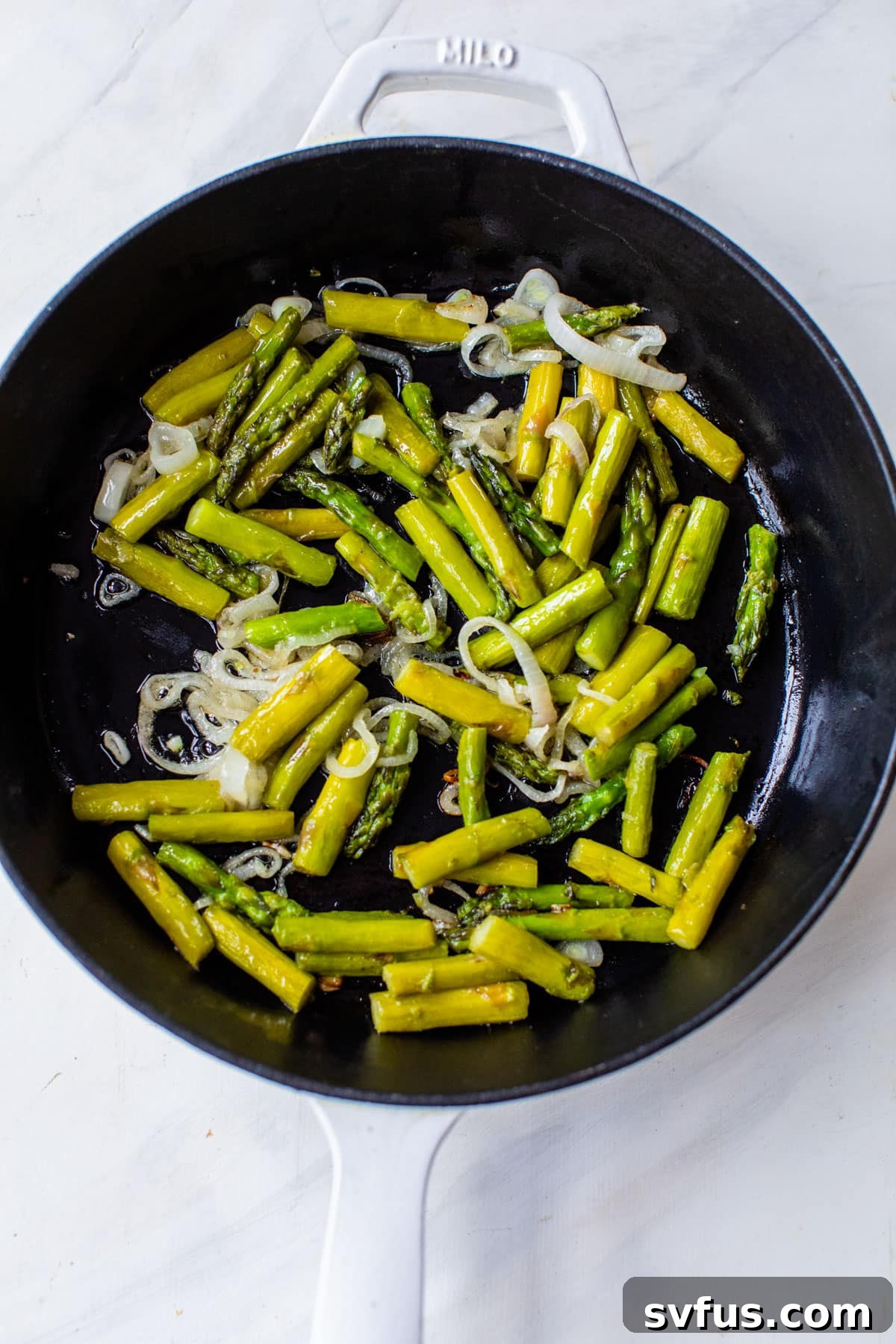
Step 1: Sauté the Shallots. Begin by preheating your oven to 350°F (175°C). In a large, oven-safe skillet (cast iron works wonderfully here), heat 1 tablespoon of olive oil over medium heat until it shimmers. Add the sliced shallots to the hot oil and sauté them gently for 2-3 minutes until they become soft, translucent, and wonderfully fragrant. This step builds a foundational layer of aromatic flavor for your frittata.
Step 2: Cook the Asparagus. Add the remaining 1 tablespoon of olive oil to the skillet, followed by the chopped asparagus pieces and a pinch of salt. Sauté the asparagus for about 2 minutes, allowing it to begin softening. Then, pour in 1 tablespoon of water and continue cooking for another 2-3 minutes, or until the asparagus is bright green and fork-tender, but still retains a slight bite. This brief cooking ensures the asparagus isn’t raw in the frittata but also doesn’t become mushy.
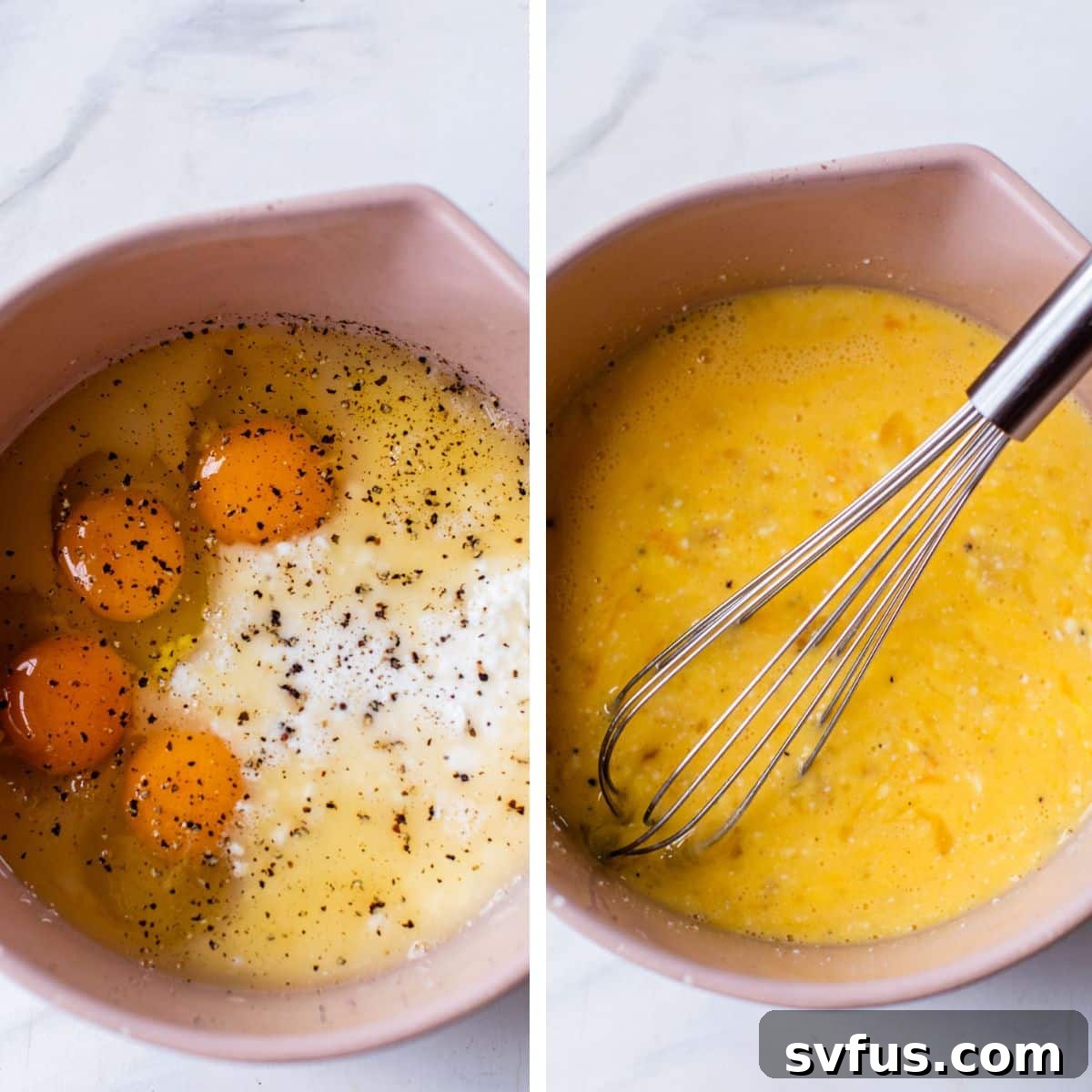
Step 3: Prepare the Cheesy Egg Filling. While the vegetables are cooking, prepare your rich and creamy egg mixture. In a medium-sized bowl, whisk together the whole eggs, egg whites, cottage cheese, 1/4 teaspoon of salt, and 1/4 teaspoon of black pepper until well combined and slightly frothy. The cottage cheese will break down slightly, contributing to the frittata’s luscious texture.
Step 4: Set the Edges on the Stovetop. Once the asparagus and shallots are cooked, spread them into an even layer at the bottom of the skillet. Carefully pour the whisked egg mixture over the vegetables. Cook the frittata on the stovetop over medium heat for 3-4 minutes, without stirring. You’ll notice the edges of the frittata beginning to set and firm up, indicating it’s ready for the next step. This initial stovetop cooking helps create a lovely, stable base.
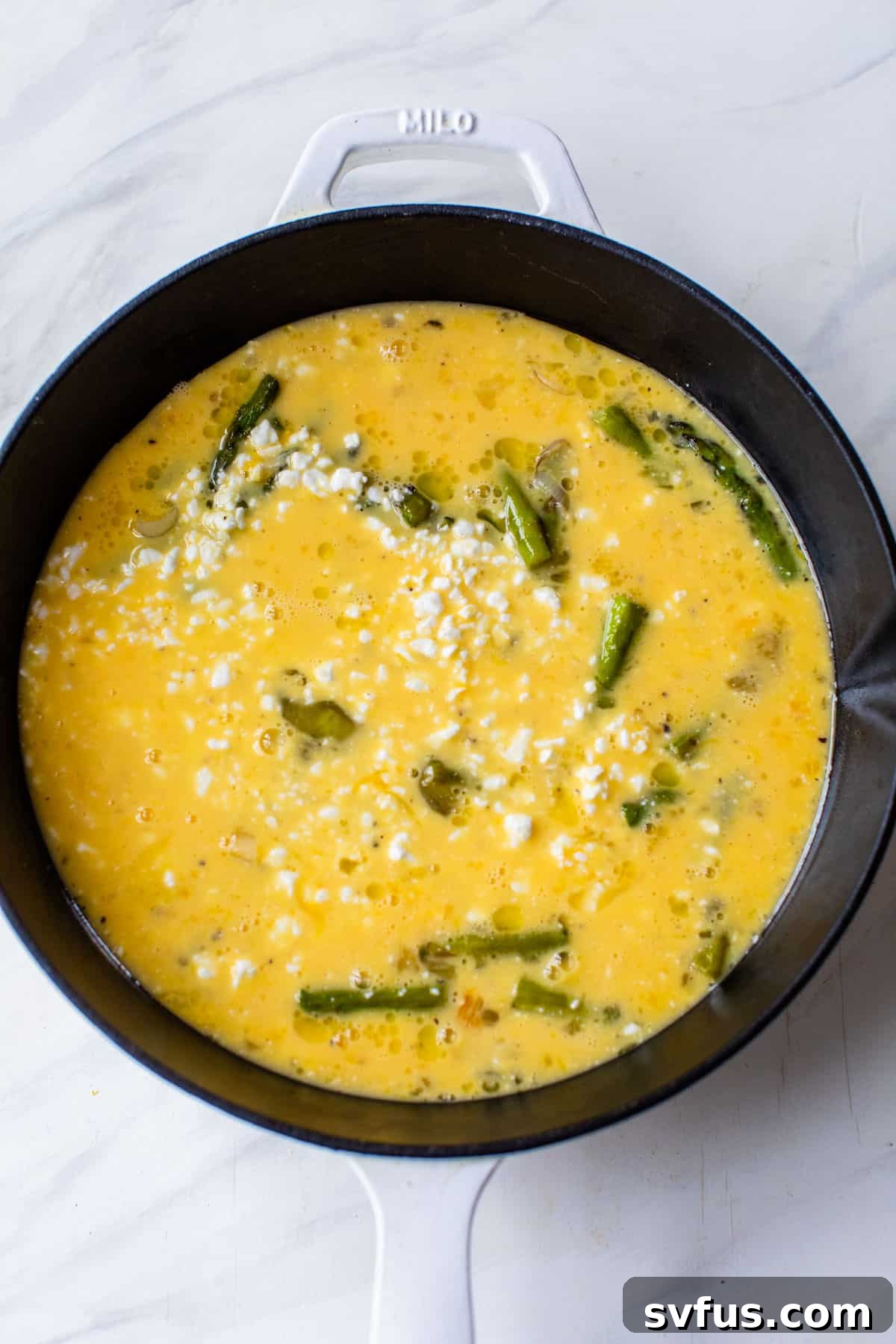
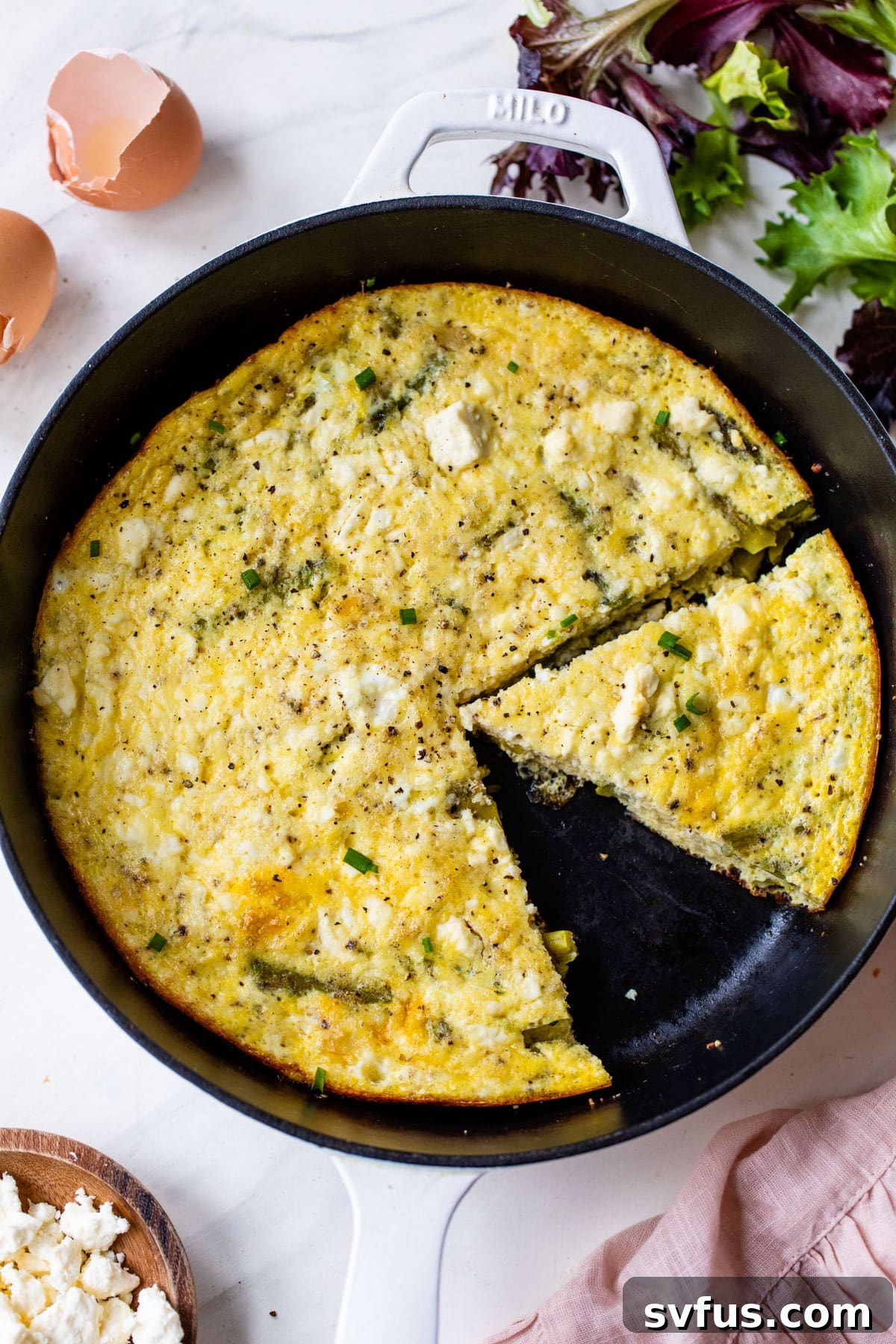
Step 5: Finish Baking in the Oven. Sprinkle the crumbled feta cheese evenly over the partially set frittata. Carefully transfer the skillet to your preheated oven. Bake for 15-17 minutes, or until the center is fully set (no longer jiggly when gently shaken) and the edges are beautifully golden brown. Remove from the oven, allow it to rest for a few minutes before slicing, and then serve immediately. Enjoy your perfectly baked Asparagus Frittata!
Tips and FAQs for the Best Frittata
Achieving a perfect frittata is easy with a few expert tips. Here’s how to ensure yours turns out beautifully every time, along with answers to common questions:
- No Oven-Safe Skillet? No Problem! If you don’t own an oven-safe skillet or a cast iron pan, you can still make this delicious frittata. Simply cook the shallots and asparagus as instructed. Then, combine the cooked vegetables with the whisked egg mixture in a lightly greased 9-inch pie pan or a small baking dish. Bake in the preheated oven until the edges are golden and the center is set – typically around 20-25 minutes, depending on the dish’s depth.
- Transform it into a Quiche: For those who love a crust, you can easily adapt this recipe into a quiche. Prepare the egg and vegetable mixture, then pour it into a pre-baked (blind-baked) pie crust. My gluten-free pie crust recipe works perfectly here. Bake until the filling is set and golden.
- Prevent Overbaking for Creamy Perfection: The key to a tender, creamy frittata is to avoid overbaking. Overcooked eggs can become rubbery and dry. Keep a close eye on your frittata in the oven; as soon as the center no longer jiggles when you gently shake the pan, it’s done. Pull it from the oven, and let it rest for about 5 minutes before slicing and serving. This resting period allows the eggs to finish setting and the flavors to meld.
What else can you add to a frittata? Endless Customization!
Frittatas are incredibly versatile and serve as an excellent canvas for using up leftover vegetables and cooked meats in your fridge. The main rule of thumb for add-ins is to partially cook any raw vegetables beforehand. This prevents them from releasing too much moisture into the eggs during baking, which could result in a watery frittata. Get creative with these ideas:
- More Vegetables: Enhance the nutritional value and flavor with additional vegetables. Consider sautéed mushrooms, diced bell peppers, spinach (wilted first), artichoke hearts, zucchini, sun-dried tomatoes (chopped), or even roasted broccoli florets. Diced cooked potatoes or sweet potatoes can add a hearty element.
- Pre-cooked Proteins: Elevate your frittata with savory proteins. Crumbled bacon or pancetta, diced ham, sausage, or even plant-based options like tempeh bacon or diced air fryer chicken breast are fantastic additions. Ensure they are cooked before adding to the egg mixture.
- Pre-cooked Seafood: For a more gourmet touch, incorporate delicate seafood. Flaked smoked salmon, succulent lump crab meat, or perfectly cooked air fryer shrimp can transform your frittata into an elegant meal.
- Additional Cheeses: Beyond feta, consider mixing in grated Parmesan, mozzarella, goat cheese, or a sharp cheddar for added flavor and creaminess.
- Herbs and Spices: Fresh herbs like chives, parsley, dill, or basil can brighten the flavors. A pinch of nutmeg can also enhance the creamy egg base.
What goes well with a vegetable frittata?
Despite its egg base, this savory baked dish is incredibly versatile and can be enjoyed for any meal – breakfast, brunch, lunch, or even a light dinner. Here are some pairing suggestions:
- For Breakfast and Brunch:
- Fluffy pastries like maple bacon scones or sweet pecan pie baked oatmeal.
- A simple slice of tomato breakfast toast or crusty bread.
- Fresh fruit salad or a green salad with a light vinaigrette.
- Crispy breakfast potatoes or hash browns.
- For Lunch or Dinner:
- Hearty sides like air fryer potato wedges or roasted sweet potatoes.
- A refreshing sun-dried tomato and arugula salad or a simple mixed green salad.
- Roasted vegetables such as balsamic Brussels sprouts or sautéed green beans.
- A warm bowl of tomato soup or a light vegetable broth.
What’s the difference between a frittata, an omelet, and a quiche?
While all three are popular egg-based dishes, they have distinct characteristics that set them apart:
- Frittata: Originating from Italy, a frittata is often started on the stovetop and then finished in the oven. It typically contains a variety of mix-ins (vegetables, cheese, meat) that are added to the egg mixture before cooking and evenly distributed throughout the dish. Frittatas are usually served unfolded, in wedges, and at room temperature or warm, making them perfect for feeding a crowd. They are known for being crustless and thick.
- Omelet: A French classic, an omelet is cooked entirely on the stovetop, usually over higher heat. The eggs are cooked quickly until just set, and fillings are typically added to one half of the omelet before it’s folded over. Omelets are usually individual servings, designed to be eaten immediately while hot and fluffy, and rarely contain a crust.
- Quiche: A savory French tart, quiche is defined by its rich, custard-like egg filling baked in a flaky pastry crust. The fillings (cheese, meat, vegetables) are mixed with eggs and cream, poured into a pie crust, and then baked in the oven. Quiche is typically served warm or at room temperature, making it a popular choice for brunch or light lunches, often serving multiple people.
Can you make this frittata ahead of time?
Absolutely! This frittata is perfect for meal prepping. You can whisk together the cooked vegetables, eggs, cheeses, and seasonings the night before. Simply store the mixture in a sealed, airtight container in the refrigerator. The next morning, give it a quick stir and proceed with baking as directed. This makes for a super quick and convenient breakfast or brunch during busy weekdays or when entertaining guests.
Storage and Reheating Tips
This Asparagus Frittata is delicious freshly baked, but its leftovers are equally enjoyable, making it a fantastic make-ahead option:
- Refrigerator: To store, wrap individual leftover frittata slices tightly in plastic wrap or place them in an airtight container. They will keep fresh in the refrigerator for up to 4 days, making them perfect for quick breakfasts or lunches throughout the week.
- Freezer: For longer storage, slices of frittata freeze remarkably well. Wrap individual slices in plastic wrap and then aluminum foil, or store them in a freezer-safe bag or container. They can be kept in the freezer for up to 3 months. When ready to enjoy, reheat the slices directly from frozen in a 275ºF (135°C) oven until warmed through, which usually takes about 20 minutes. Alternatively, microwave individual slices for 1-2 minutes until hot.
More Delightful Breakfast and Brunch Recipes
If you loved this Asparagus Frittata, you might enjoy exploring these other fantastic breakfast and brunch ideas:
- Hearty Whole30 Breakfast Casserole
- Nutrient-Rich Cottage Cheese Breakfast Bowl
- Easy and Delicious Vegan Cinnamon Rolls
We hope you enjoy this recipe as much as we do! If you made this Asparagus Frittata, please take a moment to leave a comment and a star rating below. Your feedback is greatly appreciated!
Asparagus Frittata
By Erin Alvarez
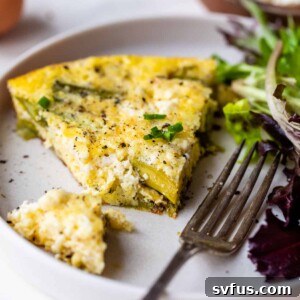
Welcome spring with this Asparagus Frittata! Filled with seasonal veggies, cottage cheese, and feta, it’s a crowd-pleasing and low carb breakfast or brunch that’s perfect for any occasion.
Recipe Details:
- Servings: 6 slices
- Prep Time: 5 mins
- Cook Time: 25 mins
- Total Time: 30 mins
Ingredients
- 2 tbsp olive oil, divided
- 1/3 cup shallots, sliced
- 1/2 lb. asparagus, cut into 1″ pieces
- Pinch of salt
- 1 tbsp water
- 4 eggs
- 1/2 cup egg whites
- 2/3 cup cottage cheese
- 1/4 tsp salt
- 1/4 tsp black pepper
- 1/4 cup feta cheese
Instructions
- Preheat oven to 350°F (175°C).
- Heat 1 tablespoon of olive oil in a cast iron or oven-safe skillet over medium heat, then add the shallots and sauté until soft, 2-3 minutes.
- Add the remaining 1 tablespoon of olive oil, asparagus, and a pinch of salt. Sauté for 2 minutes, then add the water and cook until the asparagus is tender, 2-3 minutes.
- Meanwhile, whisk the eggs, egg whites, cottage cheese, 1/4 tsp salt, and 1/4 tsp pepper together in a medium bowl.
- Pour the egg mixture over the vegetables in the skillet and cook on the stove over medium heat for 3-4 minutes, just until the edges begin to set.
- Sprinkle the feta cheese over the top, then transfer the skillet to the preheated oven. Bake for 15-17 minutes, or until the center is set and the edges are golden brown. Slice and enjoy!
Notes
*Calories are per serving and are an estimation.
Nutrition Information
- Serving: 1 slice
- Calories: 150 kcal
- Carbohydrates: 5 g
- Protein: 11 g
- Fat: 10 g
- Saturated Fat: 3 g
- Polyunsaturated Fat: 1 g
- Monounsaturated Fat: 5 g
- Trans Fat: 0.01 g
- Cholesterol: 119 mg
- Sodium: 319 mg
- Potassium: 223 mg
- Fiber: 1 g
- Sugar: 3 g
- Vitamin A: 504 IU
- Vitamin C: 3 mg
- Calcium: 83 mg
- Iron: 2 mg