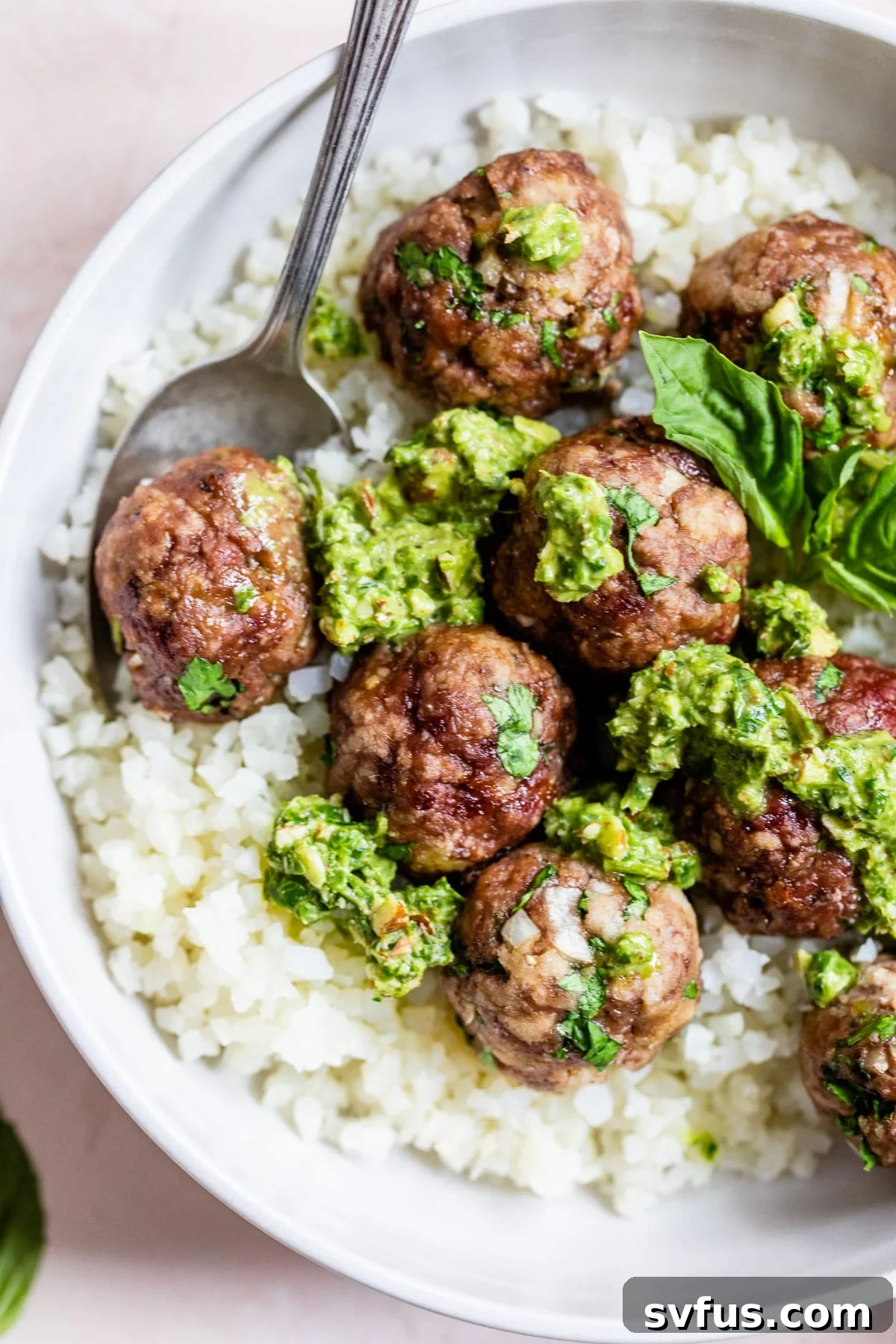
Welcome to the ultimate guide for crafting the most delectable Baked Paleo Meatballs! Bid farewell to dull dinners with these incredibly simple, gluten-free, and grain-free meatballs. Baked to perfection with a gloriously crisp exterior and a tender, juicy interior, this recipe is a reliable win for anyone seeking a satisfying Whole30, keto, or paleo-friendly meal. Prepare to revolutionize your healthy eating routine with a dish that’s as flavorful as it is easy to prepare.
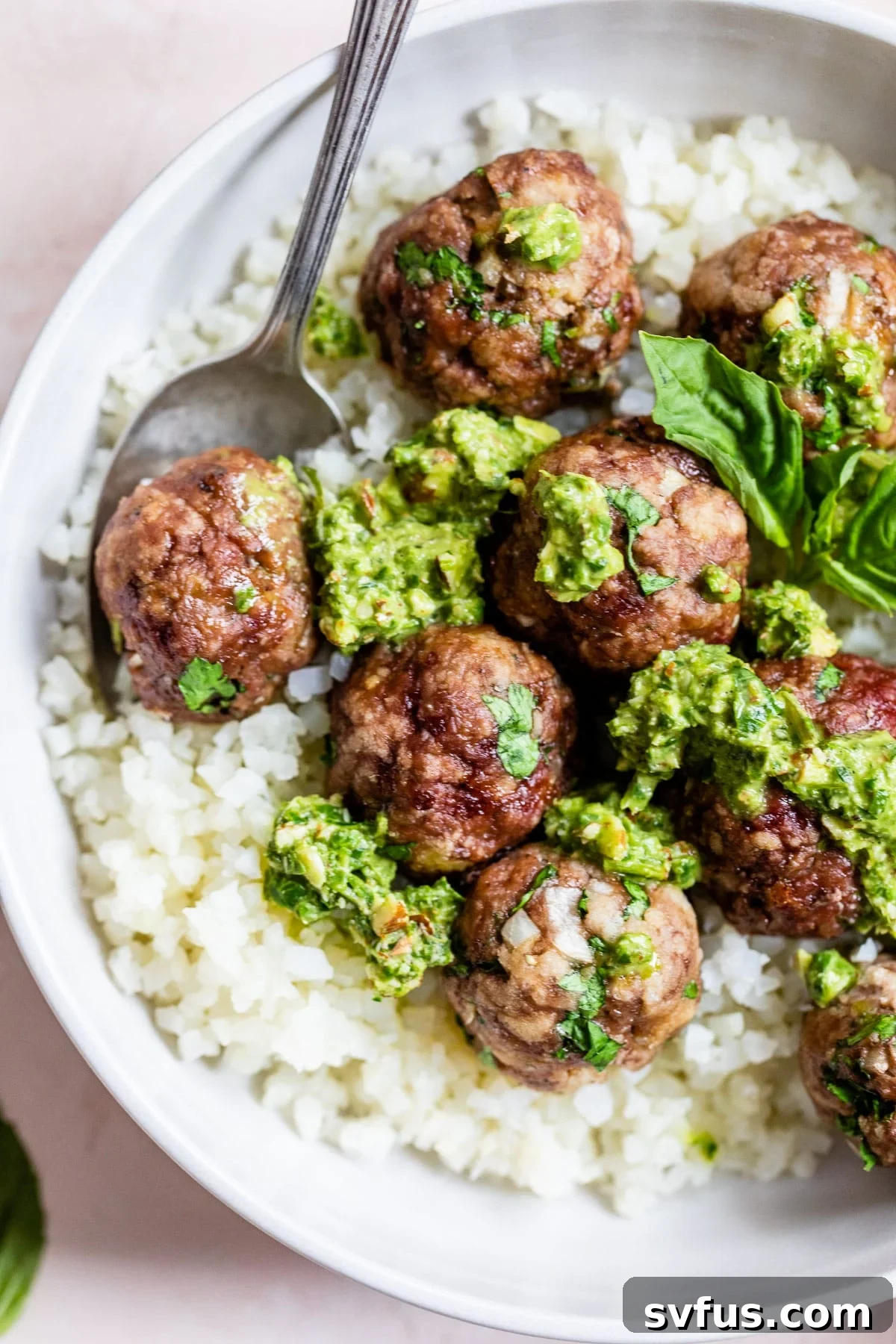
Baked Paleo Meatballs: Your New Go-To Healthy Dinner
Are you finding that your usual paleo and Whole30 dinner routines are losing their spark? It’s time to infuse some excitement back into your healthy eating with these phenomenal Baked Paleo Meatballs! They are not only a fantastic remedy for food boredom but also incredibly straightforward to assemble, making them a perfect solution for those hectic evenings when a quick yet delicious meal is essential. Picture this: sinking your teeth into succulent, savory bites of perfectly seasoned meat, elegantly served over a fluffy bed of cauliflower rice or intertwined with delicate zucchini noodles. The irresistible combination of flavors and textures makes this dish an absolute must-try.
Crafting these paleo meatballs is a swift affair, requiring just about 30-35 minutes from the moment you start prepping to the moment they emerge from the oven. The recipe relies on a straightforward yet powerful mix of high-quality ground beef, aromatic garlic, finely milled almond flour, and a selection of fragrant herbs. This carefully balanced blend guarantees each meatball is seasoned to perfection, offering a consistently tender and moist texture that will undoubtedly become a new family favorite. They encapsulate the ideal blend of rich, savory taste and wholesome ingredients, solidifying their place as a cornerstone in any health-conscious kitchen.
The robust and savory characteristics of these meatballs find their perfect match when paired with a vibrant kale pesto, transforming an ordinary dinner into an extraordinary culinary experience. Yet, their utility extends far beyond the main course. Consider preparing a larger batch and freezing them for future use, providing you with an effortless option for a quick appetizer when unexpected guests arrive or for spontaneous gatherings. Whether featured as the centerpiece of your meal or as a delightful snack, these versatile paleo meatballs are guaranteed to impress with minimal fuss.
For those eager to expand their repertoire of paleo and Whole30-compliant meatball recipes, I highly recommend exploring my equally scrumptious Italian chicken meatballs and paleo turkey meatballs. Each recipe presents a distinct flavor profile while maintaining adherence to your dietary preferences, ensuring your meal planning remains both thrilling and varied.
Why These Baked Paleo Meatballs Will Become Your Kitchen Staple
These aren’t merely meatballs; they represent a thoughtfully designed recipe engineered to integrate effortlessly into a health-focused lifestyle, all while making zero compromises on flavor or convenience. Here are some compelling attributes that will make these baked paleo meatballs an indispensable part of your cooking:
- Dietary Inclusivity: Expertly formulated to be inherently low-carb, paleo, Whole30, and keto-friendly. This broad compatibility is achieved through a meticulously curated list of dairy-free, grain-free, and gluten-free ingredients, rendering them suitable for a diverse array of dietary needs and restrictions.
- Unrivaled Convenience: Keeping a batch of these versatile meatballs on hand is an absolute game-changer. They excel as a foundation for stress-free weeknight dinners and shine as wholesome, satisfying appetizers for any social event. Their capacity for advanced preparation is simply unmatched, simplifying meal planning immensely.
- Effortless Baking Method: In stark contrast to traditional pan-fried meatballs that demand constant vigilance, these meatballs are baked in the oven. This hands-off approach significantly reduces your active cooking time, freeing you to attend to other culinary tasks or simply unwind. The consistent, dry heat of the oven ensures even cooking without the splatters and constant turning associated with stovetop methods.
- Consistently Perfect Texture: Baking is the secret to achieving meatballs that boast a beautifully crisp, golden-brown exterior while retaining an exquisitely tender and juicy interior. This consistently desirable texture is the hallmark of a perfectly executed meatball, offering a delightful contrast with every bite.
- Family-Friendly Appeal: With their straightforward, savory taste and perfectly portioned size, these meatballs are consistently a hit with children. This makes healthy eating an enjoyable and appealing prospect for the entire family, simplifying mealtime negotiations.
Ingredient Deep Dive: Crafting the Perfect Paleo Meatballs
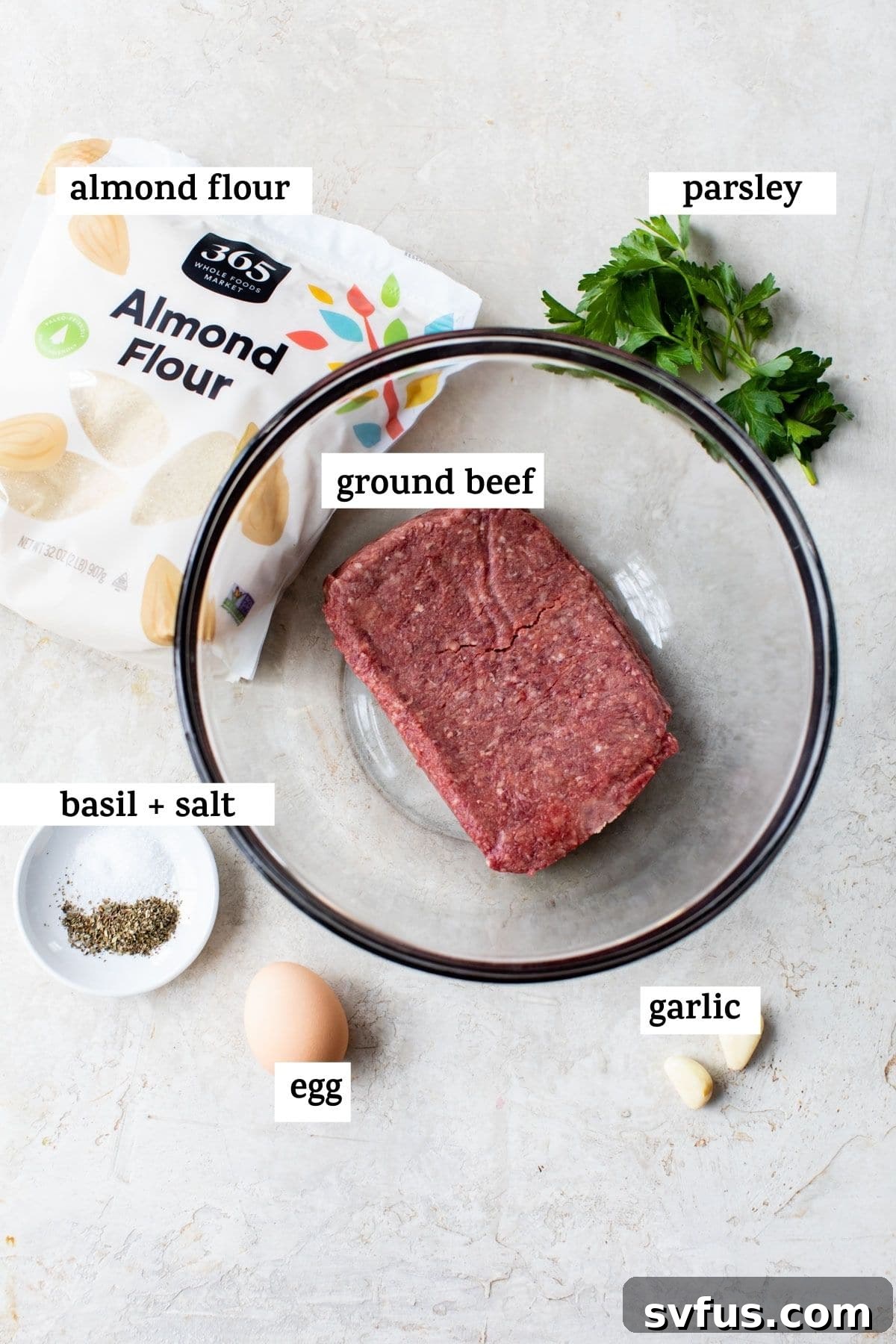
The foundation of truly exceptional meatballs lies in a nuanced understanding of each ingredient’s contribution. Below, we delve into the components of these delectable baked paleo meatballs and guide you on making the optimal selections:
- Ground Beef: This is the very essence of our meatballs! To ensure the most succulent and incredibly juicy outcome, I highly recommend opting for ground beef with a fat content ranging from 70% to 80% lean (for example, 80/20 or 70/30). The fat content is crucial as it renders beautifully during the baking process, infusing the meatballs with unparalleled flavor and preventing them from becoming dry and crumbly. While ground beef is our star, you are certainly encouraged to experiment with a medley of ground meats; a combination of ground pork, ground veal, and ground beef can yield a richer, more complex flavor profile. Alternatively, for a leaner option, ground turkey or chicken can be used, though you might need to adjust for moisture levels.
- Egg: This seemingly simple ingredient plays a pivotal role, serving as the essential binder that effectively holds together the ground beef, spices, and flour. Without its cohesive power, your meatballs would likely fall apart during the cooking process. The egg contributes significantly to both the structural integrity and the moistness of the final product.
- Herbs & Spices: Flavor is non-negotiable! My chosen blend features the timeless combination of fresh parsley, dried basil, and finely minced garlic. Fresh parsley introduces a bright, herbaceous note, while dried basil imparts a comforting, earthy warmth. Finely minced garlic adds a pungent, savory depth that is absolutely indispensable. However, feel free to unleash your creativity here! Consider swapping basil for dried oregano or thyme, or streamline the seasoning process with a high-quality pre-mixed Italian seasoning blend. A generous pinch of freshly cracked black pepper is also highly advisable to uplift and harmonize all the flavors.
- Almond Flour: This is the hero of our paleo and Whole30-friendly rendition, acting as a superb substitute for conventional breadcrumbs. Almond flour excels at keeping the meatballs intact and lends a subtle, delicate nutty flavor, all without introducing grains or gluten. Its fine texture is instrumental in binding the mixture beautifully. For those with almond sensitivities or seeking other options, finely crushed pork rinds present an excellent low-carb and paleo alternative. If your diet isn’t strictly Whole30 or paleo, standard or Italian-style breadcrumbs can be used, though this would naturally alter the recipe’s dietary classification.
- Salt: Absolutely fundamental for seasoning! Do not be shy with the salt; it is the catalyst that magnifies and accentuates all the delicious natural flavors of the meat and herbs, transforming them from good to truly great.
Step-by-Step Guide: Baking Perfect Paleo Meatballs
Creating these delightful meatballs is a remarkably straightforward process with these clear, easy-to-follow instructions. Adhere to each step diligently to ensure optimal results and perfectly cooked meatballs:
- Prepare Your Workspace: Initiate the cooking process by preheating your oven to a precise 400°F (200°C). Concurrently, prepare a large baking sheet by lining it with a sheet of parchment paper. This simple yet effective step is crucial for preventing the meatballs from sticking and significantly simplifies the cleanup process afterwards. Set the prepared baking sheet aside.
- Craft the Meatball Mixture: In a generously sized mixing bowl, meticulously combine all the specified meatball ingredients: the ground beef, the large egg, the finely chopped fresh parsley, the minced garlic, the dried basil, the salt, and the almond flour. Now, using your clean hands, gently but thoroughly mix the ingredients until they are just combined. The paramount rule here is to consciously avoid over-mixing, as this action can lead to dense, tough, and less enjoyable meatballs. Mix only until all components are evenly incorporated.
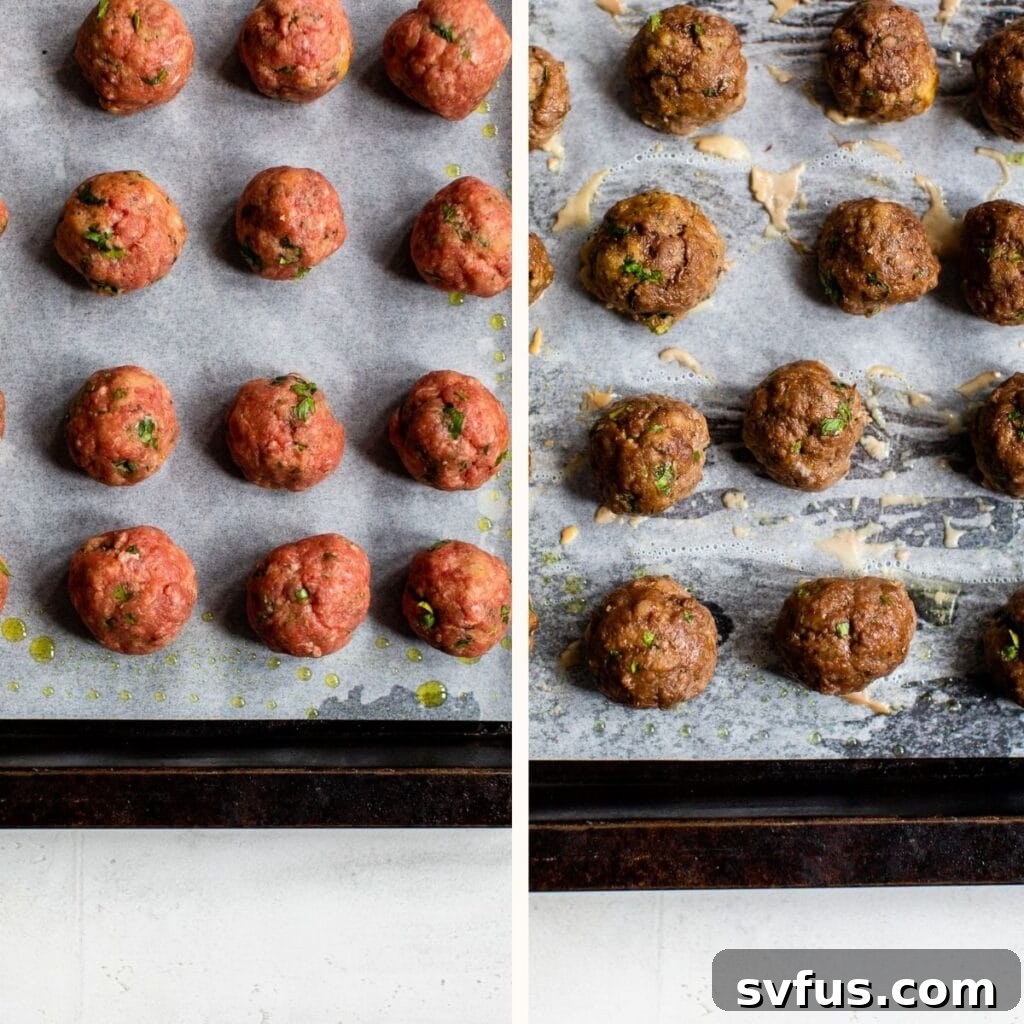
- Form into Uniform Balls: Once your meatball mixture has achieved the perfect consistency, it’s time for the crucial step of forming the meatballs. For consistency in both cooking time and aesthetic presentation, strive to create meatballs that are roughly 2 tablespoons in size. Gently roll portions of the mixture between your palms to fashion smooth, spherical balls. As each meatball is formed, place it directly onto your prepared parchment-lined baking sheet, ensuring there is adequate space between each one to facilitate even baking and proper air circulation.
- Bake to Perfection: Carefully transfer the loaded baking sheet into your preheated oven. Allow the meatballs to bake for an estimated 18-20 minutes. The definitive indicator of doneness is when they are thoroughly cooked through and register an internal temperature of 165°F (74°C) when measured with a reliable meat thermometer. Visually, they should possess a beautiful golden-brown hue and exhibit a lightly crisp exterior.
- Serve and Savor: Upon completion of baking, promptly remove the perfectly cooked meatballs from the oven. They are now poised to be served. Arrange them enticingly over a generous portion of fluffy cauliflower rice, light and airy zucchini noodles, or your preferred paleo-friendly accompaniment. Finish by drizzling generously with your choice of sauce, perhaps a vibrant kale pesto, a rich marinara, or a creamy avocado-based sauce. Relish every bite of your wholesome and incredibly satisfying meal!
Expert Tips & Frequently Asked Questions for Meatball Mastery
Achieving truly perfect meatballs is quite attainable when you keep a few critical tips in mind. Here are some invaluable insights and comprehensive answers to common questions, designed to help you master this delicious recipe and impress every time:
- The Golden Rule: Avoid Over-Mixing: This tip cannot be stressed enough – it is paramount! Overworking the meat mixture compresses the muscle proteins, which inevitably leads to tough, rubbery, and unappetizing meatballs. Your goal is to mix just enough until all the ingredients are evenly combined, and then stop immediately. Employ gentle hands throughout the mixing process.
- Embrace Uniformity for Even Cooking: Strive for meatballs that are as close to the same size as possible. This consistency is vital because it ensures that all meatballs cook evenly at the same rate, preventing the frustrating scenario where some are undercooked and potentially unsafe, while others are overcooked and regrettably dry. A small ice cream scoop or a consistent measuring spoon can be an excellent tool for achieving this uniformity.
- Effortless Entertaining: Serving a Crowd: If you’re planning to feature these delicious paleo meatballs at a larger gathering or party, consider this ingenious strategy: after they are baked according to the primary instructions, carefully transfer them into a slow cooker. Introduce your preferred paleo-friendly sauce – be it a classic marinara, a tangy sugar-free BBQ sauce, or another favorite – and allow them to simmer gently on a low setting for a few hours. This method not only keeps the meatballs wonderfully warm but also infuses them even further with the flavors of the sauce, making party preparation remarkably stress-free.
- Leverage the Freezer for Ultimate Convenience: Frozen meatballs are an absolute powerhouse for meal prepping and weeknight efficiency! The fantastic news is that there’s no need to thaw them before adding them to your slow cooker with sauce, or simmering them directly in a pot of your chosen sauce. This capability significantly streamlines your cooking process, saving precious time and effort on exceptionally busy days.
- The Science of Doneness: Use a Meat Thermometer: The safest, most accurate, and most reliable method to ascertain that your meatballs are thoroughly cooked is to utilize a reliable meat thermometer. Insert the probe into the very center of a meatball; the internal temperature should consistently read a safe 165°F (74°C). Relying on visual cues alone can sometimes be misleading, so this tool is your best friend for food safety and optimal texture.
How do you serve paleo meatballs for a complete meal?
The inherent beauty of paleo meatballs lies in their astonishing versatility! My undisputed favorite method for serving them is atop a generous mound of fluffy cauliflower rice, which masterfully mimics the texture of traditional grain-based rice while keeping your meal perfectly low-carb and compliant. Other exemplary paleo-friendly foundations include delicately spiralized zucchini noodles, lusciously creamy mashed cauliflower, nutrient-dense spaghetti squash, or a vibrant, colorful medley of roasted vegetables. The essential crowning glory is always a delicious, flavorful sauce. These meatballs pair exquisitely with a broad spectrum of sauces; my personal go-to choices are either a bright, herbaceous kale pesto or a rich, savory almond pesto. For a classic, comforting Italian-inspired rendition, feel absolutely free to switch things up and utilize a sugar-free tomato sauce or a compliant marinara. You could also venture into creamy avocado-based sauces, or even a dairy-free white sauce for a unique twist. The possibilities are truly endless, so don’t hesitate to unleash your culinary creativity!
How long does it take to bake meatballs and at what temperature?
The precise baking duration for meatballs is primarily influenced by their size and the specific temperature of your oven. For standard-sized meatballs, typically ranging from 1-inch to 2-inches in diameter, baking them in a preheated oven set to 400°F (200°C) will generally require approximately 15 to 20 minutes. Should you opt for a slightly lower oven temperature, such as 350°F (175°C), beef meatballs will necessitate a marginally longer cooking period, typically around 20 to 25 minutes. Irrespective of the exact cooking time, the most unequivocal and reliable indication that your meatballs are perfectly done and safe to consume is when their internal temperature reaches a safe 165°F (74°C), as accurately measured with a trustworthy meat thermometer. This crucial step ensures both food safety and optimal juiciness.
Can you pan-fry the meatballs instead of baking?
Absolutely! While this particular recipe highlights the numerous advantages and health benefits of baking, pan-frying remains a perfectly viable and delicious alternative method if you prefer a stovetop approach. Here’s a detailed guide on how to achieve perfectly pan-fried paleo meatballs:
- Initiate with a Flavorful Sear: Begin by heating a generous drizzle of high-quality olive oil in a large, heavy-bottomed skillet over a medium-high heat setting. Once the olive oil is shimmering enticingly, carefully introduce the meatballs into the skillet, ensuring they are arranged in a single layer. It is crucial to avoid overcrowding the pan, as this can steam the meatballs rather than browning them; if necessary, work in multiple batches to ensure thorough and proper browning. Sear the meatballs, turning them gently and periodically, until they develop a beautiful, golden-brown crust on all sides. This initial searing step is key to developing incredible flavor and locking in the meatball’s natural juices.
- Conclude with a Gentle Simmer: Once the meatballs have achieved a delightful golden-brown exterior, reduce the heat significantly to a low setting. Pour in approximately ½ cup of your preferred paleo-friendly sauce – options include a classic marinara, a vibrant homemade pesto, or even a savory broth – into the skillet. Cover the skillet securely with a lid, allowing the meatballs to simmer gently in the flavorful sauce for an additional 10 to 15 minutes. This simmering period ensures they cook through completely, becoming incredibly tender while simultaneously absorbing the rich flavors of the sauce. As always, for ultimate peace of mind, verify doneness by using a meat thermometer to ensure an internal temperature of 165°F (74°C).
Can you make the meatballs without eggs? Egg-Free Paleo Meatballs
Eggs play an indisputably vital role in the structural integrity of most meatball recipes, primarily because they act as a crucial binding agent, helping all the ingredients coalesce and maintain their spherical shape throughout the cooking process. While this particular recipe was meticulously tested and perfected using a standard chicken egg, rest assured that you can certainly explore effective egg alternatives if dietary needs dictate. A flax egg stands out as a highly popular and remarkably effective substitute for both paleo and vegan recipes: to prepare one, simply combine 1 tablespoon of finely ground flaxseed meal with 3 tablespoons of water, stir the mixture thoroughly, and then allow it to rest for approximately 5-10 minutes until it transforms into a gelatinous, egg-like consistency. This flax egg should perform admirably as a binder in this specific recipe. Other potential binding agents, such as a small quantity of pureed sweet potato or zucchini, could also be considered, though a flax egg remains the most straightforward, reliable, and widely accepted egg-free option for faithfully replicating the intended texture and cohesive structure of these delightful meatballs.

Storage and Meal Prep Made Easy
These paleo meatballs are perfectly suited for efficient meal prepping, guaranteeing you always have a healthy, delicious component readily available. Implementing proper storage techniques is crucial for preserving their freshness and delectable flavor:
- Refrigerator Storage: Any leftover cooked meatballs can be securely stored in an airtight container within the refrigerator for a period of up to 3 to 4 days. This makes them an excellent choice for convenient, healthy packed lunches or for quick, reheat-friendly dinners throughout your busy week.
- Freezer Storage: For more extended preservation, these meatballs freeze exceptionally well. First, it is essential to allow the cooked meatballs to cool completely to room temperature. Following this, arrange them in a single layer on a baking sheet and flash freeze them until they are solid (this technique prevents them from sticking together in a clump). Once thoroughly frozen, transfer the solid meatballs to a freezer-safe bag or an airtight container. They will maintain their superior quality in the freezer for an impressive duration of up to 2 to 3 months. When you are ready to use them, you can conveniently reheat them directly from their frozen state within a simmering sauce, or you can opt to thaw them overnight in the refrigerator before warming.
More Paleo and Whole30 Beef Recipes to Explore
If you’re thoroughly enjoying the delicious and wholesome world of paleo and Whole30 cooking, I’ve curated a few more beef-centric recipes that are certain to captivate your taste buds and integrate flawlessly into your healthy lifestyle. Expand your culinary horizons with these fantastic options:
- Paleo Beef Pho: Experience a comforting and profoundly flavorful rendition of the classic Vietnamese soup, meticulously adapted to be entirely compliant with paleo principles, offering all the warmth without compromise.
- Paleo Beef Stew: This hearty, rich, and deeply satisfying stew is generously packed with tender beef and an assortment of wholesome vegetables, making it the perfect choice for a cozy, nourishing meal on any occasion.
- Whole30 Meatloaf: Discover a beloved family favorite thoughtfully reinvented to be perfectly compliant with the rigorous Whole30 program, ensuring that absolutely none of the comforting, familiar flavors are sacrificed in the process.
Recipe Card: Baked Paleo Meatballs
Yields: 20 meatballs
Prep time: 15 minutes
Cook time: 20 minutes
Total time: 35 minutes
Baked Paleo Meatballs are easy to make from scratch using a handful of gluten free and grain free ingredients. Baked until they’re crisp on the outside and tender on the inside, you can count on these meatballs whenever you’re craving a delicious and satisfying Whole30 dinner!

Ingredients for the Meatballs:
- 1 lb. ground beef (70-80% lean recommended)
- 1 large egg
- 1/4 cup fresh parsley, finely chopped
- 2 garlic cloves, minced
- 1/2 tsp dried basil
- 1/2 tsp salt
- 1/2 cup almond flour
Ingredients for Serving:
- Kale pesto or your favorite paleo-friendly sauce
- Cauliflower rice, zucchini noodles, or roasted vegetables
Instructions:
- Preheat your oven to 400°F (200°C). Line a large baking sheet with parchment paper and set it aside.
- In a large mixing bowl, combine the ground beef, egg, chopped fresh parsley, minced garlic, dried basil, salt, and almond flour. Use your hands to gently mix the ingredients until just combined. Be careful not to over-mix, as this can make the meatballs tough.
- Roll the mixture into approximately 20 uniform meatballs (about 2 tablespoons each). Place them evenly spaced on the prepared baking sheet.
- Bake for 18-20 minutes, or until the meatballs are fully cooked through and have reached an internal temperature of 165°F (74°C).
- Serve hot over cauliflower rice, zucchini noodles, or roasted vegetables, topped with kale pesto or your preferred paleo-friendly sauce. Enjoy!
Notes:
- Nutrition: Calories are per meatball and are an estimation.
- Storage: Store leftover cooked meatballs in an airtight container in the refrigerator for up to 4 days. For longer storage, freeze cooled meatballs on a baking sheet until solid, then transfer to a freezer-safe bag or container for up to 3 months.
- Sauce Options: Feel free to use any paleo-friendly sauce you love! Aside from kale pesto, a simple sugar-free marinara sauce is an excellent choice.
- Serving Suggestions: For paleo and Whole30 compliance, serve over cauliflower rice, zucchini noodles, or spaghetti squash. If not strictly adhering to these diets, they are also delicious served with your favorite pasta.
Nutrition Information (per meatball, estimated):
Calories: 77kcal | Carbohydrates: 1g | Protein: 5g | Fat: 6g | Saturated Fat: 2g | Polyunsaturated Fat: 1g | Monounsaturated Fat: 2g | Trans Fat: 1g | Cholesterol: 24mg | Sodium: 77mg | Potassium: 70mg | Fiber: 1g | Sugar: 1g | Vitamin A: 75IU | Vitamin C: 1mg | Calcium: 13mg | Iron: 1mg
Nutrition information is automatically calculated, so should only be used as an approximation.
Did you try this recipe? We’d love to hear from you! Leave a comment and a star rating below to share your experience. Thanks!
UPDATE NOTE: This post was originally published in January 2019. It was comprehensively updated with new text, expanded content, improved SEO, and fresh photos in March 2022 to provide the most valuable and delightful experience for our readers.