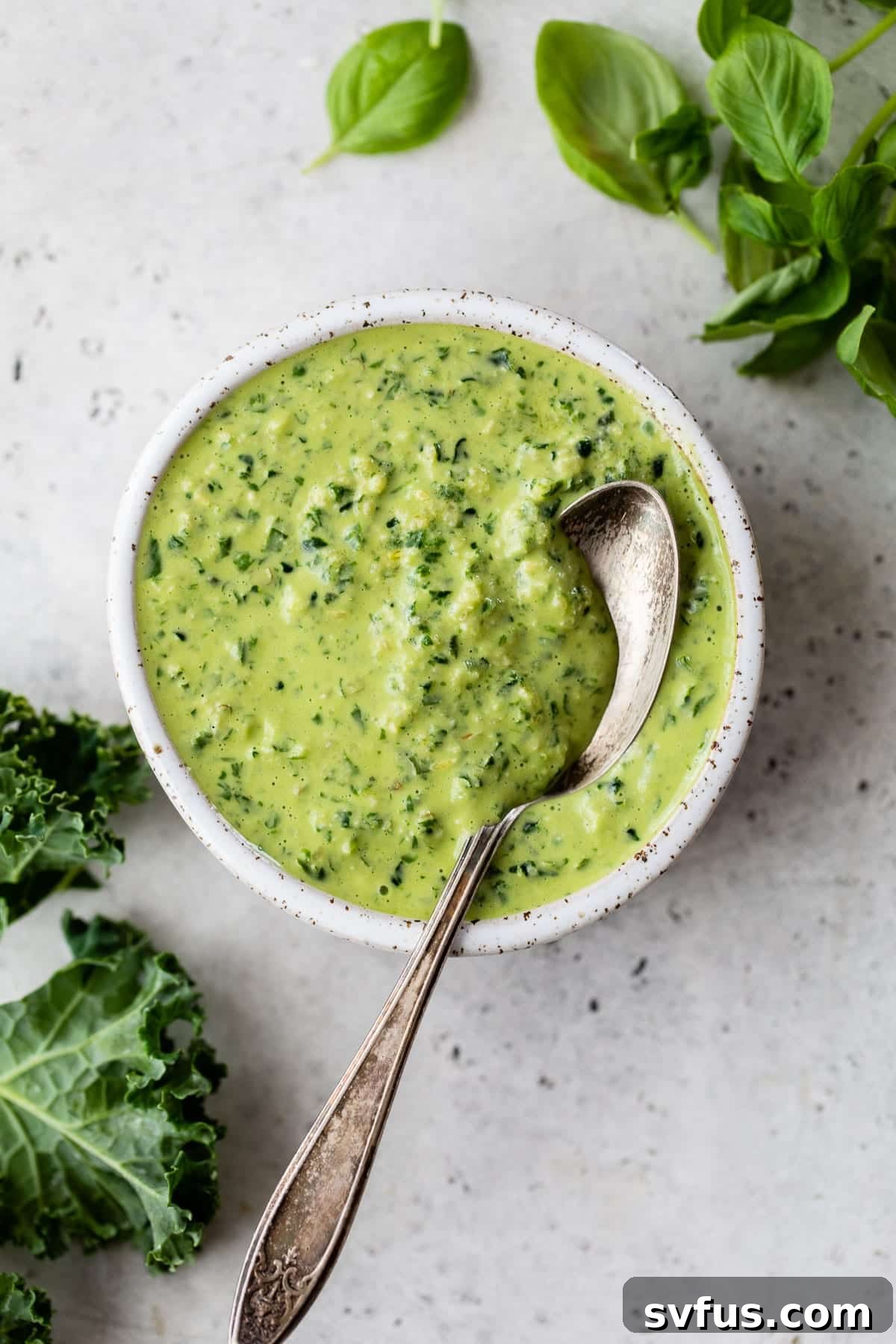
Welcome to the vibrant world of homemade sauces, where flavor meets freshness and simplicity reigns supreme. Among the countless culinary creations, few offer the versatility and sheer delight of a perfectly crafted pesto. Today, we’re diving into an exceptional twist on this classic: **Kale Pesto**. This isn’t just any pesto; it’s a luscious, creamy, and incredibly flavorful sauce that elevates everyday meals into extraordinary dining experiences. Made with robust kale, aromatic fresh basil, creamy pine nuts, and a generous kick of garlic, it’s designed to pair flawlessly with your favorite pasta dishes, pizzas, or even as a vibrant spread. Best of all, it’s entirely vegan-friendly and comes together in mere minutes, proving that healthy eating can also be incredibly delicious and convenient. Prepare to transform your kitchen into a haven of fresh aromas and delightful tastes with this ultimate kale pesto recipe.
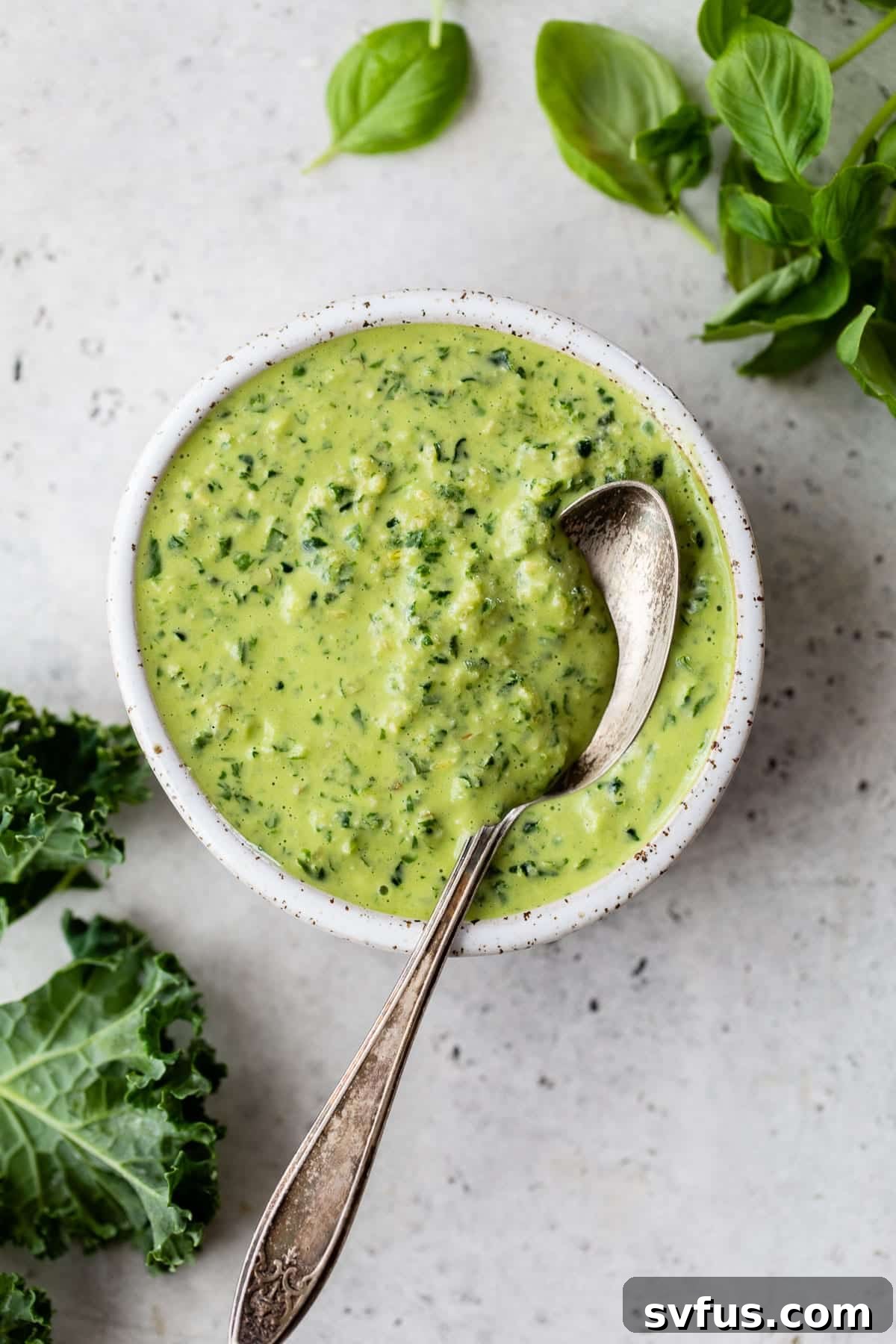
While I adore all variations of pesto – from the nutty depth of an almond pesto to the sun-kissed sweetness of my sun-dried tomato pesto – this Kale Pesto has undeniably captured my heart as a standout favorite. Its unique blend offers a depth of flavor that is both surprisingly rich and incredibly refreshing. The robust earthiness of kale, harmoniously balanced with the bright, peppery notes of fresh basil, creates a profile that is genuinely captivating. It’s a revelation for anyone looking to incorporate more leafy greens into their diet in the most delectable way possible. Forget bland greens; this pesto makes eating your vegetables an absolute joy.
This recipe isn’t just about taste; it’s about convenience and healthful living. Imagine a sauce that’s not only creamy and dreamy but also packed with garlicky goodness and vibrant green flavor, ready to serve in a mere 5 minutes. That’s precisely what this Kale Pesto delivers. It’s an ideal solution for busy weeknights or when you need a quick, impressive addition to any meal. And speaking of meals, have you tried my kale pesto pasta? It’s an absolute must-try, showcasing just how wonderfully this pesto complements al dente noodles for a truly satisfying and wholesome dish. Beyond pasta, its versatility knows no bounds, making it a staple in my kitchen and, soon, in yours.
Why You’ll Love This Kale Pesto: Unpacking Its Exceptional Features
This Kale Pesto isn’t just another sauce; it’s a culinary powerhouse designed for maximum flavor and minimal effort. Here’s what makes it an absolute must-try in your kitchen:
- The Ultimate Kale Transformation: If you’re looking for the absolute best way to utilize kale, especially that bunch lingering in your fridge, this is it. It transforms the often-misunderstood leafy green into a creamy, vibrant, and utterly irresistible sauce. This method is fantastic for boosting your nutrient intake without sacrificing flavor, making healthy eating more accessible and enjoyable for everyone.
- Unrivaled Versatility for Every Meal: This pesto is a true chameleon in the kitchen. It pairs exquisitely with a wide array of dishes. Toss it with your favorite pasta for a quick and satisfying meal, spread it as a base for an unforgettable pizza, or even dollop it on a grilled burger for a gourmet touch. Its robust flavor profile also makes it a fantastic addition to sandwiches, wraps, roasted vegetables, or as a vibrant dip for crusty bread.
- Lightning-Fast Preparation: Say goodbye to complicated recipes and lengthy cooking times. This pesto is crafted entirely in a food processor, taking a mere 5 minutes from start to finish. This speed makes it perfect for busy weeknights, last-minute meal prep, or whenever you need a burst of fresh flavor without the fuss. It’s a testament to the power of simple, high-quality ingredients coming together effortlessly.
- Rich in Nutrients: Beyond its incredible taste, this pesto is a nutritional powerhouse. Kale is renowned for its high vitamin K, A, and C content, while basil offers antioxidants. Olive oil provides healthy monounsaturated fats, making this a sauce that nourishes your body as much as it delights your palate. It’s a guilt-free indulgence that supports a healthy lifestyle.
- Naturally Vegan and Adaptable: Crafted without any dairy products, this kale pesto is inherently vegan, making it suitable for a wide range of dietary preferences. Its plant-based nature doesn’t compromise on creaminess or flavor, offering a rich experience for all. Furthermore, the recipe is easily adaptable, allowing for substitutions to accommodate allergies or simply to experiment with different flavor profiles, ensuring everyone can enjoy its deliciousness.
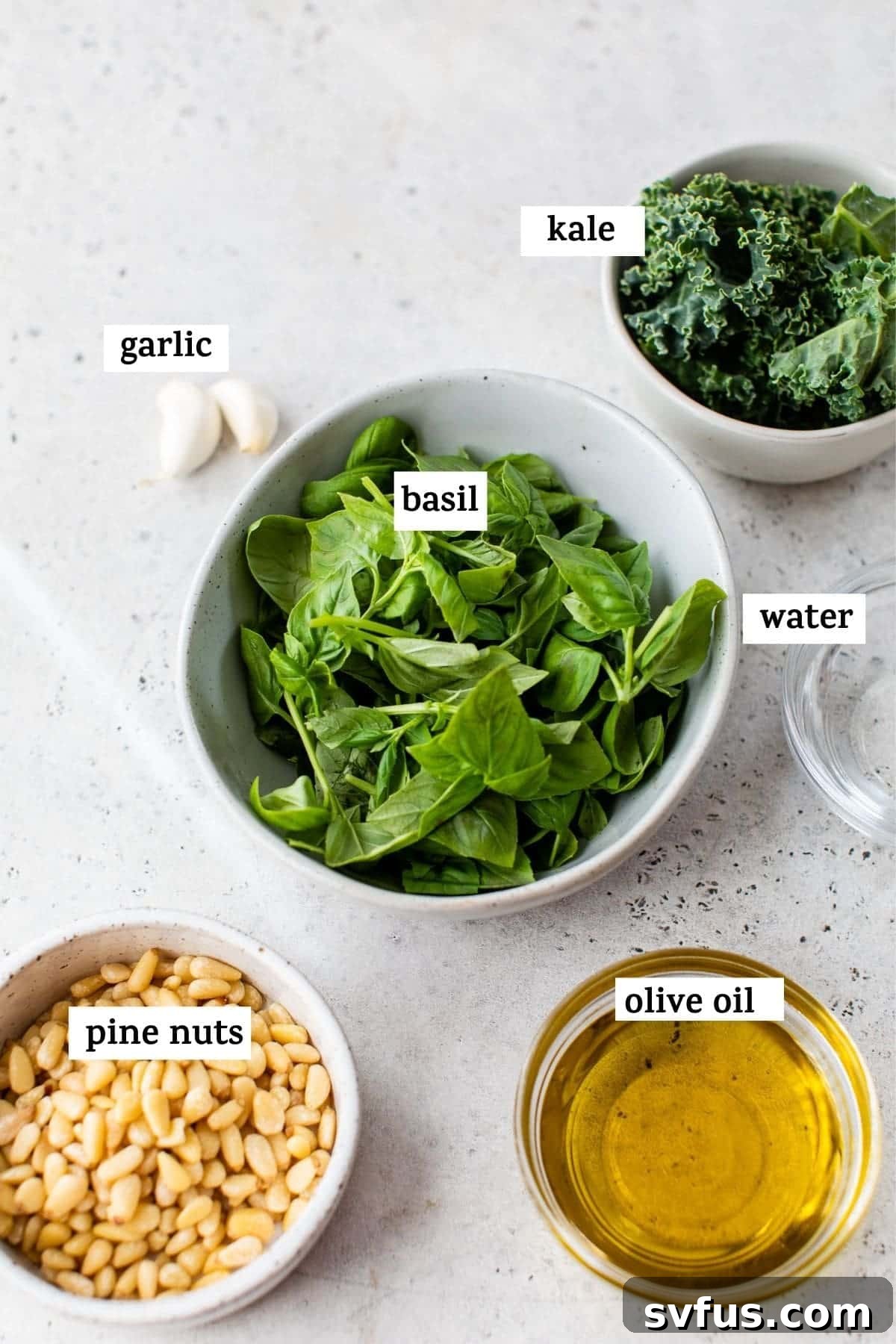
Mastering Your Kale Pesto: A Deep Dive into Key Ingredients
The magic of this Kale Pesto lies in the quality and synergy of its simple ingredients. Understanding each component will help you achieve the perfect balance of flavor and texture every time.
Kale: The star of our show! I typically opt for curly kale due to its slightly peppery flavor and excellent texture when blended, but lacinato kale (also known as dinosaur kale or Tuscan kale) works equally well, offering a slightly milder, sweeter note. Whichever variety you choose, it’s absolutely crucial to remove the tough, fibrous stems before adding the leaves to your food processor. These stems can make your pesto stringy and unpleasantly bitter. A good rule of thumb is to gently strip the leaves away from the central rib. Kale is packed with vitamins K, A, and C, making this pesto not just delicious but incredibly nourishing. Don’t be shy about using a full cup; it blends down beautifully.
Basil: Fresh basil is non-negotiable for authentic pesto flavor. Its sweet, peppery, and slightly minty notes are what define pesto. There truly is no substitution for fresh basil in this recipe; dried basil simply won’t yield the same vibrant taste or aroma. Look for bright green leaves without any wilting or black spots. The fresher the basil, the more aromatic and flavorful your pesto will be. It provides that essential brightness that cuts through the richness of the other ingredients.
Garlic: Oh, the glorious garlic! The recipe specifies 2 garlic cloves, but I wholeheartedly encourage you to use two *large* garlic cloves. For garlic lovers, an extra clove or two won’t hurt, it will only enhance the pungent, aromatic foundation of this pesto. Garlic is a key player, providing a warm, spicy undertone that is fundamental to any good pesto. Freshly peeled garlic will give you the best results; avoid pre-minced garlic for optimal flavor.
Olive Oil: The lifeblood of pesto. High-quality extra virgin olive oil is not just an ingredient; it’s a cornerstone that provides richness, emulsification, and a smooth, luxurious texture. Its fruity, slightly peppery notes are essential to the overall flavor profile. I strongly advise against substitutions here. While you *could* technically use an alternative like avocado oil, the final taste and mouthfeel would be distinctly different and lack the classic pesto character. Invest in a good bottle of olive oil; it truly makes a difference.
Pine Nuts: These small, buttery nuts are traditional for a reason. They contribute immensely to the pesto’s creamy texture and add a delicate, rich flavor. However, pine nuts can be quite pricey. If you’re looking for a more budget-friendly option, or simply prefer a different flavor, almonds or walnuts make excellent substitutions. Toasting your nuts lightly in a dry pan for a few minutes before adding them can enhance their natural oils and bring out a deeper, more complex flavor, adding another layer to your pesto. Just be careful not to burn them!
Water (or Lemon Juice): While not explicitly listed initially, water is crucial for achieving the perfect consistency without adding excessive oil. It helps to thin the pesto to your desired texture, making it more spreadable or pourable. Lemon juice, which we’ll add in the final step, also plays a dual role: it brightens the flavor, cutting through the richness, and helps to preserve the vibrant green color of the pesto, preventing oxidation. A squeeze of fresh lemon juice at the end can truly elevate the entire dish.
Salt: Essential for seasoning and balancing all the flavors. Start with a quarter teaspoon and adjust to taste. High-quality sea salt or kosher salt is recommended.
Crafting Your Creamy Kale Pesto: Simple Step-by-Step Instructions
Making this incredible Kale Pesto is deceptively simple and incredibly quick. Follow these steps for a perfectly smooth and flavorful sauce every time.
Step 1: Combine the Solids and Pulse
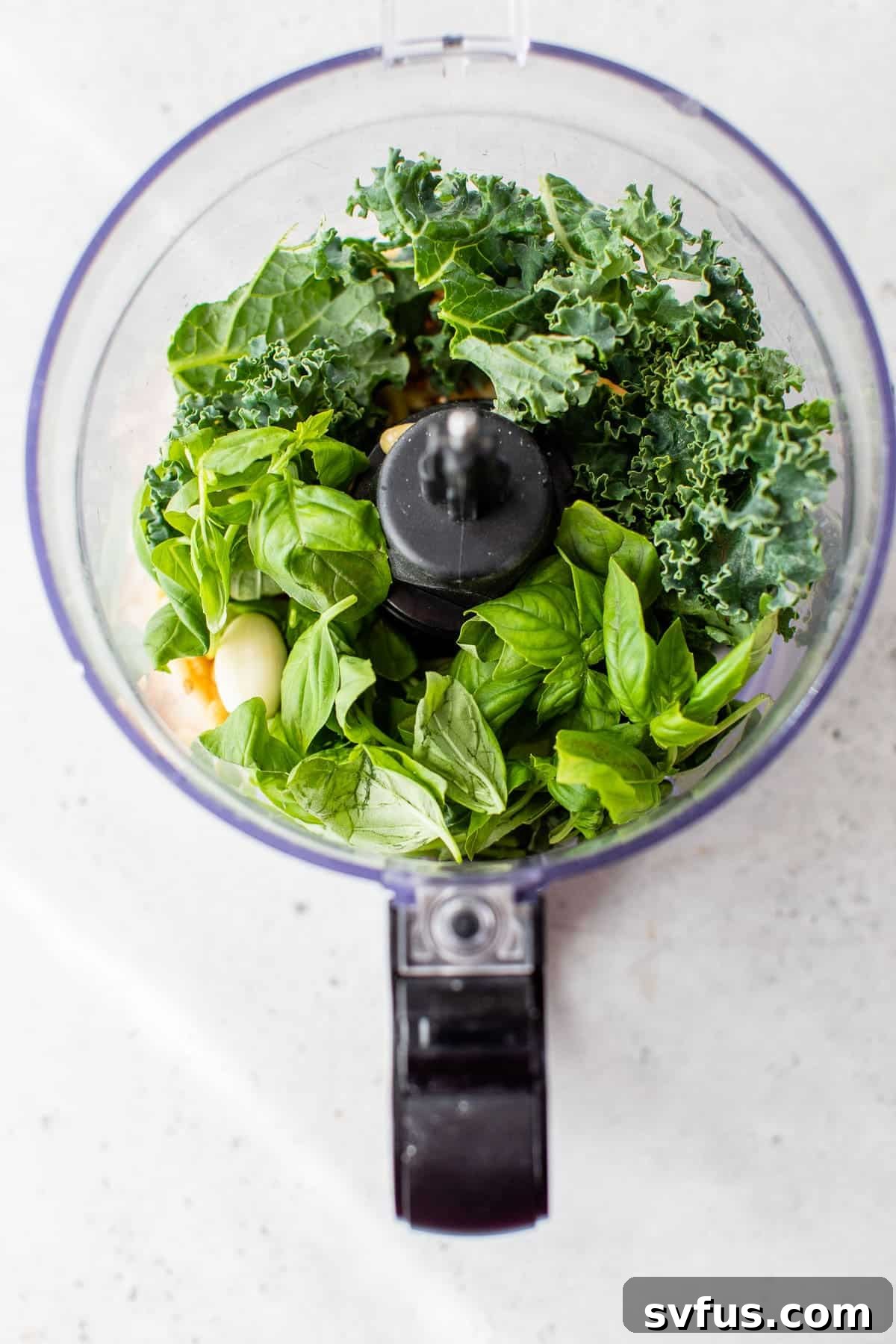
Begin by adding your prepared kale (stems thoroughly removed!), fresh basil leaves, peeled garlic cloves, and pine nuts to the bowl of your food processor. Ensure your food processor is securely covered. Pulse the ingredients for approximately 10-15 seconds. The goal here is to coarsely chop everything down and begin to break down the fibrous kale, creating a rustic, chunky mixture. You want to see the ingredients starting to come together, but not yet a paste. Scrape down the sides of the bowl with a spatula if necessary to ensure even processing.
Step 2: Incorporate Liquids for Creaminess
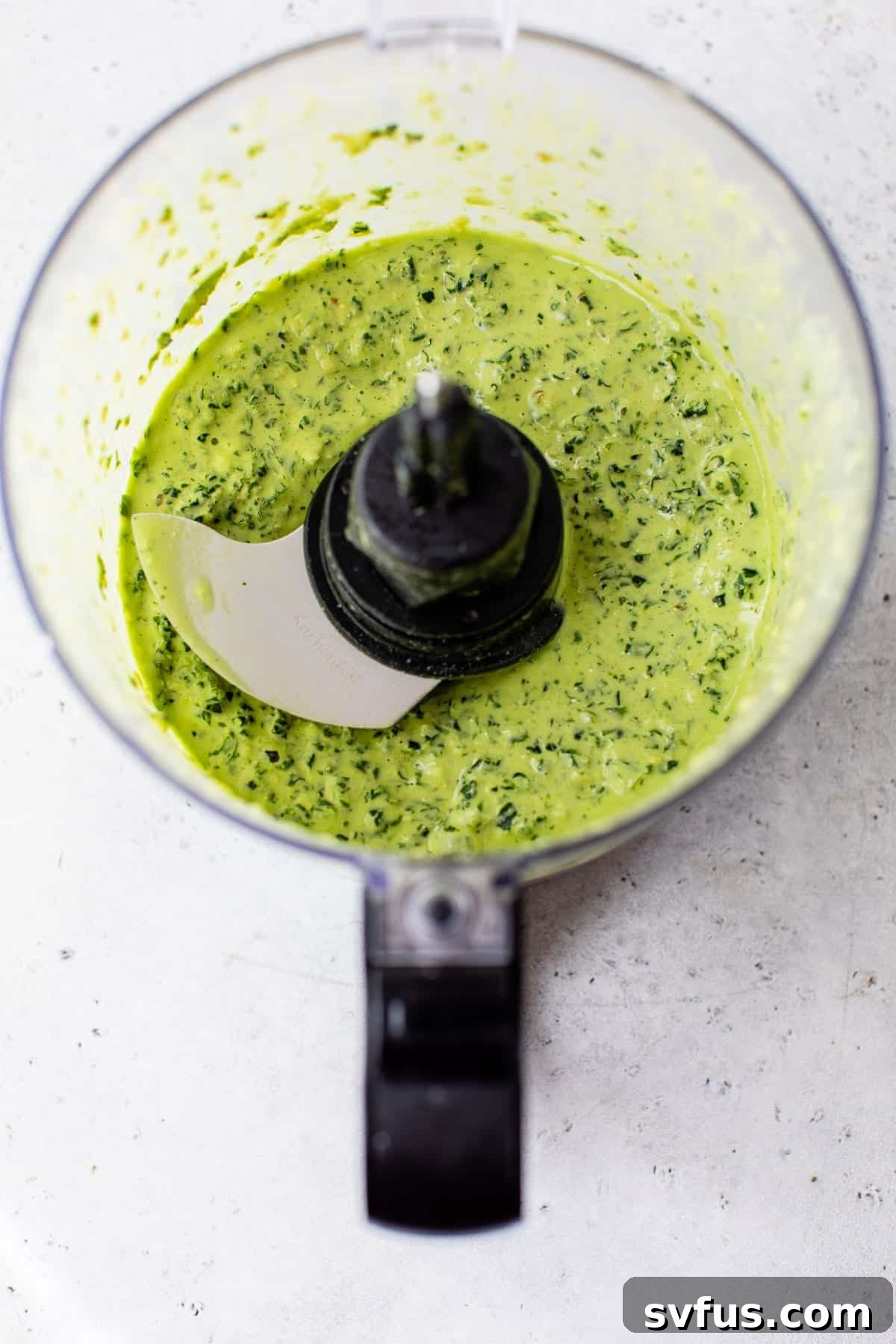
With the food processor motor still running, slowly pour the olive oil through the feed tube at the top. This continuous drizzle helps to emulsify the oil with the solid ingredients, creating a smooth and creamy texture. Continue to pulse or process for another 10-15 seconds until the mixture starts to look like a thick, vibrant green paste. Now, it’s time to adjust the consistency. Add 1 tablespoon of water at a time, processing briefly after each addition, until your pesto reaches your desired creamy, pourable consistency. You’ll likely need between 2 to 4 tablespoons total, depending on the moisture content of your kale and how thick you prefer your pesto. The water helps to thin the pesto without making it too oily, maintaining a perfect balance.
Step 3: Season and Perfect
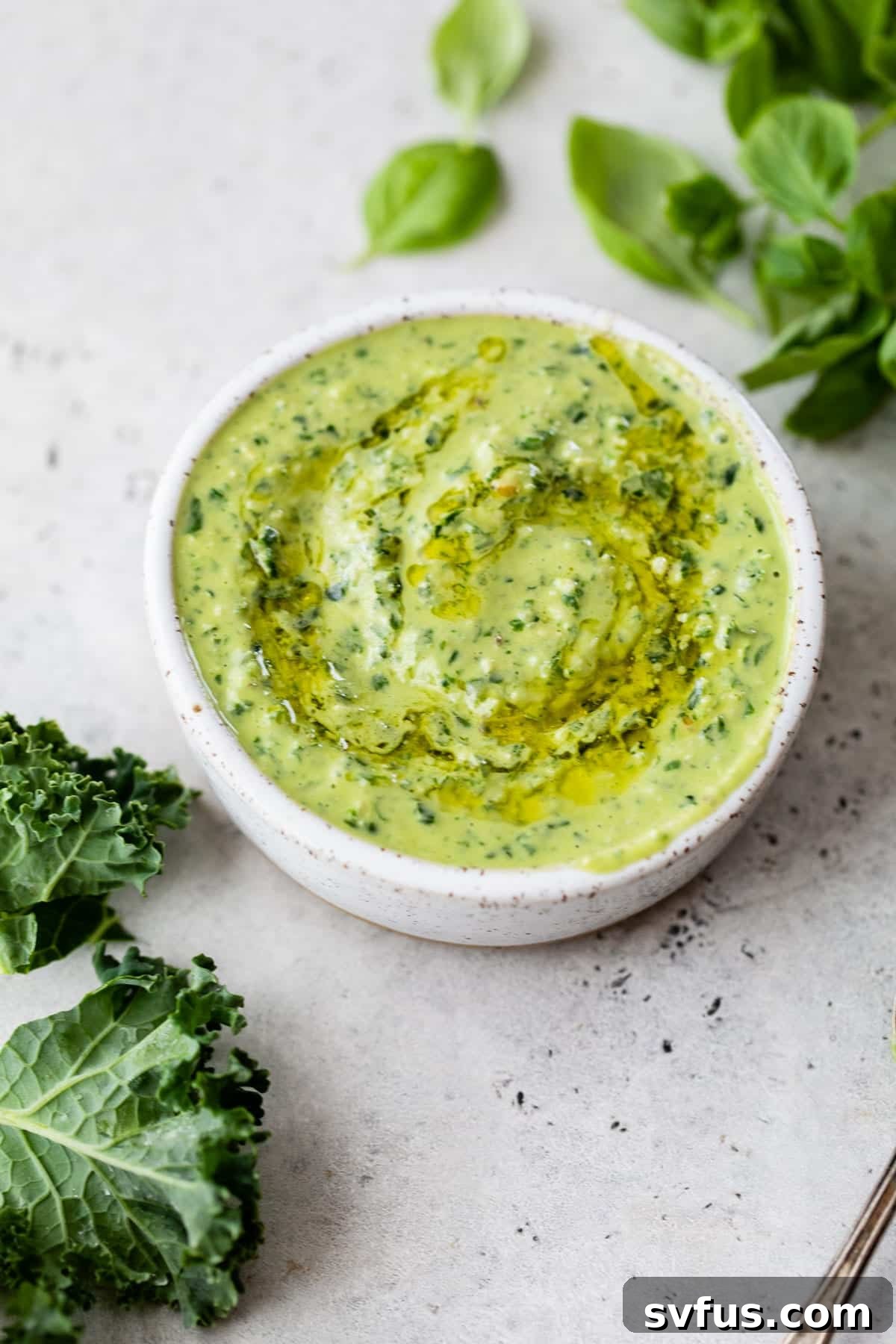
Now for the most important part: tasting and seasoning! Stop the food processor and taste a small spoonful of your freshly made pesto. Add salt as needed, starting with ¼ to ½ teaspoon, and mix well. Remember, you can always add more salt, but you can’t take it away. This is also the stage where you can add 1 tablespoon of fresh lemon juice if you prefer. Lemon juice not only adds a bright, tangy counterpoint to the rich flavors but also helps to preserve the vibrant green color of your pesto. Pulse briefly to incorporate the seasonings. Taste again and adjust any final seasonings. Your perfectly creamy, flavorful Kale Pesto is now ready to be enjoyed!
Frequently Asked Questions About Kale Pesto
Got questions about making the perfect Kale Pesto? Here are answers to some common inquiries:
Can I use a blender instead of a food processor?
While a food processor is generally recommended for pesto due to its wide bowl and sharp blades that create a consistent texture without over-blending, you can certainly use a blender. If you opt for a blender, especially a standard-sized one, I recommend using a smaller, more compact blender like a NutriBullet or a single-serve blender. This helps ensure the ingredients are processed effectively without getting stuck. You might need to stop and scrape down the sides more frequently, and possibly add a little extra olive oil or water to help the blades catch all the ingredients and achieve a smooth consistency. Start with a lower speed and gradually increase it, pulsing rather than continuously blending to maintain control over the texture.
Do I have to use kale and/or pine nuts?
You don’t *have* to, but both kale and pine nuts are what define this particular “Kale Pesto.” If you’re looking to experiment with different greens or nuts, the recipe remains highly adaptable!
- Kale Substitutions: If kale isn’t your favorite or you want to try something new, you can substitute it with other greens like spinach (milder, less bitter), arugula (peppery kick), or even a mix of fresh parsley and cilantro for a more herbaceous flavor. Keep in mind that these substitutions will alter the flavor profile significantly, but can still yield a delicious pesto.
- Pine Nut Substitutions: As mentioned in the ingredient notes, pine nuts can be expensive. Excellent alternatives include walnuts (adds a slightly bitter, earthy note), almonds (milder, creamier), cashews (very creamy, slightly sweet), or even sunflower seeds (for a nut-free option with a distinct flavor). Toasted nuts often provide a deeper flavor. If you’re looking for a pesto that’s specifically nut-free, sunflower seeds or pumpkin seeds are great choices.
For a classic almond-based pesto, you might want to try my almond pesto instead, which provides a different but equally delightful experience.
Can I add cheese to this vegan pesto?
Absolutely! While this recipe is crafted to be vegan, a sprinkle of nutritional yeast can add a cheesy, umami flavor without dairy. If you’re not strictly vegan, you can certainly add freshly grated Parmesan cheese (about 1/4 to 1/2 cup) to the food processor along with the other ingredients in Step 1. This will add a salty, nutty depth and a more traditional pesto flavor. Just be sure to adjust the amount of salt you add later, as Parmesan is quite salty itself.
Why is my pesto bitter?
Several factors can contribute to bitter pesto:
- Over-processing: Blending the pesto for too long can oxidize the olive oil, leading to a bitter taste. Use short pulses rather than continuous blending.
- Incorrect Olive Oil: Using a very strong, bitter extra virgin olive oil can sometimes make the pesto bitter. Choose a good quality, mild-to-medium intensity olive oil.
- Kale Stems: Not removing the tough stems from the kale can introduce bitterness and a stringy texture.
- Garlic: Too much garlic, or garlic that has been bruised (rather than minced cleanly), can sometimes contribute to bitterness.
To counteract bitterness, you can try adding a bit more lemon juice, a touch of maple syrup or agave nectar (just a tiny amount to balance), or a handful of fresh spinach, which is milder.
How can I make this pesto nut-free?
To make this Kale Pesto completely nut-free, simply substitute the pine nuts with seeds. Toasted sunflower seeds or pumpkin seeds are excellent alternatives. They provide a similar creamy texture and a delightful nutty flavor profile without any tree nuts. Just toast them lightly in a dry pan for a few minutes before adding them to the food processor for enhanced flavor.
Storage Solutions for Freshness and Longevity
One of the best things about homemade pesto is how well it stores, allowing you to enjoy its fresh flavors for days or even months. Proper storage is key to maintaining its vibrant color and taste.
- Refrigerator: To store your freshly made kale pesto in the refrigerator, spoon it into an airtight container. Press a piece of plastic wrap directly onto the surface of the pesto to prevent air exposure, which can cause oxidation and browning. You can also pour a thin layer of olive oil over the top before sealing. Stored this way, your pesto will remain fresh and vibrant for up to 5 days, ready to elevate your meals throughout the week.
- Freezer: Freezing pesto is an incredibly popular and efficient way to extend its shelf life, ensuring you always have a burst of fresh flavor on hand. The easiest method is to spoon the pesto into an ice cube tray. Once frozen solid, pop the pesto cubes out and transfer them to a freezer-safe bag or container. This allows you to thaw individual portions as needed. Frozen pesto can be stored in the freezer for up to 3 months. When you’re ready to use it, simply thaw a cube or two in the refrigerator overnight or at room temperature for a couple of hours. The Harvest Kitchen offers a fantastic, detailed article on how to freeze pesto, providing even more tips and tricks for optimal results.
Regardless of your chosen storage method, the key is to minimize air exposure. This not only preserves the bright green color but also locks in the fresh, aromatic flavors of your homemade Kale Pesto.
Explore More Delicious Kale Recipes!
If you’ve fallen in love with kale through this pesto, there are many other incredible ways to enjoy this nutritious green. Here are a few more of my favorite kale-centric recipes that are sure to delight:
- One Pot Gnocchi with Kale: A comforting and hearty meal that comes together in a single pot, featuring tender gnocchi, savory sausage, and fresh kale.
- Grilled Corn Kale Salad: A vibrant and refreshing salad perfect for summer, combining sweet grilled corn with crisp kale and a zesty dressing.
- Easy Kale Smoothie: A quick and nutritious way to get your daily dose of greens, this smoothie is both delicious and energizing.
Each of these recipes showcases kale in a unique and delicious way, proving its versatility beyond just a side dish. Don’t hesitate to give them a try!
If you’ve tried your hand at this delightful Kale Pesto, we’d love to hear from you! Be sure to leave a comment below and share your star rating. Your feedback helps us and other home cooks discover new favorites. Thank you for cooking with us!
Kale Pesto
Erin Alvarez
6
5 minutes
5 minutes
Ingredients
- 2 garlic cloves
- 6 tbsp pine nuts
- 1 cup kale, stems removed
- 2 cups fresh basil
- 1/4 cup olive oil
- 2 tbsp water, or more
- salt to taste
- 1 tbsp lemon juice, optional
Instructions
-
Add the garlic, pine nuts, kale, and basil to your food processor and pulse for 10 seconds.
-
Then, with the motor still running, pour the olive oil in through the top and pulse for 10 seconds. Add the water 1 tbsp at a time until pesto forms (you will need between 2-4 tbsp total). Taste test, then add salt. Last, add the lemon juice (optional). Enjoy!
Notes
*Storage: store in a sealed container in the refrigerator for up to 5 days; or, store in the freezer for up to 3 months
Nutrition
Carbohydrates: 3g |
Protein: 2g |
Fat: 16g |
Saturated Fat: 2g |
Sodium: 5mg |
Potassium: 145mg |
Fiber: 1g |
Sugar: 1g |
Vitamin A: 1541IU |
Vitamin C: 16mg |
Calcium: 35mg |
Iron: 1mg
Did you make this?
Leave a comment and star rating below!