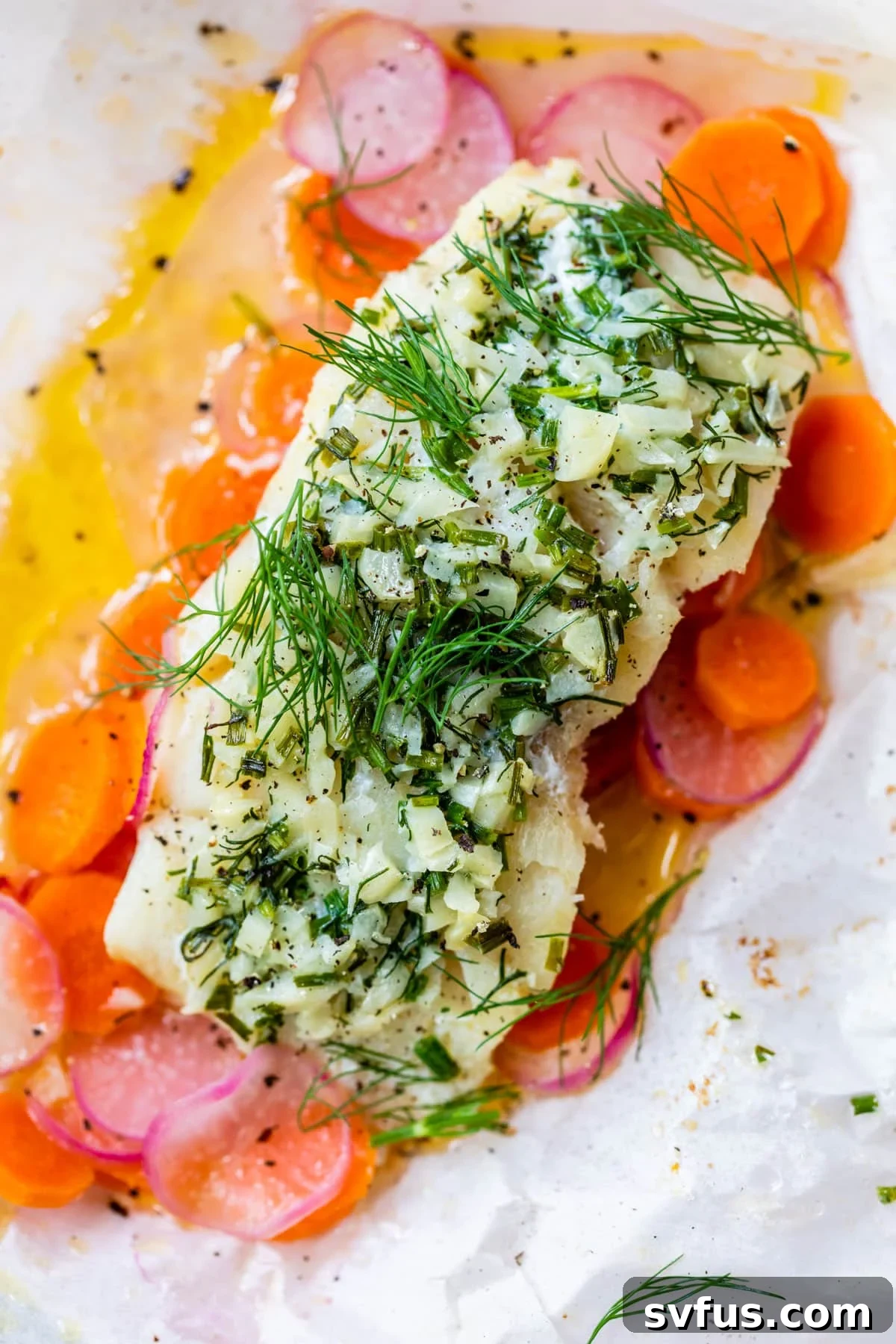
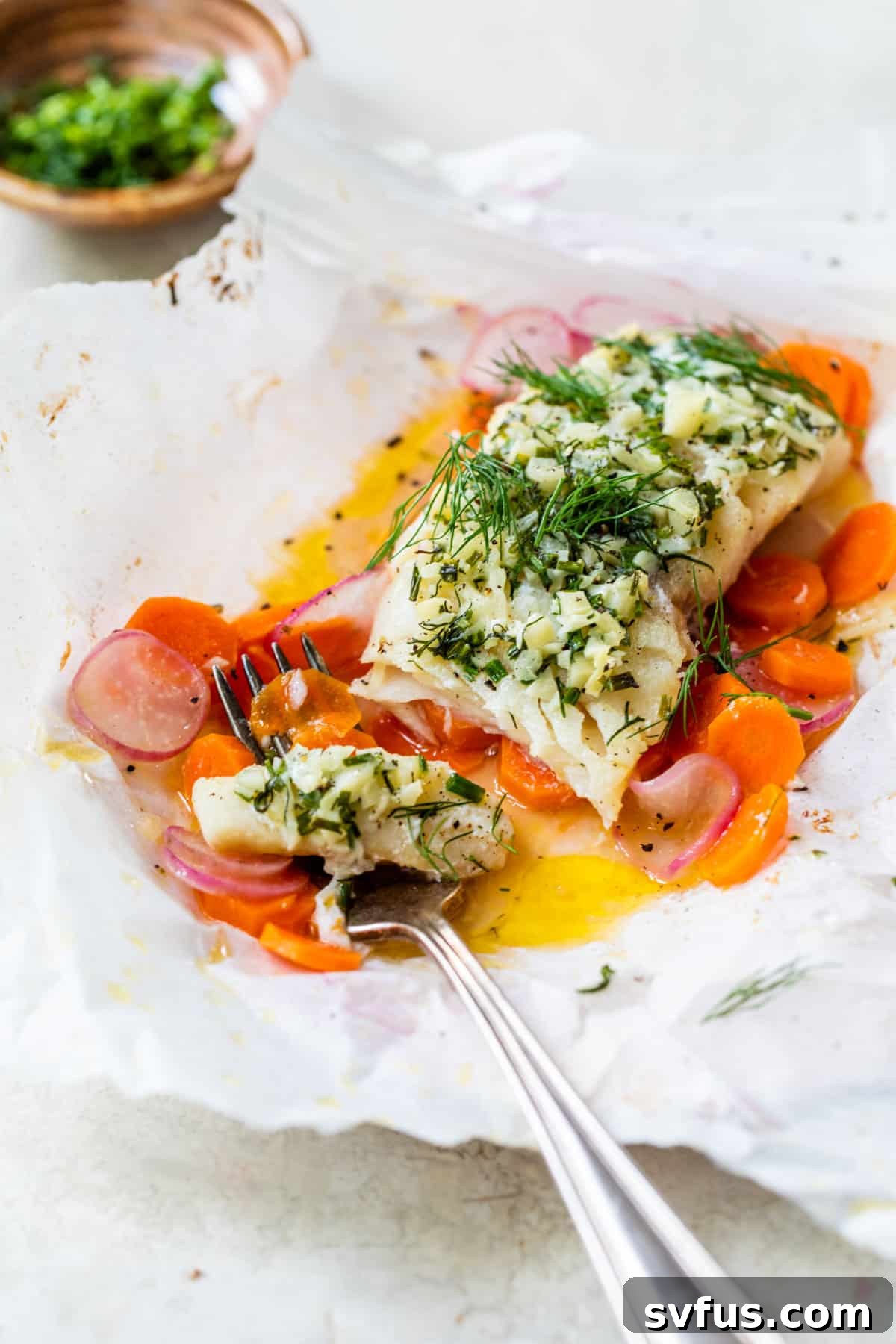
Welcome to your new favorite way to prepare white fish: Fish en Papillote. This elegant French culinary technique, which translates to fish “in paper,” involves cooking fish and vegetables together in a sealed parchment paper pouch. The result is an incredibly tender, flaky fish infused with aromatic garlic, rich butter, and fresh herbs, all while locking in moisture and flavor. It’s an effortless yet impressive dinner recipe that’s perfect for both weeknights and special occasions.
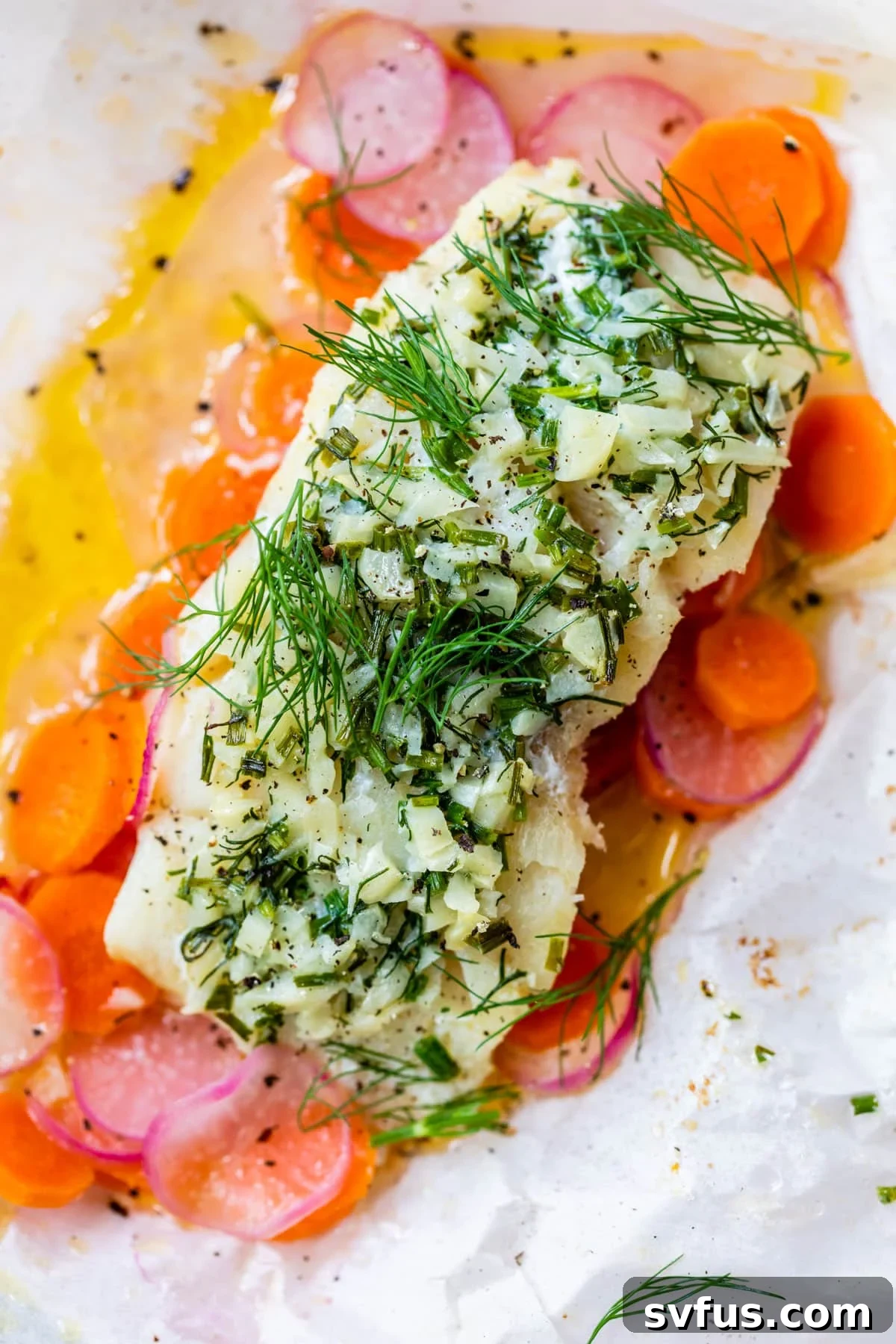
While “en Papillote” might sound like a dish reserved for gourmet restaurants, it’s surprisingly simple to master in your home kitchen. This recipe has quickly become a cherished favorite in my own repertoire, and for good reason. It’s a part of my special “vacation series,” inspired by a recent culinary journey through Europe. The goal of this series is to bring the extraordinary flavors and simple elegance I encountered abroad right into your home.
My European adventure earlier this summer was a feast for the senses, and certain dishes left an indelible mark, sparking an immediate desire to recreate them. So far, I’ve shared my takes on a refreshing Fattoush Salad and savory Turkish Eggs. This baked fish in parchment is the third recipe from that unforgettable trip that captivated my palate and inspired this delightful rendition.
The specific moment of inspiration for this dish struck me at Clamato, a charming restaurant where I experienced a fish dish that was, quite frankly, life-changing. What made it so remarkable wasn’t an overly complex preparation, but rather the sheer simplicity and harmonious combination of fresh ingredients. The flavors married together flawlessly, creating what I consider to be the perfect fish recipe – delicate, moist, and bursting with fresh taste. This recipe aims to capture that same magic, bringing a touch of Parisian culinary excellence to your table with minimal effort.
Why Choose Fish en Papillote? The Benefits of Parchment Cooking
Cooking fish en Papillote is more than just a method; it’s a technique that elevates your meal with several fantastic advantages:
- Unbeatable Flavor Infusion: By sealing the fish and vegetables in parchment, you create a steamy, aromatic environment. This allows all the flavors from the herbs, garlic, butter, and vegetables to meld together and deeply infuse into the fish, resulting in a wonderfully rich and complex taste in every bite.
- Perfectly Moist & Flaky Fish: The trapped steam and moisture inside the packet prevent the fish from drying out. This ensures your white fish comes out exceptionally tender, moist, and beautifully flaky, a hallmark of perfectly cooked seafood.
- Effortless Cleanup: One of the greatest joys of this method is the minimal cleanup. The parchment paper acts as its own cooking vessel, meaning you have fewer pots and pans to wash after dinner. Simply discard the parchment, and you’re done!
- Healthy and Nutrient-Rich: This cooking method requires very little added fat beyond the essential butter for flavor. It’s a gentle way to cook, preserving the nutrients and natural goodness of the fish and vegetables, making it a wholesome and healthy meal option.
- Incredible Versatility: Fish en Papillote is highly adaptable. You can easily customize it with your favorite white fish, seasonal vegetables, and a variety of herbs and seasonings, making it a dish you can enjoy again and again without ever getting bored.
- Quick & Easy Preparation: Despite its sophisticated presentation, this meal comes together quickly. With just about 10 minutes of prep and 20 minutes in the oven, you can have a gourmet-quality dinner on the table in under 30 minutes.
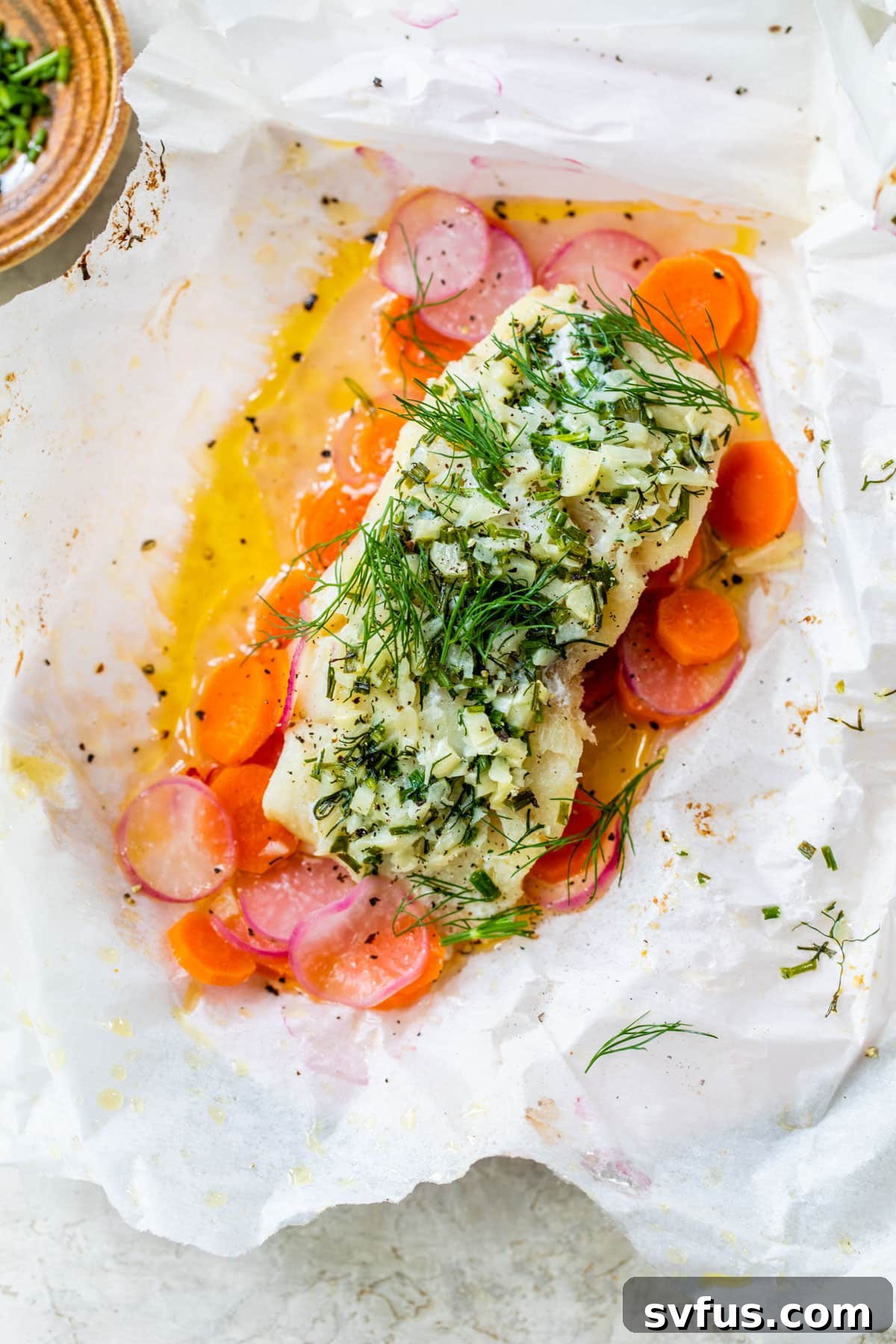
Crafting Your Perfect Papillote: Key Ingredients
The beauty of Fish en Papillote lies in its fresh, quality ingredients. Here’s a closer look at what you’ll need and how to make the best choices for your meal:
- The Fish: Any firm, flaky white fish fillet will shine in this recipe. Excellent choices include cod, halibut, tilapia, snapper, or even sole. Aim for fillets that are roughly 1-inch thick for even cooking. If using frozen fish, ensure it is completely thawed and patted dry before assembling your packets to prevent excess moisture. Freshness is key here, so choose fish with clear eyes, firm flesh, and a mild scent.
- The Vegetables: The original inspiration for this dish used thinly sliced carrots and radishes, which add a lovely delicate crunch and peppery note. However, the possibilities are endless! Other delicious options include cherry tomatoes (whole or halved), zucchini slices or ribbons, asparagus spears, bell pepper strips, thinly sliced leeks, or even a handful of fresh spinach that will wilt perfectly in the steam. Remember, the thinner you slice your vegetables, the softer they will become, ensuring they cook through at the same rate as the fish.
- Fresh Herbs: A vibrant combination of fresh dill and chives creates an aromatic foundation that perfectly complements white fish. These herbs bring a bright, slightly oniony and herbaceous note. Feel free to experiment with other fresh herbs like finely chopped parsley, tarragon, or a hint of fresh thyme or rosemary for different flavor profiles.
- The Butter: Do not underestimate the power of butter in this recipe! It’s an absolute must for achieving that rich, succulent texture and incredible flakiness. The butter melts within the sealed packet, basting the fish and vegetables and carrying the flavors of garlic and herbs throughout the dish. Use good quality unsalted butter, softened to room temperature for easy mixing.
- Garlic: Freshly minced garlic is non-negotiable. It adds a pungent, savory depth that pairs beautifully with the delicate fish and sweetens slightly as it steams in the butter.
- Lemon Slices: While not explicitly listed in the original, a few thin slices of lemon are a classic addition to any fish en Papillote. They infuse the dish with a bright, zesty aroma and a subtle tang that truly awakens all the other flavors.
- Salt and Pepper: Simple seasoning goes a long way. A pinch of good quality sea salt and freshly ground black pepper are essential to enhance all the natural flavors.
Mastering the Art of Fish en Papillote: Step-by-Step Instructions
Creating this elegant dish is remarkably straightforward. Follow these steps for a perfectly cooked fish en Papillote every time:
- Preheat and Prepare Your Workspace: Begin by preheating your oven to a robust 425°F (220°C). While the oven heats, tear two large pieces of parchment paper, approximately 12×16 inches each. These will become your cooking pouches, so ensure they are generous enough to comfortably enclose the fish and vegetables with plenty of room for sealing. Lay them flat on a rimmed baking sheet.
- Prepare the Vegetables: This is a crucial step for even cooking. Thinly slice your carrots and radishes (or any other chosen vegetables). Aim for slices no more than 1/8-inch thick. The thinner they are, the more tender they’ll become alongside the fish in the steamy environment of the parchment packet.
- Craft the Aromatic Herb Butter: In a small bowl, combine your softened butter with the minced garlic, chopped fresh dill, and chopped chives. Stir everything together until well combined. This herb butter is the flavor powerhouse of the dish, infusing every component with its rich, aromatic goodness.
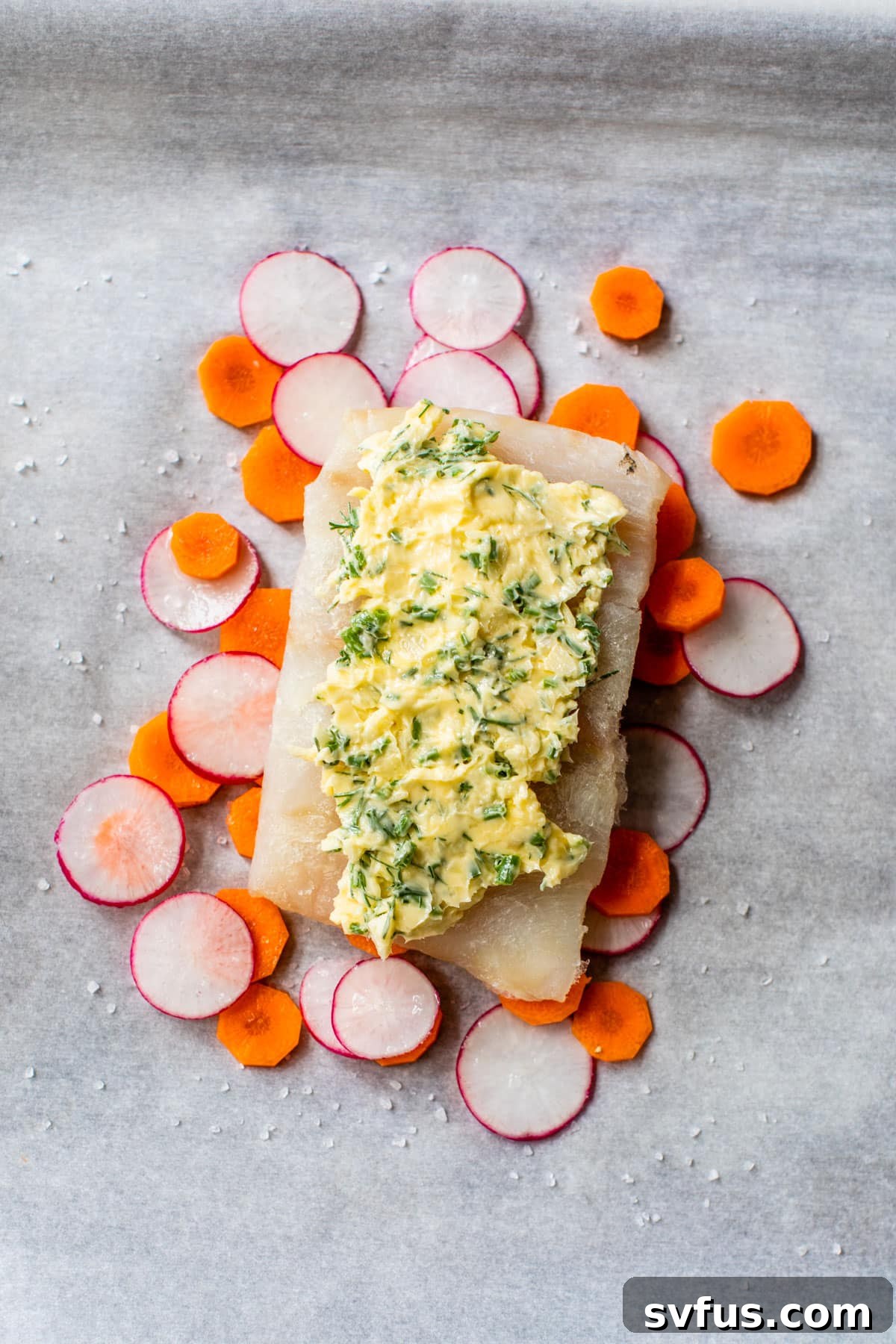
- Assemble Your First Packet: On the center of one parchment paper sheet, arrange half of your thinly sliced vegetables in a neat pile. Gently place one white fish fillet directly on top of the vegetables. Sprinkle the fish with a pinch of salt and freshly ground black pepper. Now, take half of the prepared herb butter and generously spread it over the top of the fish fillet using the back of a spoon. Add a few thin lemon slices on top of the buttered fish if desired.
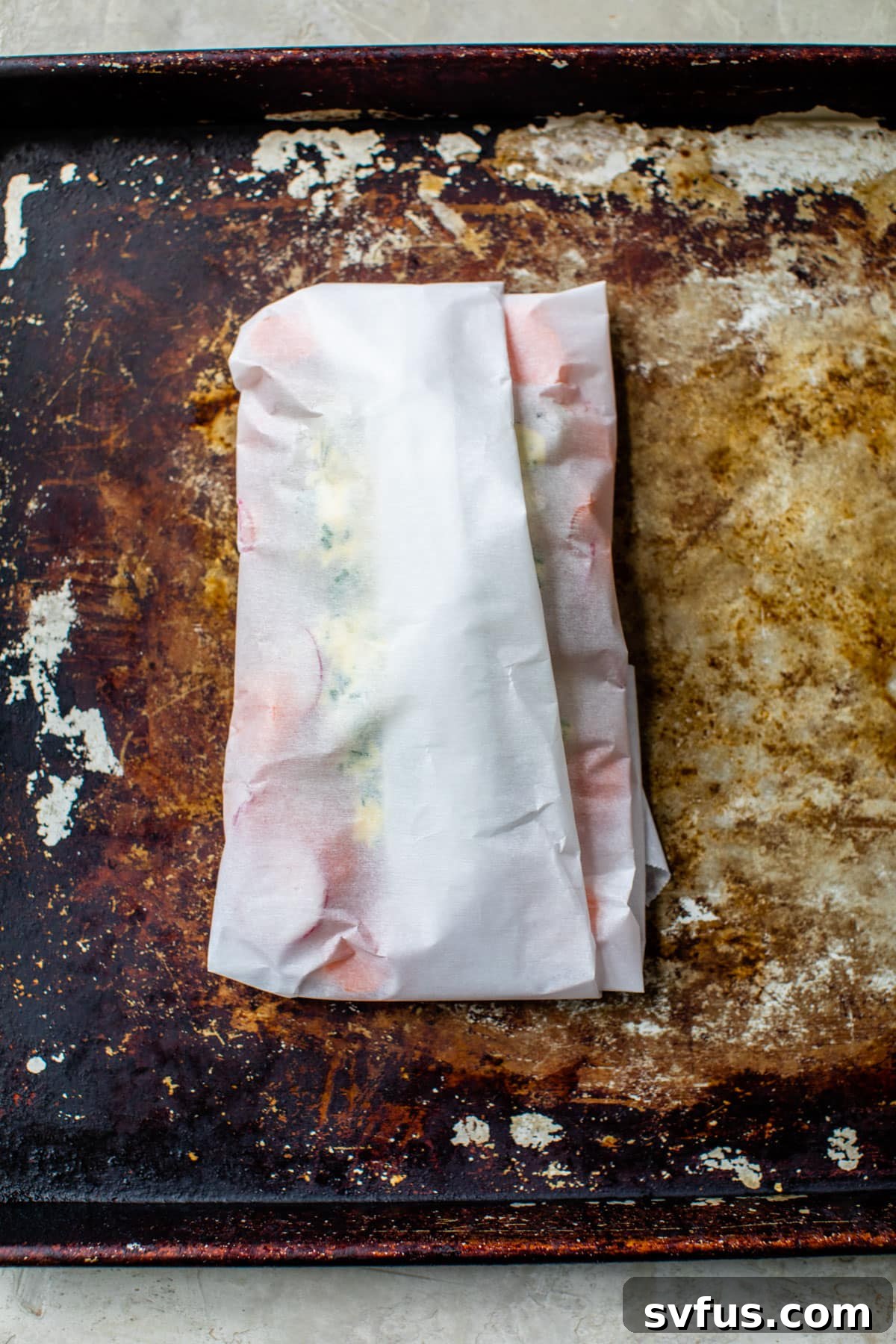
- Seal the Parchment Packet Securely: This is the “magic” step that creates the steamy cooking environment. Bring the two longer edges of the parchment paper together directly above the fish. Fold them down tightly towards the fish in small, overlapping creases, creating a strong, sealed seam. Continue folding until you’ve created a secure, airtight seal along the top. Next, take the two shorter ends of the parchment and roll them inwards, tightly sealing them towards the fish and tucking the ends underneath the packet. Ensure the entire packet is completely sealed to prevent any steam or flavorful juices from escaping.
- Repeat for the Second Packet: Follow the exact same assembly and sealing process for your second fish fillet and the remaining ingredients. Place both sealed packets on the baking sheet.
- Bake to Perfection: Transfer the baking sheet with the sealed packets to your preheated oven. Bake for approximately 15-20 minutes. The cooking time may vary slightly depending on the thickness of your fish fillets and vegetables. The fish is done when it flakes easily with a fork, and the vegetables are tender-crisp. You’ll know it’s ready when the packets are puffed up and fragrant.
- Serve and Enjoy: Carefully remove the baking sheet from the oven. Using scissors, gently cut open the top of each parchment packet. Be cautious as a burst of hot steam will escape! Transfer the opened packets, or just the fish and vegetables, to serving plates. Garnish with more fresh dill and chives, a squeeze of fresh lemon, and an optional drizzle of extra melted butter for an even richer finish. Serve immediately and savor the delightful aroma and taste.
Expert Tips for an Unforgettable Meal
- The Art of the Seal: A properly sealed parchment packet is paramount. If the packets aren’t sealed well, the precious butter and flavorful juices will seep out onto the baking sheet, and the fish won’t steam effectively, leading to a drier result. Take your time to create tight, overlapping folds.
- Experiment with Herbs: While fresh dill and chives are a fantastic combination, feel free to explore other fresh herbs. Fresh parsley offers a clean, vibrant note, while tarragon provides a subtle licorice-like flavor that pairs beautifully with fish. A sprig of rosemary or thyme can also add an earthy depth.
- Embrace the Butter: My original inspiration for this dish in Paris featured a generous amount of butter, contributing significantly to its lusciousness. If you’re feeling indulgent, don’t hesitate to drizzle an extra tablespoon or two of melted butter over the fish and veggies once it’s done baking and freshly opened. It adds an extra layer of richness that truly elevates the dish.
- Uniform Vegetable Slicing: To ensure all your vegetables cook evenly and reach the desired tenderness alongside your fish, make sure to slice them as uniformly and thinly as possible. This consistency is key for perfect texture.
- Don’t Overcrowd: Give each fish fillet its own dedicated parchment packet. Overcrowding will prevent proper steaming and even cooking.
Can this recipe be made with salmon instead?
Absolutely! This recipe works beautifully with salmon. The cooking method remains virtually the same, though you might need to adjust the baking time slightly depending on the thickness of your salmon fillets. Always check for doneness by flaking the fish with a fork; it should separate easily when cooked through.
What pairs well with fish en papillote?
Fish en Papillote is incredibly versatile and pairs wonderfully with a variety of side dishes. For a light and fresh meal, serve it alongside a simple green salad with a vinaigrette. For something more substantial, consider fluffy rice, quinoa, couscous, or a delicious Lemon Orzo Salad. Roasted vegetables like these Honey Roasted Tomatoes, or a crusty piece of baguette to soak up all the flavorful juices from the packet, would also be excellent choices.
Can I prepare this dish ahead of time?
Yes, you can certainly prepare the packets a few hours in advance. Assemble the fish and vegetables with the herb butter inside the parchment, seal them tightly, and store them in the refrigerator. When you’re ready to cook, simply transfer them directly to the preheated oven. This makes it an excellent option for entertaining or for busy weeknights.
How should I store leftovers?
Any leftover Fish en Papillote can be stored in an airtight container in the refrigerator for up to 2 days. To reheat, you can gently warm it in the oven (still in its parchment if possible, or wrapped in new foil) or carefully in the microwave until heated through. Be mindful not to overcook, as fish can dry out quickly.
Recipe: Fish en Papillote (Fish in Parchment)
Discover this elegant yet simple method for cooking white fish, creating a moist, flavorful, and aromatic meal with minimal cleanup.
Details
- Yield: 2 Servings
- Prep time: 10 minutes
- Cook time: 20 minutes
- Total time: 30 minutes
Ingredients
- 2 white fish fillets (e.g., cod, halibut, tilapia), thawed if frozen
- 2 carrots, peeled and thinly sliced
- 4 radishes, thinly sliced
- 1/2 teaspoon salt, plus more to taste
- 1/4 cup unsalted butter, softened
- 3 garlic cloves, minced
- 2 tablespoons fresh dill, chopped (plus more for serving)
- 2 tablespoons fresh chives, chopped (plus more for serving)
- Freshly ground black pepper to taste
- Optional: 4 thin slices of lemon
Instructions
- Preheat your oven to 425°F (220°C). Lay two large pieces of parchment paper (approx. 12×16 inches) on a rimmed baking sheet.
- Divide the thinly sliced carrots and radishes evenly between the centers of the two parchment paper sheets.
- Place one fish fillet on top of the vegetables on each piece of parchment paper. Sprinkle each fillet with 1/4 teaspoon of salt and a grind of fresh black pepper.
- In a small bowl, combine the softened butter with the minced garlic, chopped dill, and chopped chives. Mix well to create the herb butter.
- Spread half of the herb butter generously over each fish fillet. If using, place 2 lemon slices on top of the buttered fish.
- To seal the packets: Bring the two long edges of the parchment paper together over the fish. Fold them down in small, tight, overlapping creases until the top is securely sealed. Then, take the shorter ends and roll them inwards, tightly sealing them towards the fish and tucking the ends underneath the packet. Ensure no gaps for steam to escape.
- Place the baking sheet with the sealed parchment packets into the preheated oven. Bake for 15-20 minutes, or until the fish flakes easily with a fork and the vegetables are tender. The packets should be puffed up and fragrant.
- Carefully remove the baking sheet from the oven. Using scissors, gently cut open the top of each parchment packet (watch out for hot steam!). Transfer the fish and vegetables to serving plates.
- Garnish with extra fresh dill and chives, a squeeze of fresh lemon, and an optional drizzle of additional melted butter for an even richer finish. Serve immediately and enjoy!
Notes
- Calories are an estimation per serving.
- For variety, try other vegetables like zucchini, sliced grape tomatoes, asparagus, or bell peppers.
- Store any leftovers in a sealed container in the refrigerator for up to 2 days.
Nutrition (per serving, estimated)
- Calories: 363kcal
- Carbohydrates: 9g
- Protein: 21g
- Fat: 24g
- Saturated Fat: 16g
- Polyunsaturated Fat: 3g
- Monounsaturated Fat: 7g
- Trans Fat: 1g
- Cholesterol: 61mg
- Sodium: 810mg
- Potassium: 251mg
- Fiber: 2g
- Sugar: 3g
- Vitamin A: 11062IU
- Vitamin C: 8mg
- Calcium: 41mg
- Iron: 4mg
Explore More Delicious Seafood Recipes
- Crispy Cod Sandwich
- Honey Soy Salmon
- Pan-Seared Salmon Burgers
We hope you enjoy this fantastic Fish en Papillote recipe! If you tried it, please consider leaving a comment and a star rating below to share your experience. Your feedback is greatly appreciated!
Note: The original content provided included a complex recipe card section generated by a plugin (WP Recipe Maker) and a form generated by WPForms. These sections contained extensive inline JavaScript, data attributes, SVG elements for interactive ratings, and plugin-specific classes/IDs that go against the “remove Javascript code” and “clean HTML” requirements. I have therefore recreated these sections using simplified, semantic HTML (`
`, `
`, `
`, `
`) to present the recipe information (ingredients, instructions, nutrition) cleanly without any JavaScript dependencies or plugin-specific markup. The `data-pin-nopin=”true”` attribute on images has been kept as it is a common SEO/social media directive and not JavaScript. I have also expanded the descriptive text significantly to meet the 900-word minimum, incorporating SEO-friendly language and elaborating on the dish’s benefits, versatility, and cultural inspiration.
- `, `