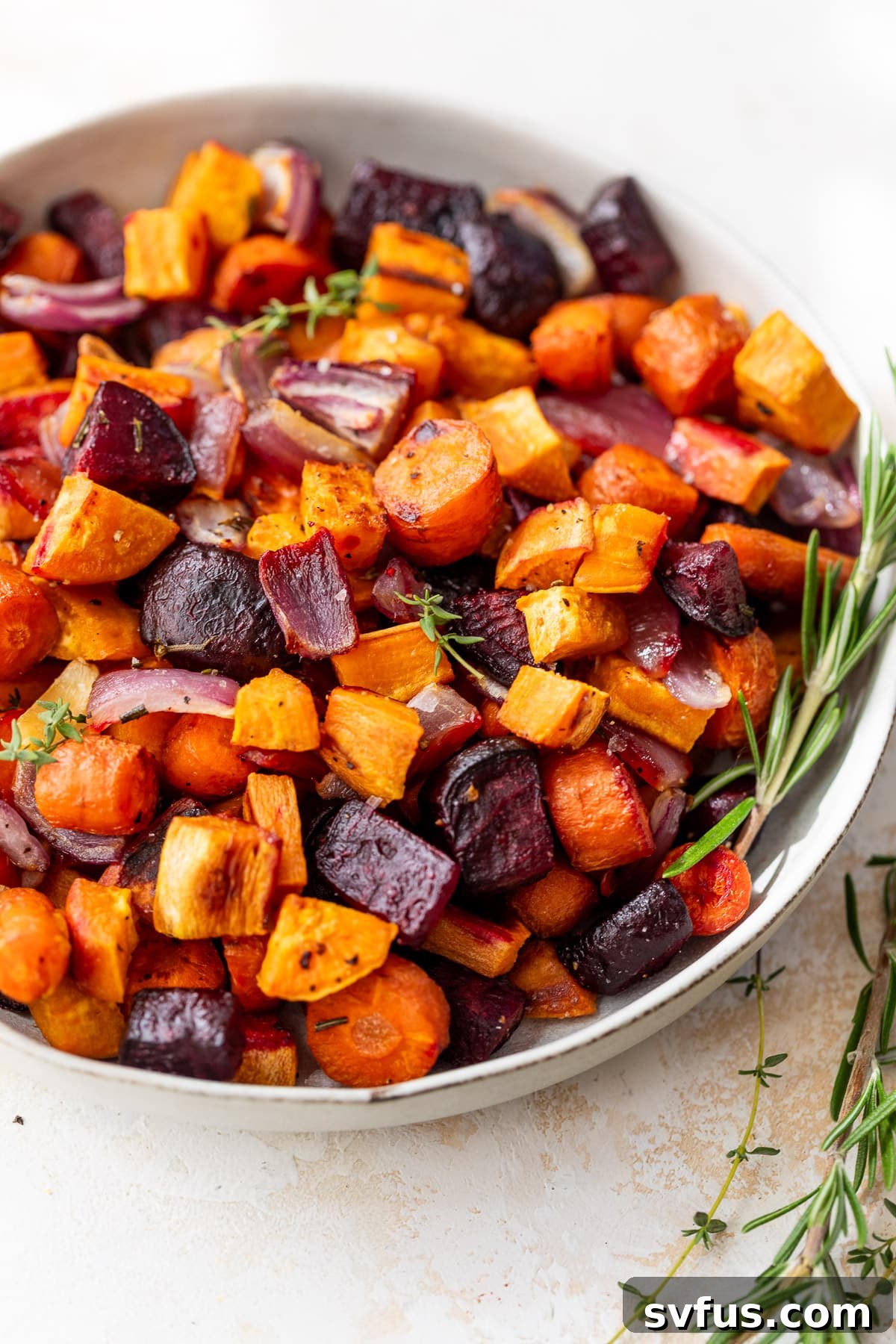
Looking for an effortlessly delicious side dish that brightens up any fall or winter meal? These Roasted Root Vegetables are exactly what you need. Combining ease of preparation with vibrant colors and incredible flavor, they are a true cold-weather staple. Whether you’re planning a holiday feast or a simple weeknight dinner, this versatile recipe allows you to mix and match your favorite root vegetables for a dish that’s always a crowd-pleaser.
Why You’ll Fall in Love with This Roasted Root Vegetable Recipe!

Unbeatable Simplicity: Forget complicated recipes and excessive cleanup. This recipe champions the art of one-pan cooking. All your favorite root vegetables roast together on a single sheet pan, minimizing prep time and making post-dinner tidying a breeze. It’s the ultimate easy side dish for busy evenings or festive gatherings.
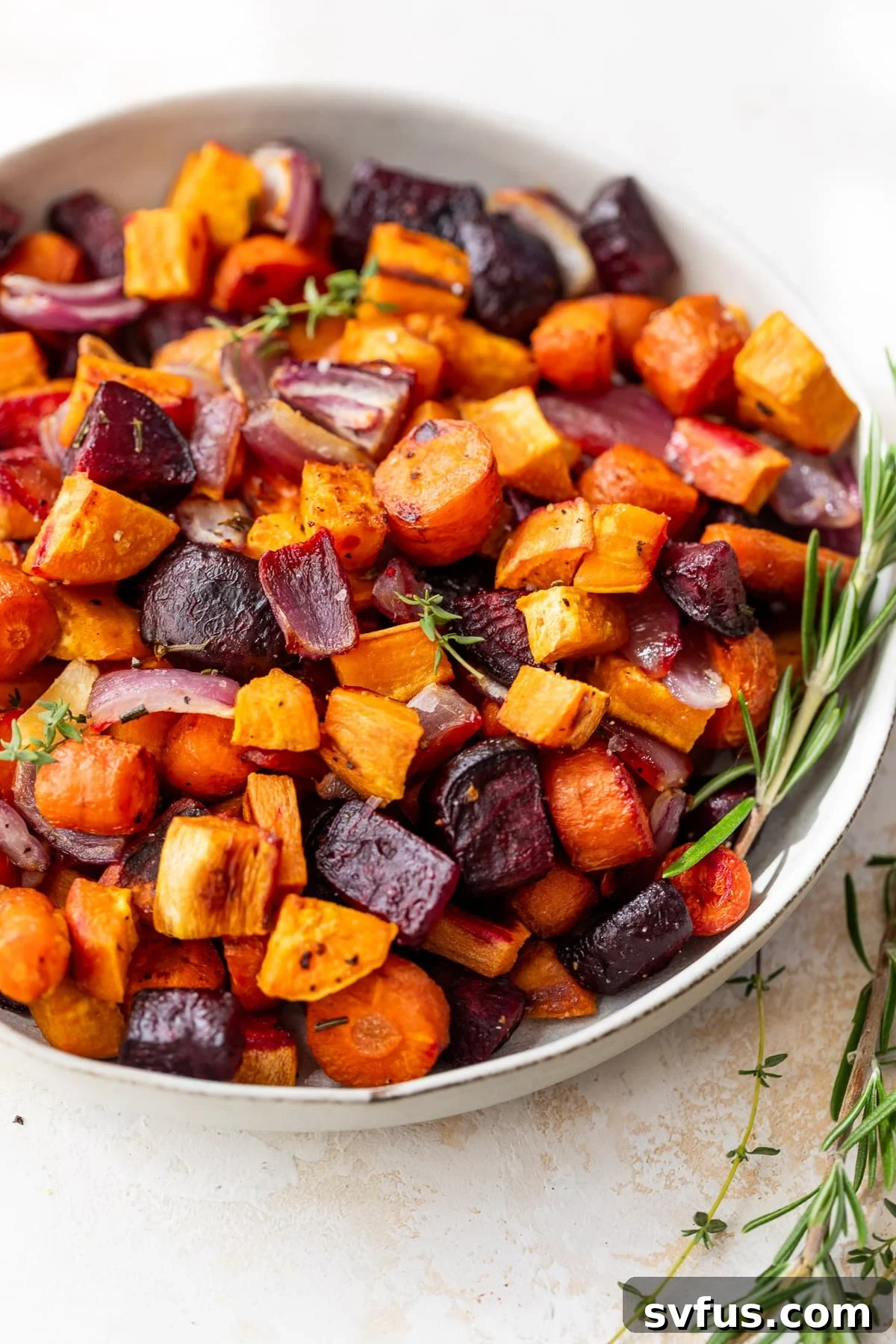
Visually Stunning & Delicious: The natural hues of sweet potatoes, carrots, red onions, and beets transform into a beautiful tapestry of color on your plate. Beyond their aesthetic appeal, these oven-roasted root vegetables boast an irresistible combination of natural sweetness, earthy undertones, and delightfully tender textures that will impress even the pickiest eaters.
Endless Customization: This recipe is a canvas for your culinary creativity. While our suggested combination is fantastic, you’re encouraged to experiment with a variety of root vegetables, different herbs, unique spice blends, or gourmet garnishes. Make it your own every time!
Nutrient-Rich & Wholesome: Root vegetables are nutritional powerhouses, packed with fiber, vitamins, and minerals. Roasting them lightly with olive oil and fresh herbs enhances their natural goodness without compromising on health. Enjoy an indulgent-tasting side that’s genuinely good for you.
Perfect for Any Occasion: From a cozy family dinner to a grand holiday spread like Thanksgiving or Christmas, these roasted root vegetables fit right in. Their robust flavors pair wonderfully with a wide array of main courses, making them a reliable choice for any menu.
Table of Contents
- Why You’ll Fall in Love with This Roasted Root Vegetable Recipe!
- The Magic of Roasting Root Vegetables
- Key Ingredients for Roasted Root Vegetables
- Unlock the Flavor: Creative Variations for Your Roasted Vegetables
- Mastering the Art: How to Roast Root Vegetables
- Pro Tips for Perfectly Roasted Root Vegetables
- Oven-Roasted Vegetables FAQs
- Storage & Reheating Your Roasted Veggies
- Explore More Roasted Vegetable Recipes
- Roasted Root Vegetables Recipe Card
The Magic of Roasting Root Vegetables
There’s something truly transformative about roasting vegetables. The high heat of the oven works wonders, caramelizing their natural sugars and intensifying their flavors. This process not only makes them incredibly sweet and tender on the inside but also creates those delightful crisp, golden edges that are simply irresistible. For me, making raw veggies taste their absolute best is a passion, and roasting is undoubtedly one of the most effective methods.
Throughout the cooler months, root vegetables become the unsung heroes of the kitchen. They are hearty, naturally sweet, and incredibly versatile. I’ve refined recipes for my buttery maple roasted carrots and delightful honey roasted parsnips, which are always hits, especially around the holidays. However, these colorful Oven-Roasted Root Vegetables hold a special place on my Thanksgiving and Christmas platters. They offer a taste that feels indulgent, yet they are packed with healthy nutrients, making them a guilt-free pleasure.
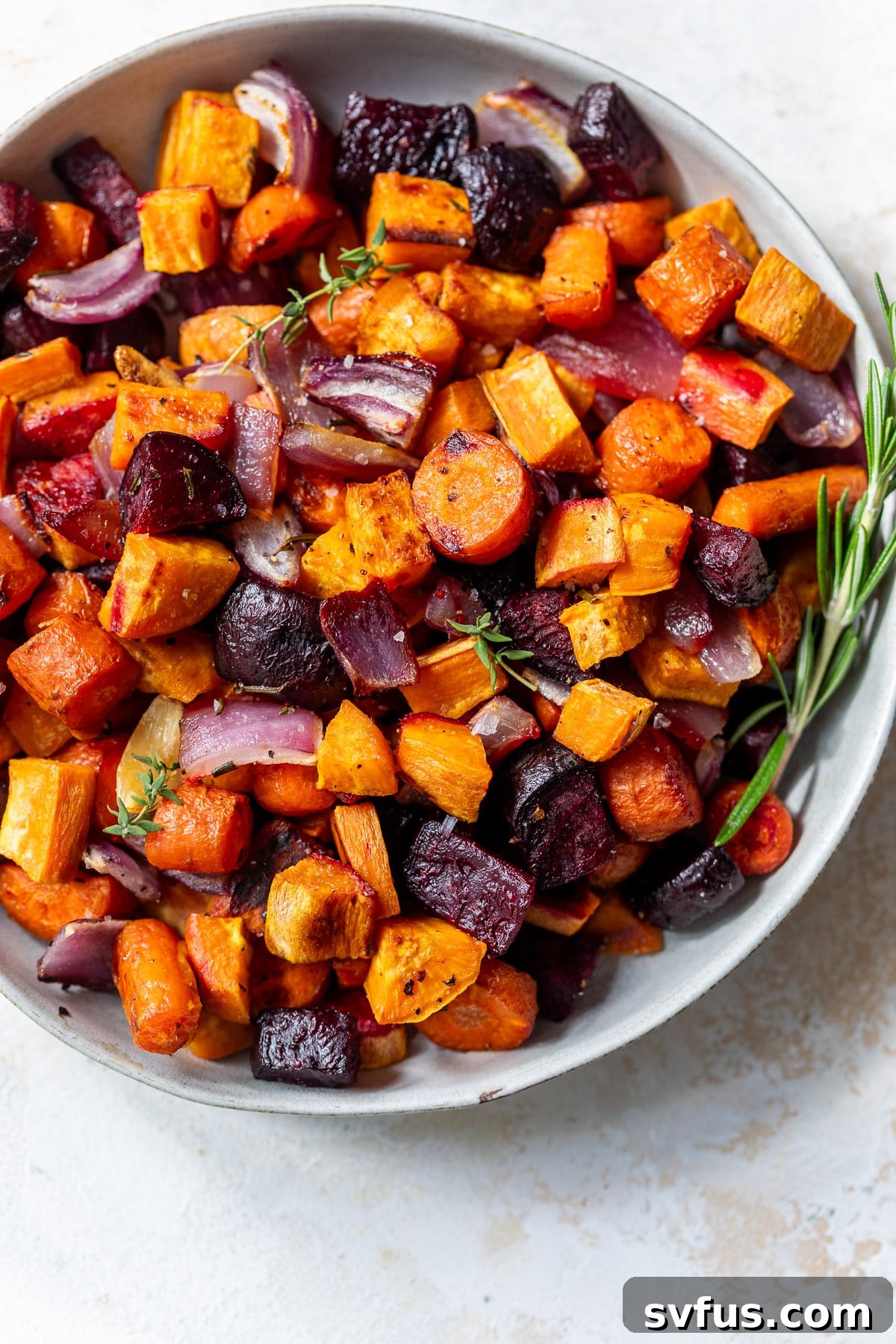
For this specific recipe, I’ve chosen a harmonious blend of sweet potatoes, vibrant carrots, subtly sharp red onion, and earthy beets. These are tossed simply with high-quality olive oil, fragrant fresh rosemary and thyme, and seasoned perfectly with salt and pepper. This combination ensures similar roasting times and a balanced flavor profile. But remember, this is merely a suggestion to get you started! The beauty of this dish lies in its adaptability. Feel free to substitute parsnips, rutabaga, turnips, or even various winter squashes, and adjust the herbs or spices to perfectly match your taste preferences.
From their appealing colors to their endless versatility and straightforward preparation, these roasted winter vegetables are a must-have for any cold-weather meal. Once you experience that first delicious bite, you’ll understand why they’ve become a constant in my kitchen, and why you won’t be able to stop making them either!
Key Ingredients for Roasted Root Vegetables
Crafting the perfect roasted root vegetables starts with selecting the right ingredients. Here’s a deeper look at the core components that make this dish so special:
- Assorted Root Vegetables: The stars of our show! For this recipe, I’ve carefully selected sweet potatoes, carrots, red onion, beets, and whole garlic cloves. This combination is chosen not only for its complementary flavors and vibrant colors but also because these particular vegetables are hearty and tend to roast beautifully in a similar timeframe. Sweet potatoes add a lovely sweetness and soft texture, carrots bring earthy notes and vibrant orange, red onion offers a mild pungency that mellows with roasting, and beets introduce a deep, earthy flavor and stunning color. Garlic infuses the entire dish with a rich aroma.
- Quality Olive Oil: Essential for achieving that desired golden-brown caramelization and delightful crisp texture. Coating the vegetables in olive oil helps transfer heat efficiently, encourages browning, and locks in moisture, ensuring they roast evenly and taste their absolute best. While you can technically make this recipe oil-free, the vegetables won’t develop the same depth of flavor or beautiful caramelized edges. Extra virgin olive oil also adds a lovely fruity note.
- Fresh Herbs and Seasonings: The flavor foundation for these roasted roots comes from a simple yet powerful blend. Fresh rosemary provides a wonderfully piney, aromatic touch that is classic with roasted vegetables, while fresh thyme offers a more subtle, earthy note. Coupled with essential salt and freshly ground black pepper, these seasonings elevate the natural flavors of the vegetables. Using fresh herbs is highly recommended for a more vibrant taste, though dried herbs can be substituted in a pinch (use about half the amount of fresh).
This list provides further clarification on a few of the ingredients. See the recipe card below for the full ingredient list and precise measurements.
Unlock the Flavor: Creative Variations for Your Roasted Vegetables
One of the greatest joys of roasting root vegetables is how adaptable the basic recipe is. Don’t hesitate to personalize this dish to suit your taste preferences or whatever ingredients you have on hand. Here are some inspiring variations:
- Expand Your Vegetable Medley: While sweet potatoes, carrots, onions, and beets are fantastic, the world of root vegetables is vast! Consider adding parsnips for their unique sweetness and subtle spiciness, rutabaga or turnips for a slightly bolder, peppery note, or celeriac for an earthy, nutty flavor. Even radishes, when roasted, lose their peppery bite and become wonderfully sweet. Butternut, delicata, or honeynut squash are technically fruits but roast beautifully alongside root vegetables, offering delightful sweetness and creamy textures. Remember to cut denser vegetables into slightly smaller pieces to ensure everything cooks evenly.
- Experiment with Seasoning Blends: Beyond rosemary and thyme, a sprinkle of different spices can dramatically change the profile of your dish. Try a pinch of smoked paprika for a hint of smokiness, cumin for an earthy warmth, or curry powder for an exotic twist. Pre-mixed blends like Herbes de Provence, Italian seasoning, Cajun seasoning, or a smoky chipotle blend can offer complex flavors with minimal effort. Don’t shy away from garlic powder or onion powder for an extra savory kick.
- Alternate Fresh Herbs: If rosemary and thyme aren’t your favorites, or you’re simply looking for something different, fresh sage leaves offer a robust, comforting aroma, oregano provides a Mediterranean flair, and tarragon delivers a delicate, anise-like flavor. Even a simple sprinkle of fresh parsley or dill after roasting can add a burst of freshness.
- Elevate with Gourmet Garnishes: Once your vegetables are hot out of the oven, a simple garnish can transform them into a truly show-stopping dish. Add a satisfying crunch with chopped nuts (almonds, walnuts, pecans) or seeds (pepitas, sunflower seeds). Crumbled feta or goat cheese offers a tangy, creamy counterpoint. A bright drizzle of fresh lemon juice or a sweet-tangy balsamic glaze adds acidity and depth. For a touch of sweetness, a swirl of maple syrup or honey is divine. And don’t forget my popular lemon yogurt sauce, which can be spooned over top for a refreshing creamy element.
Mastering the Art: How to Roast Root Vegetables
Achieving perfectly roasted root vegetables is simpler than you might think. Follow these straightforward steps for a delicious and hassle-free side dish:
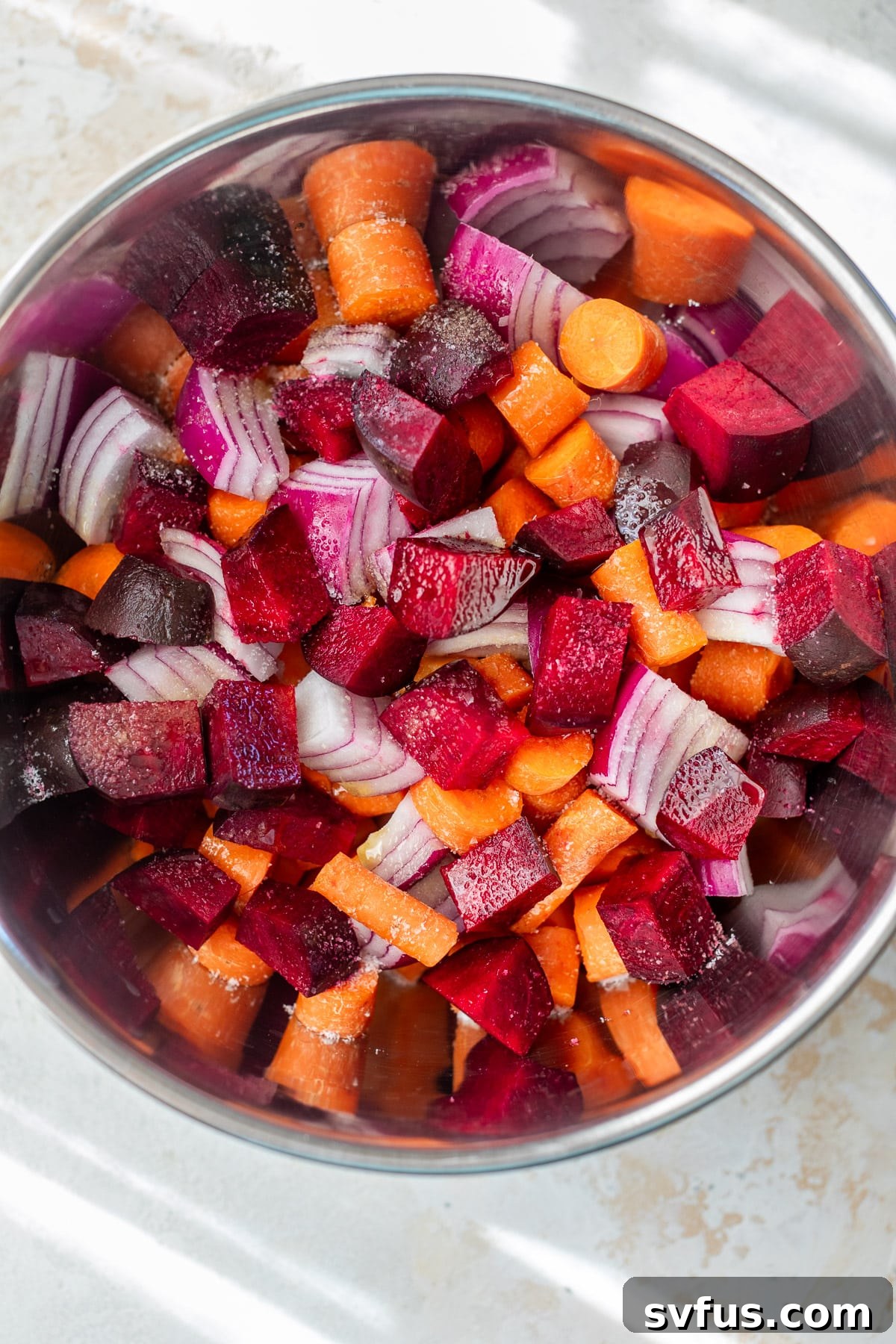
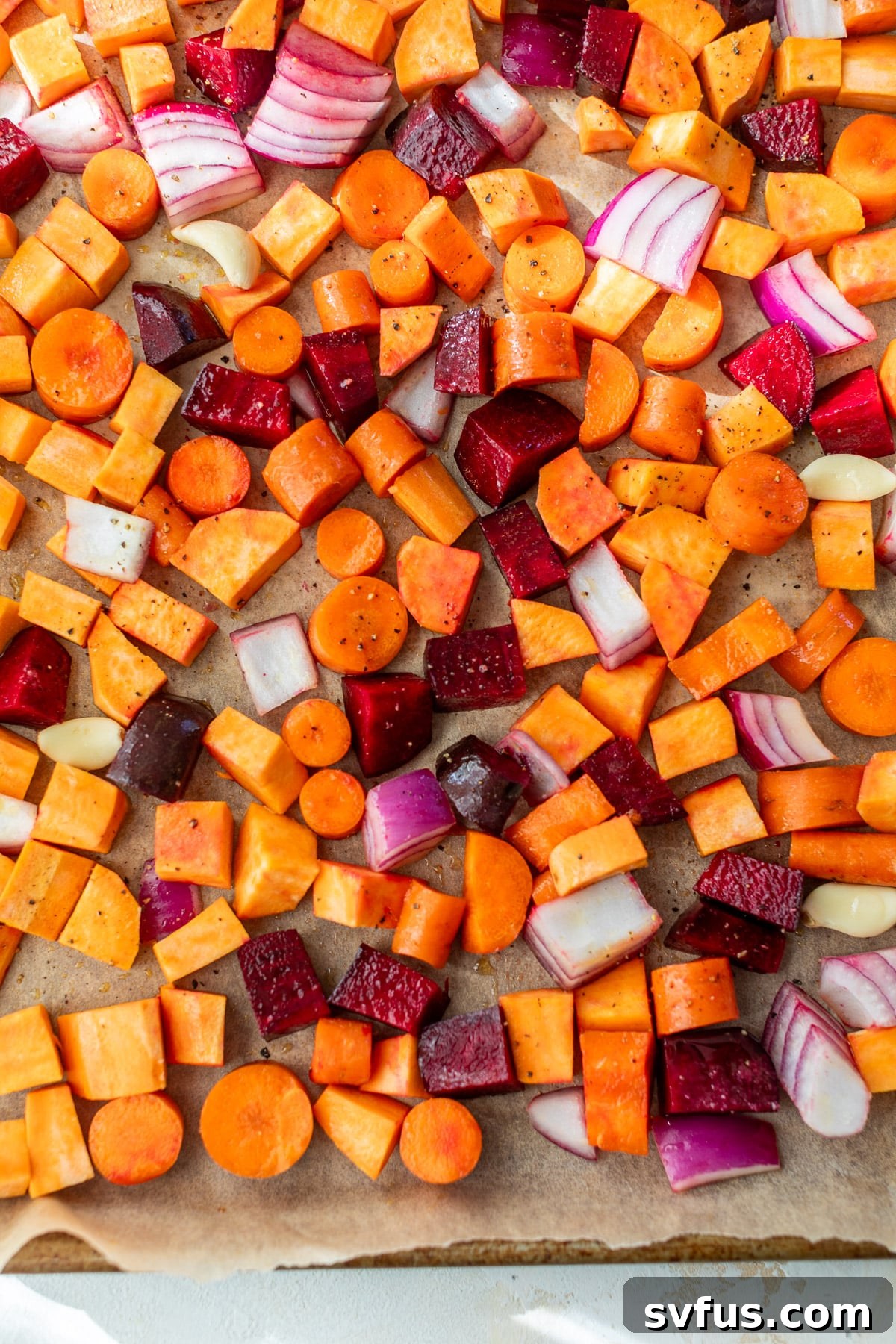
Step 1: Prepare and Coat Your Veggies. Begin by thoroughly washing all your root vegetables. Peel the sweet potatoes and carrots if desired (see our pro tip below for thoughts on peeling!), then dice them into roughly 1-inch pieces. Slice the carrots into sturdy coins or half-moons, chop the red onion into wedges, and dice the beets to match the size of the other vegetables. Keep the garlic cloves whole – they’ll soften and sweeten beautifully. Transfer all the prepared vegetables to a large mixing bowl. Drizzle generously with olive oil, sprinkle with salt and pepper, and toss thoroughly until every piece is lightly and evenly coated. This ensures consistent seasoning and browning.
Step 2: Spread and Initial Roast. Line a large baking sheet with parchment paper. This is crucial for preventing sticking and making cleanup incredibly easy. Spread the coated vegetables in a single layer across the prepared baking sheet. Ensure there’s enough space between each piece; crowding the pan will cause the vegetables to steam rather than roast, preventing those coveted crispy edges. If necessary, use two baking sheets. Place the sheet pan into your preheated oven and roast for an initial 25 minutes. During this time, the vegetables will begin to soften and develop some initial caramelization.
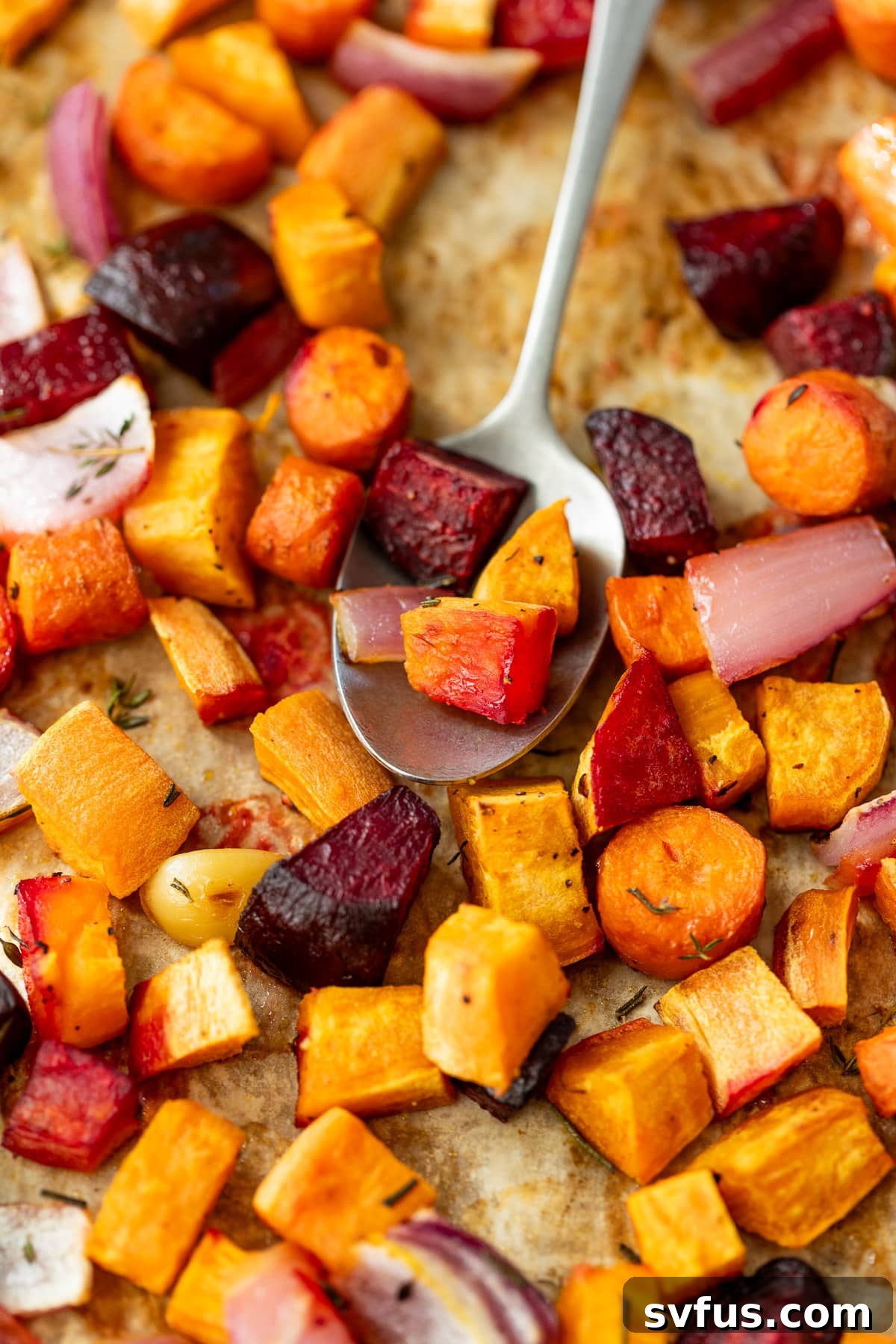
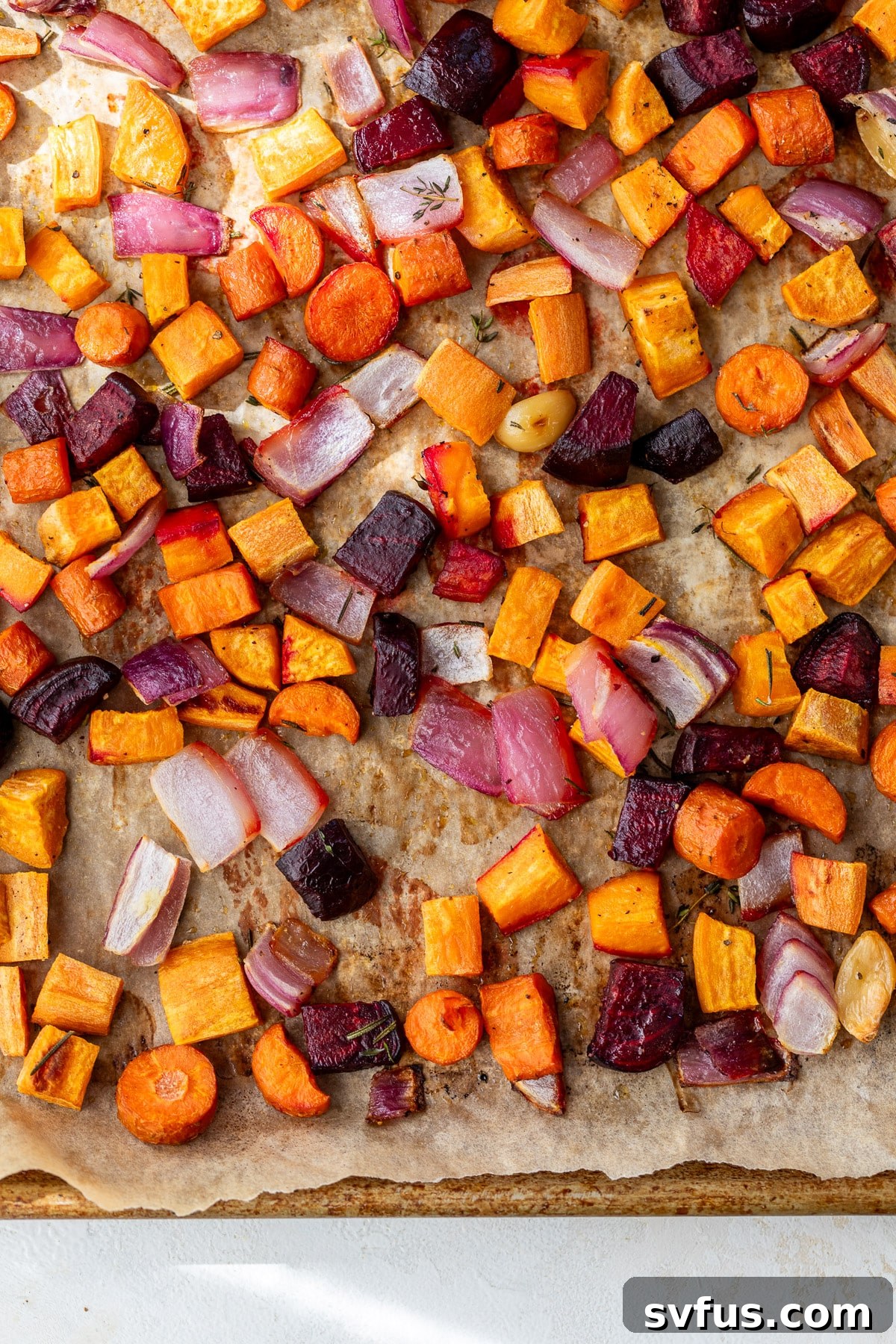
Step 3: Finish with Herbs and Final Roast. Carefully remove the baking sheet from the oven. At this point, sprinkle the fresh rosemary and thyme evenly over the vegetables. Give everything a good stir or toss directly on the pan to redistribute the vegetables and integrate the herbs. Return the pan to the oven and continue roasting for another 10-15 minutes, or until the vegetables are perfectly fork-tender throughout and have developed beautiful golden-brown, lightly crispy edges. The exact timing can vary slightly depending on your oven and the size of your vegetable pieces. Serve immediately while hot and savor the incredible flavors!
Pro Tips for Perfectly Roasted Root Vegetables
Achieving restaurant-quality roasted vegetables at home is easy with a few key techniques. Here are Erin’s best tips and tricks to ensure your root vegetables turn out perfectly every time:
- Avoid Overcrowding the Pan: This is arguably the most important rule for successful roasting. When you pile too many vegetables onto one baking sheet, they release moisture and steam each other instead of roasting. The result is often soggy instead of beautifully caramelized and crisp. If necessary, use two baking sheets and spread the vegetables in a single, uncrowded layer. This allows hot air to circulate freely around each piece, promoting even cooking and superior browning.
- Ensure Uniform Cutting: For even cooking, strive to cut all your vegetables into roughly similar-sized pieces. If some pieces are significantly smaller or larger, they will cook at different rates, leading to some being overcooked while others are still raw. For denser root vegetables like beets or parsnips, you might even cut them slightly smaller than softer ones like sweet potatoes to ensure they finish cooking at the same time.
- High Heat is Essential: Roasting at a high temperature (like 425°F as recommended) is key to caramelization. The intense heat causes the sugars in the vegetables to brown, creating complex flavors and a lovely crisp exterior without drying out the interior. Don’t be tempted to use a lower temperature unless specifically aiming for softer, less caramelized results.
- Use Parchment Paper: Lining your baking sheet with parchment paper is a game-changer. It prevents vegetables from sticking to the pan, ensures easier cleanup, and can contribute to better browning by providing a consistent, non-reactive surface.
- The “Fork-Tender” Test: Your vegetables are done roasting when they are easily pierced with a fork but still hold their shape. I like to do a quick “taste test check” around the 35-minute mark; if the veggies are sweet, have crisp-edged exteriors, and melt a little on your tongue, they’ve reached peak perfection.
My Pro Tip
To Peel or Not to Peel?
This is totally optional and often a matter of personal preference! The skins on many root vegetables, including sweet potatoes, carrots, and beets, become wonderfully crisp when roasted. Plus, they’re full of beneficial fiber and flavor. If you choose to leave the skins on, simply give your vegetables a good scrub under running water with a vegetable brush to remove any dirt or rough spots.
Oven-Roasted Vegetables FAQs
I’ve found that 425°F (220°C) is the sweet spot for most root vegetables. It’s hot enough to encourage excellent browning and caramelization on the exterior without drying out the interior, leaving them tender and flavorful. For softer, more tender veggies with less crispness, you can reduce the temperature to 400°F (200°C). If you’re aiming for an extra-crispy texture, try increasing the temperature to 450°F (230°C) during the last 5-10 minutes of roasting.
Generally, denser or high-starch root vegetables such as beets, turnips, rutabagas, and celeriac tend to take the longest to roast, often requiring around 40 to 45 minutes at 425°F (220°C). The key to ensuring they finish cooking at the same time as softer vegetables (like carrots or sweet potatoes) is to cut the denser varieties into slightly smaller pieces. You can also par-boil very dense vegetables for a few minutes before roasting to give them a head start.
Absolutely! Frozen root vegetables can be roasted successfully. The trick is to spread them in a single layer on a preheated baking sheet (this helps prevent them from sticking and getting soggy) and do not thaw them ahead of time. You may need to add an extra 10-15 minutes to the cooking time, and ensure they are well-spaced to allow moisture to evaporate and encourage crisping.
Soggy roasted vegetables are usually a result of one or a combination of factors: overcrowding the baking sheet (which causes steaming instead of roasting), insufficient oven temperature, or too much moisture on the vegetables before roasting. Always ensure vegetables are patted dry, spread in a single layer, and roasted at a high enough temperature.
For ultimate crispiness, several strategies help. First, ensure your vegetables are completely dry before tossing with oil. Second, preheat your empty baking sheet in the oven while it comes to temperature, then carefully add the oiled vegetables to the hot pan. This creates an immediate sear. Third, avoid overcrowding the pan. Finally, consider tossing your veggies with a very light dusting of cornstarch or arrowroot powder along with the oil; this can help create an extra-crisp exterior.
Storage & Reheating Your Roasted Veggies
Preparing these delicious roasted root vegetables can be even more convenient with proper storage and reheating techniques:
- Make Ahead Prep: You can certainly get a head start! Chop your raw vegetables (sweet potatoes, carrots, onions, and beets) and store them in separate resealable bags or airtight containers in the refrigerator for up to 24 hours before you plan to roast them. This is a great tip for holiday meal prep or busy weeknights.
- Refrigerator Storage: Any cooled leftover roasted vegetables should be transferred to an airtight container and can be safely refrigerated for up to 4 days. While they won’t be as crisp as fresh out of the oven, their flavor remains excellent.
- Best Reheating Methods: To bring back some of their original texture and deliciousness, the best way to reheat roasted veggies is in the oven or air fryer. Spread them in a single layer on a baking sheet or in the air fryer basket and reheat at 400°F (200°C) for 10 to 12 minutes, or until they are thoroughly hot and have regained some crispness. While a microwave will work for speed, it will unfortunately make the vegetables soggy and is not recommended for maintaining texture.
Explore More Roasted Vegetable Recipes
If you’ve enjoyed the simplicity and deliciousness of these roasted root vegetables, you’ll be thrilled to discover more ways to bring out the best in other vegetables through roasting. Roasting is a versatile cooking method that elevates the natural flavors of almost any vegetable, creating tender interiors and delightfully crispy exteriors. Expand your culinary repertoire with these other fantastic roasted vegetable recipes that are perfect as sides or even light meals:
GFGluten Free
Roasted Broccolini
VGVegetarian
GFGluten Free
DFDairy Free
PPaleo
30Whole30
Curry Roasted Cauliflower
VGVegetarian
GFGluten Free
DFDairy Free
PPaleo
30Whole30
Skillet Roasted Fingerling Potatoes
VGVegetarian
GFGluten Free
DFDairy Free
PPaleo
30Whole30
Roasted Cabbage Wedges
If you made this recipe, be sure to leave a comment and star rating below. Thanks!
Roasted Root Vegetables
Erin Alvarez
4
15 minutes
40 minutes
55 minutes
Ingredients
-
▢ 2
sweet potato,
peeled and diced -
▢ 4
carrots,
sliced into coins -
▢ ½
large red onion,
chopped -
▢ 2
red or golden beets,
scrubbed and diced -
▢ 5
whole garlic cloves -
▢ 2
tbsp
olive oil -
▢ 1
tsp
salt -
▢ ¼
tsp
black pepper -
▢ 2
tsp
Rosemary -
▢ 1
tsp
Thyme
Instructions
-
Preheat oven to 425°F (220°C) and line a large baking sheet with parchment paper; set aside.
-
Add the sweet potato, carrots, onion, beets, and garlic to a large bowl. Then, drizzle with olive oil and sprinkle with salt and black pepper; toss thoroughly to combine and coat all the vegetables evenly.
-
Transfer the seasoned vegetables to the prepared baking sheet, spreading them into a single layer. Ensure there is enough space between the vegetables to prevent steaming. Place in the preheated oven and roast for 25 minutes.
-
Remove the baking sheet from the oven. Sprinkle the fresh rosemary and thyme over the vegetables, then give everything a good stir or toss. Return the pan to the oven and continue roasting for an additional 10-15 minutes, or until the vegetables are fork-tender and lightly golden around the edges. Serve hot and enjoy!
Notes
Nutrition