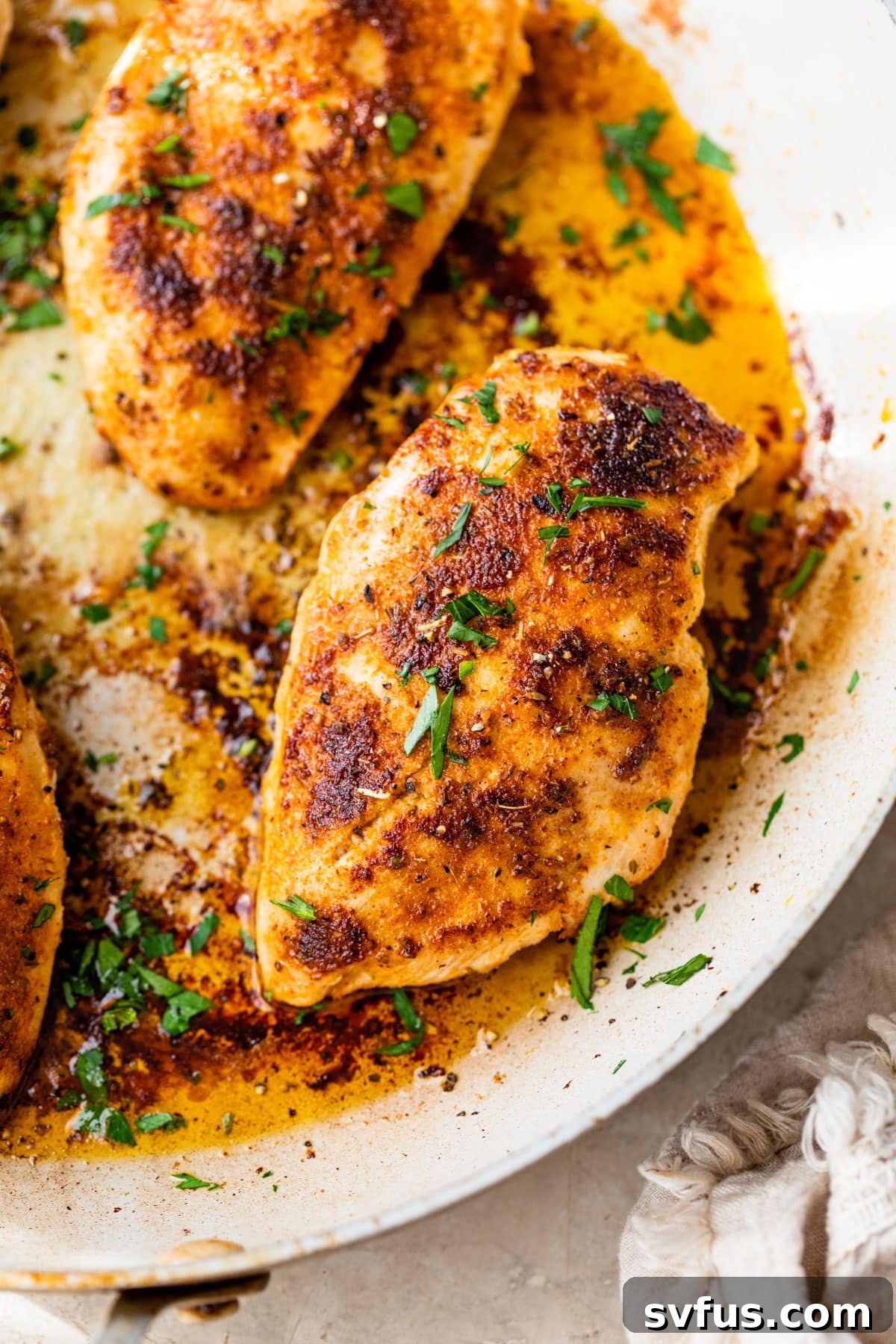
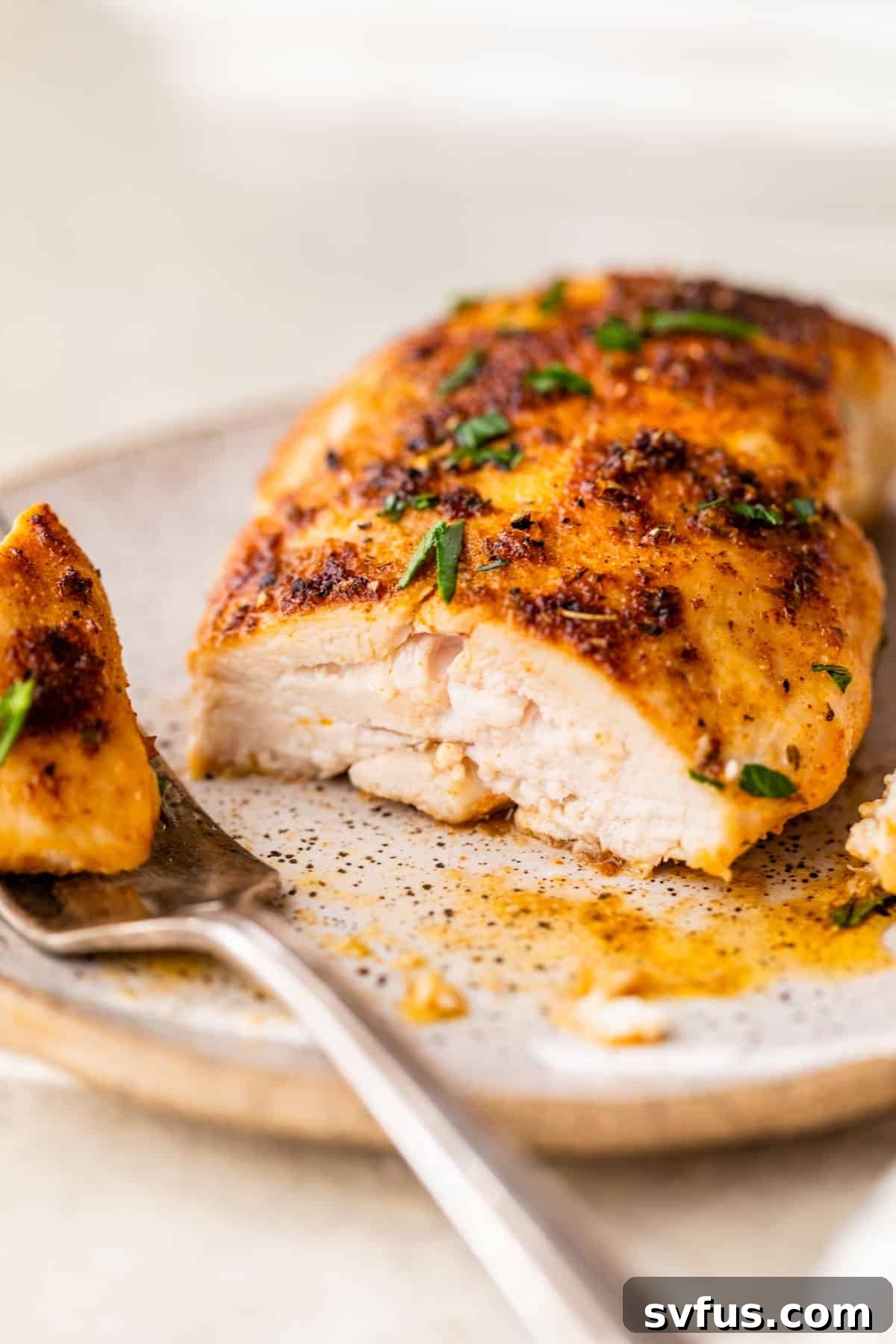
Say goodbye to bland, dry chicken and hello to culinary perfection with this incredible Pan-Seared Chicken Breast recipe! Master the art of cooking impeccably juicy, flavorful chicken on your stovetop every single time. This straightforward method focuses on simple seasoning and a hot skillet, delivering a quick, healthy, and utterly delicious meal that will become a staple in your kitchen.
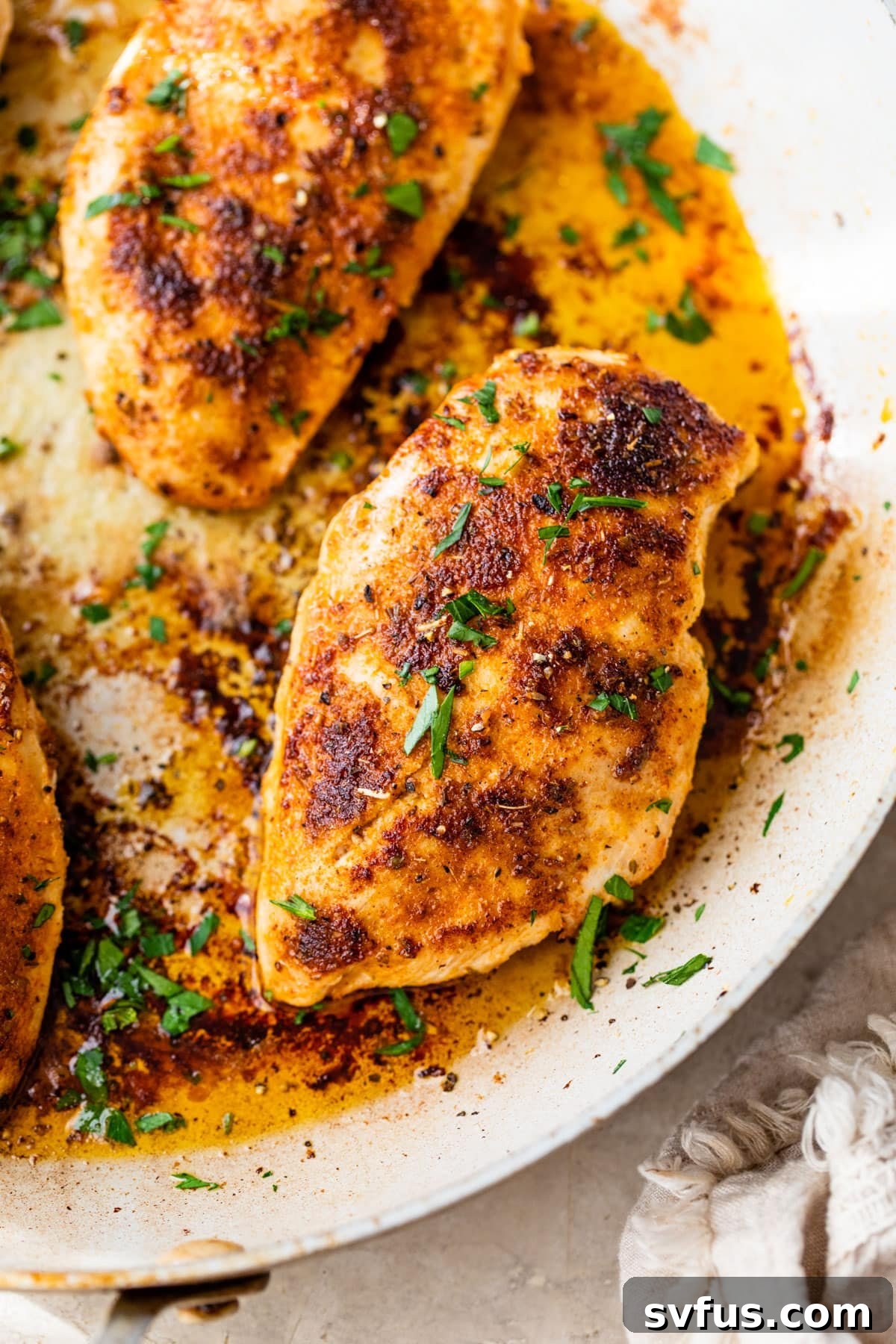
Cooking chicken breasts can often feel like a tightrope walk between undercooked and overcooked, dry and rubbery. However, with the right technique, you can consistently achieve tender, succulent results. While delicious sauces, like those in peanut chicken skillet and sun-dried tomato chicken recipes, are fantastic for infusing flavor and moisture, sometimes all you need is a pure, unadulterated chicken experience. This pan-searing method is designed to maximize natural juices and develop an irresistible golden-brown crust, delivering a protein-packed dish bursting with flavor and moisture.
This easy-to-follow guide will walk you through the precise steps to achieve the perfect sear. We’ll focus on preparing boneless, skinless chicken breasts, lightly seasoned without any breading, then expertly pan-searing them until they are beautifully golden and crisp on the outside, and incredibly tender within. It’s a fast, efficient, and incredibly satisfying technique, making it your go-to for quick lunches, satisfying weeknight dinners, or efficient meal prep sessions throughout the week.
The beauty of perfectly pan-fried chicken lies in its versatility. It effortlessly elevates any green salad, adds substantial protein to a vibrant grain bowl, or stands proudly as a quick, flavorful main course. Pair it with your favorite healthy sides, and you have a complete, wholesome, and delightfully simple meal that caters to busy schedules without compromising on taste or nutrition.
Why Pan-Searing is the Best Method for Juicy Chicken Breast
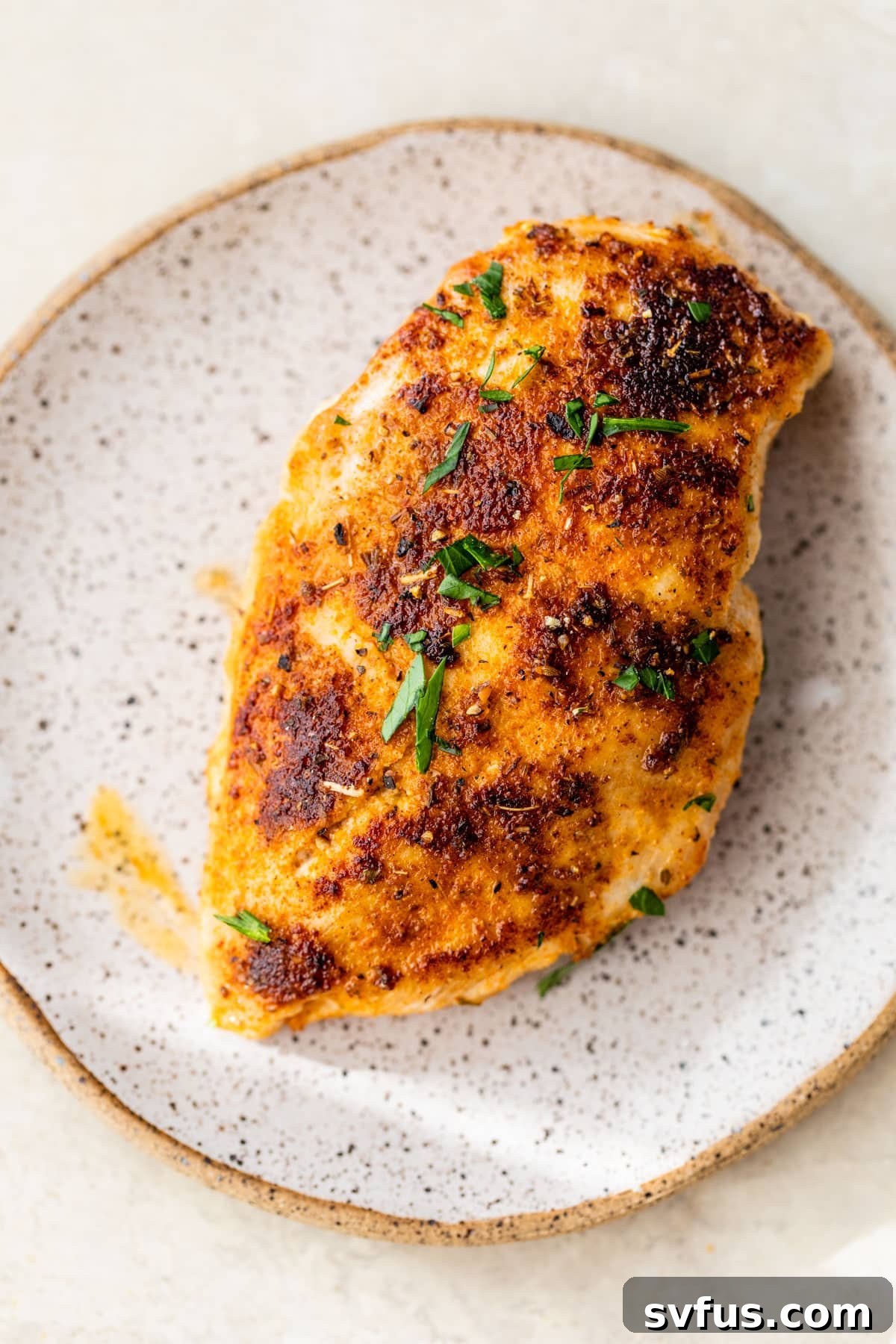
Pan-searing is arguably one of the most effective and rewarding ways to cook chicken breasts. Unlike baking or boiling, which can sometimes lead to uneven cooking or a less appealing texture, pan-searing offers direct, high heat contact. This creates the Maillard reaction – the scientific process responsible for the golden-brown crust and rich, savory flavors that make seared chicken so incredibly delicious. The quick cooking time also locks in moisture, preventing the chicken from drying out, a common pitfall when preparing lean cuts like chicken breast.
This method allows for precise control over the cooking process, letting you achieve that perfect balance of crisp exterior and tender interior. It’s also incredibly efficient, transforming raw chicken into a meal-ready protein in mere minutes, which is ideal for busy weeknights. Furthermore, the simplicity of the technique means fewer dishes and less fuss, allowing the natural flavor of the chicken and carefully selected seasonings to shine through.
Recipe Features & Benefits
- Effortless & Speedy: This stovetop method is remarkably quick and convenient, delivering perfectly crisp and juicy chicken to your table in under 15 minutes of active cooking time. Ideal for busy evenings when time is of the essence.
- Unmatched Versatility: The resulting chicken is a blank canvas for culinary creativity. Use it as a lean protein boost in everything from fresh green salads and hearty grain bowls to wraps, sandwiches, pasta dishes, or as a standalone main.
- Minimal Ingredients: You won’t need a lengthy shopping list for this recipe. It focuses on fresh chicken, essential spices, and a few pantry staples you likely already have on hand, making it both accessible and budget-friendly.
- Consistently Juicy Results: With a few key techniques, this recipe guarantees moist, tender chicken every time, eradicating the common problem of dry, chewy chicken breast.
- Flavorful Crust: The high heat searing creates a beautiful, savory, golden-brown crust that adds incredible depth and texture to each bite.
Ingredient Notes & Selection Tips
Understanding your ingredients is key to achieving outstanding results. Here’s a closer look at what you’ll need and tips for selection:
- Chicken Breast: Opt for boneless, skinless chicken breasts that are similar in size and thickness to ensure even cooking. If your breasts are particularly large or thick, slicing them in half horizontally (butterflying) or pounding them to an even 1-inch thickness will significantly improve cooking consistency and speed. Pre-pounded cutlets are also an excellent time-saving option if available. Fresh, high-quality chicken will always yield the best flavor and texture.
- Olive Oil: A good quality extra virgin olive oil works wonderfully here, providing flavor and a high enough smoke point for searing. Alternatively, avocado oil is another excellent choice due to its very high smoke point, making it ideal for cooking over medium-high heat without burning.
- Spices and Seasonings: The carefully balanced blend of garlic powder, smoked paprika, onion powder, dried oregano, salt, black pepper, and a pinch of cayenne pepper is what gives this chicken its succulent, savory depth with just the right amount of kick. Smoked paprika adds a beautiful color and a smoky undertone that elevates the flavor profile. This versatile seasoning blend is so good, you might find yourself tripling the batch to keep on hand for other proteins like air fryer pork chops and air fryer chicken thighs.
- Butter: Finishing the chicken with a knob of butter adds richness, enhances moisture, and contributes to that beautiful golden-brown crust. As the butter melts, it bastes the chicken, infusing it with an irresistible buttery flavor.
Step-by-Step Instructions for Perfectly Seared Chicken
Follow these detailed steps to achieve perfectly juicy and flavorful pan-seared chicken breasts every time:
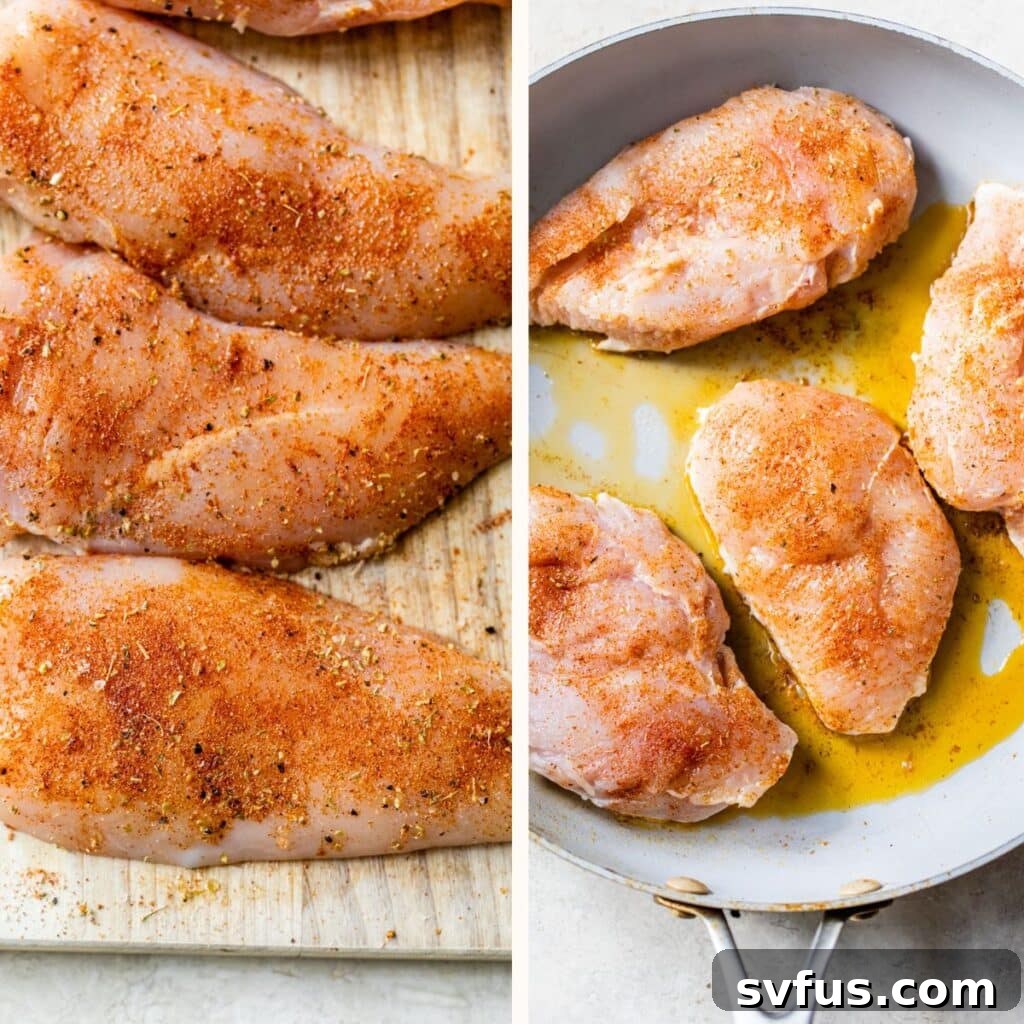
- Prepare the Chicken: Begin by prepping your chicken breasts. If you have large, thick breasts, slice them horizontally through the middle to create two thinner, more even cutlets. This ensures quicker and more consistent cooking. Alternatively, cover the chicken with plastic wrap and pound it to an even 1-inch thickness using a meat mallet. Once prepared, it’s crucial to pat each chicken piece thoroughly dry with paper towels. Removing excess moisture is vital for achieving a proper sear and a crispy crust.
- Season Generously: In a small bowl, combine the garlic powder, smoked paprika, onion powder, dried oregano, salt, black pepper, and cayenne pepper. Lightly drizzle or brush 1 tablespoon of olive oil over the chicken breasts, then generously sprinkle the prepared spice mixture over both sides. Use your hands to gently rub the seasoning into the chicken, ensuring an even coating for maximum flavor.
- Pan-Fry to Golden Perfection: Heat the remaining 2 tablespoons of olive oil in a large, heavy-bottomed skillet (cast iron works exceptionally well) over medium-high heat. The pan should be hot but not smoking. Carefully place the seasoned chicken breasts into the hot skillet, ensuring not to overcrowd the pan (cook in batches if necessary). Let them cook undisturbed for about 5-7 minutes, or until a beautiful browned, golden crust forms. Resist the urge to move or flip them too soon; the chicken will release easily when it’s ready. Flip the chicken, reduce the heat to medium, and continue cooking for another 3-6 minutes, or until the internal temperature reaches 160-163°F (71-73°C) with a meat thermometer.
- Finish with Butter and Rest: Once the chicken is cooked through, add the butter to the skillet. The residual heat will melt the butter, creating a flavorful pan sauce. Immediately remove the skillet from the heat. Allow the chicken breasts to absorb the buttery goodness in the warm pan for a minute or two before transferring them to a clean cutting board. Let them rest for at least 5-10 minutes. This resting period is critical, allowing the juices to redistribute throughout the meat, resulting in incredibly tender and moist chicken.
- Slice and Serve: After resting, slice the chicken breasts against the grain for maximum tenderness (or serve them whole if preferred). Drizzle with any pan juices from the skillet or cutting board, and enjoy your perfectly pan-seared chicken immediately!
Expert Tips and FAQs for the Best Pan-Seared Chicken
- Pound for Evenness: For a consistently browned sear and even cooking, pound your chicken breasts to an even 1-inch thickness. Place the chicken between two sheets of plastic wrap and use the flat side of a meat mallet or a heavy rolling pin. This technique ensures that all parts of the chicken cook at the same rate.
- Crispy Coating Variation: For an extra crispy fried chicken texture, lightly dredge the seasoned breasts in a thin coating of all-purpose flour mixed with a bit more of your spice blend. Rice flour, almond flour, potato starch, or a gluten-free flour blend will work just as effectively for a gluten-free option.
- Resist the Urge to Fiddle: Once the chicken is in the hot pan, avoid moving it around or flipping it too soon. Allow it to develop a crust. If the chicken doesn’t effortlessly release from the pan when you try to flip it, it’s not ready. Give it another minute or two.
- Maintain an Uncovered Skillet: Keep your skillet uncovered during searing. Covering the pan traps steam, which will cause the chicken to steam rather than sear, preventing that desirable crispy crust.
- Don’t Crowd the Pan: Overcrowding lowers the pan’s temperature and releases moisture, leading to steamed rather than seared chicken. Cook in batches if necessary, ensuring each piece has enough space.
- Use a Hot Skillet: The key to a great sear is a properly preheated pan. Heat the oil until it shimmers but isn’t smoking. A few drops of water should sizzle immediately upon contact.
- The Importance of Resting: Allowing the chicken to rest for 5-10 minutes after cooking is non-negotiable. This allows the muscle fibers to relax and reabsorb the juices, ensuring every bite is tender and moist.
How long do chicken breasts take to cook on the stove?
The cooking time for chicken breasts on the stove depends significantly on their thickness and the heat of your pan. For pieces cut to approximately 1-inch thick, you can expect them to cook for about 5-7 minutes per side. Thicker chicken breasts will naturally require a longer cooking time, possibly closer to 7-10 minutes per side. Always rely on an internal temperature reading rather than solely on visual cues.
How do I know when they’re done cooking?
The most accurate and safest way to determine if a chicken breast is fully cooked is by using an instant-read meat thermometer. Insert the thermometer into the thickest part of the breast. Poultry is safe to eat when its internal temperature reaches 165ºF (74ºC). However, for optimal juiciness, I recommend removing the chicken from the skillet when its internal temperature reaches between 160ºF and 163ºF (71-73ºC). The temperature will continue to rise a few degrees as the meat rests (this is called carryover cooking), ensuring it reaches the safe temperature while remaining incredibly moist.
What else can you use to season chicken breasts?
The beauty of chicken breast is its adaptability to various flavors. While salt and pepper are fundamental, you can endlessly customize your seasoning. Here are some popular blends to inspire your next culinary creation:
- Lemon Pepper: A bright and zesty blend, perfect for a fresh, light flavor.
- Italian Seasoning: Aromatic herbs like basil, oregano, rosemary, and thyme for a Mediterranean touch.
- Cajun Seasoning: Bold and spicy, featuring paprika, garlic powder, onion powder, and cayenne for a kick.
- Herbes de Provence: A fragrant French blend, often including lavender, savory, thyme, and rosemary.
- Dry BBQ Rub: A sweet and smoky combination, great for a barbecue-inspired flavor profile.
- Blackened Seasoning: A robust, smoky, and spicy blend designed to create a dark, flavorful crust.
- Mediterranean Seasoning: Often includes oregano, basil, garlic, and sometimes sumac or mint for a fresh, tangy taste.
What sauces go with pan-seared chicken?
If you prefer a wetter, saucier dish, pan-seared chicken is an excellent base for a wide array of sauces. For best results, add your chosen sauce to the skillet 2-3 minutes before the chicken is fully cooked, allowing it to warm through and coat the chicken beautifully. Some fantastic options include:
- Barbecue Sauce: For a sweet and tangy, classic American flavor.
- Cream of Mushroom Soup: Creates a rich, umami-packed, comforting sauce.
- Teriyaki Sauce: A sweet and savory Japanese-inspired glaze.
- Thai Peanut Sauce: Nutty, sweet, spicy, and incredibly flavorful.
- Healthy Alfredo Sauce: Creamy, garlicky, and satisfying without being overly heavy.
- Buffalo Sauce: For a spicy, tangy kick that pairs perfectly with blue cheese.
- Mango Marinade: A sweet and fruity option, excellent for a tropical twist.
- Jerk Marinade: Bold, spicy, and aromatic, bringing a taste of the Caribbean.
How do you serve pan-seared chicken?
The versatility of pan-seared chicken makes it a perfect component for countless healthy meals or a satisfying main protein. Here are some inspiring serving suggestions to round out your meal:
- Salads and Bowls: Slice the tender chicken and serve it over a classic Caesar or garden salad, or use it to provide a substantial protein boost to a nourishing winter kale salad or a vibrant autumn harvest bowl. It also makes a fantastic addition to power bowls with roasted vegetables and grains.
- Veggies: You can never go wrong pairing chicken with a medley of fresh or roasted vegetables. Delicious options include crisp air fryer green beans, tender instant pot carrots, elegant sautéed asparagus, hearty sautéed leafy greens, or savory fried Brussels sprouts.
- Potatoes: For a more comforting meal, serve your chicken with a satisfying side of fluffy roasted red potatoes, creamy mashed red potatoes, or naturally sweet and savory mashed sweet potatoes.
- Grains: Wholesome grains provide an excellent foundation. Consider pairing with fluffy bone broth rice, flavorful caramelized onion quinoa, or a simple side of couscous or farro.
Storage and Reheating Tips
Proper storage and reheating are crucial for enjoying your pan-seared chicken without compromising its texture or flavor.
- Refrigerator: While pan-seared chicken breasts are undoubtedly at their juiciest and most flavorful when enjoyed fresh, leftovers can be stored in an airtight container in the refrigerator for 2 to 3 days. Ensure the chicken has cooled completely before storing to prevent condensation.
- Freezer: For longer storage, allow the cooked chicken breasts to cool completely. Then, place them in a freezer-safe bag or an airtight container, removing as much air as possible to prevent freezer burn. They can be frozen for 2 to 3 months. When ready to use, thaw the chicken overnight in the refrigerator before reheating.
- Reheating: The trick to reheating chicken without drying it out is gentle, moist heat. To achieve this, warm the chicken with a splash of chicken broth or water in a covered hot skillet over low to medium heat, or in a covered baking dish in a 300ºF (150ºC) oven. Both techniques create a steamy environment that gently warms the chicken through, helping it retain its precious moisture and preventing it from becoming tough. Avoid high heat or microwave reheating if possible, as these methods can quickly dry out chicken breast.
More Stovetop Chicken Inspiration
If you’ve enjoyed mastering the art of pan-seared chicken breast, you’ll love exploring these other fantastic stovetop chicken recipes:
- Pan-Seared Chicken Thighs
- Pan-Fried Chicken Tenders
- Blackened Chicken
If you tried this recipe and loved it, please consider leaving a comment and a star rating below. Your feedback helps others discover delicious meals!
Pan-Seared Chicken Breast
Print Recipe
Say goodbye to dry chicken because this Pan-Seared Chicken Breast recipe makes perfectly juicy chicken on the stovetop every time. The chicken is simply seasoned and cooked in a hot skillet, making it a quick and flavorful recipe.
Video
Ingredients
- 2 large chicken breasts, sliced in half lengthways; or use 4 small breasts
- 3 tbsp olive oil, divided
- ¾ tsp garlic powder
- ¾ tsp smoked paprika
- ¾ tsp onion powder
- ¾ tsp oregano
- ¾ tsp salt
- ¼ tsp black pepper
- ¼ tsp cayenne
- 2 tbsp butter
Instructions
- If your chicken breasts are larger, slice them in half to create 4 thinner chicken breasts, then pat them dry with a paper towel. Brush 1 tablespoon of olive oil over the chicken.
- In a small bowl, stir all of the seasonings together. Use your hands to sprinkle the spice mixture over the chicken, coating all sides.
- Pour the remaining olive oil in a large, deep skillet or a cast iron skillet and heat it over medium-high heat. Once hot, add the chicken smooth side down and cook the chicken for 5 minutes. Use tongs to flip the chicken over, then reduce the heat to medium and cook the chicken for 2-5 minutes. NOTE: cook times vary depending on thickness of the chicken; always use a meat thermometer to confirm the internal temperature.
- Add the butter to the skillet, then remove the skillet from the heat.
- Let the chicken rest on a cutting board for 5 minutes before slicing. Enjoy!
Notes
*Calories are per serving and are an estimation.
*For extra crispy chicken, add a little bit of flour to the seasoning mixture.
*Storage: Store chicken in a sealed container in the refrigerator for up to 3 days.
*To reheat chicken without drying it out, warm it with a bit of chicken broth in a covered hot skillet or a covered baking dish in a 300ºF oven. Both techniques gently steam the chicken as it reheats to help it stay moist.
Nutrition
Carbohydrates: 1g |
Protein: 24g |
Fat: 19g |
Saturated Fat: 6g |
Polyunsaturated Fat: 2g |
Monounsaturated Fat: 10g |
Trans Fat: 0.2g |
Cholesterol: 87mg |
Sodium: 613mg |
Potassium: 448mg |
Fiber: 0.5g |
Sugar: 0.1g |
Vitamin A: 453IU |
Vitamin C: 2mg |
Calcium: 17mg |
Iron: 1mg
Leave a comment and star rating below!