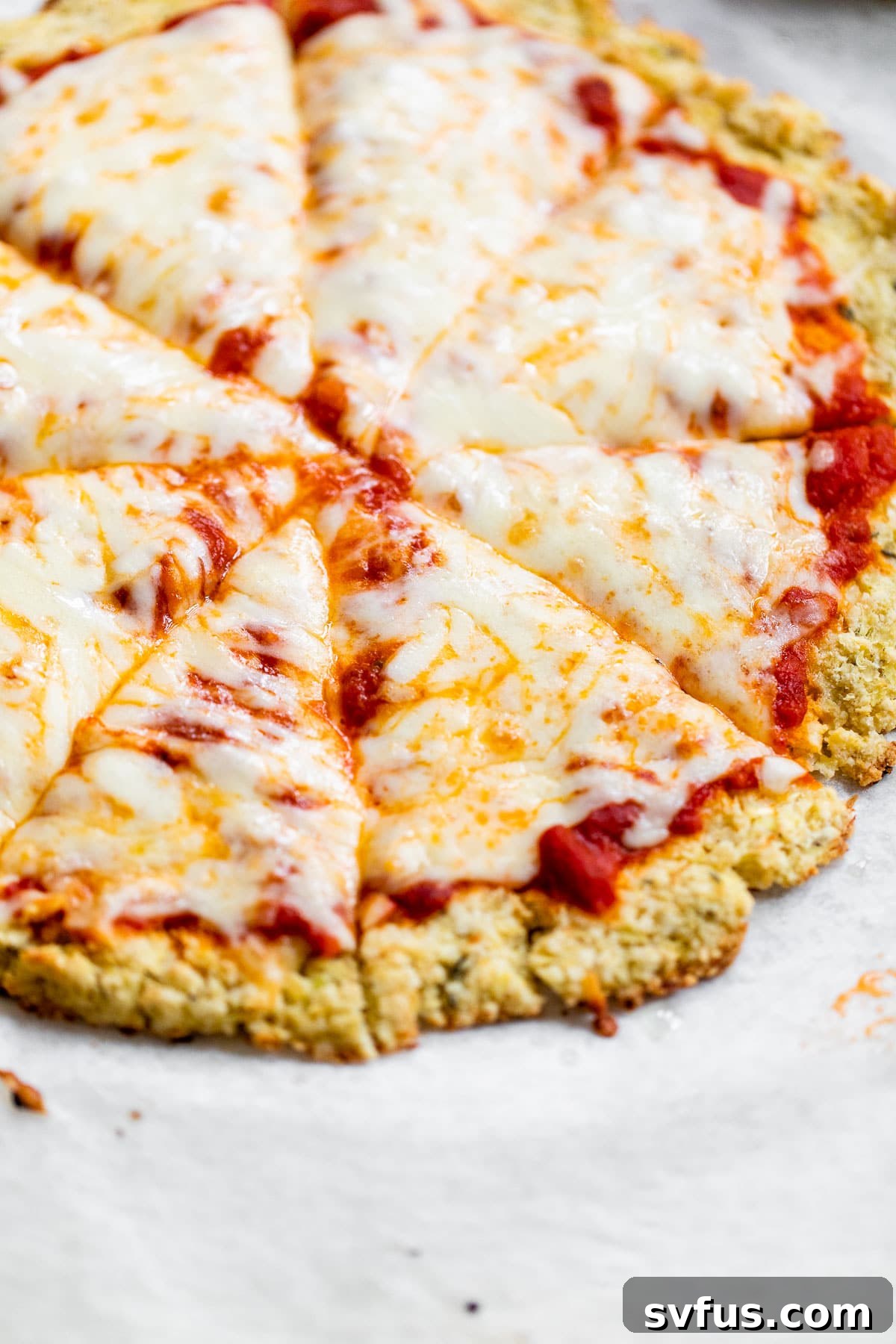
Welcome to the ultimate guide for creating a Cauliflower Pizza Crust that will revolutionize your approach to healthy eating! If you’re yearning for a pizza night without the guilt, the bloat, or the traditional carbs, you’ve found your perfect match. This recipe delivers a consistently crispy, incredibly flavorful, and truly satisfying crust that remarkably holds together, making gluten-free, low-carb, and Paleo pizza dreams a delicious reality. Forget everything you thought you knew about alternative crusts; this one is a game-changer.
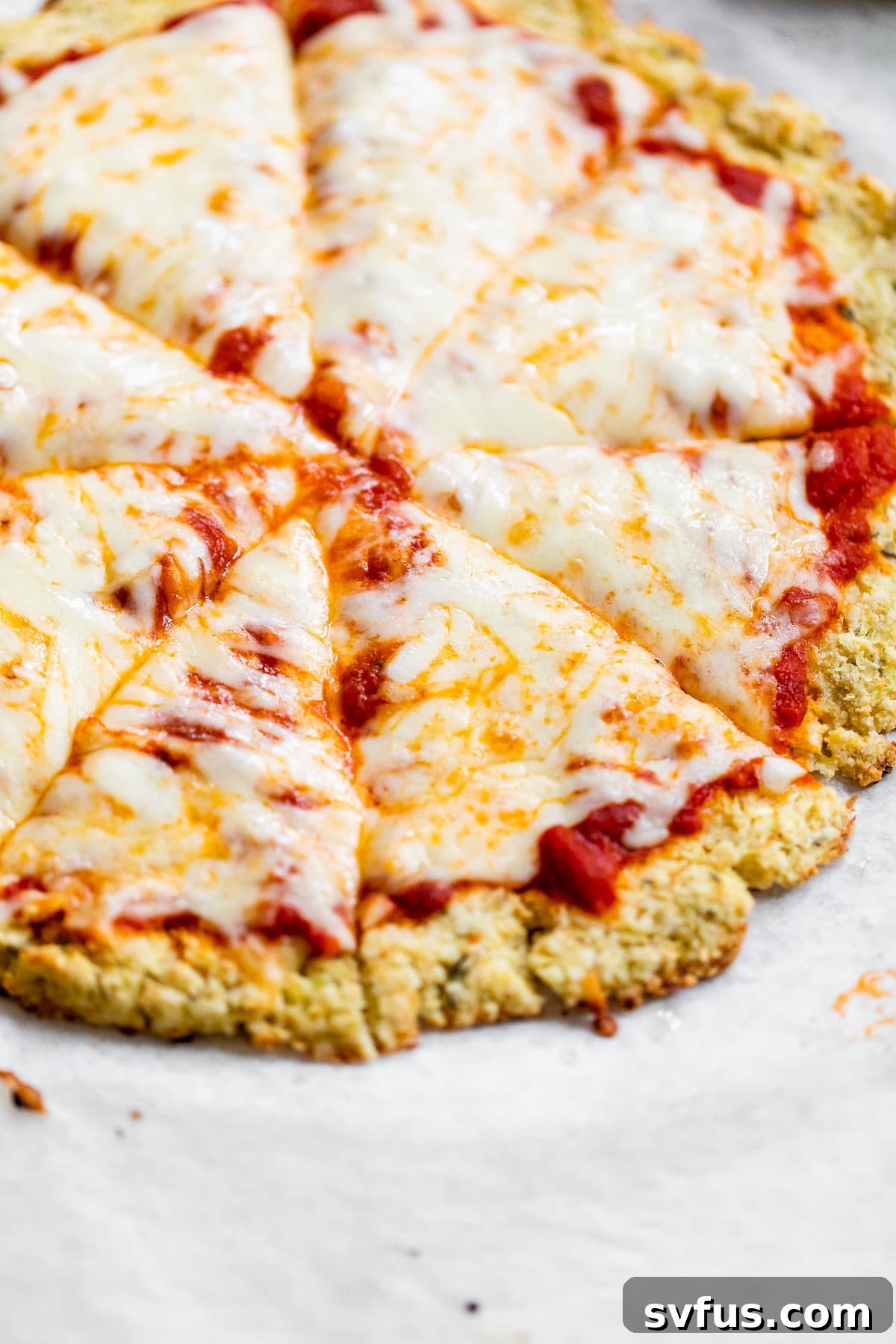
When the concept of “cauliflower pizza crust” first emerged, it was met with skepticism by many, including myself. The idea of transforming a humble vegetable into a sturdy pizza base seemed almost too good to be true. However, having personally experienced the delightful outcome, I can confidently say that this crust defies expectations. It’s not just “good for a gluten-free option”; it’s genuinely delicious. Unlike traditional wheat-based crusts that can leave you feeling heavy and overly full, this cauliflower alternative offers a lighter, more energetic feeling after your meal, allowing you to indulge without the usual post-pizza sluggishness.
Originally developed as a foundational element for my Whole30 pizza recipe, this cauliflower crust quickly earned its own spotlight. It proved to be so versatile and popular that it deserved a dedicated guide. This recipe focuses purely on crafting the perfect crust, giving you the freedom to customize your pizza with any toppings your heart desires. Best of all, this rendition is crafted without cheese in the crust itself, making it naturally gluten-free, dairy-free, and perfectly compliant with Paleo dietary guidelines. You’re in control of your pizza experience, from the base to the very last topping!
Why Choose Cauliflower Pizza Crust? Unlocking Its Incredible Benefits
Beyond being a fantastic gluten-free and low-carb option, cauliflower pizza crust offers a myriad of benefits that make it an exceptional choice for anyone looking to eat healthier without sacrificing flavor or enjoyment. Here’s a deeper look into why this veggie-packed crust deserves a permanent spot in your recipe rotation:
- Nutrient-Rich Foundation: Cauliflower is a powerhouse of essential vitamins and minerals, including Vitamin C, Vitamin K, folate, and potassium. By making it your pizza base, you’re boosting your meal’s nutritional profile significantly.
- Digestive Comfort: For those sensitive to gluten or heavy starches, traditional pizza crusts can lead to discomfort. This cauliflower crust is gentle on the digestive system, allowing you to enjoy pizza without the usual post-meal bloat or heaviness.
- Low in Calories and Carbs: A major draw for many, this crust is substantially lower in carbohydrates and calories compared to typical pizza dough. It’s an ideal choice for ketogenic diets, weight management, or simply reducing your overall carb intake.
- Surprisingly Flavorful: Far from tasting bland or solely like cauliflower, this crust is seasoned to perfection, offering a savory base that complements a wide array of toppings. The goal is a delicious crust, not just a substitute.
- Exceptional Texture: The method ensures a crispy exterior that contrasts beautifully with a tender interior. This isn’t a floppy crust; it’s designed to hold its own, allowing you to pick up slices with confidence.
- Dietary Inclusivity: Naturally gluten-free and dairy-free (when made without added cheese), this crust caters to various dietary restrictions and preferences, making pizza accessible to more people.
- Versatility for Meal Prep: This crust can be pre-baked and stored, making future pizza nights a breeze. It’s perfect for meal prepping healthy bases throughout the week.
Embracing cauliflower pizza crust means embracing a healthier, more inclusive, and equally delicious way to enjoy one of the world’s favorite foods. It’s an innovative solution that proves healthy eating doesn’t have to be boring or restrictive.
Essential Ingredients for the Perfect Crust
Crafting a superior cauliflower pizza crust starts with understanding the role of each ingredient. While the list is simple, each component is crucial for achieving the desired texture, flavor, and stability. Let’s explore the key players:
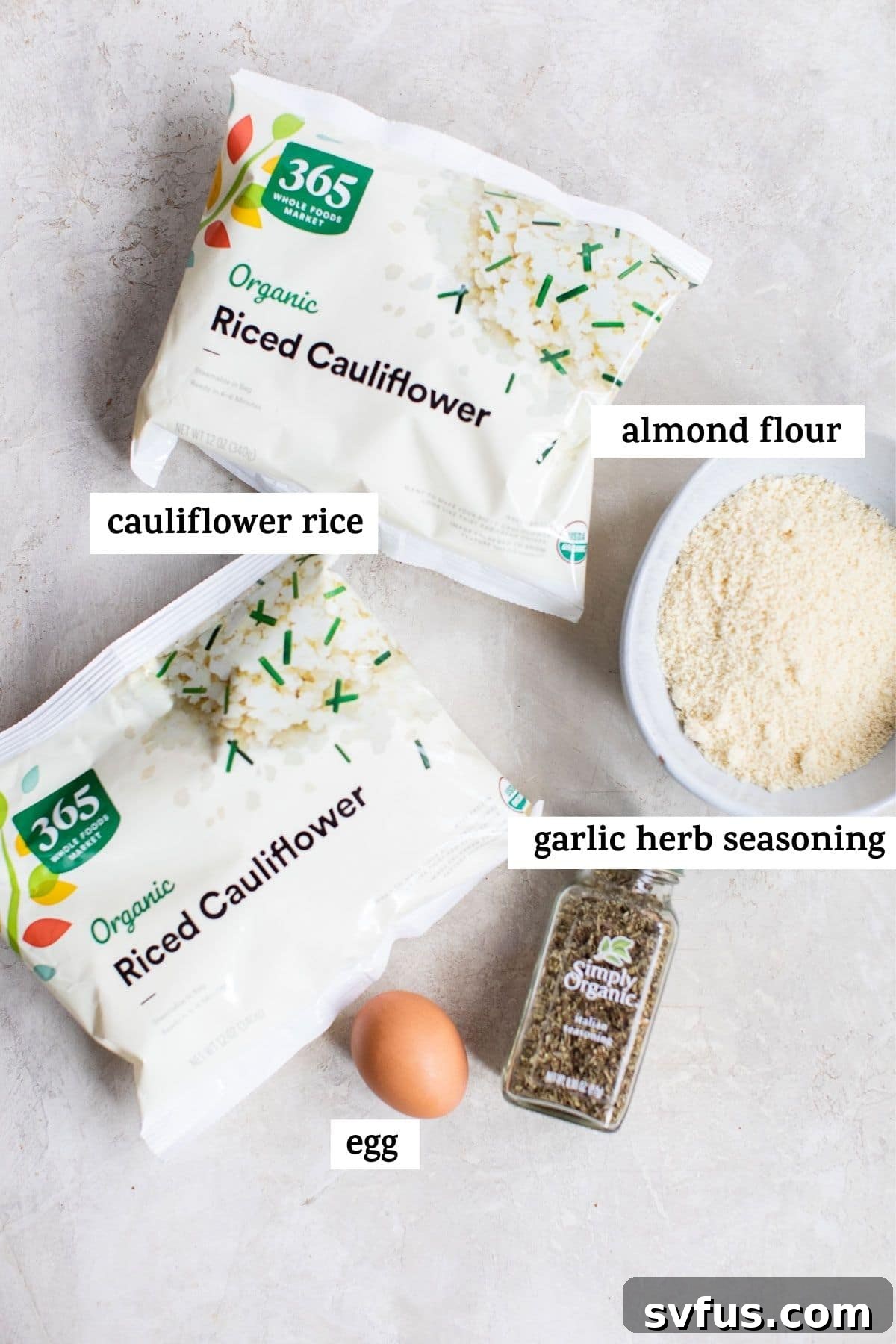
Cauliflower Rice: The Heart of the Crust
For this recipe, frozen cauliflower rice is highly recommended. My extensive testing has shown that frozen, pre-cooked cauliflower rice yields the most consistent results, largely due to its texture and moisture content after thawing and cooking. While fresh cauliflower rice (made from a whole head of cauliflower) can certainly be used, it will require a bit more effort to prepare, including steaming or boiling until tender, and then ensuring it’s thoroughly cooled before moisture removal. The critical step, regardless of whether you use fresh or frozen, is the complete removal of moisture. This is the single most important factor for a crispy, non-soggy crust. Don’t skip it!
Almond Flour: The Flavorful Binder
I prefer using almond flour in this recipe for a few compelling reasons. Firstly, it’s naturally Paleo-friendly, aligning with specific dietary needs. Secondly, almond flour contributes a subtle nutty flavor and a finer texture that enhances the overall taste and mouthfeel of the crust, arguably superior to other gluten-free flours. It also helps with the binding process, adding structure to the dough. While you can experiment with other gluten-free flours like tapioca flour or a GF all-purpose blend, be mindful that the liquid absorption rates might differ, potentially requiring adjustments to the quantities. If substituting, start with a slightly lesser amount and add more as needed until the desired dough consistency is achieved.
Italian Seasoning: The Flavor Enhancer
Let’s be honest: without proper seasoning, cauliflower can taste, well, just like cauliflower. And while cauliflower is great, we’re making pizza here! Italian seasoning is a robust and reliable choice, providing a classic, aromatic profile that pairs perfectly with pizza toppings. It typically includes a blend of oregano, basil, thyme, rosemary, and marjoram. However, don’t limit yourself! A garlic herb seasoning blend would also work beautifully, or you could even customize with a pinch of red pepper flakes for a subtle kick, or smoked paprika for a deeper, earthier note. The key is to infuse the crust with flavor from the beginning, ensuring every bite is delicious.
Egg: The Essential Binder
The egg acts as the crucial “glue” that holds this delicate cauliflower crust together. Without it, the mixture would likely crumble, making it impossible to form a cohesive crust that can withstand handling and baking. The proteins in the egg coagulate during baking, creating a sturdy matrix that binds the cauliflower rice and almond flour. I have primarily tested this recipe with a regular chicken egg. For those seeking a vegan alternative, a “flax egg” (1 tablespoon ground flaxseed meal mixed with 3 tablespoons water, allowed to sit for 5-10 minutes until gel-like) is often a successful substitute in similar recipes. While I haven’t personally tested a flax egg with this specific cauliflower crust, it is a common binder in vegan baking and is worth experimenting with if you require an egg-free option.
Step-by-Step Method for a Perfectly Crispy Crust
Creating a truly crispy and stable cauliflower pizza crust involves a few critical steps. Follow this method carefully to achieve the best results every time, ensuring your pizza dreams come true.
Step One: Prepare the Cauliflower Rice
Begin by preheating your oven to 425°F (220°C) and lining a large baking sheet with parchment paper. This non-stick surface is crucial for preventing the crust from sticking. If you are using frozen cauliflower rice, simply follow the cooking instructions provided on the bag. This typically involves microwaving, steaming, or sautéing until the cauliflower is tender. The goal is to soften the cauliflower so it can be easily squeezed and blended into a dough. Allow the cooked cauliflower rice to cool for about 5 minutes before proceeding to the next step.
Step Two: Master the Moisture Squeeze – The Golden Rule!
This is arguably the most crucial step for a crispy crust. Pour the cooked and slightly cooled cauliflower rice onto a double layer of cheesecloth or into a nut milk bag. Gather the edges and, positioning yourself over your kitchen sink, squeeze out as much moisture as humanly possible. Seriously, unleash your inner strength! You’ll be surprised by how much liquid comes out. The more moisture you remove at this stage, the crispier your crust will be. Any leftover liquid will result in a soggy, disappointing crust, and nobody wants soggy pizza. Keep squeezing until the cauliflower forms a compact, relatively dry ball. Once thoroughly squeezed, transfer the cauliflower “pulp” into a large mixing bowl.
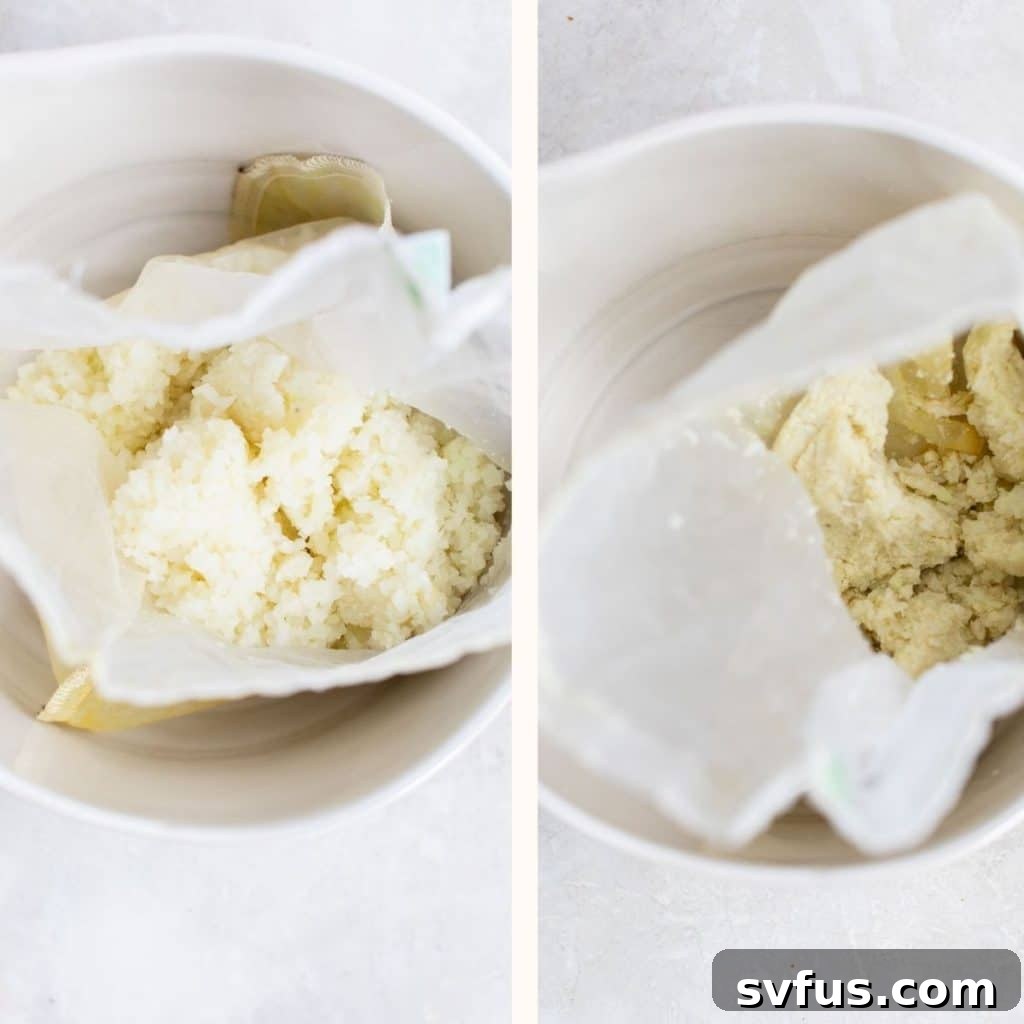
Step Three: Combine the Binding Ingredients
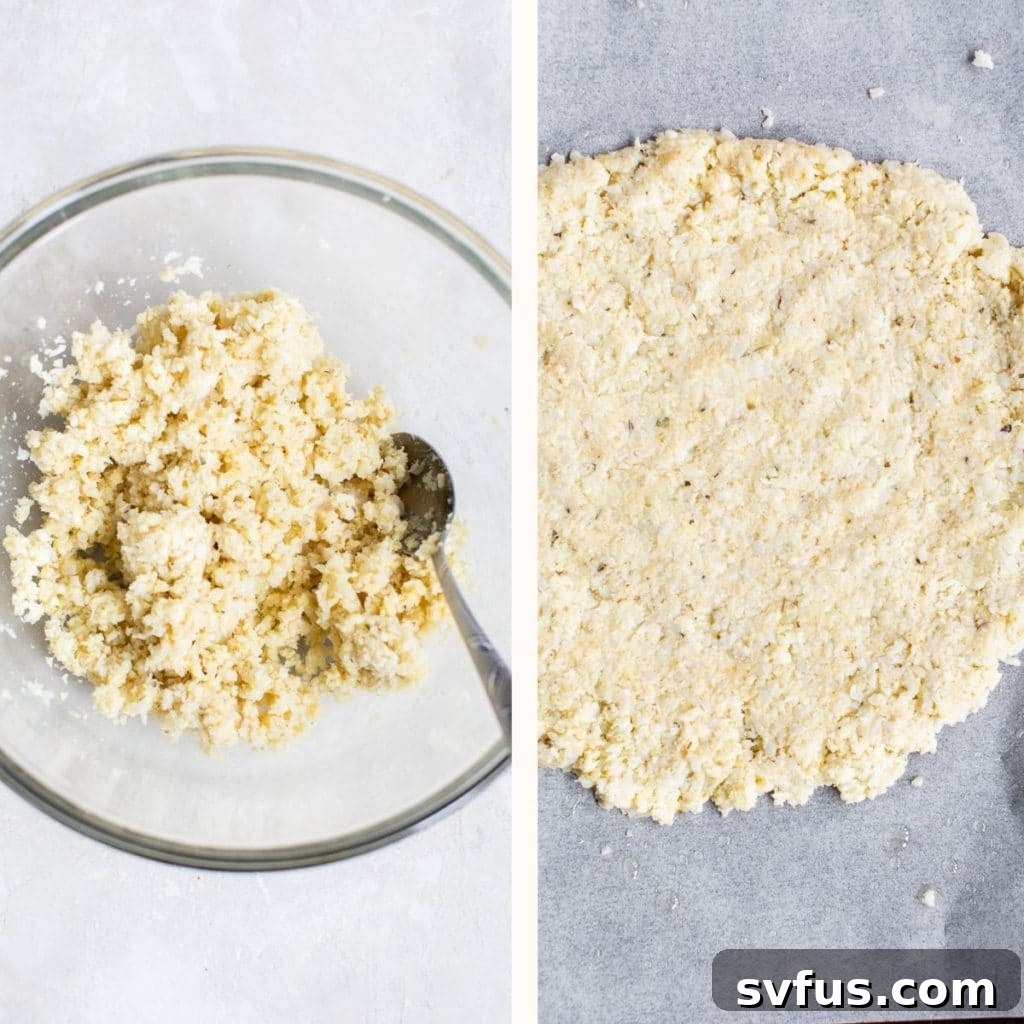
To the large bowl containing the squeezed cauliflower rice, add the almond flour, Italian seasoning (or garlic herb seasoning), and salt. Use a spoon or your hands to thoroughly mix these dry ingredients with the cauliflower. In a separate small cup, crack and whisk the egg until the yolk and white are fully combined. Pour the whisked egg into the cauliflower mixture. Continue to mix until all ingredients are well incorporated and form a cohesive, somewhat sticky dough. The egg acts as the primary binder, so ensure it’s evenly distributed.
Step Four: Form Your Pizza Crust
Using your clean hands, gather the cauliflower dough mixture and form it into a ball. Transfer this ball to the center of your parchment-lined baking sheet. Now, with your hands, gently but firmly press the mixture outwards from the center to form a round pizza crust. Aim for an even thickness, typically around ¼ to ½ inch, ensuring there are no thin spots that might burn or thick spots that won’t cook through. You can create a slightly raised edge if you like, just like a traditional pizza crust. The parchment paper will prevent sticking and make for easy transfer.
Step Five: The Two-Stage Baking Process
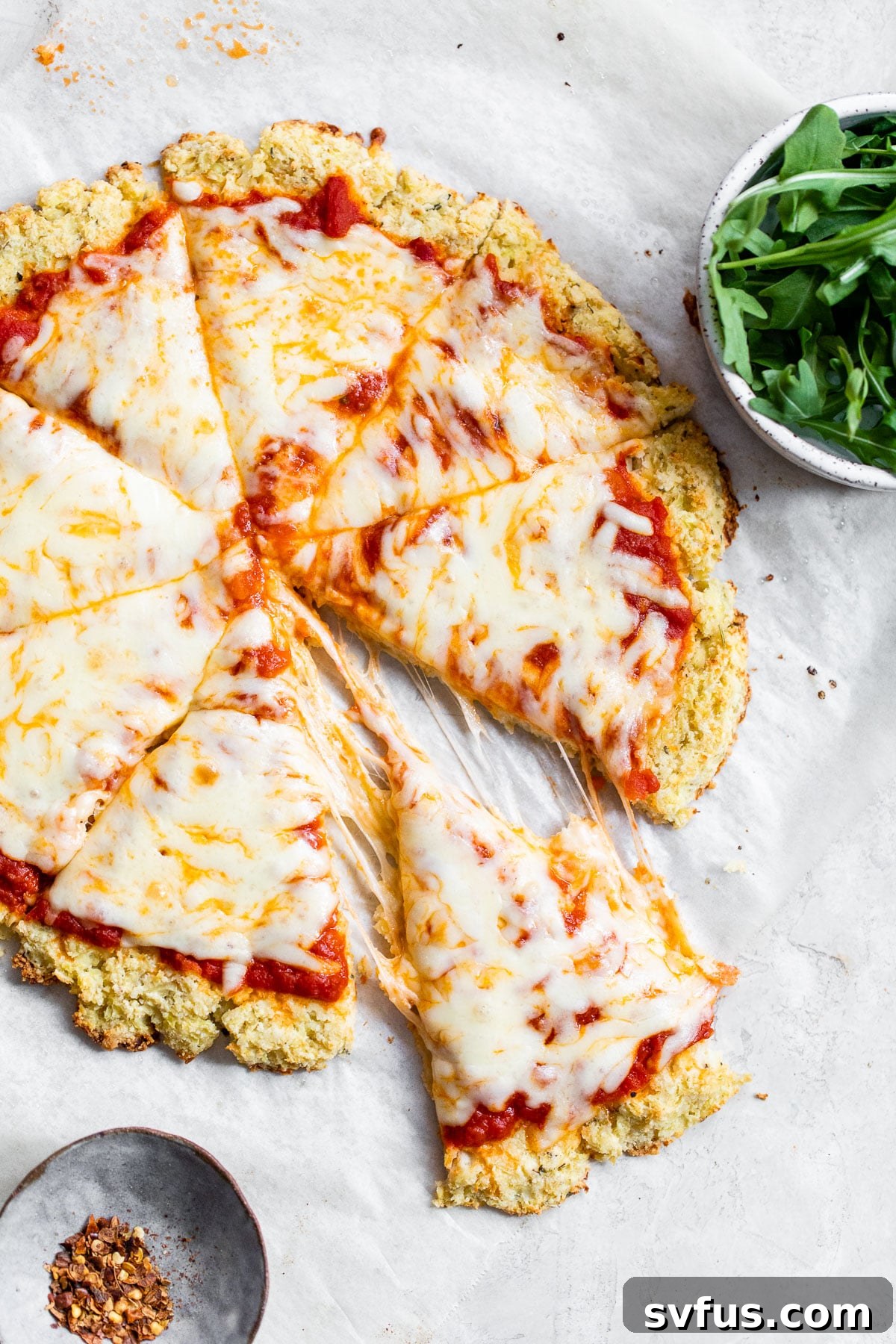
Bake the cauliflower pizza crust by itself for 15 minutes. This initial bake, known as par-baking, is essential. It helps to further dry out the crust, allowing it to firm up and become crispy, creating a stable base that won’t fall apart when you add toppings. After 15 minutes, remove the par-baked crust from the oven. Now it’s time to add your desired pizza toppings – think sauce, cheese, pepperoni, fresh vegetables, or anything your heart desires! Once topped, return the pizza to the oven and bake for an additional 10 minutes, or until the toppings are cooked through and the cheese is melted and bubbly. Remove from the oven, let it cool for a few minutes before slicing, and then enjoy your perfectly crafted, crispy cauliflower pizza!
Pro Tips and Tricks for Cauliflower Crust Mastery
Achieving cauliflower pizza crust perfection is easier with a few insider tips. These tricks will help you troubleshoot common issues, enhance flavor, and make your pizza experience even more delightful.
- Alternative Moisture Removal: If you don’t own a cheesecloth or a nut milk bag, don’t fret! You can still effectively remove moisture. Place the cooked cauliflower rice onto 3-4 layers of sturdy paper towels. Press down firmly with your hands or the back of a spoon, then gather the edges and twist, squeezing out as much liquid as possible. Repeat with fresh paper towels if needed until the cauliflower feels dry.
- Maximize Crispiness: For an extra-crispy crust, consider brushing the par-baked crust lightly with olive oil before adding toppings. Also, ensure your oven is fully preheated and that you’re baking on the lowest rack for optimal heat transfer to the bottom of the crust.
- Prevent Sticking: Always use parchment paper on your baking sheet. It’s a non-negotiable step for easy removal and cleanup. Lightly grease the parchment paper if you’re particularly concerned about sticking, though usually, it’s not necessary with parchment.
- Flavor Variations for the Crust: While Italian seasoning is a classic, feel free to experiment. Add a pinch of onion powder, smoked paprika, dried oregano, or even a dash of nutritional yeast for a cheesy flavor profile without the dairy. Freshly minced garlic or herbs can also be added for a burst of flavor.
- Meal Prep Perfection: You can prepare and par-bake the crusts in advance. Once cooled, wrap them tightly in plastic wrap and store them in the refrigerator for up to 3 days or freeze for up to 1 month. When ready to use, simply add toppings and bake as directed.
- Best Topping Choices: Since the crust is relatively light, avoid excessively wet or heavy toppings, as they can reintroduce moisture and make the crust soggy. Opt for lighter sauces, thinly sliced vegetables, and lean proteins.
- Serving Suggestions: This low-carb pizza pairs wonderfully with a fresh green salad for a light meal. For a more substantial side, consider air fryer sweet potatoes or vibrant honey roasted tomatoes. My salmon caesar salad (simply omit the salmon for a vegetarian side) also complements the flavors beautifully.
Can I Use Fresh Cauliflower Rice Instead of Frozen?
Absolutely, you can! While frozen cauliflower rice is incredibly convenient and the recommended choice for consistent results, fresh cauliflower works just as well with a minor adjustment. If using fresh, you’ll need to cook it first until it’s very soft and tender. You can steam it, boil it, or even roast it until it’s easily mashable. Once cooked, let it cool completely before proceeding to the crucial step of squeezing out all excess moisture, as you would with frozen rice. Remember, the drier the cauliflower, the crispier your crust. Just be aware that my primary testing has been with frozen cauliflower rice, so you might need slight adjustments depending on the moisture content of your fresh cauliflower.
Do I Have to Use the Egg?
The egg in this cauliflower pizza crust recipe plays a vital role as a binder, ensuring the crust holds its shape and doesn’t crumble. My testing has focused on recipes including egg for its structural integrity. Without it, the cauliflower mixture is significantly more prone to falling apart, making it challenging to form and bake a cohesive crust. However, if you have an egg allergy or prefer a vegan option, you can experiment with a flax egg as a substitute (1 tablespoon ground flaxseed mixed with 3 tablespoons water, allowed to sit for 5-10 minutes until gelatinous). While I haven’t personally tested this specific recipe with a flax egg, it’s a common and often successful alternative in many gluten-free and vegan baking applications. Be prepared for potentially slight variations in texture.
How Do I Make the Crust Extra Crispy?
Achieving maximum crispiness is a common goal for cauliflower crust enthusiasts! Here are a few secrets:
- Aggressive Moisture Removal: Reiterate this – it’s the most critical step. Squeeze, squeeze, squeeze!
- Pre-Bake Longer: If your crust isn’t as crispy as you’d like after 15 minutes, try par-baking for an additional 5-10 minutes before adding toppings.
- Hot Oven, Bottom Rack: Ensure your oven is fully preheated to 425°F (220°C) and bake the crust on the lowest oven rack. This allows direct heat to the bottom, promoting browning and crispness.
- Thin Crust: A thinner crust will always be crispier. Aim for about ¼ inch thickness across the entire base.
- Avoid Overloading Toppings: Too many wet or heavy toppings can steam the crust and make it soggy. Keep toppings minimal and cook watery vegetables (like mushrooms or spinach) beforehand to reduce their moisture content.
Can I Freeze the Cauliflower Pizza Crust?
Yes, absolutely! Freezing cauliflower pizza crust is a fantastic way to meal prep and have a healthy base ready for quick weeknight dinners.
- Par-Bake First: Follow steps 1-5 to fully par-bake the crust without any toppings.
- Cool Completely: Allow the baked crust to cool down entirely to room temperature. This prevents condensation and ice crystals from forming inside the packaging.
- Wrap Securely: Wrap the cooled crust tightly in plastic wrap, then an additional layer of aluminum foil, or place it in a freezer-safe bag. This protects it from freezer burn.
- Freeze: Store in the freezer for up to 1-2 months.
- To Reheat: When ready to use, simply remove from the freezer, unwrap, add your desired toppings (it can be topped while still frozen), and bake at 425°F (220°C) for about 15-20 minutes, or until the toppings are cooked and the crust is heated through and crispy. You might need a slightly longer bake time than if starting with a fresh par-baked crust.
Discover More Delicious Cauliflower Rice Recipes
Cauliflower rice is an incredibly versatile ingredient, extending far beyond pizza crusts. If you’ve enjoyed the healthful benefits and adaptability of this cruciferous vegetable in your pizza, you’ll love exploring these other creative and delicious cauliflower rice recipes:
- Cauliflower Breakfast Bowl: A surprising yet delightful way to start your day with a veggie-packed, savory breakfast.
- Cheesy Cauliflower Rice Skillet: A comforting, cheesy side dish or light meal that’s wonderfully satisfying without the extra carbs.
- Teriyaki Salmon Bowl: While the original features a salmon base, you can easily adapt this vibrant bowl with cauliflower rice for a low-carb, flavorful meal.
If you try this incredible cauliflower pizza crust recipe, please leave a comment and a star rating below. Your feedback helps others discover and enjoy this healthy alternative! Thank you!
Cauliflower Pizza Crust
By Erin Alvarez
Servings: 2
Prep Time: 15 mins
Cook Time: 25 mins
Total Time: 40 mins
Cauliflower Pizza Crust is what gluten-free pizza dreams are made of! It’s made with cauliflower rice, almond flour, and egg, and it’s crispy on the outside and actually holds together. If you’re looking for a low-carb pizza option, this is it!
Equipment
- cheese cloth or nut milk bag
- Large baking sheet
- Parchment paper
Ingredients
- 6 cups frozen cauliflower rice, approx. two 10 oz. bags
- 3/4 cup almond flour
- 1/2 tsp garlic herb seasoning, or sub Italian seasoning
- 1/2 tsp salt
- 1 egg
Instructions
- Preheat oven to 425°F (220°C) and line a large baking sheet with parchment paper. Cook the cauliflower rice according to the instructions on the bag(s) until tender.
- Pour the cooked cauliflower rice on top of 2 pieces of cheesecloth, or into your nut milk bag. Let it cool for 5 minutes, then squeeze it as hard as you can over your kitchen sink to remove as much moisture as possible. Once thoroughly squeezed, transfer the rice into a large bowl.
- Add the almond flour, seasoning, and salt to the bowl with the cauliflower rice and stir to combine. Crack the egg into a cup and whisk it well, then pour it into the bowl with the rice mixture and stir thoroughly to combine all ingredients into a cohesive dough.
- Use your hands to form the mixture into a ball, then transfer it to the parchment-lined baking sheet. Again, use your hands to press the mixture into a flat, round pizza crust, aiming for an even thickness (approx. ¼ to ½ inch) and creating a slight edge if desired.
- Bake the crust by itself for 15 minutes. Remove it from the oven, add your desired pizza toppings (such as sauce, cheese, pepperoni, spinach, etc.), and bake it again for 10 more minutes, or until toppings are cooked and cheese is melted and bubbly. Remove it from the oven and wait a few minutes before slicing and enjoying!
Notes
- *Calories are per serving; serving size is half of the pizza (approx. 3-4 slices).
- *If you don’t own a cheesecloth or a nut milk bag, you can pour the cooked cauliflower rice onto 3-4 paper towels and squeeze out the liquid firmly.
Nutrition
Carbohydrates: 33g |
Protein: 21g |
Fat: 24g |
Saturated Fat: 2g |
Trans Fat: 1g |
Cholesterol: 82mg |
Sodium: 757mg |
Potassium: 1475mg |
Fiber: 14g |
Sugar: 11g |
Vitamin A: 119IU |
Vitamin C: 231mg |
Calcium: 207mg |
Iron: 4mg
Nutrition information is automatically calculated and should only be used as an approximation.
Did you make this recipe?
Leave a comment and star rating below!