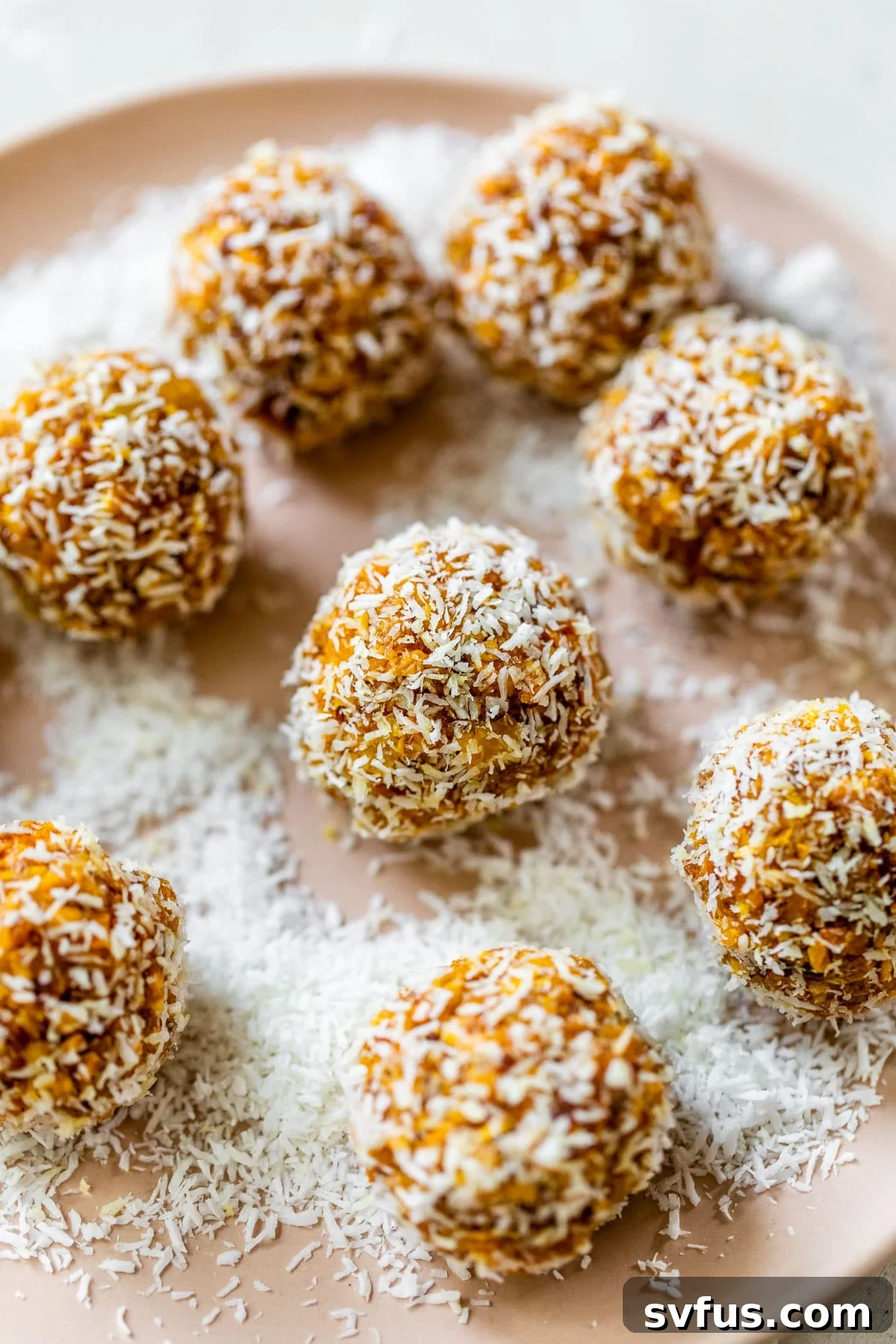
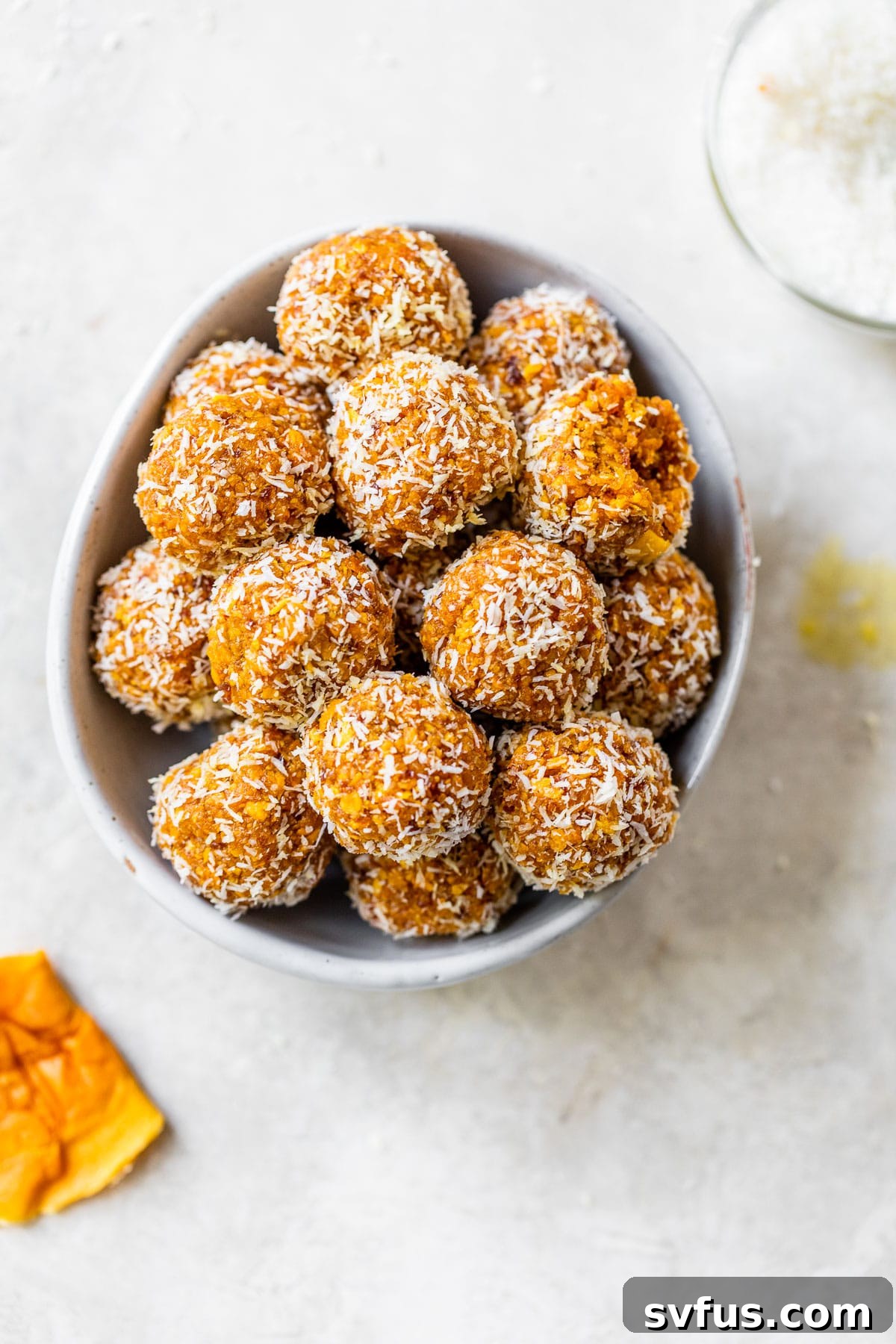
Experience the vibrant taste of the tropics any time of year with these unbelievably simple and delightful Mango Energy Balls! Perfectly crafted as an energy-boosting snack, they require just 15 minutes of hands-on time and naturally fit into vegan, nut-free, and gluten-free lifestyles. Say goodbye to mid-day slumps with these healthy, portable treats that are as delicious as they are nutritious.
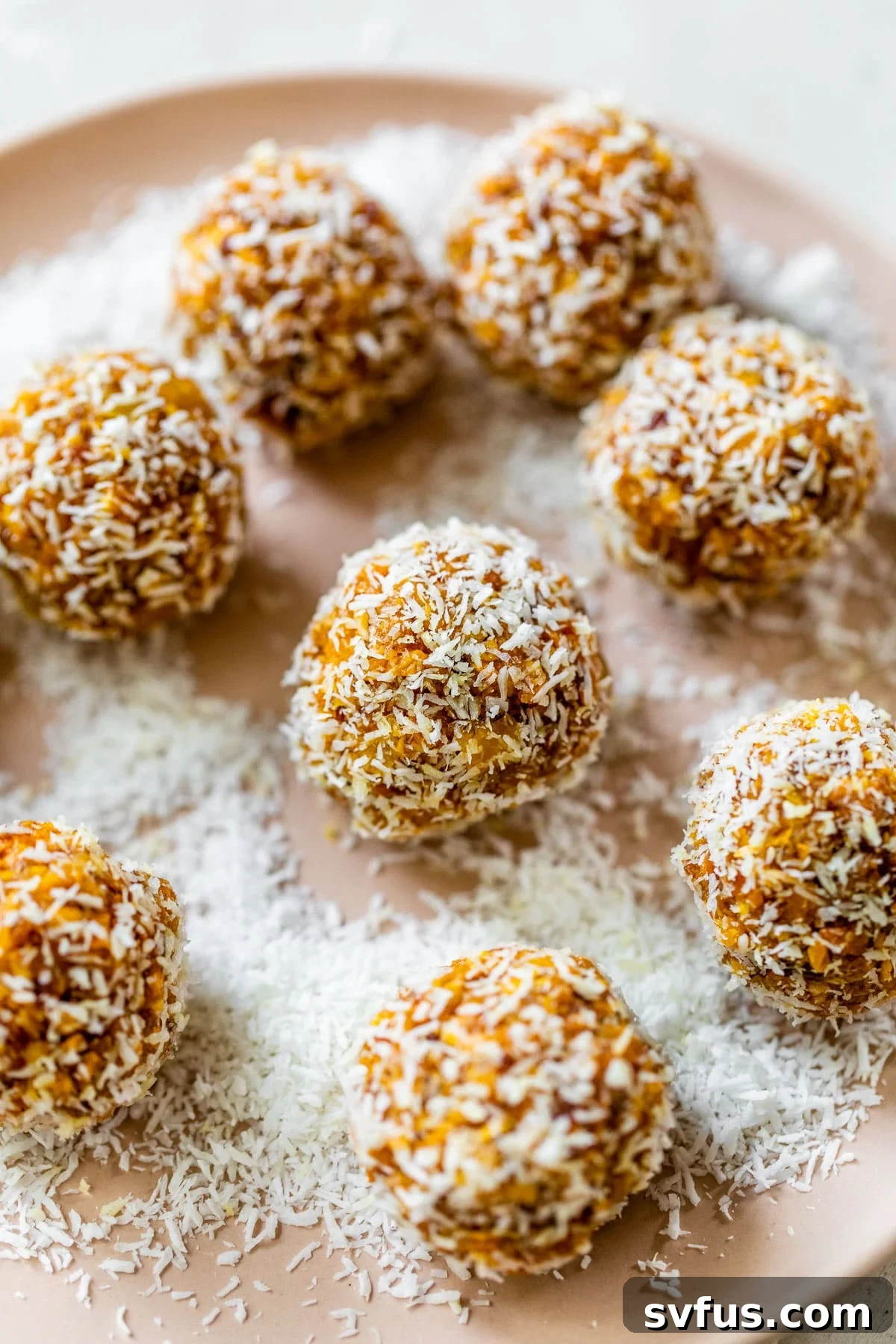
There’s something truly magical about mango that elevates any snack to an extraordinary level. Its naturally sweet, juicy, and profoundly tropical flavor profile makes it a standout ingredient, transforming simple recipes like chia pudding or crumb bars into gourmet experiences. In this recipe, the incredible richness of dried mango takes center stage, making these Mango Energy Balls irresistibly delectable.
Much like other popular energy bites and protein balls, such as my cashew butter protein bites, these mango-infused delights are designed for convenience and health-conscious individuals on the go. They are the perfect solution for when you need a quick, sustained energy boost, whether you’re heading to the gym, tackling a busy workday, or simply craving a guilt-free treat. Unlike many protein ball recipes that rely heavily on protein powders or nut butters, our tropical energy balls offer a unique flavor adventure, blending dried mango with creamy coconut, naturally sweet dates, and a hint of vanilla for a truly harmonious taste.
The beauty of these Mango Coconut Bites lies in their simplicity and speed. In just 15 minutes, with only 5 core ingredients, you can whip up a batch of these wholesome treats. Their portable nature makes them ideal for packing in your lunchbox, carrying in your travel bag, or stashing in your purse for those moments when hunger strikes. Once you discover how easy and delicious they are, you’ll want to ensure you always have a fresh supply on hand!
Why These Mango Energy Balls Are a Must-Try
These tropical mango energy bites aren’t just a snack; they’re a lifestyle upgrade. Here’s why they deserve a permanent spot in your healthy eating routine:
- Exotic Flavor Profile: A delightful blend of sweet mango and rich coconut transports your taste buds straight to a tropical paradise.
- Effortlessly Simple: Made with just 5 ingredients and ready in a mere 15 minutes, these no-bake wonders are perfect for busy schedules.
- Dietary Inclusivity: Naturally vegan, nut-free, and gluten-free, they cater to a wide range of dietary preferences and restrictions without compromising on flavor or texture.
- Sustained Energy Boost: Packed with natural sugars from mango and dates, along with healthy fats from coconut oil, they provide a clean, steady source of energy without the crash.
- Ideal for Meal Prep: Prepare a larger batch at the beginning of the week, and enjoy healthy, grab-and-go snacks for days.
- Versatile Snacking: Perfect for pre- or post-workout fuel, a healthy dessert alternative, a convenient travel snack, or simply an anytime pick-me-up.
- Kid-Friendly: A delicious and nutritious alternative to processed snacks that even the pickiest eaters will love.
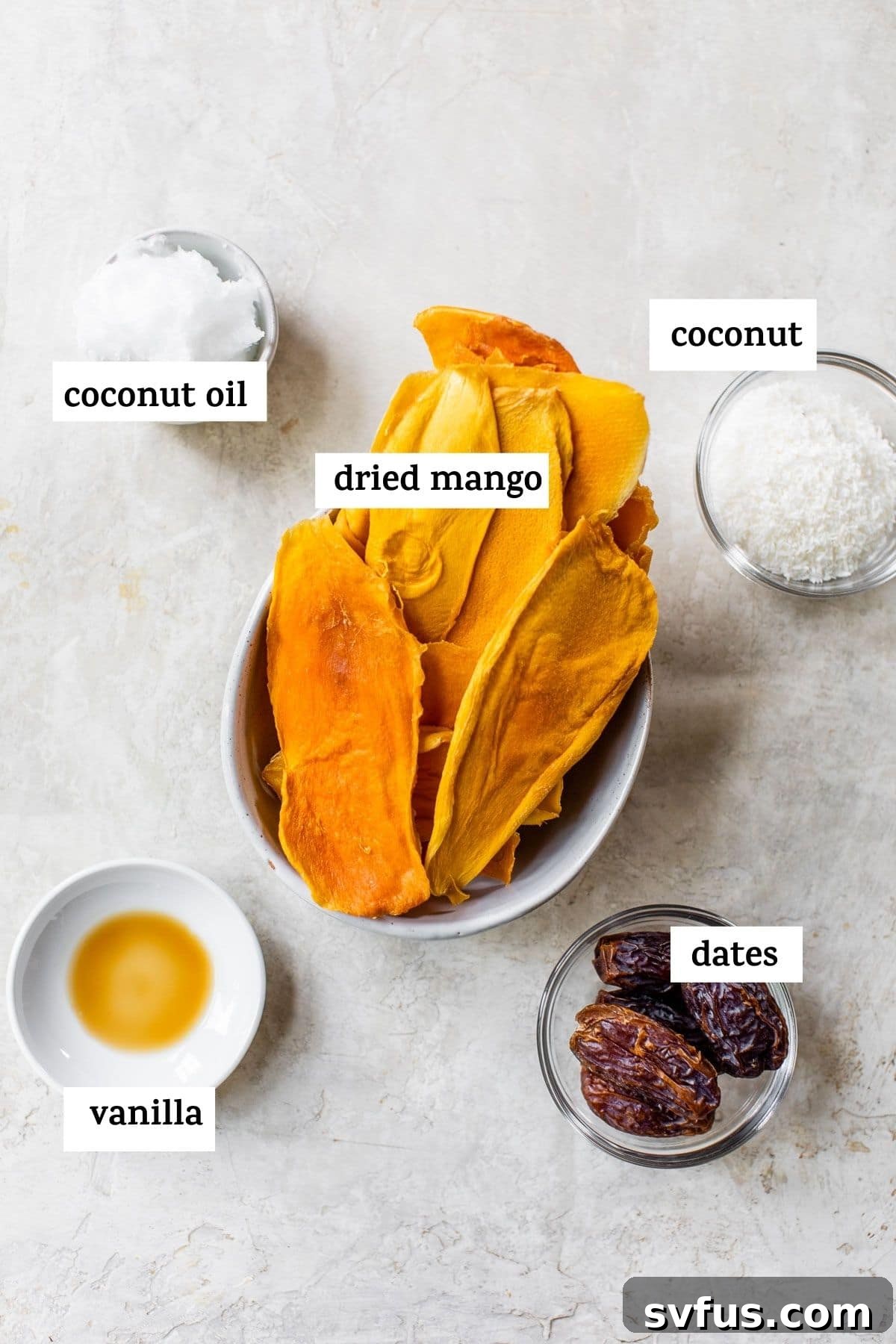
Ingredient Notes for Perfect Mango Balls
Crafting the perfect mango energy ball starts with understanding the role of each ingredient. Here’s a closer look at what goes into these tropical treats:
- Dried Mango: This is the star of our show, allowing you to savor the sweet, vibrant flavor of mango year-round, regardless of seasonality. Dried mango offers a wonderfully chewy texture and intense sweetness. When selecting your dried mango, aim for brands that list only “mango” in their ingredients to avoid unnecessary added sugars or preservatives. Opting for unsweetened varieties ensures the purest, most natural mango flavor shines through, contributing to a genuinely healthy snack.
- Medjool Dates: Beyond providing a rich, caramel-like natural sweetness, pitted Medjool dates are crucial for binding the energy balls together. Their soft, sticky texture acts as a natural adhesive, ensuring your mango balls hold their shape beautifully. Dates are also packed with fiber, offering additional health benefits and contributing to the satisfying chewiness of the bites.
- Coconut Oil: We recommend using room temperature, solid coconut oil for the best consistency. This helps create a cohesive mixture that’s easy to roll. While melted coconut oil can be used in a pinch, it might result in a slightly more oily texture in the finished balls. Coconut oil provides healthy medium-chain triglycerides (MCTs), adding to the energy-boosting properties and lending a subtle tropical note that complements the mango beautifully.
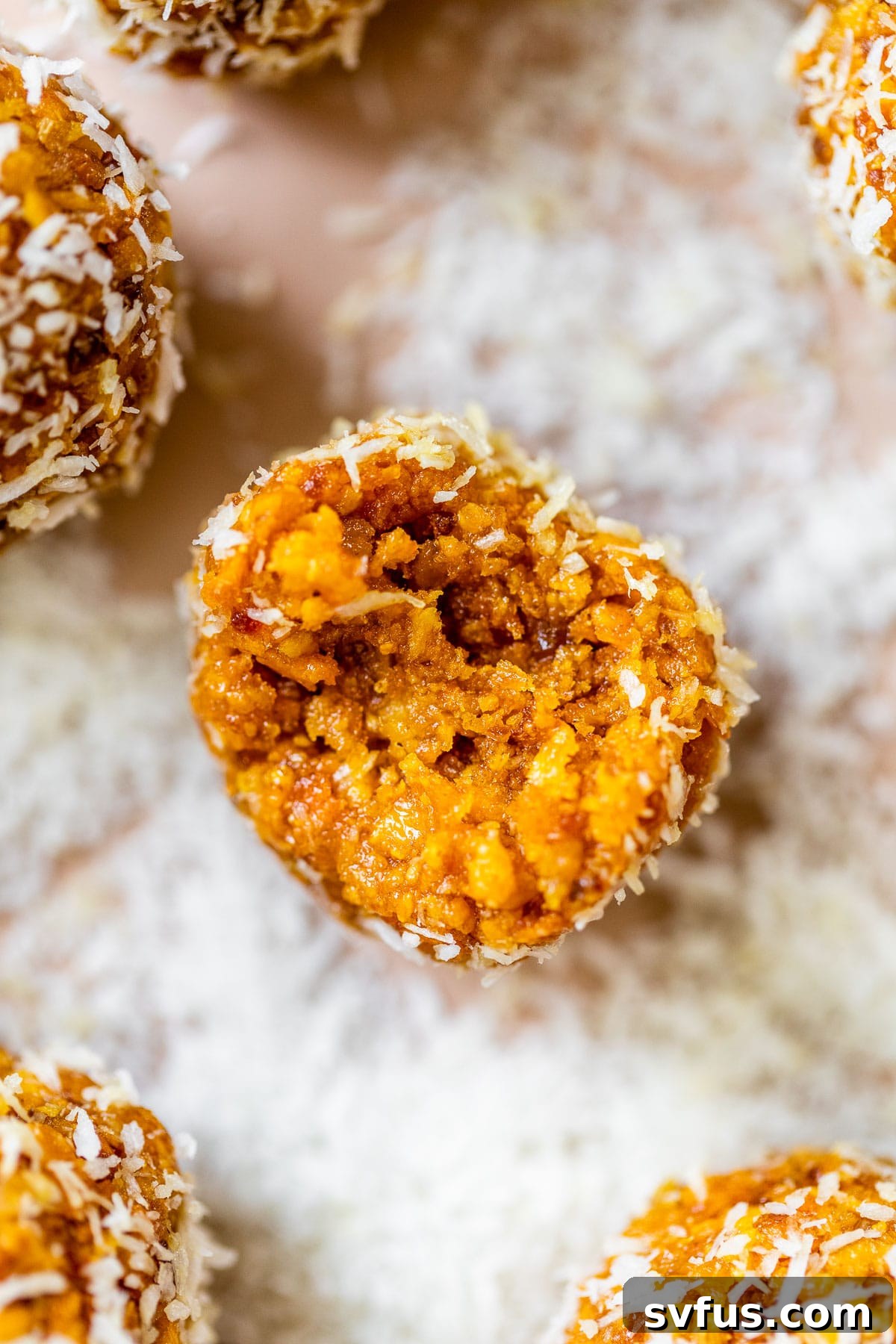
- Shredded Coconut: This ingredient serves a dual purpose in our mango energy balls. A portion is incorporated directly into the mixture, infusing it with a delicate coconut flavor and added texture. The remaining shredded coconut is reserved for coating the finished balls, providing a beautiful presentation and an extra layer of tropical goodness. You can use sweetened or unsweetened shredded coconut based on your preference; unsweetened is recommended for a healthier profile.
- Vanilla Extract: A splash of vanilla extract might seem minor, but it plays a significant role in enhancing the overall flavor profile. It brightens the sweet notes of the mango and dates, adding a depth and balance that makes these energy balls truly irresistible. Don’t underestimate its ability to round out the tropical flavors.
Step-by-Step Instructions for Mango Energy Balls
Making these delightful mango energy balls is incredibly straightforward. Follow these simple steps for a perfect batch every time:
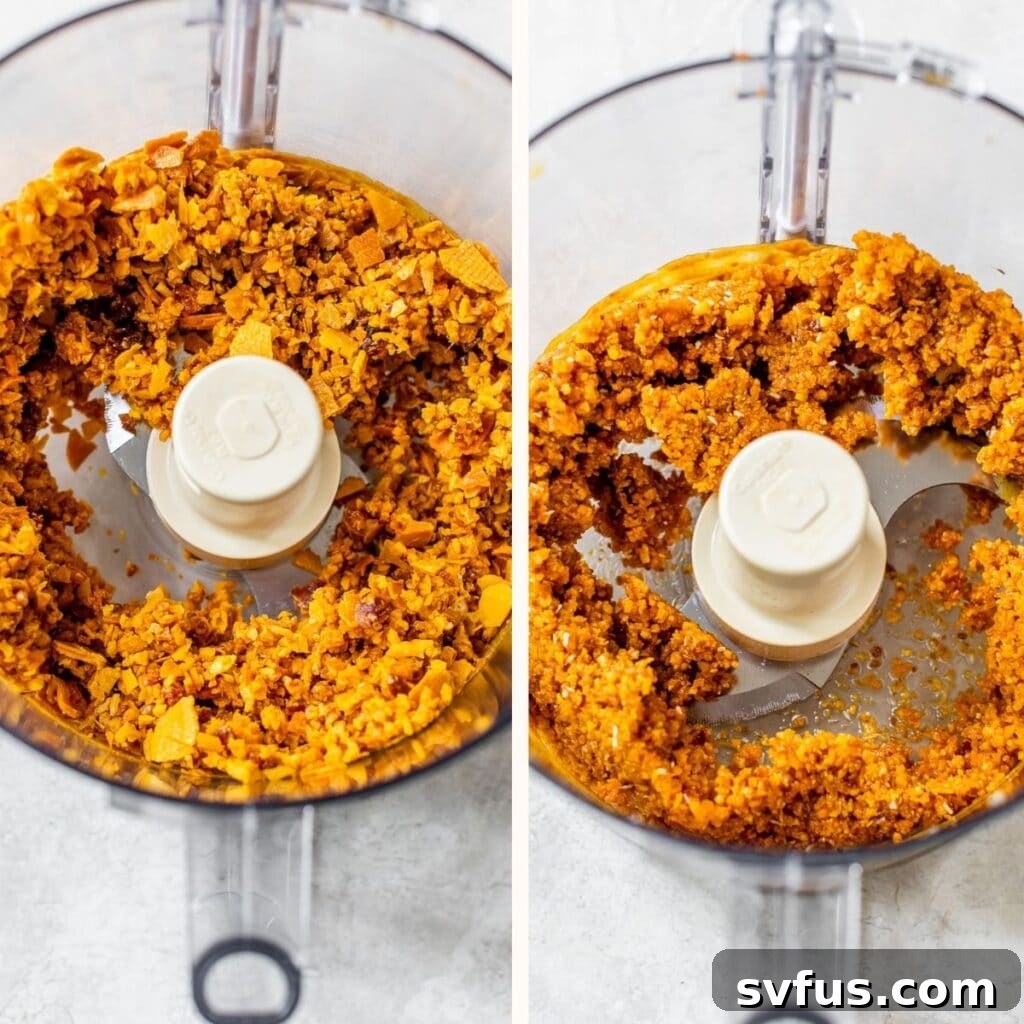
Step 1: Prepare the Dried Mango. Begin by adding your torn, bite-sized pieces of dried mango to the bowl of a food processor. Pulse the mango for approximately 10-15 seconds, or until it breaks down into small, crumbly pieces. This initial step ensures the mango is finely chopped and ready to blend smoothly with the other ingredients, creating an even consistency throughout the mixture.
Step 2: Create the Energy Ball Mixture. Once the mango is processed, add the remaining ingredients to the food processor: the pitted Medjool dates, room temperature coconut oil, 2 tablespoons of shredded coconut, and vanilla extract. Process the mixture for 30-60 seconds, or until all ingredients are well combined and a sticky, cohesive dough forms. The mixture should be pliable enough to roll into balls and should stick together when pressed between your fingers. If it seems too dry, process for a few more seconds or add a tiny bit more coconut oil.
Step 3: Prepare the Coconut Coating. Pour the remaining shredded coconut onto a small, shallow plate or a clean cutting board. This will be used to coat the mango balls, adding an appealing texture and a boost of coconut flavor.
Step 4: Form and Coat the Balls. Using your hands, scoop out small portions of the mango mixture. Roll each portion firmly between your palms to form uniform, bite-sized balls. The size is entirely up to your preference, but aim for about 1-inch diameter balls for approximately 16 servings. Once formed, gently roll each ball in the shredded coconut on the plate, ensuring it is evenly coated. This step not only adds a beautiful finish but also prevents the balls from sticking together. Store your freshly coated coconut-covered mango energy balls in an airtight container for later enjoyment, or simply indulge in them right away!
Expert Tips and FAQs for Your Mango Energy Balls
Maximize your enjoyment and master the art of making these tropical energy bites with these helpful tips and answers to common questions.
Tips for Success:
- Boost the Nutrition: Elevate the nutritional profile of your mango balls by incorporating additional superfoods. Consider blending in hemp seeds, chia seeds, ground flaxseeds, old-fashioned oats, or a scoop of your favorite vegan protein powder (ensure it’s unflavored or complements tropical flavors). For those who are not nut-free, a tablespoon of finely crushed nuts like cashews or almonds can add a delightful crunch and healthy fats.
- Adjust Sweetness: The sweetness largely comes from the dried mango and dates. If your dried mango is particularly sweet, or if you prefer a less sweet snack, you might slightly reduce the number of dates. Conversely, if you enjoy a sweeter treat, you can add an extra date or two.
- Customize the Coating: While shredded coconut adds an undeniable tropical flair, feel free to get creative with your coatings. If coconut isn’t your favorite, consider rolling the balls in finely chopped pistachios (if not nut-free), a mixture of sesame seeds, cocoa powder for a chocolatey twist, or simply leave them uncoated. The healthy fats from the coconut oil are essential for the mixture’s consistency, so don’t skip it from the internal blend.
- Meal Prep Powerhouse: These mango energy balls are perfect for weekly meal prepping. Dedicate a small amount of time on Sunday to prepare a large batch. This ensures you have healthy, homemade snacks readily available to fuel your week, saving time and preventing unhealthy impulse snacking.
- Food Processor Matters: A powerful food processor is key to achieving a smooth, well-combined mixture. If your processor struggles, you may need to pause and scrape down the sides a few times to ensure everything is incorporated evenly.
Can you make mango balls with fresh mango?
Unfortunately, fresh mango is not suitable for this specific recipe. Its high water content will make the energy ball mixture too wet and loose, preventing it from binding properly into firm balls. Fresh mango is best enjoyed on its own as a healthy snack, in smoothies, or in recipes designed for its moisture content. If you have an abundance of fresh mango, consider making your own dried mango at home!
Can I make my own dried mango?
Absolutely! Learning how to dry mango in the oven is an excellent way to utilize leftover fresh mangos and can also be more cost-effective than buying pre-packaged dried mango. Making your own also gives you control over whether any sugars or preservatives are added.
I don’t like coconut. What else can I use?
If you’re not a fan of coconut, you have several options. For the coating, shredded coconut can easily be replaced with a roll in finely crushed oats, sesame seeds, or a dusting of cocoa powder. If you’re not nut-free, crushed nuts like almonds or cashews would also work beautifully. The coconut oil in the mixture is essential for texture and binding, providing healthy fats that help emulsify the ingredients. If you absolutely cannot use coconut oil, an equivalent amount of extra virgin olive oil or a few additional Medjool dates can serve as alternative binders, though the flavor profile will subtly change.
Are these Mango Balls healthy?
Yes, these mango balls are incredibly healthy! They are made with whole, natural ingredients like dried fruit and healthy fats, providing sustained energy. They are free from refined sugars, artificial additives, and are naturally vegan, nut-free, and gluten-free, making them an excellent choice for a wide range of dietary needs.
How long do these Mango Energy Balls last?
When stored correctly, these energy balls have a good shelf life, making them perfect for meal prepping. Refer to the storage section below for detailed guidelines.
Storage Solutions for Your Mango Energy Balls
Proper storage ensures your mango energy balls remain fresh and delicious for as long as possible:
Refrigerator: For optimal freshness and texture, store your mango balls in a sealed, airtight container in the refrigerator for up to 1 week. Chilling them can also help them firm up slightly, enhancing their chewiness.
Freezer: These mango energy balls freeze exceptionally well, making them ideal for long-term storage. To prevent them from sticking together, place them in a single layer on a parchment-lined tray and freeze until firm (about 1-2 hours). Once firm, transfer them to a freezer-safe ziplock bag or an airtight container, separating layers with parchment paper if stacking. They will maintain their quality in the freezer for up to 3 months. When you’re ready to enjoy, simply thaw them at room temperature for a few minutes or in the refrigerator overnight.
More Easy and Healthy Snacks to Explore
If you loved these mango energy balls, you’ll surely enjoy these other simple and wholesome snack recipes from our kitchen:
- Healthy Peanut Butter Balls: A classic, protein-packed favorite for peanut butter lovers.
- Almond Butter Protein Bars: Perfect for a substantial snack or on-the-go fuel.
- Sweet Potato Hummus: A savory, nutrient-rich dip that’s great with veggies or crackers.
If you tried this delightful recipe, we’d love to hear from you! Please leave a comment and a star rating below to share your experience. Your feedback helps our community of healthy eaters. Thank you!
Mango Balls
Now you can enjoy the taste of the tropics year-round with these easy Mango Balls! They’re an energy-boosting snack that take 15 minutes to make and happen to be naturally vegan, nut free, and gluten free too!
Ingredients
- 8 oz. dried mango, torn into bite-size pieces
- 5 medjool dates, pitted
- 2 tbsp coconut oil, room temperature (see notes)
- 1/4 tsp vanilla extract
- 1/4 cup shredded coconut, divided
Instructions
- Add the mango to your food processor and pulse for 10 seconds.
- Then, add the dates, coconut oil, 2 tablespoons shredded coconut, and vanilla and pulse until the mixture comes together, 30-60 seconds.
- Pour the remaining shredded coconut onto a plate.
- Use your hands to roll the mixture into balls, then roll the balls into the shredded coconut. Place the balls in a sealed container and store them at room temperature or in the refrigerator. Enjoy!
Notes
*Calories are for 1 mango ball and are an estimation.
*The amount of bites you have in the end will vary depending on their size. It could range anywhere from 12-20.
*Ideally, you want the coconut oil to be at room temperature (slightly softened, similar to softened butter). However, if you’re making these on a very hot day, the oil will probably be melted already, and that’s ok! The final result will just be a little more oil-y in texture but will still taste exactly the same.
Nutrition
Calories: 132kcal | Carbohydrates: 23g | Protein: 1g | Fat: 4g | Saturated Fat: 4g | Sodium: 1mg | Potassium: 68mg | Fiber: 2g | Sugar: 17g | Vitamin A: 2238IU | Vitamin C: 3mg | Calcium: 15mg | Iron: 1mg
Did you make this?
Leave a comment and star rating below!
UPDATE NOTE: This post was originally published in March 2019. It was updated with new text, comprehensive tips, expanded FAQs, and fresh photos in March 2022 to provide the most valuable and enjoyable content for our readers.