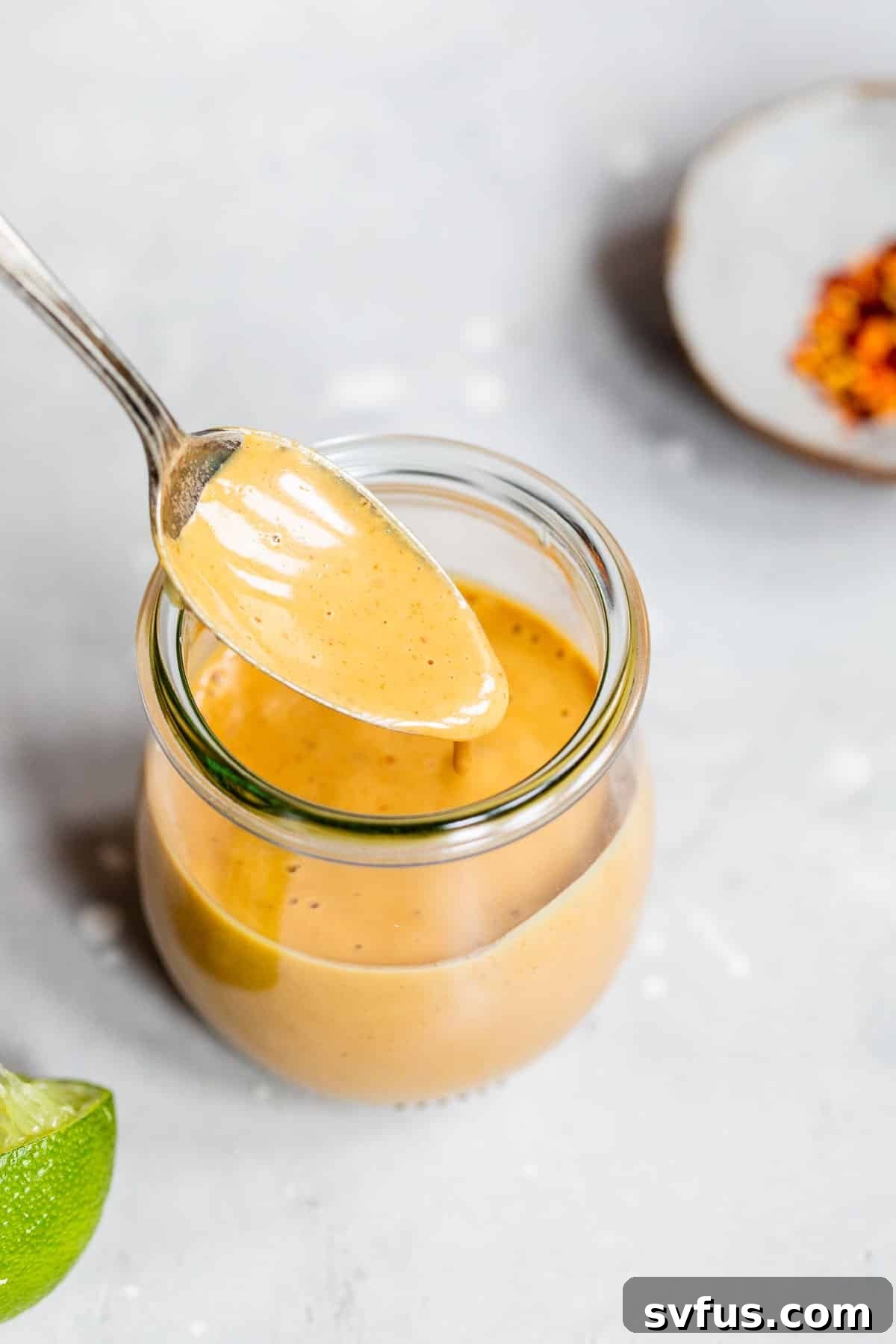
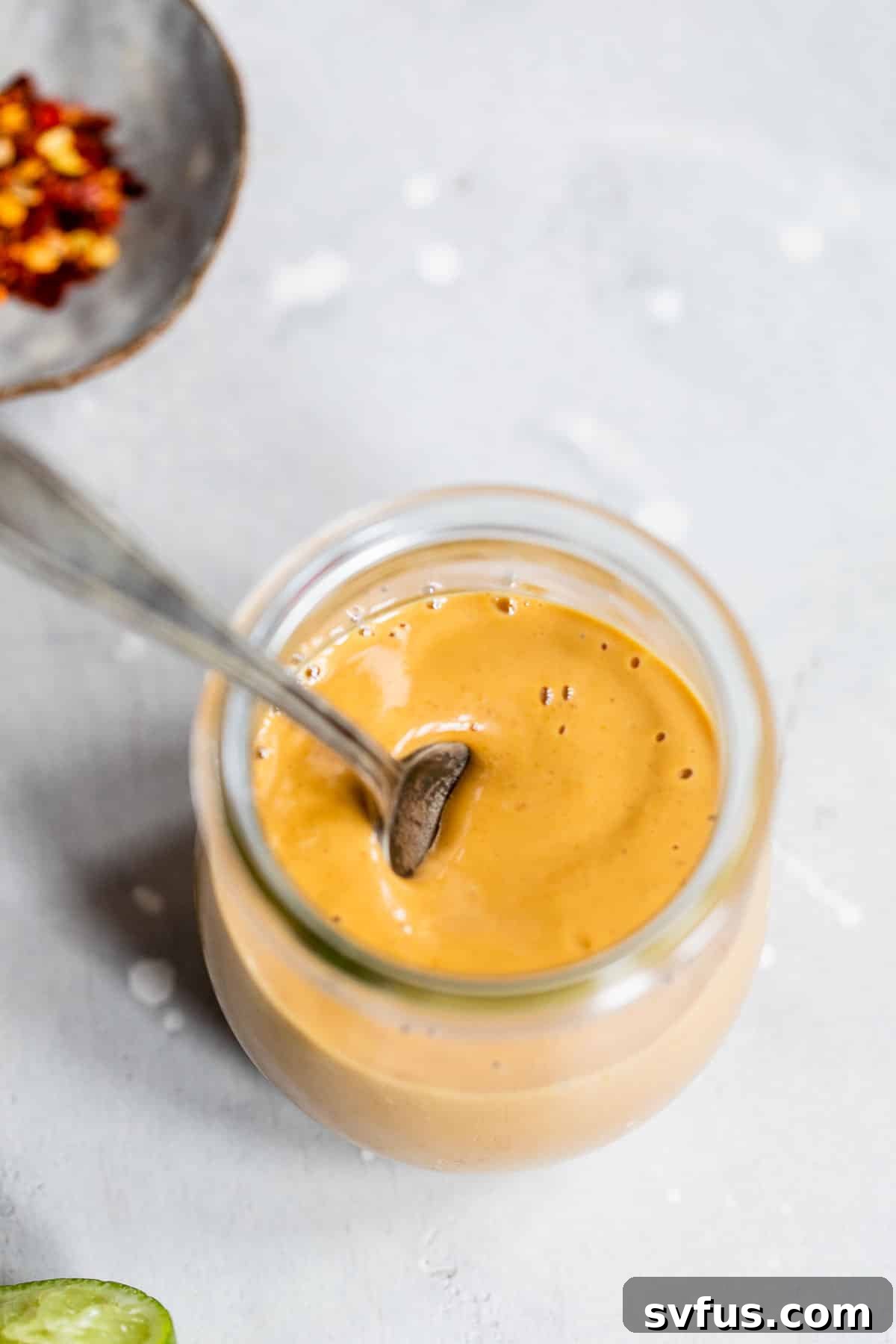
This incredible Thai Peanut Sauce is a game-changer for your meals! Not only is it completely vegan-friendly, but it also comes together in under 5 minutes with just 7 core ingredients. Prepare to elevate everything from roasted vegetables and fresh spring rolls to grilled meats and crispy tofu with this perfect dipping and drizzling companion.
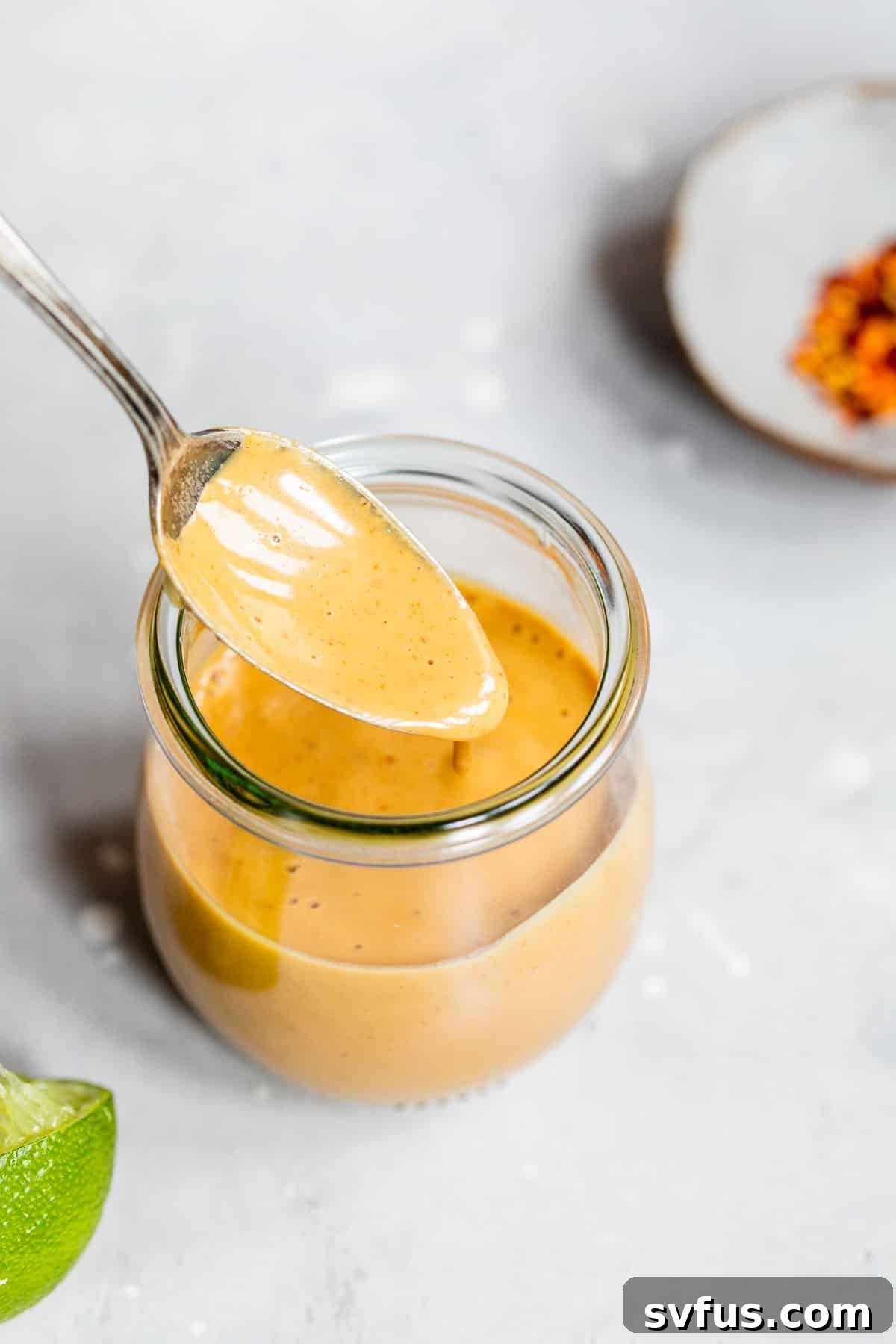
There’s something truly magical about a well-crafted sauce. It’s the secret weapon that transforms simple ingredients into an extraordinary culinary experience. And that’s precisely what our homemade Thai Peanut Sauce delivers. Forget bland meals; this vibrant, flavorful sauce promises to take your dishes to an entirely new level with minimal effort and maximum taste.
Imagine a sauce that’s bursting with a harmonious blend of sweet, savory, tangy, and a touch of spicy notes, all while being incredibly easy to prepare. This recipe uses only seven essential ingredients, making it not only delicious but also wonderfully convenient for busy weeknights or impromptu gatherings. Its simplicity is its strength, proving that you don’t need a lengthy ingredient list to create something truly spectacular.
Why You’ll Love This Easy Thai Peanut Sauce
This isn’t just another sauce recipe; it’s an invitation to elevate your everyday cooking with unparalleled ease and flavor. Here’s why this 5-minute Thai Peanut Sauce will become a staple in your kitchen:
- Effortlessly Delicious: Achieve restaurant-quality flavor in minutes, no complicated cooking required. The blend of simple ingredients creates a complex and irresistible taste profile.
- Incredibly Versatile: Its applications are virtually endless! Perfect as a dipping sauce for appetizers, a rich salad dressing, a flavor-packed marinade for proteins, or simply drizzled over any main dish for an instant upgrade.
- Lightning Quick Preparation: With just 7 core ingredients, you can whip up a fresh batch in under 5 minutes. This makes it ideal for busy weeknights when you need a quick flavor boost without adding extra stress.
- Diet-Friendly: Proudly vegan-friendly and can easily be made gluten-free with a straightforward ingredient swap, ensuring it caters to a wide range of dietary needs without compromising on taste.
- Highly Customizable: Whether you prefer more heat, extra tang, or a touch more sweetness, this sauce is a blank canvas for your palate. Adjust the spice and lime levels to perfectly match your personal preferences.
- Wholesome & Healthy: Made with fresh, natural ingredients, this homemade sauce offers a healthier alternative to many store-bought options, free from unnecessary additives and preservatives.
Endless Serving Suggestions: How to Enjoy Your Homemade Thai Peanut Sauce
The true magic of this Thai Peanut Sauce lies in its incredible adaptability. Once you have a batch ready, you’ll discover countless ways to incorporate its vibrant flavors into your meals. Here are just a few ideas to inspire your culinary creativity:
- The Ultimate Dipping Sauce: It’s the perfect companion for fresh Vietnamese-style spring rolls, crispy vegetable sticks (like cucumber, carrots, bell peppers), chicken or tofu satay skewers, or air-fried appetizers. For a fun twist, try it instead of ketchup with my air fryer sweet potatoes or classic French fries.
- Elevate Roasted & Steamed Vegetables: Transform ordinary veggies into extraordinary side dishes. Drizzle generously over your favorite roasted vegetables such as broccoli, cauliflower florets, Brussels sprouts, or asparagus. It adds a layer of rich depth and excitement that will make even the pickiest eaters eager for their greens. This sauce pairs exceptionally well with my easy weeknight broccoli, creating a sensational side dish in minutes.
- Transform Tofu & Plant-Based Meals: This sauce is a dream come true for plant-based proteins. Use it as a marinade before baking or pan-frying tofu, tempeh, or seitan, allowing the flavors to deeply infuse. Alternatively, simply drizzle it over cooked tofu for an instant burst of flavor. It works wonders with my Thai cauliflower steaks, turning them into a hearty, flavorful main course.
- Savory Salad Dressing: Thin it out slightly with a little extra water or lime juice, and you have a fantastic, creamy dressing for Asian-inspired salads. Picture it tossed with crunchy cabbage, grated carrots, sliced bell peppers, cilantro, and crushed peanuts for a refreshing and satisfying meal.
- Noodle & Rice Bowls: Toss warm noodles (like rice noodles or spaghetti) or fluffy rice with a generous helping of this peanut sauce for an instant, satisfying meal. Add some chopped scallions, crushed peanuts, and your favorite protein (chicken, shrimp, or more tofu) for a complete and balanced dish.
- Sandwiches & Wraps: Spread a thin layer inside your wraps, pita pockets, or sandwiches for a burst of Thai-inspired flavor. It complements grilled chicken, roasted vegetables, or even just fresh greens and sprouts beautifully.
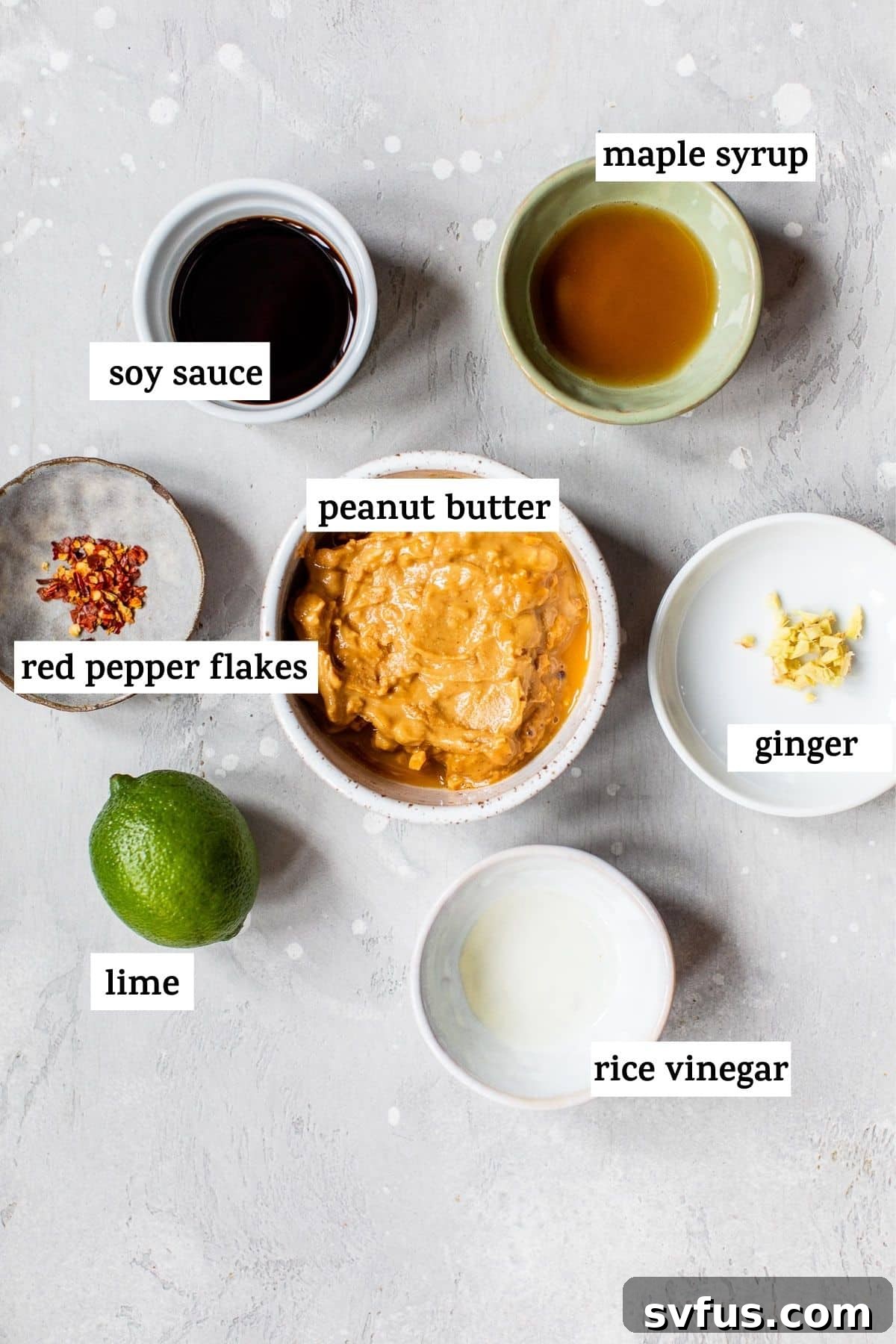
Ingredient Notes: Crafting Your Perfect Peanut Sauce
Each ingredient in this recipe is carefully selected to contribute to the balanced and complex flavor profile of an authentic Thai Peanut Sauce. Understanding their individual roles can help you achieve the best results and confidently make adjustments.
Peanut Butter: The Creamy Cornerstone
This is, without a doubt, the foundational ingredient. We recommend using creamy peanut butter for a silky-smooth sauce that glides effortlessly over your dishes. However, if crunchy peanut butter is all you have, don’t hesitate to use it! It will still work wonderfully, adding a pleasant, subtle textural element. The most important tip here is to opt for natural peanut butter with minimal ingredients – ideally just peanuts and salt. Avoid brands with added sugars, hydrogenated oils, or excessive stabilizers, as these can affect both the flavor and consistency of your homemade sauce. Natural peanut butter’s oils also aid in emulsification, making blending easier.
Soy Sauce (or Alternatives): The Umami Depth
Soy sauce is crucial for imparting that distinct savory, umami richness that defines many Asian-inspired sauces. It provides a salty depth that perfectly complements the sweetness and tang. For those following a gluten-free diet or with gluten sensitivities, tamari is an excellent, readily available substitute that offers a very similar flavor profile. Another fantastic option is coconut aminos, which is both soy-free and gluten-free. Keep in mind that coconut aminos tends to be slightly sweeter and milder than traditional soy sauce or tamari, so you might consider slightly reducing the maple syrup or adjusting other seasonings to taste.
Maple Syrup: The Natural Sweetener
Maple syrup provides the perfect touch of natural sweetness, elegantly balancing the savory and tangy components of the sauce. Its subtle caramel notes add a rich complexity without being cloyingly sweet. In a pinch, you can substitute with honey, but be aware that honey will impart a slightly different, more floral flavor to the sauce. For a strictly vegan option, agave nectar is another excellent plant-based sweetener that works beautifully.
Rice Vinegar: The Essential Tang Component
This ingredient is genuinely non-negotiable for achieving an authentic Thai peanut sauce flavor. Rice vinegar offers a mild, delicate, and slightly sweet acidity that is unmatched. Substituting with stronger vinegars like white vinegar or apple cider vinegar will drastically alter the delicate balance of the sauce, potentially overpowering the other flavors. Stick to rice vinegar for the best and most traditional taste.
Fresh Ginger: Aromatic Zing and Warmth
Freshly grated ginger is highly recommended over ground ginger. The vibrant, zesty, slightly pungent, and wonderfully aromatic flavor of fresh ginger adds an unparalleled brightness and depth that powdered ginger simply cannot replicate. If fresh ginger isn’t available, and you must use ground ginger, proceed with caution: start with just 1/4 teaspoon, as its flavor is much more concentrated, and add more sparingly after tasting until you reach your desired level of warmth and spice.
Red Pepper Flakes (or Chili Garlic Sauce): The Perfect Hint of Heat
Red pepper flakes introduce a pleasant warmth and a subtle kick to the sauce, adding an exciting layer of flavor. As with any spice, it’s best to start with a smaller amount – 1/4 teaspoon is a good starting point – and then gradually add more to suit your preferred level of spiciness. For a smoother texture and a more complex spicy-garlicky flavor, 2 teaspoons of chili garlic sauce (as detailed in the recipe card) or sriracha are excellent alternatives, integrating seamlessly into the sauce.
Fresh Lime Juice: Brightness and Acidity
Freshly squeezed lime juice is absolutely essential for brightening the overall flavor profile of the sauce. Its zesty acidity cuts through the richness of the peanut butter, preventing the sauce from tasting heavy and harmonizing all the different elements. Start with the recommended amount (2 teaspoons), then conduct a taste test and add more if needed. You might find that you prefer up to 3 teaspoons or even a bit more, depending on the tartness of your specific limes and your personal preference for tang.
Water: Adjusting to Your Desired Consistency
Water is the key to achieving the perfect consistency for your Thai Peanut Sauce. Depending on the natural thickness of your chosen peanut butter and how you intend to use the sauce (a thicker sauce for dipping, a thinner sauce for dressing), you may need to adjust the amount. Always start with the recommended 3 tablespoons and add more, one tablespoon at a time, until it reaches your perfect pourable or dippable texture. This allows for flexibility and ensures your sauce is exactly how you like it.
Method: Easy Steps to Your Homemade Thai Peanut Sauce
Making this Thai Peanut Sauce is incredibly straightforward, offering options whether you have a high-speed blender or prefer to mix by hand. The primary goal is to ensure all ingredients are thoroughly combined for a smooth and consistent sauce.
Blender Method (Our Top Recommendation for Speed and Smoothness)
For the quickest preparation and the silkiest texture, a small blender or food processor is your best tool. This method guarantees that all ingredients are perfectly emulsified, resulting in a velvety-smooth sauce that’s challenging to achieve by hand.
- Gather and Measure: Begin by measuring out all your ingredients precisely: peanut butter, soy sauce (or alternative), maple syrup, fresh lime juice, chili garlic sauce (or red pepper flakes), rice vinegar, fresh ginger, and the initial 3 tablespoons of water.
- Combine in Blender: Add all the measured ingredients into the cup of your small blender or the bowl of your food processor. Ensure the lid is securely fastened.
- Blend Until Smooth: Blend for approximately 30-60 seconds. The goal is a completely smooth, creamy, and uniform sauce. If any ingredients cling to the sides, pause, scrape down the sides with a spatula, and continue blending until fully incorporated.
- Adjust Consistency (if needed): After blending, assess the sauce’s thickness. If you desire a thinner consistency for drizzling or dressing, add an additional tablespoon of warm water at a time, blending briefly after each addition, until your preferred texture is reached.
- Taste and Customize: Finally, taste the sauce. This is your opportunity to fine-tune the flavors. You might wish for more lime juice for extra tang, a bit more chili garlic sauce or red pepper flakes for additional heat, or a pinch of salt to enhance the overall taste.
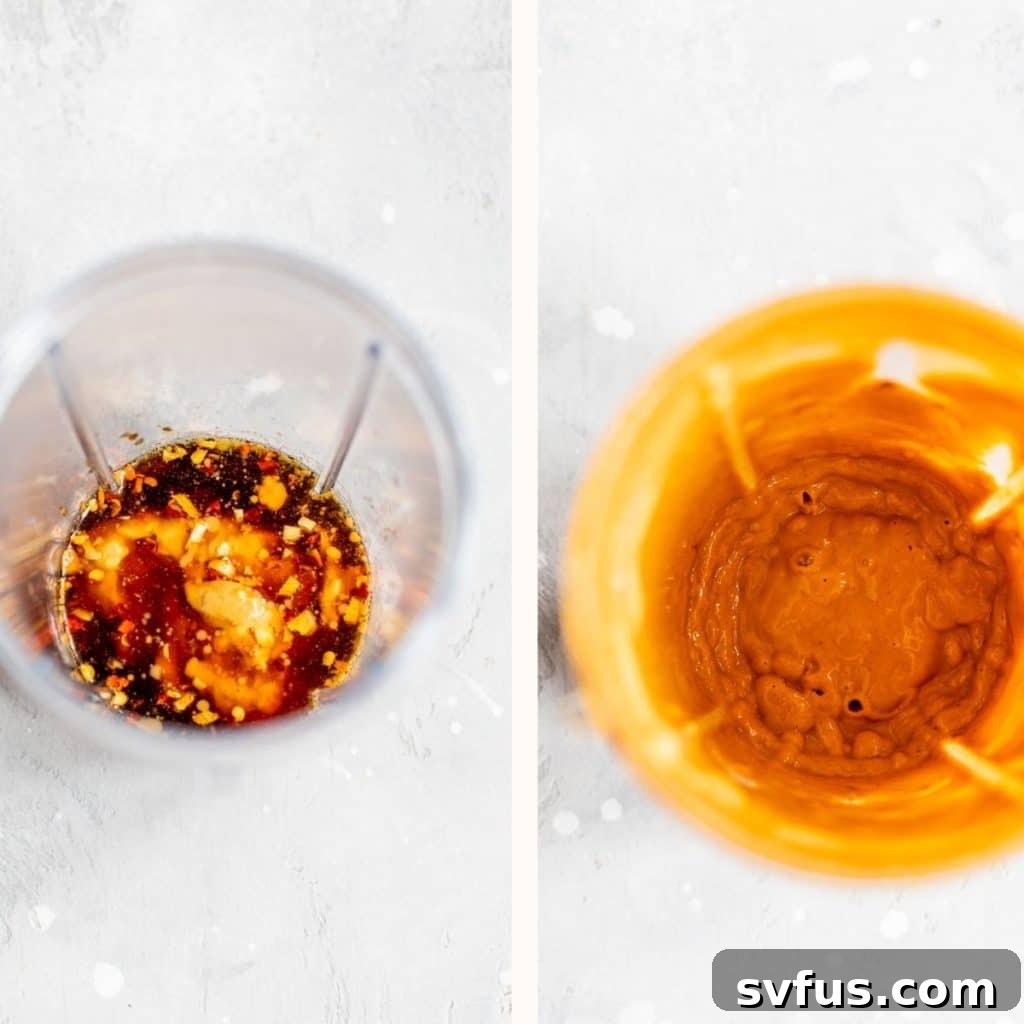
Hand Whisk Method (No Blender? No Problem!)
Even without a blender, you can still create a delightful Thai Peanut Sauce. The main consideration here is preparing the ginger properly to ensure it integrates seamlessly into the sauce without chunky bits.
- Prepare Ginger: For the hand-whisk method, it is crucial to grate your fresh ginger very finely. Use a microplane grater or the smallest side of a box grater to create a paste-like consistency. This prevents any large, fibrous chunks of ginger from remaining in your sauce. Alternatively, mince it extremely finely using a sharp knife.
- Combine Wet Ingredients: In a medium-sized mixing bowl, combine the peanut butter, soy sauce (or alternative), maple syrup, rice vinegar, lime juice, chili garlic sauce (if using) or red pepper flakes, and the initial 3 tablespoons of water.
- Add Ginger: Stir in the finely grated or minced ginger with the other ingredients.
- Whisk Until Smooth: Using a sturdy whisk, vigorously combine all the ingredients. Continue whisking continuously until the peanut butter is fully incorporated, and the sauce achieves a smooth and creamy consistency. This may require a few minutes of steady whisking to break down any lumps.
- Adjust Consistency & Taste: As with the blender method, if the sauce appears too thick, gradually whisk in small amounts of warm water until it reaches your desired texture. Taste and adjust seasonings (more lime juice for tang, more spice, or a pinch of salt) to your personal preference before serving.
Regardless of which method you choose, the result is a vibrant, flavorful Thai Peanut Sauce ready to elevate your next meal!
Tips, Customization & Troubleshooting
Customizing Your Thai Peanut Sauce
This recipe is incredibly flexible, allowing you to tailor the flavor profile to your exact liking. Don’t be afraid to experiment!
- Adjusting Spice: Begin with the recommended amount of red pepper flakes or chili garlic sauce. If you crave more heat, gradually add a little extra until it reaches your ideal level of spiciness. A dash of sriracha or a tiny pinch of cayenne pepper can also amplify the kick.
- Sweetness Balance: For a sweeter sauce, incorporate an additional teaspoon or two of maple syrup. If you prefer it less sweet, slightly reduce the maple syrup, but remember that a touch of sweetness is essential for balancing the savory and tangy notes.
- More Tang: A squeeze of additional fresh lime juice can significantly brighten the sauce and add more zest if you desire a tangier profile.
- Garlic Lover? While not in the original 7 core ingredients, a small clove of minced fresh garlic can add another delightful layer of aromatic flavor. If using a blender, add it along with the other ingredients. If whisking by hand, mince it very finely.
Achieving the Perfect Consistency
The texture of your peanut sauce is key to its enjoyment. Here’s how to manage it:
- If Your Sauce is Too Thick: It’s common for peanut sauce to thicken as it sits, especially after refrigeration. If you find your sauce is too thick for drizzling or dipping, simply whisk in a tablespoon of warm water at a time until it reaches your desired consistency. This quick fix works wonders, particularly when reheating or preparing ahead.
- If Your Sauce is Too Thin: Should your sauce accidentally become too thin, you can try adding a little more peanut butter, whisking it in thoroughly. Alternatively, letting it sit in the refrigerator for a while will naturally cause it to thicken as it cools.
Storage and Make-Ahead Instructions
One of the many advantages of this homemade Thai Peanut Sauce is how wonderfully it lends itself to meal prepping. Making a larger batch means you can enjoy its deliciousness throughout the week with minimal effort!
- How to Store: Once prepared, transfer your Thai Peanut Sauce into an airtight container or a sealed glass jar. Ensure the container is tightly closed to maintain freshness and prevent any odors from permeating other refrigerated foods.
- Shelf Life: When properly stored in the refrigerator, this versatile sauce will stay fresh and delicious for up to 7 days. This makes it perfect for preparing on a Sunday and using it to enhance your meals all week long.
- Make Ahead Tip: As previously mentioned, the sauce tends to naturally thicken when chilled in the refrigerator. Before serving a batch you’ve made ahead, give it a good stir. If it has become too thick for your preference, simply whisk in a small amount of warm water (start with 1-2 tablespoons and add more if needed) until it reaches your desired drizzling or dipping consistency. This brings it back to its perfect texture effortlessly.
Frequently Asked Questions (FAQs) About Thai Peanut Sauce
How should this Thai Peanut Sauce be stored after making it?
After preparing, store your homemade Thai Peanut Sauce in a sealed jar or any other airtight container. Keep it refrigerated to maintain its freshness and quality. Properly stored, it will last for up to 7 days.
Can I easily make this Thai Peanut Sauce gluten-free?
Yes, absolutely! Making this recipe gluten-free is very simple. Instead of using regular soy sauce, just substitute it with tamari or coconut aminos. Both options are excellent gluten-free alternatives that will provide a similar savory depth to the sauce.
Is this Thai Peanut Sauce recipe truly vegan?
Indeed! This Thai Peanut Sauce recipe is inherently vegan. All the ingredients listed—peanut butter, soy sauce, maple syrup, lime juice, rice vinegar, ginger, and red pepper flakes/chili garlic sauce—are plant-based, making it an ideal choice for those adhering to a vegan lifestyle.
Can I use a different type of nut butter instead of peanut butter?
While the recipe is specifically designed and optimized for the unique flavor profile of peanut butter, you could certainly experiment with other nut butters, such as almond butter, for a different taste. However, be aware that doing so would significantly alter the flavor profile, and it would no longer be considered a “Thai peanut sauce,” as the distinctive richness of peanuts is central to its traditional character.
More Healthy and Delicious Sauce Recipes to Try
If you’ve enjoyed the simplicity and flavor of making your own sauces, explore these other fantastic homemade options to further enhance your culinary adventures:
- Homemade Almond Pesto
- Zesty Chipotle Aioli
- Healthy Caesar Dressing
If you enjoyed making this recipe, we’d absolutely love to hear from you! Please take a moment to leave a comment and a star rating below to share your experience and feedback. Thank you so much for cooking with us!
Thai Peanut Sauce
By Erin Alvarez
Prep: 5 mins |
Total: 5 mins
This Thai Peanut Sauce is vegan-friendly and the perfect dipping sauce! It’s made with only 7 ingredients, and it pairs well with roasted veggies, meat or tofu.
Ingredients
- 1/3 cup peanut butter (creamy, natural recommended)
- 3 tbsp soy sauce (or tamari/coconut aminos for gluten-free)
- 2 tbsp maple syrup
- 2 tsp lime juice, plus more to taste
- 2 tsp chili garlic sauce, or sub sriracha (alternatively, use 1/4 tsp red pepper flakes, adjusted)
- 1 tsp rice vinegar
- 3/4 tsp fresh ginger, minced (or very finely grated)
- 1/4 tsp red pepper flakes, or more to taste (optional, if not using chili garlic sauce)
- 3 tbsp water, plus more as needed for consistency
- Salt to taste
Instructions
- Blender Method: Add all ingredients (peanut butter, soy sauce, maple syrup, lime juice, chili garlic sauce/red pepper flakes, rice vinegar, fresh ginger, and initial 3 tbsp water) to a small blender or food processor. Blend for 30-60 seconds until completely smooth and creamy.
- Hand Whisk Method (Alternative): If blending by hand, grate the fresh ginger very finely. In a bowl, combine peanut butter, soy sauce, maple syrup, rice vinegar, lime juice, chili garlic sauce/red pepper flakes, finely grated ginger, and initial 3 tbsp water. Whisk vigorously until smooth.
- Adjust Consistency: If the sauce is too thick, add more water, one tablespoon at a time, until your desired drizzling or dipping consistency is reached.
- Taste & Serve: Taste the sauce and adjust seasonings as needed. You may want more lime juice for tang, more chili garlic sauce/red pepper flakes for heat, or a pinch of salt. Enjoy immediately or store for later!
Notes
- To make gluten-free: Use tamari or coconut aminos instead of soy sauce.
- Adjust the amount of lime juice, red pepper flakes/chili garlic sauce, and salt to your personal liking.
- Calories are per serving and are an estimation. Individual results may vary.
Nutrition (Estimated per serving)
- Calories: 73 kcal
- Carbohydrates: 4g
- Protein: 3g
- Fat: 5g
- Saturated Fat: 1g
- Sodium: 302mg
- Potassium: 88mg
- Fiber: 1g
- Sugar: 3g
- Vitamin A: 19 IU
- Vitamin C: 1mg
- Calcium: 9mg
- Iron: 1mg
Did you make this delicious Thai Peanut Sauce?
We’d love to see your creations and hear your thoughts! Please consider leaving a comment and a star rating below to share your experience with other home cooks!