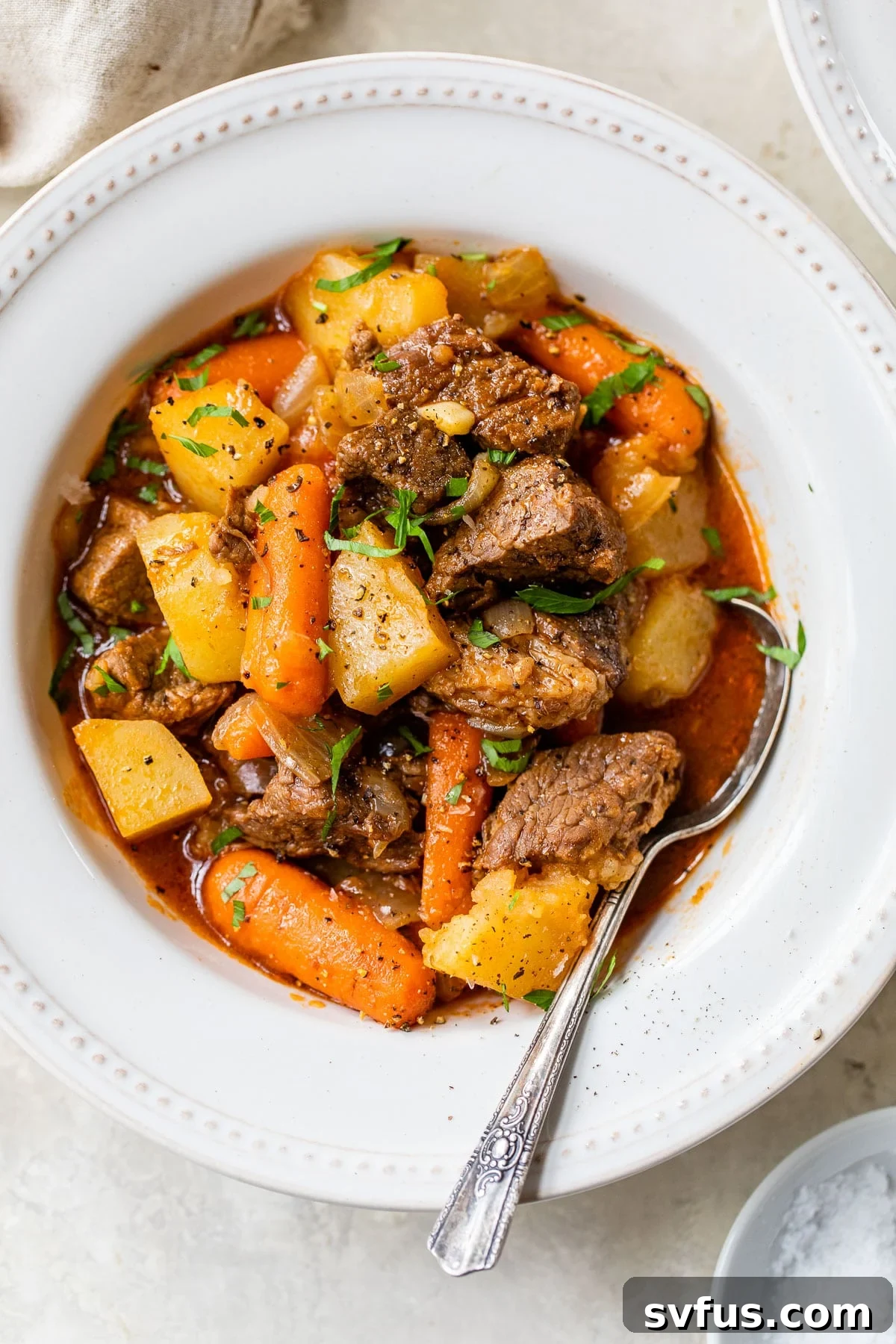
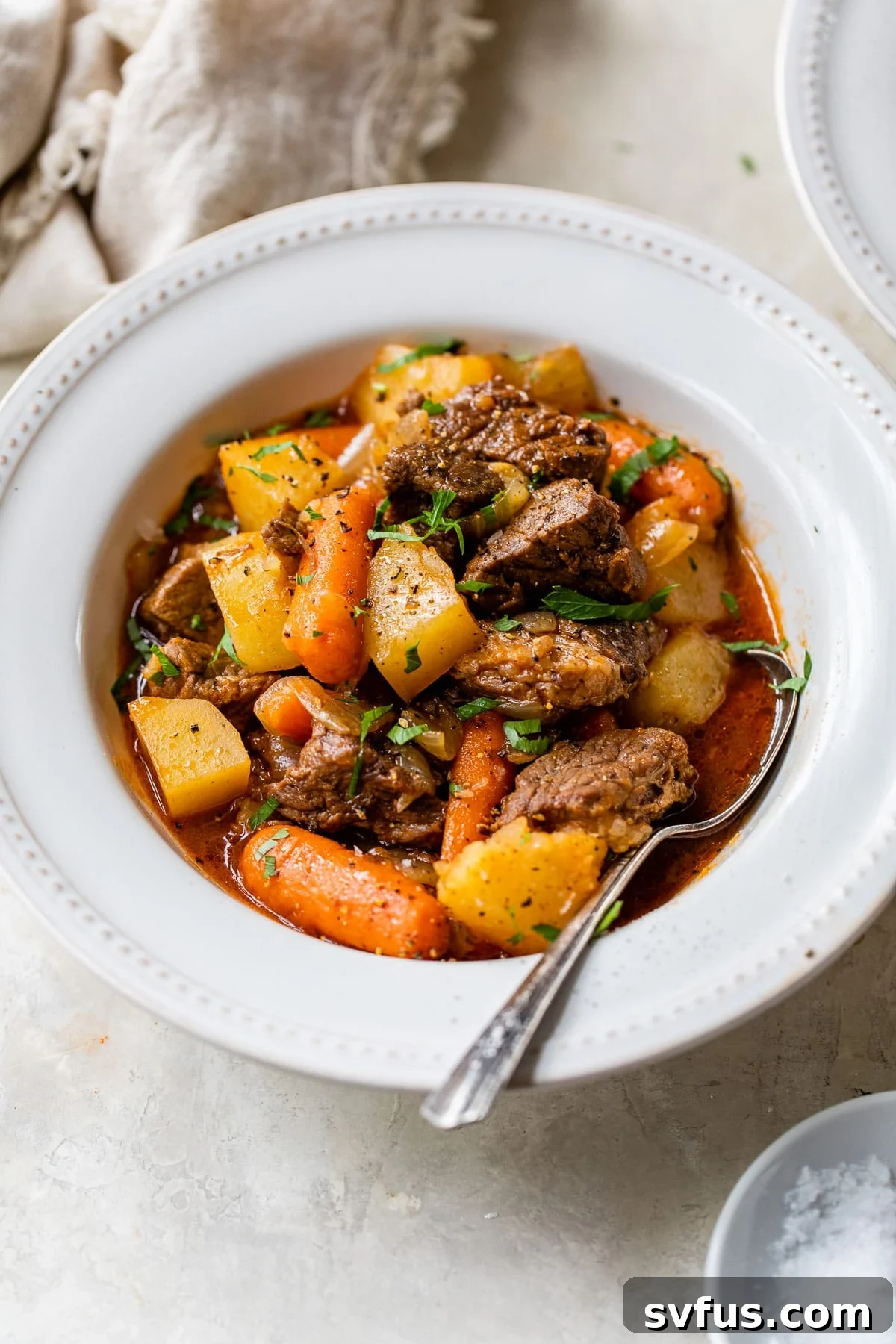
Paleo Beef Stew is the epitome of comfort food, thoughtfully reimagined for a healthier lifestyle. This delightful one-pot meal is packed with incredibly tender beef, a vibrant medley of savory vegetables, and hearty potatoes, all slow-simmered to perfection in a rich, deeply flavored beef broth. What truly distinguishes this recipe is its unwavering commitment to dietary compliance: it’s entirely gluten-free, dairy-free, and perfectly suitable for those following a Whole30 program. Prepare to indulge in a meal that not only nourishes your body but also warms your soul, without compromising on taste or satisfaction.
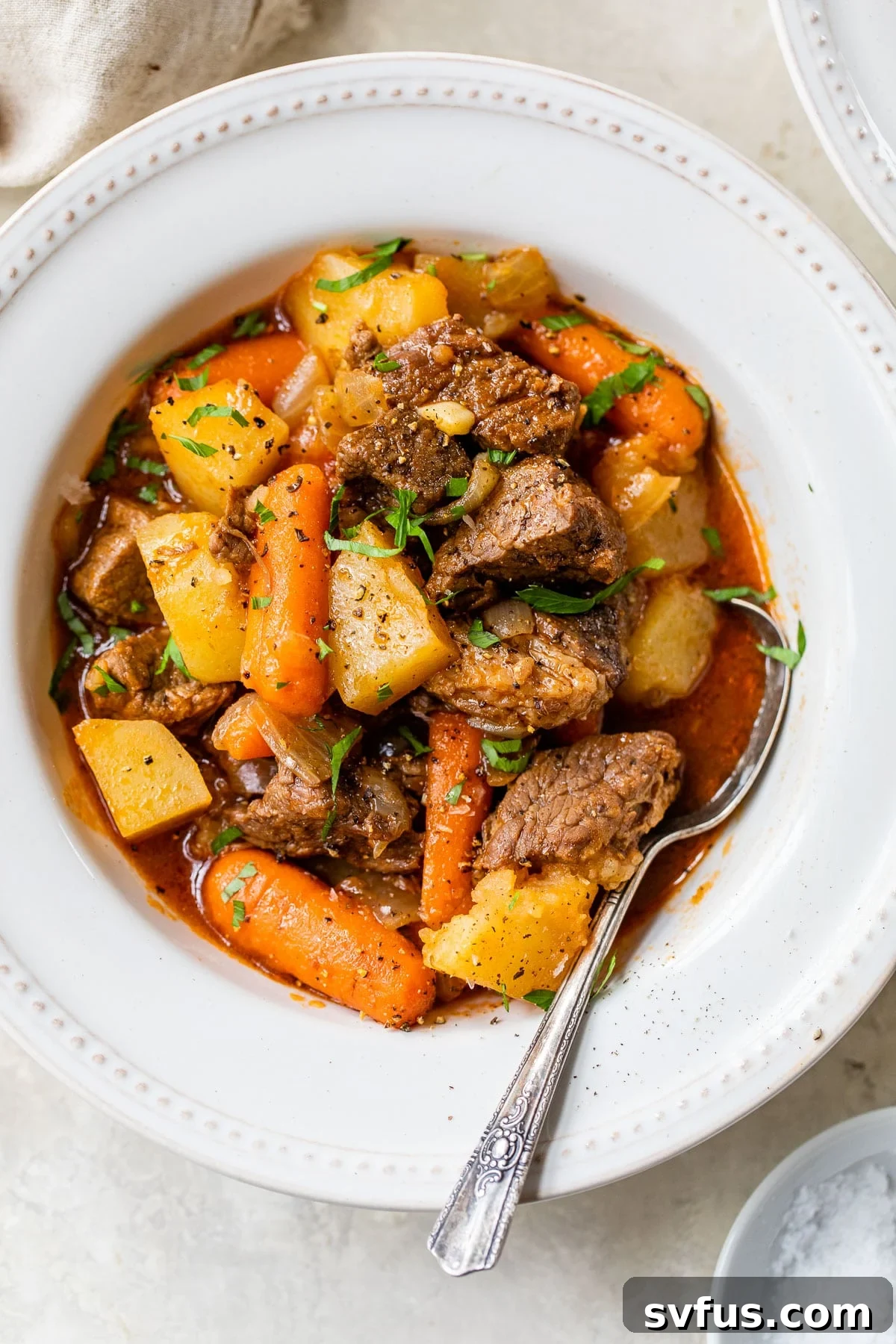
Imagine spooning into succulent bites of melt-in-your-mouth stew meat, perfectly tender carrots and onions, and creamy potatoes, all enveloped in a smooth and intensely flavorful broth. This isn’t just a dream – you get all of that and so much more with this exceptional Paleo Beef Stew recipe! It’s meticulously crafted to bring you the nostalgic comfort of a classic beef stew, but with a clean, wholesome twist that aligns seamlessly with your dietary goals. Forget complicated ingredients or lengthy prep times; this recipe champions fantastic flavors derived from simple, readily available, and paleo-friendly staples.
One of the most appealing aspects of this paleo beef stew is its incredible versatility across various cooking methods. Whether you prefer the traditional stovetop approach, the set-it-and-forget-it convenience of a slow cooker, or the rapid cooking of an Instant Pot for a quick weeknight meal, this recipe adapts beautifully. Each method is straightforward and largely hands-off, meaning you won’t need to constantly monitor the pot. It’s a truly forgiving recipe that consistently delivers delicious, satisfying results every time.
Craving more comforting and hearty paleo meals to add to your rotation? Be sure to explore some of our other top picks that promise the same deliciousness and dietary compliance. You’ll absolutely love our Whole30 Meatloaf for a classic comfort dish, the rich and savory Cream of Mushroom Pork Chops, and our flavorful Baked Paleo Meatballs with Kale Pesto. These recipes are perfect for keeping your healthy eating journey exciting, flavorful, and incredibly satisfying.
Why You’ll Love This Paleo & Whole30 Beef Stew
- Nutrient-Dense & Satisfying: This stew is generously packed with high-quality protein and wholesome, nutrient-dense vegetables, ensuring you feel full, satisfied, and energized for hours without the heaviness often associated with traditional stews.
- Dietary Friendly & Inclusive: A truly versatile dish that is naturally gluten-free, dairy-free, and fully compliant with the strict guidelines of the Whole30 program. It’s an excellent choice for individuals with various dietary restrictions or those simply seeking cleaner eating options.
- Effortless Meal Prep Solution: Ideal for planning ahead, this stew makes an excellent make-ahead dinner. Prepare a large batch on the weekend and enjoy healthy, delicious, and easy-to-reheat meals throughout your busy week with minimal extra effort.
- Incredible Depth of Flavor: Despite its “clean” ingredient list, this stew does not compromise on taste. The slow simmering process allows all the ingredients to meld together, creating a rich, deeply savory, and incredibly satisfying broth that’s bursting with natural flavors.
- Versatile Cooking Options: Adapt this recipe to your lifestyle and kitchen setup. Whether you prefer the classic stovetop method, the hands-off approach of a slow cooker, or the speed and efficiency of an Instant Pot, this stew delivers consistent, delicious results.
- Simple & Accessible Ingredients: You won’t find any exotic or hard-to-find ingredients here. This recipe relies on readily available, paleo-friendly staples, making it accessible for any home cook.
Paleo Beef Stew Ingredients Guide: What You’ll Need
Creating an exceptional paleo beef stew begins with selecting and understanding each ingredient’s unique contribution to the dish. Here’s a detailed look at what you’ll need and expert tips for each:
- Stew Meat: The absolute star of this hearty dish! Stew meat is typically comprised of pre-cubed chuck roast, a cut renowned for its rich marbling, which renders beautifully during slow cooking, resulting in incredibly tender and flavorful beef. While convenient, you can also purchase a boneless chuck roast, beef short ribs, or even brisket and cut it yourself into 1-2 inch pieces for better control over quality and size. It’s crucial to avoid leaner, pricier cuts like sirloin or tenderloin, as they tend to become tough and dry when subjected to the long simmering times required for stew.
- Coconut Aminos: This indispensable ingredient serves as a fantastic gluten-free and low-sodium alternative to traditional soy sauce. It imparts a subtle umami depth and a hint of sweetness without any soy or gluten, making it perfect for paleo and Whole30 diets. If coconut aminos are unavailable, a certified gluten-free soy sauce or liquid aminos could be used, though it’s important to note that liquid aminos are not strictly paleo.
- Beef Broth: The fundamental liquid base that forms the soul of your stew. Opt for a high-quality, unsalted beef broth to control the overall sodium content. For an even richer, more profound flavor and added nutritional benefits, we highly recommend using homemade bone broth, which adds beneficial collagen and a luxurious mouthfeel. Chicken broth can be used as a substitute in a pinch, but beef broth offers the most authentic and robust flavor for a classic beef stew. Always carefully check store-bought broth labels to ensure they are paleo and Whole30 compliant, free from added sugars, dairy, or questionable preservatives.
- Aromatic Vegetables (Onions, Carrots, Garlic): These form the aromatic foundation and sweeten the broth as they cook down. Yellow onions and carrots are indispensable staples, providing essential sweetness and a classic stew flavor profile. Minced fresh garlic adds a pungent, aromatic kick that beautifully complements the beef and other vegetables. Feel free to expand your vegetable medley with other paleo-friendly options such as chopped celery for added depth, mushrooms for an earthy richness, turnips, parsnips, or even shredded cabbage for additional texture and nutrients.
- Potatoes: Russet potatoes are an excellent choice for beef stew because their starch helps to naturally thicken the broth, contributing to a wonderfully creamy and hearty texture. Yukon Gold or fingerling potatoes also work beautifully. For those aiming to reduce carbohydrate intake, consider health-conscious swaps like rutabaga, celery root (celeriac), sweet potatoes, or even cauliflower florets.
- Tomato Paste: A small but incredibly potent ingredient that adds concentrated tomato flavor and a significant boost of umami, deepening the color and complexity of the stew’s base.
- Herbs & Spices (Oregano, Bay Leaves, Salt, Pepper): Dried oregano adds a warm, earthy, and distinctly savory flavor that harmonizes wonderfully with beef. Bay leaves are crucial for infusing the broth with a subtle, complex, and herbaceous aroma throughout the long simmering process. Don’t underestimate the importance of generously seasoning with salt and freshly ground black pepper at each stage of cooking to layer in flavor.
- Olive Oil: Used for searing the beef and gently sautéing the vegetables. Choose a good quality extra virgin olive oil for its rich flavor and numerous health benefits.
How to Make the Perfect Paleo Beef Stew: Step-by-Step Guide
Follow these meticulously detailed steps to create a rich, tender, and deeply satisfying paleo beef stew that will become a family favorite:
-
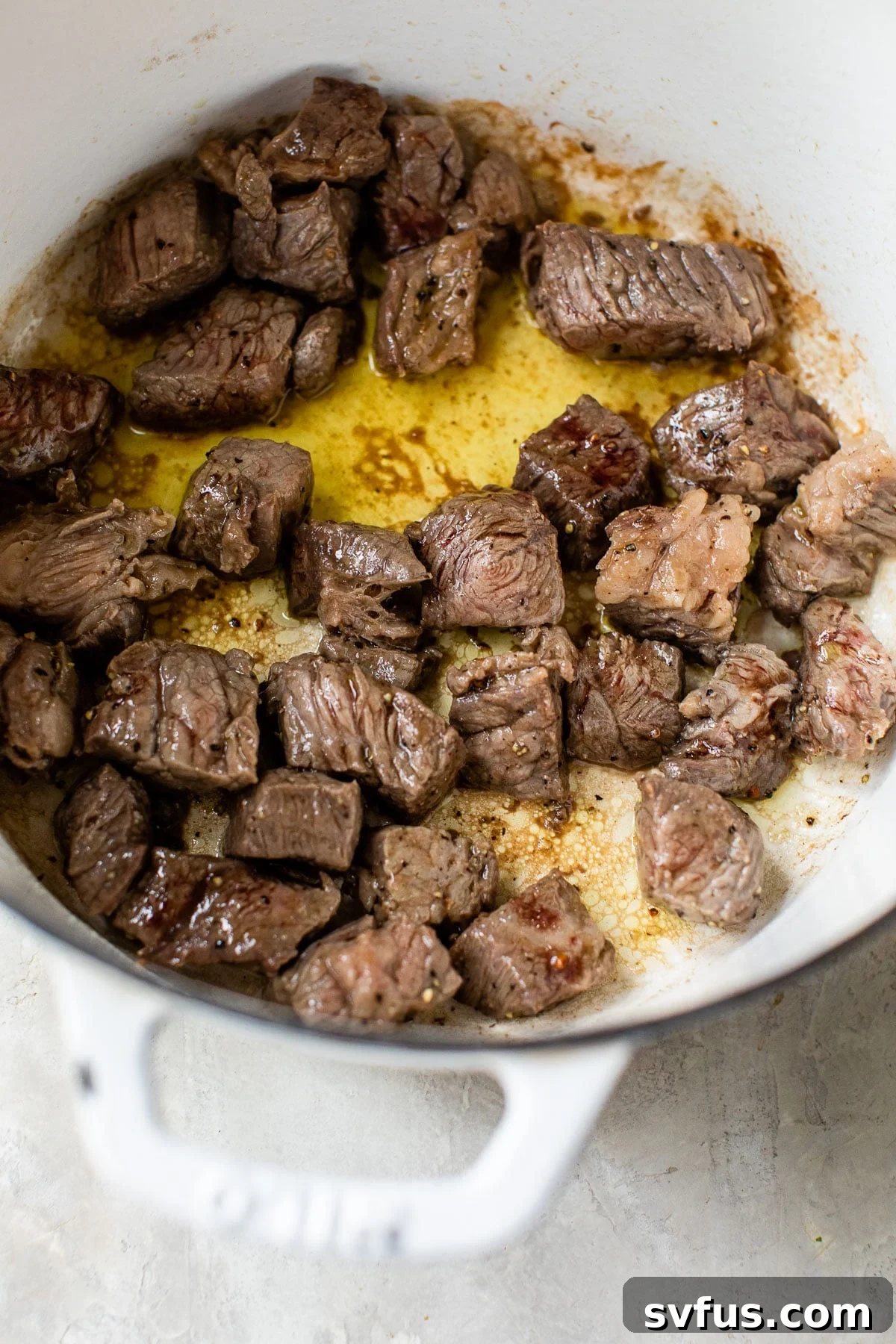
Step 1: Sear the Beef for Unrivaled Flavor. Begin by generously seasoning your cubed stew meat on all sides with a good pinch of salt and freshly ground black pepper. Heat a tablespoon of olive oil in a large, heavy-bottomed pot or Dutch oven over medium-high heat until it shimmers and is hot enough to create an immediate sizzle. Add the seasoned beef in a single layer, ensuring not to overcrowd the pot – work in batches if necessary. Sear the beef for about 2-3 minutes per side, allowing it to develop a deep, dark brown crust. This crucial step, known as the Maillard reaction, creates incredible savory flavors that will form the backbone of your stew. Once thoroughly seared, use a slotted spoon to carefully remove the beef from the pot and set it aside on a plate.

Searing the beef until perfectly browned to lock in flavor and create a rich base. - Step 2: Build the Aromatic Foundation. Reduce the heat to medium. If necessary, add a tiny bit more olive oil to the pot. Toss in the chopped yellow onion and carrots, and sauté them gently for about 5-7 minutes, stirring occasionally, until they begin to soften and become wonderfully fragrant. Next, add the minced garlic and cook for just another minute until it becomes aromatic, being extremely careful not to let it burn, which can impart a bitter taste. Stir in the tomato paste, dried oregano, and a pinch of salt. Cook this mixture for an additional 2 minutes, stirring constantly, allowing the tomato paste to toast slightly and deepen its concentrated flavor.
- Step 3: Simmer the Beef to Fork-Tender Perfection. Return the seared beef to the pot, nestling it amongst the sautéed vegetables. Pour in the rich beef broth, water, and coconut aminos. Add the fragrant bay leaves to the pot. Bring the entire mixture to a gentle rolling boil over medium-high heat, then immediately reduce the heat to a very low simmer. Cover the pot tightly with a lid and let it gently simmer for approximately 45 minutes, or until the beef is incredibly soft and practically fall-apart tender. The key to truly tender beef is patience and a slow, steady simmer.
-
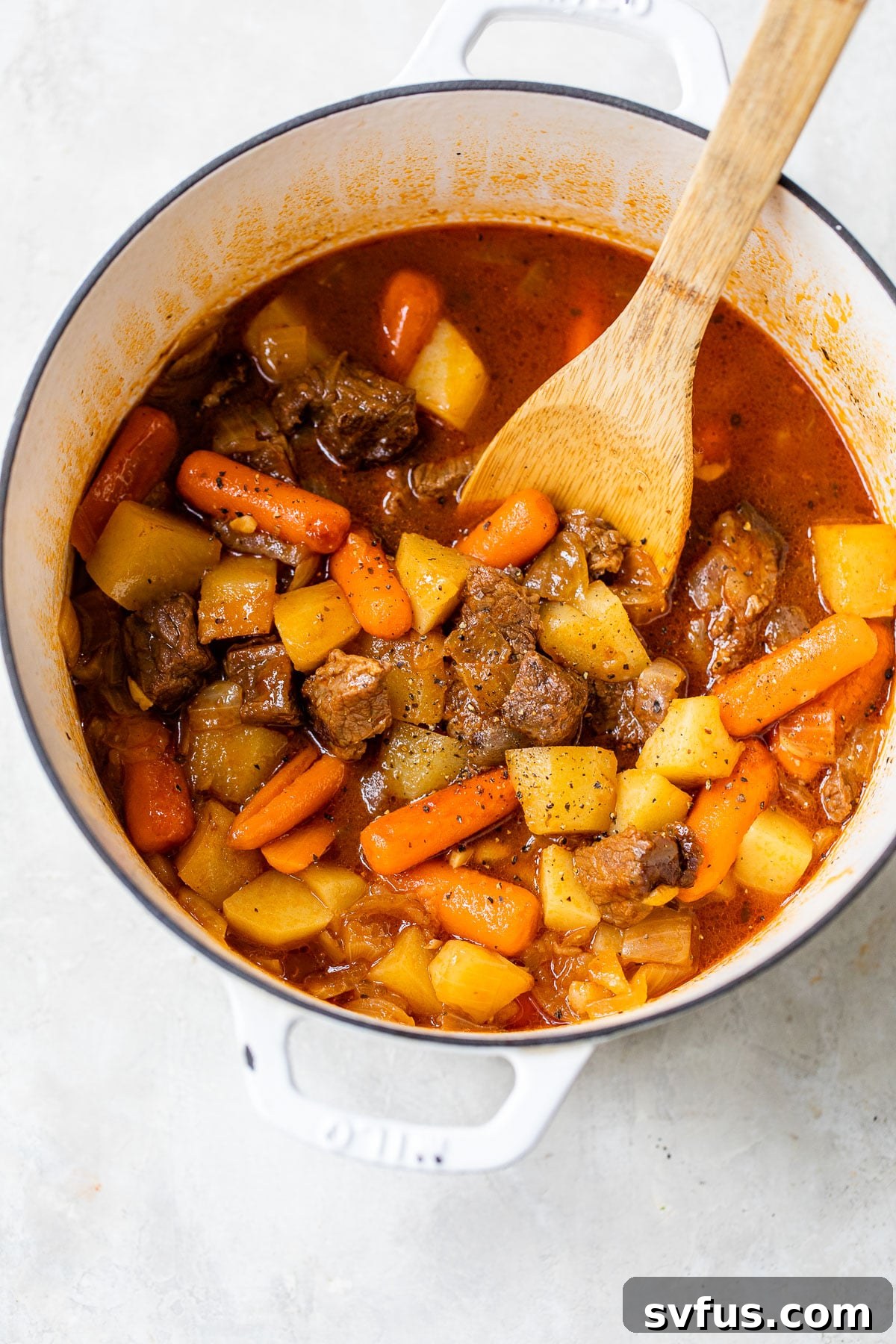
Step 4: Incorporate Potatoes and Finish with Flair. Finally, add the diced russet potatoes to the pot. Bring the liquid back up to a boil once more, then reduce the heat to a gentle simmer. Cover the pot again and continue to cook for another 15-20 minutes, or until the potatoes are completely fork-tender and easily pierced. Once cooked, carefully remove and discard the bay leaves, as their flavor can become overpowering if left in too long. Taste the stew and adjust the seasonings as needed, adding more salt and freshly ground black pepper to your preference. Serve hot and savor the rich, comforting flavors!
The stew simmering with all its hearty ingredients, reaching peak flavor and tenderness.
Expert Tips for a Flawless Paleo Beef Stew
Elevate your paleo beef stew with these insightful tips and tricks from the pros:
- Embrace Meat Variety: This paleo stew is remarkably adaptable! While beef chuck is the traditional and preferred choice, don’t hesitate to experiment with other cuts like pork shoulder, lamb shoulder, or even venison shoulder for a unique twist. The most important aspect is to cut the meat into evenly sized cubes (ideally 1-2 inches) to ensure uniform cooking and consistent tenderness throughout the stew.
- Optimize Broth Quality: For an even deeper, more complex, and richer stew, prioritize using high-quality homemade beef bone broth. The added collagen not only significantly enhances the nutritional profile but also contributes to a naturally thicker, more luxurious mouthfeel and layers of savory flavor. If using store-bought broth, always opt for an unsalted or low-sodium version to maintain control over the overall seasoning of your stew.
- Achieve Perfect Thickness: If you find your stew isn’t as thick as you’d prefer, you have excellent paleo-friendly options for natural thickening. In a small bowl, whisk together 2 tablespoons of arrowroot flour or tapioca starch with 2 tablespoons of warm water to create a smooth slurry. Stir this thickening mixture into the stew during the last few minutes of cooking, allowing it to simmer gently for another 2-3 minutes until it reaches your desired consistency. The starch will activate and create a beautiful, glossy texture.
- Explore Lower Carb Alternatives: To significantly reduce the carbohydrate content of your stew without sacrificing heartiness, simply swap the russet potatoes for other delicious root vegetables such as rutabaga, celery root (celeriac), or even chunks of cauliflower. These alternatives will still absorb the delicious broth and add wonderful texture.
- Master Seasoning: Always taste your stew before serving! Seasoning is the key to transforming a good dish into an outstanding one. Add more salt and pepper as needed, and consider a tiny splash of apple cider vinegar or a squeeze of fresh lemon juice at the very end for a bright, acidic lift that beautifully balances the rich, savory flavors.
- Finish with Fresh Herbs: For a vibrant burst of freshness and aromatic appeal, stir in a handful of chopped fresh parsley, chives, or thyme just before serving. This adds a delightful contrasting element to the deeply cooked flavors and a beautiful visual touch.
- Don’t Rush the Sear: Patience during the initial searing of the beef is paramount. A good, deep sear creates a flavorful crust and locks in precious juices, which significantly contributes to the final depth and complexity of your stew’s taste. Always ensure your pan is hot and avoid overcrowding it; sear the beef in multiple batches if necessary.
Paleo Beef Stew FAQs
How do you make this recipe in the slow cooker?
Making this paleo beef stew in a slow cooker is incredibly convenient and perfect for busy days when you want a warm, homemade meal waiting for you. First, ensure you sear the beef in a skillet on the stovetop as described in Step 1 of the main recipe instructions. This initial searing step is crucial for developing deep, rich flavors that a slow cooker alone cannot achieve. Once seared, transfer the beef to your slow cooker. Then, add the sautéed onions, carrots, and garlic (from Step 2), along with the beef broth, water, coconut aminos, and bay leaves. Cover the slow cooker with its lid and cook on HIGH for 1 to 1.5 hours. After this initial cooking time, add the diced potatoes and continue cooking on HIGH for an additional 2 to 3 hours, or on LOW for 4 to 5 hours, until the beef is fall-apart tender and the potatoes are soft. Remember to remove the bay leaves before serving.
How do you make paleo beef stew in the Instant Pot?
The Instant Pot dramatically speeds up the cooking process for this paleo beef stew, making it a fantastic option for weeknights! Begin by setting your Instant Pot to “Saute” mode (on high). Add olive oil to the inner pot and brown the beef on all sides, working in batches if needed to ensure a good sear. Once browned, remove the beef and add the onions, carrots, and garlic to sauté for a few minutes until fragrant. Stir in the tomato paste, oregano, and salt, cooking for another minute. Return the seared beef to the pot. Pour in the coconut aminos and a splash of beef broth, using a wooden spoon to deglaze the pot by scraping up any browned bits from the bottom – this step is essential for flavor and to prevent a “burn” notice. Then, add the remaining beef broth, water, bay leaves, and diced potatoes. Close the lid, ensure the steam release valve is set to the “Sealing” position, and set your Instant Pot to cook on high pressure for 20 minutes. Once the cooking cycle is complete, carefully perform a manual quick release of the pressure, remove the lid, discard the bay leaves, and enjoy your incredibly quick and tender stew!
Serving Suggestions
This robust Paleo Beef Stew is wonderfully fulfilling on its own, making it a complete and satisfying meal. However, it also pairs beautifully with a few simple additions to enhance your dining experience. Serve it alongside a crisp green salad tossed with a light vinaigrette for a refreshing contrast. For those who appreciate a fuller meal, consider a side of fluffy cauliflower rice, perfectly steamed green beans, or some vibrant sautéed kale or spinach. A final sprinkle of fresh parsley or chives just before serving adds a delightful pop of color and herbaceous freshness, elevating both the presentation and aroma.
Storage and Meal Prep
Hearty beef stew is an ideal candidate for meal prepping, as its flavors often deepen and improve significantly after a day or two in the refrigerator. Feel free to double the recipe to enjoy some now and conveniently save the rest for later.
- Refrigerator: Allow your paleo beef stew to cool completely to room temperature before transferring it into an airtight container. It will keep beautifully in the refrigerator for 3 to 4 days. To reheat, gently warm it over medium-high heat on the stovetop, stirring occasionally, until thoroughly heated through. You might find it has thickened slightly, so feel free to add a splash of extra broth or water to achieve your desired consistency.
- Freezer: For extended storage, transfer the cooled stew to freezer-safe bags or airtight containers, ensuring you leave a little headspace to allow for expansion during freezing. It can be stored in the freezer for up to 3 months. When you’re ready to savor it again, thaw the stew in the refrigerator overnight before reheating on the stovetop or gently in the microwave.
More Paleo Soups and Stews to Explore
DF
P
30
Easy Paleo Chili
DF
P
30
Paleo Beef Pho
DF
P
30
Spicy Sausage Potato Soup
If you made this delicious recipe, we’d absolutely love to hear from you! Please take a moment to leave a comment and a star rating below to share your experience and help other home cooks. Thank you for cooking with us!
Paleo Beef Stew
By Erin Alvarez
Servings: 3
Prep Time: 10 mins
Cook Time: 1 hr
Total Time: 1 hr 10 mins
This Paleo Beef Stew is full of tender beef, savory veggies, and hearty potatoes. Simmered low and slow in a rich, beefy broth, this perfectly warm and comforting one-pot meal is both gluten-free and Whole30 compliant.
Video
Ingredients
- 1 lb. stew meat
- 1 tbsp olive oil, or more
- Salt and pepper, to taste
- 1 yellow onion, chopped
- 1 1/2 cups baby carrots, whole or chopped
- 4 garlic cloves, chopped
- 2 tbsp tomato paste
- 1/2 tsp oregano
- 1/2 tsp salt
- 32 oz. beef broth
- 1 cup water
- 3 tbsp coconut aminos
- 2 bay leaves
- 2 russet potatoes, peeled and diced
Instructions
- Season the beef with salt and pepper on all sides. Heat olive oil in a large pot or Dutch oven over medium heat, then add the beef and pan-sear it for 8 minutes; use a slotted spoon to remove the beef and set it aside.
- Next, add the onions, carrots, and garlic and sauté for 5 minutes; then, add the tomato paste, salt and oregano and cook for 2 more minutes.
- Add the beef back into the pot, then pour in the broth, water, coconut aminos and bay leaves and bring the mixture to a boil. Cover, reduce heat to a simmer and simmer until the beef is tender, about 45 minutes.
- Last, add the potatoes, bring the soup back to a boil, then reduce to a simmer, cover and cook until the potatoes can easily be pierced with a fork, about 15 minutes.
- Distribute into bowls, add more salt and pepper to taste and enjoy!
Notes
- *Calories are per serving and are an estimation.
- *Storage: Store leftovers in a sealed container in the refrigerator for 3-4 days; reheat in a large saucepan over the stove.
Nutrition (Estimated per serving)
Calories: 454kcal
Carbohydrates: 41g
Protein: 42g
Fat: 13g
Saturated Fat: 4g
Polyunsaturated Fat: 1g
Monounsaturated Fat: 7g
Cholesterol: 94mg
Sodium: 2084mg
Potassium: 1605mg
Fiber: 5g
Sugar: 7g
Vitamin A: 9001IU
Vitamin C: 16mg
Calcium: 114mg
Iron: 6mg