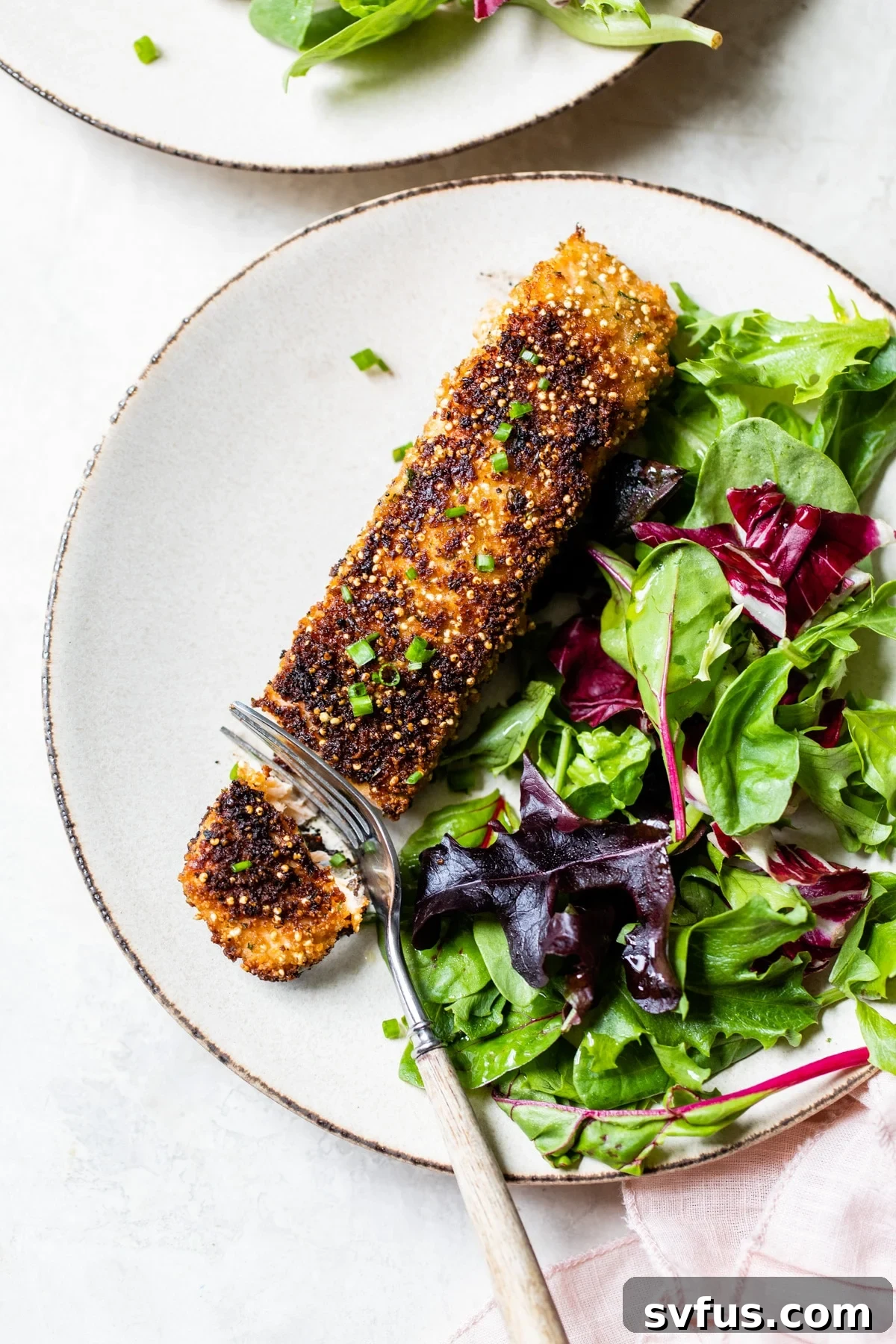
Crispy Quinoa Crusted Salmon: Your Go-To Healthy Weeknight Dinner
Experience culinary perfection with this extraordinary Quinoa Crusted Salmon recipe! Combining the flaky, rich flavor of salmon with a delightfully crispy, nutritious coating of quinoa and seasoned breadcrumbs, this dish is a true game-changer. It’s not just packed with incredible texture and savory taste, but it’s also astonishingly quick to prepare, taking less than 20 minutes from start to finish. Perfectly paired with a fresh side salad or your favorite vegetables, this Quinoa Crusted Salmon is poised to become your family’s new favorite healthy weeknight meal. Get ready to elevate your dinner routine!
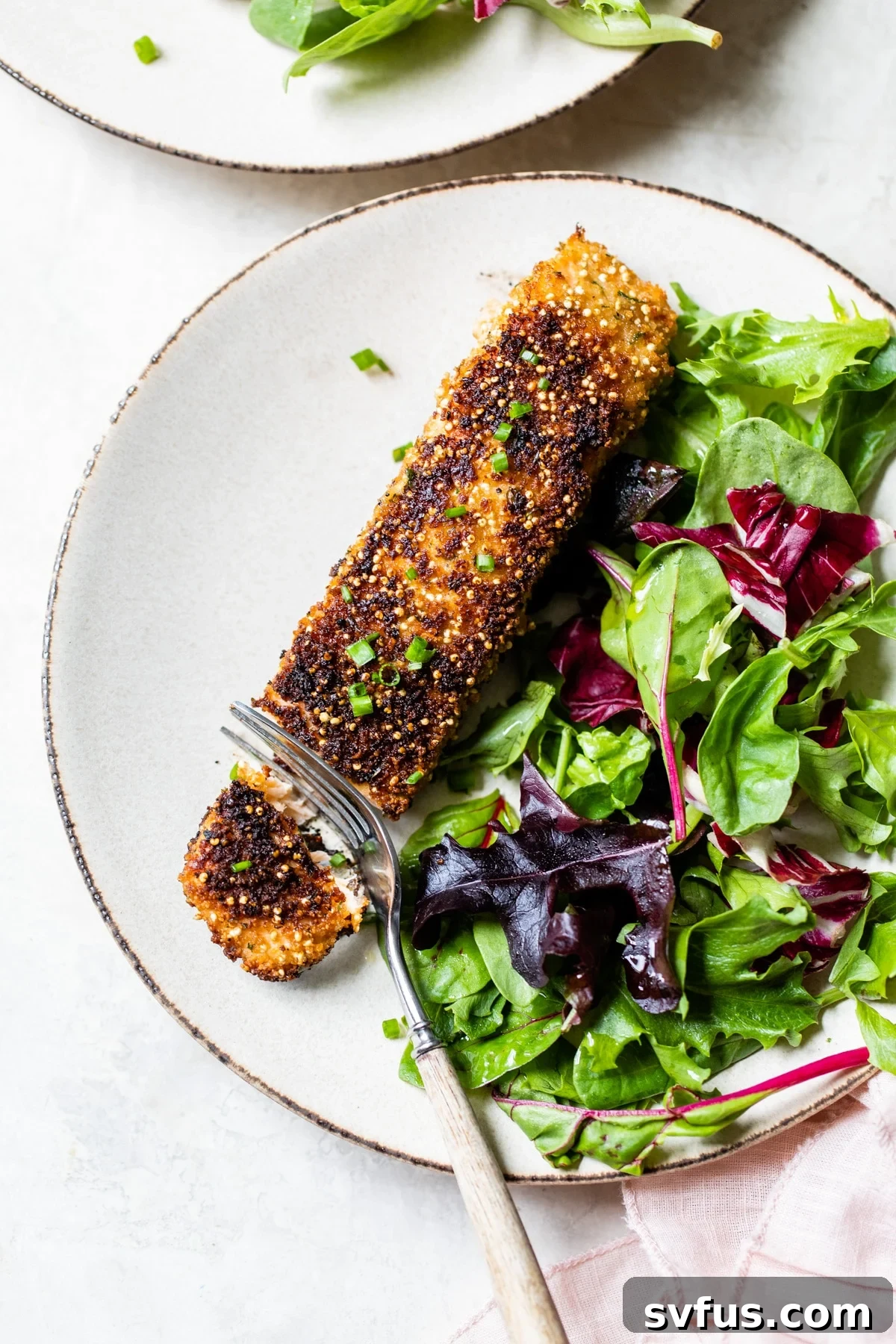
Why You’ll Adore This Quinoa Crusted Salmon Recipe
This isn’t just another salmon recipe; it’s a testament to how simple ingredients can create something truly spectacular. Here’s why this Quinoa Crusted Salmon will quickly earn a permanent spot in your recipe collection:
- Unrivaled Texture: Imagine salmon that’s exquisitely crispy on the outside, thanks to its unique quinoa and breadcrumb crust, yet remains incredibly tender, buttery, and flaky on the inside. This textural contrast is a delight in every bite.
- Flavorful & Nutritious Coating: The crust isn’t just for crunch; it’s a powerhouse of flavor and added nutrition. Seasoned breadcrumbs (feel free to use regular or gluten-free options!) combined with uncooked quinoa create a coating that’s both delicious and beneficial. Quinoa boosts the protein and fiber content, making this meal even more wholesome.
- Lightning-Fast Preparation: Forget long hours in the kitchen! This entire meal, from prep to plate, is ready in under 20 minutes. It’s the ultimate solution for busy weeknights when you crave a gourmet-quality dinner without the fuss.
- Healthy & Wholesome: Salmon is renowned for its high omega-3 fatty acids, vital for heart health and brain function. When combined with the complete protein and fiber from quinoa, you get a meal that’s satisfying, nourishing, and guilt-free.
- Impressively Easy: Don’t let the elegant appearance fool you. This recipe is straightforward, making it perfect for novice cooks and seasoned chefs alike. Minimal steps mean maximum enjoyment!
Essential Ingredients for Your Perfect Salmon
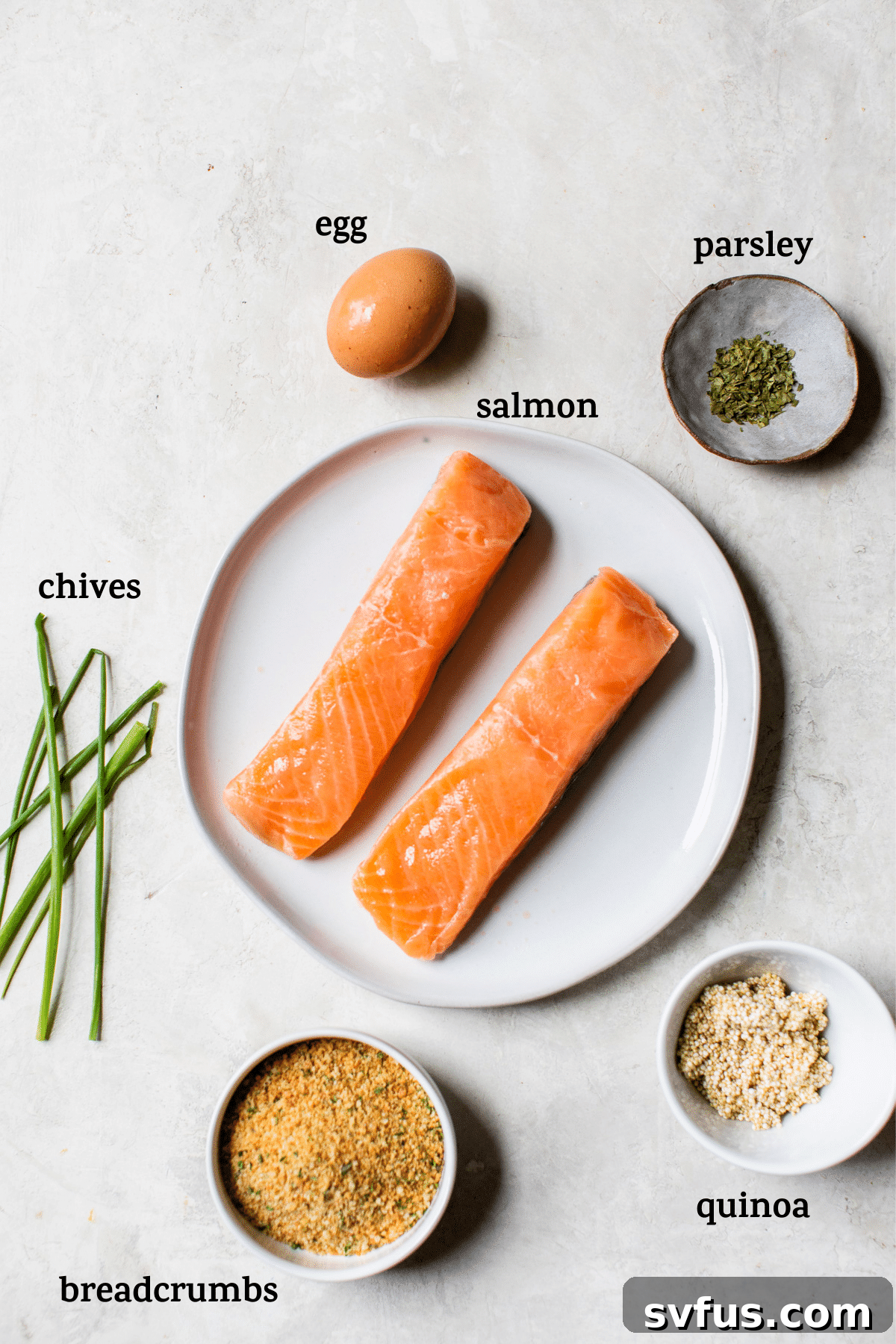
Crafting this delicious Quinoa Crusted Salmon requires just a few key ingredients, each playing a crucial role in the final flavor and texture. Here’s a detailed look at what you’ll need and some helpful tips for each:
- Salmon Fillets: Opt for boneless salmon fillets, ideally with the skin on. The skin helps protect the fish from overcooking and provides extra crispiness when fried. Both fresh and frozen salmon work beautifully; just ensure frozen fillets are completely thawed before you begin cooking. Patting them thoroughly dry is crucial for achieving that coveted crispy crust. Consider wild-caught salmon for superior flavor and nutritional profile.
- Uncooked Quinoa: You can use white or tri-color quinoa for this recipe. The key is to use it uncooked and *rinse it thoroughly* beforehand. Rinsing removes saponins, a natural coating that can give quinoa a bitter, soapy taste. To rinse, simply place the quinoa in a fine-mesh sieve and run cold water over it for at least 30 seconds until the water runs clear. Do not cook the quinoa; if pre-cooked, it will become mushy and lose its textural contribution to the crust during frying.
- Seasoned Breadcrumbs: These are essential for adding flavor and an extra layer of crunch to your crust. Pre-seasoned breadcrumbs typically contain a mix of herbs and spices like garlic powder, onion powder, and Italian seasoning, saving you a step. If you prefer to use unseasoned breadcrumbs (like Panko for extra crispiness), simply add your own blend of salt, pepper, garlic powder, dried parsley, and any other desired herbs to achieve a similar flavor profile. For a gluten-free version, readily available gluten-free seasoned breadcrumbs work perfectly.
- Large Egg: One large egg serves as the binding agent, helping the quinoa and breadcrumb mixture adhere to the salmon fillets. Whisk it well in a shallow bowl to create a smooth, even coating for the fish.
- Salt: A fundamental seasoning that enhances the natural flavors of both the salmon and the crust. Use fine sea salt or kosher salt for best results.
- Garlic Powder: Provides a savory, aromatic depth to the crust, complementing the rich taste of salmon beautifully.
- Dried Parsley: Adds a touch of herbaceous freshness and a hint of color to the crust. You can also use other dried herbs like dill or oregano if you prefer.
- Cooking Oil: Use 1-2 tablespoons of a high smoke point oil, such as avocado oil, grapeseed oil, or canola oil, for frying the salmon. This ensures a beautifully golden crust without burning.
- Fresh Chives (for garnish): A sprinkle of freshly chopped chives at the end adds a delicate oniony flavor and a vibrant green visual appeal, tying the dish together perfectly.
Step-by-Step Guide to Pan-Frying Quinoa Crusted Salmon
Achieving a perfectly crispy and tender Quinoa Crusted Salmon is simpler than you might think. Follow these easy steps for a restaurant-quality meal at home:
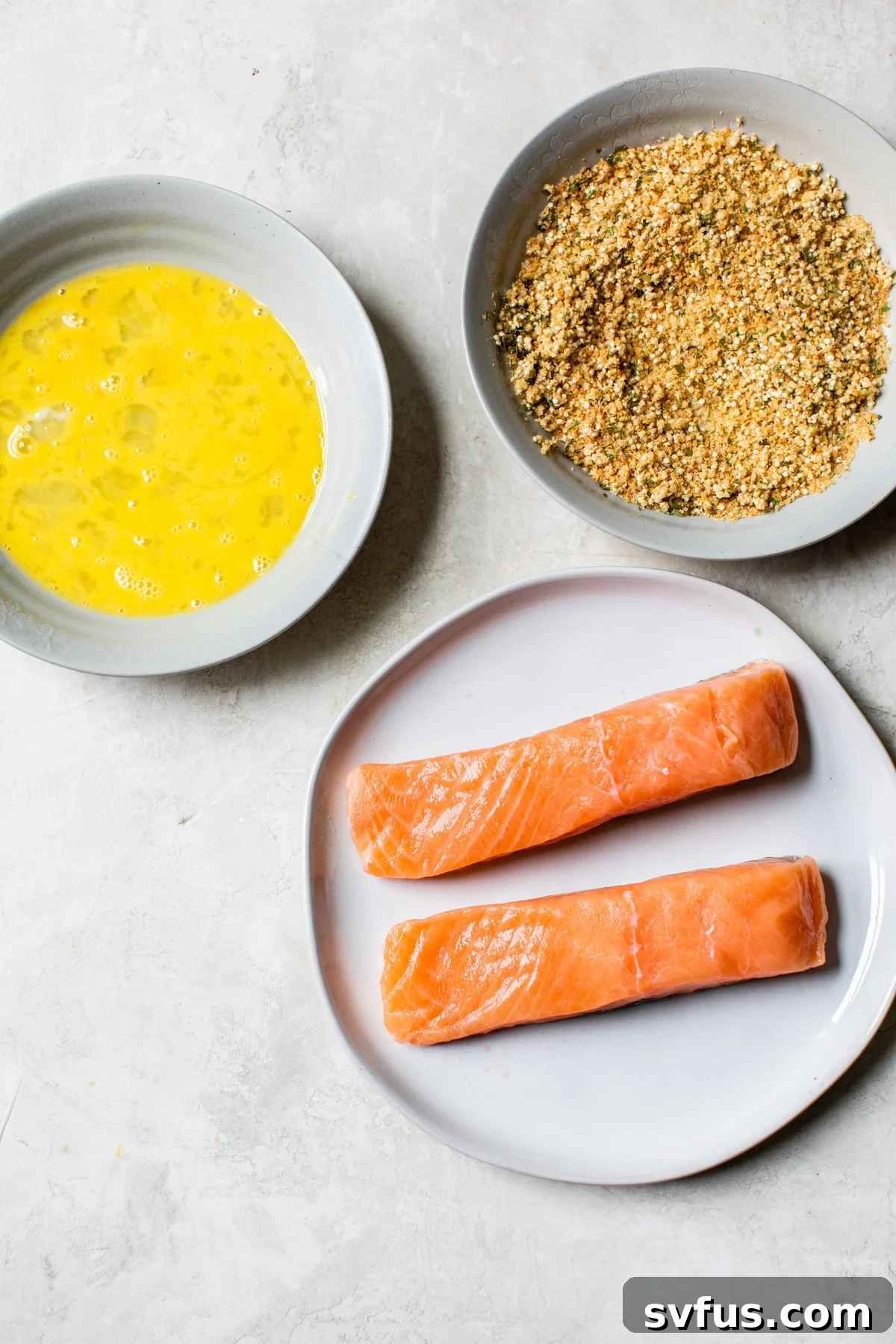
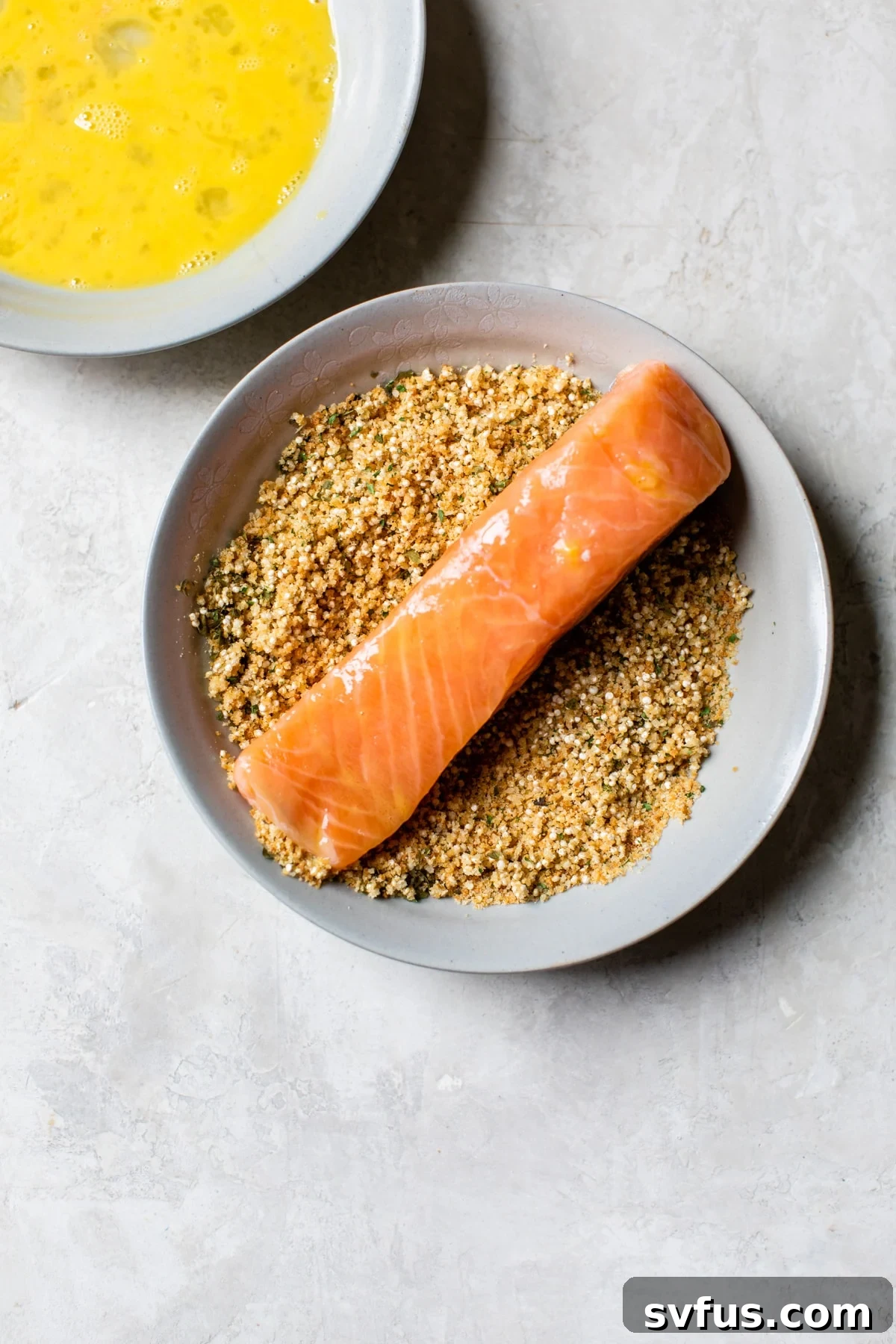
- Prepare Your Breading Stations: Begin by setting up two separate shallow bowls. In the first bowl, whisk the large egg until it’s smooth and lightly frothy. In the second, combine the uncooked, thoroughly rinsed quinoa, seasoned breadcrumbs, salt, garlic powder, and dried parsley. Mix these dry ingredients well to ensure an even distribution of flavor. While preparing, gently pat your salmon fillets completely dry with paper towels. This crucial step prevents sticking and promotes a crispier crust.
- Coat the Salmon Fillets: Take one salmon fillet and dip it entirely into the whisked egg mixture, allowing any excess to drip off. Immediately transfer the egg-coated fillet into the quinoa and breadcrumb mixture. Press gently to ensure both sides of the salmon are thoroughly and evenly coated with the crust. Repeat this process for all your salmon fillets.
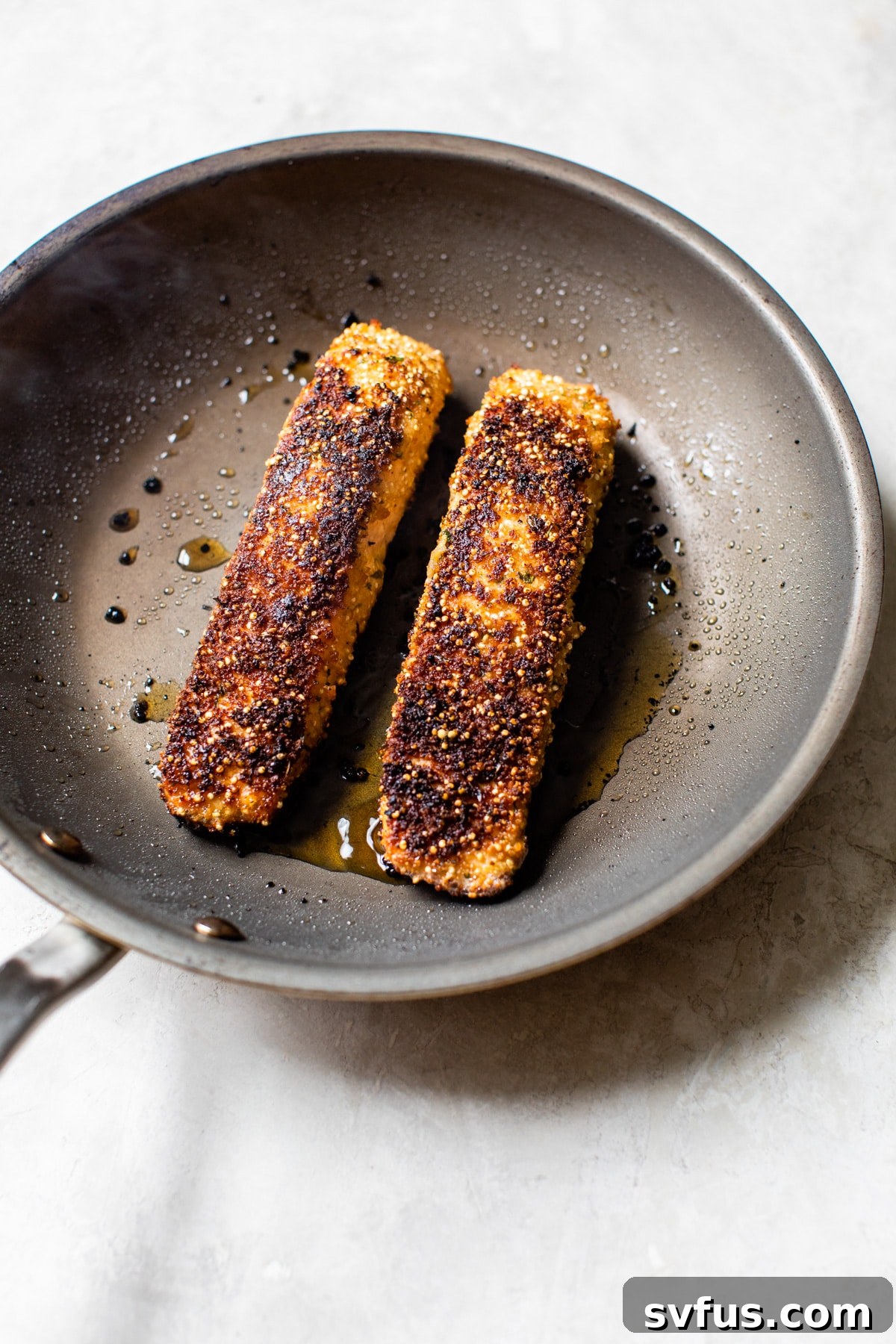
- Preheat and Fry the Salmon: Heat 1-2 tablespoons of your chosen cooking oil in a large nonstick skillet over medium-high heat. Allow the oil to get hot but not smoking. Carefully place the coated salmon fillets into the hot skillet, skin-side down (if applicable). Immediately cover the skillet with a lid. Cook for 5-6 minutes, which allows the skin to crisp up and the fish to cook through. The lid helps to steam the salmon, ensuring it cooks evenly and remains moist.
- Finish Cooking and Serve: After 5-6 minutes, remove the lid, gently flip the salmon fillets to the other side (crust-side down), and continue to cook for an additional 1-2 minutes, or until the salmon reaches an internal temperature of 145°F (63°C) and the crust is golden brown and crispy. Remove from the skillet, transfer to serving plates, and immediately garnish with freshly chopped chives. Serve hot and savor this delightful dish!
Expert Tips & Frequently Asked Questions
Even though this recipe is incredibly simple, a few expert tips can ensure your Quinoa Crusted Salmon turns out perfect every single time. Here are some insights and answers to common questions:
Tips for the Best Quinoa Crusted Salmon:
- Pat the Salmon Thoroughly Dry: This step cannot be overstated! Moisture is the enemy of crispiness and can cause the salmon to stick to your pan. Use paper towels to gently but firmly pat down both sides of your salmon fillets before dipping them in the egg wash.
- Rinse Your Quinoa! This is absolutely non-negotiable when working with uncooked quinoa. Quinoa has a natural coating called saponin, which can impart a bitter, soapy taste if not rinsed off. Place the quinoa in a fine mesh sieve and run cold water over it for at least 30 seconds until the water runs completely clear. Don’t worry if it’s still a bit wet; it won’t affect the crust.
- Don’t Overcrowd the Skillet: Cook salmon in batches if necessary to ensure each fillet has enough space. Overcrowding lowers the pan’s temperature and can lead to steaming instead of frying, resulting in a less crispy crust.
- Use a Nonstick Skillet and a Lid: A good quality nonstick skillet prevents sticking and ensures even heat distribution. The lid is crucial during the initial cooking phase as it creates steam, helping the salmon cook through gently while the crust develops.
- Monitor Cook Times: Salmon fillet thickness can vary greatly. While 5-6 minutes on the skin side and 1-2 minutes on the other side is a good general guideline, always keep an eye on your salmon. It’s done when it flakes easily with a fork and reaches an internal temperature of 145°F (63°C). Overcooked salmon becomes dry and less enjoyable.
- Rest Your Salmon: Just like with other meats, letting the salmon rest for a minute or two after cooking helps the juices redistribute, ensuring a more moist and tender result.
Frequently Asked Questions:
Can I use skinless salmon fillets?
Yes, absolutely! While skin-on salmon is generally preferred for its added protection and crispiness, you can certainly use skinless fillets. Just be aware that skinless salmon might be slightly more prone to sticking to the skillet, even a nonstick one. Ensure your pan is well-oiled and adequately preheated, and remember to pat the fillets extra dry.
What if I don’t have seasoned breadcrumbs?
No problem! You can easily make your own by using plain breadcrumbs (Panko is great for extra crispiness) and adding your own seasonings. For every 3 tablespoons of plain breadcrumbs, mix in about 1/4 teaspoon of garlic powder, a pinch of onion powder, a pinch of dried parsley, and salt and pepper to taste. Feel free to customize with other herbs like dried dill or a pinch of paprika.
Can I prepare the salmon ahead of time?
You can prepare the breading mixture and rinse the quinoa a day in advance and store them separately. However, it’s best to coat the salmon just before frying to ensure the freshest, crispiest crust. Cooked salmon is best enjoyed immediately for optimal texture.
How do I store and reheat leftovers?
Store any leftover Quinoa Crusted Salmon in an airtight container in the refrigerator for up to 2-3 days. To reheat, gently warm in a skillet over medium-low heat for a few minutes per side, or in an oven preheated to 300°F (150°C) for about 10-15 minutes, until heated through. Be careful not to overcook, as reheating can dry out salmon quickly. The crust might lose some of its initial crispiness, but it will still be delicious.
Serving Suggestions to Complement Your Salmon
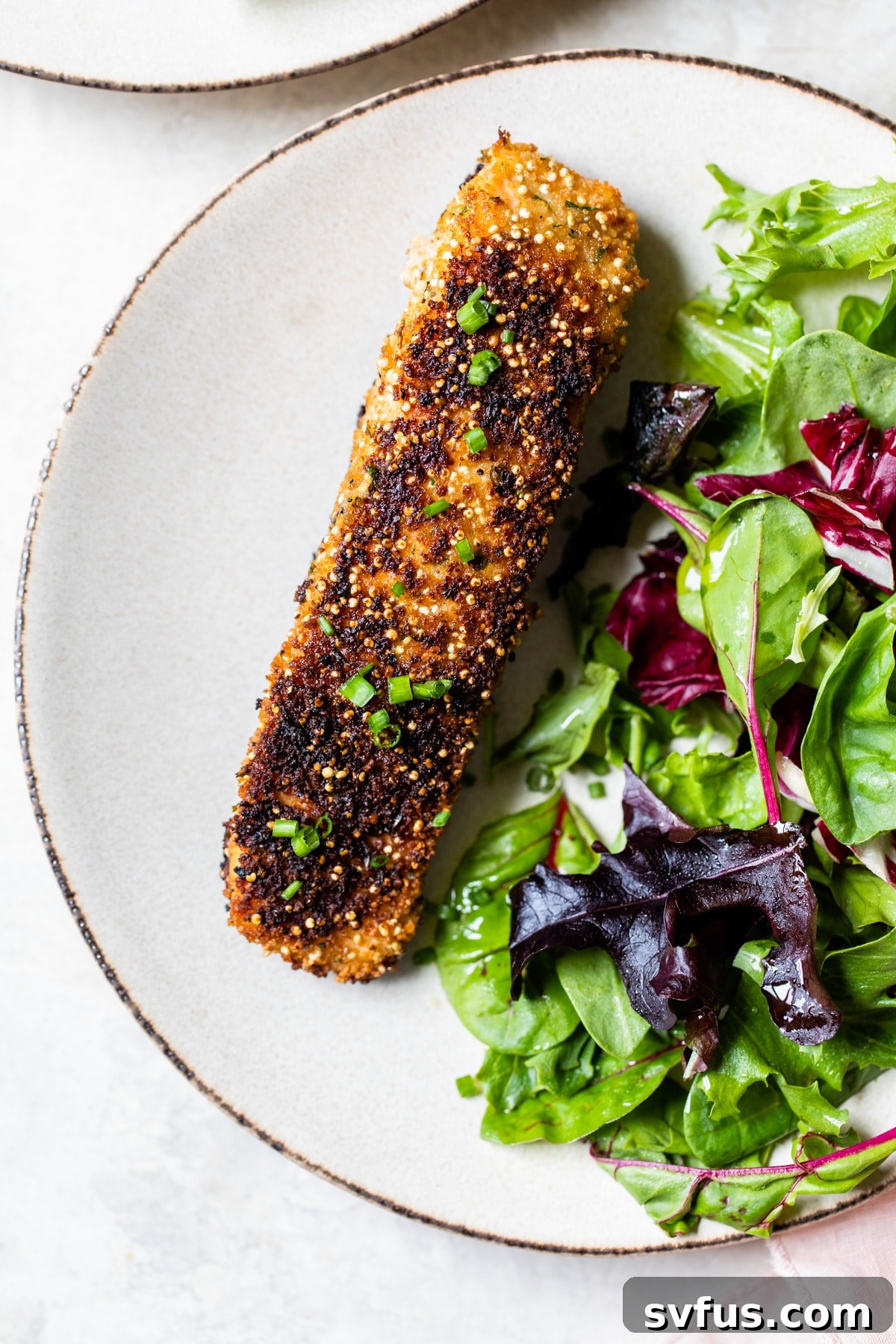
This Quinoa Crusted Salmon is a versatile main course that pairs wonderfully with a variety of sides. While a simple side salad is always a great choice, here are some other delicious ideas to complete your meal:
- Fresh Green Salad: A light and zesty green salad with a vinaigrette dressing is a classic pairing that provides a refreshing contrast to the rich salmon.
- Roasted Vegetables: Asparagus, broccoli, green beans, or Brussels sprouts roasted with a little olive oil, salt, and pepper make for a simple and healthy accompaniment.
- Steamed Rice or Quinoa: A bed of fluffy white or brown rice, or even cooked quinoa, can absorb the delicious juices from the salmon and add a comforting element to your plate.
- Mashed Potatoes or Cauliflower Mash: For a more indulgent side, creamy mashed potatoes or a lighter cauliflower mash provides a smooth texture that beautifully contrasts the crispy salmon.
- Lemon Wedges: A squeeze of fresh lemon juice just before serving brightens the flavors of the salmon and enhances its natural taste.
- Light Sauces: A simple dill yogurt sauce, a squeeze of sriracha mayo, or even a homemade pesto can add an extra layer of flavor without overpowering the dish.
More Irresistible Salmon Recipes
If you’re a fan of delicious and healthy salmon dishes, you’ll love exploring these other fantastic recipes:
- Honey Soy Salmon: A perfect balance of sweet and savory, this salmon recipe is quick to make and bursting with Asian-inspired flavors.
- Sun-Dried Tomato Salmon Skillet: An all-in-one skillet meal featuring flaky salmon, tangy sun-dried tomatoes, and creamy sauce, ideal for an effortless dinner.
- Bacon-Wrapped Salmon with Avocado Dressing: Indulgent bacon wraps around tender salmon, complemented by a fresh and creamy avocado dressing for a truly memorable dish.
Rated 5 out of 5 stars by 3 community members.
Quinoa Crusted Salmon
Erin Alvarez
2
5 mins
10 mins
15 mins
Print Recipe
Ingredients
- 12 oz. salmon fillets (two 6 oz. fillets)
- 1 large egg
- 3 tbsp seasoned breadcrumbs (gluten-free or regular)
- 3 tbsp uncooked quinoa (rinsed)
- 1/2 tsp salt
- 1/2 tsp garlic powder
- 1/2 tsp dried parsley
- 1-2 tbsp cooking oil (e.g., avocado oil, grapeseed oil)
- Fresh chives for garnish (optional)
Instructions
- Whisk the egg in one shallow bowl. In a separate shallow bowl, combine the seasoned breadcrumbs, thoroughly rinsed uncooked quinoa, salt, garlic powder, and dried parsley. Mix well. Pat salmon fillets completely dry with paper towels.
- Dip each salmon fillet into the whisked egg mixture, allowing excess to drip off. Then, transfer the fillet directly into the quinoa and breadcrumb mixture, pressing gently to ensure both sides are fully coated.
- Heat 1-2 tablespoons of cooking oil in a large nonstick skillet over medium-high heat until shimmering. Carefully place the coated salmon fillets into the hot skillet, skin-side down (if applicable). Immediately cover the skillet with a lid.
- Cook the salmon for 5-6 minutes. Then, remove the lid, gently flip the salmon to the other side, and cook for an additional 1-2 minutes, or until the salmon is flaky and cooked through (internal temperature 145°F/63°C).
- Remove the salmon from the skillet and transfer to serving plates. Garnish with fresh chives, if desired, and serve immediately. Enjoy!
Notes
*Always pat the salmon dry with a paper towel before dipping it into the egg and quinoa mixture for the crispiest crust.
*Nutritional information is an estimation and provided per serving.
Nutrition
Calories: 415kcal |
Carbohydrates: 25g |
Protein: 42g |
Fat: 15g |
Saturated Fat: 3g |
Cholesterol: 176mg |
Sodium: 889mg |
Potassium: 1023mg |
Fiber: 2g |
Sugar: 1g |
Vitamin A: 216IU |
Calcium: 70mg |
Iron: 4mg
Did you make this recipe?
We’d love to hear from you! Please leave a comment and a star rating below to share your experience!
UPDATE NOTE: This post was originally published in October 2018. It was updated with new photos and text in July 2020 to provide more comprehensive information and tips for the best cooking experience.