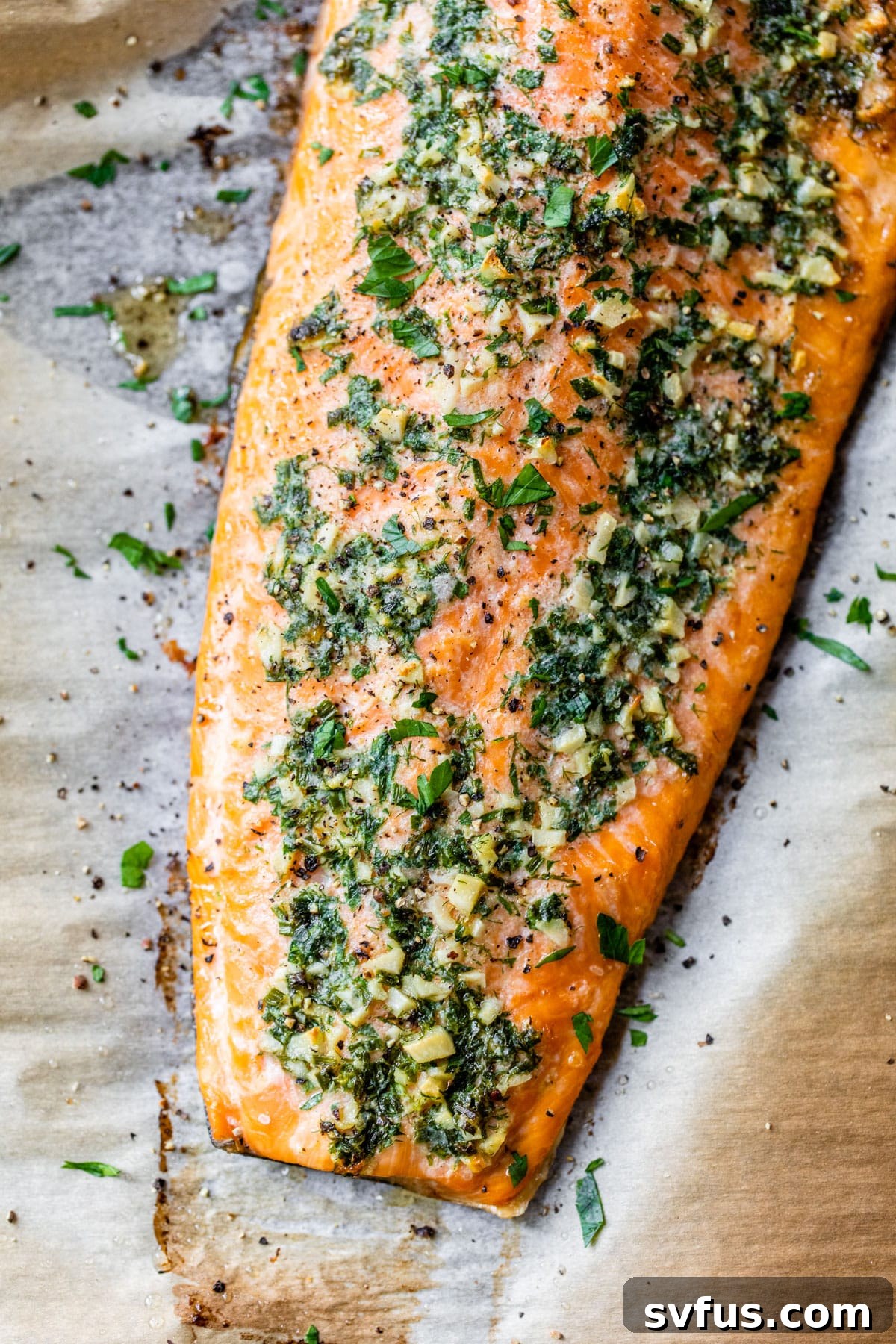
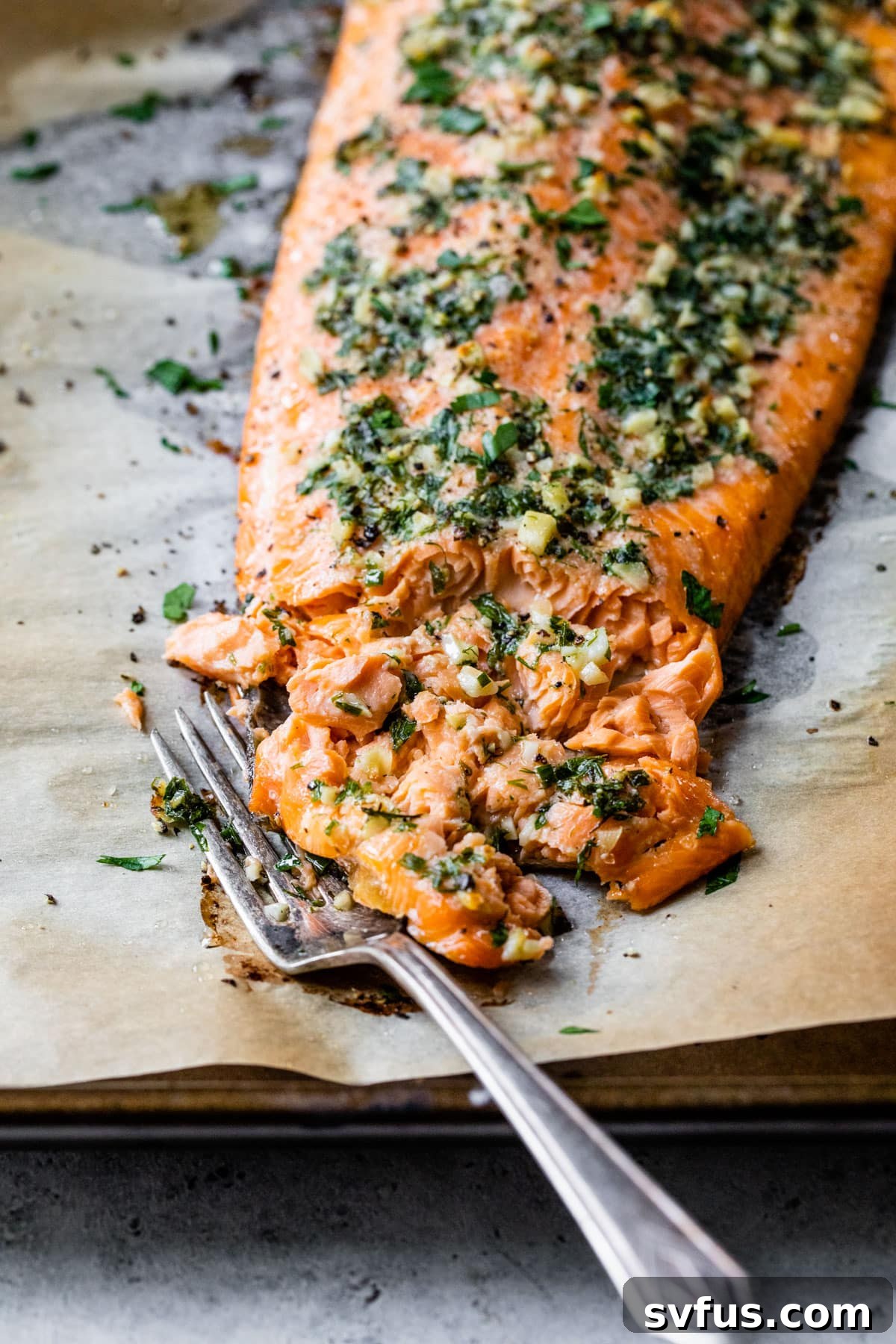
Welcome to your new favorite way to prepare salmon! This incredible Baked Salmon recipe is a true game-changer, promising a perfectly tender and flaky fillet every single time. Infused with the irresistible flavors of rich butter, aromatic garlic, vibrant fresh herbs, and a bright squeeze of lemon juice, this dish is not just a meal; it’s an experience. Whether you’re a seasoned chef or a kitchen novice, this fool-proof method will have you serving up restaurant-quality salmon that’s both healthy and utterly delicious.
Salmon is renowned for its versatility and impressive nutritional profile, making it a staple in healthy diets worldwide. While there are countless ways to enjoy this magnificent fish, this particular baked salmon recipe elevates it to new heights with its simplicity and emphasis on fresh, wholesome ingredients. Forget complicated techniques or a long list of obscure spices; this recipe focuses on enhancing the natural goodness of the salmon, allowing its inherent flavors to shine through.
I’ve shared many salmon recipes before, from my zesty Whole30 Garlic Salmon with Watercress to the popular Honey Soy Salmon, which are household favorites for quick weeknight dinners. However, this Baked Salmon recipe stands out. It’s the first one I’m presenting using a generous, whole 2 lb salmon fillet, making it ideal for family meals or entertaining. The fresh herb coating, combined with decadent butter, creates a flavor profile that’s both comforting and sophisticated, giving those other beloved recipes a serious run for their money!
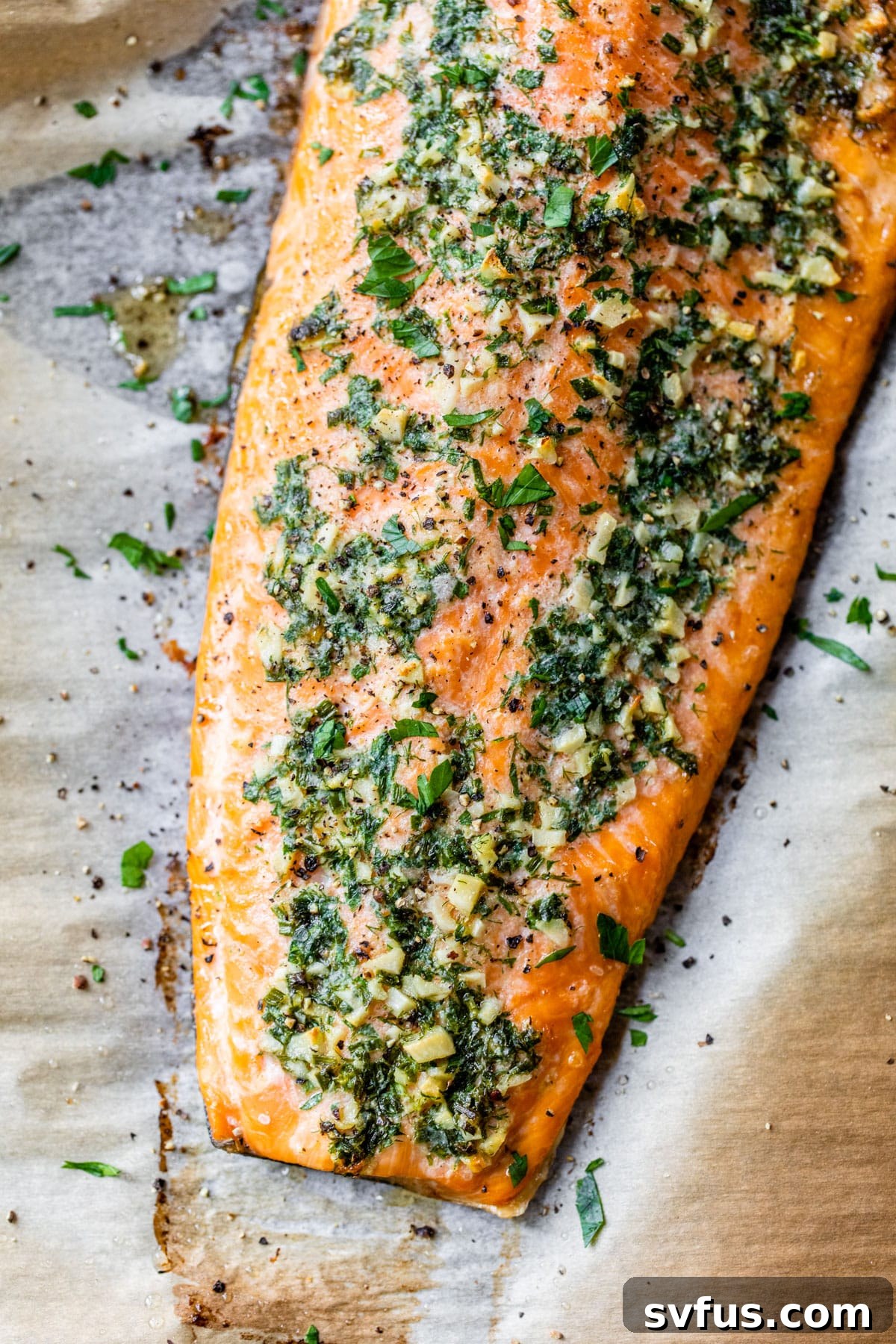
Why This Baked Salmon Recipe is a Must-Try
What makes this baked salmon dish truly special? It’s more than just a recipe; it’s a celebration of simple flavors and effortless cooking. Here’s why you’ll want to add this to your regular rotation:
- Effortlessly Elegant: This recipe delivers a light yet intensely flavorful meal that generously serves 4, and often more, without requiring hours in the kitchen. It’s perfect for a quick weeknight dinner but elegant enough for a special occasion.
- Perfectly Cooked Whole Fillet: Master cooking a whole salmon fillet with ease. This method is incredibly simple and non-intimidating, ensuring a succulent, flaky result every time, even for those new to cooking fish.
- Packed with Health Benefits: Salmon is a nutritional powerhouse. This recipe maximizes those benefits, providing an excellent source of omega-3 fatty acids, high-quality protein, and essential healthy fats that are crucial for heart health, brain function, and overall well-being.
- Fresh Flavor Focus: Instead of relying on a multitude of dried spices, this recipe champions the vibrant tastes of fresh herbs. This approach creates a brighter, cleaner flavor that truly complements the natural richness of the salmon.
- Butter Infusion: Because who can resist the magic of butter? It adds unparalleled richness and helps crisp the edges of the salmon beautifully, while keeping the interior moist and tender.
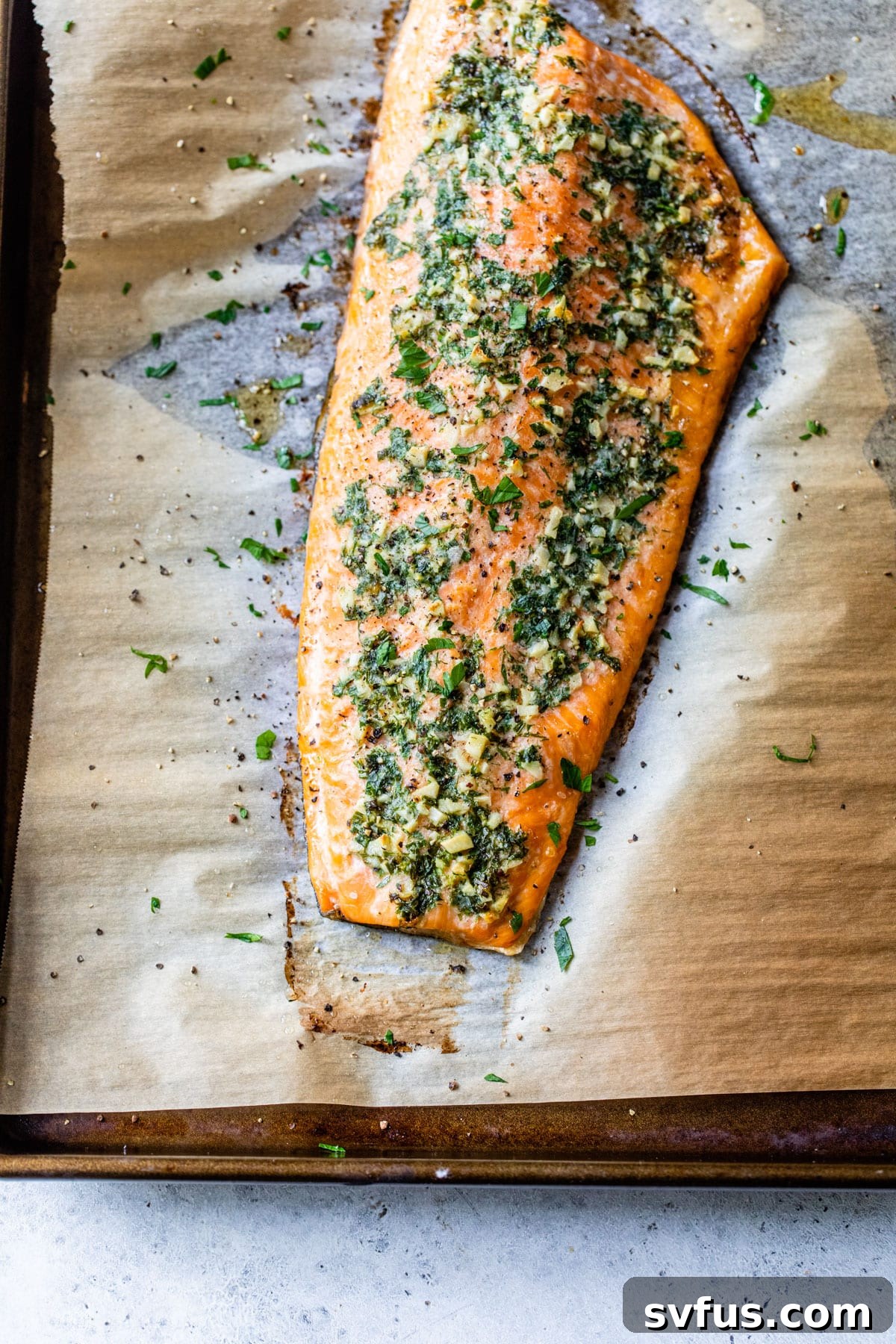
Essential Ingredients for Perfect Baked Salmon
Creating this magnificent baked salmon requires a handful of fresh, high-quality ingredients. Each plays a crucial role in building the dish’s incredible flavor profile.
- Salmon: The star of the show! A whole 2 lb. salmon fillet is ideal for this recipe, providing a substantial meal for several people. While any variety of salmon will be delicious, Sockeye salmon is known for its deep color and firm texture, Atlantic salmon is milder and more widely available, Coho offers a delicate flavor, and King salmon is rich and buttery. Choose what’s fresh and available. If you opt for pre-portioned salmon fillets, simply be mindful that the baking time will likely be slightly shorter, depending on their thickness. Ensure your salmon is thawed if frozen.
- Butter: Softened to room temperature, butter is key to creating that rich, flavorful herb coating. It melts into the fish, keeping it incredibly moist and adding a beautiful golden crust. For a dairy-free alternative, you can easily substitute with a high-quality dairy-free butter or use olive oil for a lighter touch.
- Garlic: Freshly minced garlic is non-negotiable here. Its pungent, aromatic notes are foundational to the herb butter, imparting a depth of flavor that complements the salmon perfectly. There’s truly no substitute for fresh garlic in this recipe.
- Fresh Herbs: This is where the magic happens! A harmonious blend of fresh dill, chives, and parsley works wonders. Dill provides a delicate, slightly sweet anise flavor that’s classic with salmon. Chives offer a mild oniony zest, and parsley adds a fresh, herbaceous brightness. Feel free to experiment with other fresh herbs like tarragon or finely chopped rosemary if you wish. The key is using fresh for maximum impact.
- Lemon Juice: Optional, but highly recommended! A fresh squeeze of lemon juice at the end brightens all the flavors, cutting through the richness of the butter and enhancing the natural taste of the salmon and herbs. It’s the perfect finishing touch.
- Salt and Pepper: Essential for seasoning. A pinch of salt on the salmon before applying the butter, along with salt and pepper mixed into the herb butter, ensures every bite is perfectly seasoned.
Step-by-Step Instructions for Baking Salmon
Preparing this exquisite baked salmon is incredibly straightforward. Follow these simple steps for a culinary masterpiece:
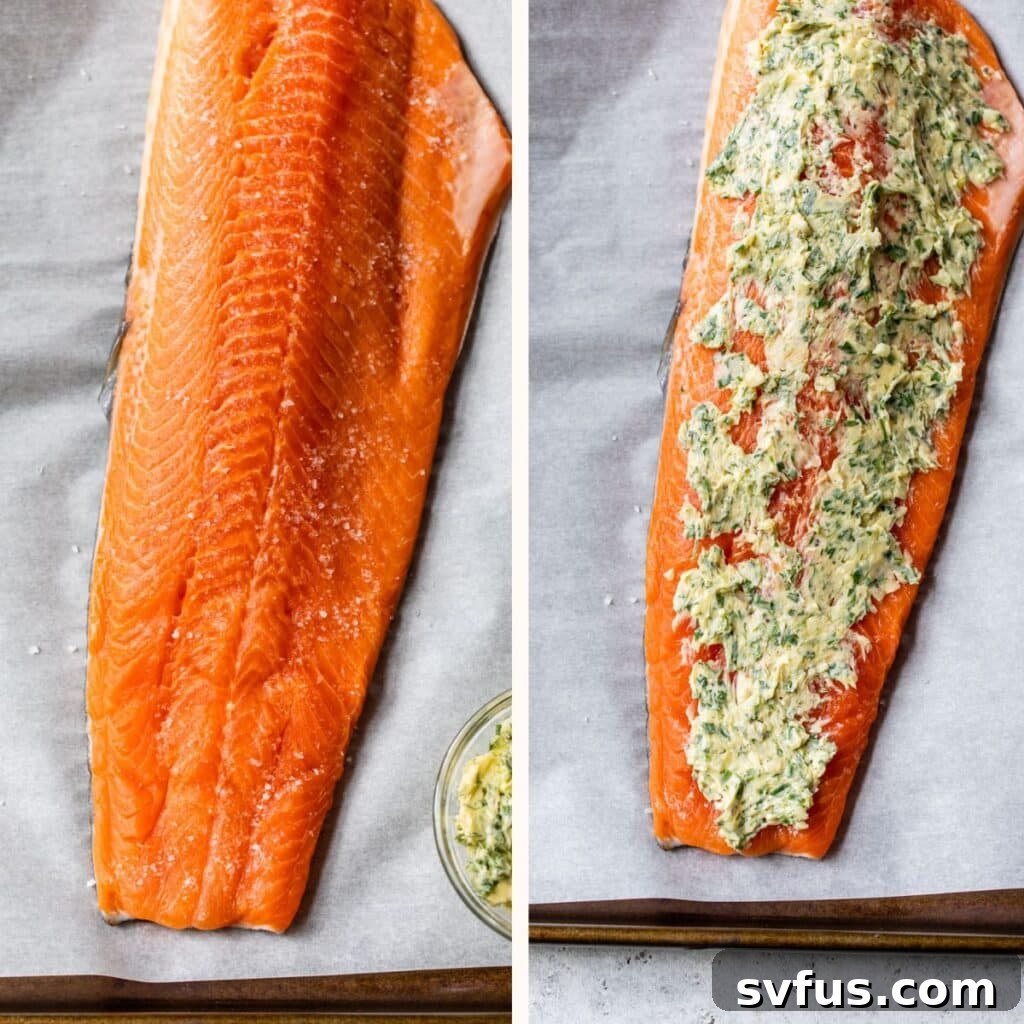
- Preparation is Key: Begin by preheating your oven to a robust 400°F (200°C). While the oven heats, line a large, rimmed baking sheet with parchment paper. This simple step makes cleanup a breeze and prevents the salmon from sticking. Carefully place your whole salmon fillet onto the parchment paper. Using paper towels, gently but thoroughly pat the salmon dry on all sides. This helps to achieve a better crust and ensures the herb butter adheres beautifully. Once dry, sprinkle a small amount of salt evenly over the salmon.
- Craft the Herb Butter: In a small bowl, combine the softened butter. Ensure it’s truly at room temperature for easy mixing and spreading. Add the minced garlic, ¼ teaspoon of salt, ¼ teaspoon of black pepper, and the finely chopped fresh dill, parsley, and chives. Stir everything together until all ingredients are well combined, forming a fragrant and spreadable herb butter mixture.
- Season the Salmon Liberally: Now for the fun part! Using the back of a spoon or a small spatula, generously spread the prepared herb butter all over the top surface of the salmon fillet. This might take a minute or two, so be patient and ensure an even layer across the entire fish. The goal is to coat it thoroughly, allowing the flavors to penetrate the salmon as it bakes.
- Bake to Perfection: Carefully transfer the baking sheet with the butter-coated salmon into your preheated oven. Bake for 15 minutes. After 15 minutes, switch your oven setting to BROIL (or grill, if your oven has that function) and broil the salmon for an additional 3-4 minutes. Keep a close eye on it during this stage, as broilers can vary in intensity and you want a golden, slightly crispy top, not a burnt one. This final broiling step gives the salmon a fantastic caramelized finish and helps achieve that desirable flaky texture.
- Serve and Savor: Once the salmon is perfectly cooked and beautifully golden, remove it from the oven. If using, drizzle 1 teaspoon of fresh lemon juice (or more, to taste) over the hot salmon immediately. This adds a burst of freshness. Serve your baked salmon hot, garnished with extra fresh herbs if desired, and prepare to enjoy a truly unforgettable meal!
Pro Tips and Tricks for the Best Baked Salmon
Elevate your baked salmon game with these expert tips:
- Butter Alternatives: If you’re looking to lighten up the recipe or prefer a dairy-free option, olive oil is a fantastic substitute for butter. Simply brush a generous amount of good quality olive oil over the salmon, then sprinkle the minced garlic and chopped fresh herbs evenly over the top before baking.
- Enhanced Leftovers: Cooked salmon, while delicious, can sometimes dry out slightly when reheated. To revive its moisture and flavor, pour a little bit of melted butter or a drizzle of olive oil over the salmon before reheating. This keeps it succulent and tasty.
- Lemon Lover’s Delight: For an extra burst of lemony flavor, consider adding a few thin slices of fresh lemon directly on top of the salmon fillet before baking. As the salmon cooks, the lemon essence will infuse beautifully into the fish. You can also add some lemon zest to the herb butter for an even more intense citrus note.
- Temperature Check: For perfectly cooked salmon, an instant-read food thermometer is your best friend. Insert it into the thickest part of the fish. Salmon is considered safely cooked when it reaches an internal temperature of 145°F (63°C). However, many chefs prefer salmon cooked to a medium-rare or medium, between 125-130°F (52-54°C), as it will continue to cook slightly after removal from the oven (carryover cooking).
- Flake Test: If you don’t have a thermometer, gently insert a fork into the thickest part of the salmon and twist. If the salmon flakes easily and appears opaque throughout (with a slight translucent center if you prefer it less done), it’s ready.
- Skin On or Off? This recipe works wonderfully with skin-on or skin-off salmon. If you leave the skin on, it can help keep the fish moist and prevent sticking. Plus, baked salmon skin can get wonderfully crispy! If you prefer it without skin, simply remove it before seasoning.
- Don’t Overcrowd the Pan: If you are baking multiple fillets, ensure they have enough space on the baking sheet. Overcrowding can lead to steaming instead of baking, which prevents that lovely golden crust. Use two baking sheets if necessary.
What Kind of Salmon Should I Use?
Any variety of salmon will yield delicious results with this recipe! I often use a beautiful sockeye salmon fillet from the seafood counter, known for its deep red color and firm texture. However, Atlantic salmon, Coho salmon, or the rich King salmon are all fantastic choices. Each type has a slightly different flavor and fat content, so choose your favorite or whatever looks freshest at your market.
If you prefer to use individually portioned fillets rather than a whole large piece, the preparation remains the same. Just keep in mind that smaller, thinner fillets will cook faster. Aim for approximately 12-15 minutes of baking time, always checking for doneness with a food thermometer or the flake test.
How Do You Know When Baked Salmon is Done?
Ensuring your salmon is perfectly cooked is crucial for both safety and enjoyment. Here are the most reliable ways to check:
- Internal Temperature: The most accurate method is to use a food thermometer. Insert it into the thickest part of the fish. The USDA recommends a minimum internal temperature of 145°F (63°C) for safe consumption. For a more tender, medium-cooked salmon, many people prefer removing it from the oven when it reaches 125-130°F (52-54°C), as it will continue to cook a bit after being removed from the heat.
- Flake Test: Gently press on the salmon with a fork. If it flakes easily, it’s done. The flesh should be opaque throughout, though a very slight translucent center is acceptable if you prefer it less cooked.
- Visual Cues: The exterior should be slightly golden and crusty from the broiling. The color of the flesh will change from a dark, raw hue to a lighter, opaque pink or orange.
What Sides Pair Well with Baked Salmon?
This garlic herb baked salmon is incredibly versatile and pairs beautifully with a wide array of side dishes. Any kind of roasted or sautéed vegetable would be a delicious accompaniment. Consider:
- My vibrant Sautéed Asparagus or simple steamed green beans for a classic pairing.
- Crispy Fried Brussels Sprouts or roasted broccoli (like my Instant Pot Broccoli, finished under the broiler) would add a lovely texture and earthy flavor.
- A light quinoa salad or a bed of fluffy brown rice to absorb the delicious butter and lemon drippings.
- A fresh green salad with a vinaigrette dressing for a refreshing contrast.
- Roasted potatoes or sweet potatoes for a heartier meal.
- Cauliflower rice for a low-carb option.
Storage and Reheating Baked Salmon
Proper storage and reheating ensure you can enjoy your delicious baked salmon for days to come.
- Storage: Allow any leftover baked salmon to cool completely. Then, transfer it to an airtight container and store it in the refrigerator for up to 3 days. This helps maintain its freshness and prevents it from absorbing other odors in the fridge.
- Make Ahead: You can definitely do some prep work in advance! Prepare the herb butter and store it in a small, sealed container in the refrigerator for up to 24 hours. Ensure your salmon fillet is completely thawed if it was frozen. This way, when you’re ready to cook, all you need to do is spread the butter and bake. I don’t recommend seasoning the fish more than an hour or two before baking, as salt can start to draw moisture out of the fish.
- Reheating: To reheat, you have a few options to keep the salmon from drying out:
- Microwave: For a quick reheat, place the salmon on a microwave-safe plate, cover it with a damp paper towel (this helps retain moisture), and microwave on medium power in 30-second intervals until warmed through. Be careful not to overheat.
- Oven: For best results and to prevent drying, reheat salmon in the oven. Preheat your oven to 300-350°F (150-175°C). Place the salmon in an oven-safe dish, add a splash of water or broth to the bottom of the dish, and cover it loosely with foil. Bake for about 10-15 minutes, or until just warmed through.
- Air Fryer: An air fryer can also reheat salmon beautifully, often resulting in a slightly crisper exterior. Place the salmon in the air fryer basket (single layer), and air fry at 300°F (150°C) for 5-7 minutes, checking frequently.
More Easy Fish Recipes to Try
If you love this baked salmon, you’ll surely enjoy exploring other delicious and easy fish recipes:
- Crispy Cod Sandwich: A flavorful and satisfying way to enjoy cod.
- Cajun Salmon: For those who love a little spice with their salmon.
- Mediterranean Baked Cod: A light and fresh dish bursting with Mediterranean flavors.
If you’ve made this Baked Salmon recipe, we’d love to hear from you! Please leave a comment and a star rating below to share your experience. Happy cooking!
Baked Salmon Fillet with Garlic and Herbs
Cook Time: 18 mins
Total Time: 28 mins
Everyone needs a good go-to salmon recipe, and this Baked Salmon recipe is perfection. It’s seasoned with butter, garlic, fresh herbs, and lemon juice, then baked in the oven until it’s nice and flakey.
Video
Ingredients
- 2 lb. salmon fillet (1.5 lb. also works well)
- Pinch of salt (for pre-seasoning salmon)
- 3 tbsp butter, softened (can use dairy-free butter or olive oil)
- 2 garlic cloves, minced
- 1/4 tsp salt
- 1/4 tsp black pepper
- 1 tbsp fresh dill, chopped
- 1 tbsp fresh parsley, chopped
- 1 tbsp chives, chopped
- 1 tsp lemon juice, or more to taste
Instructions
- Preheat oven to 400°F (200°C) and line a large baking sheet with parchment paper. Place the salmon fillet on the parchment and pat it completely dry with paper towels, then sprinkle a pinch of salt on top.
- In a small bowl, combine the softened butter with the minced garlic, 1/4 tsp salt, 1/4 tsp black pepper, chopped fresh dill, parsley, and chives. Stir until well combined.
- Using the back of a spoon, spread the herb butter mixture evenly over the entire surface of the salmon. Be patient, as this may take a minute or two to ensure even coverage.
- Place the baking sheet with the salmon in the preheated oven and bake for 15 minutes. After 15 minutes, switch the oven to BROIL (or grill) and broil for 3-4 minutes, watching closely to prevent burning, until the top is golden and the salmon is cooked through and flaky.
- Remove from the oven, drizzle with fresh lemon juice (if using), and serve immediately. Enjoy!
Notes
- Calories are per serving and are an estimation; serving size is 4-6.
- To make this dairy-free, simply use dairy-free butter or olive oil.
- If using pre-portioned salmon fillets, bake for 12-15 minutes and use a food thermometer to ensure doneness (125-130°F for medium, 145°F for well-done).
- Storage: Store leftovers in a sealed container in the refrigerator for up to 3 days.
- Reheating: You can reheat salmon in the microwave (covered with a damp paper towel), or in the oven at 300-350°F (150-175°C) covered with foil until warmed through.
Nutrition (Estimated per Serving)
Calories: 401kcal | Carbohydrates: 1g | Protein: 45g | Fat: 23g | Saturated Fat: 8g | Polyunsaturated Fat: 6g | Monounsaturated Fat: 7g | Trans Fat: 0.3g | Cholesterol: 147mg | Sodium: 314mg | Potassium: 1131mg | Fiber: 0.1g | Sugar: 0.1g | Vitamin A: 479IU | Vitamin C: 3mg | Calcium: 35mg | Iron: 2mg
Nutrition information is automatically calculated and should only be used as an approximation.
Did you make this? Leave a comment and star rating below!