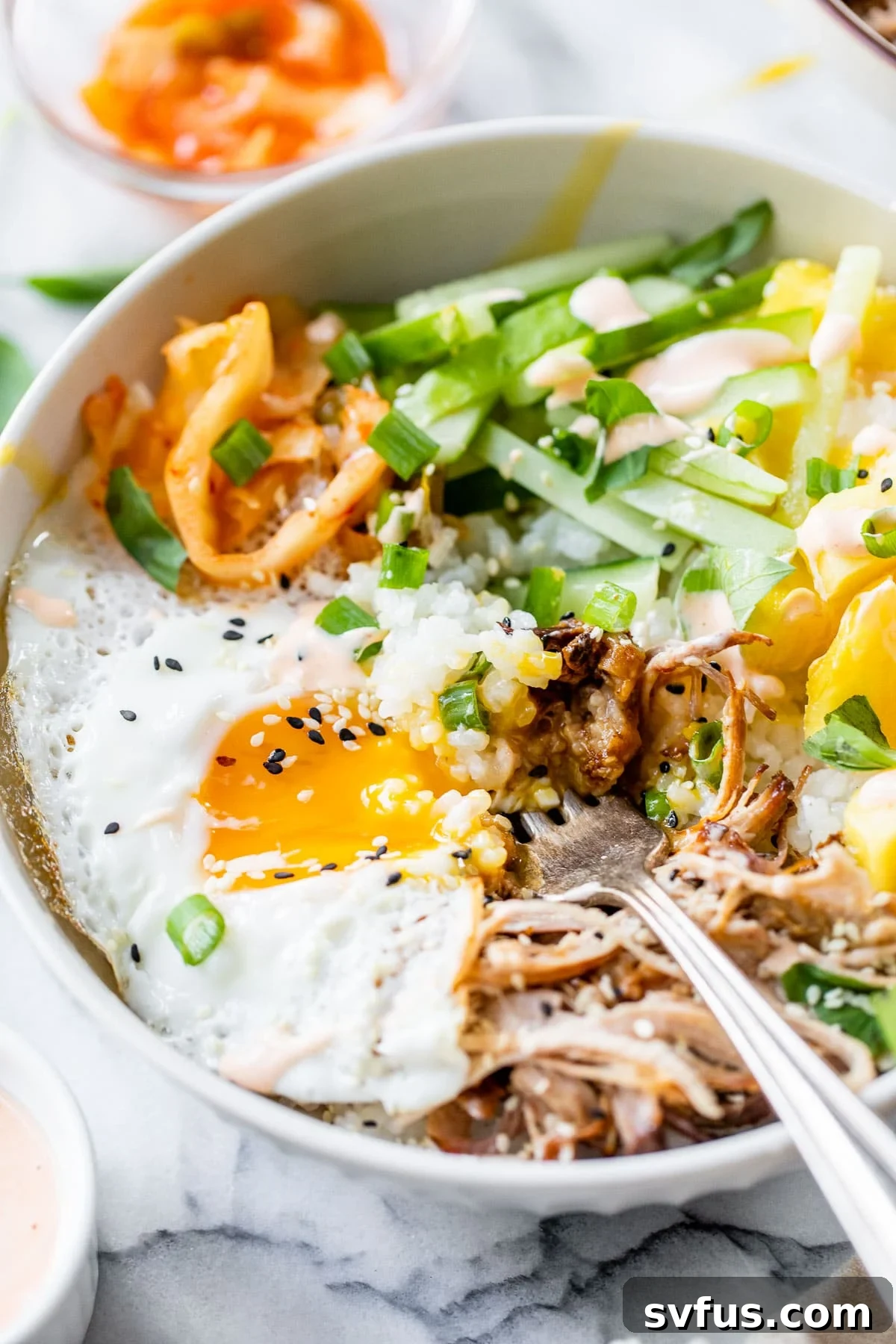
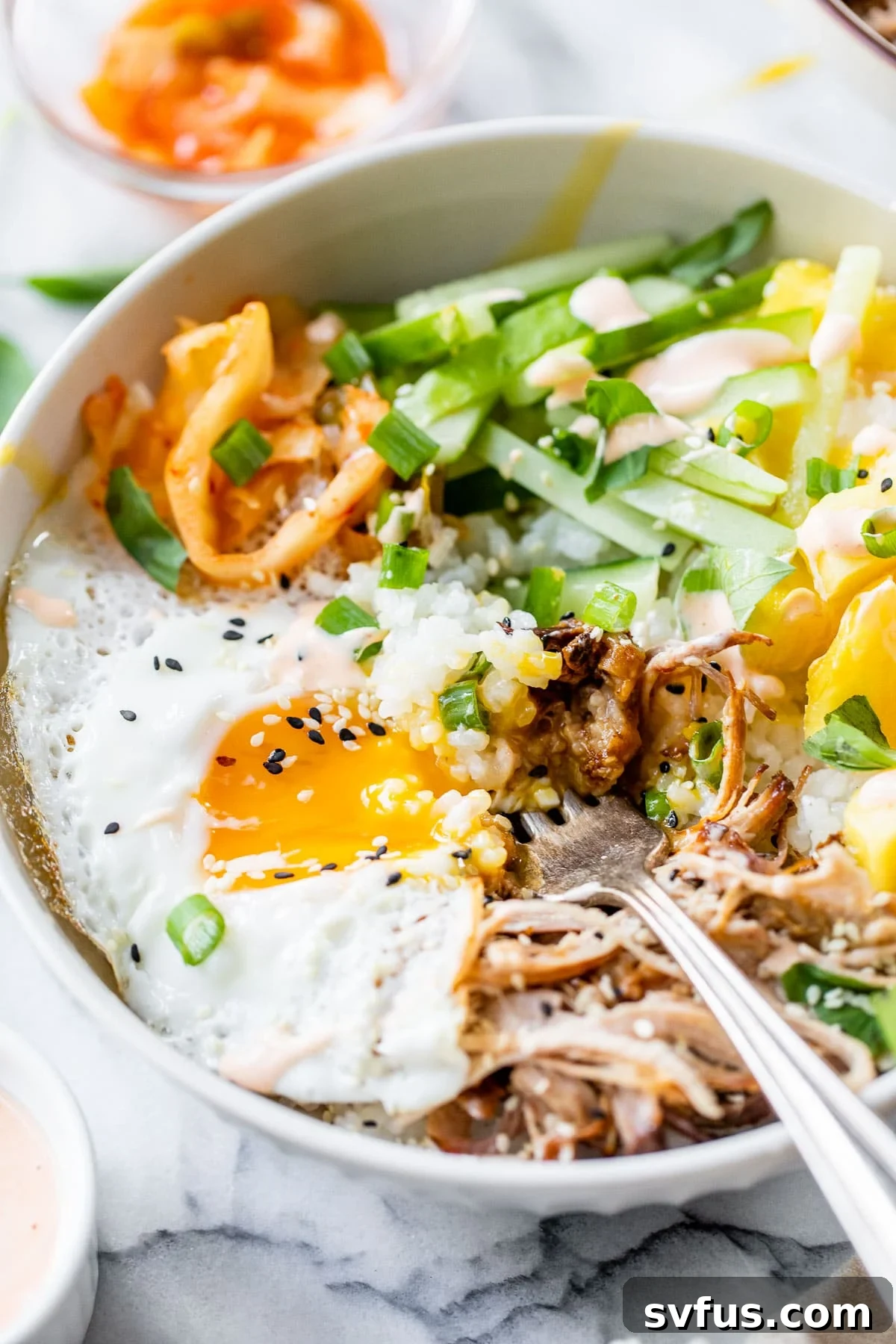
Embark on a culinary journey where the vibrant flavors of Hawaii meet the comforting tradition of Korean Bibimbap. This extraordinary Hawaiian Bibimbap with Pulled Pork is not just a meal; it’s a celebration of contrasting yet harmonious tastes that will captivate your palate and quickly become a family favorite. Imagine succulent pulled pork, slow-cooked to perfection, mingled with the sweet tang of fresh pineapple, the crisp coolness of cucumber, and the zesty kick of kimchi, all crowned with a perfectly fried egg and a drizzle of spicy mayo. It’s a healthy, hearty, and irresistibly flavorful dinner recipe designed for pure enjoyment.
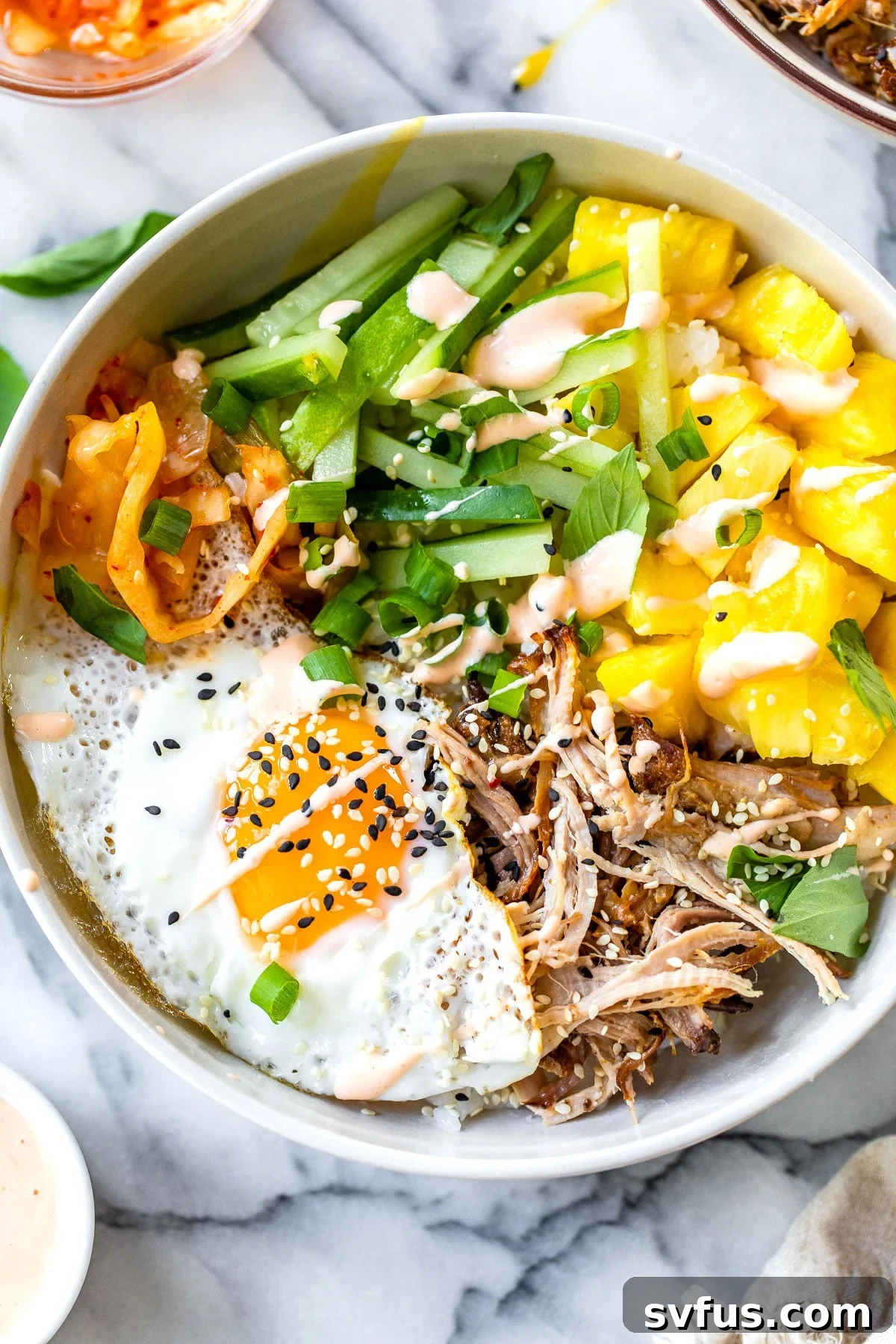
There’s a special magic to a well-crafted “bowl” recipe, and this Hawaiian Bibimbap truly embodies it. Bowl meals are incredibly versatile, offering a balanced combination of protein, grains, and fresh vegetables in every bite. They’re also endlessly customizable, allowing you to tailor ingredients to your preference or what you have on hand. If you’ve enjoyed my Teriyaki Shrimp Sushi Bowl or my Sesame Tofu Quinoa Bowl, you’ll adore this unique fusion dish. Consider it the best elements of my Honey Ginger Pork Tacos, the fresh concept of my Vegan Bibimbap, and the tropical essence of my Coconut Rice Bowl, all combined into one spectacular, easy-to-make dinner.
This vibrant bowl creates a symphony of flavors, expertly balancing savory and sweet notes. The rich, savory pulled pork and fermented kimchi are beautifully complemented by the bright sweetness of pineapple and the refreshing crunch of cucumber. Fresh basil and green onions add aromatic depth, while a runny fried egg and a creamy, spicy mayo tie all the elements together into a cohesive and incredibly satisfying meal. It’s a dish that proves healthy eating can be utterly delicious and exciting.
Discover the Outstanding Features of this Hawaiian Bibimbap Recipe
This Hawaiian Bibimbap isn’t just another dinner recipe; it’s thoughtfully designed to maximize flavor, convenience, and nutritional value. Here’s what makes this dish truly stand out:
- Effortless Pulled Pork Preparation: The star of this bibimbap, the savory pulled pork, is prepared using a slow cooker. This means you can (and should!) make it several days in advance, allowing the flavors to deepen and simplifying your weeknight meal prep significantly. It’s a fantastic way to enjoy tender, flavorful meat without the last-minute rush.
- Harmonious Flavor Combination: The pairing of sweet pineapple with the savory pulled pork, crisp cucumber, and tangy kimchi creates a dynamic and incredibly flavorful profile. Each ingredient plays a crucial role, contributing unique textures and tastes that make every bite exciting and satisfying. This fusion is what truly sets this bibimbap apart.
- The Perfect Finishing Touches: What truly brings this Hawaiian Bibimbap together are the creamy spicy mayo and a perfectly fried egg. The rich, slightly spicy sauce adds a decadent element, while a runny egg yolk acts as a natural sauce, enriching all the ingredients it touches. These elements elevate the dish from simply good to absolutely unforgettable.
Essential Ingredient Insights for Your Hawaiian Bibimbap
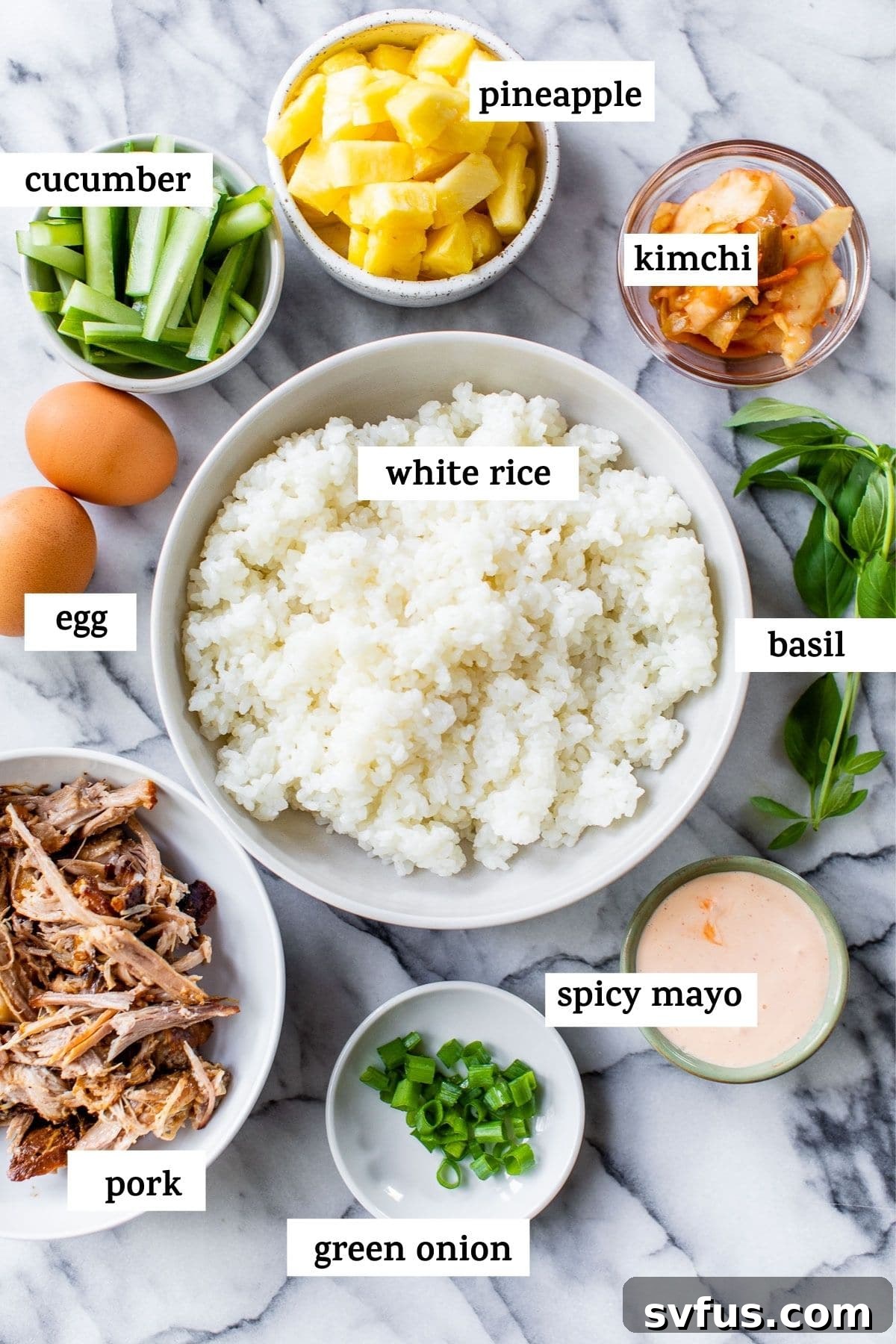
Crafting the perfect Hawaiian Bibimbap starts with understanding the role of each ingredient. Here’s a deeper dive into the components that make this dish so special:
- Rice: The foundation of any good bibimbap is the rice. I highly recommend using short-grain white rice, often labeled “sushi rice,” for its ideal sticky texture which perfectly complements the other ingredients. However, feel free to adapt! Long-grain white rice works well if you prefer a fluffier grain, and for a healthier, fiber-rich option, brown rice is an excellent substitute. For those following a Whole30 or low-carb diet, cauliflower rice can be used.
- Pulled Pork: The star protein in this fusion bowl. I achieve exceptionally tender and flavorful results by using pork shoulder (also known as pork butt) and slow-cooking it using the same method from my beloved Honey Ginger Pork Tacos recipe. This slow-cooking process ensures the pork is incredibly juicy and easy to shred, soaking up all the delicious seasonings. Preparing it in advance makes meal assembly a breeze.
- Pineapple: Fresh pineapple is absolutely key here to deliver that vibrant, sweet, and slightly tart Hawaiian essence. Its juicy texture and bright flavor cut through the richness of the pork and balance the spice. To save time without sacrificing quality, I often opt for pre-cut fresh pineapple. While canned pineapple can work in a pinch, fresh offers superior taste and texture.
- Cucumber: Thinly sliced cucumber adds a wonderfully refreshing crunch and a cool contrast to the spicy and savory elements. It provides a light, hydrating component to the bowl. If cucumber isn’t your favorite, or if you’re looking for an alternative, thinly sliced radishes offer a similar crisp texture with a slightly peppery bite.
- Kimchi: This fermented Korean staple is a powerhouse of flavor and beneficial probiotics. A little bit of kimchi goes a long way, adding a tangy, spicy, and umami-rich layer to the bibimbap. It’s an ingredient that brings depth and complexity. Purchase a jar and keep it handy; it’s fantastic in this dish, and you’ll find yourself wanting to add it to other meals like my Tofu Coconut Rice Bowl or Asian Chicken Lettuce Wraps.
- Fresh Basil and Green Onion: These fresh herbs are not just garnishes; they are crucial flavor enhancers. Fresh basil provides a fragrant, slightly peppery sweetness, while green onions offer a mild, crisp oniony bite. Both complement the other ingredients beautifully, adding freshness and aromatic complexity. Don’t skimp on these for the best experience!
- Egg: While optional, a fried egg is highly recommended for an authentic bibimbap experience. A perfectly cooked fried egg, especially with a runny yolk, adds a rich, creamy texture and extra protein, creating a luxurious “sauce” that coats all the ingredients when mixed in. It’s a classic bibimbap topping that truly elevates the dish.
- Spicy Mayo: This essential sauce is incredibly easy to make and ties all the flavors together. It’s typically a simple combination of mayonnaise and gochujang, a savory, sweet, and spicy Korean chili paste. If gochujang isn’t readily available, sriracha can be a suitable (though slightly different) substitute, providing a similar level of heat. Adjust the amount to your preferred spice level.
Crafting Your Hawaiian Bibimbap: A Simple Guide
Creating this delicious Hawaiian Bibimbap is surprisingly straightforward, especially with a bit of foresight. Here’s how to bring it all together:
- Step 1: Prepare the Pulled Pork in Advance. For maximum convenience and flavor, begin by cooking the pulled pork. This can be done up to three days before assembling your bowls. Utilize your slow cooker for this step, following my recommended slow cooker method for honey ginger pork. The slow-cooking process yields incredibly tender, flavorful pork that’s perfect for shredding. Cook it over the weekend, and you’ll have a versatile protein ready to use for this bibimbap and other meals throughout the week.
- Step 2: Cook the Perfect Rice. Before you start assembling your vibrant bowls, ensure your rice is cooked to perfection. Whether you prefer cooking it on the stovetop or using a rice cooker, follow your usual method until the grains are light and fluffy. Short-grain white rice is ideal for its slightly sticky texture, which helps bind the ingredients in the bibimbap.
- Step 3: Whisk Together the Zesty Spicy Mayo. This creamy, spicy sauce is a game-changer! In a small bowl, whisk together the mayonnaise, gochujang (Korean chili paste), and a squeeze of fresh lime juice until well combined and smooth. Taste and adjust to your preference: add a bit more gochujang or sriracha if you desire extra heat, or a touch more lime juice to mellow the spice and add brightness.
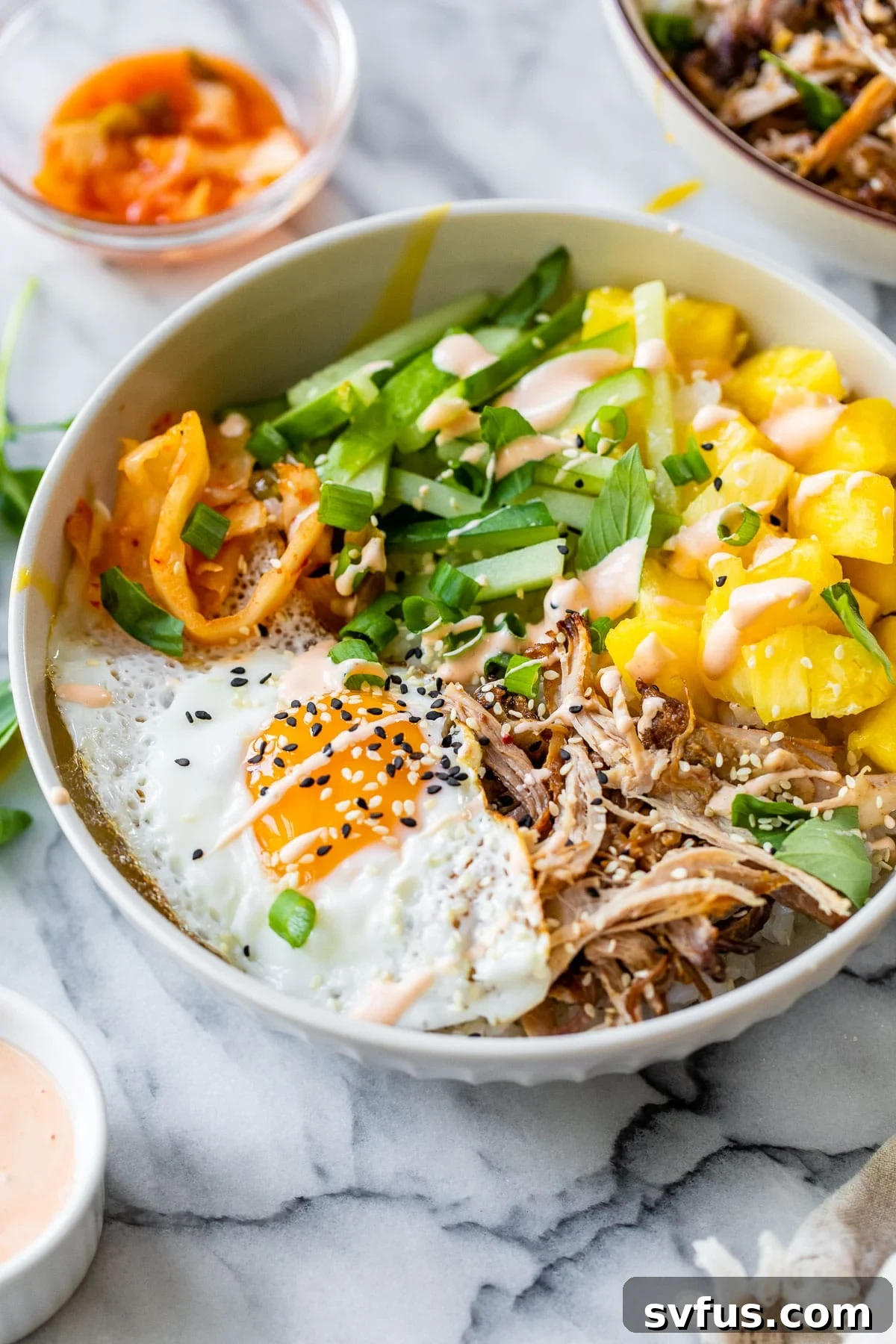
- Step 4: Assemble Your Flavorful Bibimbap Bowls. Now for the fun part – assembly! Divide the freshly cooked rice evenly between two serving bowls, creating a sturdy base. Artfully arrange generous portions of the succulent pulled pork, diced pineapple, crisp cucumber slices, tangy kimchi, vibrant green onions, and fragrant fresh basil over the rice. Finally, fry two eggs to your liking – sunny-side up with a runny yolk is traditional and highly recommended – and place one atop each bowl. Drizzle generously with your homemade spicy mayo and, for an extra touch, sprinkle with sesame seeds. Serve immediately and enjoy the explosion of flavors and textures!
Expert Tips and Frequently Asked Questions for Your Hawaiian Bibimbap
Enhance your Hawaiian Bibimbap experience with these helpful tips and answers to common questions:
- Boost Your Bowl with Extra Veggies: Want to make this bowl even heartier and more nutritious? Consider adding a variety of shredded vegetables. Finely shredded carrots, thinly sliced radishes, sautéed shiitake mushrooms, or even blanched spinach would all make excellent additions, contributing more texture, color, and nutrients to your bibimbap.
- Pork Alternatives for Diverse Palates: While pulled pork is central to this recipe, it’s easily adaptable. If you’re not a fan of pork, or simply want to try something different, consider substituting it with other proteins. Crispy baked tofu is a fantastic vegetarian option, or you could use shredded chicken or beef.
- Making it Whole30 Compliant: For those following a Whole30 diet, this Hawaiian Bibimbap can be easily modified. Swap out the white rice for cauliflower rice to keep it grain-free. For the pulled pork marinade, use coconut aminos instead of soy sauce to ensure it meets Whole30 guidelines without sacrificing flavor.
Can This Hawaiian Bibimbap Be Made Vegetarian?
Absolutely! Making this dish vegetarian is simple and yields equally delicious results. As mentioned in the tips above, the easiest way to omit the pork is by substituting it with baked tofu. Tofu readily absorbs flavors and can provide a satisfying texture. For a completely vegan version of bibimbap, I encourage you to check out my dedicated vegan bibimbap recipe, which offers specific plant-based protein and sauce recommendations.
Can You Prepare Components of This Meal in Advance?
Yes, and it’s highly recommended for efficient meal planning! The beauty of this recipe lies in its prep-ahead potential. The pulled pork can be cooked in your slow cooker days in advance and stored in the refrigerator. Similarly, you can cook the rice ahead of time and keep it in a sealed container in the fridge. This way, when dinnertime rolls around, all you need to do is quickly assemble the bowls and fry an egg, making it a perfect option for busy weeknights.
Is a Slow Cooker Essential for the Pulled Pork?
While not strictly mandatory, a slow cooker is definitely the preferred method for achieving perfectly tender pulled pork. The nature of pulled pork demands a “low and slow” cooking process to break down the meat fibers and create that desirable melt-in-your-mouth texture. There isn’t truly a fast method for traditional pulled pork. You could potentially adapt the recipe for an Instant Pot, which offers a pressure-cooking alternative, but I haven’t personally tested it for this specific recipe. If you do try it in an Instant Pot, please share your results!
Storing Your Hawaiian Bibimbap Leftovers for Optimal Freshness
Proper storage is key to enjoying your delicious Hawaiian Bibimbap leftovers. To maintain the best texture and make reheating easier, I highly recommend storing the components in separate airtight containers in the refrigerator. Keep the pulled pork in one container, the cooked rice in another, and the fresh toppings like pineapple, cucumber, and green onion in a third. This separation prevents ingredients from becoming soggy and allows for individual reheating of the pork and rice, ensuring each component retains its quality.
Explore More Delicious and Easy Bowl Recipes
If you’ve fallen in love with the convenience and flavor of this Hawaiian Bibimbap, you’ll be thrilled to discover more of my favorite bowl recipes designed for easy, healthy, and satisfying meals:
- Teriyaki Salmon Bowl: A fresh and flavorful option featuring flaky salmon and vibrant veggies.
- Banh Mi Bowl: All the iconic flavors of the Vietnamese sandwich, deconstructed into a healthy bowl.
- Mediterranean Hummus Bowl: A refreshing and nutritious bowl packed with fresh Mediterranean ingredients and creamy hummus.
If you try this delightful Hawaiian Bibimbap recipe, please take a moment to leave a comment and a star rating below. Your feedback helps other home cooks discover and enjoy this incredible dish! Thank you!
★★★★★ (5 from 1 vote)
Hawaiian Bibimbap
Erin Alvarez
2
10 mins
35 mins
45 mins

Print Recipe
This easy Hawaiian Bibimbap is an incredibly flavorful dinner recipe the whole family will enjoy. Made with pulled pork, then paired with pineapple, cucumber and spicy mayo, it’s both healthy and filling.
Ingredients
- 3 cups short grain white rice, cooked
- .5 lb. pork shoulder, (prepared as per notes)
- 1 cup pineapple, diced
- 3/4 cup cucumber, sliced
- 1/4 cup kimchi
- 2 tbsp green onion, chopped
- 2 tbsp fresh basil, or more to taste; chopped
- 2 eggs
- Sesame seeds for garnish
For the Spicy Mayo:
- 1/4 cup mayonnaise
- 2 tsp gochujang, or more to taste
- 1/2 tsp lime juice
Instructions
-
Cook the pork ahead of time in your slow cooker using this method. Reserve 1/2 lb. of pork for this recipe, then store any leftover pork in a sealed container in the refrigerator for later use.
-
Cook the rice on the stovetop or in a rice cooker as you normally would, until it is light and fluffy.
-
Make the spicy mayo: In a small bowl, whisk the mayonnaise, gochujang, and lime juice together until smooth. Set aside.
-
Assemble the bowls: Divide the cooked rice among two serving bowls. Top with the prepared pork, diced pineapple, sliced cucumber, kimchi, chopped green onion, and fresh basil. Fry two eggs to your preference and place one on top of each bowl. Drizzle generously with spicy mayo and garnish with sesame seeds before serving.
Notes
*Calories are per serving and are an estimation.
*FOR THE PORK: I followed the exact recipe from my honey ginger pork tacos. That recipe makes about 2 lb. of pork, and for this bibimbap, you’ll only need .5 lb., so you will have delicious leftovers!
*Storage: Store leftovers in separate containers for easier reheating: rice in one, pork in another, and the pineapple/cucumber/green onion in a separate container.
Nutrition
Nutrition information is automatically calculated, so should only be used as an approximation.
Did you make this? Leave a comment and star rating below!