Mastering Food Photography: Your Essential Setup and Prop Guide
Capturing the deliciousness of your culinary creations is an art form, especially in the vibrant world of food blogging. A few weeks ago, we delved into our Food Blog Essentials, covering everything from kitchen tools to basic photography gear. Today, we’re building on that foundation by exploring the nitty-gritty of my personal shooting setup and the additional food photography props that have become indispensable in my journey to create mouth-watering visuals.
My inspiration for refining my setup came during a deep dive into the internet last December, where I stumbled upon Ali’s incredible blog, Gimme Some Oven. Specifically, her Blogging Resources section was a goldmine of insights. I devoured every word, finding her detailed explanation of her photo setup particularly enlightening. (Seriously, have you seen her photos? They are absolutely breathtaking!). It’s fascinating how every food blogger develops their unique approach to staging a shot, and as someone who loves peeking behind the scenes, I was keen to learn. Two key takeaways from her process immediately resonated: her use of a step stool for those captivating overhead shots and a dedicated cart for organizing her ever-growing collection of food props.
After reading her post, I vividly remember telling Miguel how much I coveted a step stool and a utility cart for my own props. And true to form, he delivered! I’m not just bragging about Miguel here, but he truly outdid himself in selecting both items. They’ve transformed my food photography workflow and significantly enhanced the quality of my images.
The Essential Tools for a Streamlined Shooting Experience
The Indispensable Prop Cart
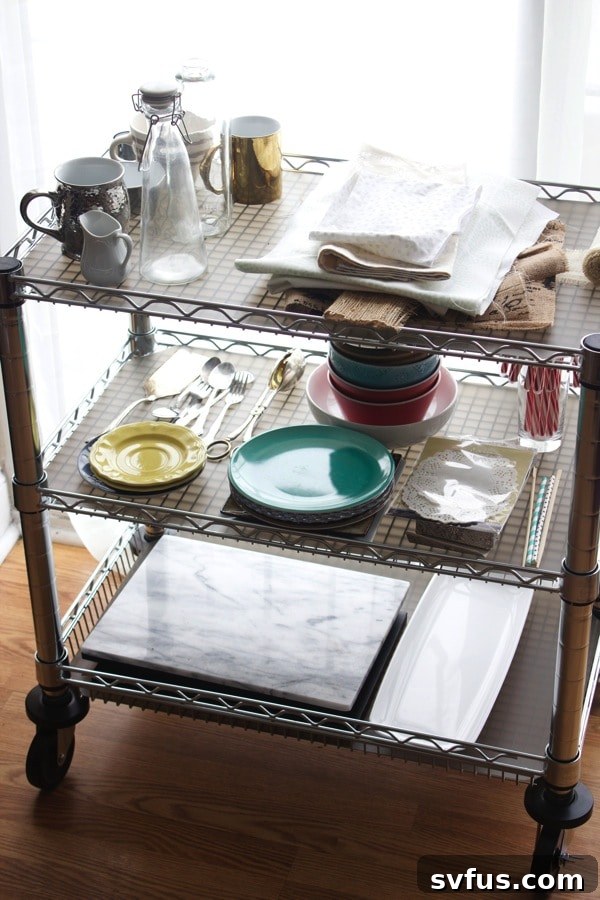
Initially, one might wonder if a prop cart is truly necessary. However, if you’re serious about elevating your food photography and introducing variety into your visuals, you’ll quickly accumulate an abundance of props. And what better way to keep them organized and accessible than on a versatile utility cart? Mine has proven to be an absolute game-changer.
My cart is strategically organized to maximize efficiency during shoots. The top shelf holds smaller, frequently used items like various cups and an assortment of napkins. The second shelf is dedicated to my collection of plates and essential silverware. The bottom shelf, a bit of a creative solution, stores my extra backdrops. This specific arrangement isn’t just for neatness; it’s a preventative measure. I learned the hard way when my mischievous pup discovered the napkins on the bottom shelf and decided they made excellent chew toys! Lesson learned, and props are now safely out of reach.
Regardless of how you choose to organize your specific props, a utility cart offers unparalleled convenience. It’s a handy, portable solution that allows you to effortlessly move your entire collection of styling elements from one shooting location to another. This mobility is particularly beneficial when chasing the best natural light around your home or studio, creating a flexible and dynamic “mobile studio” right where you need it.
Elevating Your Angles with a Step Stool
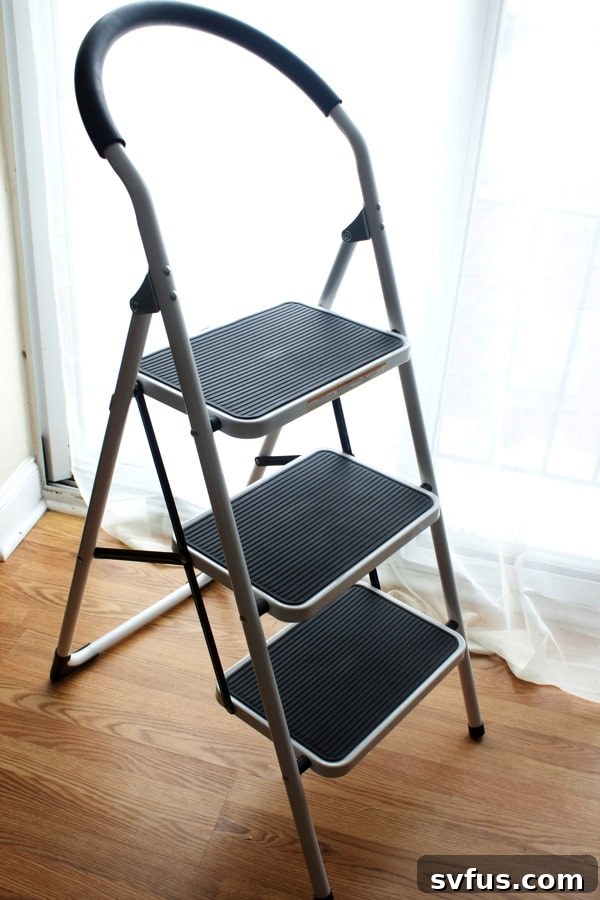
As mentioned earlier, step stools are an absolute must-have for capturing those sought-after overhead shots that are so popular in food photography. The particular stool I use features three steps, providing various height options which I find incredibly useful. Photography, at its core, is all about perspective and angles. Simply staying in one static position for an entire photoshoot often results in monotonous, uninspired images.
To truly bring your food to life, it’s crucial to move around your subject, experimenting with different viewpoints. A step stool empowers you to do precisely that, but with the added dimension of varying heights. Beyond the dramatic overhead view, it allows for comfortable eye-level shots, capturing the texture and details of the dish, or a 45-degree angle that offers a broader context of the entire scene. This ability to easily shift your vantage point creates more dynamic, engaging, and professional-looking photographs. It reduces strain on your back and knees, allowing you to focus on composition rather than discomfort. Woohoo for versatile angles and ergonomic comfort!
Curating Your Collection: Favorite Food Props and Where to Find Them
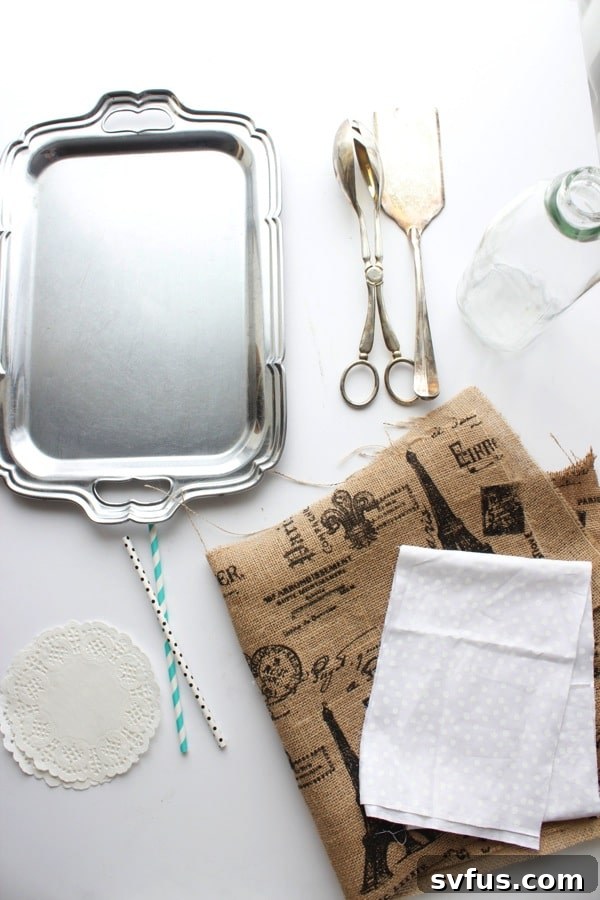
In my previous post on Food Blog Essentials, I touched upon the importance of basic food props like plates, glasses, and bowls. While these are undeniably the foundation, once you’ve established your essential collection, you’ll naturally want to expand and add more unique pieces to your styling arsenal. These “non-essential” props are what truly elevate a photograph from good to great, adding personality, texture, and a storytelling element.
Some of my personal favorite props that consistently add charm to my photos include a gleaming silver platter, vibrant colorful straws that add a playful pop, antique tongs for a touch of rustic elegance, a variety of colorful napkins to introduce texture and warmth, and a charming milk jug that evokes a sense of homey comfort. These aren’t just random items; they are carefully selected elements that help tell the story of the food.
If you’re looking to enhance your prop collection, I highly recommend browsing through food photos that inspire you. Pay close attention to what other successful food bloggers use to style their dishes. You might already have a few ideas brewing, but it never hurts to gather inspiration and see which props beautifully complement different types of food. Consider the mood you want to convey – rustic, elegant, modern, playful – and choose props that align with that aesthetic. Thrift stores, antique shops, local home goods stores, and even online marketplaces are fantastic places to discover unique, budget-friendly treasures that will make your photos stand out.
Building Your Food Photography Studio: My Apartment Setup
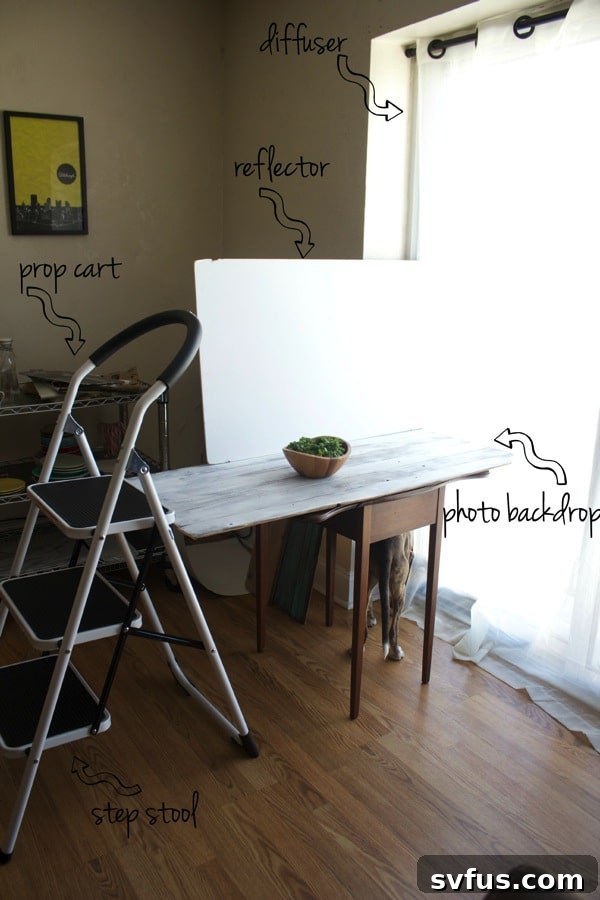
Every photoshoot is unique, and my setup naturally adapts depending on the specific subject I’m photographing and the intensity of the available light. However, for the most part, my current food photography studio – nestled within the confines of my small apartment – looks something like this:
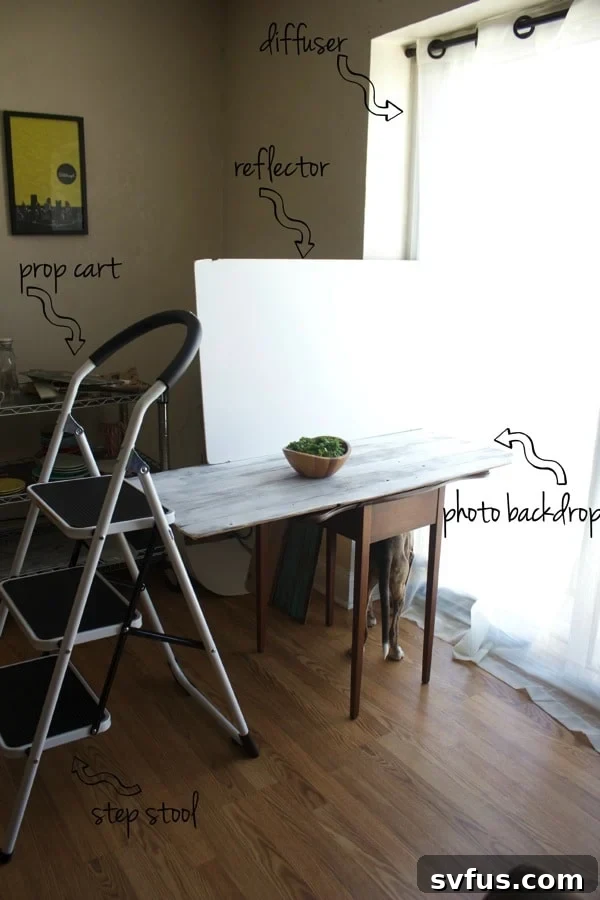
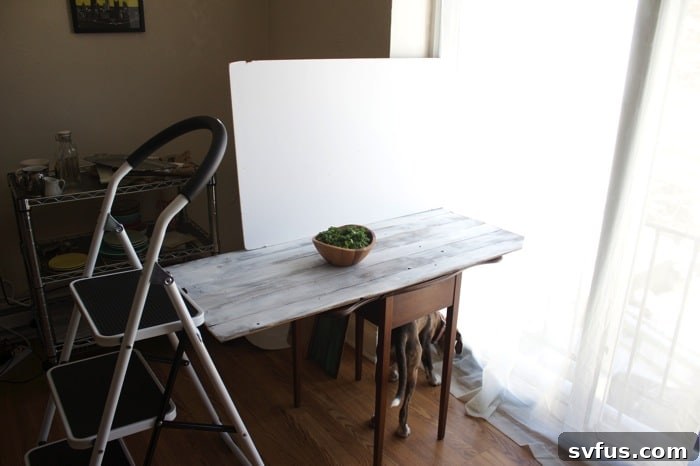
While this setup might not be a sprawling professional studio, it works incredibly well for my needs, especially given the limited space of my apartment. My primary goal is always to harness as much natural light as possible, which means setting up directly next to a window is non-negotiable. Natural light provides that soft, authentic glow that artificial lights often struggle to replicate, making your food look truly appetizing.
To manage the natural light, particularly on bright, sunny days, I’ve found that hanging a sheer curtain over the window is a simple yet effective diffuser. This softens any harsh direct sunlight, preventing blown-out highlights and deep, unflattering shadows. While I could certainly adjust camera settings to compensate for harsh light, the curtain offers a quick, physical solution that helps create beautifully even illumination. Before I invested in curtains, I used to drape a simple bed sheet over the window – it wasn’t the most elegant solution, but it certainly did the trick!
Having my trusty prop cart within arm’s reach is absolutely essential, allowing me to swiftly swap out styling elements and maintain creative flow without breaking my concentration. And while the step stool might not be strictly necessary for every shot, it undeniably makes capturing diverse angles, particularly those stunning overheads, significantly easier and more precise.
The Power of a Reflector
When it comes to controlling light, a reflector is an often-underestimated tool that can dramatically improve your photos. You don’t need expensive gear; a simple white foam board or even white cardboard, as pictured above, works wonders. Whatever material you choose, I wholeheartedly recommend incorporating a reflector into your setup.
So, what exactly does a reflector do? It works by bouncing the natural light from your window back onto your subject. This “fill light” helps to brighten shadowed areas, reduce harsh contrasts, and add a beautiful dimension to your food. Take a look at these two photos to see the immediate impact:
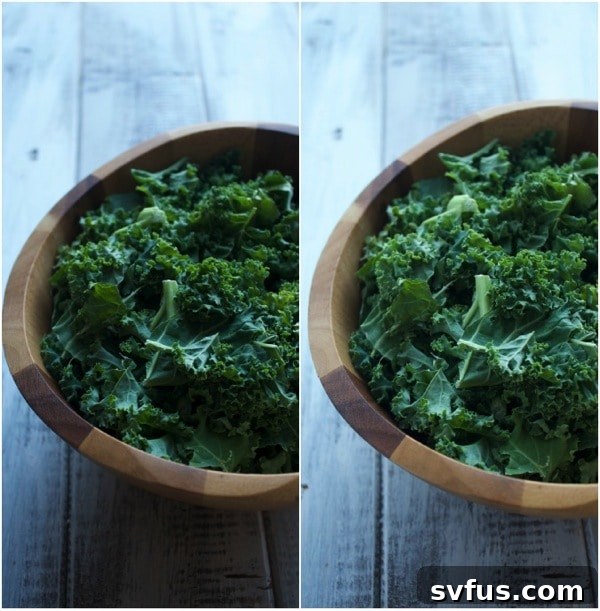
The image on the left appears much darker and lacks vibrancy because a reflector was not used, leaving significant shadows. In stark contrast, the photo on the right is noticeably brighter, more evenly lit, and visually appealing, all thanks to the simple addition of a reflector. How cool is that? It’s an easy-peasy trick that makes a world of difference!
The Magic of Backdrops
And if you’ve read this post, you already know my fervent feelings about photography backdrops. In short: I adore them, I absolutely love them, and I’m always on the hunt for more! Backdrops set the scene, add texture, define the mood, and can completely transform the aesthetic of your food photos. From rustic wooden boards to sleek marble prints or even simple fabric, the right backdrop creates the perfect canvas for your culinary masterpieces.
Future Enhancements: Taking My Setup to the Next Level
While my current setup serves me well, I’m always looking for ways to refine and improve my food photography process. My next acquisitions will likely include a sturdy tripod and additional reflectors. A tripod will allow for sharper images, especially in lower light conditions or when trying to achieve consistent compositions for stop-motion videos or stacked photos. It also frees up my hands for styling, making the entire process smoother. More reflectors, perhaps in different sizes or with varying reflective surfaces, will provide even greater control over light and shadow, allowing for more nuanced and professional results.
Continuous Learning and Community
Phew, I know that was quite a detailed dive into my food photography world! I truly hope that for your curious self, at least some of these insights prove helpful. Don’t worry, I’m just as “nosey” when it comes to seeing how others work! If you’re looking to further hone your photography skills, I highly recommend exploring the incredible resources offered by Dana from Minimalist Baker and Lindsay from Pinch of Yum. Both offer invaluable tips and tutorials that have significantly contributed to my own learning journey.
Q: Do you have a specific setup when you take food photos? Any recommendations of things I should add to my setup to simplify or enhance the process? I’m always on the hunt for innovative ways to improve!
***This post may contain affiliate links which won’t change your price but will share some commission.